Daily reading
Semidouble · Movable from Easter · Temporal
March 4, 2023
From Dom Guéranger’s The Liturgical Year.
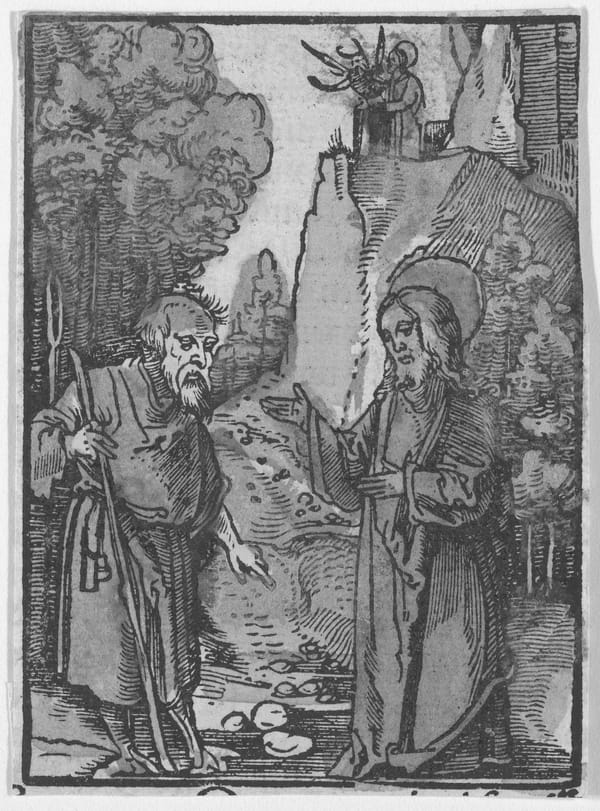
Saturday in Ember Week of Lent
The Station is in the basilica of Saint Peter on the Vatican, where the people were wont to assemble towards evening, that they might be present at the Ordination of the priests and sacred ministers. This day was called Twelve-Lesson-Saturday, because, formerly, twelve passages from the holy Scriptures were read, as upon Holy Saturday. The Mass, during which the Ordinations were given, was celebrated during the night; so that by the time it was over, the Sunday had begun. Later on, the Ordination Mass was said early on the Saturday, as we now have it; but in memory of the ancient practice, the Gospel for Saturday is repeated on the Sunday. The same is observed on the Saturday in the Advent Ember week; because the Ordination Mass of that season was also anticipated.
Collect
Lesson
Cap. xxvi.In diebus illis: Locutus est Moyses ad populum dicens: Quando compleveris decimam cunctarum frugum tuarum, loqueria in conspectu Domini Dei tui: Abstuli quod sanctificatum eat de domo mea, et dedi illud levitæ et advenæ, et pupillo ao viduæ, sicut jussisti mihi: non præterivi mandata tua, neo sum oblitua imperii tui. O bedi vi voci Domini Dei mei, et feci omnia eicut præcepisti mihi. Respice de sanctuario tuo, et de excelso cœlorum habitaculo, et benedio populo tuo Israël, et terræ quam dedisti nobis, eicut jurasti patribus nostris, terræ lacte et melle manan ti. Hodie Dominus Deus tuus præcepit tibi ut facias mandata hæc atque judicia; et custodias et impleas ex toto corde tuo, et ex tota anima tua. Dominum elegisti hodie, ut sit tibi Deus, et ambules in viis ejus, et custodias cæremonias illius, et mandata atque judicia, et obedias ejus imperio. Et Dominus elegit te hodie, ut sis ei populus peculiaris, sicut locutus est tibi, et custodias omnia præcepta illius: et faciat te excelsiorem cunctis gentibus quas cbeavit, in laudem, et nomen, et gloriam suam: ut sis populus sanctus Domini Dei tui, si cut locutus est.
Ch. xxvi.In those days: Moses spoke to the people, saying: When thou hast made an end of tithing all thy fruits thou shalt speak thus in the sight of the Lord thy God: I have taken that which was sanctified out of my house, and I have given it to the levite and to the stranger, and to the fatherless and to the widow, as thou hast commanded me; I have not transgressed thy commandments, nor forgotten thy precepts. I have obeyed the voice of the Lord my God, and have done all things as thou hast commanded me. Look from thy sanctuary, and thy high habitation of heaven, and bless thy people Israel, and the land which thou hast given us, as thou didst swear to our fathers, a land flowing with milk and honey. This day the Lord thy God hath commanded thee to do these commandments and judgments, and to keep and fulfil them with all thy heart, and with all thy soul. Thou hast chosen the Lord this day to be thy God, and to walk in his ways and keep his ceremonies and precepts, and judgments, and obey his command. And the Lord hath chosen thee this day to be his peculiar people, as he hath spoken to thee, and to keep all his commandments; and to make thee higher than all nations, which he hath created, to his own praise, and name, and glory; that thou mayst be a holy people of the Lord thy God, as he hath spoken.
God here assures us that a nation, which is faithful in observing the laws regarding the divine service, shall be blessed above other nations. History is one long illustration of the truth of this promise. Of all the nations which have fallen, there is not one that has not brought the chastisement upon itself by its neglect of the Law of God. At times, the Almighty delays to strike; but it is only that the chastisement may be the more evident and produce a more salutary effect upon mankind. When we would know the future of a country, we need only observe how it comports itself with regard to the laws of the Church. If its own laws are based on the principles and practices of Christianity, that country is sound, in spite of certain weaknesses here and there: revolutions may disturb its peace, but it will triumph over all. If the bulk of its people is faithful in the observance of external practices prescribed by the Church: for example, if they observe the Lord’s day and the holy fast of Lent; there is a fund of morality in that country, which is sure to draw down upon it the blessings of heaven. Irreligious men will scoff at all this, and call it superstition, prejudice of weak minds, and out of date for an age of progress like ours, but if their theories were to rule, and a country, which up to this time had been practically Catholic, were to seek progress by infringing the law of Christian ritual, it would, in less than a hundred years, find that public and private morality had lost ground, and its own security would be menaced. Man may talk and write as he likes: God wishes to be served and honoured by His people, and it is for Him to prescribe what are to be the forms of this service and adoration. Every injury offered to external worship, which is the great social link, is an injury to the interests of mankind. Even were there not the word of God for it, it is but just that such a consequence should follow.
Gospel
Cap. xvii.In illo tempore: Assumpsit Jesus Petrum, et Jacobum, et Joannem fratrem ejus, et duxit illos in montem excelsum seorsum: et transfiguratus est ante eos. Et resplenduit facies ejus sicut sol, vestimenta autem ejus facta sunt alba sicut nix. Et ecce apparuerunt illis Moyses et Elias cum eo loquentes. Respondens autem Petrus dixit ad Jesum: Domine, bonum est nos hic esse: si vis, faciamus hic tria tabernacula, tibi unum, Moysi unum, et Eliæ unum. Adnuc eo loquente, ecce nubes lucida obumbravit eos. Et ecce vox de nube, dicens: Hic est Filius meus dilectus, in quo mihi bene complacui: ipsum audite. Et audientes discipuli, ceciderunt in faciem suam, et timuerunt valde. Et accessit Jesus, et tetigit eos, dixitque eis: Surgite et nolite timere. Levantes autem oculos suos, neminem viderunt nisi solum Jesum. Et descendentibus illis de monte, præcepit eis Jesus, dicens: Nemini dixeritis visionem, donee Filius hominis a mortuis resurgat.
Ch. xvii.At that time: Jesus taketh unto him Peter and James, and John his brother, and bringeth them up into a high mountain apart: and he was transfigured before them. And his face did shine as the sun: and his garments became white as snow. And behold there appeared to them Moses and Elias talking with him. Then Peter answering, said to Jesus: Lord, it is good for us to be here; if thou wilt, let us make here three tabernacles, one for thee, and one for Moses, and one for Elias. And as he was yet speaking, behold a bright cloud overshaded them. And lo, a voice out of the cloud, saying: This is my beloved Son, in whom I am well pleased: hear ye him. And the disciples hearing, fell upon their face, and were very much afraid. And Jesus came and touched them, and said to them: Arise and fear not. And they, lifting up their eyes, saw no one, but only Jesus. And as they came down from the mountain, Jesus charged them, saying: Tell the vision to no man, till the Son of Man be risen from the dead.
This Gospel, which, as we have already explained, is to be repeated to-morrow, is the one that is read in the Mass of to-day’s Ordinations. The following is the interpretation given by the ancient liturgists, among whom we may especially mention the learned abbot Rupert. The Church would have us think upon the sublime dignity which has been conferred upon the newly ordained priests. They are represented by the three apostles, who were taken by Jesus to the high mountain, and favoured with the sight of His glory. The rest of the disciples were left below; Peter, James, and John were the only ones permitted to ascend to Thabor, and they, when the time should come, were to tell their fellow-apostles, and the whole world, how they had seen the glory of their Master, and heard the words of the Father declaring the Divinity of the Son of Man. ‘This voice,’ says St.Peter, ‘coming down to Him from the excellent glory: This is My beloved Son, in whom I have pleased Myself; hear ye Him. And this voice we heard, brought from heaven, when we were with Him in the holy mount.’1 In like manner, these priests who have just been ordained, and for whom you have been offering up your prayers and fast, will enter into the cloud with the Lord. They will offer up the Sacrifice of your salvation in the silence of the sacred Canon. God will descend into their hands, for your sake; and though they are mortal and sinners, yet will they, each day, be in closest communication with the Divinity. The forgiveness of your sins, which you are now preparing to receive from your heavenly Father, is to come to you through their hands; their superhuman power will bring it down from heaven upon your souls. It is thus that God has cured our pride. The serpent said to us, through our first parents: ‘Eat of this fruit, and you shall be as gods.’We unfortunately believed the tempter, and the fruit of our transgression was death. God took pity on us, and resolved to save us; but it is by the hands of men that He would save us, and this in order to humble our haughtiness. His own eternal Son became Man, and He left other men after Him, to whom He said: ‘As the Father hath sent Me, I also send you.’2 Let us, then, show honour to these men, who have, this very day, been raised to so high a dignity. One of the duties imposed on us by our holy religion is respect to the priesthood.
This is Saturday; let us have recourse to Mary, the refuge of sinners. Let us put under her maternal protection the humble penances we are now going through; for this end we may make use of the following sequence, taken from the Cluny missal:
Sequence
Mundi hujus spes Maria,
Ave plena gratia.
Maris portus ad quem rei
Currunt cum fiducia.
Cunctis demens et benigna,
Operum suffragio.
Nudis Martha et Maria,
Mentis desiderio.
Sic flos flori patuisti,
Pietatis gratia.
Regem regum peperisti,
Virgo viri nescia.
Quem lactasti et pavisti,
More matris debito.
Et Regina facta pridem,
Operum pro merito.
Apud Regem ut ruina
Relaxentur debita.
A reatu expurgatos,
Pietate solita.
dear Mother of Jesus,
and hope of the world!
O haven of the sea, where sinners
confidently seek shelter and repose.
and, by thy powerful prayers,
thou art kind and loving to all.
Thou art, by thy loving affection,
both Martha and Mary to the needy.
the flower that, by its rich graces,
bloomed to the divine Flower, thy Jesus.
thou didst give birth to the King of kings,
thou that wast a pure Virgin.
and, using a mother’s privilege,
thou didst feed him at thy breast.
and in reward for thy merits,
thou art made the Queen of heaven and earth.
to him that is our King,
beseeching him to pardon us poor fallen sinners.
and, having obtained us the new life of remission of our sins,
bring us to the kingdom, there to reign for ever.
March 4: St. Casimir, Confessor
It is from a court that we are to be taught to-day the most heroic virtues. Casimir is a prince; he is surrounded by all the allurements of youth and luxury; and yet he passes through the snares of the world with as much safety and prudence, as though he were an angel in human form. His example shows us what we may do. The world has not smiled on us as it did on Casimir; but how much we have loved it! If we have gone so far as to make it our idol, we must now break what we have adored, and give our service to the sovereign Lord, who alone has a right to it. When we read the lives of the saints, and find that persons who were in the ordinary walks of life practised extraordinary virtues, we are inclined to think that they were not exposed to great temptations, or that the misfortunes they met with in the world made them give themselves up unreservedly to God’s service. Such interpretations of the actions of the saints are shallow and false, for they ignore this great fact, that there is no condition or state, however humble, in which man has not to combat the evil inclinations of his heart, and that corrupt nature alone is strong enough to iead him to sin. But in such a saint as Casimir we have no difficulty in recognizing that all his Christian energy was from God, and not from any natural source; and we rightly conclude that we, who have the same good God, may well hope that this season of spiritual regeneration will change and better us. Casimir preferred death to sin. But is not every Christian bound to be thus minded every hour of the day? And yet, such is the infatuation produced by the pleasures or advantages of this present life, that we every day see men plunging themselves into sin, which is the death of the soul; and this, not for the sake of saving the life of the body, but for a vile and transient gratification, which is oftentimes contrary to their temporal interests. What stronger proof could there be than this, of the sad effects produced in us by original sin? The examples of the saints are given us as a light to lead us in the right path, let us follow it, and we shall be saved. Besides, we have a powerful aid in their merits and intercession: let us take courage at the thought that these friends of God have a most affectionate compassion for us their brethren, who are surrounded by so many and great dangers.
The Church, in her liturgy, thus describes to us the virtues of our young prince:
Enjoy thy well-earned rest in heaven, O Casimir! Neither the world with all its riches, nor the court with all its pleasures, could distract thy heart from the eternal joys it alone coveted and loved. Thy life was short, but full of merit. The remembrance of heaven made thee forget the earth. God yielded to the impatience of thy desire to be with Him, and took thee speedily from among men. Thy life, though most innocent, was one of penance, for knowing the evil tendencies of corrupt nature, thou hadst a dread of a life of comfort. When shall we be made to understand that penance is a debt we owe to God, a debt of expiation for the sins we have committed against Him? Thou didst prefer death to sin; obtain for as a fear of sin, that greatest of all the evils that can befall as, because it is an evil which strikes at God Himself. Pray for as daring this holy season, which is intended as a preparation for penance; impress our minds with the truths now put before us. The Christian world is honouring thee to-day; repay its homage by thy blessing. Poland, thy fatherland, once the bulwark of the Church, which kept back the invasion of schism, heresy, and infidelity, beseeches thy prayers.
March 4 (the Same Day): St. Lucius, Pope and Martyr
On this day a commemoration is made of St. Lucius, Pope and Martyr. He was a Roman by birth, and succeeded Pope Cornelius in 252. Shortly after his accession he was sent into exile by the Emperor Gallus, but was soon recalled, to the great joy of the Roman people. St. Cyprian quotes decrees issued by him against the Novatians. He died after a very short pontificate on March 4, 253. His relics were translated to the church of St. Cecilia, where they are exposed to the veneration of the Faithful.
Antiphon
| Previous Friday in Ember Week of Lent | Next March 4: St. Casimir, Confessor |