Daily reading
Lent
Double · Movable from Easter · Temporal
March 12, 2023
From Dom Guéranger’s The Liturgical Year.

|
The Third Sunday of Lent
The holy Church gave us as the subject of our meditation for the first Sunday of Lent, the temptation which our Lord Jesus Christ deigned to suffer in the desert. Her object was to enlighten us with regard to our own temptations, and teach us how to conquer them. To-day, she wishes to complete her instruction on the power and stratagems of our invisible enemies; and for this she reads to us a passage from the Gospel of St. Luke. During Lent the Christian ought to repair the past and provide for the future; but he can neither understand how it was he fell, nor defend himself against a relapse, unless he have correct ideas as to the nature of the dangers which have hitherto proved fatal, and which are again threatening him. Hence, the ancient liturgists would have us consider it as a proof of the maternal watchfulness of the Church, that she should have again proposed such a subject to us. As we shall find, it is the basis of all to-day’s instructions.
Assuredly we should be the blindest and most unhappy of men if, surrounded as we are by enemies who unceasingly seek to destroy us, and are so superior to us both in power and knowledge, we were seldom or never to think of the existence of these wicked spirits. And yet, such is really the case with innumerable Christians nowadays; for, truths are decayed from among the children of men..1 So common, indeed, is this heedlessness and forgetfulness of truth, which the holy Scriptures put before us in almost every page, that it is no rare thing to meet with persons who ridicule the idea of devils being permitted to be on this earth of ours! They call it a prejudice, a popular superstition of the middle ages! Of course they deny that it is a dogma of faith. When they read the history of the Church or the lives of the saints, they have their own way of explaining whatever is there related on this subject. To hear them talk, one would suppose that they look upon satan as a mere abstract idea to be taken as the personification of evil.
When they would account for the origin of their own or others’ sins, they explain all by the evil inclination of man’s heart, and by the bad use we make of our free will. They never think of what we are taught by Christian doctrine: namely, that we are also instigated to sin by a wicked being, whose power is as great as is the hatred he bears us. And yet they know, they believe with a firm faith, that satan conversed with our first parents, and persuaded them to commit sin, and showed himself to them under the form of a serpent. They believe that this same satan dared to tempt the Incarnate Son of God, and that he carried Him through the air, and set Him first upon a pinnacle of the temple, and then upon a very high mountain. Again, they read in the Gospel, and they believe, that one of the possessed delivered by our Saviour was tormented by a whole legion of devils, who, upon being driven out of the man, went, by Jesus’ permission, into a herd of swine, and the whole herd ran violently into the sea of Genesareth and perished in the waters. These and many other such like facts are believed, by the persons of whom we speak, with all the earnestness of faith; yet, notwithstanding, they treat as a figure of speech, or a fiction, all they hear or read about the existence, the actions, or the craft of these wicked spirits. Are such people Christians, or have they lost their senses? One would scarcely have expected that this species of incredulity could have found its way into an age like this, when sacrilegious consultations of the devil have been, we might almost say, fashionable. Means which were used in the days of paganism have been resorted to for such consultations; and those who employed them seemed to forget, or ignore, that they were committing what God in the old Law punished with death, and what, for many centuries, was considered by all Christian nations as a capital crime.
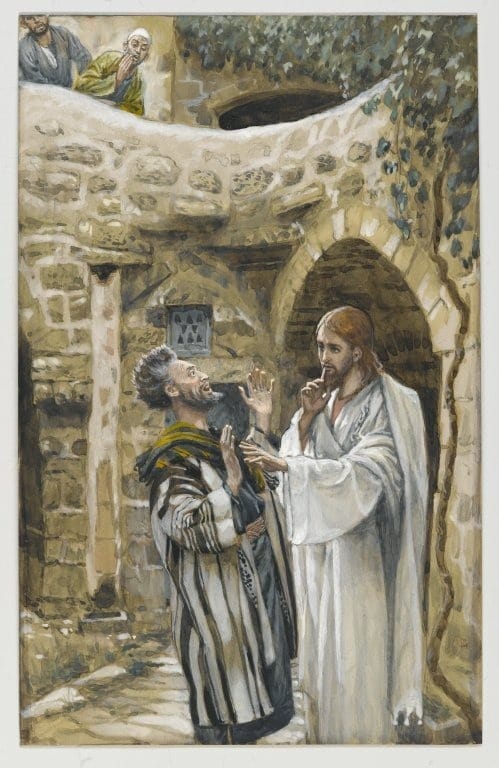
But if there be one season of the year more than another in which the faithful ought to reflect upon what is taught us both by faith and experience as to the existence and workings of the wicked spirits, it is undoubtedly this of Lent, when it is our duty to consider what have been the causes of our past sins, what are the spiritual dangers we have to fear for the future, and what means we should have recourse to for preventing a relapse. Let us, then, hearken to the holy Gospel. Firstly, we are told that the devil had possessed a man, and that the effect produced by this possession was dumbness. Our Saviour cast out the devil, and immediately the dumb man spoke. So that, the being possessed by the devil is not only a fact which testifies to God's impenetrable justice; it is one which may produce physical effects upon them that are thus tried or punished. The casting out of the devil restores the use of speech to him that had been possessed. We say nothing about the obstinate malice of Jesus’enemies, who would have it that His power over the devils came from His being in league with the prince of devils: we would now merely show that the wicked spirits are sometimes permitted to have power over the body, and would refute, by this passage from the Gospel, the rationalism of certain Christians. Let these learn, then, that the power of our spiritual enemies is an awful reality; and let them take heed not to lay themselves open to their worst attacks, by persisting in the disdainful haughtiness of their reason.
Ever since the promulgation of the Gospel, the power of satan over the human body has been restricted by the virtue of the cross, at least in Christian countries; but this power resumes its sway as often as faith and the practice of Christian piety lose their influence. And here we have the origin of all those diabolical practices, which, under certain scientific names, are attempted first in secret, and then are countenanced by being assisted at by well-meaning Christians. Were it not that God and His Church intervene, such practices as these would subvert society. Christians! remember your baptismal vow; you have renounced satan: take care, then, that by a culpable ignorance you are not dragged into apostasy. It is not a phantom that you renounced at the font; he is a real and formidable being, who, as our Lord tells us, was a murderer from the beginning2
But if we ought to dread the power he may be permitted to have over our bodies; if we ought to shun all intercourse with him, and take no share in practices over which he presides, and which are the worship he would have men give him: we ought, also, to fear the influence he is ever striving to exercise over our souls. See what God’s grace has had to do in order to drive him from our soul! During this holy season, the Church is putting within your reach those grand means of victory—fasting, prayer, and almsdeeds. The sweets of peace will soon be yours, and once more you will become God’s temple, for both soul and body will have regained their purity. But be not deceived; your enemy is not slain. He is irritated; penance has driven him from you; but he has sworn to return. Therefore, fear a relapse into mortal sin; and in order to nourish within you this wholesome fear, meditate upon the concluding part of our Gospel.
Our Saviour tells us that when the unclean spirit is gone out of a man, he walketh through places without water. There he writhes under his humiliation; it has added to the tortures of the hell he carries everywhere with him, and to which he fain would give some alleviation by destroying souls that have been redeemed by Christ. We read in the old Testament that sometimes, when the devils have been conquered, they have been forced to flee into some far-off wilderness: for example, the holy Archangel Raphael took the devil, that had killed Sara’s husbands, and bound him in the desert of upper Egypt.3 But the enemy of mankind never despairs of regaining his prey. His hatred is as active now as it was at the very beginning of the world, and he says: ‘I will return into my house, whence I came out.’Nor will he come alone. He is determined to conquer; and therefore, he will, if he think it needed, take with him seven other spirits, even more wicked than himself. What a terrible assault is being prepared for the poor soul, unless she be on the watch, and unless the peace, which God has granted her, be one that is well armed for war! Alas! with many souls the very contrary is the case; and our Saviour describes the situation in which the devil finds them on his return: they are swept and garnished, and that is all! No precautions, no defence, no arms. One would suppose that they were waiting to give the enemy admission. Then satan, to make his repossession sure, comes with a sevenfold force. The attack is made; but there is no resistance, and straightways the wicked spirits entering in, dwell there; so that the last state becometh worse than the first; for before there was but one enemy, and now there are many.
In order that we may understand the full force of the warning conveyed to us by the Church in this Gospel, we must keep before us the great reality that this is the acceptable time. In every part of the world, there are conversions being wrought; millions are being reconciled with God; divine mercy is lavish of pardon to all that seek it. But will all persevere? They that are now being delivered from the power of satan, will they all be free from his yoke when next year’s Lent comes round? A sad experience tells the Church that she may not hope for so grand a result. Many will return to their sins, and that, too, before many weeks are over. And if the justice of God overtake them in that state—what an awful thing it is to say it, yet it is true—some, perhaps many, of these sinners will be eternally lost! Let us, then, be on our guard against a relapse; and in order that we may ensure our perseverance, without which it would have been to little purpose to have been for a few days in God’s grace, let us watch, and pray; let us keep ourselves under arms; let us ever remember that our whole life is to be a warfare. Our soldierlike attitude will disconcert the enemy, and he will try to gain victory elsewhere.
The third Sunday of Lent is called Oculi, from the first word of the Introit. In the primitive Church, it was called Scrutiny Sunday, because it was on this day that they began to examine the catechumens, who were to be admitted to Baptism on Easter night. All the faithful were invited to assemble in the church, in order that they might bear testimony tathe good life and morals of the candidates. At Rome, these examinations, which were called the scrutinies, were made on seven different occasions, on account of the great number of the aspirants to Baptism; but the principal scrutiny was that held on the Wednesday of the fourth week. We will speak of it later on.
The Roman sacramentary of St. Gelasius gives us the form in which the faithful were convoked to these assemblies. It is as follows.
Dearly beloved brethren: you know that the day of scrutiny, when our elect are to receive the holy instruction, is at hand. We invite you, therefore, to be zealous and to assemble on N. (here the day was mentioned) at the hour of Sext; that so we may be able, by the divine aid, to achieve without error the heavenly mystery, whereby is opened the gate of the kingdom of heaven, and the devil is excluded with all his pomps.
The invitation was repeated, if needed, on each of the following Sundays. The scrutiny of this Sunday ended in the admission of a certain number of candidates: their names were written down and put on the diptychs of the altar, that they might be mentioned in the Canon of the Mass. The same also was done with the names of their sponsors.
The Station was, and still is, in the basilica of Saint Laurence outside the walls. The name of this, the most celebrated of the martyrs of Rome, would remind the catechumens that the faith they were about to profess would require them to be ready for many sacrifices.
In the Greek Church this Sunday is celebrated for the solemn adoration of the cross, which precedes the week called Mesonestios or mid-fast.
The catechumen who is now expecting the grace of Baptism, and the penitent who is looking forward to the day of his reconciliation, express, in the Introit, the ardour of their longings. They humbly confess their present misery; but they are full of hope in Him, who is soon to set them free from the snare.
Introit
The great battle with the enemy of mankind is now fiercely raging: the Church beseeches her God to stretch forth His right hand in her defence. Such is the petition she makes in to-day’s Collect.
Collect
The second and third Collects are given on the first Sunday of Lent, page 129.
Epistle
Cap. v.Fratres: Estote imitatores Dei, sicut filii charissimi: et ambulate in dilectione, sicut et Christus dilexit nos, et tradidit semetipsum pro nobis oblationem et hostiam Deo in odorem suavitatis. Fornicatio autem, et omnis immunditia, aut avaritia, nec nominetur in vobis, sicut decet sanctos: aut turpitudo, aut etultiloquium, aut scurrilitas, quæ ad rem non pertinet; sed magis gratiarum actio. Hoc enim ecitote intelligentes, quod omnis fornicator, aut immundus, aut avarus, quod est idolorum servitus, non håbet haereditatem in regno Christi et Dei. Nemo vos seducat inanibus verbis; propter hæc enim venit ira Dei in filios difiidentiæ. Noiite ergo effici participes eorum. Eratis enim aliquando tenebræ; nunc autem lux in Domino. Ut filii lucis ambulate: fructus enim lucis est in omni bonitate. et justitia, et veritate.
Ch. v.Brethren: Be ye followers of God, as most dear children; and walk in love, as Christ also hath loved us, and hath delivered himself for us, an oblation and a sacrifice to God, for an odour of sweetness. But fornication, and all uncleanness, or covetousness, let it not so much as be named among you, as becometh saints; or obscenity, or foolish talking, or scurrility, which is to no purpose: but rather giving of thanks. For know ye this and understand, that no fornicator, or unclean, or covetous person, which ia serving of idols, hath inheritance in the kingdom of Christ and of God. Let no man deceive you with vain words: for because of these tilings cometh the anger of God upon the children of unbelief. Be ye not therefore partakers with them. For you were heretofore darkness, but now light in the Lord. Walk then as children of the light: for the fruit of the light is in all goodness, and justice, and truth.
The apostle, speaking to the faithful of Ephesus, reminds them how they once were darkness; but now, he says, ye are light in the Lord. What joy for our catechumens to think that the same change is to be their happy lot! Up to this time they have spent their lives in all the abominations of paganism; and now they have the pledge of a holy life, for they have been received as candidates for Baptism. Hitherto they have been serving those false gods, whose worship was an encouragement to vice; and now they hear the Church exhorting her children to be followers of God, that is to say, to imitate infinite Holiness. Grace—that divine element which is to enable even them to be perfect as their heavenly Father is perfect4—is about to be bestowed upon them. But they will have to fight hard in order to maintain so elevated a position; and of their old enemies, two, in particular, will strive to re-enslave them: impurity and avarice. The apostle would not have these vices so much as named among them, from this time forward; for they, he says, that commit such sins are idolaters, and by your vocation to Baptism you have abandoned all your idols.
Such are the instructions given by the Church to her future children. Let us apply them to ourselves, for they are also intended for us. We were sanctified almost as soon as we came into the world; have we been faithful to our Baptism? We, heretofore, were light; how comes it that we are now darkness? The beautiful likeness to our heavenly Father, which was once upon us, is perhaps quite gone! But, thanks to divine mercy, we may recover it. Let us do so by again renouncing satan and his idols. Let our repentance and penance restore within us that light, whose fruit consists in all goodness, justice, and truth.
The Gradual expresses the sentiments of a soul that sees herself surrounded by enemies, and begs her God to deliver her.
The Tract is taken from Psalm cxxii., which is a canticle of confidence and humility. The sincere avowal of our misery always draws down the mercy of God upon us.
Gradual
Tract
Gospel
Cap. xi.In illo tempore: Erat Jesus ejiciens dæmonium, et illud erat mutum. Et cum ejecisset dæmonium, locutus est mu tus, et admiratæ sunt turbæ. Quidam autem ex eis dixerunt: In Beelzebub principe dæmoniorum ejicit dæmonia. Et alii tentantes, signum de cælo quærebant ab eo. Ipse autem ut vidit cogitationes eorum, dixit eis: Omne regnum in seipsum divisum desolabitur, et domus supra domum cadet. Si autem et satanas in seipsum divisus est, quomodo stabit regnum ejus? Quia dicitis in Beelzebub me ejicere dæmonia. Si autem ego in Beelzebub ejicio dæmonia, filii vestri in quo ejiciunt? Ideo ipsi judices vestri erunt. Porro si in digito Dei ejicio dæmonia, proiccto pervenit in vos regnum Dei. Cum fortis armatus custodit atrium suum, in pace sunt ea quæ possidet. Si autem fortior eo superveniens vicerit eum, universa arma ejus auferet, in quibus confidebat, et spolia ejus distribuet. Qui non est mecum, contra me est; et qui non colligit mecum, dispergit. Cum immundus spiritus exierit de homine, ambulat per loca inaquosa, quærens requiem: et non inveniens, dicit: Reyertar in domum meam unde exivi. Et cum venerit, invenit eam scopis mundatam et omatam. Tunc vadit et assumit septem alios spiritus secum, nequiores se, et ingressi habitant ibi. Et fiunt novissima hominis illius pejora prioribus. Factum est autem, cum hæc diceret, extollens vocem quædam mulier de turba, dixit illi: Beatus venter qui te portavit, et ubera quæ suxisti. At ille dixit: Quinimo beati qui audiunt verbum Dei, et custodiunt illud.
Ch. xi.At that time: Jesus was casting out a devil, and the same was dumb. And when he had cast out the devil, the dumb spoke, and the multitudes were in admiration at it. But some of them said: He casteth out devils by Beelzebub, the prince of devils. And others tempting, asked of him a sign from heaven. But he, seeing their thoughts, said to them: Every kingdom divided against itself, shall be brought to desolation, and house upon house shall fall. And if satan also be divided against himself, how shall his kingdom stand? because you say, that through Beelzebub I cast out devils. Now if I cast out devils by Beelzebub, by whom do your children cast them out? Therefore they shall be your judges. But if I by the finger of God cast out devils, doubtless the kingdom of God is come upon you. When a strong man armed keepeth his court, those things are in peace which he possesseth. But if a stronger than he come upon him and overcome him, he will take away all his armour wherein he trusted, and will distribute his spoils. He that is not with me is against me; and he that gathereth not with me scattered. When the unclean spirit is gone out of a man, he walketh through places without water, seeking rest; and not finding, he saith: I will return into my house whence I came out. And when he is come, he findeth it swept and garnished. Then he goeth and taketh with him seven other spirits more wicked than himself, and entering in they dwell there; and the last state of that man becomes worse than the first. And it came to pass, as he spoke these things, a certain woman from the crowd, lifting up her voice, said to him: Blessed is the womb that bore thee, and the paps that gave thee suck. But he said: Yea rather, blessed are they who hear the word of God, and keep it.
As soon as Jesus had cast out the devil, the man recovered his speech, for the possession had made him dumb. It is an image of what happens to a sinner, who will not, or dare not, confess his sin. If he confessed it, and asked pardon, he would be delivered from the tyranny which now oppresses him. Alas! how many there are who are kept back, by a dumb devil from making the confession that would save them! The holy season of Lent is advancing; these days of grace are passing away; let us profit by them; and if we ourselves be in the state of grace, let us offer up our earnest prayers for sinners, that they may speak, that is, may accuse themselves in confession and obtain pardon.
Let us also listen, with holy fear, to what our Saviour tells us with regard to our invisible enemies. They are so powerful and crafty, that our resistance would be useless, unless we had God on our side, and His holy angels, who watch over us and join us in the great combat. It is to these unclean and hateful spirits of hell that we delivered ourselves when we sinned: we preferred their tyrannical sway to the sweet and light yoke of our compassionate Redeemer. Now we are set free, or are hoping to be so; let us thank our divine Liberator; but let us take care not to readmit our enemies. Our Saviour warns us of our danger. They will return to the attack; they will endeavour to force their entrance into our soul, after it has been sanctified by the Lamb of the Passover. If we be watchful and faithful, they will be confounded, and leave us: but if we be tepid and careless, if we lose our appreciation of the grace we have received, and forget our obligations to Him who has thus saved us, our defeat is inevitable; and as our Lord says, our last state will be worse than the first.
Would we avoid such a misfortune? Let us meditate upon those other words of our Lord, in to-day’s Gospel: He that is not with Me is against Me. What makes us fall back into the power of satan, and forget our duty to our God, is that we do not frankly declare ourselves for Jesus, when occasions require us to do so. We try to be on both sides, we have recourse to subterfuge, we temporize: this takes away our energy; God no longer gives us the abundant graces we received when we were loyal and generous; our relapse is all but certain. Therefore, let us be boldly and unmistakably with Christ. He that is a soldier of Jesus, should be proud of his title!
The Offertory describes the consolation that a soul, rescued from satan’s grasp, feels in doing the will of her divine Master.
Offertory
In the Secret, the Church expresses her confidence in the Sacrifice she is about to offer to God; it is the Sacrifice of Calvary, which redeemed the whole world.
Secret
The second and third Secrets are given on the first Sunday of Lent, page 136.
Borrowing the words of David, the Church, in her Communion-anthem, describes the happiness of a soul that is united to her God in the Sacrament of love. It is the lot reserved for the catechumens, who have just been received as candidates for Baptism; it is to be also that of the penitents, who shall have washed away their sins in the tears of repentance.
Communion
In the Postcommunion, the Church beseeches her Lord to grant, through the merits of the mystery just partaken of by her children, that sinners may be loosed from the fetters of their sins, and delivered from the danger they have incurred—the danger of eternal perdition.
Postcommunion
The second and third Postcommunions are given on the first Sunday of Lent, page 138.
Vespers
The psalms and antiphons are given on page 99.
Capitulum
For the hymn and versicle, see page 106.
Antiphon of the Magnificat
The Mozarabic breviary offers us this beautiful prayer for the commencement of the third week of Lent.
Prayer (In Dominica III. Quadragesimæ)
March 12: St. Gregory the Great, Pope and Doctor of the Church
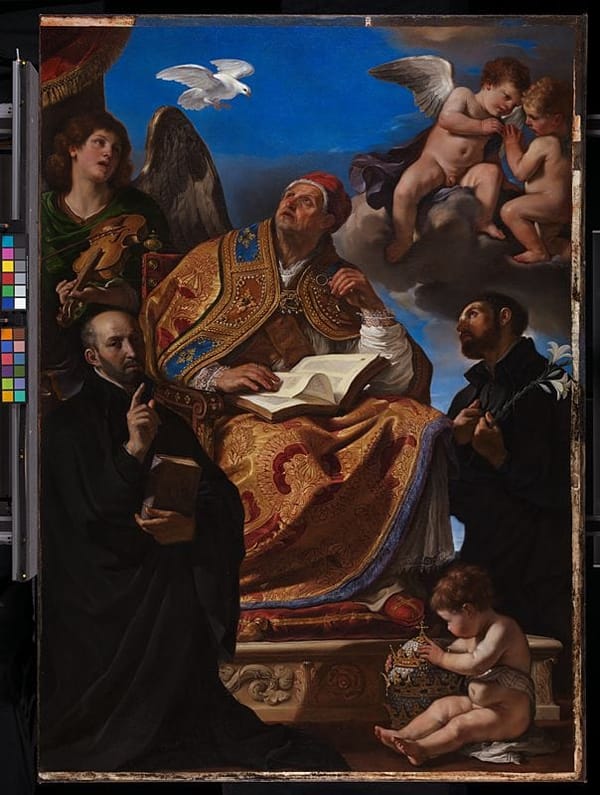 |
Among all the pastors whom our Lord Jesus Christ has placed, as His vicegerents, over the universal Church, there is not one whose merits and renown have surpassed those of the holy Pope, whose feast we keep to-day. His name is Gregory, which signifies watchfulness; his surname is ‘the Great,’ and he was in possession of that title, when God sent the Seventh Gregory, the glorious Hildebrand, to govern His Church.
In recounting the glories of this illustrious Pontiff, it is but natural we should begin with his zeal for the services of the Church. The Roman liturgy, which owes to him some of its finest hymns, may be considered as his work, at least in this sense, that it is he who collected together and classified the prayers and rites drawn up by his predecessors, and reduced them to the form in which we now have them. He collected also the ancient chants of the Church, and arranged them in accordance with the rules and requirements of the divine Service. Hence it is, that our sacred music, which gives such solemnity to the liturgy, and inspires the soul with respect and devotion during the celebration of the great mysteries of our faith, is known as the Gregorian chant.
He is, then, the apostle of the liturgy, and this alone would have immortalized his name; but we must look for far greater things from such a Pontiff as Gregory. His name was added to the three, who had hitherto been honoured as the great Doctors of the Latin Church. These three are Ambrose, Augustine, and Jerome; who else could be the fourth but Gregory? The Church found in his writings such evidence of his having been guided by the Holy Ghost, such a knowledge of the sacred Scriptures, such a clear appreciation of the mysteries of faith, and such unction and authority in his teachings, that she gladly welcomed him as a new guide for her children.
Such was the respect wherewith everything he wrote was treated, that his very letters were preserved as so many precious treasures. This immense correspondence shows us that there was not a country, scarcely even a city, of the Christian world, on which the Pontiff had not his watchful eye steadily fixed; that there was not a question, however local or personal, which, if it interested religion, did not excite his zeal and arbitration as the Bishop of the universal Church. If certain writers of modern times had but taken the pains to glance at these letters, written by a Pope of the sixth century, they would never have asserted, as they have, that the prerogatives of the Roman Pontiff are based on documents fabricated, as they say, two hundred years after the death of Gregory.
Throned on the apostolic See, our saint proved himself to be a rightful heir of the apostles, not only as the representative and depositary of their authority, but as a fellow-sharer in their mission of calling nations to the true faith. To whom does England owe her having been, for so many ages, ‘the island of saints’? To Gregory, who, touched with compassion for those Angli, of whom, as he playfully said, he would fain make Angeli, sent to their island the monk Augustine with forty companions, all of them, as was Gregory himself, children of St. Benedict. The faith had been sown in this land as early as the second century, but it had been trodden down by the invasion of an infidel race. This time the seed fructified, and so rapidly that Gregory lived to see a plentiful harvest. It is beautiful to hear the aged Pontiff speaking with enthusiasm about the results of his English mission. He thus speaks in the twenty-seventh Book of his Morals: ‘Lo! the language of Britain, which could once mutter naught save barbarous sounds, has long since begun to sing, in the divine praises, the Hebrew Alleluia! Lo! that swelling sea is now calm, and saints walk on its waves. The tide of barbarians, which the sword of earthly princes could not keep back, is now hemmed in at the simple bidding of God’s priests.’*
During the fourteen years that this holy Pope held the place of Peter, he was the object of the admiration of the Christian world, both in the east and in the west. His profound learning, his talent for administration, his position, all tended to make him beloved and respected. But who could describe the virtue of his great soul? That contempt for the world and its riches, which led him to seek obscurity in the cloister; that humility, which made him flee the honours of the papacy, and hide himself in a cave, where, at length, he was miraculously discovered, and God Himself put into his hands the keys of heaven, which he was evidently worthy to hold, because he feared the responsibility; that zeal for the whole flock, of which he considered himself not the master, but the servant, so much so indeed that he assumed the title, which the Popes have ever since retained, of ‘servant of the servants of God’ that charity which took care of the poor throughout the whole world; that ceaseless solicitude, which provided for every calamity, whether public or private; that unruffled sweetness of manner, which he showed to all around him, in spite of the bodily sufferings which never left him during the whole period of his laborious pontificate; that firmness in defending the deposit of the faith, and crushing error wheresoever it showed itself; in a word, that vigilance with regard to discipline, which made itself felt for long ages after in the whole Church? All these services and glorious examples of virtue have endeared our saint to the whole world, and will cause his name to be blessed by all future generations, even to the end of time.
Let us now read the abridged life of our saint, as given us in the liturgy.
To these admirable lessons we subjoin a selection of antiphons and responsories, which are taken from an Office approved of by the holy See, for this feast of so great a saint.
Antiphons and Responsories*
St. Peter Damian, whose feast we kept a few days back, composed the following hymn in honour of our apostle:
Nunc angelorum eocius,
Ut tunc, Gregori, gentibus
Succurre jam credentibus.
Omnemque mundi gloriam
Spernis, ut inops inopem
Jesum sequaris principem.
Dum stipem petit angelus;
Tu munus jam post geminum,
Præbes et vas argenteum.
Suæ præfert Ecclesiæ:
Sic Petri gradum percipis,
Cujus et normam sequeris.
Lux et decus Ecclesiæ,
Non sinas in periculis,
Quos tot mandatis instruis.
Tua distillant labia,
Fragrantum vim aromatum
Tuum vincit eloquium.
Mire solvis ænigmata,
Theorica mysteria
Te docet ipsa Veritas.
Vicem simul et gloriam,
Nos solve culpæ nexibus,
Redde polorum sedibus.
Sit decus Unigenito,
Sit utriusque pariti
Majestas summa Flamini.
and now art a companion of the angels!
protect now, as of old, the nations
that believe in Christ.
and all the glory of the world,
that so thou, being poor,
mayst follow the Lord Jesus, who was poor.
in the garb of one that was shipwrecked, and asks an alms;
thou first makest him a double gift,
and then thou givest him a silver vase.
for thou didst imitate the virtues,
and now thou hast
the honours, of Peter.
Light and ornament of the Church!
Thou hast so richly instructed us,
assist us in our dangers.
that brings sweetness to the heart.
Thy words are more fragrant
than the richest perfume.
the obscure figures of sacred Writ.
The divine mysteries are taught thee
by him that is the very Truth.
the office and the glory of the apostles,
pray for us, that we may be loosed from the bonds of sin,
and obtain the thrones prepared for us above.
and to his only-begotten Son,
and to the Spirit of them
both be praise and highest kingship.
Father of the Christian people! Vicar of the charity, as well as of the authority, of Christ! O Gregory, vigilant Pastor! the Church, which thou hast so faithfully loved and served, turns to thee with confidence. Thou canst not forget the flock, which keeps up such an affectionate remembrance of thee; hear the prayer she offers thee on this thy solemnity. Protect and guide the Pontiff, who now holds the place of Peter, as thou didst; enlighten and encourage him in the difficulties wherewith he is beset. Bless the hierarchy of the pastors, which has received from thee such magnificent teachings and such admirable examples. Assist it to maintain inviolate the sacred trust of faith; bless the eSorts it is now making for the restoration of ecclesiastical discipline, without which all is disorder and confusion. God chose thee as the regulator of the divine service, the holy liturgy; foster, by thy blessing, the zeal which is now rising up among us for those holy traditions of prayer, which have been so neglected; teach us the long-forgotten secret, that the best way of praying is to use the prayers of the Church. Unite all Churches in obedience to the apostolic See, which is the ground and pillar of faith, and the fountain of spiritual authority.
But there is one country which was most dear to thee—our own native land. O apostle of England! look down with aSection on this island, which has now rebelled from Rome, and has become the resort of countless false religions. But now, after three centuries of apostasy from the true faith, the hand of God’s mercy is pressing her to conversion. She is thine own child in Christ Jesus: wilt thou not aid her to return to Him? Wilt thou not guide her, by thy prayers, to come forth out of the darkness, which still so thickly clouds her, and follow the light which heaven holds out to her? Oh! if England were once more Catholic, who can tell the good she would do? For what country is there that can do grander things for the propagation of the faith? Pray for her, then; she may regain her glorious title of Isle of Saints, for she has thee for her apostle!
These are the days of salvation; pray for the faithful, who have entered on their career of penance. Obtain for them compunction of heart, love of prayer, and an appreciation of the liturgy and its mysteries. The solemn ami devout homilies which thou didst address, at this season, to the people of Rome, are still read to ns; may they sink into our hearts and fill them with fear of God’s justice, and hope in His mercy, for His justice and mercy change not to suit the time. We are weak and timid, and this makes us count as harsh the laws of the Church which oblige us to fasting and abstinence; get us brave hearts, brave with the spirit of mortification. Thy holy life is an example to us, and thy writings are our instruction; what we still want is to be made true penitents, and this thy intercession must do for us: that so we may return, with the joy of a purified conscience, to the divine Alleluia, which thou hast taught us to sing on earth, and which we hope to chant together with thee in heaven.
* We may be permitted to express a hope, that the day is not far distant, when the Proper Offices, approved of by the holy See, will be adopted in England, for those saints in whom England has a special interest. Proper hymns, &c., have been composed and approved for St. Augustine of Canterbury and St. Anselm. [TRANSULATOR.]
* Moral, in Job. Lib. xxvii. Cap. xi. ↩︎
| Previous Saturday of the Second Week of Lent | Next March 12: St. Gregory the Great, Pope and Doctor of the Church |