Daily reading
Lent
Double of the I Class · Movable from Easter · Temporal
March 19, 2023
From Dom Guéranger’s The Liturgical Year.

|
The Fourth Sunday of Lent
This Sunday, called, from the first word of the Introit, Lætare Sunday, is one of the most solemn of the year. The Church interrupts her lenten mournfulness; the chants of the Mass speak of nothing but joy and consolation; the organ, which has been silent during the preceding three Sundays, now gives forth its melodious voice; the deacon resumes his dalmatic, and the subdeacon his tunic; and instead of purple, rose-coloured vestments are allowed to be used. These same rites were practised in Advent, on the third Sunday, called Gaudete. The Church’s motive for introducing this expression of joy into to-day’s liturgy is to encourage her children to persevere fervently to the end of this holy season. The real mid-Lent was last Thursday, as we have already observed; but the Church, fearing lest the joy might lead to some infringement on the spirit of penance, has deferred her own notice of it to this Sunday, when she not only permits, but even bids, her children to rejoice!
The Station at Rome is in the basilica of Holy Cross in Jerusalem, one of the seven principal churches of the holy city. It was built in the fourth century, by the emperor Constantine, in one of his villas called Sessorius, on which account it goes also under the name of the Sessorian basilica. The emperor’s mother, St. Helen, enriched it with most precious relics, and wished to make it the Jerusalem of Rome. With this intention she ordered a great quantity of earth taken from Mount Calvary to be put on the site. Among the other relics of the instruments of the Passion which she gave to this church was the inscription which was fastened to the cross; it is still there, and is called the Tide of the Cross. The name of Jerusalem, which has been given to this basilica, and which recalls to our minds the heavenly Jerusalem towards which we are tending, suggested the choice of it as to-day’s Station. Up to the fourteenth century, when Avignon became for a time the city of the Popes, the ceremony of the golden rose took place in this church; at present, it is blessed in the palace where the sovereign Pontiff happens to be residing at this season.
The blessing of the golden rose is one of the ceremonies peculiar to the fourth Sunday of Lent, which is called on this account Rose Sunday. The thoughts suggested by this flower harmonize with the sentiments wherewith the Church would now inspire her children. The joyous time of Easter is soon to give them a spiritual spring, of which that of nature is but a feeble image. Hence, we cannot be surprised that the institution of this ceremony is of a very ancient date. We find it observed under the pontificate of St. Leo IX. (eleventh century); and we have a sermon on the golden rose preached by the glorious Pope Innocent III., on this Sunday, and in the basilica of Holy Cross in Jerusalem. In the middle ages, when the Pope resided in the Lateran palace, having first blessed the rose, he went on horseback to the church of the Station. He wore the mitre, was accompanied by all the Cardinals, and held the blessed flower in his hand. Having reached the basilica, he made a discourse on the mysteries symbolized by the beauty, the colour, and the fragrance of the rose. Mass was then celebrated. After the Mass, the Pope returned to the Lateran palace. Surrounded by the sacred college, he rode across the immense plain which separates the two basificas, with the mystic flower still in his hand. We may imagine the joy of the people as they gazed upon the holy symbol. When the procession had reached the palace gates, if there were a prince present, it was his privilege to hold the stirrup, and assist the Pontiff to dismount; for which filial courtesy he received the rose, which had received so much honour and caused such joy.
At present, the ceremony is not quite so solemn; still the principal rites are observed. The Pope blesses the golden rose in the vestiary; he anoints it with holy chrism, over which he sprinkles a scented powder, as formerly; and when the hour for Mass has come, he goes to the palace chapel, holding the flower in his hand. During the holy Sacrifice, it is fastened to a golden rose-branch prepared for it on the altar. After the Mass, it is brought to the Pontiff, who holds it in his hand as he returns from the chapel to the vestiary. It is usual for the Pope to send the rose to some prince or princess, as a mark of honour; sometimes, it is a city or a Church that receives the flower.
We subjoin a free translation of the beautiful prayer used by the sovereign Pontiff when blessing the golden rose. It will give our readers a clearer appreciation of this ceremony, which adds so much solemnity to the fourth Sunday of Lent. ‘O God! by whose word and power all things were created, and by whose will they are all governed! O Thou that art the joy and gladness of all Thy faithful people! we beseech Thy divine Majesty, that Thou vouchsafe to bless and sanctify this rose, so lovely in its beauty and fragrance. We are to bear it, this day, in our hands, as a symbol of spiritual joy; that thus the people that is devoted to Thy service, being set free from the captivity of Babylon by the grace of Thine only-begotten Son who is the glory and the joy of Israel, may show forth, with a sincere heart, the joys of that Jerusalem, which is above, and is our mother. And whereas Thy Church, seeing this symbol, exults with joy for the glory of Thy Name; do Thou, O Lord! give her true and perfect happiness. Accept her devotion, forgive us our sins, increase our faith; heal us by Thy word, protect us by Thy mercy; remove all obstacles; grant us all blessings; that thus this Same Thy Church may offer unto Thee the fruit of good works; and walking in the odour of the fragrance of that Flower, which sprang from the root of Jesse, and is called the Flower of the field, and the Lily of the valley, may she deserve to enjoy an endless joy in the bosom of heavenly glory, in the society of all the saints, together with that divine Flower, who liveth and reigneth with Thee in the unity of the Holy Ghost, world without end. Amen.’
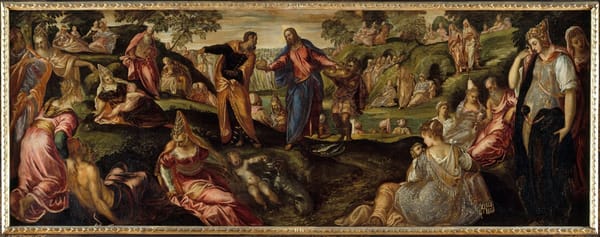
We now come to the explanation of another name given to the fourth Sunday of Lent, which was suggested by the Gospel of the day. We find this Sunday called in several ancient documents, the Sunday of the five loaves. The miracle alluded to in this title not only forms an essential portion of the Church’s instructions during Lent, but it is also an additional element of to-day’s joy. We forget for an instant the coming Passion of the Son of God, to give our attention to the greatest of the benefits He has bestowed on us; for under the figure of these loaves multiplied by the power of Jesus, our faith sees that Bread which came down from heaven, and giveth life to the world.1 ‘The Pasch,’ says our Evangelist, ‘was near at hand’; and, in a few days, our Lord will say to us: ‘With desire I have desired to eat this Pasch with you.’2 Before leaving this world to go to His Father, Jesus desires to feed the multitude that follows Him; and in order to this, He displays His omnipotence. Well may we admire that creative power, which feeds five thousand men with five loaves and two fishes, and in such wise that even after all have partaken of the feast as much as they would, there remain fragments enough to fill twelve baskets. Such a miracle is, indeed, an evident proof of Jesus’ mission; but He intends it as a preparation for something far more wonderful; He intends it as a figure and a pledge of what He is soon to do, not merely once or twice, but every day, even to the end of time; not only for five thousand men, but for the countless multitude of believers. Think of the millions, who, this very year, are to partake of the banquet of the Pasch; and yet, He whom we have seen born in Bethlehem (the house of bread) is to be the nourishment of all these guests; neither will the divine Bread fail. We are to feast as did our fathers before us; and the generations that are to follow us, shall be invited as we now are, to come and taste how sweet is the Lord.3
But observe, it is in a desert place, as we leam from St. Matthew,4 that Jesus feeds these men, who represent us Christians. They have quitted the bustle and noise of cities in order to follow Him. So anxious are they to hear His words, that they fear neither hunger nor fatigue; and their courage is rewarded. A like recompense will crown our labours, our fasting and abstinence, which are now more than half over. Let us, then, rejoice, and spend this day with the light-heartedness of pilgrims who are near the end of their journey. The happy moment is advancing, when our soul, united and filled with her God, will look back with pleasure on the fatigues of the body, which, together with our heart’s compunction, have merited for her a place at the divine banquet.
The primitive Church proposed this miracle of the multiplication of the loaves as a symbol of the Eucharist, the Bread that never fails. We find it frequently represented in the paintings of the catacombs and on the bas-reliefs of the ancient Christian tombs. The fishes, too, that were given together with the loaves, are represented on these venerable monuments of our faith; for the early Christians considered the fish to be the symbol of Christ, because the word ‘fish’ in Greek is made up of five letters, which are the initials of these words: Jesus Christ Son (of) Gody Saviour.
In the Greek Church this is the last day of the week called, as we have already noticed, Mesonestios. Breaking through her rule of never admitting a saint’s feast during Lent, she keeps this mid-Lent Sunday in honour of the celebrated abbot of the monastery of Mount Sinai, St. John Climacus, who lived in the sixth century.
Mass
The seventy years’ captivity will soon be over. Yet a little while, and the captives shall return to Jerusalem. This is the idea expressed by the Church in all the chants of to-day’s Mass. She ventures not to pronounce the heavenly Alleluia; but all her canticles bespeak jubilation; for, in a few days hence, the house of the Lord will lay aside her mourning, and will be keeping the gladdest of her feasts.
Introit
In the Collect, the Church acknowledges that her children deserve the penance they are going through; but she begs that, to-day, the hope of the coming divine consolations may refresh their spirits. The full force of the closing word of her prayer, is that they may breathe awhile.
Collect
The second and third Collects are given on the first Sunday of Lent, page 129.
Epistle
Lectio Epistolæ beati Pauli Apostoli ad Galatas.
Ch. iv.Brethren: It is written that Abraham had two sons; the one by a bond-woman, and the other by a free-woman. But he who was of the bondwoman was born according to the flesh; but he by the free-woman, was by promise. Which things are said by an allegory. For these are the two testaments. The one from Mount Sina, engendering unto bondage, which is Agar; for Sina is a mountain in Arabia, which hath affinity to that Jerusalem which now is, and is in bondage with her children. But that Jerusalem, which is above, is free; which is our mother. For it is written: Rejoice, thou barren, that bearest not: break forth and cry, thou that travailest not; for many are the children of the desolate, more than of her that hath a husband. Now we, brethren, as Isaac was, are the children of promise. But as then he, that was born according to the flesh, persecuted him that was after the spirit, so also is it now. But what saith the Scripture? Cast out the bond-woman and her son; for the son of the bondwoman shall not be heir with the son of the free-woman. So then, brethren, we are not children of the bond-woman, but of the free; by the freedom wherewith Christ hath made us free.
Let us, then, rejoice! We are children, not of Sina, but of Jerusalem. Our mother, the holy Church, is not a bond-woman, but free; and it is unto freedom that she has brought us up. Israel served God in fear; his heart was ever tending to idolatry, and could be kept to duty only by the heavy yoke of chastisement. More happy than he, we serve God through love; our yoke is sweet, and our burden is light!5 We are not citizens of the earth; we are but pilgrims passing through it to our true country, the Jerusalem which is above. We leave the earthly Jerusalem to the Jew, who minds only terrestrial things, is disappointed with Jesus, and is plotting how to crucify Him. We also have too long been grovelling in the goods of this world; we have been slaves to sin; and the more the chains of our bondage weighed upon us, the more we talked of our being free. Now is the favourable time; now are the days of salvation: we have obeyed the Church’s call, and have entered into the practice and spirit of Lent. Sin seems to us, now, to be the heaviest of yokes; the flesh, a dangerous burden; the world, a merciless tyrant. We begin to breathe the fresh air of holy liberty, and the hope of our speedy deliverance fills us with transports of joy. Let us, with all possible affection, thank our divine Liberator, who delivers us from the bondage of Agar, emancipates us from the law of fear, and making us His new people, opens to us the gates of the heavenly Jerusalem, at the price of His Blood.
The Gradual expresses the joy felt by the Gentiles, when invited to enter the house of the Lord, which has now become their own. The Tract shows God protecting His Church, the new Jerusalem, which is not to be conquered and destroyed as was that first one. This holy city communicates her own stability and security to them that are in her, for the Lord watches over both the mother and her children.
Gradual
Tract
Gospel
Cap. vi.In illo tempore: Abiit Jesus trans mare Galilææ, quod est Tiberiadis: et sequebatur cum multitudo magna, quia videbant signa quæ faciebat super his qui infirmabantur. Subiit ergo in montem Jesus: et ibi sedebat cum discipulis suis. Erat autem proximum Pascha, dies festus Judæorum. Cum sublevasset ergo oculos Jesus, et vidisset quia multitudo maxima venit ad eum, dixit ad Philippum: Unde ememus panes, ut manducent hi? Hoc autem dicebat tentans eum: ipse enim soiebat quid esset facturus. Respondit ei Philippus: Ducentorum denariorum panes non sufficiunt eis, ut unusquisque modicum quid accipiat. Dicit ei unus ex discipulis ejus, Andreas, frater Simonis Petri: Est puer unus hie, qui habet quinque panes hordeaceos, et duos pieces: sed hæc quid sunt inter tantos? Dixit ergo Jesus: Facite homines discumbere. Erat autem feenum multum in loco. Discubuerunt ergo viri, numero quasi quinque millia. Accepit ergo Jesus panes: et cum gratias egisset, distribuit discumbentibus: similiter et ex piscibus quantum vole bant. Ut autem impleti sunt, dixit discipulis suls: Colligite quæ superaverunt fragmenta, ne pereant. Collegerunt ergo, et impleverunt duodecim cophinos fragmentorum ex quinque panibus hordeaceis, quæ superfuerunt his qui manducaverant. Illi ergo homines cum vidissent quod Jesus fecerat signum, dicebant: Quia hic est vere propheta, qui venturus est in mundum. Jesus ergo cum cognovisset quia venturi essent ut raperent eum, et facerent cum regem, fugit iterum in monternipse solus.
Ch. vi.At that time: Jesus went over the sea of Galilee, which is that of Tiberias; and a great multitude followed him, because they saw the miracles which he did on them that were diseased. Jesus therefore went up into a mountain, and there he sat with his disciples. Now the Pasch, the festival day of the Jews, was near at hand. When Jesus therefore had lifted up his eyes, and seen that a very great multitude cometh to him, he said to Philip: Whence shall we buy bread that these may eat? And this he said to try him, for he himself knew what he would do. Philip answered him: Two hundred penny-worth of bread is not sufficient for them, that every one may take a little. One of his disciples, Andrew, the brother of Simon Peter, saith to him: There is a boy here that hath five barley loaves, and two fishes; but what are these among so many? Then Jesus said: Make the men sit down. Now there was much grass in the place. The men therefore sat down, in number about five thousand. And Jesus took the loaves; and when he had given thanks, he distributed to them that were sat down. In Like manner also of the fishes, as much as they would; and when they were filled, he said to his disciples: Gather up the fragments that remain, lest they be lost. They gathered up therefore, and filled twelve baskets with the fragments of the five barley loaves, which remained over and above to them that had eaten. Now those men, when they had seen what a miracle Jesus had done, said: This is of a truth the prophet that is to come into the world. Jesus therefore, when he knew that they would come to take him by force and make him king, fled again into the mountain himself alone.
These men, whom Jesus has been feeding by a miracle of love and power,are resolved to make Him their King. They have no hesitation in proclaiming Him worthy to reign over them; for where can they find one worthier? What, then, shall we Christians do, who know the goodness and the power of Jesus incomparably better than these poor Jews? We must beseech Him to reign over us, from this day forward. We have just been reading in the Epistle, that it is He who has made us free, by delivering us from our enemies. O glorious liberty! But the only way to maintain it, is to live under His Law. Jesus is not a tyrant, as are the world and the flesh; His rule is sweet and peaceful, and we are His children rather than His servants. In the court of such a King ‘to serve is to reign.’ What, then, have we to do with our old slavery? If some of its chains be still upon us, let us lose no time, let us break them, for the Pasch is near at hand; the great feastday begins to dawn. Onwards, then, courageously to the end of our journey! Jesus will refresh us; He will make us sit down as He did the men of the Gospel; and the Bread He has in store for us will make us forget all our past fatigues.
In the Offertory, the Church again borrows the words of David, wherewith to praise the Lord; but, to-day, it is mainly His goodness and power that she celebrates.
Offertory
The Secret is a prayer for the increase of devotion. We ask it by the merits of the Sacrifice at which we are assisting, for it is the source of our salvation.
Secret
The second and third Secrets are given on the first Sunday of Lent, page 136.
In the Communion anthem, the Church sings the praise of the heavenly Jerusalem, which is figured by the basilica of Holy Cross, as we have already explained. She speaks of the joy of the tribes of the Lord, who are assembled in this venerable temple, and are contemplating, under the graceful symbol of the rose, the divine Spouse, Jesus. The fragrance of His perfections draws our hearts after Him.
Communion
The divine mystery of the Bread of life has been brought before us, that we might believe and love it. The Church, therefore, in the Postcommunion, prays that we may have the grace to receive this august mystery with becoming respect and careful preparation.
Postcommunion
The second and third Postcommunions are given on the first Sunday of Lent, page 138.
Vespers
The psalms and antiphons are given on page 99.
Capitulum (Gal . iv.)
For hymn and versicle, see page 106.
Antiphon of the Magnificat
We borrow the following stanzas from the Triodion of the Greek Church. They are in keeping with to-day’s Office, and with the sentiments we should have on mid-Lent Sunday.
Hymn (Dominica IV. Jejuniorum .)
March 19: St. Joseph, Spouse of the Blessed Virgin
|
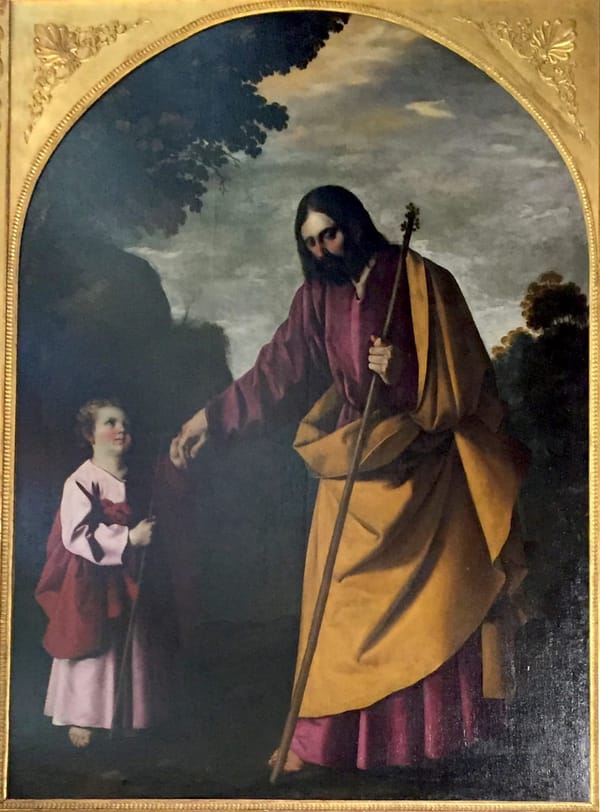
To-day, Joseph, the spouse of Mary, the fosterfather of the Son of God, comes to cheer us by his dear presence. In a few days hence, the august mystery of the Incarnation will demand our fervent adoration: who could better prepare us for the grand feast, than he that was both the confidant and thd faithful guardian of the divine secret?
The Son of God, when about to descend upon this earth to assume our human nature, would have a Mother; this Mother could not be other than the purest of Virgins, and her divine maternity was not to impair her incomparable virginity. Until such time as the Son of Mary were recognized as the Son of God, His Mother’s honour had need of a protector: some man, therefore, was to be called to the high dignity of being Mary’s spouse. This privileged mortal was Joseph, the most chaste of men.
Heaven designated him as being the only one worthy of such a treasure: the rod he held in his hand in the temple suddenly produced a flower, as though it were a literal fulfilment of the prophecy of Isaias: ‘There shall come forth a rod from the root of Jesse, and a flower shall rise up out of his root.’1 The rich pretenders to an alliance with Mary were set aside; and Joseph was espoused to the Virgin of the house of David, by a union which surpassed in love and purity everything the angels themselves had ever witnessed.
But he was not only chosen to the glory of having to protect the Mother of the Incarnate Word; he was also called to exercise an adopted paternity over the very Son of God. So long as the mysterious cloud was over the Saint of saints, men called Jesus the Son of Joseph and the carpenter's Son. When our blessed Lady found the Child Jesus in the temple, in the midst of the doctors, she thus addressed Him: ‘Thy father and I have sought Thee sorrowing’;2 and the holy evangelist adds that Jesus was subject to them, that is, that He was subject to Joseph as He was to Mary.
Who can imagine or worthily describe the sentiments which filled the heart of this man, whom the Gospel describes to us in one word, when it calls him the just man?3 Let us try to picture him to ourselves amidst the principal events of his life: his being chosen as the spouse of Mary, the most holy and perfect of God’s creatures; the angel’s appearing to him, and making him the one single human confidant of the mystery of the Incarnation, by telling him that his Virgin bride bore within her the fruit of the world’s salvation: the joys of Bethlehem, when he assisted at the birth of the divine Babe, honoured the Virgin Mother, and heard the angels singing; his seeing first the humble and simple shepherds, and then the rich eastern magi, coming to the stable to adore the new-born Child; the sudden fears which came to him, when he was told to arise, and, midnight as it was, to flee into Egypt with the Child and the Mother; the hardships of that exile, the poverty and the privations which were endured by the hidden God, whose foster-father he was, and by the Virgin, whose sublime dignity was now so evident to him; the return to Nazareth, and the humble and laborious life led in that village, where he so often witnessed the world's Creator sharing in the work of a carpenter; the happiness of such a life, in that cottage where his companions were the Queen of the angels and the eternal Son of God, both of whom honoured, and tenderly loved him as the head of the family—yes, Joseph was beloved and honoured by the uncreated Word, the Wisdom of the Father, and by the Virgin, the masterpiece of God’s power and holiness.
We ask, what mortal can justly appreciate the glories of St. Joseph? To do so, he would have to understand the whole of that mystery, of which God made him the necessary instrument. What wonder, then, if this foster-father of the Son of God was prefigured in the old Testament, and that by one of the most glorious of the patriarchs? Let us listen to St. Bernard, who thus compares the two Josephs: ‘The first was sold by his brethren, out of envy, and was led into Egypt, thus prefiguring our Saviour’s being sold; the second Joseph, that he might avoid Herod’s envy, led Jesus into Egypt. The first was faithful to his master, and treated his wife with honour; the second, too, was the most chaste guardian of his bride, the Virgin Mother of his Lord. To the first was given the understanding and interpretation of dreams; to the second, the knowledge of, and participation in, the heavenly mysteries. The first laid up stores of corn, not for himself, but for all the people; the second received the living Bread that came down from heaven, and kept It both for himself and for the whole world.’4
Such a life could not close save by a death that was worthy of so great a saint. The time came for Jesus to quit the obscurity of Nazareth, and show Himself to the world. His own works were henceforth to bear testimony to His divine origin; the ministry of Joseph, therefore, was no longer needed. It was time for him to leave this world, and await, in Abraham’s bosom, the arrival of that day, when heaven’s gates were to be opened to the just. As Joseph lay on his bed of death, there was watching by his side He that is the master of life, and that had often called this His humble creature, father. His last breath was received by the glorious Virgin-Mother, whom he had, by a just right, called his bride. It was thus, with Jesus and Mary by his side, caring for and caressing him, that Joseph sweetly slept in peace. The spouse of Mary, the fosterfather of Jesus, now reigns in heaven with a glory which, though inferior to that of Mary, is marked with certain prerogatives which no other inhabitant of heaven can have.
From heaven, he exercises a powerful protection over those that invoke him. In a few weeks from this time, the Church will show us the whole magnificence of this protection; a solemn feast will be kept in his honour in the third week after Easter. To-day the Liturgy sets before us his glories and privileges. Let us unite with the faithful throughout the world, and ofier to the spouse of Mary the hymns which are this day sung in his praise.
Hymn I
Te cuncti resonent Christiadum chori,
Qui clams meritis junctus es inclytæ
Casto fœdere Virgini.
Admirans, dubio tangeris anxius,
Afflatu superi Flaminis angelus
Conceptum puerum docet.
Ægypti profugum tu sequeris plagas:
Amissum Solymis quæris, et invenis,
Miscene gaudia fletibus.
Palmamque emeritos gloria suscipit;
Tu vivens, Superis par, frueris Deo,
Mira sorte beatior.
Da Joseph meritis sidera scandere:
Ut tandem liceat nos tibi perpetim
Gratum promere canticum.
May the choirs of Christendom resound with thy name,
for great are thy merits,
who wast united by a chaste alliance to the holy Virgin.
a cruel doubt afflicts thy heart; but an angel visits thee,
telling thee that she had conceived of the Holy Ghost
the Child she bore in her womb.
and go with the little fugitive to Egypt’s distant land.
When he was lost in Jerusalem, thou didst seek after him;
and having found him, thy tears were mingled with joy.
has crowned their life; they receive their glory, when they have won the palm:
but thou, by a strange, happy lot, hadst, even during life,
what the blessed have in heaven—thou hadst the sweet society of thy God.
and may the intercession of Joseph aid us to reach heaven:
that there we may sing to thee
our eternal hymn of grateful love.
Hymn II
Certa spes vitæ, columenque mundi,
Quas tibi læti canimus, benignus
Suscipe laudes.
Virginia sponsum, voluitque Ver bi
Te patrem dici, dedit et ministrum
Esse salutis.
Quem chorus vatum cecinit futurum,
Aspicis gaudens, humilisque natum
Numen adoras.
Cujus ad nutum tremit inferorum
Turba, cui pronus famulatur æther,
Se tibi subdit.
Quæ tibi præbens superos honores,
Det tuis nobis meritis beatæ
Gaudia vitae.
the sure hope of our life, and the pillar of the world!
Receive, in thy kind love,
the praises we now joyfully sing to thee.
the spouse of the holy Virgin;
willed thee to be called the father of the Word;
and gave thee to be an instrument of our salvation.
on the Redeemer lying in the stable,
him that the prophets had foretold was to come;
and seeing him, thou didst humbly adore the new-born King.
at whose bidding hell trembles
and before whom heaven prostrates ready to do his will,
yea, even he makes himself subject to thee.
May he that has conferred such high honours upon thee,
grant us, through the merits of thine intercession,
to come to the joys of heavenly life.
Hymn III
Cujus excelsos canimus triumphos,
Hac die, Joseph meruit perennis
Gaudia vitæ.
Cujus extremam vigiles ad horam
Christus et Virgo simul adstiterunt,
Ore sereno.
Camis, ad sedes placido sopore
Migrat æternas, rutilisque cingit
Tempora sertis.
Adsit ufc nobis, veniamque nostris
Obtinene culpis, tribuat supernæ
Munera pacis.
Trine qui regnas, Deus; et coronas
Aureas servo tribuis fideli,
Omne per ævum.
whose praises we, the faithful,
now gladly tell, and whose high triumph we sing,
deserved to receive the joys of eternal life.
thrice blessed saint,
at whose last hour Jesus and Mary
stood watching in tender love.
and Joseph, sweetly sleeping,
passed to the eternal home,
and received upon his brott the glittering crown.
let us beseech him to help us,
obtain us the pardon of our sins,
and procure us the gift of heavenly peace.
O God, O blessed Trinity,
who art our sovereign Lord!
who givest to thy faithful servant an everlasting crown of gold.
The Greek liturgy, which honours St. Joseph on the Sunday following the feast of Christmas, thus hymns his praise in the Menæa:
Hymn (Dominica post Natale Domini)
We praise and glorify thee, O happy saint! We hail thee as the spouse of the Queen of heaven, and foster-father of our Redeemer. These titles, which would seem too grand for any human being to enjoy, are thine; and they are but the expression of the dignities conferred on thee by God. The Church of heaven admires the sublime favours thou hast received; the Church on earth joyfully celebrates thy glories, and blesses thee for the favours thou art so unceasingly bestowing upon her.
Though born of the kingly race of David, thou wast the humblest of men; thy spirit led thee to seek obscurity, and a hidden life was thine ambition: but God chose thee to be an instrument in the sublimest of all His works. A noble Virgin of the same family of David, the object of heaven’s admiration, and the glory and hope of the world, is to be thy bride. The Holy Ghost is to dwell within her as in a most pure tabernacle; it is to thee, the just and chaste, that He entrusts her as an inestimable treasure. Espouse, then, to thyself her whose beauty the very King of heaven so greatly desires.5
The Son of God comes down to this earth, that He may live the life of man; He comes that He may sanctify the ties and affections of kindred. He calls thee father; He obeys thy orders. What strange emotions must have filled thy heart, O Joseph! when, knowing the prerogatives of thy bride and the divinity of thy adopted Son, thou hadst to be the head of this family, which united heaven and earth into one! What respectful and tender love for Mary, thy blessed bride! What gratitude and profound worship of Jesus, who obeyed thee as thy Child! Oh mysteries of Nazareth! a God dwells among men, and permits Himself to be called the Son of Joseph!
O sublime minister of the greatest of blessings, intercede for us with God made Man. Ask Him to bestow humility upon us, that holy virtue which raised thee to such exalted dignity, and which must be the basis of our conversion. It is pride that led us into sin, and made us prefer our own will to that of God: yet will He pardon us if we offer Him the sacrifice of a contrite and humble heart.6 Get us this virtue, without which there can be no true penance. Pray also for us, O Joseph, that we may be chaste. Without purity of mind and body we cannot come nigh the God of all sanctity, who suffers nothing defiled to approach Him. He wills to make our bodies, by His grace, the temples of His holy Spirit: do thou, great saint, help us to maintain ourselves in so exalted a dignity, or to recover it if we have lost it.
And lastly, O faithful spouse of Mary! recommend us to our Mother. If she cast a look of pity upon us during these days of reconciliation, we shall be saved: for she is the Queen of mercy, and Jesus, her Son, will pardon us and change our hearts, if she intercede for us, O Joseph! Remind her of Bethlehem, Egypt, and Nazareth, in all of which she received from thee such marks of thy devotedness. Tell her that we, also, love and honour thee; and Mary will reward us for our devotion to him who was given her by heaven as her protector and support.
| Previous Saturday of the Third Week of Lent | Next March 19: St. Joseph, Spouse of the Blessed Virgin |