Daily reading
After Pentecost
Double · Movable from Easter · Temporal
June 18, 2023
From Dom Guéranger’s The Liturgical Year.

|
The Third Sunday after Pentecost
The faithful soul has now witnessed in the holy liturgy the close of the mysteries of our redemption. The Holy Ghost has come down to support her during this second portion of her career, by forming and developing within her the fullness of the Christian life as taught by her divine Saviour when on earth. He begins by teaching her how to pray. Prayer, said our Lord, must be continual: we ought always to pray, and not to faint.1 We know not what we should pray for as we ought; but the holy Spirit helpeth our infirmity, and Himself asketh for us with unspeakable groanings.2
In the Introit and the whole Mass for this Sunday, we are taught that prayer must have, amongst its other requisite qualities, that of humble repentance for our past sins, and of confidence in God’s infinite mercy.
This is the Third Sunday after Pentecost; it is the first that has no rubrical connexion with the great feasts we have been solemnizing; it is a Sunday with all the simplicity of the Office of the Time.
Introit
Ps. Ad te, Domine, levavi animam meam: Deus meus, in te confido, non erubescam.
Gloria Patri. Respice.
Ps. To thee, O Lord, have I lifted up my soul: in thee, O my God, I place my trust, let me not be ashamed.
Glory, etc. Look thou.
Collect
Second Collect
The third Collect is left to the priest’s own choice.
Epistle
I. Cap. v.Carissimi, humiliamini sub potenti manu Dei, ut vos exaltet in tempore visitationis: omnem sollicitudinem vestram projicientes in eum, quoniam ipsi cura est de vobis. Sobrii estote, et vigilate: quia adversarius vester diabolus tanquam leo rugiens circuit, quærens quem devoret: cui resistite fortes in fide; scientes eamdem passionem ei, quæ in mundo est, vestræ fraternitati fieri. Deus autem omnis gratiae, qui vocavit nos in aeternam suam gloriam in Christo Jesu, modicum passos ipse perficiet, confirmabit, solidabitque. Ipsi gloria, et imperium in saecula sæculorum. Amen.
I. Ch. v.Dearly beloved: be ye humbled under the mighty hand of God, that he may exalt you in the time of visitation. Casting all your care upon him, for he hath care of you. Be sober and watch: because your adversary the devil, as a roaring lion, goeth about, seeking whom he may devour: whom resist ye, strong in faith; knowing that the same affliction befalls your brethren who are in the world. But the God of all grace, who hath called us unto his eternal glory in Christ Jesus, after you have suffered a little, will himself perfect you, and confirm you, and establish you. To him be glory and empire for ever and ever. Amen.
The miseries of this present life are the test to which God puts His soldiers; He passes judgment upon them, and classifies them, according to the degree of courage they have shown. Therefore is it, that we all have our share of suffering. The combat has commenced. God is looking on, watching how each of us comports himself. The day is not far off, when the Judge will pass sentence on the merits of each combatant, and award to each one the recompense he has won. Combat now; peace and rest and a crown, then. Happy they who, during these days of probation, have recognized the mighty hand of God in all the trials they have had, and have humbled themselves under its pressure, lovingly and confidingly! Against such Christians, who have been strong in faith, the roaring lion has not been able to prevail. They were sober, they were watchful, during this their pilgrimage. They were fully convinced of this, that every one has to suffer in the present life; they therefore never sighed and moaned, as though they were the only sufferers; they did not assume the attitude of victims, and call it resignation; but they took each trial as it came, and, without talking to every one about it, they quietly and joyously united it with the sufferings of Christ. O true Christians! you will be joyous for all eternity, when there will be made the manifestation of that eternal glory in Christ Jesus, which He will pass on to you, that you may share it with Him for ever!
The Gradual keeps up the same strain: it encourages the faithful soul to confidence. Let her cast all her care upon her heavenly Father; has He not always graciously heard her in all her troubles and necessities? As to enemies, let her cast away the thought; God will think of that, and, if it so please Him, will avenge the soul they persecuted.
Gradual
Gospel
Cap. xv.In illo tempore, erant appropinquantes ad Jesum publicani et peccatores, ut audirent illum. Et murmurabant pharisæi, et scribae, dicentes: Quia hic peccatores recipit, et manducat cum illis. Et ait ad illos parabolam istam, dicens: Quis ex vobis homo, qui habet centum oves: et si perdiderit unum ex illis, nonne dimittit nonaginta novem in deserto, et vadit ad illam, quae perierat, donec inveniat eam? Et cum invenerit eam, imponit in humeros suos gaudens: et veniens domum, convocat amicos, et vicinos, dicens illis: Congratulamini mihi quia inveni ovem meam quae perierat! Dico vobis quod ita gaudium erit in coelo super uno peccatore poenitentiam agente, quam super nonaginta novem justis, qui non indigent poenitentia. Aut quae mulier habens drachmas decem, si perdiderit drachmam unam, nonne accendit lucernam, et everrit domum, et quaerit diligenter donec inveniat? Et cum invenerit, convocat amicas et vicinas, dicens: Congratulamini mihi quia inveni drachmam, quam perdideram? Ita dico vobis, gaudium erit coram angelis Dei super uno peccatore pœnitentiam agente.
Ch. xv.At that time: the publicans and sinners drew near unto him to hear him. And the pharisees and scribes murmured, saying: This man receiveth sinners and eateth with them. And he spoke to them this parable, saying: What man of you that hath a hundred sheep, and if he shall lose one of them, doth he not leave the ninety-nine in the desert, and go after that which was lost until he find it? And when he hath found it, lay it upon his shoulders rejoicing: and coming home call together his friends and neighbours, saying to them: Rejoice with me, because I have found my sheep that was lost? I say to you, that even so there shall be joy in heaven upon one sinner that doth penance, more than upon ninety-nine just who need not penance. Or what woman having ten groats: if she lose one groat, doth not light a candle, and sweep the house, and seek diligently until she find it? And when she hath found it, call together her friends and neighbours, saying: Rejoice with me, because I have found the groat which I had lost? So I say to you there shall be joy before the angels of God upon one sinner doing penance.
The parable of the sheep that is carried back to the fold on the shepherd’s shoulders was a favourite one with the early Christians; and they made representations of it at almost every turn. The same is put before us in to-day’s Gospel, that our confidence may be strengthened in God’s infinite mercy. It reminds us, in its own beautiful way, of our Lord Jesus; whom we contemplated, a few weeks back, ascending triumphantly into heaven, carrying thither, in His arms, the lost human family, which He had won back from satan and death and sin. For, as St. Ambrose says, ‘who is the Shepherd of our parable? It is Christ, who carries thee, poor man, in His own Body, and has taken all thy sins upon Himself. The sheep is one, not by number, but by its kind. Rich Shepherd this, of whose flock all we human beings form but the hundredth part! for He has the Angels, and Archangels, and Dominations, and Powers, and Thrones, and all the rest; all those other countless flocks, whom He has left yonder up the mountain, that He might run after the one sheep He had lost.’3
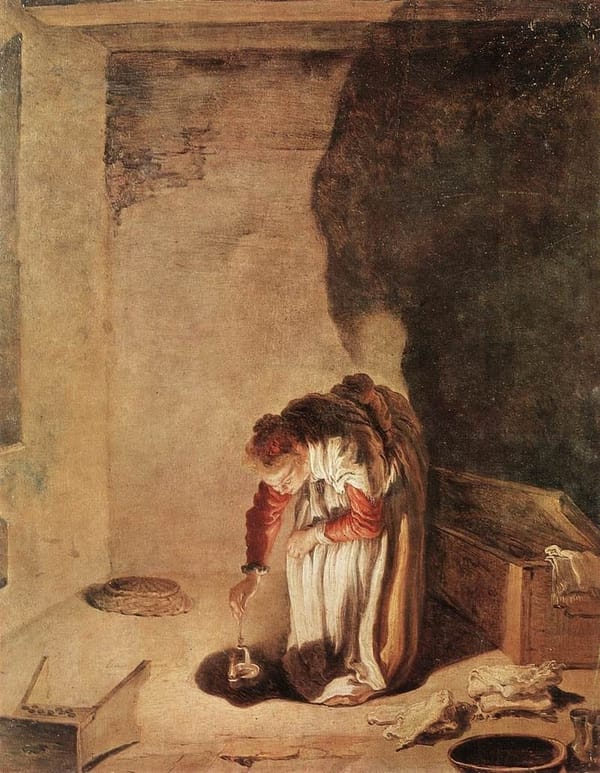
But it is from St. Gregory the Great that the Church, in her Matins of this Sunday, took the commentary on this Gospel. And in the sequel of his homily, the holy doctor gives us the explanation of the parable of the woman and the ten groats. ‘He,’ says St. Gregory, ‘that is signified by the shepherd is also meant by the woman. Jesus is God; He is the Wisdom of God. And because good coin must bear the image of the king upon it, therefore was it that the woman lost her groat, when man, who had been created after God’s image, strayed from that image by committing sin. But the woman lights a lamp; the Wisdom of God hath appeared in human flesh. A lamp is a light which burns in a vessel of clay; and Light in a vessel of clay, is the Divinity in our flesh. It is of the vessel of His Body, that this Wisdom says: My strength is dried up like a potsherd.4 For, just as day is made hard by the fire, so His strength was dried up like a potsherd, because it has strengthened unto the glory of His resurrection, in the crucible of sufferings, the Flesh which He (Wisdom) had assumed . . . . Having found the groat she had lost, the woman calleth together her friends and neighbours, saying: Rejoice until me! because I have found the groat which I had lost. Who are these friends and neighbours, if not the heavenly spirits, who are so near to divine Wisdom by the favours they enjoy of the ceaseless vision? But we must not, meanwhile, neglect to examine why this woman, who represents divine Wisdom, is described as having ten groats, one of which she loses, then looks for, and again finds. We must know, then, that God made both angels and men, that they might know Him; and that having made both immortal, He made both to the image of God. The woman, then, had ten groats, because there are nine orders of angels, and man, who is to fill up the number of the elect, is the tenth groat; he waslost by his sin, but was found again, because eternal Wisdom restored him, by lighting the lamp, that is, by assuming his flesh, and through that working wonderful works, which led to his recovery.’5
The Offertory is an outpouring of gratitude and love for the God who dwelleth in Sion; He does not abandon them that seek Him; He does not forget the poor man's prayer.
Offertory
Secret
Second Secret
The third Secret is left to the priest’s own choice.
The Preface is that appointed for all Sundays during the year, page 45; unless a feast is being kept which has a proper one assigned to it.
The Communion-anthem recalls to our minds, and with much appropriateness, the merciful teaching of to-day’s Gospel, now that eternal Wisdom has regained full possession of the lost groat, by means of the sacred Banquet, which He Himself had given to the repentant prodigal.
Communion
Postcommunion
Second Postcommunion
The third Postcommunion is left to the priest’s own choice.
Vespers
The psalms, capitulum, hymn, and vesicle, as above, pages 71-79.
Antiphon of the Magnificat
June 18: St. Ephraem the Syrian, Deacon, Confessor, and Doctor of the Church
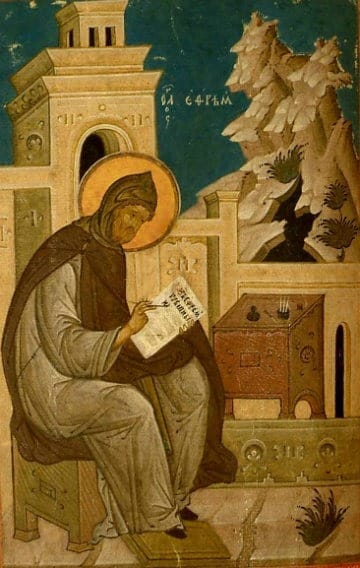 |
ST EPHRAEM, monk and deacon, the contemporary of St Athanasius, St Basil, St Gregory of Nazianzen and St Gregory of Nyssa, was with them one of the glories of the Christian East so rich in testimonies to faith and sanctity during the first centuries. He takes his place in the liturgical cycle among the doctors of the Universal Church. It is only fitting that the ancient piety of Edessa and Nisibis should be represented in the Roman calendar.
by him who was always held to be the most illustrious of her sons. St Ephraem was honoured by the whole Church for the depth and vastness of his doctrine, and the whole Catholic world rejoiced when Pope Benedict XV pronounced him worthy to be placed among the great doctors of the Church both Greek and Latin. No one was more worthy than the celebrated Deacon of Edessa of such an honour. Even during his lifetime men delighted to honour him with such titles as illustrious ‘ doctor of the universe,' ‘prophet and sun of the Syrians,’ ‘pillar of the Church,' and ‘harp of the Holy Spirit.’1 All the Orthodox fathers and doctors from St Basil, St John Chrysostom and St Jerome down to St Francis de Sales and St Alphonsus Liguori are unanimous in his praise.2 Seldom has reputation been more brilliant, authority more universally acknowledged than that of the humble Syrian monk: less than twenty years after his death his writings were read publicly in church after the Scriptures.3 As theologian, poet and orator his literary work was immense. His writings comprise commentaries on the Scriptures, theological discourses and poems, moral and ascetic treatises, hymns in praise of Almighty God, our Lady and the saints. These form an inestimable treasure where successive generations have found not only weapons wherewith to combat error but also food to strengthen their souls. The works of St Ephraem, written in Syriac, were at an early date translated not only into Greek, but also into all the languages of the East—Coptic, Ethiopian, Arabic and Armenian—so that his hymns and canticles are to be found in all the liturgical books of the Syriac Church, both Orthodox and Uniate, which thus remains indebted to his fruitful genius.
St Ephraem was bom in Mesopotamia, very probably at Nisibis, on the frontier of the Roman Empire and Persia, at the beginning of the fourth century. Tradition says that his father fulfilled the duties of a priest to an idol in that town, but that his mother may have been a Christian.4 In any case he does not appear ever to have taken part in idolatrous worship, for we know that in his youth he was a member of the household of James, the bishop of Nisibis, one of the three hundred and eighteen fathers of the Council of Nicæa. He received baptism, and under the guidance of this bishop gave himself to prayer, to all the practices of Christian asceticism, to reading and profound study of the Scriptures. It was during this time that he acquired his remarkable knowledge and love of the Holy Scriptures so noticeable in all his writings and which is one of his chief characteristics. Later on he said: 'He who applies himself with simplicity and purity of heart to the study of the Sacred Books will receive the knowledge of God. Some people glory in conversing familiarly with the great ones of the earth, with princes and kings, but let it be your glory to converse with the Holy Ghost in the presence of the angels of God by reading the divine Scriptures, for it is the Holy Ghost who there speaks to you. Spare no pains to become familiar with this study.’5
The first verses of 'Hymns of Nisibis' show us what Ephraem was to James and his successors. These poems, the earliest of his that have come down to us, give us a picture of the times in which he lived. James, Babou and Vologesus found him a zealous auxiliary, intent upon upholding their authority, drawing men to them and ardently desirous of reform. His great influence on the people was shown especially when Nisibis was besieged by Sapor, king of the Persians. During those perilous days he incessantly encouraged the citizens to resist the enemy, strengthening the besieged by his word and example, until his courage and his prayer forced the enemy to acknowledge their powerlessness and retire. Later on, when as a result of the disastrous campaign of the emperor Julian against the Persians, his successor Jovian was forced to cede Eastern Mesopotamia with Nisibis to Sapor, Ephraem joined the emigrants who left for ever a town where Christians could no longer dwell in security.
From Nisibis St Ephraem went to Edessa, which name is for ever associated with his. On the west of the town there rises a hill on whose rocky slopes are numerous caves and tombs in which lived many anchorites. St Ephraem in his turn came to seek, among the rocks of the holy mountain, a retreat which would enable him to devote himself to prayer, study and penitential exercises. His knowledge of sacred sciences, however, could not long remain hidden, and disciples soon began to gather around him. This was the period of his literary activity, which was so great as to be almost miraculous. It was during the ten years that he passed in the capital of Osrhoene that he wrote most of his works. It was also the period of his greatest activity in religious affairs, and it seems certain that the School of Edessa, famous under the name of the Persian School, owes to him, if not its existence, at least a great part of its renown.
However, Edessa could not escape the ravages to which the spread of the heresies of Arms, Manes, Marcion and other sowers of discord subjected the whole world, and we owe a great number of St Ephraem’s theological discourses and poems to his solicitude in combating heresy under all its forms, and to his care in safeguarding the purity of faith among the Christians of the town. In obedience to the inspiration of divine grace,6 he left his solitude for a time to pour forth to the faithful exhortations so rich in imagery, so full of unction and of doctrine, that to this day the heart of the reader is moved. The holy doctor inveighs with much vigour against the Arians, who deny the Divinity of Christ. The following passage occurs in one of his sermons on the Passion: ‘The King of kings who is above all kings is the only Saviour Jesus, who sits at the right hand of his Father. He is his Word, his strength, his mighty arm; he descended from the height of heaven to the depths of the earth and ascended into heaven. He came down in secret, he ascended openly, he came down as the Word, he ascended with a human body, he descended and ascended according to his own will. Blessed be he who has acted according to his power. Men should be astonished and should admire the providence of the author of all grace who has abased himself even to us. Blessed be he who in his goodness has drawn from the ocean of his mercy the life that he has bestowed upon us. The Son of God is God, and God of God, he descended from heaven and conversed upon earth, he the power of preaching. The consuming fire which fell from heaven has become a dew for mankind, he who is all on fire has hidden his flame, the vehement God has restrained himself, there is no thunder in his voice nor lightning in his movements, the terrible God has hidden his majesty, the powerful God his force, wholly in heaven, he was wholly upon earth. When you consider him in heaven there is nothing to which you can liken him; when you consider him upon earth he seems to you to be simply a man. If you look towards heaven millions of angels serve him, and seraphim without number cry before him, Holy, holy, holy. If you look towards earth he is confined in a human body. “The foxes have holes, and the birds of the air have nests, but he who is the Son of God has not where to lay his head.”7 Indeed, where could he, who is the refuge of all, have sought shelter? Where could he have rested his head, he who is the pillar that sustains the universe, who upholds the earth and the heavens in either hand, and who in the hollow of his hand holds the seas and the world?’8
With equal energy and with remarkable doctrinal precision, St Ephraem asserts the prerogatives of St Peter. In the person of our Lord speaking to Simon Peter he says: ‘I have established you, Simon my disciple, as the foundation of holy Church. Formerly I called you Peter because you upheld my building, you are the overseer of those who construct the Church upon earth. If they wish to build that which is evil, you, who are the foundation, will prevent them. You are at the source of my doctrine, you are the chief of my disciples, it is through you that I will quench the thirst of all nations, the quickening sweetness that I give belongs to you, I have chosen you as the firstfruits of my disciples to be the inheritor of my treasures. I have given you the keys of my kingdom; I have given all my treasures into your power.’9
It is interesting to receive such testimony from the mouth of him whom all the Eastern Christians reverence as their greatest doctor and consider their special glory. But few of the fathers of the first centuries of Christianity have spoken so explicitly on the subject of the Holy Eucharist as the Deacon of Edessa. He discredits in advance all the sophistry put forth at the time of the Reformation, and thus comments on the words of the institution of the Sacrament of the Body and Blood of our Lord: ‘Do not believe that what I have just given to you is bread, receive it, eat it, do not crumble it away. That which I have called my Body, truly is so. The smallest morsel is sufficient to sanctify millions of souls and suffices to give life to those who receive it. Receive and eat with faith, do not waver, for it is my Body, and he who partakes of it with faith partakes of the fire of the Holy Spirit. It seems to him who partakes without faith to be but ordinary bread, but to him who with faith partakes of the Bread consecrated in my name, if he be pure it preserves his purity, if a sinner it obtains his pardon. Let those who reject, despise or outrage this Bread know that of a certainty they do outrage to the Son, who has called and has made bread to be his Body. Take and eat, and by it partake of the Holy Spirit, for it is truly my Body, and he who eats thereof has eternal life. It is the Bread of heaven come down from on high unto us. The manna which the Israelites ate in the desert, the manna which they gathered and which they despised although it fell from heaven, was a figure of the spiritual food you have just received. Take ye all of it and eat, in eating this Bread you eat my Body, the true source of the redemption.’10
In St Ephraem's time the people of Edessa still took pleasure in the poetical compositions of Bardesanes and his son Harmonius. A hundred and fifty years previously these impious men had spread abroad the errors of Gnosticism by means of these writings, and therefore St Ephraem, in his indefatigable zeal for the purity of the faith, resolved to defeat the heresy with its own arms. ‘When he saw how the inhabitants of Edessa delighted in songs,’ says his biographer, ‘he instituted plays and dances of his own for the young folk. He established choirs of nuns, whom he taught to sing hymns having a refrain between the verses. These hymns embody beautiful thoughts and spiritual instruction on the Nativity, the Baptism, the Fast and deeds of our Lord, the Passion, Resurrection and Ascension, as well as on the confessors, on Penance and the faithful departed. The religious came together on Sunday, on great feasts and on the festivals of the martyrs, and he in the midst of them like a father accompanied them on his harp. He divided them into two choirs, so that they might sing alternately, and taught them the various musical airs with such success that the whole town came to listen. Thus his adversaries were put to shame and disappeared.11
Readers of the Liturgical Year will have often noticed and admired the spirit of faith and tender piety which fills the poems of St Ephraem, whether he celebrates the mystery of the birth of our Saviour and borrows the voices of the Shepherds and Magi to render homage to the Infant God,12 or whether he extols the humility of St John the Baptist,13 or, again, in order to console mourners, he sings of the happiness of young children caught up to heaven in their innocence.14 But never does this harp of the Holy Ghost sound forth in more harmonious tones than when it sings of Mary and extols her incomparable virginity, her divine maternity or her merciful protection of mankind.15 It is well known that the eloquent Deacon of Edessa was one of the earliest of the fathers whose testimony to the privilege of the Immaculate Conception of the Blessed Virgin was brought forward. He addresses our Lord and his Mother in these words: 'Thou, O Lord, and thy Mother are the only ones who are perfectly beautiful in every respect, for in thee, O Lord, there is no blemish, and in thy Mother there is no stain.’16 The last years of St Ephraem's life were marked by an heroic act which seems to have made a great impression upon his contemporaries. There was a terrible famine in Edessa, which brought many other evils in its train. Moved by so much suffering, the holy anchorite left his cell for a time and took up his abode in the town. By his fervent exhortations he implored the rich to come to the help of their less fortunate fellow-citizens, and he knew how to call forth abundant alms, which he himself distributed. At the same time, by his arrangement, all who were sick were brought together, and night and day he laboured to procure for them such assistance and relief as the nature of their case demanded. He did not abandon his charitable ministrations until the city again enjoyed food in plenty.
St Ephraem returned once more to his solitude, and, feeling that his end was near, he composed for his disciples his last testament, a touching discourse of considerable length in which the dominant features of his character shine forth—his faith, hope, charity, humility, and zeal for the orthodox belief. We quote a few passages which reveal the characteristics of the soul of this great monk.
I, Ephraem, am dying, and I am writing a last testament so that I may leave to each one a souvenir in order that my friends may remember me even if only on account of my words. Alas! my life is finished and the term of my years is ended. The warp is finished and the threads must be cut. The lamp is nearly empty of oil, my days and my hours are fled away. The hired soldier has completed his year, the stranger has finished his time. My guards and executioners surround me on all sides. I groan and there is none to hear; I ask mercy and there is none to deliver me. Woe is thee, Ephraem, because of the judgement when thou wilt appear before the tribunal of the Son and thine acquaintance will stand on either side of thee. There will be thy shame; woe to him who shall be confounded there. O Jesus, be thou the Judge of Ephraem; do not hand him over to another to be judged, for he whom God will judge shall receive mercy at the tribunal.
I swear by him who descended from Mount Sinai, and who spoke upon the rock, by his mouth who said Eloi, and the bowels of the earth were shaken, by him who was sold by Judas and scourged in Jerusalem, by the might of him who was buffeted and by the majesty of him who was spit upon, by the three fiery names and by the one authority and will, that I have never separated myself from the Church nor have I ever doubted the power of God. If in my mind I have ever magnified the Father more than the Son may I be deprived of his loving mercy, and if I have ever lessened the authority of the Holy Spirit may blindness come upon me. If my life has not been in conformity with my speech may I be cast into exterior darkness, and if I speak hypocritically may I bum with the ungodly. If I recount these things through pride may our Lord condemn me at the judgement . . . .
When I think of my past life my knees tremble and my teeth chatter, and when I call to mind my deeds I am overcome with horror. For I have never done anything good, nothing worthy of praise since the day of my birth. Do not embalm me for burial, such honour is not due to me; do not place sweet perfumes upon my body, I am not worthy of such distinction. Bum the incense in the sanctuary, but encompass me with your prayers. Offer sweet perfumes to God and chant psalms for my soul. Instead of pouring perfumes and sweet savours over my body remember me in your prayers, for of what use are sweet odours to a dead man who has no senses with which to perceive them? Carry your incense to the house of God and there bum it that others may benefit thereby. Do not bury that which decays in silk which is useless to it, but rather leave in the pit that which cannot appreciate honours. Luxury belongs to the rich, the dunghill to the poor. Authority belongs to the royal family, but abjection and humility to the stranger and wayfarer . . . .
Come, brethren, hearken unto me, for it is decreed that I may live no longer. Help me on my journey by your prayers, psalms and sacrifices. When the thirty days are over make a memento of me, brethren, for the dead are helped by the masses offered by the living . . . .
The one thing that gives me courage and hope before God is that I have never insulted my Saviour and no blasphemy has ever been uttered by my lips. Those who hated thee, Lord, I have hated and have abhorred thy enemies.17 Write my words upon your hearts and be mindful of what I say, for after I am dead evil persons will come among you in the clothing of sheep, but inwardly they are ravening wolves.18 Their speech is sweet, but the desires of their hearts are bitter; they have the appearance of good, but they are the messengers of Satan. Fly from them and from their doctrines; do not go near them, for you know that whoever is found in a place where outrage has been offered to the king has to come into court to be questioned according to law. Even if he can prove he was not guilty he will be condemned for want of zeal. Do not sit with heretics nor associate with apostates. It would be better to dwell with a demon than with a renegade. For if you abjure the demon he will flee, for he cannot stand before the name of Jesus, but even were you to exorcise the apostate ten thousand times he would not cease from his wickedness nor renounce his folly. It would be better to teach demons than to try to convince heretics. Demons bore witness, saying, “Thou art the Son of God,”19 but infidels and heretics daily contend pertinaciously that he is not the Son of God. Satan himself who dwells in them confesses the truth, but they assiduously deny it . . . .
O my disciples, hear my precepts and be mindful of my words. Do not depart from my faith nor be untrue to my lessons. When you hear of seditions and tumults in the world be constant and hold fast to the truth and your faith . . . .
Farewell, my friends, and pray for me, my beloved. The time has come for the merchant to return to his own country. Woe is me, my merchandise is gone and my riches are all spent. No one weeps over the death of the holy, because they pass from death to life; but weep for me, brethren, for we have wasted our days and hours in idleness. May peace abide on the earth and may her sons be joyful. May peace abide in the Church and may the persecution of the malicious cease. May the wicked become just and be converted from their sins.
Hail, O angel guide, who leadest the soul out of the body, parting them asunder that they may remain separated until the general resurrection . . . .20
Let us now read the account given of the illustrious Deacon of Edessa by the Church in her office of matins. The lessons record the chief features of this fruitful life.
Thy glory, O Ephraem, shines henceforward throughout the whole world. Let us join our feeble praise to that of East and West, which, in admiration of thy virtue, rises to thee this day. But we know that this praise will not be pleasing to thee unless we follow thy teaching and example in our lives. Help us to walk in those paths which thy writings and deeds have marked out so clearly for us, and above all strengthen our faith. Thou hast said that there is no richer man than he who has the faith. At a time when everything seems to conspire to diminish or obscure the truth, when ignorance joins with false doctrine to lessen its brightness and deter souls, obtain for us a holy eagerness to receive the doctrine of the Church, the expression of eternal truth; help us to be earnest in our search and zealous to keep and uphold it in all its purity. Inspire in us that hatred of error with which thy burning words inflamed the hearts of the faithful of Edessa, and which at thy death thou didst leave to them as thy last counsel and most precious gift.
O holy anchorite, help us to acquire all the Christian virtues, encourage within our souls the interior life, the sources of which, as thou hast taught us, are to be found where Christ himself has placed them—'that is, in the Sacraments, in the observance of the precepts of the Gospel and in the various exercises of piety which the liturgy affords and which the authority of the Church recommends to us.’21 We pray that by these means the virtue of charity, that is above all others, that is characterized by all the dispositions especially dear to Almighty God and is unable to exist without the presence of many other virtues, may ever be increasing in our souls. For, according to one of thine own graceful comparisons, even as the royal diadem lacks lustre if one of the gems is missing, so love of God and our neighbour cannot be perfect unless it be united in the other virtues.22
In order that we may dwell in charity and may safeguard our weakness from error and vice, we will live in fear of the last judgement, that terrible day thou hast described so eloquently, when the earth, sea and sky will be burnt up by a spark from the divine fire, when all men will be called upon to undergo a searching examination into each thought, word and deed. By thine assistance may we be faithful to our baptismal promises, so that on the last day we may be found worthy to take our place among the elect.
O holy doctor, who now before the divine altar and the Ruler of life art, with the angels, adoring the Blessed Trinity, be mindful of us and obtain for us the pardon of our sins that we may rejoice in the eternal happiness of the heavenly kingdom.23
- S Greg. Nyss., Vita S Ephraem; Lamy, S Ephraem Syri Hymni et Sermones, I Proleg. ↩︎
- Bened. XV Litt. encyl. Principi Apostolorum. ↩︎
- S Hier. De script. eccl., c. cxv. ↩︎
- Assemani, Bibl. Orient. i 26; Lamy, op. cit., iv, p. xxvii; Bouvy, “Les Sources historiques de la vie de saint Ephrem,” Revue augustinienne, Janvier, 1903. ↩︎
- Serm. de patientia et consummatione hujus sæculi. ↩︎
- S Greg, Nyss., op. cit. ↩︎
- St Matt. viii 20. ↩︎
- Discours sur la Passion, De Lamy, “ Étude de Patrologie orientale, saint Ephrem,” V Université catholique, 1890. ↩︎
- De Lamy, Discours sur la Passion, loc. cit. ↩︎
- De Lamy, Discours sur la Passion, loc. cit. ↩︎
- Rubens Duval, Littérature syriaque, p. 21. ↩︎
- Christmas, vol. i, p. 220; vol. ii, Passim. ↩︎
- Pentecost, vol. iii, p. 302. ↩︎
- Ibid., vol. vi, p. 193. ↩︎
- Bened. XV, loc. cit. ↩︎
- Carm. Nisib., n. 27. ↩︎
- Ps. cxxxviii 21. ↩︎
- St Matt. vii 15. ↩︎
- Ibid. viii 29. ↩︎
- Rubens Duval, Journal Asiatique, 1901. ↩︎
- Bened. XV, loc. cit. ↩︎
- Serm. de vita et exercit. monast. ↩︎
- S Greg. Nyss., loc, cit. ↩︎
June 18 (the Same Day): Sts. Mark and Marcellian, Martyrs
WE have already met with these noble athletes of to-day's feast; for on January 20, when celebrating St Sebastian, the brave defender of holy Church, Mark and Marcellian appeared at his side as the noblest conquest won by the sainted head of the praetorian guards. There are other heroes, likewise gained over by his zealous intrepidity, whose names gild the pages of the Martyrology; but these two, whose festival we are keeping, were the immediate occasion of Sebastian's leading to God so goodly a troop of valiant Christians. Their conversion prepared Sebastian’s martyrdom, by reason of his apostolate in their regard; and their glory eternally redounds to him around whom in heaven they form a resplendent phalanx.
Captivity, torments, and even the sentence of death pronounced upon them, had failed to shake the courage of these two brethren. A trial yet more terrible awaited them—namely, the sight forced upon them of the heartbroken grief caused to all they loved on earth by their sentence of condemnation; for their family, not being Christian, knew no bounds to sorrow. Their father and mother bent down by years, the wife of each, surrounded by a group of weeping children, all uttering bitterest reproaches against these soldiers of Christ for the destitution into which their coming death would plunge the survivors: such was the dire attack! Sebastian, profiting by the liberty his position afforded to approach the Christians in prison, was ever their comfort and encourager. He failed not to be present at this scene, for his noble heart fully realized how dangerously severe such a trial must be for souls as yet unscathed by any personal peril. The danger he knew might be imminent at that moment: wherefore, scorning his own safety, he there and then revealed himself a Christian, in order to hold out a strengthening hand to the two brethren. Moreover, God lent such wondrous efficacy to his words, that they converted even the pagans there assembled. Thus Mark and Marcellian had the joy of beholding those whose piteous complaints had a moment before so painfully thrilled their souls, now applauding their constancy and demanding baptism. Their unbounded happiness was evident all through their final conflict, which opened heaven to them, and which is related as follows in this short Lesson:
The Holy Ghost filled you with strength, O glorious martyrs; and the love which he poured into your hearts changed into exquisite delights torments that terrify our cowardice. Yet after all, of how much less account are those tortures that touched but your perishable body, compared with that intense anguish of soul over which you so nobly triumphed? The dire grief of those whom you held dearer far than life, and whom, to all appearance, you needs must leave in hopeless woe, was verily the culminating pitch of your martyrdom. Those alone can fail to realize this, who deserve the reproach cast by St Paul upon the pagans of his day, that they are without affection:1 when the world once more presents such a hateful spectacle as this, then will be the sign of the last day's near approach, so says the same apostle.2 Nevertheless, human love must cede to that of God: he that loveth father or mother more than me is not worthy of me: and he who loveth son or daughter more than me is not worthy of me.3 You understood all this, dear martyrs; your relatives, who would separate you from our Lord, became enemies in your eyes.4 At that very instant, Jesus, who can never let himself be outdone in generosity, restored these dear ones to you, by taking them, through a miracle of grace, together with you and because of your example, unto himself. Thus do you complete for us the instructions already given by Julitta and her boy, by Vitus and his glorious companions. Obtain for us, ye victors in such keen trials, an ever growing courage and love proportionate to our increase in the light and in the knowledge of our duty to God.
| Previous June 16: Sts. Cyr and Julitta, Martyrs | Next June 18: St. Ephraem the Syrian, Deacon, Confessor, and Doctor of the Church |