Daily reading
Advent
Double · Movable from Advent · Temporal
December 3, 2023
From Dom Guéranger’s The Liturgical Year.

|
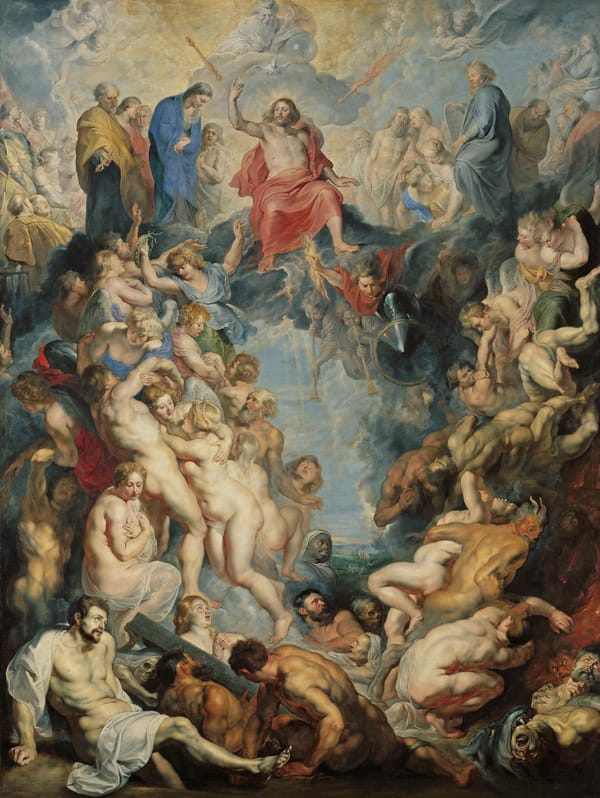
The First Sunday of Advent
This Sunday, the first of the ecclesiastical year, is called, in the chronicles and charts of the middle ages, Ad te levavi Sunday, from the first words of the Introit; or, Aspiciens a longe, from the first words of one of the responsories of Matins.
The Station* is at St. Mary Major’s. It is under the auspices of Mary—in the splendid basilica which possesses the crib of Bethlehem, and is therefore called, in ancient documents, St. Mary’s ad Præsepe—that the Roman Church recommences, each year, the sacred cycle. It would have been impossible to select a place more suitable than this for saluting the approach of the divine birth, which is to gladden heaven and earth, and manifest the sublime portent of a Virgin Mother. Let us go in spirit to this august temple, and unite in the prayers which are there being offered up: they are the very ones we also use, and which we will now explain.
In the night Office, the Church commences the reading of the Book of Isaias, who, of all the Prophets, has the most distinctly and explicitly foretold the Messias; and she continues this same Book until Christmas day inclusively. Let us strive to enter into the teaching of the holy prophet, and let the eye of our faith affectionately recognize the promised Saviour in the descriptions, sometimes consoling and sometimes terrifying, under which Isaias depicts Him.
The first words of the Church, in the still midnight, are these:
This first duty of adoration complied with, let us listen to the oracle of the prophet Isaias, delivered to us by the holy Church.
Cap. iVisio Isaiæ filii Amos, quam vidit super Judam et Jerusalem, in diebus Oziæ, Joathan, Achaz, et Ezechiæ regum Juda. Audite, cœli, et auribus percipe, terra; quoniam Dominus locutus est: Filios enutrivi et exaltavi: ipsi autem spreverunt me. Cognovit bos possessorem suum, et asinus præsepe Domini sui: Israel autem me non cognovit, et populus meus non intellexit. Væ genti peccatrici, populo gravi iniquitate, semini nequam, filiis sceleratis. Dereliquerunt Dominum, blasphemaverunt Sanctum Israel, abalienati sunt retrorsum. Super quo percutiam vos ultra, addentes praevaricationem? Omne caput languidum, et omne cor mærens. A planta pedis usque ad verticem non est in eo sanitas: vulnus, et livor et plaga tumens, non est circumligata, nec curata medicamine, neque fota oleo.
Ch. i.The vision of Isaias, the son of Amos, which he saw concerning Juda and Jerusalem, in the days of Ozias, Joathan, Achaz, and Ezechias, kings of Juda. Hear, O ye heavens, and give ear, O earth, for the Lord hath spoken: I have brought up children, and exalted them: but they have despised me. The ox knoweth his owner, and the ass his master’s crib: but Israel hath not known me, and my people hath not understood. Woe to the sinful nation, a people laden with iniquity, a wicked seed, ungracious children. They have forsaken the Lord, they have blasphemed the holy One of Israel, they are gone away backwards. For what shall I strike you any more, you that increase transgression? The whole head is sick, and the whole heart is sad. From the sole of the foot unto the top of the head, there is no soundness therein; wounds, and bruises, and swelling sores; they are not bound up, nor dressed, nor fomented with oil.
These words of the holy prophet, or rather of God who speaks to us by the prophet, should make a deep impression on the children of the Church, at this opening of the holy period of Advent. Who could hear without trembling this voice of our Lord, who is despised and unknown even at the very time when He is coming to visit His people? Lest men should be terrified at the splendour of His majesty, He divested Himself of it; and far from acknowledging the divine power of Him who thus humbled Himself out of love to them, these men have refused even to know Him; and the crib where He lay after His birth, had, at first, but two dumb animals to honour or notice it. Do you feel, Christians, how just are the complaints which your God here makes? And how your indifference for all His love is an insult? He calls heaven and earth to witness; He utters anathema against the sinful nation, His ungrateful children. Let us honestly confess that we, too, have not known the value of our Jesus’ visit to us, and that we have but too faithfully imitated the obduracy of the Jews, who heeded not the bright light when it burst upon their darkness. In vain did the angels sing on that December night; in vain did shepherds receive and welcome the invitation to adore the Babe and know Him; in vain did the Magi come from the east, asking where they were to find the crib of the King that was born. At this last example, the city of Jerusalem was somewhat moved; but the astonishment was only for a moment, and the old indifference soon stifled the good tidings.
Thus it is, O Jesus, that Thou comest unto darkness, and darkness does not comprehend Thee. We beseech Thee, let our darkness comprehend the light, and desire it. The day will come when Thou wilt disperse the spiritual and voluntary darkness of men by the awful light of Thy justice. Thy glory, O sovereign Judge, will be magnificent on that day, and we love to think upon Thy having it: but during these days of our life on earth, deliver us from Thy wrath. We are one great wound from the sole of the foot unto the top of the head; Thou knowest not where to strike: be, then, a Saviour, O Jesus, in this coming, for which we are now preparing. The whole head is sick, and the whole heart is sad: come, and raise up this head which shame and vile passions bow down to the earth. Come, and comfort this heart oppressed with sin and fear. We confess it, our wounds are deep and sore; come, thou good Samaritan, pour in Thy soothing oil and heal them.
The whole world is in expectation of its Redeemer; come, dear Jesus, show Thyself to it by granting it salvation. The Church, Thy bride, is now commencing another year, and her first word is to Thee, a word which she speaks in the anxious solicitude of a mother for the safety of her children; she cries out to Thee, saying: ‘Come!’ No, we will go no farther in our journey through the desert of this life without Thee, O Jesus! Time is passing quickly away from us; our day is perhaps far spent, and the shades of our life’s night are fast coming on; arise, O divine Sun of justice. Come! guide our steps and save us from eternal death.
The Mass
Introit
While the priest is approaching the altar, there to offer up the holy sacrifice, the Church opens her chants by this beautiful one, which so well expresses her confidence as the beloved bride of Jesus. Let us repeat it together with her, and let the heart be in harmony with our voice, for the Saviour comes to each of us in proportion to the earnestness of our longing for Him.
Collect
After the Kyrie eleison, the priest embodies in the following prayers, called on that account the Collects, all the desires and petitions of the Church for this first Sunday:
In honor of the Blessed Virgin Mary
It is right that we should also beg, during this holy season, the all-powerful mediation of her who, at first, was the sole depositary of the great secret which was to give life to the world. Let us then say with the priest:
To this is immediately added one of the following prayers:
Against the persecutors of the Church
For the Pope
Epistle
Cap. xiii.Fratres, scientes quia hora est jam nos de somno surgere. Nunc enim propior est nostra salus, quam cum credidimus. Nox præcessit, dies autem appropinquavit. Abjiciamus ergo opera tenebrarum, et induamur arma lucis. Sicut in die honeste ambulemus: non in comessationibus et ebrietatibus, non in cubilibus et impudicitiis, non in contentione et æmulatione: sed induimini Dominum Jesum Christum.
Ch. xiii.Brethren, know that it is now the hour for us to rise from sleep. For now our salvation is nearer than when we believed. The night is passed, and the day is at hand. Let us therefore east off the works of darkness, and put on the armour of light. Let us walk honestly, as in the day: not in rioting and drunkenness, not in chambering and impurities, not in contention and envy: but put ye on the Lord Jesus Christ.
The Saviour, then, who is coming to us is the clothing which we are to put on over our spiritual nakedness. Here let us admire the goodness of our God, who, remembering that man hid himself after his sin, because he was naked, vouchsafes Himself to become man’s clothing, and to cover with the robe of His Divinity the misery of human nature. Let us, therefore, be on the watch for the day and the hour when He will come to us, and take precautions against the drowsiness which comes of custom and self-indulgence. The light will soon appear; may its first rays be witness of our innocence, or at least of our repentance. If our Saviour is coming to put over our sins a covering which is to hide them for ever, the least that we, on our part, can do, is to retain no further affection for those sins, else it will be said of us that we refused our salvation. The last words of this Epistle are those which caught the eye of St. Augustine, when, after a long resistance to the grace which pressed him to give himself to God, he resolved to obey the voice which said to him: ‘Tolle lege; take and read.’ They decided his conversion; he immediately resolved to abandon the worldly life he had hitherto led, and to put on Christ Jesus. Let us begin this very day, and imitate this saint. Let us long for that dear and glorious clothing with which the mercy of our heavenly Father is so soon to cover us; and let us say with the Church these touching words, which we cannot repeat too often during this time of the year:
Gradual
Gospel
Cap. xxi.In illo tempore: Dixit Jesus discipulis suis: Erunt signa in sole, et luna, et stellis; et in terris pressura gentium præ confusione sonitus maris et fluctuum: arescentibus hominibus præ timore et exspectatione, quæ supervenient universo orbi: nam virtutes cœlorum movebuntur; et tunc videbunt Filium hominis venientem in nube cum potestate magna et majestate. His autem fieri incipientibus, respicite et levate capita vestra; quoniam appropinquat redemptio vestra. Et dixit illis similitudinem: Videte ficulneam, et omnes arbores: cum producunt jam ex se fructum, scitis quoniam prope est aestas. Ita et vos cum videritis hæc fleri, scitote quoniam prope est regnum Dei. Amen dico vobis: quia non praeteribit generatio hæc, donec omnia fiant. Cœlum et terra transibunt: verba autem mea non transibunt.
Ch. xxi.At that time: Jesus said to his disciples: There shall be signs in the sun, and in the moon, and in the stars; and upon the earth distress of nations, by reason of the confusion of the roaring of the sea, and of the waves; men withering away for fear, and expectation of what shall come upon the whole world: for the powers of the heavens shall be moved; and then they shall see the Son of Man coming in a cloud with great power and majesty. But when these things begin to come to pass look up, and lift up your heads; because your redemption is at hand. And he spoke to them a similitude: See the fig-tree and all the trees; when they now shoot forth their fruit, you know that summer is nigh. So you also, when you shall see these things come to pass, know that the kingdom of God is at hand. Amen, I say to you, this generation shall not pass away till all things be fulfilled. Heaven and earth shall pass away; but my words shall not pass away.
Thou art to come, then, O Jesus, in all the terror of the last judgement, and when men least expect Thee. In a few days Thou art coming to us to clothe our misery with the garment of Thy mercy; a garment of glory and immortality to us; but Thou art to come again on a future day, and in such dread majesty that men will wither away with fear. O my Saviour! condemn me not on that day of the world’s destruction. Visit me now in Thy love and mercy; I am resolved to prepare my soul. I desire that Thou shouldst come and be born within me, so that when the convulsions of nature warn me of Thy coming to judge me, I may lift up my head as Thou biddest Thy faithful disciples do, who, when the rest of men shall tremble at the thunder of Thy judgement, will have confidence in Thee, because they have Thee in their hearts.
Offertory
During the offering of the bread and wine, the Church, with her look steadfastly fixed on Him who is to come, keeps to her sweet canticle:
Secret
After the oblation, she silently presents to God the petitions of all her children by the following prayers:
In honor of the Blessed Virgin
Against the Persecutors of the Church
For the Pope
Communion
After the Communion of the priest and people, the choir sings these beautiful words of David in praise of the sweetness of the divine Fruit, whom our earth is going to bring forth, and who has just given Himself, by anticipation, to His faithful servants. This earth, which is ours, and which, as the prophet Isaias says, opens and buds forth the Saviour, is the blessed Virgin Mary made fruitful by the dew of heaven.
Postcommunion
Then follow the concluding prayers of thanksgiving.
In honor of the Blessed Virgin
Pour forth, we beseech thee, O Lord, thy grace into our hearts, that we to whom the Incarnation of Christ thy Son was made known by the message of an angel, may, by his Passion and cross, be brought to the glory of his Resurrection.
Against the Persecutors of the Church
For the Pope
Vespers
The psalms of the Sunday are given above, page 101. The choir chants, with each psalm, one of the five following antiphons:
Chapter
Rom. xiii. 11.
The hymn, Creator alme siderum, the verse Rorate and the canticle Magnificat, are given on pages 107 and 109.
Antiphon of the Magnificat
Collect
* The Stations marked in the Roman missal for certain days in the year, were formerly processions, in which the whole clergy and people went to some given church, and there celebrated the Office and Mass. This usage, which dates from the earliest period of the Roman Church, and of which St. Gregory the Great was but the restorer, still exists, at least in a measure; for the Stations are still observed, though with less solemnity and concourse of people, on all the days specified in the missal. ↩︎
December 3: Saint Francis Xavier, Confessor; Apostle of the Indies
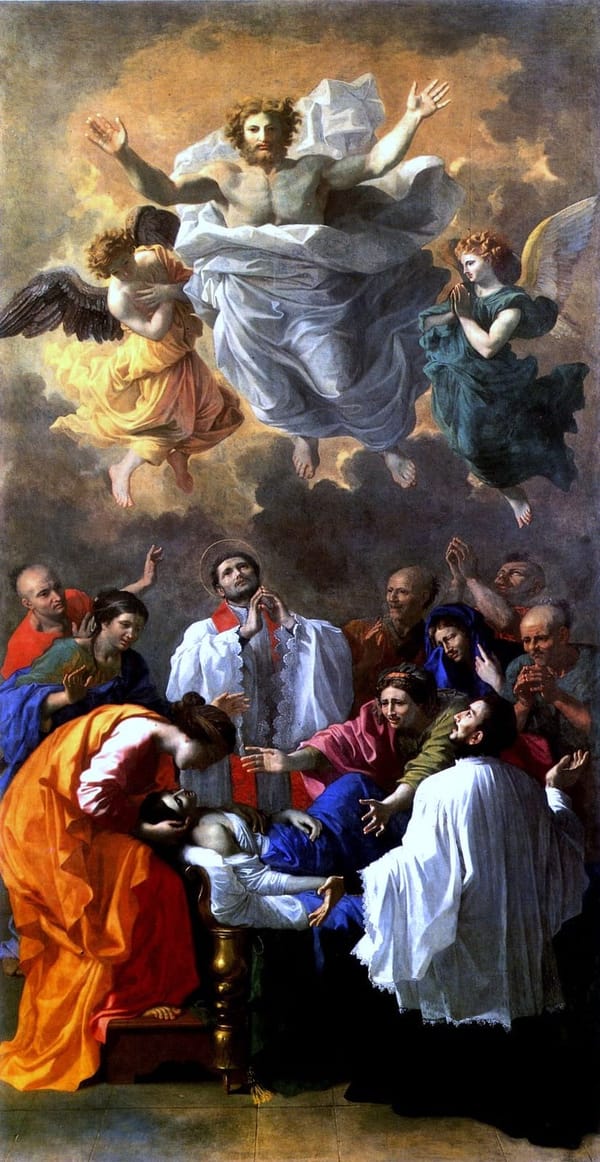 |
The apostles being the heralds of the coming of the Messias, it was fitting that Advent should have in its calendar the name of some one among them. Divine Providence has provided for this; for, to say nothing of St. Andrew, whose feast is oftentimes past before the season of Advent has commenced, St. Thomas’s day is unfailingly kept immediately before Christmas. We will explain, later on, why St. Thomas holds that position rather than any other apostle; at present, we simply assert the fitness of there being at least one of the apostolic college, who should announce to us, in this period of the Catholic cycle, the coming of the Redeemer. But God has not wished that the first apostolate should be the only one to appear on the first page of the liturgical calendar; great also, though in a lower degree, is the glory of that second apostolate, whereby the bride of Jesus Christ multiplies her children, even in her fruitful old age, as the psalmist expresses it.1 There are Gentiles who have still to be evangelized; the coming of the Messias is far from having been announced to all nations. Now of all the valiant messengers of the divine Word who have, during the last few hundred years, proclaimed the good tidings among infidel nations, there is not one whose glory is greater, who has worked greater wonders, or who has shown himself a closer imitator of the first apostles, than the modern apostle of the Indies, St. Francis Xavier.
The life and apostolate of this wonderful man were a great triumph for our mother the holy Catholic Church; for St. Francis came just at a period when heresy, encouraged by false learning, by political intrigues, by covetousness, and by all the wicked passions of the human heart, seemed on the eve of victory. Emboldened by all these, this enemy of God spoke, with the deepest contempt, of that ancient Church which rested on the promises of Jesus Christ; it declared that she was unworthy of the confidence of men, and dared even to call her the harlot of Babylon, as though the vices of her children could taint the purity of the mother. God’s time came at last, and He showed Himself in His power: the garden of the Church suddenly appeared rich in the most admirable fruits of sanctity. Heroes and heroines issued from that apparent barrenness; and whilst the pretended reformers showed themselves to be the most wicked of men, two countries, Italy and Spain, gave to the world the most magnificent saints.
One of these is brought before us to-day, claiming our love and our praise. The calendar of the liturgical year will present to us, from time to time, his contemporaries and his companions in divine grace and heroic sanctity. The sixteenth century is, therefore, worthy of comparison with any other age of the Church. The so-called reformers of those times gave little proof of their desire to convert infidel countries, when their only zeal was to bury Christianity beneath the ruin of her churches. But at that very time, a society of apostles was offering itself to the Roman Pontiff, that he might send them to plant the true faith among people who were sitting in the thickest shades of death. But, we repeat, not one of these holy men so closely imitated the first apostles as did Francis, the disciple of Ignatius. He had all the marks and labours of an apostle: an immense world of people evangelized by his zeal, hundreds of thousands of infidels baptized by his indefatigable ministration, and miracles of every kind, which proved him, to the infidel, to be marked with the sign which they received who, living in the flesh, planted the Church, as the Church speaks in her liturgy. So that, in the sixteenth century, the east received from the ever holy city of Rome an apostle, who, by his character and his works, resembled those earlier ones sent her by Jesus Himself. May our Lord Jesus be for ever praised for having vindicated the honour of the Church, His bride, by raising up Francis Xavier, and giving to men, in this His servant, a representation of what the first apostles were, whom He sent to preach the Gospel when the whole world was pagan.
Let us now read the short account given us, in the words of the Church, of this new apostle.
Glorious apostle of Jesus Christ, who didst impart His divine light to the nations that were sitting in the shadows of death! we, though unworthy of the name of Christians, address our prayers to thee, that by the charity which led thee to sacrifice everything for the conversion of souls, thou wouldst deign to prepare us for the visit of the Saviour, whom our faith and our love desire. Thou wast the father of infidel nations; be the protector, during this holy season, of them that believe in Christ. Before thy eyes had contemplated the Lord Jesus, thou didst make Him known to countless people; now that thou seest Him face to face, obtain for us that, when He is come, we may see Him with that simple and ardent faith of the Magi, those glorious first-fruits of the nations to which thou didst bear the admirable light.2
Remember also, O great apostle, those nations which thou didst evangelize, and where now, by a terrible judgement of God, the word of life has ceased to bring forth fruit. Pray for the vast empire of China, on which thou didst look when dying, but which was not blessed with thy preaching. Pray for Japan, thy dear garden which has been laid waste by the savage wild beast, of which the psalmist speaks. May the blood of the martyrs, which was poured out on that land like water, bring it the long-expected fertility. Bless, too, all the missions which our holy mother the Church has undertaken in those lands where the cross has not yet triumphed. May the heart of the infidel be opened to the grand simplicity and light of faith; may the seed bring forth fruit a hundred-fold; may the number of thy successors in the new apostolate ever increase; may their zeal and charity fail not; may their toil receive its reward of abundant fruit; and may the crown of martyrdom, which they receive, be not only the recompense but the perfection and the triumph of their apostolic ministry. Recommend to our Lord the innumerable members of that Association, which is the means of the faith being propagated through the world, and which has thee for its patron. Pray, with a filial affection and earnestness, for that holy Society, of which thou art so bright an ornament, and which reposes on thee its firmest confidence. May it more and more flourish under the storm of trial which never leaves it at rest; may it be multiplied, that so the children of God may be multiplied by its labours; may it ever have ready, for the service of the Christian world, zealous apostles and doctors; may it not be in vain that it bears the name of Jesus.
Let us consider the wretched condition of the human race, at the time of Christ’s coming into the world. The diminution of truths3 is emphatically expressed by the little light which the earth enjoys at this season of the year. The ancient traditions are gradually becoming extinct; the Creator is not acknowledged, even in the very work of His hands; everything has been made God, except the God who made all things. This frightful pantheism produces the vilest immorality, both in society at large, and in individuals. There are no rights acknowledged, save that of might. Lust, avarice, and theft, are honoured by men in the gods of their altars. There is no such thing as family, for divorce and infanticide are legalized; mankind is degraded by a general system of slavery; nations are being exterminated by endless wars. The human race is in the last extreme of misery; and unless the hand that created it reform it, it must needs sink a prey to crime and bloodshed. There are indeed some few just men still left upon the earth, and they struggle against the torrent of universal degradation; but they cannot save the world; the world despises them, and God will not accept their merits as a palliation of the hideous leprosy which covers the earth. All flesh has corrupted its way, and is more guilty than even in the days of the deluge: and yet, a second destruction of the universe would but manifest anew the justice of God; it is time that a deluge of His divine mercy should flood the universe, and that He who made man, should come down and heal him. Come then, O eternal Son of God! give life again to this dead body; heal all its wounds; purify it; let grace superabound, where sin before abounded; and having converted the world to Thy holy law, Thou wilt have proved to all ages that Thou, who camest, wast in very truth the Word of the Father; for as none but a God could create the world, so none but the same omnipotent God could save it from satan and sin, and restore it to justice and holiness.
A Responsory in Advent
(The Roman breviary, fourth Sunday of Advent)
| Previous December 2: Saint Bibiana, Virgin and Martyr | Next December 3: Saint Francis Xavier, Confessor; Apostle of the Indies |