Daily reading
Septuagesima
Double · Movable from Easter · Temporal
January 28, 2024
From Dom Guéranger’s The Liturgical Year.

|
Septuagesima Sunday
The holy Church calls us together to-day in order that we may hear from her lips the sad history of the fall of our first parents. This awful event implies the Passion and cruel Death of the Son of God made Man, who has mercifully taken upon Himself to expiate this and every subsequent sin committed by Adam and us his children. It is of the utmost importance that we should understand the greatness of the remedy; we must, therefore, consider the grievousness of the wound inflicted. For this purpose, we will spend the present week in meditating on the nature and consequences of the sin of our first parents.
Formerly, the Church used to read in her Matins of to-day that passage of the Book of Genesis, where Moses relates to all future generations, but in words of most impressive and sublime simplicity, how the first sin was brought into the world. In the present form of the liturgy, the reading of this history of the fall is deferred till Wednesday, and the preceding days give us the account of the six days of creation. We will anticipate the great instruction, and begin it at once, inasmuch as it forms the basis of the whole week’s teaching.
Cap. iii.Sed et serpens erat callidior cunctis animantibus terræ, quæ fecerat Dominus Deus. Qui dixit ad mulierem: Cur præcepit vobis Deus ut non comederetis de omni ligno paradisi? Cui respondit mulier: De fructu lignorum quæ sunt in paradiso vescimur: de fructu vero ligni, quod est in medio paradisi, præcepit nobis Deus ne comederemus, et ne tangeremus illud, ne forte moriamur. Dixit autem serpens ad mulierem: Nequaquam morte moriemini; seit enim Deus quod in quocumque die comederitis ex eo, aperientur oculi vestri, et critis sicut dii, scientes bonum et malum. Vidit igitur mulier, quod bonum esset lignum ad vescendum, et pulchrum oculis, aspectuque delectabile: et tulit de fructu illius, et comedit: deditque viro suo, qui comedit. Et aperti sunt oculi amborum.
Ch. iii.Now the serpent was more subtle than any of the beasts of the earth, which the Lord God had made. And he said to the woman: Why hath God commanded you, that you should not eat of every tree of paradise? And the woman answered him, saying: Of the fruit of the trees that are in paradise we do eat; but of the fruit of the tree which is in the midst of paradise, God hath commanded us that we should not eat, and that we should not touch it, lest perhaps we die. And the serpent said to the woman: No, you shall not die the death; for God doth know, that in what day soever you shall eat thereof, your eyes shall be opened, and you shall be as gods, knowing good and evil. And the woman saw that the tree was good to eat, and fair to the eyes, and delightful to behold: and she took of the fruit thereof, and did eat: and gave to her husband, who did eat. And the eyes of them both were opened.
Oh! terrible page of man’s history! It alone explains to us our present position on the earth. It tells us what we are in the eyes of God, and how humbly we should comport ourselves before His divine Majesty. We will make it the subject of this week’s meditation. And now, let us prepare to profit by the liturgy of this Sunday, which we call Septuagesima.
In the Greek Church, it is called Prophoné (Proclamation), because on this day they announce to the people the coming fast of Lent, and the precise day of Easter. It is also called the Sunday of the prodigal son, because that parable is read in their liturgy for this Sunday, as an invitation to sinners to draw nigh to the God of mercy. But it is the last day of the week Prophoné, which, by a strange custom, begins with the preceding Monday, as do also the two following weeks.
Mass
The Station, at Rome, is in the church of Saint Lawrence outside the walls. The ancient liturgists observe the relation between the just Abel (whose being murdered by Cain is the subject of one of the responsories of to-day’s Matins), and the courageous martyr, over whose tomb the Church of Rome commences her Septuagesima.
The Introit describes the fears of death, wherewith Adam and his whole posterity are tormented, in consequence of sin. But in the midst of all this misery there is heard a cry of hope, for man is still permitted to ask mercy from his God. God gave man a promise, on the very day of his condemnation: the sinner needs but to confess his miseries, and the very Lord against whom he sinned will become his deliverer.
Introit
In the Collect, the Church acknowledges that her children justly suffer the chastisements which are the consequences of sin; but she beseeches her divine Lord to send them that mercy which will deliver them.
Collect
Second Collect
The priest adds a third Collect, which is left to his own choice.
Epistle
Cap. ix., x.Fratres, nescitis quod ii qui in stadio currunt, omnes quidem currunt, sed unus accipit bravium? Sic currite, ut comprehendatis. Omnis autem, qui in agone contendit, ab omnibus se abstinet: et illi quidem ut corruptibilem coronam accipiant, nos autem incorruptam. Ego igitur sic curro, non quasi in incertum: sic pugno, non quasi aerem verberans: sed castigo corpus meum et in servitutem redigo: ne forte cum aliis prædicaverim, ipse reprobus efficiar. Nolo enim vos ignorare, fratres, quoniam patres nostri omnes sub nube fuerunt, et omnes mare transierunt, et omnes in Moyse baptizati sunt, in nube et in mari; et omnes eamdem escam spiritalem manducaverunt, et omnes eumdem potum spiritalem biberunt (bibebant autem de spiritali, consequenteeos petra; petra autem erat Christus). Sed non in pluribus eorum beneplacitum est Deo.
Ch. ix., x.Brethren, know you not that they that run in the race, all run indeed, but one receiveth the prize? So run that you may obtain. And every one that striveth for the mastery, refraineth himself from all things; and they indeed that they may receive a corruptible crown, but we an incorruptible one. I therefore so run, not as at an uncertainty: I so fight, not as one beating the air: but I chastise my body and bring it into subjection: lest, perhaps, when I have preached to others, I myself should become a castaway. For I would not have you ignorant, brethren, that our fathers were all under the cloud, and all passed through the sea, and all in Moses were baptized in the cloud, and in the sea: and did all eat the same spiritual food; and all drank the same spiritual drink (and they drank of the spiritual rock that followed them, and the rock was Christ). But with the most of them God was not well pleased.
These stirring words of the apostle deepen the sentiments already produced in us by the sad recollections of which we are this day reminded. He tells us that this world is a race, wherein all must run; but that they alone win the prize, who run well. Let us, therefore, rid ourselves of everything that could impede us, and make us lose our crown. Let us not deceive ourselves: we are never sure, until we reach the goal. Is our conversion more solid than was St. Paul's? Are our good works better done, or more meritorious, than were his? Yet he assures us that he was not without the fear that he might perhaps be lost; for which cause he chastised his body, and kept it in subjection to the spirit. Man, in his present state, has not the same will for all that is right and just, which Adam had before he sinned, and which, notwithstanding, he abused to his own ruin. We have a bias which inclines us to evil; so that our only means of keeping our ground is to sacrifice the flesh to the spirit. To many this is very harsh doctrine; hence, they are sure to fail; they never can win the prize. Like the Israelites spoken of by our apostle, they will be left behind to die in the desert, and so lose the promised land. Yet they saw the same miracles that Josue and Caleb saw! So true is it that nothing can make a salutary impression on a heart which is obstinately bent on fixing all its happiness in the things of this present life; and though it is forced, each day, to own that they are vain, yet each day it returns to them, vainly but determinedly loving them.
The heart, on the contrary, that puts its trust in God, and mans itself to energy by the thought of the divine assistance being abundantly given to him that asks it, will not flag or faint in the race, and will win the heavenly prize. God’s eye is unceasingly on all them that toil and suffer. These are the truths expressed in the Gradual.
Gradual
The Tract sends forth our cry to God, and the cry is from the very depths of our misery. Man is humbled exceedingly by the fall; but he knows that God is full of mercy, and that, in His goodness, He punishes our iniquities less than they deserve: were it not so, none of us could hope for pardon.
Tract
Gospel
Cap. xx.In illo tempore, dixit Jesus discipulis suis parabolani hanc: Simile est regnum cælorum homini patrifamilias, qui exiit primo mane Conducere operarios in vineam suam. Conventione autcm facta cum operariis ex denario diurno, misit eos in vineam suam. Et egressus circa horam tertiam, vidit aliosstantes in foro otiosos, et dixit illis: Ite et vos in vineam meam, et quod justum fuerit, dabo vobis. Illi autem abierunt. Iterum autem exiit circa sextam et nonam horam, et fecit similiter. Circa undecimam vero exiit; et invenit alios stantes, et dicit illis: Quid hic statis tota die otiosi? Dicunt ei: Quia nemo nos conduxit. Dicit illis: Ite et vos in vineam meam. Cum sero autem factum esset, dicit dominus vineæ procuratori suo: Voca operarios, et redde illis mercedem, incipiens a novissimis usque ad primos. Cum venissent ergo qui circa undecimam horam venerant, acceperunt singulos denarios. Venientes autem et primi, arbitrati sunt quod plus essent accepturi: acceperunt autem et ipsi singulos denarios. Et accipientes murmurabant adversus patremfamilias, dicentes: Hi novissimi una hora fecerunt, et pares illos nobis fecisti qui portavimus pondus diei et æstus? At ille respondens uni eorum, dixit: Amice, non facio tibi injuriam; nonne ex denario convenisti mecum? Tolle quod tuum est, et vade: volo autem et huic novissimo dare sicut et tibi. Aut non licet mihi quod volo facere? An oculus tuus nequam est, quia ego bonus sum? Sic erunt novissimi primi, et primi novissimi. Multi enim sunt vocati, pauci vero electi.
Ch. xx.At that time, Jesus spoke to his disciples this parable; The kingdom of heaven is like to a householder who went out early in the morning to hire labourers into his vineyard. And having agreed with the labourers for a penny a day, he sent them into his vineyard. And going out about the third hour, he saw others standing in the market place idle. And he said to them: Go you also into my vineyard, and I will give you what shall be just. And they went their way. And again he went out about the sixth and the ninth hour, and did in like manner. But about the eleventh hour he went out and found others standing, and he saith to them: Why stand you here all the day idle? They say to him: Because no man hath hired us. He saith to them: Go you also into my vineyard. And when evening was come, the lord of the vineyard saith to his steward: Call the labourers and pay them their hire, beginning from the last even to the first. When, therefore, they were come that came about the eleventh hour, they received every man a penny. But when the first also came, they thought that they should receive more: and they also received every man a penny. And receiving it they murmured against the master of the house, saying: These last have worked but one hour, and thou hast made them equal to us that have borne the burden of the day, and the heats. But he answering said to one of them: Friend, I do thee no wrong: Didst thou not agree with me for a penny? Take what is thine, and go thy way: I will also give to this last even as to thee. Or, is it not lawful for me to do what I will? Is thy eye evil, because I am good? So shall the last be first, and the first last. For many are called, but few chosen.
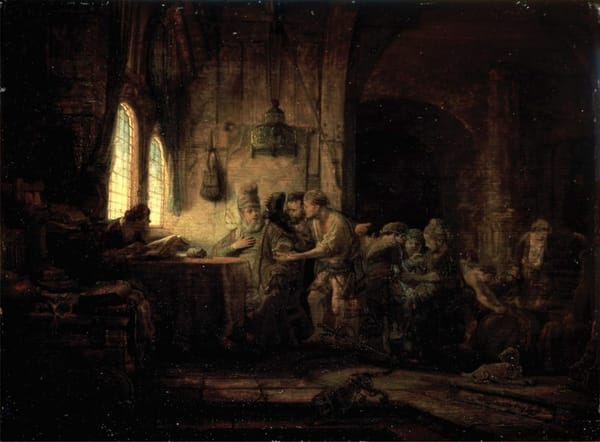
It is of importance that we should well understand this parable of the Gospel, and why the Church inserts it in to-day’s liturgy. Firstly, then, let us recall to mind on what occasion our Saviour spoke this parable, and what instruction He intended to convey by it to the Jews. He wishes to warn them of the fast approach of the day when their Law is to give way to the Christian Law; and He would prepare their minds against the jealousy and prejudice which might arise in them, at the thought that God was about to form a Covenant with the Gentiles. The vineyard is the Church in its several periods, from the beginning of the world to the time when God Himself dwelt among men, and formed all true believers into one visible and permanent society. The morning is the time from Adam to Noah; the third hour begins with Noah and ends with Abraham; the sixth hour includes the period which elapsed between Abraham and Moses; and lastly, the ninth hour opens with the age of the prophets, and closes with the birth of the Saviour. The Messias came at the eleventh hour, when the world seemed to be at the decline of its day. Mercies unprecedented were reserved for this last period, during which salvation was to be given to the Gentiles by the preaching of the apostles. It is by this mystery of mercy that our Saviour rebukes the Jewish pride. By the selfish murmurings made against the master of the house by the early labourers, our Lord signifies the indignation which the scribes and pharisees would show at the Gentiles being adopted as God’s children. Then He shows them how their jealousy would be chastised: Israel, that had laboured before us, shall be rejected for their obduracy of heart, and we Gentiles, the last comers, shall be made for we shall be made members of that Catholic Church, which is the bride of the Son of God.
This is the interpretation of our parable given by St. Augustine and St. Gregory the Great, and by the generality of the holy fathers. But it conveys a second instruction, as we are assured by the two holy doctors just named. It signifies the calling given by God to each of us individually, pressing us to labour, during this life, for the kingdom prepared for us. The morning is our childhood. The third hour, according to the division used by the ancients in counting their day, is sunrise; it is our youth. The sixth hour, by which name they called our midday, is manhood. The eleventh hour, which immediately preceded sunset, is old age. The Master of the house calls His labourers at all these various hours. They must go that very hour. They that are called in the morning may not put off their starting for the vineyard, under pretext of going afterwards, when the Master shall call them later on. Who has told them that they shall live to the eleventh hour? They that are called at the third hour may be dead at the sixth. God will call to the labours of the last hour such as shall be living when that hour comes; but, if we should die at midday, that last call will not avail us. Besides, God has not promised us a second call, if we excuse ourselves from the first.
At the Offertory, the Church invites us to celebrate the praises of God. God has mercifully granted us, that the hymns we sing to the glory of His name should be our consolation in this vale of tears.
Offertory
Secret
Second Secret
The third Secret is left to the priest’s own choice.
In the Communion antiphon, the Church prays that man, having now been regenerated by the Bread of heaven, may regain that likeness to his God which Adam received at his creation. The greater our misery, the stronger should be our hope in Him, who descended to us that we might ascend to Him.
Communion
Postcommunion
Second Postcommunion
The third Postcommunion is left to the priest’s own choice.
Vespers
The psalms and antiphons as on page 72.
Capitulum (1 Cor. ix.)
The hymn and versicle, page 79.
Antiphon of the Magnificat
Mercifully hear, we beseech thee, O Lord, the prayers of thy people; that we who are justly afflicted for our sins, may be mercifully delivered for the glory of thy name. Through, etc.
For each day of this week we select a few stanzas from the hymn, which the Greek liturgy uses in the Office for the Sunday preceding the fast of Lent. It is a lamentation over Adam's fall.
In Dominica Tyrophagi
January 28 (the Same Day): St. Agnes, Her Second Feast
FIVE days after the martyrdom of the Virgin Emerentiana, the parents of the glorious Saint Agnes visited the tomb of their child, during the night, there to weep and pray. It was the eighth day since her martyrdom. Whilst they were thinking upon the cruel death, which, though it had enriched their child with a Martyr's palm, had deprived them of her society, Agnes suddenly appeared to them: she was encircled with a bright light, and wore a crown on her head, and was surrounded by a choir of virgins of dazzling beauty. On her right hand there stood a beautiful white lamb, the emblem of the Divine Spouse of Agnes.
Turning towards her parents, she said to them: 'Weep not over my death: for I am now in heaven, together with these virgins, living with him whom I loved on earth with my whole soul.'
It is to commemorate this glorious apparition that the holy Church has instituted this Feast, which is called Saint Agnes' Second Feast (Sanctœ Agnetis secundo). Let us pray to this fervent spouse of the Divine Lamb, that she intercede for us with him, and present us to him in this life, until it be given to us to possess him face to face in heaven. Let us unite with the Church in the following Prayer, which she uses in today's Office:
January 28 (the Same Day): The Blessed Charlemagne, Emperor
In many Churches, especially in Germany, there is kept, on the second Feast of the Martyr Agnes, the Feast of the pious Emperor Charlemagne. The Emmanuel, who is come into this world, is to receive the title of King of kings and Lord of lords; he is to gird himself with the sword, and bring all nations into subjection; what could be more fitting than that he should lead to his Crib the greatest of Christian Princes, who ever made it his glory to use his sword in the service of Christ and his Church?
Charlemagne was held as a Saint by the people, and the decree of his canonization was given by the Antipope Paschal the Third, in the year 1165, at the request of Frederic Barbarossa; on which account, the Holy See has permitted this public veneration to be continued in all those places where it prevailed, though it has never given its approbation to the informal procedure of Paschal, nor made it valid by its own sentence, which it would, in all probability, have done had the request been made. At the same time, the many Churches, which, now for seven centuries, have honoured the memory of Charlemagne, keep his Feast under the simple title of Blessed, out of respect to the Roman Martyrology, where his name is not inserted.
Before the Reformation, the name of Blessed Charlemagne was inscribed in the Calendar of a great many of the Churches in France; the Breviaries of Rheims and Rouen are the only ones that have retained it. The Church of Paris ceased to keep his Feast, in order to satisfy the prejudices of several Doctors of the University, in the early part of the 16th century. Protestantism had, naturally enough, an antipathy for a man, who was the noblest type of a Catholic Prince: and they who were tainted with the spirit of Protestantism, defended their blotting out the name of Charlemagne from the Calendar, not so much by the informality of his Canonization, as by the scandal which they affected to find in his life. Public opinion was formed on this, as on so many other matters, with extreme levity; and among those who will be surprised at finding the name of Charlemagne in this volume, we quite expect that they will be the most astonished who have never taken the trouble to inquire into the holiness of his life.
More than thirty Churches in Germany still keep the Feast of the great Emperor. His dear Church of Aix-la-Chapelle possesses his Relics and exposes them to the veneration of the people. The University of Paris, strange to say, chose him for its Patron in 1661; but his Feast, which had been given up for more than a century, was only restored as a national holiday, without the slightest allusion being made to it in the Liturgy.
It does not enter into the plan of this work to discuss the reasons, for which public veneration has been paid to the Saints whose feasts we keep during the year; our readers must not, therefore, expect from us anything in the shape of a formal defence of the saintly life of Charlemagne. Nevertheless, we cannot refrain from making a few remarks, which our subject seems to require. And firstly, we affirm, with the great Bossuet that the morals of Charlemagne were without reproach,* and that the contrary opinion, which is based on certain vague and contradictory expressions of a few writers of the Middle-Ages, has only gained ground by Protestant influence. Dom Mabillon—after having given the history of the Emperor’s repudiation of Hermengarde, and his return to Himiltrude, his first wife—concludes his account of Charlemagne, in his Benedictine Annals, by acknowledging that this Prince’s plurality of wives has never been proved to have been simultaneous. Natalis Alexander and Le Cointe—authors who cannot be taxed with partiality, and who have gone into all the intricacies of the question—prove most clearly, that the only reproach to be laid to Charlemagne’s charge, on the subject of his wives, is his having repudiated Himiltrude, out of complaisance to the mother of Hermengarde, a fault which he repaired the following year, in compliance with the remonstrances of Pope Stephen the Fourth.
We grant, that after the death of Luitgarde, the last of his wives who was treated as Queen, Charlemagne married several others, whom Eginhard calls concubines, because they did not wear the crown, and their children were not considered as princes of the blood; but we say, with Mabillon, that Charlemagne may have had these wives successively, and that it is difficult to believe the contrary, regarding so religious a Prince, and one who had singular respect for the laws of the Church.
But, independently of the opinion of the grave authors whom we have cited, there is an incontestable proof of Charlemagne’s innocence on the score of the simultaneous plurality of wives, at least from the time of his separation from Hermengarde. The Prince was then in his twenty-eighth year. The severity of the Roman Pontiffs relative to the marriages of sovereigns is too well known to require proof. The history of the Middle-Ages abounds with the struggles they had, on this essential point of Christian morals, with the most powerful monarchs, some of whom were most devoted to the Church. How, then, we would ask, would it be possible, that St. Adrian the First, who governed the Church from 772 to 795, and whom Charlemagne treated as a father, asking his advice in everything he undertook—how, we repeat, would this holy Pontiff allow Charlemagne to indulge in the most scandalous crimes, without remonstrating, whilst Stephen the Fourth, who only sat three years, and had not the same influence on this Prince, could induce him to dismiss Hermengarde? Or again, would St. Leo the Third—who reigned as Supreme Pontiff from 795 till after Charlemagne’s death, and who recompensed his virtuous conduct by crowning him Emperor—would he have made no effort to induce him to abandon the concubinage in which some writers would make us believe he lived after the death of his last Queen Luitgarde? Now, we find not the shadow of any such remonstrances made by these two Popes, who governed the Church for more than forty years, and have been placed on her altars. The honour of the Church herself is at stake in this question, and it is the duty of every Catholic to suspect the imputations cast on the name of Charlemagne as calumnies.
It would seem, from the letter of Pope Stephen the Fourth, that the marriage with Himiltrude was suspected, though falsely, of nullity; and it is not improbable that this suspicion may have satisfied Charlemagne’s conscience when he divorced her. However this may be, we find Charlemagne afterwards legislating against public immorality with all the zeal and energy of a man whose own life was not tainted with anything of the kind. We will cite but one example of this Christian firmness in repressing scandal, and we put it to the conviction of any honest heart, if a Prince, whose life had been a series of public scandals, could have dared to express himself, with the simplicity and confidence of an innocent conscience, in an assembly of the Bishops and Abbots of his Empire, and in the presence of the Princes and Barons whose licentiousness he wished to repress, and who might so justly have excused their own disorders, by the lewd example of the very man who exhorted them to virtue and threatened to chastise their vices? In a Capitulary, given during the Pontificate of St. Leo the Third, he thus decrees: “We forbid, under pain of sacrilege, the seizure of the goods of the Church, and injustices of whatsoever sort, adultery, fornication, incest, illicit marriage, unjust homicide, &c., for we know, that by such things kingdoms and kings, yea and private subjects, do perish. And whereas, by God’s help, and the merit and the intercession of the Saints and Servants of God, whom we have at all times honoured, we have gained a goodly number of kingdoms, and won manifold victories, it behoveth us all to be on our guard lest we deserve the forfeiture of these gains by the aforementioned crimes and shameful lewdnesses. We know, of a truth, that sundry countries, wherein have been perpetrated these seizures of the goods of the Church, these injustices, these adulteries, and these prostitutions, have lost their courage in battle, and their firmness in the faith. Any one may learn from history, how the Lord hath permitted the Saracens and other peoples to conquer the workers of such like iniquities; nor doubt we that the like will happen likewise to us, unless we abstain from such misdeeds; for God is wont to punish them. Be it, therefore, known to all our subjects, that he who shall be taken and convicted of any of these crimes, shall be deposed of all his honours, if he have any; that he shall be thrown into prison, till he repent and make amends by a public penitence; and, moreover, that he shall be cut off from all communication with the faithful; for we shall grievously fear the pit whereinto we see others be fallen.” Again, we ask, would Charlemagne have spoken such language as this, if, as has been asserted, his old age was being disgraced with debauchery, at the very time that he passed this Capitulary, that is, after the death of Luitgarde?
Granting, then, that this great Prince had sinned, we must allow that it was only in the early part of his reign, and we ought to remember that the remainder of his life was so holy as to be more than an ample penance. Is it not a sight worthy of our admiration to see this brave warrior, when he had become the mighty Sovereign, unceasingly practising, not only sobriety, which was a rare virtue among his countrymen, but fastings, which would bear comparisons with those of the most fervent anchorets—wearing a hair-shirt even to the day of his death—assisting at the Offices of the Church, day and night, even during his various campaigns, when he had the Divine services performed in his tent—and giving abundant alms, (which, as the Scripture tells us, covereth a multitude of sins,) not only to all the poor of his dominions, who besought his charity, but likewise to the Christians of Africa, Egypt, Syria, and Palestine, for whose sakes he more than once exhausted his royal treasury? But, what is above all this, and, in the absence of every other proof, would testify to Charlemagne’s possessing every virtue that could adorn a Christian Prince, is his making no other use of his sovereign power than that of spreading the Kingdom of Christ on the earth. It is the one single end he proposed to himself in every battle he fought, and every law he made.
This monarch, to whom were subject France, Catalonia, Navarre, and Aragon; Flanders, Holland, and Friesland; the provinces of Westphalia, Saxony, as far as the Elbe; Franconia, Suabia, Thuringia, and Switzerland; the two Pannonias, (that is, Austria and Hungary,) Dacia, Bohemia, Istria, Liburnia, Dalmatia, and even Sclavonia; and finally, the whole of Italy, as far as southern Calabria—this Monarch signs himself, in his glorious Capitularia: “I, Charles, by the grace of God and the giving of his mercy, King and governor of the Kingdom of the French, devoted defender of God’s Holy Church, and her humble Champion.” So many other Kings and Emperors—who are not to be compared with him in power, and yet are objects of men’s admiration in spite of all their crimes, which are artfully palliated by every possible excuse—have made it their one grand aim to enslave the Church. History tells us of even some otherwise pious Kings, who were jealous of her Liberty, and sought to curtail it: Charlemagne ever respected that Liberty, as though it were his own mother’s honour. It was he, that, following the example of Pepin, his father, so nobly secured the independence of the Apostolic See. Never had the Roman Pontiffs a more devoted or a more obedient Son. Scorning petty political jealousies, he restored to the clergy and people the episcopal elections, which were in the hands of the Sovereign, when he began his reign. He waged war mainly with a design to favour the propagation of the faith among infidel nations. He marched into Spain, that he might free the Christians from the yoke of the Moors. He brought the Churches of his Kingdom into closer union with the Apostolic See, by establishing the Roman Liturgy in all the States that were under his sceptre. In the whole of his legislation, which he framed in assemblies where Bishops and Abbots had the preponderance, there is not a single trace of what have been called Gallican Liberties, which consist in the interference of the Sovereign, or civil Magistrate in matters purely ecclesiastical. “So great was Charlemagne’s love for the Roman Church,” says Bossuet, “that the main point of his Last Will was the recommending to his successors the defence of the Church of St. Peter, a defence which was the precious heirloom of his house, handed down to him by his father and his father’s father, and which he was resolved to leave also to his children. It was this love of the Church which prompted him to say, and the saying was afterwards repeated in a full Council, held during the reign of one of his descendants, that if the Church of Rome were, by an impossibility, to put on us a burden which was well nigh insupportable, we ought to bear it.”
What could prompt this spirit of Christian moderation, which made Charlemagne so respectful to the moral power of the Church—what could temper down the risings of pride, which, as a general rule, increases with the increase of power—what save a most saintly tenor of life? Man, unless he be endowed with the help of a powerful grace, cannot attain, much less can he maintain himself his whole life long, in such perfect dispositions as these. Charlemagne, then, has been selected by our Emmanuel himself to be the perfect type of a Christian Prince; and we Catholics should love to celebrate his glory during this Christmas season, during which is born among us the Divine Child, who is come to reign over all nations, and guide them in the path of holiness and justice. Jesus has come from heaven to be the model of Kings, as of the rest of men; and so far, no man has so closely imitated this divine model as "Charles the Victorious, the ever August, the Monarch crowned by God.”
We will borrow from the Breviaries of Germany the liturgical history of her great Apostle. It is true, that there is a want of exactitude, here and there, in the following Lessons; but they are valuable, as being the expression of the devotion of a Catholic people for their glorious and saintly Emperor.
The following Hymn is taken from the same Office as the Lessons we have just read.
Hymn
Regum terræ Imperator,
Inter beatorum coetus,
Nostros audi pie fletus.
Languor cedit, vita datur,
Sitientibus das undas,
Et baptismo gentes mundas.
Sola prece frangis muros,
Regna suave jugum Christi
Ferre doces, quæ vicisti.
Servus prudens, et fidelis,
E castris astra petisti,
Ad locum pacis ivisti.
Fontem vivum nobis prode,
Ora pia prece Deum,
Et fac nobis pium eum.
Laus et honor Unitati,
Quæ virtute principali
Jure regnat coæquali.
Emperor of the kings of the world!
lovingly hear our prayers,
now that thou reignest among the blessed.
the sick are healed, life is restored,
the thirsty obtain fountains of water,
and whole nations are cleansed in the laver of baptism.
yield to the simple power of thy prayers;
and thou teachest the vanquished nations
to bear the sweet yoke of Christ.
and oh! how worthy of heaven!
Thou didst ascend thither from the battlefield,
thou enteredst into the land of peace.
and call forth for us a stream of living water.
By thy holy prayers,
obtain for us the mercy of our God.
Praise and honour to the Holy Unity,
that reigneth co-equally
in infinite power.
The same Liturgy gives us this Antiphon.
Among the Sequences written in honour of the holy Emperor, we find the following, which is taken from an ancient Missal of Aix-la-Chapelle.
Sequence
Regni sedes principalis,
Prima regum curia.
Quæ de magni regis gaudes
Caroli memoria.
Psallat chorus hic sonorus
Vocali concordia.
Bonum, quod cor meditatur,
Dulcis est psalmodia.
Magni Regis magna gesta
Recolat Ecclesia.
Omnes simul plaudant ac singuli
Celebri lætitia.
Hic invictæ dux cohortis
Decem sternit millia.
Atque metit gladio
Ex messe zizania.
Boni fructus bonus sator,
Et prudens agricola.
Fana, Deos, hic evertit,
Et confringit idola.
Hic regnare sacras leges
Facit cum justitia.
Ut et justus, sed nec sine
Sit misericordia.
Unctus dono gratiæ
Cæteris præ regibus.
Majestatis regiæ
Insignitur fascibus.
Jesu Christi conregnator,
Sis pro nobis exorator,
Sancte pater Carole.
Ut in regno claritatis,
Nos plebs tua cum beatis
Cœli simus incolæ.
Mundi salus, vitæ via,
Vacillantum rege gressus,
Et ad Regem des accessus,
In perenni gloria.
Incorruptæ fili Matris,
Per hunc sanctum cujus
Festa Celebramus, nobis præsta
Sempiterna gaudia.
seat of princely power,
and favourite court of kings!
the memory of King Charles the Great,
sing thy praises to the King of kings.
and this sweet choir of music
sing as with one voice of praise.
when the hand achieves
the holy meditation of the heart!
let the Church proclaim
the great deeds of the great King.
let all, and each, praise him
with a holiday of joy.
the leader of the invincible army,
and he prostrates his enemies by tens of thousands.
and with his sword
cleanses the harvest from the tares.
the good sower of the good seed,
the prudent husbandman.
he overthrows the temples,
and the false gods, and breaks the idols.
he establishes the reign
of holy laws and justice.
for he loves justice;
but he tempers justice by mercy.
and with grace,
above all other kings.
he is decked with all the emblems
of kingly majesty.
O King that now reignest with Christ!
O Charles! O sainted father!
pray for us,
being cleansed from our sins,
may be made fellow-citizens
with the blessed in the kingdom of heaven.
that didst give to the world its Saviour and its Life!
guide our faltering steps,
and lead us to Jesus our King,
in everlasting bliss.
Son of the Virgin-Mother!
we beseech thee, by the merits of the Saint
whose Feast we celebrate, grant us to come
to everlasting joy.
We will conclude our selection by giving the Collect said on this feast.
Collect
All hail faithful and beloved servant of God, Apostle of Christ, Defender of his Church, Lover of justice, Guardian of the laws of morality, and Terror of them that hate the Christian name! The hand of the Vicar of Christ purified the diadem of the Cæsars, and put it on thy venerable head. The imperial sceptre and globe are in thy hands. The sword of the victories won for God is girt on thy side. The Supreme Pontiff has anointed thee King and Emperor. Bearing thus in thyself the figure of Christ in his temporal Kingship, thou didst so use thy power as that he reigned in and by thee. And now he recompenses thee for the love thou hadst for him, for the zeal thou hadst for his glory, and for the respect thou didst ever evince to the Church, his Spouse. He has changed thy earthly and perishable royalty into that which is eternal, and in his heavenly kingdom thou art surrounded by those countless souls, whom thou didst convert from idolatry to the service of the one true God.
We are celebrating the Birth of the Son of that Virgin-Mother, in whose honour thou didst build the glorious Church, which still excites the admiration of all nations. It was in that sacred edifice that thou didst place the Swathing-clothes wherewith she clad her Divine Babe; and it is here, too, that our Emmanuel would have thine own Relics enshrined, so to receive the honour they deserve. O admirable imitator of the faith of the three Eastern Kings! present us to him, who deigned to be clothed in these humble garments. Ask him to give us a share of thy humility, which made thee love to kneel near his Crib—of thy devotion for the Feasts of the Church—of thy zeal for the glory of his divine Majesty—and of the courage and earnestness wherewith thou didst labour to spread his Kingdom on earth.
Oh! pray for our Europe, which was once so happy under thy paternal rule, and is now divided against itself. The Empire, which the Church confided to thy care, has now fallen, in just punishment for its treachery to the Church that gave it existence. The nations of that fallen Empire are now restless and unhappy. The Church alone can satisfy their wants, for she alone can give them Faith; she alone has not changed the principles of justice; she alone can control power, and teach subjects obedience. Oh! pray that nations, both people and their governments, may return to what can alone give them liberty and security, and cease to seek these blessings by revolution and discord. Protect France, that fairest gem of thy crown, protect her with an especial love, and show her that thou art ever her King and her Father. Finally, O blessed Charlemagne! ask our God that he arrest the progress of Russia, the Empire of schism and tyranny, and never permit that we become a prey to its intrigue and ambition.
* “Charlemagne was valiant, wise, and moderate; he was a warrior without ambition, and led an exemplary life. This I say, notwithstanding the reproaches heaped upon him by ignorance, in times past. His prodigious conquests caused the kingdom of God to be spread, and, in everything he did, he showed himself to be a perfect Christian.” Sermon on the Unity of the Church. ↩︎
January 28 [January 31]: St. Peter Nolasco, Confessor
 |
[This feast day, originally kept on January 31, was moved to January 28 when St. John Bosco was placed on January 31.-Ed.]
From Dom Guéranger's The Liturgical Year.
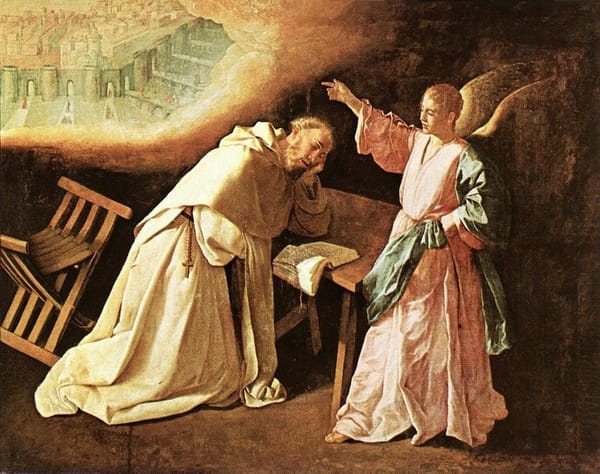
THE Ransomer of Captives, Peter Nolasco, is thus brought before us by the Calendar, a few days after the Feast of his master, Raymund of Pennafort. Both of them offer to the Divine Redeemer the thousands of Christians they ransomed from slavery. It is an appropriate homage, for it was the result of the Charity which first began in Bethlehem, in the heart of the Infant Jesus, and was afterwards so fervently practiced by these two Saints.
Peter was born in France, but made Spain his adopted country, because it offered him such grand opportunities for zeal and self-sacrifice. In imitation of our Redeemer, he devoted himself to the ransom of his brethren; he made himself a prisoner to procure them their liberty; and remained in exile, that they might once more enjoy the happiness of home. His devotedness was blessed by God. He founded a new Religious Order in the Church, composed of generous-hearted men, who for six hundred years prayed, toiled, and spent their lives in obtaining the blessing of liberty for countless captives, who would else have led their whole lives in chains, exposed to the imminent danger of losing their faith.
Glory to the Blessed Mother of God, who raised up these ransomers of Captives! Glory to the Catholic Church, whose children they were! But above all glory be to our Emmanuel, who, on his entrance into this world, thus spoke to his Eternal Father: Sacrifice and oblation thou wouldst not, neither are they pleasing to thee; but a Body thou hast fitted unto me. Then said I, Behold I come:1 that is, Behold, I come to offer myself as a Sacrifice. The Divine Infant has deigned to call us his brethren, and has given himself for our salvation; it is this same spirit of charity which made St Peter Nolasco devote his life to his suffering fellow-men.
Our Lord rewarded him by calling him to heaven at that very hour wherein twelve hundred years before he himself had been born at Bethlehem. It was during the joyful celebrations of Christmas night that the liberator of so many from bodily captivity was united for ever to the Divine Liberator of souls.
Peter’s last hymn on earth was the 110th Psalm: and as his faltering voice uttered the words: He hath sent redemption to his people; he hath commanded his covenant for ever, his soul took its flight to heaven.
The Church, in fixing a day for the feast of our Saint, could not of course take the anniversary of his death, which belongs so exclusively to Jesus: but it was just that he, who had been honoured with being born to heaven at the very hour which God had chosen for the Birth of his Son upon the earth, should receive the tribute of our festive commemoration on one of the forty days of Christmas; this last day of January was selected.
Let us now learn from the Liturgy the claims of Peter Nolasco to our veneration and love.
Thou, O Jesus! camest to cast fire upon the earth, and thy desire is that it be enkindled in the hearts of men. Thy desire was accomplished in Peter Nolasco, and the children of his Order. Thus dost thou permit men to co-operate with thee in the designs of thy sweet mercy, and, by thus restoring harmony between man and his Creator, thou hast once more given to the earth the blessing of fraternal love between man and man. Sweet Infant Jesus! we cannot love thee without loving all mankind; and thou, who art our Ransom and our Victim, willest that we also be ready to lay down our lives for one another.
Thou, O Peter! wast the Apostle and the model of this fraternal charity; and our God rewarded thee by calling thee to himself on the anniversary of the Birth of Jesus. That sweet Mystery, which so often encouraged thee in thy holy labours, has now been revealed to thee in all its glory. Thy eyes now behold that Jesus as the great King, the Son of the Eternal Father, before whom the very Angels tremble. Mary is no longer the poor humble Mother, leaning over the Crib where lies her Son; she now delights thy gaze with her queenly beauty, seated as she is on a throne nearest to that of the divine Majesty. Thou art at home amidst all this glory, for heaven was made for souls that love as thine did. Heaven is the land of love, and love so filled thy heart even when on earth, that it was the principle of thy whole life.
Pray for us, that we may have a clearer knowledge of this love of God and our neighbour, which makes us like to God. It is written that he that abideth in charity abideth in God, and God in him;2 intercede for us, that the Mystery of Charity which we are now celebrating may transform us into him who is the one object of all our love during this season of grace. May we love our fellow-creatures as ourselves; bear with them, excuse their weaknesses, and serve them. May our good example encourage them, and our words edify them; may we comfort them and win them to the service of God by our kindness and our charities.
Pray for France, which is thy country, and for Spain, where thou didst institute thy grand Order. Protect the precious remnants of that Order, by whose means thou didst work such miracles of charity. Console all prisoners and captives. Obtain for all men that holy Liberty of Children of God, of which the Apostle speaks,3 which consists in obedience to the law of God. When this liberty is in man's soul, he never can be a slave; but when the inner man is enslaved, the outward man never can be free. Oh! pray that the fetters of false doctrines and passions may be broken, and then the world will enjoy that true liberty, which would soon put an end to tyranny, and make tyrants impossible.
| Previous January 27: St. John Chrysostom, Bishop and Doctor of the Church | Next January 28 (the Same Day): St. Agnes, Her Second Feast |