Daily reading
Lent
Double · March 8 · Sanctoral
March 8, 2024
From Dom Guéranger’s The Liturgical Year.
A Double leads the weekday.Rubric
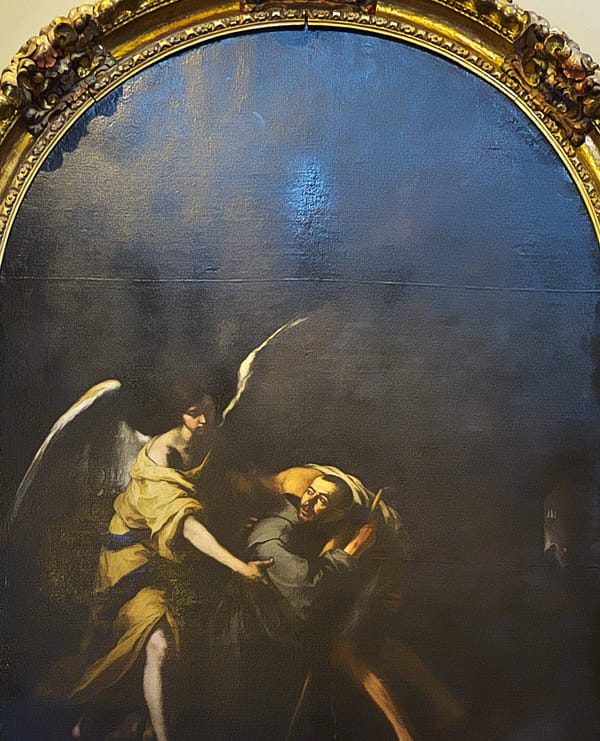 |
March 8: St. John of God, Confessor
This day month we were keeping the feast of St. John of Matha, whose characteristic virtue was charity; our saint of to-day was like him: love for his neighbour led him to devote himself to the service of them that most needed help. Both are examples to us of what is a principal duty of this present season; they are models of fraternal charity. They teach us this great lesson, that our love of God is false if our hearts are not disposed to show mercy to our neighbour, and help him in his necessities and troubles. It is the same lesson as that which the beloved disciple gives us, when he says: 'He that hath the substance of this world, and shall see his brother in need, and shall put up his mercy from him, how doth the charity of God abide in him?’* But if there can be no love of God where there is none for our neighbour, the love of our neighbour itself is not genuine unless it be accompanied by a love of our Creator and Redeemer. The charity which the world has set up, which it calls philanthropy, and which it exercises not in the name of God, but solely for the sake of man, is a mere delusion; it is incapable of producing love between those who give and those who receive, and its results must necessarily be unsatisfactory. There is but one tie which can make men love one another: that tie is God, who created them all, and commands them all to be one in Him. To serve mankind for its own sake, is to make a god of it; and even viewing the workings of the two systems in this single point of view—the relief they afford to temporal suffering—what comparison is there between mere philanthropy, and that supernatural charity of the humble disciples of Christ, who make Him the very motive and end of all they do for their afflicted brethren? The saint we honour today, was called John of God, because the name of God was ever on his lips. His heroic acts of charity had no other motive than that of pleasing God; God alone was the inspirer of the tender love he had for his suffering fellow-creatures. Let us imitate his example, for our Lord assures us that He considers as done to Himself whatsoever we do even for the least of His disciples.
The liturgy thus portrays the virtues of our saint:
What a glorious life was thine, O John of God! It was one of charity, and of miracles wrought by charity. Like Vincent of Paul thou wast poor, and, in thy early life, a shepherd-boy like him; but the charity which filled thy heart gave thee a power to do what worldly influence and riches never can. Thy name and memory are dear to the Church; they deserve to be held in benediction by all mankind, for thou didst spend thy life in serving thy fellow-creatures, for God’s sake. That motive gave thee a devotedness to the poor, which is an impossibility for those who befriend them from mere natural sympathy. Philanthropy may be generous, and its workings may be admirable for ingenuity and order; but it never can look upon the poor man as a sacred object, because it refuses to see God in him. Pray for the men of this generation, that they may at length desist from perverting charity into a mere mechanism of relief. The poor are the representatives of Christ, for He Himself has willed that they be such; and if the world refuse to accept them in this their exalted character, if it deny their resemblance to our Redeemer, it may succeed in degrading the poor, but by this very degradation it will make them its enemies. Thy predilection, O John of God, was for the sick; have pity, therefore, on our times, which are ambitious to eliminate the supernatural, and exclude God from the world by what is called secularization of society. Pray for us, that we may see how evil a thing it is to have changed the Christian for the worldly spirit. Enkindle holy charity within our hearts, that during these days, when we are striving to draw down the mercy of God upon ourselves, we also may show mercy. May we, as thou didst, imitate the example of our blessed Redeemer, who gave Himself to us His enemies, and deigned to adopt us as His brethren. Protect also the Order thou didst institute, which has inherited thy spirit; that it may prosper, and spread in every place the sweet odour of that charity, which is its very name.
* 1 St. John iii. 17 ↩︎
Friday of the Third Week of Lent
The Station is at the church of Saint Laurence in Lucina. In this venerable and celebrated church is kept the gridiron, on which the holy archdeacon consummated his martyrdom.
Collect
Epistle
Cap. xx.In diebus illis: Convenerunt filii Israël adversum Moysen et Aaron: et versi in seditionem, dixerunt: Date nobis aquam, ut bibamus. Ingressusque Moyses et Aaron, dimissa multitudine, tabernaculum fœderis, corruerunt proni in terram, clamaveruntque ad Dominura, atque dixerunt: Domine Deus, audi clamorem hujus populi, et aperi eis thesaurum tuum, fontem aquæ vivæ, ut satiati, cesset murmuratio eorum. Et apparuit gloria Domini super eos. Locutusque est Dominus ad Moysen, dicens: Tolle virgam, et congrega populum, tu et Aaron frater tuus, et loquimini ad petram coram eis, et ilia dabit aquas. Cumque eduxeris aquam de petra, bibet omnis multitudo, et jumenta ejus. Tulit igitur Moyses virgam, quæ erat in conspectus Domini, sicut præceperat ei, congregata multitudine ante petram, dixitque eis: Audite, rebelles et increduli: num de petra hac vobis aquam poterimus ejicere? Cumque elevasset Moyses manum, percutiens virga bis silicem, egressæ sunt aquæ largissimæ, ita ut populus biberet, et jumenta. Dixitque Dominus ad Moysen et Aaron: Quia non credidistis mihi, ut sanctificaretis me coram filiis Israël, non introducetis hos populos in terram quam dabo eis. Hæc est aqua contradictionis, ubi jurgati sunt filii Israël contra Dominum, et sanctificatus est in eis.
Ch. xx.In those days: The children of Israël came together against Moses and Aaron: and making a sedition they said: Give us water to drink. And Moses and Aaron leaving the multitude, went into the tabernacle of the oovenant, and fell flat upon the ground, and cried to the Lord and said: O Lord God, hear the cry of this people, and open to them thy treasure, a fountain of living water, that being satisfied, they may cease to murmur. And the glory of the Lord appeared over them. And the Lord spoke to Moses, saying: Take the rod, and assemble the people together, thou and Aaron thy brother, and speak to the rock before them, and it shall yield waters. And when thou hast brought forth water out of the rock, all the multitude and their cattle shall drink. Moses therefore took the rod which was before the Lord, as he had commanded him, and having gathered together the multitude before the rock, he said to them: Hear, ye rebellious and incredulous; can we bring you forth water out of this rock? And when Moses had lifted up his hand, and struck the rock twice with the rod, there came forth water in great abundance, so that the people and their cattle drank. And the Lord said to Moses and Aaron: Because you have not believed me, to sanctify me before the children of Israël, you shall not bring these people into the land which I will give them. This is the water of contradiction, where the children of Israël strove with words against the Lord, and he was sanctified in them.
Here we have one of the most expressive figures of the old Testament: it symbolizes the Sacrament of Baptism, for which our catechumens are now preparing. A whole people asks for water; if it be denied them, they must perish in the wilderness. St. Paul, the sublime interpreter of the types of the old Testament, tells us that the rock is Christ,1 from whom came forth the fountain of living water, which quenches the thirst of our souls, and purifies them. The holy fathers observe that the rock yielded not its waters until it had been struck with the rod, which signifies the Passion of our Redeemer. The rod itself, as we are told by some of the earliest commentators of the Scriptures, is the symbol of the cross; and the two strokes, wherewith the rock was struck, represent the two parts of which the cross was formed. The paintings which the primitive Church has left us in the catacombs of Rome, frequently represent Moses in the act of striking the rock, from which flows a stream of water; and a glass, found in the same catacombs, bears an inscription, telling us that the first Christians considered Moses as the type of St. Peter, who, in the new Covenant, opened to God’s people the fountain of grace, when he preached to them on the day of Pentecost; and gave also to the Gentiles to drink of this same water when he received Cornelius, the centurion, into the Church. This symbol of Moses striking the rock, and the figures of the old Testament which we have already come across, or shall still meet with, in the lessons given by the Church to the catechumens, are not only found in the earliest frescoes of the Roman catacombs, but we have numerous proofs that they were represented in all the Churches both of the east and of the west. Up to the thirteenth century and even later, we find them in the windows of our cathedrals, and in the traditional form or type which was given to them in the early times. It is to be regretted that these Christian symbols, which were so dear to our Catholic forefathers, should now be so forgotten as to be almost treated with contempt. Let us love them, and, by the study of the holy liturgy, let us return to those sacred traditions, which inspired our ancestors with heroic faith, and made them undertake such grand things for God and for their fellow-men.
Gospel
Cap. iv.In illo tempore: Venit Jesus in civitatem Samariæ, quæ dicitur Sichar, juxta prædium quod dedit Jacob Joseph filio suo. Erat autem ibi fons Jacob. Jesus ergo fatigatus ex itinere, sedebat sic supra fontem. Hora erat quasi sexta. Venit mulier de Samaria haurire aquam. Dicit ei Jesus: Da mihi bibere. (Discipuli enim ejus abierant in civitatem ut cibos emerent.) Dicit ergo ei mulier illa Samaritana: Quomodo tu, Judaeus cum sis, bibere a me poscis, quæ sum mulier Samaritana? Non enim coutuntur Judæi Samaritanis. Respondit Jesus, et dixit ei: Si scires donum Dei, et quis est qui dicit tibi: Da mihi bibere: tu forsitan petisses ab eo, et dedisset tibi aquam vivam. Dicit ei mulier: Domine, neque in quo haurias, habes, et puteus altus est: unde ergo habes aquam vivam? Numquid tumajor es patre nostro Jacob, qui dedit nobis puteum, et ipse ex eo bibit, et filii ejus, et pecora ejus? Respondit Jesus, et dixit ei: Omnis qui bibit ex aqua hac, sitiet iterum: qui autem biberit ex aqua, quam ego dabo ei, non sitiet in æteraum; sed aqua, quam ego dabo ei, fiet in eo fons aquæ salientis in vitam ætemam. Dicit ad cum mulier: Domine, da mihi hanc aquam, ut non sitiam, neque veniam huc haurire. Dicit ei Jesus: Vade, voca virum tuum, et veni huc. Respondit mulier, et dixit: Non habeo virum. Dicit ei Jesus: Bene dixisti, quia non habeo virum: quinque enim viros habuisti, et nunc quem habes, non est tuus vir: hoc vere dixisti. Dicit ei mulier: Domine, video quia propheta es tu. Patres nostri in monte hoc adoraverunt, et vos dicitis, quia Jerosolymis est locus, ubi adorare oportet. Dicit ei Jesus: Mulier, crede mihi, quia venit hora, quando neque in monte hoc neque in Jerosolymis adorabitis Patrem. Vos adoratis quod nescitis: nos adoramus quod scimus, quia salus ex Judæis est. Sed venit hora, et nunc est, quando veri adoratores adorabunt Patrem in spiritu et veritate. Nam et Pater tales quærit, qui adorent eum. Spiritus est Deus: et eos qui adorant eum, in spiritu et veritate oportet adorare. Dicit ei mulier: Scio quia Messias venit (qui dicitur Christus). Cum ergo venerit ille, nobis anmmtiabit omnia. Dioit ei Jesus: Ego sum, qui loquor tecum. Et continuo venerunt discipuli ejus: et mirabantur quia cum muliere loquebatur. Nemo tamen dixit: Quid quæris, aut quid loqueris cum ea? Reliquit ergo hydriam suam mulier, et abiit in civitatem, et dicit illis hominibus: Venite, et videte hominem qui dixit mihi omnia quæcumque feci: numquid ipse est Christus? Exierunt ergo de civitate, et veniebant ad eum. Interea rogabant cum discipuli dicentes: Rabbi, manduca. Ille autem dicit eis: Ego cibum habeo manducare, quem vos nescitis. Dicebant ergo discipuli ad invicem: Numquid aliquis attulit ei manducare? Dicit eis Jesus: Meus cibus est ut faciam voluntatem ejus qui misit me, ut perficiam opus ejus. Nonne vos dicitis, quod adhuc quatuor menses sunt, et messis venit? Ecce dico vobis: Levate oculos vestros, et videte regiones, quia albæ sunt jam ad messem. Et qui metit, mercedem accipit, et congregat fructum in vitam æternam: ut et qui seminat, simul gaudeat, et qui metit. In hoc enim est verbum verum: quia alius est qui seminat, et alius est qui metit. Ego misi vos metere, quod vos non laborastis: alii laboraverunt, et vos in labores eorum introistis. Ex civitate autem ilia multi crediderunt in cum Samaritanorum, propter verbum mulieris testimonium perhibentis: Quia dixit mihi omnia quæcumque feci. Gum venissent ergo ad ilium Samaritani, rogaverunt cum ut ibi maneret. Et mansit ibi duos dies. Et multo plures crediderunt in cum propter sermonem ejus. Et mulieri dicebant: Quia jam non propter tuam loquelam credimus: ipsi enim audivimus, et scimus quia hic est vere Salvator mundi.
Ch. iv.At that time: Jesus came to a city of Samaria which is called Sichar, near the land which Jacob gave to his son Joseph. Now Jacob’s well was there. Jesus therefore being wearied with his journey, sat thus on the well. It was about the sixth hour. There cometh a woman of Samaria to draw water. Jesus saith to her: Give me to drink. For his disciples were gone into the city to buy meats. Then that Samaritan woman saith to him: How dost thou, being a Jew, ask of me to drink, who am a Samaritan woman? For the Jews do not communicate with the Samaritans. Jesus answered, and said to her: If thou didst know the Gift of God, and who he is that saith to thee, Give me to drink: thou perhaps wouldst have asked of him, and he would have given thee living water. The woman saith to him: Sir, thou hast nothing wherein to draw, and the well is deep; from whence then hast thou living water? Art thou greater than our father Jacob, who gave us the well, and drank thereof himself, and his children, and his cattle? Jesus answered, and said to her: Whosoever drinketh of this water, shall thirst again: but he that shall drink of the water that I will give him, shall not thirst for ever. But the water that I will give him, shall become in him a fountain of water springing up into life everlasting. The woman saith to him: Sir, give me this water, that I may not thirst, nor come hither to draw. Jesus saith to her: Go, call thy husband, and come hither. The woman answered, and said: I have no husband. Jesus said to her: Thou hast said well, I have no husband; for thou hast had five husbands; and he whom thou now hast, is not thy husband. This thou hast said truly. The woman saith to him: Sir, I perceive that thou art a prophet. Our fathers adored on this mountain, and you say that at Jerusalem is the place where men must adore. Jesus saith to her: Woman, believe me, that the hour cometh, when you shall neither on this mountain, nor in Jerusalem, adore the Father. You adore that which you know not; we adore that which we know, for salvation is of the Jews. But the hour cometh, and now is, when the true adorers shall adore the Father in spirit and in truth. For the Father also seeketh such to adore him. God is a spirit; and they that adore him, must adore him in spirit and in truth. The woman saith to him: I know that the Messias cometh, who is called Christ; therefore when he is come, he will tell us all things. Jesus saith to her: I am he, who am speaking with thee. And immediately his disciples came; and they wondered that he talked with the woman. Yet no man said: What seekeet thou, or why talkest thou with her? The woman therefore left her waterpot, and went her way into the city, and saith to the men there: Come, and see a man who has told me all things whatsoever I have done. Is not he the Christ? They went therefore out of the city, and came unto him. In the meantime the disciples prayed him, saying: Rabbi, eat. But he said to them: I have meat to eat which you know not. The disciples therefore said one to another: Hath any man brought him to eat? Jesus saith to them: My meat is to do the will of him that sent me, that I may perfect his work. Do not you say, there are yet four months and then the harvest cometh? Behold I say to you, lift up your eyes, and see the countries, for they are white already to harvest. And he that reapeth receiveth wages, and gathereth fruit unto life everlasting; that both he that soweth, and he that reapeth may rejoice together. For in this is the saying true: that it is one man that soweth, and it is another that reapeth. I have sent you to reap that in which you did not labour; others have laboured, and you have entered into their labours. Now of that city many of the Samaritans believed in him, for the word of the woman giving testimony: He told me all things whatsoever I had done. So when the Samaritans were come to him, they desired him that he would tarry there. And he abode there two days. And many more believed in him because of his own word. And they said to the woman: We now believe, not for thy `saying; for we ourselves have heard him, and know that this is indeed the Saviour of the world.
Our Gospel shows us the Son of God continuing the ministry of Moses, by revealing to the Samaritan woman, who represents the Gentiles, the mystery of the water that gives life everlasting. We find this subject painted on the walls of the catacombs, and carved on the tombs of the Christians, as far back as the fifth, and even the fourth century. Let us, then, meditate upon this event of our Lord’s life, for it tells us of His wonderful mercy. Jesus is wearied with His journey; He, the Son of God, who had but to speak and the world was created, is fatigued seeking after His lost sheep. He is obliged to rest His wearied limbs; He sits; but it is near a well. He finds a Samaritan woman there; she is a Gentile, an idolatress; she comes to draw water from the well; she has no idea of a water of eternal life: Jesus intends to reveal the mystery to her. He begins by telling her that He is tired and thirsty. A few days hence, when expiring on His cross, He will say:’I thirst’: and so now, He says to this woman: Give me to drink. So true is it that, in order to appreciate the grace brought us by our Redeemer, we must first know this Redeemer in His weakness and sufferings.
But before the woman has time to give Jesus what He asks, He tells her of a water, of which he that drinks shall not thirst for ever: He invites her to draw from a fountain, that springeth up into life everlasting. The woman longs to drink of this water; she knows not who He is that is speaking with her, and yet she has faith in what He says. This idolatress evinces a docility of heart, which the Jews never showed to their Messias; and she is docile, notwithstanding that He who speaks to her belongs to a nation which despises all Samaritans. The confidence wherewith she listens to Jesus is rewarded by His offering still greater graces. He begins by putting her to the test. Go, He says, eall thy husband, and come hither. She was living in sin, and Jesus would have her confess it. She does so without the slightest hesitation; her humility is rewarded, for she at once recognizes Jesus to be a Prophet, and she begins to drink of the living water. Thus was it with the Gentiles. The apostles preached the Gospel to them; they reproached them with their crimes, and showed them the holiness of the God they had offended; but the Gentiles did not therefore reject their teaching; on the contrary, they were docile, and only wanted to know what they should do to render themselves pleasing to their Creator. The faith had need of martyrs; and they were found in abundance amidst these converts from paganism and its abominations.
Jesus seeing such simple-heartedness in the Samaritan, mercifully reveals to her who He is. He tells this poor sinner that the time has come when all men shall adore God; He tells her that the Messias has come upon the earth, and that He Himself is that Messias. It is thus that Christ treats a soul that is simple and obedient. He shows Himself to her without reserve. When the disciples arrived, they wondered; they had as yet too much of the Jew in them; they, therefore, could not understand how their Master could show anything like mercy to this Samaritan. But the time will soon come, when they will say with the great apostle St. Paul: ‘There is neither Jew nor Greek; there is neither bond nor free; there is neither male nor female; for all are one in Christ Jesus.’2
Meanwhile, the Samaritan becomes an apostle, for she is filled with heavenly ardour. She leaves her pitcher at the well: what cares she for its water, now that Jesus has given her to drink of the living water? She goes back to the city; but it is that she may preach Jesus there, and bring to Him, if she can, all the inhabitants of Samaria. In her humility, she gives this proof of His being a great Prophet: that He has told her all the sins of her life! These pagans, whom the Jews despised, hasten to the well, where Jesus has remained speaking to His disciples on the coming harvest. They acknowledge Him to be the Messias, the Saviour of the world; and Jesus condescends to abide two days in this city, where there was no other religion than that of idolatry, with a fragment here and there of some Jewish practice. Tradition tells us that the name of the Samaritan woman was Photina. She and the Magi were the first-fruits of the new people of God. She suffered martyrdom for Him who revealed Himself to her at Jacob’s well. The Church honours her memory each year, in the Roman martyrology, on March 20.
The Mozarabic liturgy celebrates the vocation of the Samaritan woman in the following beautiful Preface:
Illatio
(In DominicaI. Quadrajesimæ)
| Previous Thursday of the Third Week of Lent | Next Friday of the Third Week of Lent |