Daily reading
Passiontide
Double · Movable from Easter · Temporal
March 17, 2024
From Dom Guéranger’s The Liturgical Year.

|
Passion Sunday
The holy Church begins her night Office of this Sunday with these impressive words of the royal prophet. Formerly, the faithful considered it their duty to assist at the night Office, at least on Sundays and feasts; they would have grieved to lose the grand teachings given by the liturgy. Such fervour has long since died out; the assiduity at the Offices of the Church, which was the joy of our Catholic forefathers, has now become a thing of the past; and even in countries which have not apostatized from the faith, the clergy have ceased to celebrate publicly Offices at which no one assisted. Excepting in cathedral churches and in monasteries, the grand harmonious system of the divine praise has been abandoned, and the marvellous power of the liturgy has no longer its full influence upon the faithful.
This is our reason for drawing the attention of our readers to certain beauties of the Divine Office, which would otherwise be totally ignored. Thus, what can be more impressive than this solemn Invitatory of to-day’s Matins, which the Church takes from one of the psalms, and which she repeats on every feria between this and Maundy Thursday? She says: To-day, if ye shall hear the voice of the Lord, harden not your hearts! The sweet voice of your suffering Jesus now speaks to you, poor sinners! be not your own enemies by indifference and hardness of heart. The Son of God is about to give you the last and greatest proof of the love that brought Him down from heaven; His death is nigh at hand: men are preparing the wood for the immolation of the new Isaac: enter into yourselves, and let not your hearts, after being touched with grace, return to their former obduracy; for nothing could be more dangerous. The great anniversaries we are to celebrate have a renovating power for those souls that faithfully correspond with the grace which is offered them; but they increase insensibility in those who let them pass without working their conversion. To-day, therefore, if you hear the voice of the Lord, harden not your hearts!
During the preceding four weeks, we have noticed how the malice of Jesus' enemies has been gradually increasing. His very presence irritates them; and it is evident that any little circumstance will suffice to bring the deep and long-nurtured hatred to a head. The kind and gentle manners of Jesus are drawing to Him all hearts that are simple and upright; at the same time, the humble life He leads, and the stem purity of His doctrines, are perpetual sources of vexation and anger, both to the proud Jew that looks forward to the Messias being a mighty conqueror, and to the pharisee, who corrupts the Law of God, that he may make it the instrument of his own base passions. Still, Jesus goes on working miracles; His discourses are more than ever energetic; His prophecies foretell the fall of Jerusalem, and such a destruction of its famous temple, that not a stone is to be left on a stone. The doctors of the Law should, at least, reflect upon what they hear; they should examine these wonderful works, which render such strong testimony in favour of the Son of David; and they should consult those divine prophecies which, up to the present time, have been so literally fulfilled in His person. Alas! they themselves are about to carry them out to the very last iota. There is not a single outrage or suffering foretold by David and Isaias, as having to be put upon the Messias, which these blind men are not scheming to verify.
In them, therefore, was fulfilled that terrible saying: ‘He that shall speak against the Holy Ghost, it shall not be forgiven him, neither in this world, nor in the world to come.’1 The Synagogue is nigh to a curse. Obstinate in her error, she refuses to see or to hear; she has deliberately perverted her judgment: she has extinguished within herself the light of the holy Spirit; she will go deeper and deeper into evil, and at length fall into the abyss. This same lamentable conduct is but too often witnessed nowadays in those sinners, who, by habitual resistance to the light, end by finding their happiness in sin. Neither should it surprise us, that we find in people of our own generation a resemblance to the murderers of our Jesus: the history of His Passion will reveal to us many sad secrets of the human heart and its perverse inclinations; for what happened in Jerusalem, happens also in every sinner’s heart. His heart, according to the saying of St. Paul, is a Calvary, where Jesus is crucified. There is the same ingratitude, the same blindness, the same wild madness, with this difference: that the sinner who is enlightened by faith, knows Him whom he crucifies; whereas the Jews, as the same apostle tells us, knew not the Lord of glory.2 Whilst, therefore, we listen to the Gospel, which relates the history of the Passion, let us turn the indignation which we feel for the Jews against ourselves and our own sins; let us weep over the sufferings of our Victim, for our sins caused Him to suffer and die.
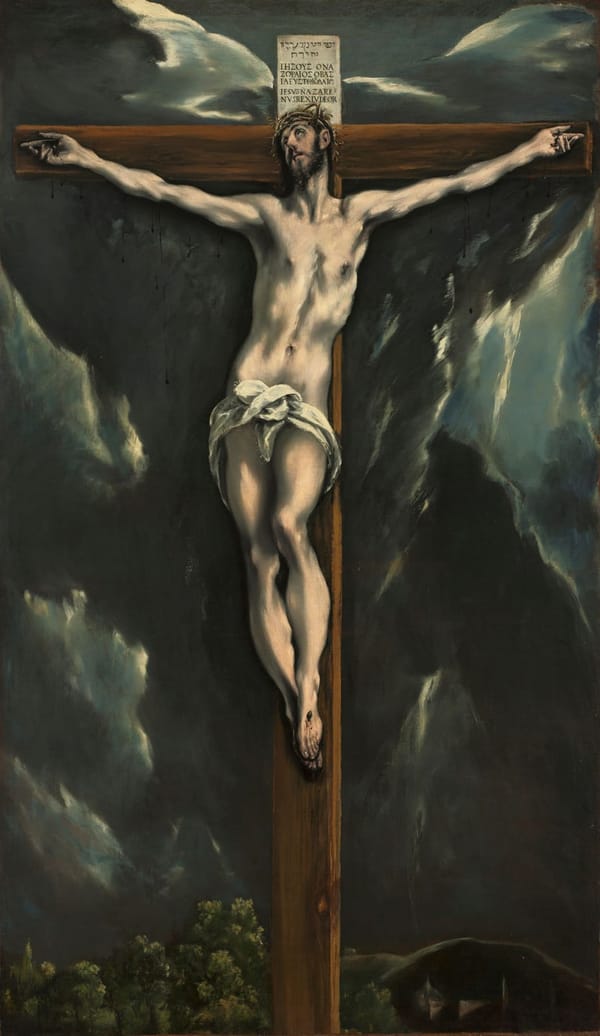
Everything around us urges us to mourn. The images of the saints, the very crucifix on our altar, are veiled from our sight. The Church is oppressed with grief. During the first four weeks of Lent, she compassionated her Jesus fasting in the desert; His coming sufferings and crucifixion and death are what now fill her with anguish. We read in to-day’s Gospel, that the Jews threaten to stone the Son of God as a blasphemer: but His hour is not yet come. He is obliged to flee and hide Himself. It is to express this deep humiliation, that the Church veils the cross. A God hiding Himself, that He may evade the anger of men—what a mystery! Is it weakness? Is it, that He fears death? No; we shall soon see Him going out to meet His enemies: but at present He hides Himself from them, because all that had been prophesied regarding Him has not been fulfilled. Besides, His death is not to be by stoning: He is to die upon a cross, the tree of malediction, which, from that time forward, is to be the tree of life. Let us humble ourselves, as we see the Creator of heaven and earth thus obliged to hide Himself from men, who are bent on His destruction! Let us go back, in thought, to the sad day of the first sin, when Adam and Eve hid themselves because a guilty conscience told them they were naked. Jesus has come to assure us of our being pardoned, and lo! He hides Himself, not because He is naked—He that is to the saints the garb of holiness and immortality—but because He made Himself weak, that He might make us strong. Our first parents sought to hide themselves from the sight of God; Jesus hides Himself from the eye of men. But it will not be thus for ever. The day will come when sinners, from whose anger He now flees, will pray to the mountains to fall on them and shield them from His gaze; hut their prayer will not be granted, and they shall see the Son of Man coming in the clouds of heaven, with much power and majesty.3
This Sunday is called Passion Sunday, because the Church begins, on this day, to make the sufferings of our Redeemer her chief thought. It is called also, Judica, from the first word of the Introit of the Mass; and again Neomania, that is, the Sunday of the new (or the Easter) moon, because it always falls after the new moon which regulates the feast of Easter.
In the Greek Church, this Sunday goes under the simple name of the fifth Sunday of the holy fasts.
Mass
At Rome, the Station is in the basilica of St. Peter. The importance of this Sunday, which never gives way to any feast, no matter what its solemnity may be, required that the place for the assembly of the faithful should be in one of the chief sanctuaries of the holy city.
The Introit is taken from the first verses of Psalm xlii. The Messias appeals to God’s tribunal, and protests against the sentence about to be pronounced against Him by men. He likewise expresses His confidence in His Father’s help, who, after His sufferings and death, will lead Him in triumph into the holy mount.
Introit
The Gloria Patri is not said during Passiontide and Holy Week (unless a saint’s feast be kept), but the Introit is repeated immediately after the Psalm.
In the Collect, the Church prays that there may be produced in her children that total reformation, which the holy season of Lent is intended to produce. This reformation is such, that it will not only subject the body to the spirit, but preserve also the spirit itself from those delusions and passions, to which it has been, hitherto, more or less a slave.
Collect
Then is added one of the following prayers:
Against the Persecutors of the Church
For the Pope
Epistle
Cap. IX.Fratres: Christus assistens Pontifex futurorum bonorum, per amplius et perfectius tabernaculum non manufactum, id est, non hujus creationis: neque per sanguinem hircorum aut vitulorum, sed per proprium Sanguinem introivit semel in Sancta, æterna redemptione inventa. Si enim sanguis hircorum et taurofum, et cinis vitulæ aspersus inquinatos sanctificat ad emundationem carnis: quanto magis Sanguis Christi, qui per Spiritum sanctum semetipsum obtulit immaculatum Deo, emundabit conscientiam nostram ab operibus mortuis, ad serviendum Deo viventi? Et ideo novi Testamenti mediator est: ut morte intercedente, in redemptionem earum prævaricationum, quæ erant sub priori Testamento, repromissionem accipiant, qui vocati sunt, æternæ hæreditatis: in Christo Jesu Domino nostro
Ch. IX.Brethren: Christ being come, an High Priest of the good things to come, by a greater and more perfect tabernacle not made with hands, that is, not of this creation, neither by the blood of goats or of calves, but by his own Blood, entered once into the Holies, having obtained eternal redemption. For, if the blood of goats and of oxen, and the ashes of an heifer being sprinkled, sanctify such as are defiled, to the cleansing of the flesh; how much more shall the Blood of Christ (who by the Holy Ghost offered himself unspotted unto God), cleanse our conscience from dead works to serve the living God? And therefore, he is the mediator of the new Testament: that by means of his death, for the redemption of those transgressions which were under the former Testament, they that are called may receive the promise of eternal inheritance, in Christ Jesus our Lord.
It is by blood alone that man is to be redeemed. He has offended God. This God cannot be appeased by anything short of the extermination of His rebellious creature, who, by shedding his blood, will give an earnest of his repentance and his entire submission to the Creator, against whom he dared to rebel. Otherwise, the justice of God must be satisfied by the sinner’s suffering eternal punishment. This truth was understood by all the people of the ancient world, and all confessed it by shedding the blood of victims, as in the sacrifices of Abel at the very commencement of the world, in the hecatombs of Greece, in the countless immolations whereby Solomon dedicated the temple. And yet God thus speaks to His people: ‘Hear, O My people, and I will speak: O Israel, and I will testify to thee: I am God thy God. I will not reprove thee for thy sacrifices, and thy burnt-offerings are always in my sight. I will not take calves out of thy house, nor he-goats out of thy flocks. I need them not: for all the beasts of the woods are Mine. If I should be hungry I would not tell thee; for the world is Mine, and the fullness thereof. Shall I eat the flesh of bullocks? or shall I drink the blood of goats?’4 Thus, God commands the blood of victims to be offered to Him, and, at the same time, declares that neither it nor they are precious in His sight. Is this a contradiction? No: God would hereby have man understand that it is only by blood that he can be redeemed, but that the blood of brute animals cannot effect this redemption. Can the blood of man himself bring him his own redemption, and appease God’s justice? No, not even man’s blood, for it is defiled; and even were it undefiled, it is powerless to compensate for the outrage done to God by sin. For this there was needed the Blood of a God; such was the Blood of Jesus, and He has come that He may shed it for our redemption.
In Him is fulfilled the most sacred of the figures of the old Law. Once each year, the high-priest entered into the Holy of holies, there to make intercession for the people. He went within the veil, even to the Ark of the Covenant; but he was not allowed to enjoy this great privilege, unless he entered the holy place carrying in his hands the blood of a newly-offered victim. The Son of God, the true High Priest, is now about to enter heaven, and we are to follow Him thither; but unto this, He must have an offering of blood, and that Blood can be none other than His own. We are going to assist at this His compliance with the divine ordinance. Let us open our hearts, that this precious Blood may, as the apostle says in to-day’s Epistle, cleanse our conscience from dead works to serve the living God.
The Gradual is taken from the Psalms. Our Saviour here prays to be delivered from His enemies, and protected from the rage of them that have risen up against Him; yet is He ready to do the will of His Father, by whom He will be avenged.
In the Tract, which is also taken from the Psalms, the Messias, under the name of Israel, complains of the persecution He has met with from the Jews, even from His youth. They are now about to scourge Him in a most cruel manner. But He also foretells the punishment their deicide is to bring upon them.
Gradual
Tract
Gospel
Cap. viii.In illo tempore: Dicebat Jesus turbis Judæorum: Quis ex vobis arguet me de peccato? Si veritatem dico vobis, quare non creditis mihi? Qui ex Deo est, verba Dei audit. Propterea vos non auditis, quia ex Deo non estis. Responderunt ergo Judæi, et dixerunt ei: Nonne bene dicimus nos quia Samaritanus es tu, et dæmonium habes? Respondit Jesus: Ego dæmonium non habeo: sed honorifico Patrem meum, et vos inhonorastis me. Ego autem non quæro gloriam meam: est qui quærat et judicet. Amen, amen dico vobis: Si quis sermonem meum servavaverit, mortem non videbit in æternum. Dixerunt ergo Judæi: Nunc cognovimus quia dæmonium habes. Abraham mortuus est, et prophetæ: et tu dicis: Si quis sermonem meum servaverit, non gustabit mortem in æternum. Numquid tu major es patre nostro Abraham, qui mortuus est? et prophetæ mortui sunt. Quem teipsum facis? Respondit Jesus: Si ego glorifico meipsum, gloria mea nihil est: est Pater meus, qui glorificat me, quem vos dicitis quia Deus vester est, et non cognovistis eum; ego autem novi eum: et si dixero quia non scio eum, ero similis vobis mendax. Sed scio eum, et sermonem ejus servo. Abraham pater vester exsultavit ut videret diem meum: vidit, et gavisus est. Dixerunt ergo Judæi ad eum: Quinquaginta armos nondum habes, et Abraham vidisti? Dixit eis Jesus: Amen, amen, dico vobis, antequam Abraham fieret, ego sum. Tulerunt ergo lapides ut jacerent in eum: Jesus autem abscondit se, et exivit de templo.
Ch. viii.At that time: Jesus said to the multitude of the Jews: Which of you shall convince me of sin? If I say the truth to you, why do you not believe me? He that is of God, heareth the words of God. Therefore you hear them not, because you are not of God. The Jews, therefore, answered and said to him; Do not we say well that thou art a Samaritan, and hast a devil? Jesus answered: I have not a devil; but I honour my Father, and you have dishonoured me. But I seek not my own glory: there is one that seeketh and judgeth. Amen, amen, I say to you: If any man keep my word, he shall not see death for ever. The Jews therefore said: Now we know that thou hast a devil. Abraham is dead, and the prophets: and thou sayest: If any man keep my word, he shall not taste death for ever. Art thou greater than our father Abraham, who is dead? And the prophets are dead. Whom dost thou make thyself? Jesus answered: If I glorify myself my glory is nothing. It is my Father that glorifieth me, of whom you say that he is your God; and you have not known him, but I know him. And if I shall say that I know him not, I shall be like to you, a liar. But I do know him, and do keep his word. Abraham your father rejoiced that he might see my day: he saw it, and was glad. The Jews therefore said to him: Thou art not yet fifty years old, and hast thou seen Abraham? Jesus said to them: Amen, amen, I say to you, before Abraham was made, I am. They took up stones therefore to cast at him. But Jesus hid himself, and went out of the temple.
The fury of the Jews is evidently at its height, and Jesus is obliged to hide Himself from them. But He is to fall into their hands before many days are over; then will they triumph and put Him to death. They triumph, and Jesus is their victim: but how different is to be His lot from theirs! In obedience to the decrees of His heavenly Father, and out of love for men, He will deliver Himself into the hands of His enemies, and they will put Him to death; but He will rise victorious from the tomb, He will ascend into heaven, He will be throned on the right hand of His Father. His enemies, on the contrary, after having vented all their rage, will live on without remorse, until the terrible day come for their chastisement. That day is not far off, for observe the severity wherewith our Lord speaks to them: 'You hear not the words of God, because you are not of God' Yet there was a time when they were of God, for the Lord gives His grace to all men; but they have rendered this grace useless; they are now in darkness, and the light they have rejected will not return.
You say that My Father is your God, and you have not known Him; but I know Him. Their obstinacy in refusing to acknowledge Jesus as the Messias, has led these men to ignore that very God, whom they boast of honouring; for if they knew the Father, they would not reject His Son. Moses, and the Psalms, and the Prophets, are all a dead letter to them; these sacred Books are soon to pass into the hands of the Gentiles, who will both read and understand them. If, continues Jesus, I should say that I know Him not, I should be like to you, a liar. This strong language is that of the angry Judge who is to come down, at the last day, to destroy sinners. Jerusalem has not known the time of her visitation: the Son of God has visited her, He is with her, and she dares to say to Him: Thou hast a devil! She says to the eternal Word, who proves Himself to be God by the most astonishing miracles, that Abraham and the prophets are greater than He! Strange blindness, that comes from pride and hardness of heart! The feast of the Pasch is at hand; these men are going to eat, and with much parade of religion, the flesh of the figurative lamb; they know full well that this lamb is a symbol, or a figure, which is to have its fulfilment. The true Lamb is to be sacrificed by their hands, and they will not know Him. He will shed His Blood for them, and it will not save them. How this reminds us of those sinners, for whom this Easter promises to be as fruitless as those of the past years! Let us redouble our prayers for them, and beseech our Lord to soften their hearts, lest trampling the Blood of Jesus under their feet, they should have it to cry vengeance against them before the throne of the heavenly Father.
At the Offertory, confiding in the merits of the Blood that has redeemed us, let us, in the words of the Psalm, give praise to God, and proclaim Him to be the author of that new life, of which the sacrifice of the Lamb is the never-failing source.
Offertory
The Sacrifice of the spotless Lamb has produced two effects upon the sinner: it has broken his fetters, and has made him the object of God’s love. The Church prays, in the Secret, that the Sacrifice which she is about to offer, and which is one with that of the cross, may work the same results in us.
Secrets
Against the Persecutors of the Church
For The Pope
The Communion-antiphon is formed out of the very words spoken by Jesus, when instituting the august Sacrifice which has just been celebrated, and of which the priest and people have partaken, in memory of the Passion, for it renews both the remembrance and the merits of the Passion.
Communion
In the Postcommunion, the Church prays to God, that He would maintain in the faithful the fruits of the visit He has so graciously paid them; for, by their participation in the sacred mysteries, He has entered into them.
Postcommunions
Against the Persecutors of the Church
For the Pope
Vespers
The psalms and antiphons are given on page 81.
Capitulum (Heb. ix)
For the hymn and versicle, see page 89.
Antiphon of the Magnificat
The following, appropriate prayer is from the Mozarabic breviary.
Capitulum
That we may the better honour the holy cross, we give, for each day of this week, an appropriate hymn from one or other of the various ancient liturgies. The one we have selected for to-day is the composition of St. Venantius Fortunatus, bishop of Poitiers.
Hymn
Atque cruore suo vulnera nostra lavat.
Traxit ab ore lupi qua sacer Agnus oves.
Atque suo clausit funere mortis iter.
Quæ eripuit Paulum crimine, morte Petrum.
Quando tuis ramis tam nova poma geris.
Et redeunt vitæ qui caruere die.
Luna nec in noctem, sol neque meridie.
Spargis et ornatas flore recente comas.
Dulcia sanguineo vina rubore fluunt.
March 17: St. Patrick, Apostle of Ireland, Bishop and Confessor
The saint we have to honour to-day is the apostle of that faithful people, whose martyrdom has lasted three hundred years: it is the great St. Patrick, he that gave Erin the faith. There shone most brightly in this saint that gift of the apostolate, which Christ has left to His Church, and which is to remain with her to the end of time. The ambassadors or missioners, sent by our Lord to preach His Gospel, are of two classes. There are some who have been entrusted with a small tract of the Gentile world; they had to sow the divine seed there, and it yielded fruit more or less according to the dispositions of the people that received it: there are others, again, whose mission is like a rapid conquest, that subdues a whole nation, and brings it into subjection to the Gospel. St. Patrick belongs to this second class; and in him we recognize one of the most successful instruments of God's mercy to mankind.
And then, what solidity there is in this great saint’s work! When is it that Ireland received the faith? In the fifth century, when Britain was almost wholly buried in paganism; when the race of the Franks had not as yet heard the name of the true God; when Germany had no knowledge of Christ’s having come upon the earth; when the countries of northern Europe deeply slumbered in infidelity: yes, it was before these several nations had awakened to the Gospel, that Ireland was converted. The faith, brought to her by her glorious apostle, took deep root and flourished and fructified in this isle, more lovely even by grace than she ifl by nature. Her saints are scarcely to be numbered, and went about doing good in almost every country of Europe; her children gave, and are still giving, to other countries, the faith that she herself received from her beloved patron. And when the sixteenth century came with its protestantism; when the apostasy of Germany was imitated by England, Scotland, and the whole north of Europe, Ireland stood firm and staunch; no persecution, however cleverly or however cruelly carried on against her, has been able to detach her from the faith taught her by Saint Patrick.
Let us honour the admirable apostle, chosen by God to sow the seed of His word in this privileged land; and let us listen to the simple account of his labours and virtues, thus given in the lessons of his feast:
The following sequence, in honour of our saint, is taken from an ancient manuscript missal, published by Messingham, in his Florilegiam Insulœ Sanctorum, Paris, 1624:
Sequence
Qua conscendit ad superna
Vir Dei Patricius.
Puer bonus Christi crucem
Veneratur ocyus.
Fons erupit, donum lucis
Cæco nato præbuit.
Quo nutrici, quæ languebat,
Sanitatem tribuit.
Fit cuetos porcorum:
Aurum quo redimitur
Reperit decorum.
Satan hunc vexavit:
Sed Helias artuum
Robur reparavit.
Moribus imbutus,
Corpus abstinentiis,
Moysen secutus;
In montis cacumina
Scandit et jejunat;
Glacierum fragmina
Succendens adunat.
Documentis et doctrina
Studet evangelicis.
Doctor est, nutu divino,
Transmissus Hibemicis.
Fur punitur plagie duris,
Et ejus successio.
Obiit ante, post revectus
Orante Patricio.
Prece congregata
Pellit ab Hibernia,
Mari liberata.
Cœlos aliquoties
Apertos aspexit;
Et Jesum suspiciens
Dominum conspexit.
Transit pater ab hac luce
Signis plenus,
Christo duce,
Lucie ad palatium.
Confer, bone Jesu, tua
Pietate gaudium.
whereon Patrick, the man of God,
ascended to heaven!
the holy youth devoutly venerated
the cross of Christ.
a fount gushed forth upon the spot,
and with its waters he gave sight to one born blind.
and by it restored
his nurse to health.
and was made keeper of swine:
but the saint found a piece of glittering gold,
and with it bought his freedom.
with bodily injuries;
but Elias healed him,
and gave him back his strength.
and, like Moses,
he restrained his body
from vices by fasting.
He ascends a high mountain,
and there he fasts.
He throws ice upon a fire,
and it burns as though it were wood.
and teaching of Germanus,
and studies under him the maxims of the Gospel.
sends him to teach salvation
to the people of Hibernia.
was discovered by its bleating;
and he and his family were punished with a severe scourge.
and asked to be restored to health. He was first punished with real death,
and was then restored to life by Patrick’s prayer.
all venomous reptiles,
and drove them from Hibernia’s shore.
At times, he saw
the heavens opened;
and as he gazed above,
he saw the Lord Jesus.
Our father passed out of this world,
under the guidance of Christ;
and, glorious by his miracles,
he was taken to the courts
of heavenly light.
by his intercession,
that we may enter into joy.
The following antiphons and prayers are taken from the Officium Sancti Patricii, Paris, 1622:
Another favourite antiphon, used in the ancient Proper Office of St. Patrick, was composed of the words spoken to him by the angel:
We conclude these liturgical extracts with a prayer from an ancient manuscript breviary of Armagh.
Prayer
Thy life, great saint, was spent in the arduous toils of an apostle; but how rich was the harvest thou didst reap! Every fatigue seemed to thee light, if only thou couldst give to men the precious gift of faith; and the people to whom thou didst leave it have kept it with a constancy which is one of thy greatest glories. Pray for us, that this faith, without which it is impossible to please God,1 may take possession of our hearts and minds. It is by faith that the just man liveth,2 says the prophet, and it is faith that, during this holy season of Lent, is showing us the justice and mercy of God, in order that we may be converted, and offer to our offended Lord the tribute of our penance. We are afraid of what the Church imposes on us, simply because our faith is weak. If our principles were those of faith, we should soon be mortified men. Thy life, though so innocent, and so rich in good works, was one of extraordinary penance: gain for us thy spirit, and help us to follow thee, at least at a humble distance. Pray for Erin, that dear country of thine, which loves and honours thee so fervently. She is threatened with danger even now, and many of her children have left the faith thou didst teach. An odious system of proselytism has disturbed thy flock; protect it, and suffer not the children of martyrs to be apostates. Let thy fatherly care follow them that have been driven by suffering to emigrate from their native land: may they keep true to the faith, be witnesses of the true religion in the countries to which they have fled, and ever show themselves to be the obedient children of the Church. May their misfortunes thus serve to advance the kingdom of God. Holy pontiff! intercede for England; pardon her the injustice she has shown to thy children; and, by thy powerful prayers, hasten the happy day of her return to Catholic unity. Pray, too, for the whole Church; thy prayer, being that of an apostle, easily finds access to Him that sent thee.
| Previous Saturday of the Fourth Week of Lent | Next March 17: St. Patrick, Apostle of Ireland, Bishop and Confessor |