Daily reading
Paschal Time
Double · Movable from Easter · Temporal
April 28, 2024
From Dom Guéranger’s The Liturgical Year.

|
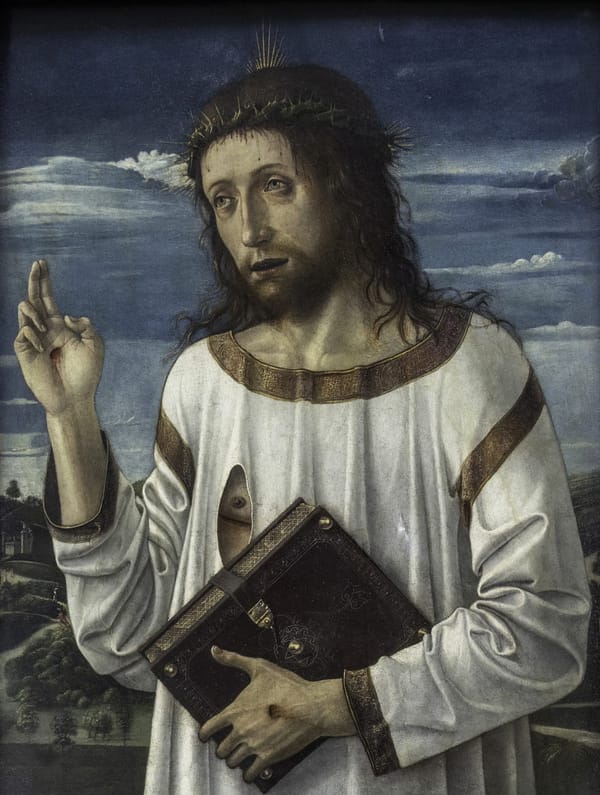
Fourth Sunday after Easter
OUR Jesus has organized his Church, and confided to his Apostles the sacred deposit of the truths which are to form the object of our faith. We must now follow him in another work, of equal importance to the world, to which he gives his divine attention during these forty days: it is the institution of the sacraments. It is not enough that we believe; we must, moreover, be made just—that is, we must bear upon us the likeness of God’s holiness; we must receive, we must have incorporated within us that great fruit of the redemption which is called grace; that thus being made living members of our divine Head, we may be made join theirs with him of the kingdom of heaven. Now it is by means of the sacraments that Jesus is to produce in us this wondrous work of our justification; he applies to us the merits of his Incarnation and Sacrifice, but he applies them by certain means, which he himself, in his power and wisdom, has instituted.
Being the sovereign master of his own gifts, he can select what means he pleases whereby to convey grace to us; all we have to do is to conform to his wishes. Thus, each of the sacraments is a law; so that it is in vain that we hope for a sacrament to produce its effects, unless we fulfil the conditions specified by our Redeemer. And here, at once, we cannot but admire that infinite goodness which has so mercifully blended two such widely distinct operations in one and the same act—namely, on the one side the humble submission of man, and on the other the munificent generosity of God.
We were showing, a few days back, how the Church, though a spiritual society, is also visible and exterior, because man, for whose sake the Church was formed, is a being composed of body and soul. When instituting the sacraments, our Lord assigned to each an essential rite; and this rite is outward and sensible. He made the Flesh, which he had united to his divine Person, become the instrument of our salvation by his Passion and Death on the Cross; he redeemed us by shedding his Blood for us: so is it in the sacraments; he follows the same mysterious plan, taking physical things as his auxiliaries in effecting the work of our justification. He raises them to a supernatural state, and makes them the faithful and all-powerful conductors of his grace, even to the most intimate depths of our soul. It is the continuation of the mystery of the Incarnation, the object of which is to raise us, by visible things, to the knowledge of things invisible. Thus is broken the pride of Satan; he despised man because he is not purely a spirit, but is spirit and matter unitedly; and he refused to pay adoration to the word made Flesh.
Moreover, the sacraments, being visible signs, are an additional bond of union between the members of the Church: we say additional, because these members have the two other strong links of union—submission to Peter and to the pastors sent by him and profession of the same faith. The Holy Ghost tells us, in the sacred Volume, that a threefold cord is not easily broken.1 Now we have such a one; and it keeps us in the glorious unity of the Church: hierarchy, dogma, and sacraments, all contribute to make us one Body. Everywhere, from north to south, and from east to west, the sacraments testify to the fraternity that exists amongst us; by them we know each other, no matter in what part of the globe we may be, and by the same we are known by heretics and infidels. These divine sacraments are the same in every country, how much soever the liturgical formulae of their administration may differ; they are the same in the graces they produce, they are the same in the signs whereby grace is produced—in a word, they are the same in all the essentials.
Our Risen Jesus would have the sacraments be seven. As at the beginning he stamped the creation of the visible world with this sacred number, giving six days to work and one to rest, so, too, would he mark the great spiritual creation. He tells us, in the Old Testament, that Wisdom (that is, himself, for he is the Eternal Wisdom of the Father) will build to himself a house, which is the Church; and he adds that he will make it rest on seven pillars.2 He gives us a type of this same Church in the tabernacle built by Moses, and he orders a superb candlestick to be provided for giving light, by day and night, to the holy place; but there were to be seven branches to the candlestick, and on each branch were to be graven flowers and fruits.3 When he raises his beloved disciple to heaven, he shows himself to him surrounded by seven candlesticks, and holding seven stars in his right hand.4 He appears to him as a Lamb, bearing seven horns, which are the symbol of strength, and having seven eyes, which signify his infinite wisdom.5 Near him lies a Book, in which is written the future of the world; the Book is sealed with seven seals, and none but the Lamb is able to loose them.6 The disciple sees seven spirits, burning like lamps, before the throne of God,7 ready to do his biddings, and carry his word to the extremities of the earth.
Turning our eyes to the kingdom of Satan, we see him mimicking God's work, and setting up a seven of his own. Seven capital and deadly sins are the instruments whereby he makes man his slave; and our Saviour tells us that when Satan has been defeated and would regain a soul, he brings with him seven of the wickedest spirits of hell. We read in the Gospel that Jesus drove seven devils out of Mary Magdalen. When God’s anger bursts upon the world, immediately before the coming of the dread Judge, he will announce the approach of his chastisements by seven trumpets, sounded by seven angels;8 and seven other angels will then pour out upon the guilty earth seven vials filled with the wrath of God.9
We, therefore, who are resolved to make sure our election; who desire to possess the grace of our Risen Jesus in this life, and to enjoy his vision in the next; oh! let us reverence and love this merciful seven, these admirable sacraments! Under this sacred number he has included all the varied riches of his grace. There is not a want or necessity, either of souls individually, or of society at large, for which our Redeemer has not provided by these seven sources of regeneration and life. He calls us from death to life by Baptism and Penance; he strengthens us in that supernatural life by Confirmation, the Eucharist, and Extreme Unction; he secures to his Church both ministry and increase by Holy Orders and Matrimony. The seven sacraments supply everything needed; take one away, and you destroy the harmony. The Churches of the East, though severed now for long ages from Catholic unity, retain all seven; and when Protestantism broke the sacred number, it showed in this, as in all its other pretended reformations, that it was estranging itself from the spirit of the Christian religion. No: the doctrine of the sacraments is one that cannot be denied without denying the true faith. If we would be members of God’s Church, we must receive this doctrine as coming from him who has a right to insist on our humble submission to his every word. It is to the soul which thus believes that the sacraments appear in all their divine beauty and power: we understand, because we believe, Credite, et intelligetis! It is the fulfilment of the text from Isaias, as rendered by the Septuagint: Unless ye believe, ye shall not understand!10
Let us confine our considerations, for to-day, to the first of the sacraments—Baptism. It is during Paschal Time that we have it brought before us in all its glory. We remember how, on Holy Saturday, it filled the hearts of the catechumens with joy, giving them a right to heaven. But the great sacrament had had its preparations. On the Feast of the Epiphany, we adored our Emmanuel as we beheld him descending into the river Jordan, and by this contact with his sacred Body, communicating to the element of water the power of purifying men's souls from sin. The Holy Ghost, in the form of a dove, rested on Jesus' head, and by his divine influence gave fecundity to the life-giving element. The voice of the Eternal Father was heard in a cloud announcing his adoption of all such as should receive baptism; he adopted them in Jesus, his eternally wellbeloved Son.
During his sojourn on earth, our Redeemer thus explained the mystery of baptism to Nicodemus, who was a ruler among the Jews, and a master in Israel: Unless a man be born again of water and the Holy Ghost, he cannot enter into the kingdom of God11 Here, as in so many other instances, he foretells what he intends to do at a future time; he prepares us for the mystery by telling us that as our first birth was not pure, he is preparing a second for us; that this second birth will be holy, and that water is to be the instrument of so great a grace.
But after his Resurrection, our Emmanuel openly announced his having given to water the power of producing the sublime adoption to which mankind was invited by the Eternal Father. Speaking to his Apostles, he thus gives them the fundamental law of the kingdom he had come from heaven to establish: Going, teach ye all nations: baptizing them in the name of the Father, and of the Son, and of the Holy Ghost.12 This is the master-gift bestowed on the world by its Redeemer: salvation by water and the invocation of the blessed Trinity; for he adds: He that believeth and is baptized, shall be saved.13 What a revelation was here! It told us of the infinite mercy wherewith our Creator loved us: it was the inauguration of the sacraments by the announcement of the first of the seven—of that one which, according to the expression of the holy Fathers, is the gate to the rest.
Let us love this august mystery of baptism, to which we are indebted for the life of our souls, and for the indelible character which makes us members of our divine Head, Jesus. The holy King of France, St Louis, who was baptized in the humble village of Poissy, loved to sign himself’ Louis of Poissy.' He looked upon the baptismal font as the mother who had given him a life incomparably superior to that which made him the son of an earthly monarch: she gave him to be the child of God and heir to the kingdom of Heaven. We should imitate this saintly king.
But observe the exceeding considerateness of our Risen Jesus, when he instituted this the most indispensable of the sacraments. He chose for its matter the commonest that could be, and the most easily to be had. Bread, wine and oil are not so plentiful as water, which is to be found in every place; God made it thus plentiful, that when the appointed time came, the fount of regeneration might be within everyone's reach.
In his other sacraments, our Saviour would have priests alone to be the ministers: not so with baptism. Any one of the faithful, whatever may be his or her condition, may administer baptism. Nay more; an infidel can, by water and the invocation of the blessed Trinity, confer upon others the baptismal grace, which he or she does not possess, provided only that he really intends to do what Holy Church does, when she administers the sacrament of baptism.
Nor is this all. An unbaptized man or woman may be dying, and no one near him to administer this sacrament; he is on the brink of eternity, and there is no hand nigh to pour the water of regeneration upon him; our Saviour has lovingly provided for this necessity. Let this man or woman believe in baptism; let him desire it in all the sincerity of his soul; let him entertain sentiments of compunction and love, such as are required of an adult when receiving baptism; he is baptized in desire, and heaven is open to him.
But what if it be a child, who has not come to the use of reason? Our Saviour’s words are plain: He that believeth and is baptized, shall be saved. How, then, can this child be saved? The guilt of original sin is upon it, and it is incapable of making an act of faith. Fear not: the power of holy baptism extends even so far as this. The faith of the Church will be imputed to this child, which the Church is about to adopt as her own: let water be but poured on the child, in the name of the three divine Persons, and it is a Christian for ever. Baptized in the faith of the Church, this child now possesses (and, as we say, personally) Faith, Hope and Charity; the sacramental water has achieved this wondrous work. If the little innocent dies, it goes straight to heaven.
These, O Jesus! are the admirable effects of the first of thy sacraments. How truly does the Apostle say of thee, that thou wiliest all men to be saved!14 If this thy will be in some without its fulfilment, so that some children die without baptism, it is because of the consequences which sin produces in the parents, and which thy justice is not bound to prevent. And yet, how frequently does not thy mercy intervene, and procure the grace of regeneration for children who, naturally, would have been excluded! Thus, the water of baptism has been poured upon countless babes, who were dying in the arms of their pagan parents, and the angels received these little ones into their choirs. Knowing this, dear Saviour, we are forced to exclaim with the Psalmist: Let us that live bless the Lord!15
In the Greek Church, the fourth Sunday after Easter is called the Sunday of the Samaritan, because there is then read the passage of the Gospel which relates the conversion of this woman.
The Roman Church begins the Catholic Epistles in her Night Office of this Sunday, and continues them till Pentecost Sunday.
Mass
In the Introit, the Church makes use of one of the finest canticles of the royal prophet, in order to celebrate the wonderful graces bestowed upon her by her divine Spouse; she also rejoices at the thought that the Gentiles have been called to the knowledge of God, to justification and salvation.
Introit
Ps. Salvavit sibi dextera ejus: et brachium sanctum ejus.℣. Gloria Patri. Cantate.
Ps. His right hand, and his holy arm hath saved us.℣. Glory, etc. Sing, etc.
Laden with the blessings of God, who, by his divine sacraments has made them to be one people, the faithful should not be satisfied with observing the commandments—they should love them; they should also long after the heaven that is promised them. The Church prays, in the Collect, that her children may receive the grace to do all this.
Collect
To this are added two of the Collects given at page 135.
Epistle
Cap. i.Charissimi, omne datum optimum, et omne donum perfectum desursum est, descendens a Patre luminum, apud quem non est transmutatio nec vicissitudinis obumbratio. Voluntarie enim genuit nos verbo veritatis, ut simus initium aliquod creaturae ejus. Scitis, fratres mei dilectissimi. Sit autem omnis homo velox ad audiendum: tardus autem ad loquendum, et tardus ad iram. Ira enim viri, justitiam Dei non operatur. Propter quod abjicientes omnem immunditiam, et abundantiam malitiae, in mansuetudine suscipite insitum verbum, quod potest salvare animas vestras.
Ch. i.Dearly beloved: Every best gift, and every perfect gift, is from above, coming down from the Father of lights, with whom there is no change, nor shadow of alteration. For of his own will hath he begotten us by the word of truth, that we might be some beginning of his creatures. You know, my dearest brethren. And let every man be swift to hear, but slow to speak, and slow to anger. For the anger of man worketh not the justice of God. Wherefore casting away all uncleanness and abundance of naughtiness, with meekness receive the ingrafted word, which is able to save your souls.
The favours bestowed upon the Christian people proceed from the goodness of our heavenly Father. He is the source of everything in the order of nature; and if, in the order of grace, we are become his children, it is because he sent us his Consubstantial Word—the Word of Truth—whereby, by means of baptism, we were made children of God. Hence, we ought to imitate, as far as our weakness will permit, the divine calm of our Father who is in heaven; we ought to avoid that state of passionate excitement which savours of a terrestrial life, whereas ours should be of the heaven whither God calls us. The Apostle bids us receive, with meekness, the word, which makes us what we are. He tells us that this word is a germ of salvation grafted into our souls: only let us put no obstacle to its growth, and we shall be saved.
In the first Alleluia-Versicle, our Risen Jesus extols, in the words of the royal psalmist, the power of his Father, who gave him the victory of his Resurrection. In the second, we ourselves proclaim the praise of the immortal life of our divine Master; we proclaim it in the words of St Paul;
Gospel
Cap. xvi.In illo tempore: Dixit Jesus discipulis suis: Vado ad eum qui misit me: et nemo ex vobis interrogat me, Quo vadis? Sed quia hæc locutus sum vobis, tristitia implevit cor vestrum. Sed ego veritatem dico vobis: Expedit vobis ut ego vadam: si enim non abiero, Paraclitus non veniet ad vos: si autem abiero, mittam eum ad vos. Et cum venerit ille, arguet mundum de peccato, et de justitia, et de judicio. De peccato quidem, quia non crediderunt in me: de justitia vero, quia ad Patrem vado, et jam non videbitis me: de judicio autem, quia princeps hujus mundi jam judicatus est. Adhus multa habeo vobis dicere: sed non potestis portare modo. Cum autem venerit ille Spiritus veritatis, docebit vos omnem veritatem: non enim loquetur a semetipso: sed quæcumque audiet loquetur, et quæventura sunt annuntiabit vobis. Ille me clarificabit: quia de meo accipiet et annuntiabit vobis.
Ch. xvi.At that time: Jesus said to his disciples: I go to him that sent me; and none of you asketh me: Whither goest thou? But because I have spoken these things to you, sorrow hath filled your heart. But I tell you the truth: it is expedient to you that I go: for if I go not, the Paraclete will not come to you; but if I go, I will send him to you. And when he is come, he will convince the world of sin, and of justice, and of judgement. Of sin: because they believed not in me. And of justice: because I go to the Father; and you shall see me no longer. And of judgement: because the prince of this world is already judged. I have yet many things to say to you: but you cannot bear them now. But when he, the Spirit of truth, is come, he will teach you all truth. For he shall not speak of himself; but what things soever he shall hear, he shall speak: and the things that are to come he shall show you. He shall glorify me: because he shall receive of mine, and shall show it you.
The Apostles were sad at hearing Jesus say to them: I go. Are not we so, too? we who, thanks to the sacred Liturgy, have been in such close company with him ever since the day of his birth at Bethlehem. Yet a few days, and he is to ascend into heaven, and our year is to lose the charm it possessed of following, day by day, the actions and words of our Emmanuel. Still, he would have us moderate our sadness. He tells us that in his stead the Paraclete, the Comforter, is about to descend upon the earth, and abide with us to the end of time, in order that he may give us light and strength. Let us make good use of these last hours with our Jesus: we shall soon have to be preparing for the divine Guest who is to take his place.
By these words, which were spoken shortly before his passion, our Saviour does more than tell us of the coming of the Holy Ghost; he also shows us how terrible this coming will be to them that have rejected the Messias. His words are unusually mysterious: let us listen to the explanation given of them by St Augustine, the Doctor of doctors. When the Holy Ghost is come, says our Lord, he will convince the world of sin, because they believed not in me. How great must, indeed, be the responsibility of them that have been witnesses of Jesus' wonderful works, and yet will not receive his teaching! Jerusalem will be told that the Holy Ghost has come down upon the disciples: and she will receive the news with the same indifference as she did the miracles which proved Jesus to be her Messias. The coming of the Holy Ghost will serve as a sort of signal of the destruction of the deicide city. Jesus adds: The Paraclete will convince the world of justice, because I go to the Father, and ye shall see me no longer. The Apostles, and they that believe their word, shall be just and holy by faith: they will believe in him that is gone to the Father—in him whom they are to see no longer in this world. Jerusalem, on the contrary, will remember him only to blaspheme him: the holiness, the faith, the justice of them that shall believe, will be her condemnation, and the Holy Ghost will leave her to her fate. Jesus continues: The Paraclete will convince the world of judgement, because the prince of this world is already judged. They that follow not Christ Jesus, follow Satan: he is their prince, but his judgement is already pronounced. The Holy Ghost warns the followers of the world that their leader is already in eternal torments. Let them reflect well upon this; for, as St Augustine observes,’the pride of man has no right to reckon upon indulgence; let it but think of the hell into which even the angels were cast because they were proud.'16
In the Offertory, the Christian makes use of the psalmist's words, to celebrate the favours bestowed by God upon his soul. He invites the whole earth to join him in his gratitude, and he does well; for the favours received by this Christian are offered to the whole of mankind; Jesus has invited all men to share by means of the sacraments in the graces of the redemption.
Offertory
Holy Church delights in the contemplation of divine truth, so profusely communicated tø her by our Risen Lord; she prays, in the following prayer, that her children may lead such good lives in this world, as to merit the eternal enjoyment of the God of all truth.
Secret
To this are added two of the Secrets given at page 140.
The Communion-Anthem repeats the mysterious words of the Gospel, which we have already explained; they remind us that the coming of the Holy Ghost may be either a reward or a punishment, according to the dispositions of men.
Communion
Whilst giving thanks for the divine mystery just received, the Church, in the Postcommunion, teaches us that the Eucharist has the power of cleansing us from our sins, and preserving us from the dangers to which we are exposed.
Postcommunion
To this are added two of the Postcommunions given at page 141.
Vespers
The psalms, hymn and versicle are given on pages 81-90.
Antiphon of the Magnificat
We will close the day with the following fine Preface given in the ancient Gothic Missal, which was published by Dom Mabillon, and was formerly used in many of the Churches of Gaul.
Contestatio
April 28: St. Paul of the Cross, Confessor
SPLENDIDLY adorned with the sacred sign of the Passion, Paul of the Cross comes to-day to pay homage to the Conqueror of Death. It behoved Christ to suffer and so enter into his glory. It behoves the Christian, the member of Christ, to follow his Head in suffering that he may share his triumph. Even as a child Paul penetrated deeply into the ineffable mystery of the suffering of a God. He was filled with an ardent love for the cross, and ran with giant strides along this royal road. He passed through the torrent, following his divine Head, he was buried with him in death, and has won a share in his Resurrection.
The diminution of truths among the children of men seemed to have dried up the fount of sanctity, when Italy, ever fruitful in her vivid faith, gave birth to the Christian hero, who stands out in the arid waste of the eighteenth century, like a saint of olden times. God never deserts his Church. He confronts a century of revolt and sensualism veiled under the name of philosophy with the Cross of his Son. A new Paul, recalling both in his name and his works the great Apostle of the Gentiles, rises in the midst of a generation intoxicated with pride and falsehood, to whom the Cross has become once more a folly and a scandal. This apostle was weak, poor, isolated and long misunderstood, but his heart was full of love and self-abnegation, and he sought to put to confusion the wisdom of sages and the prudence of prudent men. Clad in a coarse habit, with bare feet, his head crowned with thorns and a heavy cross on his shoulder, he journeyed through cities, claiming the attention of both the humble and the mighty, and desiring to know nothing but Jesus Crucified. The Cross made his zeal fruitful and showed itself to be indeed the power and the wisdom of God. Those who prided themselves on having banished the miraculous from history and the supernatural from the life of the people, might exult in their triumph, but, unknown to them, wonderful prodigies, countless miracles, were making whole peoples submissive to the voice of this man who, by completely destroying sin in his own person, had regained the power which Adam once had over nature, and seemed to possess in his mortal flesh the qualities of a glorified body.
But the apostolate of the Cross was not to end with Paul’s death. The resources of ancient times were no longer sufficient for a decrepit age. We are far from the days when the exquisite delicacy of Christian sentiment was strongly moved by the sight of the cross amid flowers, as it is seen in the paintings of the catacombs. Man’s senses have been dulled by unhealthy emotions, and there is need of a stimulant in the form of a constant representation of the tears, the Blood, and the gaping wounds of our divine Redeemer. Paul of the Cross received the mission to supply this need. At the cost of unspeakable sufferings he became the father of a new religious family, which adds to the three ordinary vows of religion a fourth vow—to propagate devotion to the sacred Passion of our Lord, the badge of which each Religious wears visibly on his breast.
We must not forget that the Passion of our Lord is for the Christian soul only a preparation for the great mystery of the Pasch, the glorious term of the manifestations of the Word, the supreme end of the elect, whose piety finds therein its completion and its crown. The Holy Spirit, who guides the Church throughout the admirable course of the liturgical cycle, has no other end in view for the souls who abandon themselves unreservedly to his sanctifying power. Paul's desire was to be nailed to the cross on Calvary, but he was often carried thence to the heights of heaven where he heard mysterious words such as it is not granted to man to utter.1 He assisted at the triumph of the Son of Man, who, after having lived on earth a mortal life and passed through death, is living now for ever and ever.2 He saw on the throne of God the Lamb standing as though slain, and giving light to the heavenly city,3 and this sublime vision of the realities of heaven inspired him with that divine enthusiasm, that intoxication of love, which, in spite of his terrifying austerities, gives an incomparable charm to his whole person. ‘Fear not,' he said to his children who were terrified by the furious attacks of the Devil, ' fear not, cry “Alleluia.” The devil is afraid of the Alleluia; it is a word that comes from Paradise.' He could not restrain his feelings when he saw nature born again with her Saviour in these days of spring, the flowers blossoming under the steps of his Risen Lord, the birds celebrating his victory in their harmonious songs. His heart was full to overflowing with love and poetry; he touched the flowers gently with his stick and upbraided them, saying: ‘Hold your peace, hold your peace.’ ‘To whom do these lands belong?’ he said one day to a companion, ‘to whom do these lands belong, I say? You do not understand. They belong to our great God.’ And his biographer relates that he was rapt in an ecstasy of love and carried some distance through the air. ‘Love God, my brethren,' he repeated to all those whom he met, ‘love God, who so well deserves our love. Do you not hear the very leaves on the trees telling you to love God? O love of God, love of God!'
We yield to the charm of a sanctity which is so sweet and yet so strong. It is a divine attraction, such as could never be exercised by the false spirituality, so much in vogue in the eighteenth century, even among the holiest. Under pretext of subduing man's evil nature and avoiding possible excesses, the new teachers allied themselves, though unwittingly, with Jansenism, checked the flight of the soul, disciplined it, remade it according to their own fashion, and confined it within the limits of certain rules which were supposed to lead all souls to perfection at the same rate. But saints are made by the divine Spirit, the spirit of love and holiness, to whose essence liberty belongs. He does not confine himself within the bounds of human methods. Our Lord says: ' The Spirit breatheth where he will . . . but thou knowest not whence he cometh and whither he goeth. So is every one that is bom of the Spirit.'4 The Holy Ghost chose Paul in his earliest infancy. He took possession of this child, so richly endowed by nature, destroyed nothing and sanctified everything. He formed him according to ancient models, always ardent, always attractive, and exceedingly holy. Such a one could never have been produced by a school whose over-correct methods wear the soul out by a barren and self-centred asceticism.
The Liturgy gives the following short account of St Paul of the Cross:
Romam profectus, theologicis disciplinis rite imbutus, a summo Pontifice Benedicto Decimo tertio ex obedientia sacerdotio auctus est. Facta sibi ab eodem potestate aggregandi socios, in solitudinem recessit Argentarii montis, quo eum beata Virgo jampridem invitaverat, veste illi simul ostensa atri coloris, Passionis Filli sui insignibus decorata, ibique fundamenta jecit novæ Congregationis. Quæ brevi, plurimis ab eo toleratis laboribus, præclaris aucta viris, cum Dei benedictione valde succrevit; a Sede Apostolica non semel confirmata una cum regulis, quas orando ipse a Deo acceperat, et quarto addito voto pergratam Dominicæ Passionis memoriam promovendi. Sacras Virgines quoque instituit, quæ excessum caritatis divini Sponsi sedulo meditarentur. Hæc inter, animarum inexhausta aviditate ab Evangelii prsedicatione numquam deficiens, homines pene innumeros etiam perditissimos aut in hæresim lapsos, in salutis tramitem adduxit. Præsertim Christi enarranda Passione, mirifica ejus prationis vis erat, qua una cum adstantibus in fletum effusus quælibet obdurata corda ad poenitentiam scindebat.
Thou hadst but one thought, O Paul. Hidden in those ‘clefts of the rock,’5 which are the sacred Wounds of the Saviour, thou wouldst bring all men to these divine fountains which quench the thirst of the true Israel in the desert of this life. Happy were they who could hear thy victorious word and save themselves by the Cross in the midst of a perverse generation. But in spite of thy apostolic zeal, thy voice could not make itself heard in all lands, and where thou wast absent evil was let loose upon the world. False science and mistaken piety, mistrust of Rome and the corruption of the great had prepared the way for the destruction of the old Christian social order, and the world was given over to teachers of lies. Thy prophetic gaze saw the abyss in which kings and peoples were soon to be engulfed. The successor of St Peter, unable to quell the storm which raged against the Church, sought by his efforts and sacrifices to hold back the floods, even for a time. Thou wert the friend of the Pontiffs and their support in those sad days, the witness of Christ suffering in his Vicar. What sorrows were confided to thee! And what must have been thy thoughts when at thy death thou didst bequeath the venerated image of the Mater Dolorosa to a Pontiff who was destined to drain the cup of bitterness and die a captive in a strange land! Thou didst promise to watch over the Church from thy throne in heaven with that tender compassion which identified thee on earth with her suffering Spouse. Keep this promise to-day, O Paxil! This age of social disintegration has neither made atonement for the sins of the past nor learnt wisdom from misfortune. The Church is the victim of oppression on all sides, the power is in the hands of her persecutors, and the Vicar of Christ is a prisoner in his palace and lives on alms. The Bride has no bed but the Cross of her Spouse, she lives on the memory of his sufferings. The Holy Spirit who guards her and is preparing her for the final summons, has raised thee up to keep her perpetually in mind of those sufferings which are to strengthen her in the trials of the last days.
Thy children all the world over are true to the spirit of their father and continue thy work on earth. They have gained a footing in England where thy prophetic gaze foresaw their labours, and this kingdom, for which thou didst pray so earnestly, is being gradually freed, through their influence, from the bonds of schism and heresy. Bless their apostolate. May they grow and be multiplied to meet the ever-increasing needs of these unhappy times! May their zeal ever continue to minister to the Church, and may the holiness of their lives ever redound to the glory of their father!
Thou, O Paul, wast faithful to thy crucified Master in his humiliation, and he has been faithful to thee in his triumphant Resurrection. In the hour of darkness thou didst live hidden in the clefts of the mysterious Rock. But what must be thy glory, now that Christ victorious ‘enlighteneth wonderfully from the everlasting hills’!6 Enlighten and perfect us, we beseech thee. We give thanks to God for thy triumph. Do thou in return help us to be faithful to the standard of the Cross, so that we, like thee, may be illuminated by its glory, when it appears in the clouds of heaven on the day of judgement.7 O Apostle of the Cross, initiate us into the mystery of the Pasch, which is so closely connected with that of Calvary. Only he who has shared the combat can comprehend the victory and have part in the triumph.
April 28 (the Same Day): St. Vitalis, Martyr
THERE are few martyrs of the West whose names are more celebrated than those of SS Gervasius and Protasius. The veneration in which they aie held by the Roman Church has led her to honour the memory of their father, who also won the palm under the persecution of Nero. She has chosen for his feast the glad season of Easter. The account given by the Liturgy of St Vitalis is short; but we can gather, from the few circumstances related, what fine characters these primitive Christians were who received the crown of martyrdom under the first of all the persecutions—the one that numbers among its choicest victims the two Apostles SS Peter and Paul.
Sin is the enemy of the soul; it throws her back again into that death whence Jesus had drawn her by his Resurrection. To preserve one of thy brethren from this misery, thou, O Vitalis, didst bravely raise a cry of zealous warning to him in the midst of his torments, and thy words awakened him to self-possession and courage. Show this same fraternal charity to us. We are living the life of our Risen Jesus; but the enemy is bent on robbing us of this life. He will seek to intimidate us; he will lay all manner of snares wherewith to deceive us; he will give us battle, and this untiringly. Pray then for us, O holy martyr, that we may be on our guard, and that the mystery of the Pasch may be fully accomplished within us, now and for ever!
| Previous Saturday of the Fourth Week after Easter | Next April 28: St. Paul of the Cross, Confessor |