lyp.network

Daily reading

Semidouble · May 16 · Sanctoral

May 16, 2024

From Dom Guéranger’s The Liturgical Year.
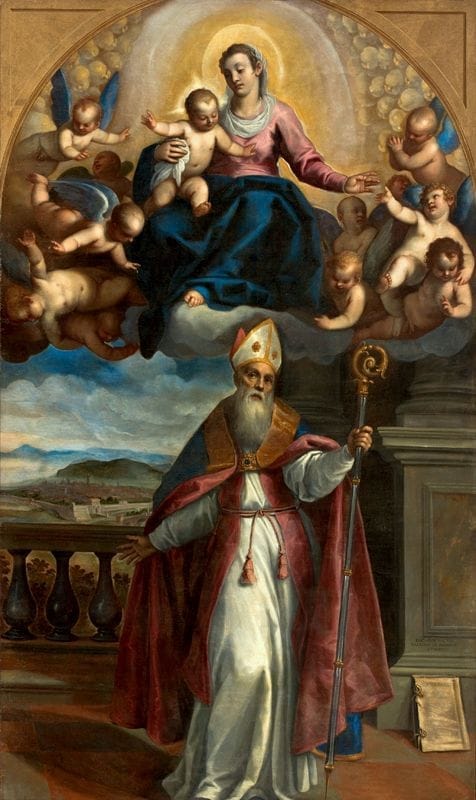
May 16: St. Ubaldus, Bishop and Confessor

IN order to honour her eternal High Priest, the Church presents to him this day the merits of a pontiff who, after his mortal career, was admitted into a happy immortality. Ubaldus, here on earth, was the image of our Lord Jesus Christ. Like his divine Master, he received the holy anointing of priesthood; he was a mediator between God and man; he was the shepherd of a flock; and now he is united with our Risen Jesus, the great Anointed, the Mediator, the Shepherd. In proof of his influence in heaven, Ubaldus has had given to him a special power against the wicked spirits who lay snares for our perdition. It has frequently happened that the simple invocation of his name has sufficed to foil their machinations. The Church has fixed this day as his feast with the view of encouraging the faithful to have recourse to his protection.

Let us now read the account she gives of the virtues of the saintly bishop:

Ubaldus, Eugubii in Umbria nobili genere natus, a primis annis pietate et litteris egregie est institutus. Jamque adolescens, ut uxorem duceret saepe tenta tus, nunquam tamen a proposito servandae virginitatis recessit. Sacerdos effectus, patrimonium suum pauperibus et Ecclesiis distribuit, et Canonicorum Regularium Ordinis sancti Augustini institutum suscipiens, illud in patriam transtulit, atque in eo aliquandiu sanctissime vixit. Cujus sanctitatis opinione evulgata, ab Honorio Secundo summo Pontifice Ecclesiae Eugubinæ invitus praeficitur, et Episcopalis consecrationis munere decoratur.
Ad suam itaque revertens Ecclesiam, quum de consueta vivendi ratione nihil admodum immutasset, in omni tamen virtutum genere eo magis eminere coepit, quo efficacius aliorum etiam salutem verbo et exemplo procuraret, factus forma gregis ex animo. Nam victu-parco, vestitu moderato, lectulo aspero et pauperrimo, crucis mortificationem jugiter in suo corpore circumferebat, dum inexplebili orationis studio spiritum quotidie recrearet. Hinc admirabilem illam mansuetudinem est adeptus, qua gravissimas injurias et contumelias non modo aequanimiter tulit, verum etiam mirifico dilectionis affectu persecutores suos omni benignitatis testimonio complectebatur.
Biennio antequam ex hac vita migraret, quum diutinis afflictaretur infirmitatibus, inter acerbissimos corporis cruciatus, velut aurum in fornace purgatum, Deo gratias indesinenter agebat. Adveniente autem sacro Pentecostes die, quum multis annis Ecclesiam sibi commissam summa cum laude gubernasset, sanctis operibus ac miraculis clarus, quievit in pace: quem Cœlestinus Papa Tertius in Sanctorum numerum retulit. Ejus virtus prœcipue in effugandis spiritibus immundis elucet. Corpus vero per tot saecula incorruptum magna fidelium veneratione in patria colitur, quam non semel a praesenti discrimine liberavit.
Ubaldus was born at Gubbio in Umbria, of a noble family. He was from childhood formed in the most admirable way to piety and learning. When grown up, he was frequently urged to marry; but nothing could shake his resolution of leading a life of celibacy. On being ordained priest, he divided his fortune between the poor and the Churches, and entered among the Canons Regular of the Order of St Augustine. He established that Institute in his own country, and was for some time a most fervent observer of all its regulations. The fame of his virtue spread far and wide. Pope Honorius the Second compelled him to accept the charge of the Church of Gubbio; and, accordingly, he was consecrated bishop.
When he took possession of his see, he changed little or nothing of his mode of life; but he began to apply himself more than ever to the practice of every virtue, in order that he might the more effectually, both by word and example, procure the salvation of souls, for he was a pattern of the flock in all earnestness. His food was scanty, his dress unpretending, his bed hard and most poor. Whilst always bearing about in his body the mortification of the Cross, he refreshed his spirit every day with prayer, in which he seemed insatiable. The result of such a life was a meekness so admirable that he not only bore the worst injuries and insults with patience, but even treated his persecutors with surprising affection and showed them all possible kindness.
During the last two years of his life he suffered much from sickness. In the midst of the most acute pains, whereby he was made pure as gold that is cleansed in the furnace, he ceased not to give thanks to God. Finally, on the holy feast of Pentecost, after governing for many years and in a most laudable manner the diocese that had been entrusted to him, he slept in peace, venerated for his holy life and miracles. He was canonized by Pope Celestine the Third. God has given him a special power for driving away unclean spirits. His body, which has remained incorrupt for several centuries, is honoured with much devotion by the faithful of the city of Gubbio, which he has more than once rescued from the calamities that threatened it.

O blessed Pontiff! be thou our protector against the spirits of hell. They are devoured by envy at seeing how man, that lowly and feeble creature, has become the object of God’s predilection. The incarnation of the Son of God, his death on the cross, his glorious resurrection, the sacraments which give us the life of Grace—all these sublime means, whereby the infinite goodness of God has restored us to our lost dignity,have excited the rage of the old enemy, and he seeks revenge by insulting, in us, the image of our Creator. At times he attacks man with all the frenzy of angry jealousy. To mimic the operations of sanctifying grace, which, so to speak, makes us the instruments of God’s good pleasure, Satan sometimes takes possession of our fellow-creatures, and makes them his slaves. Thy power, O Ubaldus, has often manifested itself by rescuing these unhappy victims of the devil’s jealousy; and Holy Church, on this day, celebrates the special prerogative conferred on thee by our heavenly Father. Relent not in the exercise of thy charitable office. And yet, O holy Pontiff, thou knowest that the snares of the wicked spirits are more inj urious to the souls than to the bodies of men. Have pity, then, on the unhappy slaves of sin, who, though the divine Sun of the Pasch has risen upon them, are still in the darkness of guilt. Pray for them, that they may become once more children of the light, and share in the Easter Resurrection which Jesus offers to all.


May 16 (the Same Day): St. John Nepomucen, Martyr

TO the martyrs who were slain because they refused to adore false gods—to the martyrs whose blood was shed by heretics—there is added to-day another brave soldier of Christ, who won his crown in a very different sort of combat. The sacrament of Penance whereby sinners regain the heaven they had lost claims John Nepomucen as its glorious defender.

A holy secrecy shrouds the reconciliation made between God and the penitent. This sacramental secrecy deserved to have its martyr. When Jesus instituted the sacrament of Penance—that second baptism, wherein the Blood of our Redeemer washes away the sins of the Christian soul—he willed that man should not be deterred from confessing his humiliations to his spiritual physician by the fear of their ever being revealed. How many hidden martyrdoms have there not been, during these eighteen hundred years, for the maintenance of this secret, which, whilst it gives security to the penitent, exposes the confessor to obloquy, injustice, and even death! But the martyr we honour to-day was not one of these hidden sufferers. His testimony to the inviolability of the sacramental seal was public; he gave it amidst cruel tortures; it cost him his life.

All praise, then, to the brave and faithful priest! Right worthy was he to hold in his hands the keys that open or shut the gate of heaven! In this great fact of the observance of the seal of confession, on which depends the salvation of millions of souls, we have a permanent miracle. But there was one thing wanting to it—the glory of martyrdom. The holy priest of Prague gave it that glory; and he offers the fair palm to our Risen Jesus, whom we have seen, during these days between his Resurrection and Ascension, mercifully instituting the sacrament of Penance, wherein he communicates to men his own power of forgiving sin.

We subjoin the Lessons approved by the Holy See for the feast of this great martyr:

Joannes Nepomuci Bohemiae oppido, unde Nepomuceni cognomen duxit, a parentibus aetate provectis, non sine futurae sanctitatis praesagio, flammis supra nascentis domum mirabiliter collucentibus, ortus est. Quum infans in gravem morbum incidisset, beatæ Virginis ope, cui natum parentes referebant acceptum, e vitæ periculo evasit incolumis. Egregia indole, piaque institutione coelestibus indiciis Obsequente, inter sanctas religiosasque exercitationes pueritiam egit: nam ecclesiam frequenter adire, ac sacerdotibus ad aras operantibus ministrare in deliciis habebat. Zatecii politioribus litteris ad humanitatem informatus, Pragœ vero gravioribus disciplinis excultus, philosophiae, theologiae, sacrorumque canonum magisterium et lauream emeruit. Sacerdotio initiatus atque a scientia sanctorum ad lucra animarum rite comparatus, ministerio verbi Dei se penitus addixit. Quum igitur in vitiis exstirpandis, et revocandis in viam salutis errantibus, eloquentia et pietate uberes ederet fructus, inter canonicos metropolitanae Ecclesiae Pragensis cooptatus, mox sibi demandatam Evangelii coram rege Wenceslao Quarto praedicandi provinciam suscepit, eo successu ut Joannis suasu multa rex faceret, magnoque in honore ejus virtues haberet. Conspicuas tamen, quas ille obtulit, dignitates Dei servus, ne a divini verbi praeconio avocaretur, constantissime recusavit.
Regiis illum eleemosynis in pauperes erogandis praefectum, Joanna regina conscientiae sibi moderatorem adscivit. Quum autem Wenceslaus ab officio institutoque decessisset, atque in vitia praeceps abriperetur, piae vero conjugis obtestationes et monita gravate ferret, contendere ausus est ut in sacramentali judicio sacerdoti credita reginae arcana sibi a Joanne panderentur. At Dei minister, blanditiis primum, tormentis deinde et carceris squalore tentatus, nefariae regis cupiditati fortiter obstitit. Furentem tamen Wenceslai animum quum ab execrando proposito nec humana nec divina jura deterrerent, supremum agonem, quem instare sibi athleta Christi noverat, populo in concione de impendentibus etiam regni calamitatibus admonito, non obscure praenuntiavit. Mox Boleslaviam profectus, ad beatæ Virginis imaginem antiquo cultu celebrem, cœleste praesidium ad certandum bonum certamen effusis precibus imploravit. Inde vespere revertentem in pervigilio Dominicae Ascensionis, rex e fenestra conspicatus arcessit; quumque vehementius urgeret, et proximam in aquis, si obluctari pergeret, submersionem intentaret, Joannes invicta constantia terrores minasque refutavit. Itaque, regis imperio, in Moldavam, flumen Pragam interfluens, noctu dejectus, illustrem martyrii coronam est consecutus.
Sacrilegum facinus clam patratum et martyris gloriam insigne prodigium divinitus patefecit. Ubi enim exanime corpus secundo flumine vehi cœpit, ardentes faces aquis supernatantes et discurrentes apparuerunt. Quamobrem ex arena postridie mane corpus elatum canonici deinde, regis iram nihil timentes, in metropolitanam ecclesiam solemni pompa intulerunt, et sepulturae mandarunt. Quum autem in dies invicti sacerdotis memoria miraculis et maxima fidelium, eorum praecipue qui fama periclitantur, veneratione cresceret, post annos demum amplius trecentos, in juridica recognitione corporis, quod sub humo tamdiu jacuerat, lingua ejus incorrupta et vivida reperta est: quæ, sexto post anno judicibus a Sede Apostolica delegatis exhibita, novo prodigio repente intumuit, et subobscurum ruborem in purpureum commutavit. His itaque aliisque signis rite probatis, Benedictus Decimus tertius, Pontifex Maximus, die decima nona mensis Martii, anno salutis millesimo septingentesimo vigesimo nono, primum hunc sacramentalis sigilli assertorem, arcani fidem sanguine obsignantem, sanctorum martyrum catalogo adscripsit.
John was born of parents who were advanced in years, at Nepomuk, a town in Bohemia, from which he took the name of Nepomucen. His future sanctity was foretold by the appearance of bright rays miraculously shining over the house wherein he was born. When an infant, he was seized with a dangerous illness; but was delivered from death by the protection of the blessed Virgin, to whom his parents considered themselves indebted for his birth. He was blessed with an excellent disposition, and received a pious training, in keeping with the indications given from heaven. He spent his boyhood in the practice of religious exercises; it was his delight to be frequently in church and serve the priests at Mass. He went through his humanities at Zatek, and the higher studies at Prague, where he took his degrees in Philosophy, Theology, and Canon law. He was ordained priest; and being, by his proficiency in the science of the Saints, well fitted for gaining souls, he devoted himself entirely to preaching the word of God. In consideration of the great fruits produced by his eloquence and piety, which extirpated vice and brought sinners back to the way of salvation, he was made a Canon of the Metropolitan Church of Prague. Being afterwards chosen as preacher to King Wenceslaus the Fourth, he so far succeeded, that the king had a great regard for his virtue, and often followed his advice. He offered him several high dignities; but the saint always refused to accept them, fearing that they would interfere with his preaching the divine word.
He was entrusted w'ith the distribution of the royal alms to the poor, and Queen Jane chose him as her own spiritual director. Wenceslaus, who had given himself up to vices, which disgraced his character both as a king and a Christian, was displeased at the entreaties and counsels of his wife, and even dared to insist on John’s revealing to him the secrets, told to him as priest, by the queen in the sacrament of Penance. The minister of God courageously resisted the king’s impious request, and neither bribes, nor tortures, nor imprisonment, could make him yield. Seeing that the king had reached such a pitch of rage that the laws of neither man nor God made him relent, the soldier of Christ plainly foretold in one of his sermons his own approaching death, and the calamities that were to befall the kingdom. He then set out for Buntzel, where is kept an image of the blessed Virgin that has been venerated for centuries: he there implored heaven in fervent prayer, to grant him the assistance he needed, in order to fight the good fight. As he was returning home, on the evening before the Vigil of the Ascension, the king, who was standing at the palace window, saw him, and sent word that he was to repair to him. The king was more than ever urgent in his demand, and threatened John with immediate drowning, if he continued to refuse compliance. The saint was not to be conquered, and showed the king that he was not afraid of his threats. Wherefore, by the king's orders, he was thrown that same night into the river Moldau, which flows through Prague; and thus obtained the glorious crown of martyrdom.
The sacrilegious crime thus privately committed was miraculously revealed, as was also the great glory of the martyr. For as soon as life was extinct, and the corpse began to float down the stream, flaming torches were seen following it on the surface of the water. The next morning, the Canons went and took the body from the sand on which it lay, and heedless of the king's displeasure, had it carried with much solemnity to the metropolitan Church, and gave it burial. The memory of this courageous priest became most venerable in course of time both through the miracles that were wrought, and through the devotion of the faithful—of those especially whose good name is injured by evil report. After upwards of three hundred years, a juridical examination was made of his body (which, during all the time, had lain under the ground), and his tongue was found to be incorrupt and like that of a living man. Six years later the tongue was shown to judges delegated by the Apostolic See; when, by a fresh miracle, it immediately resumed the fulness of life, and, from being of a brownish colour, became perfectly red. These and other miracles having been authentically proved, he was canonized by Pope Benedict the Thirteenth, on the nineteenth day of March, in the year of our Lord 1729, as the defender of the seal of confession, and the first martyr to shed his blood for the maintenance of its holy secrecy.

How great, O glorious martyr, was the honour reserved for thee by the Son of God, when he chose thee to be the one who was to attest, by laying down his life, the sacredness of the secret which protects the sacrament of Penance! Other priests, as well as thyself, have bravely suffered persecution for the sake of the secrecy of the mystery of reconciliation: but thou wast the one chosen by heaven to give a solemn testimony of priestly discretion. Thy sufferings were known to more than angels: thy martyrdom was a public one, and the faithful honour thy courage as an eloquent proof of how truly our good Shepherd, Jesus, removes every difficulty that could deter the strayed sheep from returning to the fold.

We address ourselves to thee, O holy martyr, on this day of thy triumph and beseech thee to intercede for sinners. Admirable minister of the sacrament of Penance! thou seest how many Christians there are who neglect to avail themselves of the means of salvation prepared for them by our risen Saviour. Instead of laying hold of this ‘second plank after shipwreck,’ they let themselves be carried on to the deep abyss by the tide of their sinful habits. There are thousands who have turned a deaf ear, even this Easter, to the call of Holy Church, who invited them, as an affectionate Mother, to approach the tribunal of mercy and reconciliation. We beseech thee, intercede for these blind, unwary, ungrateful men. Procure for them the grace which will lead them to the feet of the God of mercy, who is ever ready to grant pardon.

There are others, again, who go to Confession, but who have not the dispositions requisite for receiving the grace of the Sacrament—the justification of their souls. Pray also for these, that they may see the danger they thus incur of profaning the Blood of Christ. Obtain for all them who approach the holy tribunal an honest avowal of their sins, and contrition of heart; that thus the life of our Risen Jesus may be imparted to them and that they may never again lose it. By thy powerful intercession, raise up zealous and faithful ministers of this great sacrament of which thou wast the martyr. Draw down the blessing of heaven on their arduous labour: then will the number of the children of God be increased, and the grace of the Holy Ghost triumph in souls that have long been dead in sin.

Cast, too, an eye of compassion on thy fatherland of Bohemia, where there are so many faithful hearts that love and honour thee. Alas! there are tares which disfigure that portion of the Church. The enemy came, not many years after thy glorious martyrdom, and sowed the baneful weeds of heresy in thy native land. The good seed claims thy protection; but take pity also on the cockle, for even it may be turned, by the true faith, into wheat, and be garnered into the house of our heavenly Father. Secure peace to thy Bohemia and save her from the snares that are laid for her.


Thursday within the Octave of the Ascension

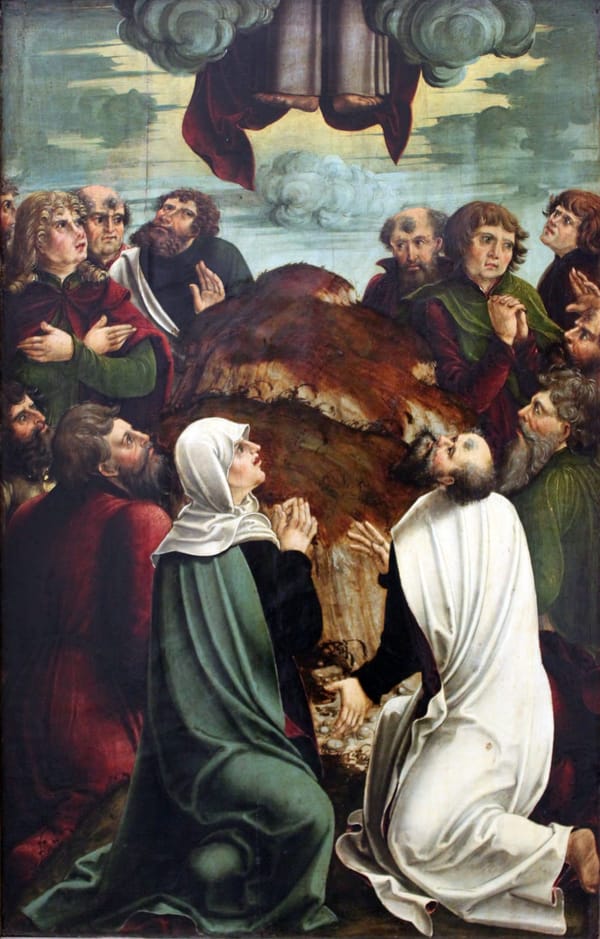
The Ascension of Christ, Mattheis Stöberl, c. 1510–15.
Credits
O Rex gloriae, Domine virtutum, qui triumphator hodie super omnes cœlos ascendisti, ne derelinquas nos orphanos; sed mitte promissum Patris in nos, Spiritum veritatis, alleluia.
O King of glory, Lord of hosts, who didst this day ascend in triumph above all the heavens! leave us not orphans, but send upon us the Spirit of truth, promised by the Father, alleluia.

We have already seen how the Ascension of our Emmanuel won Him the empire over our understanding: it was the triumph of faith. The same mystery gave Him a second victory: the victory of love, which makes Him reign in our hearts. For eighteen hundred years, in whom have men believed, firmly and universally, except Jesus? In what have men agreed, except the dogmas of faith? What countless errors has this divine torch dispelled! What light has it given to the nations that received it! And in what darkness has it left those which rejected it after having once received it!

In like manner, no one has been loved as our Jesus has been, ever since the day of His Ascension; no one is so loved now or ever will be, as He. But that He might thus win our love He had to leave us, just as He had to do in order to secure our faith. Let us return to our text, that we may get deeper into the beautiful mystery.’It is expedient for you that I go!’1 Before the Ascension, the disciples were as inconstant in their love as they were in their faith. Jesus could not trust them. But no sooner had He left them, than they became warmly devoted to Him. Instead of complaining of their bereavement, they returned full of joy to Jerusalem. The thought of their master’s triumph made them forget their own loss, and they hastened, as He bade them, to the cenacle, where they were to be endued with power from on high. Watch these men during the subsequent years; examine what their conduct was from that time to the day of their death; count, if you can, their acts of devotedness in the arduous labour of preaching the Gospel; and say, if any other motive than love for their master could have enabled them to do what they did. With what cheerfulness did they drink His chalice!2 With what raptures did they hail His cross, when they saw it being prepared for themselves!

But let us not stop at these first witnesses; they had seen Jesus, and heard Him, and touched Him.3 Let us turn to those who came after them, and knew Him by faith only; let us see if the love, which burned in the hearts of the apostles, has been kept up by the Christians of the past eighteen centuries. First of all, there is the contest of martyrdom, which has never been altogether interrupted since the Gospel began to be preached. The opening campaign lasted three hundred years. What was it that induced so many millions to suffer, not only patiently but gladly, every torture that cruelty could devise? Was it not their ambition to testify how much they loved their Jesus? Let us not forget how these frightful ordeals were cheerfully gone through, not only by men hardened to suffering, but also by delicate women, by young girls, yea even by little children. Let us call to mind the sublime answers they gave to their persecutors, whereby they evinced their generous ardour to repay the death of Jesus by their own. The martyrs of our own times, in China, Japan, the Corea, and elsewhere, have repeated, without knowing it, the very same words to their judges and executioners as were addressed to the proconsuls of the third and fourth centuries by the martyrs of those days.

Yes, our divine King who has ascended into heaven, is loved as no other ever was or could be. Think of those millions of generous souls, who, that they might be exclusively His, have despised all earthly affections, and would know no other love than His. Every age,—even our own, in spite of all its miseries,—has produced souls of this stamp, and God alone knows how many.

Our Emmanuel has been, and to the end of time will ever be, loved on this earth. Have we not reason to say so, when we consider how many there have always been, even among the wealthiest ones of the world, who, in order that they might bear a resemblance to the Babe of Bethlehem, have given up everything they possessed? What an irresistible proof of the same truth we have in the countless sacrifices of self-love and pride, made with a view to imitate the obedience of the God-Man on earth! And what else but an ardent love of Jesus could have prompted those heroic acts of mortification and penance, whereby the sufferings of His Passion have been emulated, and, as the apostle says, filled up?4

But grand as all this is, it was not enough to satisfy man’s devoted love of His absent Lord. Jesus had said: ‘Whatsoever you do to the least of your brethren, you do it to Me.’5 Love is ever quick at catching the meaning of our Redeemer’s words. It took advantage of these, and saw in them another means for reaching Jesus,—reaching Him through the poor. And as the worst of poverties is the ignorance of divine truths, because it would make a man poor and miserable for eternity, therefore have there risen up in every age zealous apostles, who, bidding farewell to home and fatherland, have carried the light of the Gospel to them that sat in darkness and in the shadow of death. They heeded not the fatigues or the perils of such a mission: what cared they for all these things, if they could but make Jesus known and honoured and loved by one poor savage or Hindoo?

But what of those other poor ones, the sick, in whom Jesus suffers? Fear not: He is too much loved to be forgotten there. Once let the Church be free enough to develop her plans of charity, and there will be an institute of relief for every class of sufferers. The poor, the sick, all will be cared for and comforted. There will be vocations to charity, to meet every want; and women, too, urged by the love of their divine Lord, will deem it an honour to be the nurses and attendants of a suffering or dying Lazarus. The world itself is in admiration at their heroism; and though it knows not the divine principle which originates these charitable institutions, yet is it obliged to acknowledge the extraordinary good they effect.

But man’s observation can only reach the exterior; the interior is the far grander reality, and it is beyond his notice. What we have said so far is, therefore, but a very feeble description of the ardour wherewith our Lord Jesus Christ has been, and still is, loved on this earth. Let us picture to ourselves the millions of Christians who have lived since the first foundation of the Church. Many, it is true, have had the misfortune to be unfaithful to the object of their existence; but what an immense number have loved Jesus with all their heart and soul and strength!

Some have never flagged in their love; others have needed a conversion from vice or tepidity, returned to Him, and slept in the kiss of peace. Count, if you can, the virtuous actions, the heroic sacrifices, of those countless devoted servants of His, who are to be arrayed before Him in the valley of Josaphat. His memory alone can hold and tell the stupendous total of what has been done. This well-nigh infinite aggregate of holy deeds and thoughts, from the seraphic ardour of the greatest saint down to the cup of cold water given in the name of the Redeemer, what is it all but the ceaseless hymn of our earth to its beloved absent One, its never-forgotten Jesus? Who is the man, how dear soever his memory may be, for whom we would be devoted, or sacrifice our interests, or lay down our lives, especially if he had been ten or twenty ages gone from us? Who is that great Dead, the sound of whose name can make the hearts of men vibrate with love, in every country, and in every generation? It is Jesus, who died, who rose again, who ascended into heaven.

But we humbly confess, O Jesus, that it was necessary for us that Thou shouldst go from us, in order that our faith might soar up to Thee in heaven, and that our hearts, being thus enlightened, might burn with Thy love. Enjoy thine Ascension, O Thou King of angels and of men! We, in our exile, will feast on the fruits of the great mystery, waiting for it to be fulfilled in ourselves. Enlighten those poor blind infidels, whose pride will not permit them to recognize Thee, notwithstanding these most evident proofs. They continue in their errors concerning Thee, though they have such superabundant testimony of Thy Divinity in the faith and love Thou hast received in every age. The homage offered Thee by the universe, represented, as it has ever been, by the chief nations of the earth and by the most virtuous and learned men of each generation, is as nought in the eyes of these unbelievers. Who are they, to be compared with such a cloud of faithful witnesses? Have mercy on them, O Lord! save them from their pride; then will they unite with us in saying:’It was indeed expedient for this world to lose Thy visible presence, O Jesus! for never were Thy greatness, Thy power, and Thy Divinity, so recognized and loved, as when Thou didst depart from us. Glory, then, be to the mystery of Thine Ascension, whereby, as the psalmist prophesied, Thou receivedst gifts, that Thou mightest bestow them upon men!’6

We will take a hymn to-day from the Greek Church: it is the one she sings in honour of our Redeemer’s triumph, at her evening Office of Ascension day.

Hymn (In Assumptione Domini, ad magnum Vespertinum.)

Assumptus est in cœlos Dominus, ut mundo mitteret Paraclitum. Cœli præparaverunt thronum ejus, et nubes ascensum ejus. Mirantur angeli, supra seipsos hominem videntes. Pater suscipit quem habet in sinu coaeternum. Spiritus sanctus omnibus angelis suis imperat: Attollite portas, principes, vestras. Omnes gentes plaudite manibus, quia ascendit Christus ubi erat prius.
Domine, Assumptione tua obstupuerunt Cherubim, conspicientia te Deum in nubibus ascendentem, super ipsa sedentem; et glorificamus te, quoniam benigna est misericordia tua: Gloria tibi.
In montibus sanctis tuas videntes exaltationes, Christe, splendor gloriae Patris, fulgentem vultus tui speciem iterum atque iterum celebramus; tuas adoramus passiones, resurrectionem honoramus, inclytam glorificantes Assumptionem: miserere nobis.
Domine, quando te in nubibus elevatum viderunt apostoli, cum gemitibus la- crymarum tristitia repleti, Christe vitæ dator, lamentantes dicebant: Domine, utpote misericors, ne derelinquas nos orphanos, quos propter clementiam dilexisti servos tuos; sed mitte, sicut promisisti nobis, sanctissimum Spiritum tuum, illuminantem animas nostras.
Domine, dispensationis impleto mysterio, tuos assumens discipulos, in montem Olivarum tecum ducebas; et ecce firmamentum cœli intrasti. Qui propter me egenus sicut ego factus es, et illuc ascendisti unde non es separatus, sanctissimum tuum mitte Spiritum, illuminantem animas nostras.
A sinu paterno non separatus, dulcissime Jesu, et cum iis qui sunt in terra sicut homo conversatus, hodie a monte Olivarum assumptus es in gloria, et lapsam naturam nostram pro misericordia elevans, cum Patre sedere fecisti. Unde cœlestia incorporeorum agmina, prodigium stupentia, admiratione stabant attonita; et tremore comprehensa tuum erga homines amorem magnificabant. Cum quibus et nos in terra ex- istentes, tuam ad nos descensionem et a nobis Assumptionem glorificantes, rogamus dicentes: Qui discipulos et genitricem tuam Deiparam infinito gaudio in tua Assumptione replevisti, nos quoque electorum tuorum lætitia dignare, precibus eorum, propter magnam misericordiam tuam.
The Lord ascended into heaven, that he might send the Paraclete into this world. The heavens prepared his throne, and the clouds his Ascension. The angels are lost in wonder at seeing man exalted above them. The Father receives him who is in his own bosom, his co-eternal Son. The Holy Ghost speaks this bidding to all his angels: ‘Lift up your gates, O ye princes!’ Clap your hands, all ye people, for Christ hath ascended to the heaven where he has ever been.
The Cherubim were in amazement at thine Assumption, O Lord; they beheld thee ascending upon the clouds, thee their God, who sittest upon them. We glorify thee, for compassionate is thy mercy: Glory be to thee!
Seeing thy risings upon the holy mountains, O Christ, thou brightness of the Father’s glory! we tire not in praise of the brilliant beauty of thy Face. We adore thy Passion, we honour thy Resurrection, we glorify thy noble Assumption: have mercy on us!
When the apostles saw thee, O Lord, raised up to the clouds, they sighed, and wept, and were sad. Thus to thee, O Christ, thou giver of life, did they speak their sorrow: ‘Thou art merciful, O Lord! then leave not orphans us thy servants, whom, in thy goodness, thou hast loved; but send upon us, as thou hast promised, thy most holy Spirit, who will enlighten our souls.’
Having, O Lord, fulfilled the mystery of the dispensation, thou didst lead thy disciples to Mount Olivet; when, lo! thou ascendest into the firmament of heaven. O thou, that for my sake, wast made poor as I, and ascendest to the realm which thou hadst never left, send thy most holy Spirit to enlighten our souls!
Living as Man with them that were on earth, thou, sweetest Jesus! wast not separated from thy Father’s bosom. On this day, thou wast taken up in glory from Mount Olivet; and mercifully raising up our fallen nature thou placedst it on thy Father’s throne. The heavenly host of angels stood in astonished admiration at the sight of the prodigy; and, seized with awe, they celebrated in songs of praise thy love for man. Together with them, we also, who dwell on earth, do glorify thy coming down unto us and thine ascending up from us, and thus do we pray: O thou that, in thine Assumption, filledst the disciples and thy Mother with infinite joy; vouchsafe, through their prayers, and thine own great mercy, to give us a share in the joy of thine elect.

As a close to this glorious octave, we offer the eighth and last of the beautiful prayers given by the Mozarabic breviary in honour of our Lord’s Ascension.

Prayer

Christe Jesu, terribilis Deus noster, et rex noster, cujus in nativitate cum pastoribus angeli gloriam detulerunt; cui devicto mortis auctore, omnes gentes manibus cordibusque plauserunt; quem trophæa victricia reportantem ad æthera, apostolorum est fides prosecuta: fac nos redemptionis nostræ et Ascensionis tuae mysteria fidei jubilatione cantare; et cum principibus populi Deo Abraham fideli famulatu placere. Amen.
Christ Jesus! our God of dread majesty, and our King! at whose birth the angels and shepherds gave glory; at whose victory over the author of death all nations clapped their hands and were filled with joy; at whose ascending, with thy trophies, into heaven, the apostles were perfected in their faith: grant that we, also, with fervent faith, may sing our canticles of praise in honour of the mysteries of our Redemption and of thine Ascension; and that, with the princes of thy people, we may, by our faithful service, be well-pleasing to the God of Abraham. Amen.
  1. St. John, xvi. 7. ↩︎
  2. St. Matth. xx. 23. ↩︎
  3. 1 St. John, i. 1. ↩︎
  4. Coloss. i. 24. ↩︎
  5. St. Matth. xxv. 40. ↩︎
  6. Ps. lxvii. 19. ↩︎
Previous
Wednesday within the Octave of the Ascension
Next
May 16 (the Same Day): St. John Nepomucen, Martyr