Daily reading
After Pentecost
Greater Double · Movable from Easter · Temporal
June 30, 2024
From Dom Guéranger’s The Liturgical Year.

|
The Sixth Sunday after Pentecost
The Office for the sixth Sunday after Pentecost, which began yesterday evening, reminded us, in its Magnificat antiphon, of a repentance which has never had an equal. David, the royal prophet, the conqueror of Goliath, himself conquered by sensuality, and from adulterer become a murderer, at last felt the crushing weight of his double crime, and exclaimed : 'I do beseech thee, O Lord, take away the iniquity of thy servant, for I have done foolishly!'1
Sin is always a folly and a weakness, no matter of what kind it may be, or who he be that commits it. The rebel angel, and fallen man, may, in their pride, make efforts to persuade themselves that, when they sinned, they did not act as fools, and were not weak; but all their efforts are vain; sin must ever have this disgrace upon it, that it is folly and weakness, for it is a revolt against God, a contempt for His law, a mad act or the creature, who, being made by his. Creator to attain infinite happiness and glory, prefers to debase himself by turning towards nothingness, and then falls even lower than the nothingness from which he was taken. It is, however, a folly that is voluntary, and a weakness that has no excuse; for, although the creature have nothing of his own but darkness and misery, yet his infinitely merciful Creator, by means of His grace, which is never wanting, puts within that creature's reach divine strength and light.
It is so with even the sinner that has been the least liberally gifted; he has no reason that can justify his offences. But when he that sins is a creature who has been laden with God's gifts, and, by His divine generosity, been raised higher than others in the order of grace, oh! then the offence he commits against his benefactor is an injury that has no name. Let this be remembered by those who, like David, could say that their God has 'multiplied His magnificence' over them.2 They may, perhaps, have been led by Him into high paths which are reserved for the favoured few, and may have reached the heights of divine union : yet must they be on their guard; no one who has still to carry with him the burden of a mortal body of flesh is safe, unless by exercising a ceaseless vigilance. On the mountains, as on the plains and m the valleys, at all times and in all places, a fall is possible; but when it is on those lofty peaks which, in this land of exile, seem bordering on heaven, and but one step from the 'entrance into the powers of the Lord,'3 what a terrific fall when the foot slips there! The yawning precipices which that soul had avoided on her ascent are now all open to engulf her; abyss after abyss of crime she rushes into, and with a violence of passion that terrifies even them that have long been nothing but wickedness.
Poor fallen soul! pride, like that of satan, will now try to keep her obstinately fixed in her crimes : but, from the depths into which she has fallen, let her, like David, send forth the cry of humility; let her lament her abominations; let her not be afraid to look up, through her tears, at those glorious heights which were once her abode—an anticipated heaven. Without further delay, let her imitate the royal penitent, and say with him : 'I have sinned against the Lord!' and she will hear the same answer that he did : 'The Lord hath taken away thy sin; thou shalt not die ';4 and as with David, so also with her, God may still do grand things in her. David, when innocent, was a faithful image of Christ, who was the object of the love of both heaven and earth; David, sinner but penitent, was still the figure of the Man-God, as laden with the sins of the whole world, and bearing on His single self the merciful and just vengeance of His offended Father.
In the Mass of this Sunday, which they call the sixth of Saint Matthew, the Greeks read the account of the cure of the paralytic, which is related in the ninth chapter of that evangelist. The preceding chapter, with its episode of the centurion and the two possessed, had furnished them with the Gospels for their fourth and fifth Sundays.
Mass
It is difficult to see what connexion there is between the Mass and the Office of this Sunday, as they are at present arranged. Honorius of Autun and Durandus applied the Introit and the other sung portions which follow, to the inauguration of Solomon’s reign. At the period when those two writers lived,5 the Scripture lessons for this Sunday were taken from the first pages of the second Book of Paralipomenon, where we have the account of the glorious early days of David’s son. But, since that time, it has been the Church’s practice to continue the reading of the four Books of Kings up to the month of August, omitting altogether the two Books of Paralipomenon, which were but a practical repetition of the events already related in previous lessons. So that the connexion suggested by the two writers just mentioned has no foundation in the actual arrangement of to-day's liturgy. We must, therefore, be satisfied with taking from the Introit the teaching of what it is that constitutes the Christian's courage, viz., his faith in God's power which is always ready to help him, and the conviction of his own nothingness, which keeps him from all presumption.
Introit
The Collect gives us an admirable summing up of the strong, yet sweet, action of grace upon the whole course of Christian life. It has evidently been suggested by those words of St. James : 'Every best gift, and every perfect gift, is from above, coming down from the Father of lights.'6
Collect
The other Collects as on page 120.
Epistle
Cap. vi.Fratres, Quicumque baptizati sumus in Christo Jesu, in morte ipsius baptizati sumus. Consepulti enim sumus cum illo per baptismum in mortem : ut quomodo Christus surrexit a mortuis per gloriam Patris. ita et nos in novitate vitæ ambulemus. Si enim complantati facti sumus similitudini mortis ejus, simul et resurrectionis erimus. Hoc scientes, quia vetus homo noster simul crucifixus est, ut destruatur corpus peccati, et ultra non serviamus peccato. Qui enim mortuus est, justifìcatus est a peccato. Si autem mortui sumus cum Christo, credimus quia simul etiam vivemus cum Christo : scientes quod Christus resurgens ex mortuis, jam non moritur, mors illi ultra non dominabitur. Quod enim mortuus est peccato, mortuus est semel: quod autem vivit, vivit Deo. Ita et vos existimate, vos mortuos quidem esse peccato, viventes autem Deo in Christo Jesu Domino nostro.
Ch. vi. Brethren : all we who are baptized in Christ Jesus are baptized in his death. For we are buried together with him by baptism unto death : that as Christ is risen from the dead by the glory of the Father, so we also may walk in newness of life. For if we have been planted together in the likeness of his death, we shall be also in the likeness of his resurrection. Knowing this, that our old man is crucified with him, that the body of sin may be destroyed, to the end that we may serve sin no longer. For he that is dead is justified from sin. Now if we be dead with Christ, we believe that we shall live also together with Christ. Knowing that Christ, rising again from the dead, dieth now no more, death shall no more have dominion over him. For in that he died to sin, he died once : but in that he liveth, he liveth unto God. So do you also reckon that you are dead to sin, but alive unto God in Christ Jesus our Lord.
The Masses of the Sundays after Pentecost have, so far, given us but once a passage from St. Paul's Epistles. Hitherto SS. Peter and John have addressed the faithful at the commencement of the sacred mysteries. It may be that the Church, during these weeks which represent the early days of the apostolic preaching, has intended by this to show us the disciple of faith and the disciple of love as being the two most prominent in the first promulgation of the new Covenant, which was committed, at the outset, to the Jewish people. At that time, Paul was but Saul the persecutor, and was putting himself forward as the most rabid opponent of that Gospel which, later on, he would so zealously carry to the farthest parts of the earth. If his subsequent conversion made him become an ardent and enlightened apostle even to the Jews, it soon, became evident that the house of Jacob was not the special mission of his apostolate.7 After publicly announcing his faith in Jesus the Son of God, after confounding the Synagogue by the weight of his testimony,8 he waited in silence for the termination of the period accorded to Juda for the acceptance of the covenant; he withdrew into privacy,9 waiting for the vicar of the Man-God, the head of the apostolic college, to give the signal for the vocation of the Gentiles, and open in person the door of the Church to these new children of Abraham.10
But Israel has too long abused God's patience; the day of the ungrateful Jerusalem's repudiation is approaching,11 and the divine Spouse, after all this long forbearance with His once chosen, but now faithless bride, the Synagogue, has gone to the Gentile nations. Now is the time for the Doctor of the Gentiles to speak; he will go on speaking and preaching to them to his dying day; he will not cease proclaiming the word to them, until he has brought them back, and lifted them up to God, and consolidated them in faith and love. He will not rest until he has led this once poor, despised Gentile world to the nuptial union with Christ12—yes, to the full fecundity of that divine union of which, on the twenty-fourth and last Sunday after Pentecost, we shall hear him thus speaking : 'We cease not to pray for you, and to beg that ye may be filled with the knowledge of His will, in all wisdom and spiritual understanding; that ye may walk worthy of God, in all things pleasing Him; being fruitful in every good work . . . . Giving thanks to God the Father, who hath made us worthy to be partakers of the lot of the saints in light, . . . and hath translated us into the kingdom of His beloved Son.'13
It is to the Romans that are addressed to-day's inspired instructions of the great apostle. For the reading of these admirable Epistles of St. Paul, the Church, during the Sundays after Pentecost, will follow the order in which they stand in the canon of Scripture : the Epistle to the Romans, the two to the Corinthians, then those to the Galatians, Ephesians, Philippians, and Colossians, will be read to us in their turns. They make up the sublimest correspondence that was ever written— a correspondence where we find Paul's whole soul, giving us both precept and example how best we may love our Lord. 'I beseech you,' so he speaks to his Corinthians, 'be ye followers of me, as I also am of Christ.'14
Indeed, the Gospel,15 the kingdom of God,16 the Christian life, is not an affair of mere words. Nothing is less speculative than the science of salvation. Nothing makes it penetrate so deeply into the souls of men as the holy life of him that teaches it. It is for this reason that the Christian world counts him alone as apostle or teacher who, in his one person, holds the double teaching of doctrine and works. Thus, Jesus, the Prince of pastors,17 manifested eternal truth to men, not only by the words uttered by His divine lips, but likewise by the works He did during His life on earth. So, too, the apostle, having become a pattern of the flock,18 shows us all, in his own person, what marvellous progress a faithful soul may make under the guidance of the Holy Ghost, the Spirit of sanctification.
Let us, then, be attentive to every word that comes from this mouth, ever open to speak to the whole earth;19 but, at the same time, let us fix the eyes of our soul on the works achieved by our apostle, and let us walk in his footsteps.20 He lives in his Epistles; he abides and continues with us all, as he himself assures us, for the furtherance ana joy of our faith.21
Nor is this all. If we value, as we ought, the example and the teaching of this father of the Gentiles,22 we must not forget his labours, and sufferings, and solicitudes, and the intense love he bore towards all those who neither had seen, nor were ever to see, his face in the flesh.23 Let us make him the return of dilating our hearts with affectionate admiration of him. Let us love, not only the light, but him also who brings it to us; yea, and all them that, like him, have been getting for us the exquisite brightness from the treasures of God the Father and of His Christ. It is the recommendation made so feelingly by St. Paul himself;24 it is the intention willed by God Himself, when He confided to men like ourselves the charge of sharing with Him the imparting of this heavenly light to us. Eternal Wisdom does not show herself directly here below; she is hid, with all her treasures, in the Man-God;25 she reveals herself by Him,26 and by the Church,27 which is the mystical body of that Man-God,28 and by the chosen members of that Church, the apostles.29 We can neither love nor know her save in and by our Lord Jesus Christ;30 and we cannot love or understand Jesus unless we love and understand His Church.31 Now, in this Church, this glorious aggregate of the elect both of heaven and of earth, we should especially love and venerate those who are, in a special manner, associated with our Lord's sacred Humanity in manifesting the divine Word, who is the one centre of our thoughts both in this world and in the world to come.
According to this standard, who ever had a stronger claim than Paul to the veneration, gratitude, and love, of the faithful? Who of the prophets and holy apostles went deeper into the mystery of Christ?32 Who was like him, in revealing to the world 'the light of the knowledge of the glory of God, in the face of Christ Jesus'?33 Was there ever a more perfect teacher, or a more eloquent interpreter, of the life of union,—we mean of that marvellous union which brings regenerated humanity into the embrace of God, and continues and repeats the life of the Word Incarnate in each Christian? To him, the last and least of the saints (as he humbly calls himself), was given the grace of proclaiming to the Gentiles the unsearchable riches of Christ; to him was confided the mission of teaching to all nations the mystery of creation, the mystery hidden so long in God, the secret of the world's history—viz., the manifestation of infinite Wisdom, by the Church, in Christ Jesus our Lord.34
For, as the Church is neither more nor less than the body and mystical complement of the Man-God, so, in St. Paul’s mind, the formation and growth of the Church are but the sequel of the Incarnation; they are but the continued development of the mystery shown to the angelic hosts, when this Word Incarnate made Himself visible to them in the crib at Bethlehem. After the Incarnation, God was better known by His angels; though ever the self-same in His own unchanging essence, yet, to them, He appeared grander and more magnificent in the brilliant reflection of His infinite perfections, as seen in the Flesh of His Word. So, too, although no increase in them was possible, and their plenitude was their fixed measure, yet the created perfection and holiness of the Man-God have their fuller and clearer revelation, in proportion as the marvels of perfection and holiness, which dwell in Him as in their source, are multiplied in the world.
Starting from Him, flowing ever from His fullness,35 the stream of grace and truth36 ceaselessly laves each member of the body of the Church. Principle of spiritual growth, mysterious sap, it has its divinely appointed channels : and these unite the Church more closely to her Head, than the nerves and vessels which convey movement and life to the extremities of our body unite its several parts to the head, which directs and governs the whole frame. But, just as in the human body the life of the head and of the members is one, giving to each of them the proportion and harmony which go to make up the perfect man, so, in the Church, there is but one life, the life of the Man-God, of Christ the Head, forming His mystical body, and perfecting, in the Holy Ghost, its several members.37 The time will come when this perfection will have attained its full development; then will human nature, united with its divine Head in the measure and beauty of the perfect age of Christ, appear on the throne of the Word,38 an object of admiration to the angels, and of delight to the most holy Trinity. Meanwhile, Christ is being completed in all things and in all men;39 as heretofore at Nazareth, Jesus is still growing; and these His advancings are gradual fresh manifestations of the beauty of infinite Wisdom.40
The holiness, the sufferings, and then the glory of the Lord Jesus—in a word, His life continued in His members41—this is St. Paul’s notion of the Christian life : a notion most simple and sublime, which, in the apostle’s mind, resumes the whole commencement, progress, and consummation of the work of the Spirit of love in every soul that is sanctified. We shall find him, later on, developing this practical truth, of which the Epistle read to us to-day merely gives the leading principle. After all, what is Baptism, that first step on the road to heaven, but the neophyte's incorporation with the Man-God, who died once unto sin, that He might for ever live in God His Father? On Holy Saturday,42 after having assisted at the blessing of the font, we had read to us a similar passage from another Epistle of St. Paul,43 which put before us the divine realities achieved beneath the mysterious waters. Holy Church returns to the same teaching to-day, in order that she may recall to our minds this great principle of the commencement of the Christian life, and make it the basis of the instructions she is here going to give us. If the very first effect of the sanctification of one who, by Baptism, is buried together with Christ, be to make him a new man, to create him afresh in this Man-God,44 to ingraft his new life upon the life of Jesus whereby to bring forth new fruits,—we cannot wonder at the apostle’s unwillingness to give us any other rule for our contemplation or our practice than the study and imitation of this divine model. There, and there only, is man’s perfection;45 there is his happiness. As, then, have received the knowledge of Jesus Christ the Lord, walk ye in Him :46 for, as many of you as have been baptized in Christ, have put on Christ.’47 Our apostle emphatically tells us that he knows nothing, and will preach nothing, but Jesus.48 If we be of St. Paul's school, adopting, as we shall then do, the sentiments of our Lord Jesus Christ, and making them our own,49 we shall become other Christs, or, rather, one only Christ with the Man-God, by the sameness of thoughts and virtues, under the impulse of the same sanctifying Spirit.
Between the Epistle and the Gospel, the Gradual and Alleluia-verse come urging us to make that humble and confiding prayer which should ever be ascending to God from the Christian soul.
Gradual
Gospel
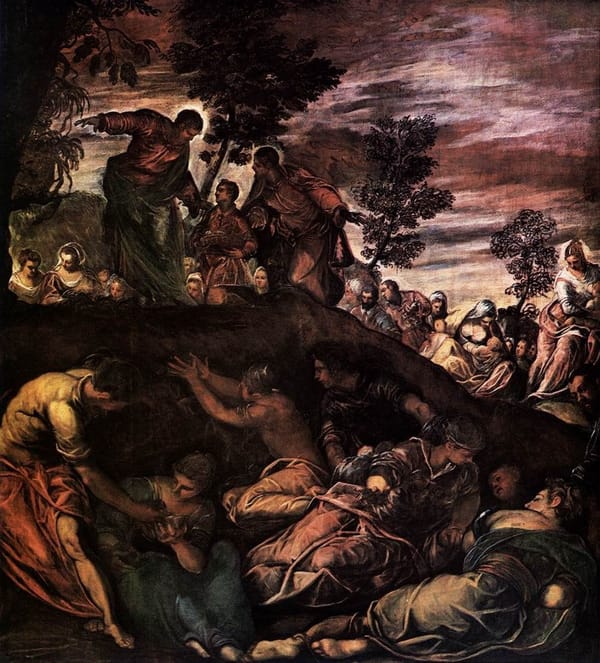
Cap. viii.In illo tempore : Quum turba multa esset cum Jesu, nec haberent quod manducarent, convocatis discipulis, ait illis : Misereor super turbam : quia ecce jam triduo sustinent me, nec habent quod manducent : et si dimisero eos jejunos in domum suam, deficient in via : quidam enim ex eis de longe venerunt. Et responderunt ei discipuli sui : Unde illos quis poterit hic saturare panibus in solitudine? Et interrogavit eos : Quot panes habetis? Qui dixerunt : Septem. Et præcepit turbæ discumbere super terram. Et accipiens septem panes, gratias agens fregit, et dabat discipulis suis ut apponerent, et apposuerunt turbæ. Et habebant pisciculos paucos : et ipsos benedixit, et jussit apponi. Et manducaverunt, et saturati sunt, et sustulerunt quod superaverat de fragmentis, septem sportas. Erant autem qui manducaverant, quasi quatuor millia : et dimisit eos.
Ch. viii.At that time : When there was a great multitude with Jesus, and had nothing to eat, calling bis disciples together, he saith to them : I have compassion on the multitude, for behold they have now been with me three days, and have nothing to eat; and if I shall send them away fasting to their home, they will faint in the way : for some of them came from afar off. And his disciples answered him : From whence can any one fill them here with bread in the wilderness? And he asked them : How many loaves have ye? Who said: Seven. And he commanded the people to sit down on the ground; and taking the seven loaves, giving thanks he broke, and gave to his disciples for to set before them, and they set them before the people. And they had a few little fishes; and be blessed them, and commanded them to be set before them. And they did eat and were filled, and they took up that which was left of the fragments, seven baskets. And they that had eaten were about four thousand : and he sent them away.
The interpretation of the sacred text is given to us by St. Ambrose, in his homily which has been chosen for this Sunday. We shall there find the same vein of thought as is suggested by the whole tenor of the liturgy assigned for this portion of the year. The holy doctor thus begins: ‘After the woman, who is the type of the Church, has been cured of the flow of blood, and after the apostles have received their commission to preach the Gospel, the nourishment of heavenly grace is imparted.’ He had just been asking, a few lines previous, what this signified : and his answer was : ‘The old Law had been insufficient to feed the hungry hearts of the nations; so, the Gospel food was given to them.’50
We were observing this day week, that the Law of Sinai, because of its weakness,51 had made way for the testament of the universal covenant. And yet, it is from Sion itself that the Law of grace has issued; here again it is Jerusalem that is the first to whom the word of the Lord is spoken.52 But the bearers of the good tidings have been rejected by the obdurate and jealous Jews; they therefore turn to the Gentiles,53 and shake off Jerusalem's dust from their feet. That dust, however, is to be an accusing testimony;54 it is soon to be turned into a rain, showering down on the proud city a more terrible vengeance than was that of fire, which once fell on Sodom and Gomorrha.55 The superiority of Juda over the rest of the human race had lasted for ages; but now all that ancient privilege of Israel, and all his rights of primogeniture, are gone; the primacy has followed Simon Peter to the west; and the crown of Sion, which has fallen from off her guilty head,56 now glitters, and will do so for ever, on the consecrated brow of the queen of nations.
Like the poor woman of the Gospel who had spent all her substance over useless remedies, the Gentile world had grown weaker and weaker by the effects of original and subsequent sins; she had put herself under the treatment of false teachers, who gradually reduced her to the loss of that law and those gifts of nature which, as St. Ambrose expresses it, had been her ‘vital patrimony.’57 At length the day came when she heard of the arrival of the heavenly physician : she at once roused herself; the consciousness of her miserable condition urged her on; her faith got the upper hand of her human respect, and brought her to the presence of the Incarnate Word; her humble confidence, which so strongly contrasted with the insulting arrogance of the Synagogue, led her into contact with Christ, and she touched Him; virtue went forth from Him,58 cured her original wound, and at once restored to her all the strength she had lost by her long period of languor.
Having thus cured human nature, our Lord bade her cease her fast, which had lasted for ages; He gave her the excellent nourishment she required. St. Ambrose, whose comment we are following, compares the miraculous repast mentioned in today's Gospel with the other multiplication of loaves brought before us on the fourth Sunday of Lent; and he remarks how, both in spiritual nourishment and in that which refreshes the body, there are various degrees of excellence. The Bridegroom does not ordinarily serve up the choicest wine, He does not produce the daintiest dishes, at the beginning of the banquet He has prepared for His dear ones.59 Besides, there are many souls here below who are incapable of rising, beyond a certain limit, towards the divine and substantial light which is the nourishment of the spirit. To these, therefore— and they are the majority, and are represented by the five thousand men who were present at the first miraculous multiplication—the five loaves of inferior quality60 are an appropriate food, and one that, by its very number, is in keeping with the five senses, which, more or less, have dominion over the multitude. But, as for the privileged favourites of grace,—as for those men who are not distracted by the cares of this present life, who scorn to use its permitted pleasures, and who, even while in the flesh, make God the only king of their soul,—for these, and for these only, the Bridegroom reserves the pure wheat of the seven loaves, which, by their number, express the plenitude of the holy Spirit, and mysteries in abundance.
‘Although they are in the world,’ says St. Ambrose, ‘yet these men, to whom is given the nourishment of mystical rest, are not of the world’61 In the beginning, God spent six days in giving to the universe He had created its perfection and beauty : He consecrated the seventh to the enjoyment of His works.62 Seven is the number of the divine rest; it was also to be that of the fruitful rest of the sons of God, of perfect souls, in that peace which makes love secure, and is the source of the invincible power of the bride, as mentioned in the Canticle.63 It is for this reason that the Man-God, when proclaiming on the mount the beatitudes of the law of love, attributed the seventh to the peace-makers, or peaceable64 as deserving to be called, most truly, the sons of God.65 It is in them alone that is fully developed the germ of divine sonship,66 which is put into the soul at Baptism. Thanks to the silence to which the passions have been reduced, their spirit, now master of the flesh, and itself subject to God, is a stranger to those inward storms, those sudden changes, and even those inequalities of temperature, which are all unfavourable to the growth of the precious seed;67 warmed by the Sun of justice in an atmosphere which is ever serene and unclouded, there is no obstacle to its coming up, there is no ill-shapen growth; absorbing all the human moisture of this earth wherein it is set, assimilating the very earth itself, it Boon leaves nothing else to be seen in these men but the divine, for they have become, in the eyes of the Father who is in heaven, a most faithful image of His firstborn Son.68
‘Rightly, then,’ continues St. Ambrose, 'the seventh beatitude is that of the peaceful; to them belong the seven baskets of the crumbs that were over and above. This bread of the Sabbath, this sanctified bread, this bread of rest, is something great; and I even venture to say, that if, after thou hast eaten of the five loaves, thou shalt have eaten also of the seven, thou hast no bread on earth that thou canst look forward to.’69
But take notice of the condition specified in our Gospel, as necessary for those who aspire to such nourishment as that. ‘It is not,’ says the Saint, 'to lazy people, nor to them that live in cities, nor to them that are great in worldly honours, but to them that seek Christ in the desert, that is given the heavenly nourishment : they alone who hunger after it are received by Christ into a participation of the Word and of God’s kingdom.’70 The more intense their hunger, the more they long for their divine object and for no other, the more will the heavenly food strengthen them with light and love, the more will it satiate them with delight.
All the truth, all the goodness, all the beauty of created things, are incapable of satisfying any single soul; it must have God. So long as man does not understand this, everything good or true that his senses and his reason can provide him with, so far from being able to satiate him, is ordinarily nothing more than a distraction from the one object that can make him the happy being he was created to be, and a hindrance to his living the true life which God willed him to attain. Observe how our Lord waits for all his human schemes to fail, and then He will be his helper, if he will but permit Him. The men of our to-day's Gospel are not afraid to abide with Him in the desert, and put up with the consequent privations of meat and drink; their faith is greater than that of their brethren who have preferred to remain in their homes in the cities, and has raised them so much the higher in the order of grace; for that very reason, our Lord would not allow them to admit anything of a nature to interfere with the divine food He prepares for their souls.
Such is the importance of this entire self-abnegation for souls that aim at the highest perfection of Christian life, such, too, the difficulty which even the bravest find in reaching that total self-abnegation by their own efforts, that we see our Lord Himself acting directly upon the souls of His saints, in order to create in them that desert, that spiritual vacuum, whose very appearance makes poor nature tremble, and yet which is so indispensable for the reception of His gifts. Struggling like another Jacob with God,71 under the effort of this unsparing purification, the creature feels herself to be undergoing a sort of indescribable martyrdom. She has become the favoured object of Jesus' research; and, as He intends to give Himself unreservedly to her, so He insists on her becoming entirely His. It is with a view to this that He, in the delicate dealings of His mercy, subdues and breaks her, in order that He may detach her from creatures and from herself. The piercing eye of the Word perceives every least crease or fold of her spiritual being; His grace carries its jealous work right down to the division of soul and spirit, and reaches to the very 'joints and marrow,’ scrutinizing and unmercifully probing the thoughts and intents of the heart.72 As the prophet describes the refiner of the silver and gold which is to form the king’s crown and sceptre, so our divine Lord : 'He shall sit, refining and cleansing,'73 in the crucible, this soul so dear to Him, that He wishes to wear her as one of the precious jewels of His everlasting diadem. Nothing could exceed His zeal in this work, which, in His eyes, is grander far than the creation of a thousand worlds. He watches, He fans, the flame of the furnace, and He Himself is called 'a consuming fire.’74 When the senses have no more vile vapours to emit; when the dross of the spirit, which is the last to yield, has become detached from the gold, then does the divine Purifier show it, with complacency, to the gaze of men and angels; its lustre is all He would have it be; so He may safely produce on it a faithful image of Himself.
When the Jewish people were led forth by Moses from Egypt, they said : ‘The Lord God hath called us; we will go three days' journey into the wilderness, to sacrifice unto the Lord our God.'75 In like manner, the disciples of Jesus have retired into the wilderness, as our to-day's Gospel tells us; and, after three days, they have been fed with a miraculous bread, which foretold the victim of the great sacrifice, of which the Hebrew one was a figure. In a few moments, both the bread and the figure are to make way, on the altar before which we are standing, for the highest possible realities. Let us, then, go forth from the land of bondage of our sins; and since our Lord's merciful invitation comes to us so repeatedly, let our souls get the habit of keeping away from the frivolities of earth, and from worldly thoughts. And now as we sing the Offertory-anthem, let us beseech our Lord that He may graciously give us strength to advance farther into that interior desert, where He is always the most inclined to hear us, and where He is most liberal with His graces.
Offertory
The efficacy of our prayers depends on this—that the object of those prayers be prompted and animated by faith. The Church bas just been receiving her children's offerings for the sacrifice; she now asks, in the Secret, that we may all be endowed with faith.
Secret
The other Secrets as on page 130.
We were just admiring the work of purification, achieved by the Angel of the Covenant in His chosen souls. The Prophet Malachy, who spoke to us about this mystery of refining the elect, tells us, in the next verse, why all this is done; his words give us an explanation of the Communionanthem we are now going to chant : 'And the sacrifice of Juda and of Jerusalem shall please the Lord, as in the days of old, and in the ancient years.'76
Communion
The sacred mysteries are the true fire that purifies : they entirely cleanse from the remnants of sin every Christian that allows their divine heat to tell upon him; they also strengthen him in the path of perfection. Let us, then, unite with the Church in this prayer:
Postcommunion
The other Postcommunions, as on page 131.
Vespers
The psalms, capitulum, hymn, and versicle, as above, pages 71-81.
Antiphon of the Magnificat
- 1 Paralip. xxi. 8. ↩︎
- Ps. lxx. 21. ↩︎
- Ps. lxx. 16. ↩︎
- 2 Kings xii. 13. ↩︎
- The twelfth and thirteenth centuries. ↩︎
- St. Jas. i. 17. ↩︎
- Gal. ii. 9. ↩︎
- Acts ix. 20, 22. ↩︎
- Gal. i. 17-22. ↩︎
- Acts x. ↩︎
- Is. l. 1. ↩︎
- 2 Cor. xi. 2. ↩︎
- Col. i. 9-13. Epistle for the Twenty-fourth Sunday after Pentecost. ↩︎
- 1 Cor. iv. 16, xi.1; Phil. iii. 17; 1 Thess. i. 6. ↩︎
- 1 Thess i. 5. ↩︎
- 1 Cor. iv. 20. ↩︎
- 1 St. Pot. v. 4. ↩︎
- Ibid. 3. ↩︎
- 2 Cor. vi. 11. ↩︎
- Phil iii. 17. ↩︎
- Ibid. i. 25, 26. ↩︎
- 1 Cor. iv. 14, 15. ↩︎
- Col. ii. 1-5. ↩︎
- 2 Cor. vi. 11-13; Heb. xiii. 7. ↩︎
- Col. ii. 3. ↩︎
- 1 Cor. i. 24. ↩︎
- Eph. iii. 10. ↩︎
- Ibid. i. 23. ↩︎
- 1 Cor. ii. 6, 7. ↩︎
- 1 Cor. ii. 8. ↩︎
- St. John xv. 14; St. Luke x.16. ↩︎
- Eph. iii. 4, 5. ↩︎
- 2 Cor. iv. 6. ↩︎
- Eph. iii. 8-11. ↩︎
- St. John i 16. ↩︎
- Ibid. 14. ↩︎
- Eph. iv. 12-16. ↩︎
- Eph. ii. 6. ↩︎
- Ibid. i. 23. ↩︎
- St. Luke ii. 40, 52. ↩︎
- 2 Cor. iv. 10, 11. ↩︎
- Our Volume for Passiontide and Holy Week, p. 624. ↩︎
- Col. iii. 1-4 (the Epist. for Holy Saturday). ↩︎
- Eph. ii. 10. ↩︎
- Coloss. i. 28. ↩︎
- Ibid. ii. 6. ↩︎
- Gal. iii. 27. ↩︎
- 1 Cor. ii. 2. ↩︎
- Phil. ii. 5. ↩︎
- St. Ambr., In Luc., lib. vi. 69. ↩︎
- Heb. vii. 18, 19. ↩︎
- Isa. ii. 3. ↩︎
- Acts xiii. 46. ↩︎
- St. Luke ix. 5. ↩︎
- St. Matt. x. 15. ↩︎
- Lam. V. 16. ↩︎
- In Luc vi 56. ↩︎
- St. Luke viii. 46. ↩︎
- St. John ii. 10. ↩︎
- Hordeacci; St. John vi. 9. ↩︎
- In Luc. vi. 80. ↩︎
- Gen. ii. 1-3. ↩︎
- Cant. viii. 10. ↩︎
- St. Ambr., In Lue., vi. 80. ↩︎
- St. Matt. v. 9. ↩︎
- Heb. iii. 14. ↩︎
- 1 St. John iii. 9. ↩︎
- Rom. viii. 29. ↩︎
- In Luc., ubi supra. ↩︎
- In Luc., vi. 69. ↩︎
- Gen. xxxii. 24. ↩︎
- Heb. iv. 12, 13. ↩︎
- Mal iii. 3. ↩︎
- Deut. iv. 24. ↩︎
- Exod. iii. 18. ↩︎
- Mal. iii. 4. ↩︎
June 30: The Commemoration of St. Paul
|
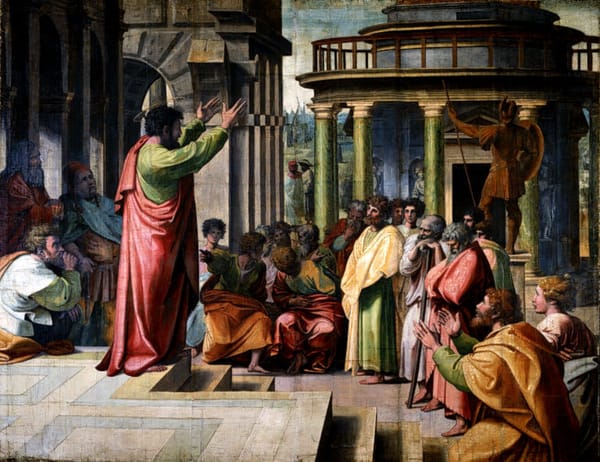
WHEREAS the Greeks on this day are uniting in one solemnity the memory, as they express it, ‘of the illustrious saints, the twelve apostles, worthy of all praise,’1 let us follow in spirit the Roman populace, who are gathered around the successor of Peter, and are making the splendid basilica of the Ostian Way re-echo with songs of victory, while he is offering to the Doctor of the Gentiles the grateful homage of the city and of the world.
On the twenty-fifth of January we beheld Stephen leading to Christ’s crib the once ravenous wolf of Benjamin,2 tamed at last, but who in the morning of his impetuous youth had filled the Church of God with tears and bloodshed. His evening did indeed come when, as Jacob had foreseen, Saul, the persecutor, would outstrip all his predecessors among Christ’s disciples in giving increase to the fold, and in feeding the flock with the choicest food of his heavenly doctrine.3
By an unexampled privilege, our Lord, though already seated at the right hand of his Father, vouchsafed not only to call, but personally to instruct this new disciple, so that he might one day be numbered amongst his apostles. The ways of God can never be contradictory one to another; hence, this creation of a new apostle may not be accomplished in a manner derogatory to the divine constitution already delivered to the Christian Church by the Son of God. Therefore, as soon as the illustrious convert emerged from those sublime contemplations during which the Christian dogma had been poured into his soul, he went to Jerusalem to see Peter, as he himself relates to his disciples in Galatia. 'It behoved him,' says Bossuet, 'to collate his own Gospel with that of the prince of the apostles.'4 From that moment, aggregated as a co-operator in the preaching of the Gospel, the Acts of the Apostles describes him at Antioch accompanied by Barnabas, presenting himself to the work of opening the Church to the Gentiles, the conversion of Cornelius having been already effected by Peter himself. He passes a whole year in this city, reaping an abundant harvest. After Peter's imprisonment in Jerusalem, at his subsequent departure for Rome, a warning from on high makes known to those who preside over the Church at Antioch, that the moment has come for them to impose hands on the two missionaries, and confer on them the sacred character of Ordination.
From that hour Paul attains the full power of an apostle, and it is clear that the mission for which he had been preparing is now opened. At the same time, in St Luke's narrative, Barnabas almost disappears, retaining but a very secondary position. The new apostle has his own disciples, and he henceforth takes the lead in a long series of peregrinations marked by as many conquests. His first is to Cyprus, where he seals an alliance with ancient Rome, analogous to that which Peter contracted at Cesarea.
In the year 43, when Paul landed in Cyprus, its proconsul was Sergius Paulus, illustrious for his ancestry, but still more so for the wisdom of his government. He wished to hear Paul and Barnabas: a miracle worked by Paul, under his very eyes, convinced him of the truth of his teaching; and the Christian Church counted that day among her sons one who was heir to the proudest name among the noble families of Rome. Touching was the mutual exchange that took place on this occasion. The Roman patrician had just been freed by the Jew from the yoke of the Gentiles; in return, the Jew hitherto called Saul received and thenceforth adopted the name of Paul, as a trophy worthy of the apostle of the Gentiles.
From Cyprus Paul travelled successively to Cilicia, Pamphylia, Pisidia, and Lycaonia, everywhere preaching the Gospel and founding Churches. He then returned to Antioch in the year 47, and found the Church there in a state of violent agitation. A party of Jews, who had come over to Christianity from the ranks of the Pharisees, whilst consenting indeed to the admission of Gentiles into the Church, were maintaining that this could only be on condition of their being likewise subjected to Mosaic practices, such as circumcision and distinction of meats. The Christians who had been received from among the Gentiles were disgusted at this servitude to which Peter had not subjected them; and the controversy became so hot that Paul deemed it necessary to undertake a journey to Jerusalem where Peter had lately arrived, a fugitive from Rome, and where the apostolic college was at that moment further represented by John, as well as by James the bishop of the city. These being assembled to deliberate on the question, it was decreed, in the name and under the influence of the Holy Ghost, that to exact any observance relative to Jewish rites should be utterly forbidden in the case of Gentile converts. It was on this occasion, too, that Paul received from these pillars, as he styles them, the confirmation of his apostolate superadded to that of the twelve, and to be specially exercised in favour of the Gentiles. By this extraordinary ministry deputed to the nations, the Christian Church definitively asserted her independence of Judaism, and the Gentiles could now freely come flocking into her bosom.
Paul then resumed his course of apostolic journeys over all the provinces he had already evangelized, in order to confirm the Churches. Thence, passing through Phrygia, he came to Macedonia, stayed a while at Athens, and then on to Corinth, where he remained a year and a half. At his departure he left in this city a flourishing Church, whereby he excited against himself the fury of the Jews. From Corinth Paul went to Ephesus, where he stayed two years. So great was his success with the Gentiles there, that the worship of Diana was materially weakened; whereupon a tumult ensuing, Paul thought the moment come for his departure from Ephesus. During his abode there he made known to his disciples a thought that had long haunted him: ‘ I must needs see Rome.’ The capital of the Gentile world was indeed calling the apostle of the Gentiles.
The rapid growth of Christianity in the capital of the empire had brought face to face, in a manner more striking than elsewhere, the two heterogeneous elements which formed the Church of that day: the unity of faith held together in one fold those that had formerly been Jews, and those that had been pagans. It so happened that some of both of these classes, too easily forgetting the gratuity of their common vocation to the faith, began to go so far as to despise their brethren of the opposite class, deeming them less worthy than themselves of that Baptism which had made them all equal in Christ. On the one side, certain Jews disdained the Gentiles, remembering the polytheism which had sullied their past life with all those vices which come in its train. On the other side, certain Gentiles contemned the Jews, as coming from an ungrateful and blinded people, who had so abused the favours lavished upon them by God as to crucify the Messias.
In the year 53, Paul, already aware of these debates, profited by a second journey to Corinth to write to the faithful of the Church in Rome that famous Epistle in which he emphatically sets forth how gratuitous is the gift of faith; and maintains how Jew and Gentile alike being quite unworthy of the divine adoption, have been called solely by an act of pure mercy. He likewise shows how Jew and Gentile, forgetting the past, have but to embrace one another in the fraternity of the same faith, thus testifying their gratitude to God through whom both of them have been alike prevented by grace. His apostolic dignity, so fully recognized, authorized Paul to interfere in this matter, though touching a Christian centre not founded by him.
While awaiting the day when he could behold with his own eyes the queen of all Churches, lately fixed by Peter on the seven hills, the apostle was anxious once again to make a pilgrimage to the city of David. Jewish rage was just at that moment rampant in Jerusalem against him; national pride being more specially piqued that he, the former disciple of Gamaliel, the accomplice of Stephen's murder, should now invite the Gentiles to be coupled with the sons of Abraham, under the one same Law of Jesus of Nazareth. The tribune Lysias was scarcely able to snatch him from the hands of these bloodthirsty men, ready to tear him to pieces. The following night Christ appeared to Paul, saying to him; ‘Be constant, for as thou hast testified of me in Jerusalem, so must thou bear witness also at Rome.’
It was not, however, till after two years of captivity, that Paul, having appealed to Cæsar, landed in Italy at the beginning of the year 56. Then at last the apostle of the Gentiles made his entry into Rome: not with the trappings of a victor; he was but a humble Jewish prisoner led to the place where all appellants to Cæsar were mustered; yet he was that Jew whom Christ himself had conquered on the way to Damascus. No longer Saul the Benjamite, he now presented himself under the Roman name of Paul; nor was this a robbery on his part, for after Peter he was to be the second glory of Rome, the second pledge of her immortality. He did not bring the Primacy with him, indeed, as Peter had done, for that had been committed by Christ to one alone; but he came to assert, in the very centre of the Gentile world, the divine delegation which he had received in favour of the nations, just as a tributary flows into the main stream, which, mingling its waters with its own, at last empties them unitedly into the ocean. Paul was to have no successor in his extraordinary mission; but the element which he had deposited in the mistress and mother Church was of such value, that in course of ages the Roman Pontiffs, heirs to Peter's monarchical power, have ever appealed to Paul's memory as well, pronouncing their mandates in the united names of the 'blessed apostles Peter and Paul.’
Instead of having to await in prison the day whereon his cause was to be heard, Paul was at liberty to choose a lodging-place in the city. He was obliged, however, to be accompanied day and night by a soldier to whom, according to the usual custom, he was chained, but only in such a way as to prevent his escape: all his movements being otherwise left perfectly free, he could easily continue to preach the Word of God. Towards the close of the year 57, in virtue of his appeal to Cæsar, the apostle was at last summoned before the prætorium, and the successful pleading in his cause resulted in his acquittal.
Being now free, Paul revisited the East, confirming on his evangelical course the Churches he had previously founded. Thus Ephesus and Crete once more enjoyed his presence; in the one he left his disciple Timothy as bishop, and in the other Titus. But Paul had not quitted Rome for ever: marvellously enlightened as she had been by his preaching, the Roman Church was yet to be gilded by his parting rays and empurpled by his blood. A heavenly warning, as in Peter’s case, bade him also return to Rome where martyrdom was awaiting him. This fact is attested by St Athanasius:5 we learn the same also from St Asterius of Ameseus, who hereupon remarks that the apostle entered Rome once more, 'in order to teach the very masters of the world; to turn them into his disciples; and by their means to wrestle with the whole human race. There Paul finds Peter engaged in the same work; he at once yokes himself to the same divine chariot with him, and sets about instructing the children of the Law within the synagogues, and the Gentiles outside.’6
At last Rome possesses her two princes conjointly: the one seated on the eternal chair, holding in his hands the keys of the kingdom of heaven; the other surrounded by the sheaves he has garnered from the fields of the Gentile world. They shall now part no more; even in death, as the Church sings, they shall not be separated. The period of their being together was necessarily short, for they must render to their Master the testimony of blood before the Roman world should be freed from the odious tyranny under which it was groaning. Their death was to be Nero’s last crime; after that he was to fade from sight, leaving the world horror-stricken at his end, as shameful as it was tragic.
It was in the year 65 that Paul returned to Rome; once more signalizing his presence there by the manifold works of his apostolate. From the time of his first labours there, he had made converts even in the palace of the Caesars: having returned to this former theatre of his zeal, he again found entrance into the imperial abode. A woman who was living in criminal intercourse with Nero, and also a cup-bearer of his, were both caught in the apostolic net, for it were hard indeed to resist the power of that mighty word. Nero, enraged at ' this foreigner’s ’ influence in his household, was bent on Paul’s destruction. He was cast into prison, but such was his zeal that he persisted the more in preaching Jesus Christ. The two converts of the imperial palace having abjured, together with paganism, the manner of life they had been leading, their twofold conversion hastened Paul’s martyrdom. He was well aware that it would be so, as can be seen in these lines addressed to Timothy: ‘I labour even unto bands, as an evildoer; but the word of God is not bound. Therefore I endure all things for the sake of the elect. For I am even now ready to be sacrificed, like a victim already sprinkled with the lustral water, and the time of my dissolution is at hand. I have fought the good fight, I have finished my course, I have kept the faith. As to the rest, there is laid up for me a crown of justice which the Lord, the just Judge, will render to me in that day.'7
On the twenty-ninth of June, in the year 67, whilst Peter, having crossed the Tiber by the triumphal bridge, was drawing nigh to the cross prepared for him on the Vatican plain, another martyrdom was being consummated on the left bank of the same river. Paul, as he was led along the Ostian Way, was also followed by a group of the faithful who mingled with the escort of the condemned. His sentence was that he should be beheaded at the Salvian waters. A two miles' march brought the soldiers to a path leading eastwards, by which they led their prisoner to the place fixed upon for his martyrdom. Paul fell on his knees, addressing his last prayer to God; then having bandaged his eyes, he awaited the death-stroke. A soldier brandished his sword, and the apostle's head, as it was severed from the trunk, made three bounds along the ground; three fountains immediately sprang up on these several spots. Such is the local tradition; and to this day three fountains are to be seen on the site of his martyrdom, over each of which an altar is raised.
Let us unite our voice of homage to that of preceding ages in honour of this vessel of election, whence salvation flows so abundantly over our earth. Let us first borrow the following responsories from the Roman Office, the formulas of which for to-day's feast present such a fair collection of graceful beauty.
On the feast of the conversion of the great apostle, Adam of St Victor furnished a theme for our songs in an admirable sequence. The Missal of Liège of the year 1527 offers us the following, the simplicity of which is wanting neither in gracefulness nor depth:
Sequence
Gentes applaudite:
Votaque mentium
Voce depromite.
Curam impendere:
Pastorem ovibus
Incumbit colere.
Honoris ferculum
Tumoris vacuum
Jure percolitis
Qui veri quæritis
Fontis irriguum.
Laudis materiam
In hoc exilio
Confert et gaudium,
Doctoris gentium
Sacra conversio.
Sero munificus:
Non inane
Benjamin typicus
Tulit auspicium.
Doloris filium:
Vocat pater
Dextræ suffragium,
Doctus mysterium.
Paulus distribuit:
Divisit spolia
Legis in gratia.
Ducem malitiæ,
Christus exhibuit
Ministrum gratiæ.
Cæcutus corruit:
Lapsa de nubibus
Vox eum arguit.
Saule, nec sequeris:
Cur in aculeum
Vertis calcaneum?
Præstare crederis
Mihi obsequium:
In meis fratribus
Cruentis manibus
Versando gladium.
Cesserunt vetera:
Præconem gratiæ
Te nunc constituo:
Surge continuo,
Locum do veniæ.
De cujus cumulo
Arenti copia
Redundat sæculo.
Non propter meritum:
Larga donatio,
Sed præter debitum.
Per ignem Spiritus,
Ad refrigerium
Transit divinitus.
Mutatur moribus:
Secundus ordine,
Primus laboribus.
Vocatis primitus:
Præest epistolis,
Vocatus cœlitus.
Semel lapidibus:
Ter mari mergitur,
Nec perit fluctibus.
Raptus in spiritu,
Dei mysterium,
Mentis intuitu
Intuetur, nece loquitur,
Quia nec loqui sinitur.
Pastorum gloria,
Felici tramite
Tua ovilia Deduc,
Perduc, constitue
Perennis loco pascuæ,
clap your applauding hands,
O ye Gentiles: and with voice
proclaim your soul’s wishes.
appertaineth the care of the flock:
unto the sheep
it behoveth to revere the shepherd.
vessel of honour
without flaw,
rightfully treasured by such as seek
indeed pastures watered
by the true fountain.
of the doctor of the Gentiles
confers gladness
in this our exile,
subject of praise,
and a worthy example.
at eve, munificent:
not vainly
did the type of Benjamin
give omen.
a son of pain:
the father called him
the son of the right hand,
for he knew the mystery.
Paul distributed:
he divided the spoils
of the Law in grace.
to be the leader of wickedness,
Christ showed
to be the minister of grace.
he falls down blind:
a voice from the clouds
reproves him.
O Saul, wherefore followest me not?
Wherefore kickest thou
against the goad?
thou thinkest
to do me service
brandishing the sword
with bloody hands
against my brethren.
the old things are done away with:
thee do I now constitute
preacher of grace:
at once arise,
I give place to pardon.’
from out whose copious
stream the arid world
is inundated.
not on account of merits:
O copious donation,
beyond all measure due!
through the fire of the Spirit,
he passes
to divine refreshment.
changed are his manners:
in order he is second,
in labours he is first.
he is peer:
he excels in his epistles,
he is called directly by heaven.
once stoned:
thrice submerged in the sea,
yet perished not in the waves.
to the third heaven,
he beheld with mental gaze
the mystery of God,
nor spoke it again,
for speak it he could not.
glory of shepherds,
by a safe pathway
lead, conduct,
establish thy sheep
in the place of perennial pasture.
St Peter Damian has consecrated a hymn to the doctor of the Gentiles in strains of energetic piety.
Hymn
Tuba clangens Ecclesiæ,
Nubes volans ac tonitrum
Per amplum mundi circulum.
Ruraque cordis irriga:
Cœlestis imbre gratiæ
Mentes virescant aridæ.
Cœlum conscendit tertium,
Audit verba mysterii
Quæ nullis audet eloqui.
Seges surgit uberrima:
Sic cœli replent horreum
Bonorum fruges operum.
Perfundit orbem radiis:
Fugat errorum tenebras,
Ut sola regnet veritas.
Sit decus Unigenito,
Sit utriusque parili
Majestas summa Flamini.
O resounding trumpet of the Church,
O fleeting cloud swift
carrying the thunder all round earth's circuit:
and irrigate the fields of our hearts:
may our arid souls wax green,
beneath the sweet showers of heavenly graces.
he scales the third heaven,
he hears words of mystery,
which he dares not repeat to anyone.
a rich harvest springs up:
thus are heaven’s granaries filled
with the fruits of good works.
he sheds his rays over the world:
the darkness of error he puts to flight,
and truth reigns alone.
glory be to the Only-Begotten,
supreme majesty be to the Spirit,
equal of both.
In conclusion, conformably with liturgical tradition which never celebrates one of these two apostles without making a commemoration of the other, we give below, despoiled of all later touches, the entire poem of Elpis, whence yesterday’s Vesper hymn culled but two strophes. The third strophe is used by the Church on the other feasts of St Peter, the fourth on those of St Paul; the two unitedly formed the Lauds hymn of yesterday’s feast.
Hymn
Lux lucis, omne perfudisti sæculum:
Decorans cœlos inclyto martyrio.
Hac sacra die quæ dat reis veniam.
Judices sæcli, vera mundi lumina:
Per crucem alter, alter ense triumphans,
Vitæ senatum laureati possident.
Vota precantum, et peccati vincula
Resolve, tibi potestate tradita,
Qua cunctis cœlum verbo claudis, aperis.
Et mente polum nos transferre satage:
Donec perfectum largiatur plenius,
Evacuato quod ex parte gerimus.
Fide devotos, spe robustos, maxime
Fonte repletos charitatis geminæ,
Post mortem carnis impetrate vivere.
Honor, potestas, atque jubilatio,
In unitate cui manet imperium,
Ex tunc, et modo, per æterna sæcula.
with a golden light and with a ruddy beauty,
adorning the heavens with a glorious martyrdom,
on this sacred day, which gives pardon to the guilty.
the judges of the world, the true lights of the earth,
the one conquering by the cross, the other by the sword,
crowned with laurel, both take their seats in the senate of Life.
and loose the fetters of sin,
by the power given to thee,
whence, by thy word, thou shuttest or openest heaven to all.
regulate our way of living, and do thou carefully bear us up in spirit to heaven;
until that which we now have but in part being brought to an end,
that which is perfect may be given to us in its plenitude.
grant that devoted in faith, strong in hope, and above all,
filled from the fount of twofold charity,
we may come to live for ever after the death of this flesh.
to which there is ever due supreme dominion,
both in time past, and now through everlasting ages,
may there be eternal glory, honour, power, and jubilation!
To thee, O Paul, we turn this day! Happily founded on Peter, the rock that supports the Church, could we possibly forget thee, by whose labours our forefathers, the Gentiles, became part of the city of God? Sion, once the well-beloved, rejected the Stone and stumbled against it: what is the mystery of this other Jerusalem come down from heaven, the materials whereof were nevertheless drawn up from the abyss? Compacted together in admirable masonry, they proclaim the glory of the skilful architect who laid them on the Corner-Stone; and they are precious stones of such surpassing brilliancy as to outshine all the gems of the daughter of Sion. To whom is this new-comer indebted for all her beauty, for all these her bridal honours? How have the sons of the forsaken one come out from the unclean dens where their mother dwelt, a companion of dragons and of leopards?8 It is because the voice of the Spouse was heard saying: ‘ Come, my bride, come from Libanus; from the top of Amana, from the top of Sanir and Hermon!'9 Nevertheless, the Spouse in his own sacred Person, while he lived here below, never quitted the ancient land of promise, and his mortal accents never once fell on the ear of her who dwelt beyond the confines of Jacob. But, O Paul, didst thou not exclaim: 'How shall they call upon him? how believe him of whom they have not heard?'10 Yet whosoever knows thy love of the Spouse has naught to fear, mindful that thou thyself, O holy apostle, hast proposed the problem and canst solve it.
This is the answer; we sang it on the day of Christ's triumphant Ascension: ‘ When the beauty of the Lord shall arise above the heavens, he shall be mounted on a cloud, and the wing of the wind shall be his swift steed; and, clad in light, he shall dart from pole to pole across the heavens, giving his gifts to the children of men.'11 Thou thyself, O Paul, art this cloud, this wing of the wind bearing the Bridegroom's message unto the nations; yea, thou wast expressly chosen from on high to teach the Gentiles, as those pillars of the Church, Peter, James, and John, have attested.12 How beautiful were thy feet when, having quitted Sion, thou didst appear on our mountains and didst cry out to the Gentiles: ‘ Thy God shall reign!'13 How sweet thy voice when it murmured in the ear of the poor forsaken one the heavenly call: ‘Hearken, O daughter, and see, and incline the ear of thy heart'!14 How tender the pity thou didst evince towards her who had long lived a stranger to the Covenant, without promise, without a God in this world!15
But afar off was she who was to be brought so near to the Lord Jesus, that he and she should form but one body! Thou didst experience, in this immense labour, both the pains of childbirth and the cares of a mother giving the breast to her new-born babe; thou hadst to bear the tedious delay of the growth of the bride, to guard her from every defilement, to inure her gradually to the dazzling light of the Spouse; until at last, rooted and founded in charity, and having reached unto the measure of the age of the fullness of Christ, she might indeed be his glory, and be filled by him unto all the plenitude of God. But what a toil to bring up this new creation from the original slime, to the throne of the heavenly Adam, at the right hand of the Father! Oftentimes repulsed, betrayed, put in chains, misunderstood in the most delicate sentiments of thine apostolic heart, thou hadst naught for thy salary save untold anguish and suffering. Yet fatigue, watchings, hunger, cold, nakedness, abandonment, open violence, perfidious attacks, perils of all kinds, far from abating, only excited thy zeal: joy superabounded in thee; for these sufferings were the filling up of those which Jesus had endured to purchase that alliance so long desired by eternal Wisdom. After his example, thou too hadst but one end, whither tended all thy strength and all thy gentleness: along the dusty Roman roads, or tempest-tossed in the depth of the sea; in the city or the desert; borne aloft on ecstatic wing into the third heavens, or bowed beneath the whips of the Jews and the sword of Nero; everywhere bearing the embassy of Christ, thou didst boldly defy alike life and death, powers of earth and powers of heaven, to stay the might of the Lord or his love, whereby thou wast upheld in thy vast enterprise. Then, as if aware by anticipation of the amazement that would be excited by these enthusiastic outpourings of thy great soul, thou didst utter this sublime cry: 'Would to God that you could bear with some little of my folly: but do bear with me, for I am jealous of you with the jealousy of God. For I have espoused you to one husband, that I may present you as a chaste virgin to Christ!'16
Yesterday, O Paul, thy work was ended. Having given all, thou at length gavest thyself. The sword that struck off thy head accomplished Christ's triumph, as thou hadst predicted. Peter's death fixes the throne of the Spouse in its predestined place. But to thee is the bride, the Gentile world, indebted for being now able, as she sits at the right hand of the Spouse, to turn to the rival Synagogue, exclaiming: 'I am black, but beautiful, daughters of Jerusalem; therefore hath the King loved me and chosen me to be his queen!'17
Praise be to thee, O apostle, now and for ever! Eternity itself will not suffice to exhaust the gratitude of the nations. Accomplish thy work in each one of us during all ages. Do not allow this mystical body to suffer loss in any of her members. Uphold and brace against despondency the preachers of the sacred Word, all those who by the pen, or by any title whatsoever, are continuing thy work of light. Multiply those valiant apostles who are ever narrowing upon our globe the boundaries of darkness. Thou didst promise to remain with us, to be ever watchful of faith's progress in souls, and to cause the pure delights of divine union to be ever developing there. Keep thy promise; because of thy going away to Jesus, thy word is none the less plighted to those who, like ourselves, could not know thee here below. For to those who have not seen thy face in the flesh thou hast left, in one of thine immortal Epistles, the assurance that thou wilt take care that their hearts be comforted, being instructed in charity, and unto all riches of fullness of understanding, unto the knowledge of the mystery of God the Father and of Jesus Christ, in whom are hid all the treasures of wisdom and knowledge.18
During this season of the sacred cycle, the reign of the Holy Spirit who formeth saints,19 grant that Christians of goodwill may be brought to understand how, by their Baptism, they are put in possession of that sublime vocation which is often imagined to be the happy lot of but a chosen few. Would that they could seize this grand yet very simple idea, which thou hast given, of the mystery wherein is contained the absolute and universal principle of Christian life:20 that, having been buried with Jesus under the waters, and thereby incorporated with him, they are necessarily bound by every right and title to become saints, to aim at union with Jesus in his life since they have been granted union with him in his death. Ye are dead, and your life is hidden with Christ in God!21 these were the words addressed by thee to our forefathers. Repeat them to us likewise, for thou didst give them as a truth intended for all without distinction! Suffer not, O Doctor of the Gentiles, that the light grow dim among us, to the great detriment of the Lord and of his bride.
- Menæa, June 30. ↩︎
- Gen. xlix 27. ↩︎
- The following is mainly borrowed from Dom Guéranger in his work: Sainte Cécile et la société romaine aux deux premiers siècles, as was likewise the passage concerning St Peter, see pp. 348-355 ↩︎
- Sermon sur l’units. ↩︎
- De fuga sua, xviii. ↩︎
- Homil. viii. ↩︎
- 2 Tim. ↩︎
- Cant. iv 8. ↩︎
- Ibid. ↩︎
- Rom. x 14. ↩︎
- Resp. of Matins Ascen. ↩︎
- Gal. ii 7-9. ↩︎
- Isa. lii 7. ↩︎
- Ps. xliv ii. ↩︎
- Eph. ii 12. The sequel is strung together freely, from this and his other Epistles. ↩︎
- 2 Cor. xi 1, 2. ↩︎
- Cant. i 4; iv 8. ↩︎
- Col. ii 2, 3. ↩︎
- Rom. viii. ↩︎
- Ibid. vi. ↩︎
- Col. iii 3. ↩︎
| Previous June 29: Sts. Peter and Paul, Apostles | Next June 30: The Commemoration of St. Paul |