Daily reading
After Pentecost
Semidouble · Movable from Easter · Temporal
August 25, 2024
From Dom Guéranger’s The Liturgical Year.

|
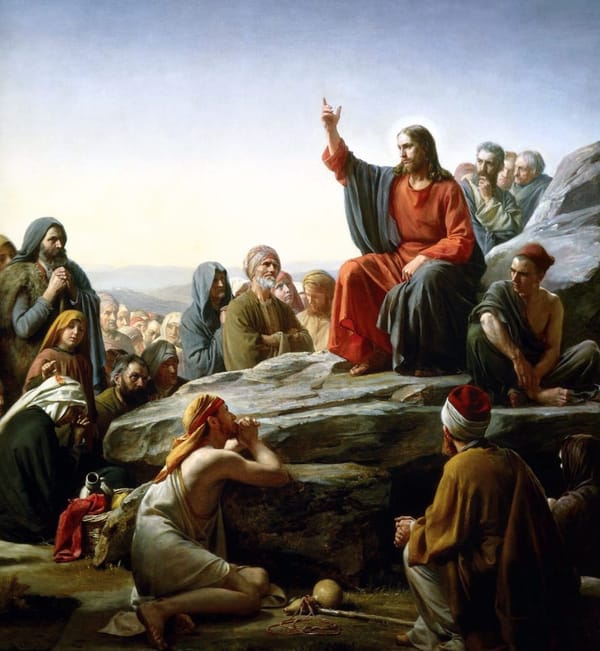
The Fourteenth Sunday after Pentecost
In the western Church this Sunday is called that of the two masters, because of the Gospel which is read upon it. The Greeks give it the name of the Sunday of the invited to the marriage-feast,1 or, the fourteenth of St. Matthew, unless the feast of the Exaltation of the holy Cross (September 14) happen to fall during the ensuing week. In this latter case this and the following Sunday are called ‘of the Exaltation,' and take for their Gospels the first from St. John, the second from St. Mark. After this, follow the Sundays called ‘of St. Luke,’which go on till Lent, in the manner already described for St. Matthew.
Mass
Behold, O God, our protector! and look on the face of thy Christ! Thus begins the Church, as she advances towards the altar, whereon the holy sacrifice is going to be offered up. The Church is the bride of the Man-God; she is, as the apostle says, His glory; but the Spouse, according to the same St. Paul, is both the image and the glory of God,2 and the head of His bride.3 In all truth, then, and with full confidence that she will be graciously heard, the Church, in presenting her petitions to the Most High, begs of Him to look on the face of His Christ, who is also hers.
Introit
The thought of the future glories which fills the Church with gladness, and the dignity of the divine union which, even in this present life, makes her truly bride, do not prevent her from always feeling the need she has of help from on high. Were she to be deprived one single moment of God’s assistance, she would see her children, through their innate human frailty, hurrying into the abyss of vice, such as the apostle describes in to-day's Epistle. Let us join with our mother in her Collect, and beseech God to grant us that uninterrupted, that constant mercy, which is absolutely necessary for us.
Collect
The other Collects, as on page 120.
Epistle
Cap. v.Fratres, Spiritu ambulate, et desideria carnis non perficietis. Caro enim concupiscit adversus spiritum : spiritus autem adversus carnem: hæc enim sibi invicem adversantur : ut non quacumque vultis, illa faciatis. Quod si spiritu ducimini, non estis sub lege. Manifesta sunt autem opera carnis : quæsunt fornicatio, immunditia, impudicitia, luxuria, idolorum servitus, veneficia, inimicitiæ, contentiones, æmulationes, iræ, rixæ, dissensiones, sectæ, invidiæ, homicidia, ebrietates, comessationes, et his similia; quæprædico vobis, sicut prædixi: quoniam qui talia agunt, regnum Dei non consequentur. Fructus autem Spiritus est : charitas, gaudium, pax, patientia, benignitas, bonitas, longanimitas, mansuetudo, fides, modestia, continentia, castitas. Adversus hujusmodi non est lex. Qui autem sunt Christi, carnem suam crucifixerunt cum vitiis et concupiscentiis.
Ch. v.Brethren: Walk in the spirit, and you shall not fulfil the lusts of the flesh. For the flesh lusteth against the spirit; and the spirit against the flesh: for these are contrary one to another: so that you do not the things that you would. But if you are led by the spirit, you are not under the law. Now the works of the flesh are manifest, which are, fornication, uncleanness, immodesty, luxury, idolatry, witchcrafts, enmities, contentions, emulations, wraths, quarrels, dissensions, sects, envies, murders, drunkenness, revellings, and such like. Of the which I foretell you, as I have foretold to you, that they who do such things shall not obtain the kingdom of God. But the fruit of the Spirit is charity, joy, peace, patience, benignity, goodness, longanimity, mildness, faith, modesty, continency, chastity. Against such there is no law. And they that are Christ’s have crucified their flesh with the vices and concupiscences.
The bride, who came from the top of Sanir and Hermon that she might be crowned,4 knows not the servitude of Sinaï;5 still less is she under the slavery of the senses. On the mountain, where her tent is fixed for ever,6 her Spouse has broken the fetters of the Jewish Law, and that more galling chain which tied all people down—the network of sin that covered all the nations of the earth.7 She, the bride, is queen; her sons are kings;8 the milk whereon she feeds them9 infuses liberty within them.10 Filled with the holy Spirit, who is their glory and their strength,11 they have the Lord of hosts looking on them, as they bravely engage in battles such as princes should fight.12 Satan, too, has beheld their glorious struggles, and his kingdom has been shaken to its foundations.13 Two cities now divide the world between them;14 and the holy city, made up of vanquishers over the devil, the world, and the flesh, is full of admiration and joy at seeing that the noblest of the nations flock to her.15 The law which reigns supreme within her walls is love, for the holy Spirit, who rules her happy citizens, takes them far beyond the injunctions or prohibitions of any law. Together with charity, there spring up joy, peace, and those other fruits, here enumerated by the apostle; they grow spontaneously from a soil which is saturated with the glad waters16 of a stream, which is no other than the sanctifying Spirit, who inundates the city of God.17 We are not astonished at this new Sion’s being loved by the Lord above all the tabernacles of Jacob,18 beautiful as those once were.19 Now that the blessing has taken on earth the place once held by the Law, the servants of God have become sons and daughters. Even while living in the flesh, they bear evidence of their heavenly origin, by going on from virtue unto virtue. Though sojourning in this vale of tears, they are ever on the ascent, approaching gradually nigher to the high summits of holiness; they reflect in their lives the perfection of their heavenly Father,20 who, surrounded as He thus is in Sion by this noble family, is seen to be, in all truth, the God of gods.21
Flesh and blood have had no share in their divine birth;22 flesh and blood have no hand in their regenerated life.23 Their first birth being in the flesh, they were flesh, and did the works of death and ignominy mentioned in the Epistle, showing at every turn that they were from slime of earth;24 but, born of the Spirit, they are spirit,25 and do the works of the spirit, in spite of the flesh which is always part of their being.26 For, by giving them of His own life, the Spirit has emancipated them, by the power of love, from the tyranny of sin,27 which held dominion over their members;28 and, having been grafted on Christ, they bring forth fruit unto God.29
Man, therefore, who was once a slave to concupiscence, has regained on the cross of Christ that equilibrium of his existence30 which is true liberty. The supremacy, which the soul had forfeited in punishment for her revolt against God,31 has been restored to her by the laver of the water of Baptism, and now that she is once more queen, it is but just that she chastise the slave who so long lorded it over her, his rightful sovereign. Man owes nothing to the flesh,32 especially after the miseries it has brought upon him; but further than this, God, too, has been insulted by the sensual abominations committed in His sacred presence; and He, too, demands atonement. For this purpose He mercifully takes man, now that he is enfranchised, and confides to him the task of sharing with His divine Majesty in taking revenge on their common enemy and usurper. Then again, this mortifying the flesh and keeping it in subjection is a necessary means for retaining the good position already obtained. It is true that the rebel has been made incapable of damaging those who are in Christ Jesus, and who walk not according to the flesh and its vile suggestions;33 but it is equally true that the rebel is rebel still, and is ever watching for opportunities to assail the spirit. If there be exceptions, they are exceedingly rare. The rule of the flesh is, to attack the spirit all through life, and try to make it yield. If one were an Antony in the desert, the flesh would be fierce in its assaults even there. If the saint were a Paul, just fresh from the third heaven of his sublime revelations, the flesh would have impudence enough to buffet even him.34 So that, had we no past sins to atone for, the commonest prudence would urge us to take severe measures of precaution against an enemy who is so fearfully untiring in his hatred of us, and, what is worse, lives always in our own home. St. Paul, of whom we were just speaking, says of himself: ‘I chastise my body, and bring it into subjection, lest, perhaps . . . I should become reprobate!’35
Penance and mortification differ in this: that penance is a debt of justice, incumbent on the sinner; mortification is a duty commanded by prudence; which duty becomes that of every Christian who is not foolish enough to pretend to be out of the reach of concupiscence. Is there anyone living who could honestly say that he has fully acquitted himself of these two duties, that he has satisfied the claims of God’s justice, and that he has stifled every germ of his evil passions? All spiritual masters, without exception, teach that no man who is desirous either of perfection or of salvation should limit himself to the rules of simple temperance, that cardinal virtue which forbids excess in pleasures of any kind. This, they tell us, is not enough; and that the Christian, taking up another virtue, namely fortitude, must from time to time refuse himself even lawful gratifications; must impose privations on himself which are not otherwise of obligation; must even inflict punishment on himself in the manner and measure permitted him by a discreet director. Amidst the thousands of holy writers who treat of this point of asceticism, let us listen to the amiable and gentle St. Francis of Sales. ‘If,'says he, in his Introduction to a Devout Life—’if you can bear fasting you would do well to fast on certain days, beyond those fasts which the Church commands us to observe . . .; even when one does not fast much, yet does the enemy fear us all the more when he sees that we know how to impose a fast on ourselves. Wednesdays, Fridays, and Saturdays were the days whereon the Christians of former times most practised abstinence. Therefore, do you choose out of these for your fasts, as far as your devotion and the discretion of your director will counsel you to do.... The discipline, when taken with moderation, possesses a marvellous power for awakening the desire for devotion. The hair-shirt is efficacious in reducing the body to subjection . . .; on days which are especially devoted to penance, one may wear it, the advice of a discreet confessor having been previously taken.'36 Thus speaks the learned Doctor of the Church, the saintly Bishop of Geneva, whose sweet prudence is almost proverbial; and they to whom he addresses these instructions are persons living in the world. In the world, quite as much as in the cloister, the Christian life, if seriously taken up, imperatively requires this incessant war of the spirit against the flesh. Let that war cease, and the flesh speedily usurps the sway, and reduces the soul to a state of torpor, by either seizing her very first attempts at virtue and chilling them into apathy, or by plunging her, at a single throw, deep into the filth of sin.
Neither is it to be feared that affability in the Christian’s social intercourse will be in any way impaired by this energy of self-mortification. That virtue which is based on such forgetfulness of oneself, as to make him love discomfort and suffering for God’s sake, does not render such a man one whit less pleasing in company, or rob the friendly circle he frequents of one single charm. But will it not interfere somewhat with an article which the world is very jealous about? No. When dress is what Christian reserve would have it be, in other and plainer words, when it is the love of Jesus that regulates the arrangements, there is no toilet where the jewels of penance may not find their place, without in the least intruding upon those of the world. The day of judgment will give a strange lesson to those many good-for-nothing and cowardly Christians who feel sure that everyone of their acquaintance is as fond of easy-going softness as they themselves are! Then will be revealed to them the pious schemes of penance, which Christian love of the cross suggested, as means for crucifying their flesh even amidst pleasures, and to those very persons who were the most admired in the worldling’s earthly paradise of gay saloons.
And ought it not to be thus? Ought not the cross to be most dear to men? Yes, unless we hold that Christianity and divine love have entirely disappeared from this world. How is it possible to love Jesus, the Man of sorrows,37 and not love His sufferings? Can we say that we are walking in His footsteps if we are not on the road to Calvary? ‘If any man will come after Me,’ says Jesus, 'let him deny himself, and take up his cross, and follow Me!’38 And the Church, who is one with her divine Spouse—the Church who completes Him in all things,39 and, therefore, continues through all ages His life of expiation and atonement—puts on her children the sublime task which the apostle thus expresses: 'I fill up those things that are wanting of the sufferings of Christ, by suffering in my flesh for His body, which is the Church.'40
Sublime task indeed! Filial, as far as the Church is concerned, but divine, also, and deifying, if we consider the union it produces between the Word and the soul. The Word gives to the soul what He has not given to the angels; He invites her to a share of that chalice, which the eternal Father reserved to Jesus’ sacred Humanity.41 Here we have the intimacy of the bride: the one same cup for the two, and it unites their two lives into one. It is a cup of sorrow’s holy inebriation; they both drink it with avidity; and that avidity gives such vehemence to their union that the creature at times leaves her ecstasy all stigmatized in soul, yea, it may be in her body too, with the wounds of her crucified Lord. But whether our Lord communicate or not, either invisibly or visibly, the stigmata of His love to the soul that is devoted to Him, there is always, under one form or other, the royal seal, which gives the surest sign of authenticity to the contract of divine union here below; that seal is suffering. Many, who on hearing or reading the favours gratuitously granted to certain saintly souls are excited to a feeling of holy envy, would shrink back with dismay if they were told of the trials they had to go through before gaining such mystic ascensions. Even when the trials of purification (of which we were speaking on a former occasion42) are all over, the place of meeting is invariably that which the inspired Canticle calls the Mount of myrrh,43 which is but another name for suffering. Myrrh is the first fragrant herb culled by the divine Word in the mystic garden; nay, it is the only one He expressly mentions.44 Myrrh distils from the bride’s hands, and her fingers are full of it;45 her Spouse is the bouquet she clasps to her heart, but that bouquet is one of myrrh;46 and His lips are as lilies dropping choice myrrh.47
Of course, we are too miserable ever to aspire to be raised up by the holy Spirit to those heights of the mystic life, where divine union produces such marvellous results as those we have already mentioned; but let us remember that neither the intensity, nor the merit of love, nor even the reality of effective union depends on those exterior manifestations. It should suffice to make us love, and even go in quest of suffering, to remember how faith teaches us that it was life-long with Him, who wishes, and infinitely deserves, to be the one object of our thoughts and affections. We are members of a Head who was crowned with thorns; can we pretend to have nothing but pleasures and flowers? Let us not forget that all the saints must, when in heaven, be likenesses of the new Adam;48 and that the eternal Father admits no one into His house, who is not conformable to the image of His Son.49
In the Gradual, the Church sings the happy confidence she has put in her divine Spouse. The Alleluia-verse invites us to rejoice, as she, our mother, does in God our Saviour.
Gradual
℣. Bonum est sperare in Domino, quam sperare in principibus.
Gospel
Cap. vi.In illo tempore : Dixit Jesus discipulis suis : Nemo potest duobus dominis servire : aut enim unum odio habebit, et alterum diliget : aut unum sustinebit, et alterum contemnet. Non potestis Deo servire, et mammonse. Ideo dico vobis, ne solliciti sitis animæ vestræ quid manducetis, neque corpori vostro quid induamini. Nonne anima plus est quam esca : et corpus plus quam vestimentum? Respicite volatilia cœli, quoniam non serunt, neque metunt, neque congregant in horrea : et Pa ter vester cœlestis pascit illa. Nonne vos magia pluris estis illis? Quis autem vestrum cogitans, potest adjicere ad staturam suam cubitum unum? Et de vestimento quid solliciti estis? Considerate lilia agri, quomodo crescunt: non laborant, neque nent. Dico autem vobis, quoniam nec Salomon in omni gloria sua coopertus est sicut unum ex istis. Si autem fœnum agri, quod hodie est, et cras in clibanum mittitur, Deus sic vestii : quanto magia vos modicæ fidei? Nolite ergo solliciti esse, dicentes : Quid manducabimus, aut quid bibemus, aut quo operiemur? Hæc enim omnia gentes inquirunt. Scit enim Pater vester, quia his omnibus indigetis. Quærite ergo primum regnum Dei, et justitiam ejus: et hæc omnia adjicientur vobis.
Ch. vi.At that time: Jesus said to his disciples : No man can serve two masters. For either he will hate the one, and love the other : or he will sustain the one, and despise the other. You cannot serve God and mammon. Therefore I say to you, be not solicitous for your life, what you shall eat, nor for your body, what you shall put on. Is not the life more than the meat, and the body more than the raiment? Behold the birds of the air, for they neither sow, nor do they reap, nor gather into barns, and your heavenly Father feedeth them. Are not you of much more value than they? And which of you, by taking thought, can add to his stature one cubit? And for raiment why are you solicitous? Consider the lilies of the field how they grow: they labour not, neither do they spin. But I say to you, that not even Solomon in all his glory was arrayed as one of these. And if the grass of the field, which is to-day, and to-morrow is cast into the oven, God doth so clothe; how much more you, O ye of little faith? Be not solicitous therefore, saying, what shall we eat, or what shall we drink, or wherewith shall we be clothed? For after all these things do the heathens seek. For your Father knoweth that you have need of all these things. Seek ye therefore first the kingdom of God, and his justice, and all these things shall be added unto you.
The supernatural life can never be healthy in men’s souls, unless it triumph over the three enemies, which St. John calls concupiscence of the flesh, concupiscence of the eyes, and the pride of life.50 As to the first of these, our Epistle has been instructing us upon the obstacle it raises against the action of the holy Spirit, and on the means we are to adopt for surmounting it. Pride of life is overcome by humility, on which the Church has several times spoken to us during the previous Sundays. The Gospel which has just been read to us is the condemnation of the concupiscence of the eyes—that is, attachment to the goods of this world which, of themselves, are goods but in name and appearance.
No man, says our Lord, can serve two masters; and these two masters are, God and mammon. Mammon means riches.51 Riches are not, of their own nature, bad. When lawfully acquired, and used agreeably to the designs of God, riches help the possessor to gain true goods for his soul; he stores up for himself, in the kingdom of his eternal home, treasures, which neither thieves nor rust can reach.52 Ever since the Incarnation, wherein the divine Word espoused poverty to Himself, it is the poor that are heaven’s nobility. And yet, the mission of the rich man is a grand one: he is permitted to be rich in order that he may be God’s minister to make all the several portions of material creation turn to their Creator’s glory. God graciously vouchsafes to entrust into his hands the feeding and supporting of the dearest of His children, that is, the poor, the indigent and suffering members of His Christ. He calls him to uphold the interests of His Church, and be the promoter of works connected with the salvation of men. He confides to him the keeping up of the beauty of His temples. Happy that man, and worthy of all praise, who thus directly brings back to the glory of their Maker the fruits of the earth, and the precious metals she yields from her bosom! Let not such a man fear: it is not of him that Jesus speaks those anathemas uttered so frequently by Him against the rich ones of this world. He has but one Master—the Father who is in heaven, whose steward he humbly and gladly acknowledges himself to be. Mammon does not domineer over him; on the contrary, he makes her his servant, and obliges her to minister to his zeal in all good works. The solicitude he takes in spending his wealth in acts of justice and charity, is not that which our Gospel here blames; for, in all such solicitude, he is but following our Lord's precept, of seeking first the kingdom of God; and the riches which pass through his hands in the furtherance of good works, do not distract his thoughts from that heaven where his heart is, because his true treasure is there.53
It is quite otherwise when riches, instead of being regarded as a simple means, become the very end of a man's existence, and that to such an extent as to make him neglect, yea, and sometimes forget, his last end. ‘The ways of every covetous man,' says the Scripture, 'destroy the souls of the possessors.'54 The apostle explains this by saying that the love of money drives a man into temptation and the snares of the devil, by the countless unprofitable and hurtful desires it excites within him; it drowns men in destruction and perdition, making them even barter away their faith.55 And yet, the more an avaricious man gets, the less he spends. To nurse his treasure, to gaze upon it,56 to be thinking of it all day and night long, when obliged to go from home—that is what he lives for; and his money becomes at last his idol.57 Yes, mammon is not merely his master, whose commands are obeyed before all others, but it is his god, before which he sacrifices friends, relatives, country, and himself, for he devotes, and, as it is said in Ecclesiasticus, throws away his whole soul and body to his idol.58 Let us not be astonished at our Gospel declaring that God and mammon are irreconcilable enemies; for, who was it but mammon that had our Lord Jesus sacrificed on its hateful altar, for thirty pieces of silver? Of all the devils in hell, is there one whose hideous guilt is deeper than the fallen angel who prompted Judas to sell the Son of God to His executioners? It is the avaricious who alone can boast of deicide! The vile love of money, which the apostle defines as the root of all evils,59 can lay claim to having produced the greatest crime that was ever perpetrated!
But, without going into such crimes as made the authors of the inspired Books of even the old Testament say that 'nothing is more wicked than the covetous man . . .; there is not a more wicked thing than to love money’60—it is easy to allow oneself to be led, as regards this world's goods, into an excessive solicitude, which prudence condemns. What ineffable truth and clearness in the reasoning of our Jesus, as put before us in to-day's Gospel! To attempt to add any human words to these of His, would be an insult offered to both their charm and their energy. The exquisitely beautiful comparisons of the birds of the air, and the lilies of the field, by which our divine Master shows how such solicitude is the very opposite of the confidence we should have in our heavenly Father, are beyond all comment We may add, however, that solicitude of this sort would prove the existence of an attachment to earthly things, which is incompatible with anything approaching to Christian perfection, or to the desire of making progress in the paths of divine union. The unitive way is possible in every state of life; only, there must be one condition observed, and that is, the soul must be detached from every tie that could keep her from going to God. The religious breaks these ties by his three vows, which are in direct opposition to the triple concupiscence of fallen nature; the layman, who, though he is living in the world, desires to be what his Creator would have him be, must, without the aid of the real separation which the religious makes, be quite as completely detached from his own will, and sensuality, and riches, in order that all his intentions and aspirations may be fixed on the eternal home, where his one infinite, loved treasure is. If he does not bring himself, even in the midst of his riches, to be as poor in spirit as the religious is in deed, his progress will be checked at the very first step he takes in the contemplative life; and, if he allow the obstacle to block up the way, he must give up all idea of rising, in light and love, above the lowly paths of the majority of Christians.
Like the other portions of to-day’s liturgy, the Offertory is all confidence and joy. The prince of the heavenly hosts—the Archangel St. Michael, whose feast is at hand, and whom the Church always invokes in the blessing of the incense at this part of the Mass—is he not ever ready to protect and watch over those who fear the Lord?
Offertory
Let us, in the Secret, pray that the saving Host, offered on the altar, may, by its virtue, purify our soul, and draw the divine power to our assistance.
Secret
The other Secrets, as on page 130.
The Communion-anthem, taken from the Gospel which now is assigned to this Sunday, was not the one primitively used; the ancient liturgists make no mention of it in its present position, nor is it to be found there in any of the manuscripts consulted by Blessed Thomasi, when he was preparing the publication of his Antiphonary. The composition of this and some other Masses shows some few variations of this kind; but these are details, which, whatever may be their interest in other respects, savour too much of erudition, and the nature of this work necessarily excludes them.
Communion
An ever-growing love of purity, heaven's protection, and final perseverance—these are the precious fruits of our frequent assistance at these sacred mysteries. Let us secure them, by joining our mother in her Postcommunion prayer.
Postcommunion
The other Postcommunions as on page 181.
Vespers
The psalms, capitulum, hymn, and versicle, as above, pages 71-81.
Antiphon of the Magnificat
- St. Matt. xxii. ↩︎
- 1 Cor. xi. 7. ↩︎
- Ibid. 3; Eph. v. 28. ↩︎
- Cant. iv. 8. ↩︎
- Gal. iv. 24-26. ↩︎
- Isa. ii. 2. ↩︎
- Ibid. xxv. 7. ↩︎
- 1 St. Pet. ii. 9. ↩︎
- Isa. lxvi. 8-12. ↩︎
- Gal, iv. 31. ↩︎
- Rom. viii. 14, 26. ↩︎
- Eph. iv. 8, vi. 12. ↩︎
- St. John xii. 31. ↩︎
- St. Aug., De Civit. Dei. ↩︎
- Isa. lx. 5. ↩︎
- Ps. lxiv. 11. ↩︎
- Ibid. xlv. 5. ↩︎
- Ibid, lxxxvi. 2. ↩︎
- Num. xxiv. 5. ↩︎
- St. Matt. v. 48. ↩︎
- Ps. lxxxiii. 6-8. ↩︎
- St. John i. 12. ↩︎
- 1 Cor. xv. 60. ↩︎
- Gen. ii. 7. ↩︎
- St. John iii. 6. ↩︎
- 2 Cor. x. 3. ↩︎
- Rom. viii. 2. ↩︎
- Ibid. vii. 23. ↩︎
- Ibid. 4. ↩︎
- Ibid. viii. 3. ↩︎
- Ibid. i. 28. ↩︎
- Ibid. viii. 12. ↩︎
- Ibid. 1. ↩︎
- 2 Cor. xii. 7. ↩︎
- 1 Cor. ix. 27. ↩︎
- Introduction to a Devout Life, Part III., ch. xxiii ↩︎
- Isa. liii. 8. ↩︎
- St. Matt. xvi. 24. ↩︎
- Eph. i. 23. ↩︎
- Col. i. 24. ↩︎
- St. John xviii. 11. ↩︎
- The sixth Sunday after Pentecost. ↩︎
- Cant. iv. 6. ↩︎
- Ibid. v. 1. ↩︎
- Cant. v. 5. ↩︎
- Ibid. i. 12. ↩︎
- Ibid. v. 13. ↩︎
- 1 Cor. xv. 45-49. ↩︎
- Rom. viii. 29, 30. ↩︎
- 1 St. John ii. 16. ↩︎
- Homil. diei. ↩︎
- St. Matt vi. 19, 20. ↩︎
- St. Matt, vi. 21. ↩︎
- Prov. i. 19. ↩︎
- 1 Tim. vi. 9, 10. ↩︎
- Eccles. v. 9, 10. ↩︎
- Eph. v. 5; Col. iii. 5. ↩︎
- Ecclus. x. 10. ↩︎
- 1 Tim. vi. 10. ↩︎
- Ecclus. x. 9, 10. ↩︎
August 25: St. Louis, King of France, Confessor
|
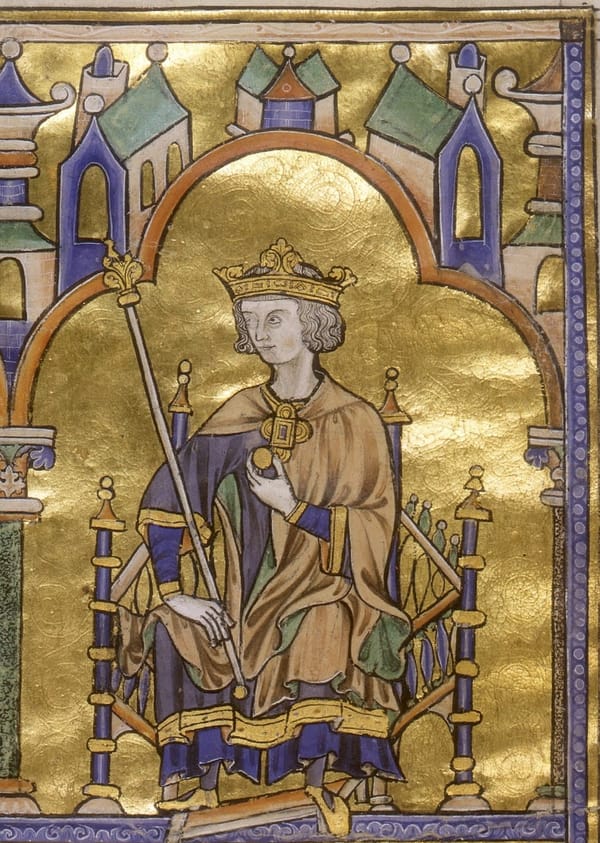
It was his Christian faith that made Louis IX so great a prince. ‘You that are the judges of the earth, think of the Lord in goodness, and seek Him in simplicity of heart.’1 Eternal Wisdom, in giving this precept to kings, rejoiced with divine foreknowledge among the lilies of France, where this great saint was to shine with so bright a lustre.
Subject and prince are bound to God by a common law, for all men have one entrance into life, and the like going out.2 Far from being less responsible to the divine authority than his subjects, the prince is auswerable for every one of them as well as for himself. The aim and object of creation is that God be glorified by the return of all creatures to their Author, in the manner and measure that He wills. Therefore, since God has called man to a participation in His own divine life, and has made the earth to be to him but a place of passage, mere natural justice and the present order of things are not sufficient for him. Kings must recognize that the object of their civil sovereignty, not being the last end of all things, is, like themselves, under the direction and absolute rule of that higher end, before which they are but as subjects. Hear therefore, ye kings, and understand: a greater punishment is ready for the more mighty.3 Thus did the divine goodness give merciful warnings under the ancient Covenant.
But not satisfied with giving repeated admonitions, Wisdom came down from her heavenly throne. Henceforth the world belongs to her by a twofold title. By the right of her divine origin, she held the principality in the brightness of the saints, before the rising of the day star; she now reigns by right of conquest over the redeemed world. Before her coming in the flesh, it was already from her that kings received their power, and that equity which directs its exercise. Jesus, the Son of Man, whose Blood paid the ransom of the world, is now, by the contract of the sacred nuptials which united Him to our nature, the only source of power and of all true justice. And now, once more, O ye kings, understand: says the psalmist; receive instruction, you that judge the earth.4
St. Augustine:
It is Christ who speaks: Now that I am king in the name of God My Father, be not sad, as though you were thereby deprived of some good you possessed; but rather acknowledging that it is good for you to be subject to Him who gives you security in the light, serve this Lord of all with fear, and rejoice unto Him.5
It is the Church that continues, in the name of our ascended Lord, to give to kings this security which comes from the light: the Church who, without trespassing upon the authority of princes, is nevertheless their superior as mother of nations, as judge of consciences, as the only guide of the human race journeying towards its last end. Let us listen to the sovereign Pontiff Leo XIII, speaking with the precision and power which characterize his infallible teaching:
As there are on earth two great societies: the one civil, whose immediate end is to procure the temporal and earthly well-being of the human race; the other religious, whose aim is to lead men to the eternal happiness for which they were created: so also God has divided the government of the world between two powers. Each of these is supreme in its kind; each is bounded by definite limits drawn in conformity with its nature and its peculiar end. Jesus Christ, the founder of the Church, willed that they should be distinct from one another, and that both should be free from trammels in the accomplishment of their respective missions; yet with this provision, that in those matters which appertain to the jurisdiction and judgment of both, though on different grounds, the power which is concerned with temporal interests, must depend, as is fitting, on that power which watches over eternal interests. Finally, both being subject to the eternal and to the natural Law, they must in such a manner mutually agree in what concerns the order and government of each, as to form a relationship comparable to the union of soul and body in man.
In the sphere of eternal interests, to which no one may be indifferent, princes are bound to hold not only themselves but their people also in subjection to God and to His Church.
[For] since men united by the bonds of a common society depend on God no less than individuals, associations whether political or private cannot, without crime, behave as if God did not exist, nor put away religion as something foreign to them, nor dispense themselves from observing, in that religion, the rules according to which God has declared that He wills to be honoured. Consequently, the heads of the State are bound, as such, to keep holy the name of God, make it one of of their principal duties to protect religion by the authority of the laws, and not command or ordain anything contrary to its integrity.6
Let us now return to St. Augustine’s explanation of the text of the Psalm:
How do kings serve the Lord with fear, except by forbidding and punishing with a religious severity all acts contrary to the commands of the Lord? In his twofold character as man and as prince, the king must serve God: as man, he serves Him by the fidelity of his life; as king, by framing or maintaining laws which command good and forbid evil. He must act like Ezechias and Josias, destroying the temples of the false gods and the high places that had been constructed contrary to the command of the Lord; like the king of Ninive obliging his city to appease the Lord; like Darius giving up the idol to Daniel to be broken, and casting Daniel’s enemies to the lions; like Nabuchodonosor forbidding blasphemy throughout his kingdom by a terrible law. It is thus that kings serve the Lord as kings, viz: when they do in His service those tilings which only kings can do.7
In all this teaching we are not losing sight of to-day’s feast; for we may say of Louis IX as an epitome of his life: ‘He made a covenant before the Lord to walk after Him and keep His commandments; and cause them to be kept by all.’8 God was his end, faith was his guide: herein lies the whole secret of his government as well as of his sanctity. As a Christian he was a servant of Christ, as a prince he was Christ’s lieutenant; the aspirations of the Christian and those of the prince did not divide his soul; this unity was his strength, as it is now his glory. He now reigns in heaven with Christ, who alone reigned in him and by him on earth. If then your delight be in thrones and sceptres, O ye kings of the people, love wisdom, that you may reign for ever.9
Louis was anointed king at Rheims on the first Sunday of Advent 1226; and he laid to heart for his whole life the words of that day’s Introit: ‘To Thee, O Lord, have I lifted up my soul: in Thee, O my God, I put my trust!' He was only twelve years old; but our Lord had given him the surest safeguard of his youth, in the person of his mother, that noble daughter of Spain, whose coming into France, says William de Nangis, was the arrival of all good things.10 The premature death of her husband Louis VIII left Blanche of Castille to cope with a most formidable conspiracy. The great vassals, whose power had been reduced during the preceding reigns, promised themselves that they would profit of the minority of the new prince, in order to regain the rights they had enjoyed under the ancient feudal system to the detriment of the unity of government. In order to remove this mother, who stood up single-handed between the weakness of the heir to the throne and their ambition, the barons, everywhere in revolt, joined hands with the Albigensian heretics; and made an alliance with the son of John Lackland, Henry III, who was endeavouring to recover the possessions in France lost by his father in punishment for the murder of prince Arthur. Strong in her son’s right and in the protection of Pope Gregory IX, Blanche held out; and she, whom the traitors to their country called the foreigner in order to palliate their crime, saved France by her prudence and her brave firmness. After nine years of regency, she handed over the nation to its king, more united and more powerful than ever since the days of Charlemagne.
We cannot here give the history of an entire reign; but, honour to whom honour is due: Louis, in order to become the glory of heaven and earth on this day, had but to walk in the footsteps of Blanche, the son had but to remember the precepts of his mother.
There was a graceful simplicity in our saint’s life, which enhanced its greatness and heroism. One would have said he did not experience the difficulty that others feel, though far removed from the throne, in fulfilling those words of our Lord: Unless you become as little children, you shall not enter into the kingdom of heaven.11 Yet who was greater than this humble king, making more account of his Baptism at Poissy than of his anointing at Rheims; saying his Hours, fasting, scourging himself like his friends the Friars Preachers and Minors; ever treating with respect those whom he regarded as God’s privileged ones, priests, religious, the suffering and the poor? The great men of our days may smile at him for being more grieved at losing his breviary than at being taken captive by the Saracens. But how have they behaved in the like extremity? Never was the enemy heard to say of any of them: ‘You are our captive, and one would say we were rather your prisoners.’ They did not check the fierce greed and bloodthirstiness of their gaolers, nor dictate terms of peace as proudly as if they had been the conquerors. The country, brought into peril by them, has not come out of the trial more glorious. It is peculiar to the admirable reign of St. Louis, that disasters made him not only a hero but a saint; and that France gained for centuries in the east, where her king had been captive, a greater renown than any victory could have won for her.
The humility of holy kings is not forgetfulness of the great office they fulfil in God’s name; their abnegation could not consist in giving up rights which are also duties, any more than charity could cast out justice, or love of peace could oppose the virtues of the warrior. St. Louis, without an army, felt himself superior as a Christian to the victorious infidel, and treated him accordingly; moreover the west discovered very early, and more and more as his sanctity increased with his years, that this king, who spent his nights in prayer, and his days in serving the poor, was not the man to yield to anyone the prerogatives of the crown. ‘There is but one king in France,’ said the judge of Vincennes rescinding a sentence of Charles of Anjou; and the barons at the castle of Bellême, and the English at Taillebourg, were already aware of it; so was Frederick II who, threatening to crush the Church and seeking aid from the French, received this answer: ‘The kingdom of France is not so weak as to suffer itself to be driven by your spurs.’
Louis’s death was like his life, simple and great. God called him to Himself in the midst of sorrowful and critical circumstances, far from his own country, in that African land where he had before suffered so much; these trials were sanctifying thorns, reminding the prince of his most cherished jewel, the sacred crown of thorns which he had added to the treasures of France. Moved by the hope of converting the king of Tunis to the Christian faith, it was rather as an apostle than a soldier that he had landed on that shore where his last straggle awaited him. ‘I challenge you in the name of our Lord Jesus Christ, and of His lieutenant Louis king of France;’ such was the sublime provocation hurled against the infidel city, and it was worthy of the close of such a life. Six centuries later, Tunis was to see the sons of those same Franks unwittingly following up the challenge of the saintly king, at the invitation of all the holy ones resting in the now Christian land of ancient Carthage.
The Christian army, victorious in every battle, was decimated by a terrible plague, Surrounded by the dead and dying, and himself attacked with the contagion, Louis called to him his eldest son, who was to succeed him as Philip III, and gave him his last instructions:
Dear son, the first thing I admonish thee is that thou set thy heart to love God, for without that nothing else is of any worth. Beware of doing what displeases God, that is to say mortal sin; yea rather oughtest thou to suffer all manner of torments. If God send thee adversity, receive it in patience, and give thanks for it to our Lord, and think that thou hast done Him ill service. If He give thee prosperity, thank Him humbly for the same and be not the worse, either by pride or in any other manner, for that very thing that ought to make thee better; for we must not use God’s gifts against Himself. Have a kind and pitiful heart towards the poor and the unfortunate, and comfort and assist them as much as thou canst. Keep up the good customs of thy kingdom, and put down all bad ones. Love all that is good and hate all that is evil of any sort. Suffer no ill word about God or our Lady or the saints to be spoken in thy presence, that thou dost not straightway punish. In the administering of justice be loyal to thy subjects, without turning aside to the right hand or to the left; but help the right, and take the part of the poor until the whole truth be cleared up. Honour and love all ecclesiastical persons, and take care that they be not deprived of the gifts and alms that thy predecessors may have given them. Dear son, I admonish thee that thou be ever devoted to the Church of Rome, and to the sovereign Bishop our father, that is the Pope, and that thou bear him reverence and honour as thou oughtest to do to thy spiritual father. Exert thyself that every vile sin be abolished from thy land; especially to the best of thy power put down all wicked oaths and heresy. Fair son, I give thee all the blessings that a good father can give to a son; may the blessed Trinity and all the saints guard thee and protect thee from all evils; may God give thee grace to do His will always, and may He be honoured by thee, and may thou and I after this mortal life be together in His company and praise Him without end.12
Continues Joinville:
When the good king had instructed his son my lord Philip, his illness began to increase greatly; ho asked for the Sacraments of holy Church, and received them in a sound mind and right understanding, as was quite evident; for when they were anointing him and saying the seven Psalms, he took his own part in reciting. I have heard my lord the Count d’Alencon his son relate, that when he drew nigh to death, he called the saints to aid and succour him, and in particular my lord St. James, saying his prayer which begins: Esto Domine; that is to say: O God, be the sanctifier and guardian of thy people. Then he called to his aid my lord St. Denis of France, saying his prayer, which is as much as to say: Sire God, grant that we may despise the prosperity of this world, and may fear no adversity! And I heard from my lord d’Alencon (whom God absolve), that his father next invoked Madame St. Genevieve. After this the holy king had himself laid on a bed strewn with ashes, and placing his hands upon his breast and looking towards heaven, he gave up his soul to his Creator, at the same hour wherein the Son of God died on the cross for the salvation of the world.
Let us read the short notice consecrated by the Church to her valiant eldest son.
Jerusalem, the true Sion, at length opens her gates to thee, O Louis, who for her sake didst give up thy treasures and thy life. From the eternal throne whereon the Son of God gives thee to share His own honours and power, ever promote the kingdom of God on earth; be zealous for the faith; be a strong arm to our mother the Church. Thanks to thee, the infidel east, though it adores not Christ, at least respects His adorers, having but one name for Christian and Frank. For this reason our present rulers would remain protectors of Christianity in those lands, while they persecute it at home; a contradiction no less fatal to the country than opposed to its traditions of liberty, and its reputation for honour and honesty. How can they be said to know our traditions and our history, or to understand the national interests, who misunderstand the God of Clovis, of Charlemagne, and of St. Louis? In that Egypt, the scene of thy labours, what has now become of the patrimony of glorious influence which has been held by thy nation for centuries?
Thy descendants are no longer here to defend us against these men who use the country for their own purposes and exile those who have been the makers of it. But how terrible are the judgments of the Lord! Thou thyself hast said: ‘I would rather a stranger than my own son should rule my people and kingdom, if my son is to rule amiss.’13 Thirty years after the Crusade of Tunis, an unworthy prince, Philip IV thy second successor, outraged the Vicar of Christ. Straightway he was rejected by heaven, and his direct male line became extinct. The withered bough was replaced by another branch, though still from the same root. But the nation had to suffer for its kings, and to expiate the crime of Anagni: the judgment of God allowed a terrible war to be brought about through the political indisoretion of the same Philip the Fair,14 a prince as discreditable to the State as to the Church and to his own family. Then for a hundred years the country seemed to be on the brink of destruction; until by a wonderful protection of God over the land, the Maid of Orleans, blessed Joan of Arc, rescued the lily of France from the clutches of the English leopard.
Other faults alas! were to compromise still further, and then, twice over, to wither up or break the branches of the royal tree. Long did thy personal merits outweigh before God the scandalous immorality, which our princes had made their family mark, their odious privilege: a shame, which was transmitted by the expiring Valois to the Bourbons; which had to be expiated, but not effaced, by the blood of the just Louis XVI; and which so many illustrious exiles are still expiating in lowliness and sorrow in a foreign land. Would that thou couldst at least recognize these thy remaining sons by their imitation of thy virtues! For it is only by striving to win back this spiritual inheritance, that they can hope that God will one day restore them the other.
For God, who commands us to obey at all times the power actually established, is ever the master of nations and the unchangeable disposer of their changeable destinies. Then every one of thy descendants, taught by a sad experience, will be bound to remember, O Louis, thy last recommendation: 'Exert thyself that every vile sin be abolished from thy land; especially, to the best of thy power, put down all wicked oaths and heresy.’
- Wisd. i. 1. ↩︎
- Ibid. vii. 6. ↩︎
- Ibid. vi. 2, 9. ↩︎
- Psalm ii. 10. ↩︎
- S. Aug. Enarrat. in Ps. ii. ↩︎
- Cf. Epist. Encycl. ad Episcopos Galliæ, Nohilissima Gallorum gens, 8 Febr. 1884,—Encycl. Immortale Dei, de civitatum constitutione Christiana, l Nov. 1885,—Encycl. Arcanum divinœ sapientiœ, de matrimonio Christiano, 10 Feb. 1880. ↩︎
- Aug. ad Bonifac. Ep. 185. ↩︎
- 2 Paralip. xxxiv. 31-33. ↩︎
- Wisd. vi. 22. ↩︎
- Gesta S. Ludovici. ↩︎
- Matt, xviii. 3. ↩︎
- Geoffrey do Beaulieu; Queen Margaret’s Confessor; William de Nangis; Joinville. ↩︎
- Joinville, part 1. ↩︎
- By marrying his daughter Isabella to Edward II of England; which marriage after the death of Philip’s three sons Louis X, Philip V, and Charles IX, without male issue, furnished the plea for Isabella’s son Edward III to pretend to the crown of France. ↩︎
| Previous August 24: St. Bartholomew, Apostle | Next August 25: St. Louis, King of France, Confessor |