Daily reading
After Pentecost
Double of the II Class · Movable from Easter · Temporal
September 15, 2024
From Dom Guéranger’s The Liturgical Year.

|
The Seventeenth Sunday after Pentecost
The Gospel, which is now assigned to the Mass of the seventeenth Sunday, has given it the name of the Sunday of the love of God, dating, that is, from the time when the Gospel of the cure of the dropsy and of the invitation to the wedding-feast was anticipated by eight days. Previously even to that change, and from the very first, there used to be read, on this seventeenth Sunday, another passage from the new Testament, which is no longer found in this series of Sundays: it was the Gospel which mentions the difficulty regarding the resurrection of the dead, which the Sadducees proposed to our Lord.1
Mass
The judgments of God are always just, whether it be, in His justice, humbling the proud, or, in His mercy, exalting the humble. This day last week we saw this sovereign disposer of all things, allotting to each his place at the divine banquet. Let us recall to mind the behaviour of the guests, and the respective treatment shown to the humble and the proud. Adoring these judgments of our Lord, let us sing our Introit; and, as far as regards ourselves, let us throw ourselves entirely upon His mercy.
Introit
The most hateful of all the obstacles which divine love has to encounter upon earth is the jealousy of satan, who endeavours, by an impious usurpation, to rob God of the possession of our souls—souls, that is, which were created by and for Him alone. Let us unite with holy Church in praying, in the Collect, for the supernatural assistance we require for avoiding the foul contact of the hideous serpent.
Collect
The other Collects, as on page 120.
Epistle
Cap. iv.Fratres, Obsecro vos ego vinctus in Domino, ut digne ambuletis vocatione, qua vocati estis, cum omni humilitate, et mansuetudine, cum patientia, supportantes invicem in charitate, solliciti servare unitatem spiritus in vinculo pacis. Unum corpus, et unus Spiritus, sicut vocati estis in una spe vocationis vestræ. Unus Dominus, una fides, unum baptisma. Unus Deus et Pater omnium, qui est super omnes, et per omnia, et in omnibus nobis. Qui est benedictus in sæcula sæculorum. Amen.
Ch. iv.Brethren: I, a prisoner in the Lord, beseech you that you walk worthy of the vocation in which you are called, with all humility and mildness, with patience, supporting one another in charity. Careful to keep the unity of the Spirit in the bond of peace. One body and one spirit; as you are called in one hope of your calling. One Lord, one faith, one baptism, one God, and Father of all, who is above all, and through all, and in us all, who is blessed for ever and ever. Amen.
The Church, by thus giving these words from St. Paul’s Epistle to the Ephesians, again takes up the subject so dear to her, viz., the dignity of her children. She beseeches them to correspond, in a becoming manner, to their high vocation. This vocation, this call, which God gives us is, as we have been so often told, the call, or invitation, made to the human family to come to the sacred nuptials of divine union; it is the vocation given to us to reign in heaven with the Word, who has made Himself our Spouse, and our Head.2 The Gospel read to us last week was formerly the one appointed for this present Sunday, and was thus brought into close connexion with our Epistle. These words of St. Paul to the Ephesians are an admirable commentary on that Gospel, and it, in turn, throws light on the apostle’s words about the vocation. ‘When thou art invited to a wedding (cum vocatus fueris) sit down in the lowest place!’ These were our Lord’s words to us last Sunday; and now we have the apostle saying to us : Walk worthy of the vocation in which you are called, yes, walk in that vocation with all humility!
Let us now attentively hearken to our apostle, telling us what we must do, in order to prove ourselves worthy of the high honour offered to us by the Son of God. We must practise, among other virtues, these three—humility, mildness, and patience. These are the means for gaining the end that is so generously proposed to us. And what is this end? It is the unity of that immense body, which the Son of God makes His own, by the mystic nuptials He vouchsafes to celebrate with our human nature. This Man-God asks one condition from those whom He calls, whom He invites, to become, through the Church, His bride, bone of His bones and flesh of His flesh.3 This one condition is, that they maintain such harmony among them, that it will make one body and one spirit of them all, in the bond of peace. ‘Bond most glorious!’ cries out St. John Chrysostom—‘bond most admirable, which unites us all with one another, and then, thus united, unites us with God.’4 The strength of this bond is the strength of the holy Spirit Himself, who is all holiness and love; for it is that holy Spirit who forms these spiritual and divine ties; He it is who, with the countless multitude of the baptized, does the work which the soul does in the human body— that is, gives it life, and unites all the members into oneness of person. It is by the Holy Ghost that young and old, poor and rich, men and women, distinct as all these are in other respects, are made one, fused, so to say, in the fire which eternally burns in the blessed Trinity. But, in order that the flame of infinite love may thus draw into its embrace our regenerated humanity, we must get rid of selfish rivalries, and grudges, and dissensions, which, so long as they exist among us, prove us to be carnal,5 and, therefore, to be unfit material either for the divine flame to touch, or for the union which that flame produces. According to the beautiful comparison of St. John
Chrysostom,6 when the fire lays hold of various species of wood which have been thrown into it, if it find the fuel properly dry, it makes one burning pile of all the several woods; but, if they are damp and wet, it cannot act on them separately, nor reduce the whole to one common blaze. So is it in the spiritual order; the unhealthy humidity of the passions neutralizes the action of the sanctifying Spirit; and union, which is both the means and the end of love, becomes an impossibility.
Let us, therefore, bind ourselves to our brethren by that blessed link of charity, which, if it fetters at all, fetters only our bad tempers; but, in all other respects, it dilates our hearts, by the very fact of its giving free scope to the Holy Ghost to lead them safely to the realization of that one hope of our common vocation and calling, which is to unite us to God by love. Of course, charity, even with the saints, is, so long as they are on this earth, a laborious virtue; because, even with the best, grace seldom restores to a perfect equilibrium the faculties of man, which were put out of order by original sin. From this it follows that the weaknesses of human nature will sometimes show themselves, either by excess or by deficiency; and when these weaknesses do appear, not only the saint himself is humbled by their getting the better of him, but, as he is well aware, those who live with him have to practise kindness and patience towards him. God permits all this, in order to increase the merit of us all, and make us long more and more for heaven. For it is there alone that we shall find ourselves, not only totally, but without any effort, in perfect harmony with our fellow-men; and this because of the perfect peaceful submissiveness of our entire being under the absolute sway of the thrice holy God, who will then be all in all.7 In that happy land God Himself will wipe away the tears of His elect, for their miseries will all be gone; and their miseries will be gone because their whole being will be renovated, because united with Him, who is its infinite source.8 The eternal Son of God, having then conquered in each member of His mystical body the hostile powers and death itself,9 will appear, in the fullness of the mystery of His Incarnation, as the true Head of humanity, sanctified, restored,10 and developed in Him. He will rejoice at seeing how, by the workings of the sanctifying Spirit, there has been wrought the destined degree of perfection in each of the several parts of that marvellous body,11 which He vouchsafed to aggregate to Himself by the bond of love; and all this in order that He might Himself eternally celebrate, in concert with all creation, the glory of the ever adorable Trinity. How will the sweetest music of earth be then surpassed! How will our most perfect choirs seem to us then to have been almost like the noise of children singing out of tune, compared with the concord and harmony of that eternal song! Let us make ourselves ready for that heavenly concert. Let us put our voices in order, by now attuning our hearts to that plenitude of love, which, alas! is not often enjoyed here below, but which we should ever be trying to realize, by patiently supporting the faults of our brethren and ourselves, as the Epistle so earnestly impresses upon us.
In the ecstasy of her delight at hearing these few sounds of heaven’s music brought to her by such a singer as her apostle, our mother the Church seems to feel herself carried away far beyond time, and boldly joins a short song of her own to that of Jesus and His apostle; for by way of a conclusion to the text of our Epistle, she adds an ardent expression of praise, which is not in the original; and thus she forms a kind of doxology to the inspired words of her apostolic cantor.
We now know the priceless gifts brought to our earth by the Man-God.12 Thanks to the prodigies of power and love achieved by the divine Word and the sanctifying Spirit, the soul of the just man is a little heaven on earth. Let us sing in our Gradual and Alleluia the happiness of the Christian people, chosen by God for His own inheritance.
Gradual
Gospel
Cap. xxii.In illo tempore : Accesserunt ad Jesum Pharisæi, et interrogavit eum unus ex eis legis doctor, tentans eum : Magister, quod est mandatum magnum in lege? Ait illi Jesus : Diliges Dominum Deum tuum ex toto corde tuo, et in tota anima tua, et in tota mente tua. Hoc est maximum, et primum mandatum. Secundum autem simile est huic : Diliges proximum tuum sicut teipsum. In his duobus mandatis universa lex pendet, et prophetæ. Congregatia autem Pharisæis, interrogavit eos Jesus, dicens : Quid vobis videtur de Christo? cujus filius est? Dicunt ei : David. Ait illis: Quomodo ergo David in spiritu vocat eum Dominum, dicens : Dixit Dominus Domino meo : Sede a dextris meis, donec ponam inimicos tuos scabellum pedum tuorum? Si ergo David vocat eum Dominum, quomodo filius ejus est? Et nemo poterat ei responded verbum; neque ausus fuit quisquam ex illa die eum amplius interrogare.
Ch. xxii.At that time : The Pharisees came to Jesus: and one of them, a doctor of the law, asked him, tempting him: Master, which is the great commandment in the law? Jesus said to him : Thou shalt love the Lord thy God with thy whole heart, and with thy whole soul, and with thy whole mind. This is the greatest and the first commandment. And the second is like to this: Thou shalt love thy neighbour as thyself. On these two commandments dependeth the whole law and the prophets. And the Pharisees being gathered together, Jesus asked them saying: What think ye of Christ? whose son is he? They say to him: David’s. He saith to them : How then doth David in spirit call him Lord, saying : The Lord said to my Lord, Sit on my right hand, until I make thy enemies thy footstool? If David then called him Lord, how is he his son? And no man was able to answer him a word; neither durst any man from that day forth ask him any more questions.
The Man-God allowed temptation to approach His sacred Person in the desert;13 He disdained not to sustain the attacks, which the devil’s spiteful cunning has, from the world’s beginning, been inventing, as the surest means of working man’s perdition. Our Jesus permitted the demon thus to tempt Him, in order that He might show His faithful servants how they are to repel the assaults of the wicked spirit. To-day, our adorable Master, who would be a model to His children in all their trials,14 is represented to us as having to contend, not with satan’s perfidy, but with the hypocrisy of His bitterest enemies, the pharisees. They seek to ensnare Him in His speech,15 just as the representatives of the world, which He has condemned,16 will do to His Church, and that in all ages, right to the end of time. But as her divine Spouse triumphed, so will she; for He will enable her to continue His work upon earth, and amidst the same temptations and the same snares. She is ever to obtain the victory, by maintaining a most inviolable fidelity to God’s law and truth. The tools of satan, who are the heretics and the princes of the world, chafing at the restraint put by Christianity on their ambition and lust, will always be studying how best to outwit the guardian of the divine oracles, by their captious propositions or questions. When necessity requires her to speak, she is quite ready; for, as bride of that divine Word, who is His Father’s eternal and substantial utterance, what can she be but a voice, either to announce Him on earth, or to sing Him in heaven? That word of hers, endowed as it is with the power and penetration of God Himself, will not only never be conquered by surprise, but, like a two-edged sword, it will generally go much deeper than the crafty questioners of the Church anticipated; it will not only refute their sophistry, it will also expose the hypocrisy and wickedness of their intentions.17 By their sacrilegious attempts, they will have gained nothing but disgrace and shame, and the mortification of having occasioned a fresh lustre to truth by the new light in which it has been put, and of having procured a clearer knowledge of dogma or morals for the devoted children of the Church.
It was thus with the pharisees of to-day’s Gospel. As the homily upon it tells us, they wanted to see if Jesus, who had declared Himself to be God, would not, consequently, make some addition to the commandment of divine love; and if He did they would be justified in condemning Him as having tried to change the letter of the law in its greatest commandment.18 Our Lord disappointed them. He met their question by giving it a longer answer than they had asked for. Having first recited the text of the great commandment as given in the Scripture, he continued the quotation, and, by so doing, showed them that He was not ignorant of the intention which had induced them to question Him. He reminded them of the second commandment, like unto the first, the commandment of love of our neighbour, which condemned their intended crime of deicide. Thus were they convicted of loving neither their neighbour, nor God Himself, for the first commandment cannot be observed if the second, which flows from and completes it, be broken.
But our Lord does not stop there; He obliges them to acknowledge, at least implicitly, the Divinity of the Messiah. He puts a question, in His turn, to them, and they answer it by saying, as they were obliged to do, that the Christ was to be of the family of David; but if He be his Son, how comes it that David calls Him his Lord, just as he calls God Himself, as we have it in Psalm cix., where he celebrates the glories of the Messiah? The only possible explanation is, that the Messiah, who in due time, and as Man, was to be born of David’s house, was God, and Son of God, even before time existed, according to the same psalm: ‘From my womb, before the day-star, I begot thee.’19 This answer would have condemned the pharisees, so they refused to give it; but their silence was an avowal; and, before very long, the eternal Father’s vengeance upon these vile enemies of His Son will fulfil the prophecy of making them His footstool in blood and shame: that time is to be the terrible day when the justice of God will fall upon the deicide city.
Let us Christians, out of contempt for satan, who stirred up the expiring Synagogue thus to lay snares for the Son of God, turn these efforts of hatred into an instruction which will warm up our love. The Jews, by rejecting Christ Jesus, sinned against both of the commandments which constitute charity, and embody the whole law; and we, on the contrary, by loving that same Jesus, fulfil the whole law.
Jesus is the brightness of eternal glory,20 one, by nature, with the Father and the Holy Ghost; He is the God whom the first commandment bids us love, and it is in Him also that the second has its truest and adequate application. For not only is He as truly Man as He is truly God, but He is the Man par excellence,21 the perfect Man, on whose type, and for whom, all other men were formed;22 He is the model and the brother of all of them;23 He is at the same time the leader who governs them as their King,24 and offers them to God as their High Priest;25 He is the Head who communicates to all the members of the human family beauty, and life, and movement, and light; He is the Redeemer of that human family since it has fallen, and on that account He is twice over the source of all right, and the ultimate and highest motive, even when not the direct object, of every love that deserves to be called love here below. Nothing counts with God, excepting so far as it has reference to Jesus. As St. Augustine says,26 God loves men only inasmuch as they either are, or may one day become, members of His Son; it is His Son that He loves in them; thus He loves, with one same love though not equally, His Word, and the Flesh of His Word, and the members of His Incarnate Word. Now, charity is love—love such as it is in God, communicated to us creatures by the Holy Ghost. Therefore, what we should love, by charity, both in ourselves, and in others, is the divine Word, either as being, or, according to another expression of the same St. Augustine, ‘that He may be,’ in others and in ourselves.27
Let us take care, also, as a consequence of this same truth, not to exclude any human being from our love, excepting the damned, who are absolutely and eternally cut off from the body of the Man-God. Who can boast that he has the charity of Christ if he do not embrace His unity? The question is St. Augustine’s again.28 Who can love Christ, without loving, with Him, the Church, which is His body? without loving all His members? What we do—be it to the least, or be it to the worthiest, be it of evil, or of good—it is to Him we do it, for He tells us so.29 Then, let us love our neighbour as ourselves, because of Christ, who is in each of us, and who gives to us all union and increase in charity.30
That same apostle who says, 'The end of the law is charity,’31 says also: ‘The end of the law is Christ;’32 and we now see the harmony existing between these two distinct propositions. We understand, also, the connexion there is between the word of the Gospel: On these two commandments dependeth the whole law and the prophets, and that other saying of our Lord: Search the Scriptures, for the same are they that give testimony of Me.33 The fullness of the law, which is the rule of men’s conduct, is in charity,34 of which Christ is the end; just as the object of the revealed Scriptures is no other than the Man-God, who embodies in His own adorable unity, for us His followers, all moral teaching, and all dogma. He is our faith and our love, ‘the end of all our resolutions,’ says St. Augustine; 'for all our efforts tend but to this—to perfect ourselves in Him; and this is our perfection —to reach Him: having reached Him, seek no farther, for He is your End.’35 The holy Doctor gives us, when we have reached this point, the best instruction as to how we are to live in the divine union: 'Let us cling to One, let us enjoy One, let us all be one in Him; hcereamus Uni, fruamur Uno, permaneamus unum'36
The beautiful anthem for to-day’s Offertory, separated, as we now have it, from the verses which formerly accompanied it, does not suggest why, in the earliest ages, it was assigned to this Sunday. We subjoin these verses to the anthem, which has been retained. The second concludes with the announcement of the arrival of the prince of the heavenly hosts, who is coming to the aid of God’s people. This gives the desired explanation; and it becomes all the clearer, when we remember that this Sunday begins the week of the great archangel in the antiphonary published, from the most ancient manuscripts, by the blessed Thomasi; and that the following Sunday is there designated as the first Sunday after Saint Michael (post Sancti Angeli).
Offertory
Forgiveness of our past sins, and preservation from future ones, these are the effects produced by the holy sacrifice. Let us pray for them, in the Secret, together with the Church.
Secret
The other Secrets, as on page 130.
It is while assisting at these great mysteries that the Christian soul, in the enthusiasm of her love, presents to her God her promises and her engagements. Let her, then, give herself unreservedly to God, who overwhelms her with His favours; but, while thus giving free vent to the holy emotions which she so justly feels, let her not forget, that He who hides Himself, out of consideration for our weakness, under the eucharistic veil, is the Most High, who is terrible to the kings of the earth, and an avenger of infidelity to what is vowed.
Communion
It is the very holiness of God that in this divine Sacrament comes for the purpose of curing our vices, and fortifying our faltering steps on the road which leads to eternity. In the prayer of the Postcommunion, let us yield our souls to His almighty influence.
Postcommunion
The other Postcommunions, as on page 131.
Vespers
The psalms, capitulum, hymn, and versicle, as above, pages 71-81.
Antiphon of the Magnificat
- St. Matt. xxii. 23-33. ↩︎
- Eph. ii. 5. ↩︎
- Eph. v. 30. ↩︎
- St. Chrys., in Ep. ad Eph., Hom. ix. 3. ↩︎
- 1 Cor. iii. 3. ↩︎
- St. Chrys., ubi supra. ↩︎
- 1 Cor. xv. 28. ↩︎
- Apoc. xxi. 4, 5 ↩︎
- 1 Cor. xv. 24-28. ↩︎
- Eph. i. 10. ↩︎
- Ibid. iv. 13-16. ↩︎
- Eph. iv. 8. ↩︎
- St. Matt. iv. 1-11. ↩︎
- Heb. ii. 17, 18; iv. 15. ↩︎
- St. Matt. xxii. 15. ↩︎
- St. John xvi. 8-11. ↩︎
- Heb. iv. 12. ↩︎
- St. Chrys., Hom, lxxvii. in Matt. ↩︎
- Ps. cix. 3. ↩︎
- Heb. i. 3. ↩︎
- St. John xix. 5. ↩︎
- Rom. viii. 29. ↩︎
- Heb. ii. 17. ↩︎
- St. John xviii. 37. ↩︎
- Heb. x. 14. ↩︎
- S. Aug., in Joan. Tract cx. ↩︎
- Serm. cclv., in dieb pasch. ↩︎
- Epist. lxi. ↩︎
- St. Matt. xxv. 40-45. ↩︎
- Eph. iv. 15, 16. ↩︎
- 1 Tim. i 5 ↩︎
- Rom. x. 4. ↩︎
- St. John v. 39. ↩︎
- Rom. xiii. 10. ↩︎
- St. Aug., in Ps. Ivi. ↩︎
- De Trinit., L. iv. 11. ↩︎
September 15: The Octave Day of the Nativity of the Blessed Virgin
‘Praise and glory be to thee, O holy Trinity, who hast brought us all to this day’s solemnity. Praise be to thee also, O holy Mother of God, sceptre of the orthodox faith: through thee the cross triumphs, and man is called back to heaven; through thee the idols are overthrown, and the nations are brought to repentance.’1 Such words as these, which the Church borrows from her doctors to close the bright octave, were doubtless sung in prophecy by the angels around the new-born babe Mary. And such, in the light of the ages since elapsed, must needs be our answer to the question so often repeated at the cradle side: What shall this child be?
The doctrine lately laid down so magisterially by the infallible successor of St. Peter, is this: Since the days of her mortal life, when Mary was, even in this world, truly the Mother of the Church, the Queen of the apostles and their mistress with regard to the divine oracles; but especially since she has received in heaven an almost infinite power for dispensing the fruits of redemption: the mighty helper of the Christian people, the restorer of the world, has not ceased to prove herself the impregnable rampart of the Church, the solid foundation of the faith, the fountain springing from God, whence the rivers of divine Wisdom pour out their pure waters, sweeping away heresy from all places.2
May so glorious a past give us confidence for the future. ‘It is by Mary,’ says the blessed Grignon de Montfort, ‘that the salvation of the world has begun, and it is by Mary that it must be consummated. Being the way by which Jesus Christ came to us the first time, she will also be the way by which He will come the second time, though not in the same manner. Mary must shine forth more than ever in mercy, in might and in grace, in these latter times: in mercy, to bring back and lovingly receive the poor strayed sinners who shall be converted and shall return to the Catholic Church; in might, against the enemies of God, idolaters, schismatics, Mahometans, Jews, and souls hardened in impiety, who shall rise in terrible revolt against God, to seduce all those who shall be contrary to them, and make them fall by promises and threats; and finally, she must shine forth in grace, in order to animate and sustain the valiant soldiers and faithful servants of Jesus Christ, who shall do battle for His interests. Mary must be terrible as an army ranged in battle, principally in these latter times. It is principally of these last and cruel persecutions of the devil, which shall go on increasing daily till the reign of Antichrist, that we ought to understand that first and celebrated prediction and curse of God, pronounced in the terrestrial paradise against the serpent: I will put enmities between thee and the woman, and thy seed and her seed.
God has never made or formed but one enmity; but it is an irreconcilable one: it is between Mary, His worthy Mother, and the devil; between the children and servants of the blessed Virgin and the children and instruments of Lucifer. Satan fears Mary not only more than all angels and men, but in some sense more than God Himself. It is not that the anger, the hatred, and the power of God are not infinitely greater than those of the blessed Virgin, for the perfections of Mary are limited; but it is because satan, being proud, suffers infinitely more from being beaten and punished by a little and humble handmaid of God, and her humility humbles him more than the divine power. The devils fear one of her sighs for a soul more than the prayers of all the saints, and one of her menaces against them more than all other torments.’3
Let us sing to Mary on her birthday feast this graceful sequence of the fourteenth century.
Sequence
Quæ nos lavit a labe criminis
Celebratur hodie, dies est lætitiæ:
Hanc eduxit Solveri luminis manu Sapientiæ,
Templum suæ gratiæ.
Cujus ortu mors nostra moritur,
Evæ lapsus jam restituitur in Maria:
Sicut luna pulchra describitur,
Super cunctas ut sol eligitur Virgo pia.
Virga fumi sed aromatica,
In te cœli mundique fabrica Gloriatur:
Tibi canit Salomon cantica
Canticorum, te vox angelica Protestatur.
Intra tui secretum corporis,
In te totum et totum deforis Simul fuit:
Christus, gigas immensi roboris,
Nox a nexu funesti pignoris Eripuit.
Virginalis filius uteri,
Accingantur senes et pueri ad laudem Virginis:
Pro peccato parentum veteri,
Mediator voluit fieri Dei et hominis.
Intra tuum celasti gremium,
Quo salutis reis remedium indulgetur:
Fac post vitæ præsentis stadium,
Ut optatu m in cœlis bravium nobis detur.
who cleansed us from the stain of our crimes,
is celebrated to-day: it a day of joy!
from the root of Jesse by the Sun of true light;
she is the handiwork of Wisdom, the temple of divine grace.
at whose rising our death dies;
the fall of Eve is now repaired in Mary.
appearing beautiful as the moon,
chosen above all maidens as the sun outshines the stars.
pillar of smoke of aromatical spices,
both heaven and earth are justly proud of thee.
to thee sang Solomon his Song of songs;
the angel’s voice thy greatness did proclaim.
in thy chaste body took up his abode,
at once wholly within, wholly without.
the giant of immeasurable strength,
has freed us from the bond of the fatal pledge.
has taken pity on the human race:
then let old men and children be prompt to praise the Virgin.
for that ancient sin of our first parents,
chose to become the mediator between God and man.
carried on within thy bosom,
whereby the remedy of salvation was mercifully given to the guilty!
grant that, after the course of this present life,
we may obtain in heaven the reward we so desire.
September 15 (the Same Day): Feast of the Seven Dolours of the Blessed Virgin Mary
|
[This feast day, previously kept on the third Sunday of September, was moved to Sept. 15 in the reforms of Pope St. Pius X, and is also celebrated on the Friday before Palm Sunday. We provide this on both Sept. 15 and on the Friday before Palm Sunday.]
From Dom Guéranger's The Liturgical Year.
‘O all ye that pass by the way, attend, and see if there be any sorrow like to my sorrow!’1 Is this, then, the first cry of that sweet babe, whose coming brought such pure joy to our earth? Is the standard of suffering to be so soon unfurled over the cradle of such lovely innocence? Yet the heart of mother Church has not deceived her; this feast, coming at such a time, is ever the answer to that question of the expectant human race: What shall this child be?
The Saviour to come is not only the reason of Mary’s existence, He is also her exemplar in all things. It is as His Mother that the blessed Virgin came, and therefore as the ‘Mother of sorrows’; for the God, whose future birth was the very cause of her own birth, is to be in this world 'a Man of sorrows and acquainted with infirmity.’2 ‘To whom shall I compare thee?’ sings the prophet of lamentations: ‘O Virgin . . . great as the sea is thy destruction.’3 On the mountain of the sacrifice, as Mother she gave her Son, as bride she offered herself together with Him; by her sufferings both as bride and eus Mother, she was the co-redemptress of the human race. This teaching and these recollections were deeply engraved on our hearts on that other feast of our Lady’s dolours which immediately preceded Holy Week.
Christ dieth now no more: and our Lady’ sufferings are over. Nevertheless the Passion of Christ is continued in His elect, in His Church, against which hell vents the rage it cannot exercise against Himself. To this Passion of Christ’s mystical body, of which she is also Mother, Mary still contributes her compassion; how often have her venerated images attested the fact, by miraculously shedding tears! This explains the Church’s departure from liturgical custom, by celebrating two feasts, in different seasons, under one same title.
On perusing the register of the apostolic decrees concerning sacred rites, the reader is astonished to find a long and unusual interruption lasting from March 20, 1809 to September 18, 1814, at which latter date is entered the decree instituting on this present Sunday a second Commemoration of our Lady’s Dolours.4 1809-1814, five sorrowful years, during which the government of Christendom was suspended; years of blood which beheld the Man-God agonizing once more in the person of His captive Vicar. But the Mother of sorrows was still standing beneath the cross, offering to God the Church's sufferings; and when the trial was over, Pius VII, knowing well whence the mercy had come, dedicated this day to Mary as a fresh memorial of the day of Calvary.
Even in the seventeenth century, the Servites had the privilege of possessing this second feast, which they celebrated as a double of the second class, with a vigil and an octave. It is from them that the Church has borrowed the Office and Mass. This honour and privilege was due to the Order established by our Lady to honour her sufferings and to spread devotion to them. Philip Benizi, heir to the seven holy Founders, propagated the flame kindled by them on the heights of Monte Senario; thanks to the zeal of his sons and successors, the devotion to the Seven Dolours of the blessed Virgin Mary, once their family property, is now the treasure of the whole world.
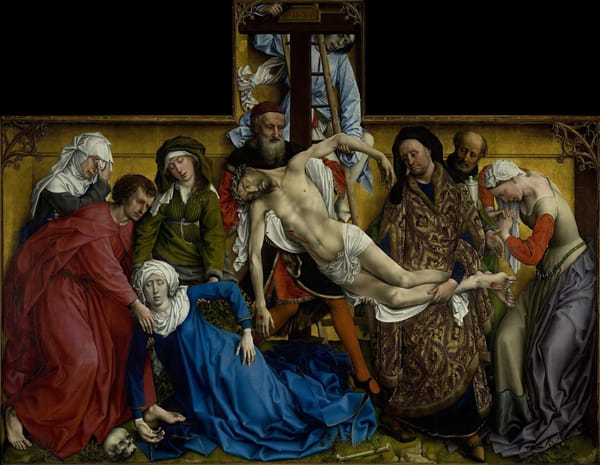
The prophecy of the aged Simeon, the flight into Egypt, the loss of the divine Child in Jerusalem, the carrying of the cross, the Crucifixion, the taking down from the cross, and the burial of Jesus: these are the seven mysteries into which are grouped the well-nigh infinite sufferings which made our Lady the Queen of martyrs, the first and loveliest rose in the garden of the Spouse. Let us take to heart the recommendation from the Book of Tobias which the Church reads during this week in the Office of the time: Thou shalt honour thy mother: for thou must be mindful what and how great perils she suffered in giving thee birth.5
Mass
The daily Sacrifice, though surrounded with all the pomps of the liturgy, is substantially the same as that of Calvary. But the only assistants at the foot of the cross were, as our Introit points out, one man, and a few women weeping around the Mother of sorrows. The Gospel will repeat this Introit, and even its verse which, contrary to custom, is not taken from the Psalms.
Introit
The honouring of our Lady’s Dolours does not distract our thoughts from the one Victim of salvation. On the contrary, its immediate result, as the Collect shows, is to cause the Passion of our Saviour to bear fruit in our souls.
Collect
Then is added the Collect of the occurring Sunday.
Epistle
Cap. xiii.Benedixit te Dominus in virtute sua, quia per te ad nihilum redegit inimicos nostros. Benedicta es tu, filia, a Domino Deo excelso, præ omnibus mulieribus super terram. Benedictus Dominus, qui creavit cœlum et terram: quia hodie nomen tuum ita magnificavit, ut non recedat laus tua de ore hominum, qui memores fuerint virtutis Domini in sternum, pro quibus non pepercisti animie tuæ propter angustias, et tribulationem generis tui, sed subvenisti ruinæ ante conspectum Dei nostri.
Ch. xiii.The Lord hath blessed thee by his power, because by thee he hath brought our enemies to nought. Blessed art thou, O daughter, by the Lord the most high God above all women upon the earth. Blessed be the Lord who made heaven and earth, because he hath so magnified thy name this day, thatthy praise shall not depart out of the mouth of men, who shall be mindful of the power of the Lord for ever; for that thou hast not spared thy life by reason of the distress and tribulation of thy people, but hast prevented our ruin in the presence of our God.
Oh the greatness of our Judith among all creatures! ‘God,’ says the pious and profound Father Faber, ‘vouchsafed to select the very things about Him which are most incommunicable, and in a most mysteriously real way communicate them to her. See how He had already mixed her up with the eternal designs of creation, making her almost a partial cause and partial model of it. Our Lady’s co-operation in the redemption of the world gives us a fresh view of her magnificence. Neither the Immaculate Conception nor the Assumption will give us a higher idea of Mary’s exaltation than the title of co-redemptress. Her dolours were not necessary for the redemption of the world, but in the counsels of God they were inseparable from it. They belong to the integrity of the divine plan. Are not Mary’s mysteries Jesus’ mysteries, and His mysteries hers? The truth appears to be, that all the mysteries of Jesus and Mary were in God’s design as one mystery. Jesus Himself was Mary’s sorrow, seven times repeated, aggravated sevenfold. During the hours of the Passion, the offering of Jesus and the offering of Mary were tied in one. They kept pace together; they were made of the same materials; they were perfumed with kindred fragrance; they were lighted with the same fire; they were offered with kindred dispositions. The two things were one simultaneous oblation, interwoven each momentthrough the thickly crowded mysteries of that dread time, unto the eternal Father, out of two sinless hearts, that were the hearts of Son and Mother, for the sins of a guilty world which fell on them contrary to their merits, but according to their own free will.’6 Let us mingle our tears with Mary’s, in union with the sufferings of the great Victim. In proportion as we do this during life we shall rejoice in heaven with the Son and the Mother; if our Lady is now, as we sing in the Alleluia verse, Queen of heaven and mistress of the world, is there one among all the elect who can recall sufferings comparable to hers?
After the Gradual follows the Stabat Mater, the touching Complaint attributed to the Franciscan, blessed Jacopone de Todi.
Gradual
Sequence
Juxta crucem lacrymosa,
Dum pendebat Filius.
Contristatam et dolentem,
Pertransivit gladius.
Fuit illa benedicta
Mater Unigeniti!
Pia Mater, dum videbat
Nati pænas inclyti.
Matrem Christi si videret
In tanto supplicio?
Christi Matrem contemplari
Dolentem cum Filio?
Vidit Jesum in tormentis,
Et flagellis subditum.
Moriendo desolatum,
Dum emisit spiritum.
Me sentire vim doloris
Fac ut tecum lugeam.
In amando Christum Deum,
Ut sibi complaceam.
Crucifixi fige plagas
Cordi meo valide.
Tam dignati pro me pati,
Pænas mecum divide.
Crucifixo condolere,
Donec ego vixero.
Et me tibi sociare
In planctu desidero.
Mihi jam non sis amara:
Fac me tecum plangere.
Passionis fac consortem,
Et plagas recolere.
Fac me cruce inebriari,
Et cruore Filii.
Per te, Virgo, sim defensus,
In die judicii.
Da per Matrem me venire
Ad palmam victoriæ.
Fac ut animæ donetur
Paradisi gloria.
hung her Son, the sorrowing
Mother stood and wept.
that sighed, and mourned,
and grieved.
was that blessed Mother
of an only Son!
and mourned at seeing
her divine Son suffer.
to see Jesus’ Mother
in such suffering?
the Mother and the Son in sorrow,
and not join his own with theirs?
tormented and scourged
for the sins of his people.
as he breathed forth
his soul and died.
make me feel the force of sorrow;
make me weep with thee!
with the love of Jesus my God,
that so I may content his heart.
deeply stamp the wounds
of the Crucified upon my heart.
for it is for me he graciously deigned
to be wounded and to suffer.
make me compassionate with thee our crucified Jesus,
as long as life shall last.
to stand nigh the cross with thee,
and be a sharer in thy grief.
be not displeased at my prayer:
make me weep with thee.
make me a partner of his Passion,
an adorer of his Wounds.
make me to be inebriated with the cross
and Blood of thy Son.
let me be defended by thee, O Virgin,
on the day of judgment!
let me, by thy Mother’s aid,
come to my crown of victory.
oh! give to my soul
the reward of heaven’s glory.
Gospel
Cap. xix.In illo tempore: Stabant juxta crucem Jesu Mater ejus, et soror Matris ejus Maria Cleophæ, et Maria Magdalene. Cum vidisset ergo Jesus Matrem, et discipulum stantem quem diligebat, dicit Matri suæ: Mulier, ecce filius tuus. Deinde dicit discipulo: Ecce mater tua. Et ex illa hora accepit eam discipulus in sua.
Ch. xix.At that time, there stood by the cross of Jesus, his Mother, and his Mother’s sister Mary of Cleophas, and Mary Magdalene. When Jesus therefore had seen his Mother and the disciple standing, whom he loved, he saith to his Mother, Woman, behold thy Son. After that he saith to the disciple, Behold thy Mother. And from that hour the disciple took her to his own.
‘Woman, behold thy son.—My God, My God, why hast Thou forsaken Me?’ Such are the words of Jesus on the cross. Has He, then, no longer a Father in heaven, a Mother on earth? Oh! mystery of justice, and still more of love! God so loved the world as to give His only-begotten Son for it, so far as to lay upon Him, instead of upon sinful men, the curse our sins deserved; and our Lady too, in her sublime union with the Father, did not spare, but offered in like manner for us all, this same Son of her virginity. If on this head we belong to the eternal Father, we belong henceforth to Mary also; each has bought us at a great price: the exchange of an only Son for sons of adoption.
It is at the foot of the cross that our Lady truly became the Queen of mercy. At the foot of the altar, where the renewal of the great Sacrifice is preparing, let us commend ourselves to her omnipotent influence over the Heart of her divine Son.
Offertory
Recordare, Virgo Mater Dei, dum steteris in conspectu Domini, ut loquaris pro nobis bona, et ut avertat indignationem suam a nobis.
Be mindful, O Virgin Mother of God, when thou standest in the sight of the Lord, to speak good things for us, that he may turn away his anger from us.
How many holy souls, in the course of ages, have come to keep faithful company with the Mother of sorrows! Their intercession united with Mary’s is a strength to the Church; and we hope to obtain thereby the effect of the merits of our Saviour’s death.
Secret
Offerimus tibi preces et hostias, Domine Jesu Christe, humiliter supplicantes: ut, qui transfixionem dulcissimi spiritus beatæ Mariæ Matris tuæ precibus recensemus; suo, suorumque sub cruce sanctorum consortium, multiplicato piissimo interventu, meritis mortis tuæ, meritum cum beatis habeamus. Qui vivis.
We offer to thee prayers and sacrifices, O Lord Jesus Christ, humbly beseeching, that we who pray in remembrance of the transfixion of the most sweet soul of blessed Mary thy Mother, by the multiplied and pious intercession of her and her holy companions under the cross, may have a reward with the blessed, by the merits of thy death. Who livest.
A commemoration is then made of the Sunday.
The Preface is the same as on September 8, page 165, except that for ‘in Nativitate, on the Nativity,’ is substituted ‘in Transfixione, on the Transfixion’ of the blessed Mary ever Virgin.
So great, it has been said, was Mary’s grief on Calvary, that, had it been divided among all creatures capable of suffering, it would have caused them all to die instantly.7 It was our Lady’s wonderful peace, maintained by perfect acquiescence and the total abandonment of her whole being to God, that alone was able to sustain in her the life which the Holy Ghost was preserving for the Church’s sake. May our participation in the sacred mysteries give us that peace of God which passeth all understanding, and which keepeth minds and hearts in Christ Jesus!
Communion
As the Postcommunion points out, the loving memory of our Mother’s sorrows will powerfully assist us to find all good things in the holy Sacrifice of the altar.
Postcommunion
The Postcommunion of the occurring Sunday is added, and the Gospel of the same is read at the end of the Mass instead of the usual passage from St. John.
Vespers
The first and fifth antiphons of Vespers are taken from the Canticle of canticles, the three intermediate ones from Isaias, and that of the Magnificat from Job; the capitulum is from Jeremias.
Ps. Dixit Dominus, page 38.
Ps. Laudate pueri, page 41.
Ps. Lætatus sum, page 152.
Ps. Nisi Dominus, page 153.
Ps. Lauda Jerusalem, page 154.
Capitulum
Thren. ii.
Hymn
Quo dolore volvitur,
Luctuosa de cruento
Dum, revulsum stipite,
Cernit ulnis incubantem
Virgo Mater Filium!
Et latus dulcissimum,
Dexteramque vulneratam,
Et sinistram sauciam,
Et rubras cruore plantas
Ægra tingit lacrymis.
Stringit arctis nexibus
Pectus illud, et lacertos,
Illa figit vulnera:
Sicque tota colliquescit
In doloris osculis.
Per tuas has lacrymas,
Filiique triste funus,
Vulnerumque purpuram,
Hunc tui cordis dolorem
Conde nostris cordibus.
Et coævo Flamini,
Esto summæ Trinitati
Sempiterna gloria,
Et perennis laus, honorque
Hoc, et omni sæculo.
in what an abyss of sorrow
is she whelmed, that Virgin Mother,
as mourning she beholds her Son
taken down from the blood-stained tree
and laid in her arms!
that side most sweet,
that right hand all pierced,
and the left hand wounded too,
those feet all rosy with his blood:
the desolate Mother bathes them with her tears.
she locks in loving embrace
that breast and those arms,
and kisses their wounds;
and thus she melts away
in sorrowful caresses.
by these thy tears,
by the cruel death of thy Son,
and by his empurpled wounds,
plant deep in our hearts
this anguish of thine own.
and to the coequal Spirit,
to the most high Trinity,
be everlasting glory,
unending praise and honour,
now and for evermore.
Antiphon of the Magnificat
The Prayer is the Collect of the Mass page 211.
Then is made a commemoration of the Sunday.
September 15 (the Same Day): St. Nicomedes, Martyr
A holy priest named Nicomedes is honoured today. The virgin martyr St. Felicula, whose body he had buried, obtained for him in return the palm of martyrdom. Let us, together with the Church, implore his protection.
Prayer
| Previous September 14: The Exaltation of the Holy Cross | Next September 15: The Octave Day of the Nativity of the Blessed Virgin |