Daily reading
Simple · February 18 · Sanctoral
February 18, 2025
From Dom Guéranger’s The Liturgical Year.
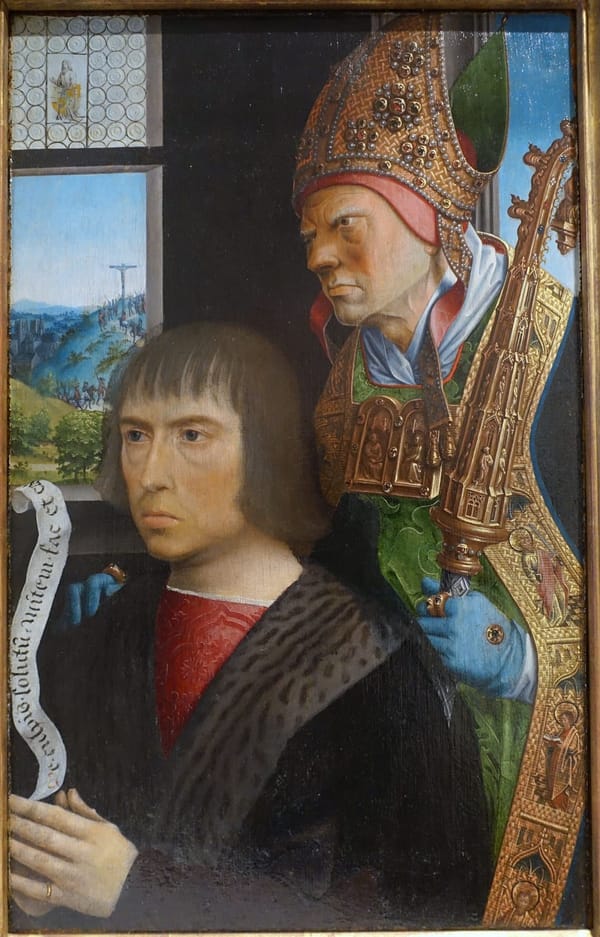
February 18: St. Simeon, Bishop and Martyr
How venerable our saint of to-day, with his hundred and twenty years, and his episcopal dignity, and his martyr-crown! He succeeded the apostle St. James in the see of Jerusalem; he had known Jesus, and had been His disciple; he was related to Jesus, for he was of the house of David; his father was Cleophas, and his mother that Mary, whom the tie of kindred united so closely to the blessed Mother of God that she has been called her sister. What grand titles these of Simeon who comes with all our other martyrs of Septuagesima, to inspirit us to penance! Such a veteran, who had been a contemporary of the Saviour of the world, and was a pastor who could repeat to his flock the very lessons Jesus had given him, could never rejoin his divine Master save by the path of martyrdom, and that martyrdom must be the cross. Like Jesus, then, he dies on a cross; and his death, which happened in the year 106, closes the first period of the Christian era, or, as it is called, the apostolic age. Let us honour this venerable pontiff, whose name awakens within us the recollection of all that is dear to our faith. Let us ask him to extend to us that fatherly love, which nursed the Church of Jerusalem for so many long years. He will bless us from that throne which he won by the cross, and will obtain for us the grace we so much need, the grace of conversion.
The following is the lesson given on St. Simeon:
Receive, most venerable saint, the humble homage of our devotion. What is all human glory compared with thine? Thou wast of the family of Christ; thy teaching was that which His divine lips had given thee; thy charity for men was formed on the model of His sacred Heart; and thy death was the closest representation of His. We may not claim the honour thou hadst, of calling ourselves brothers of the Lord Jesus: but pray for us, that we may be of those of whom He thus speaks: ‘Whosoever shall do the will of My Father that is in heaven, he is My brother, and sister, and mother.’* We have not, like thee, received the doctrine of salvation from the very lips of Jesus; but we have it in all its purity, by means of holy tradition, of which thou art one of the earliest links; oh, obtain for us a docility to this word of God, and pardon for our past disobedience. We have not to be nailed to a cross, as thou wast; but the world is thickly set with trials, to which our Lord Himself gives the name of the cross. These we must bear with patience, if we would have part with Jesus in His glory. Pray for us, O Simeon, that henceforth we may be more faithful; that we may never more become rebels to our duty; and that we may repair the faults we have so often committed by infringing the law of our God.
* St. Matt. xii. 50. ↩︎
Tuesday of Septuagesima Week
The serpent’s promises had stifled, in Eve’s heart, every sentiment of love for the God that had created her and loaded her with blessings: she is ambitious to be God like Him! Her faith, too, is wavering; she is not sure that God may not have deceived her, by threatening her with death should she disobey His command. Flushed by pride, she looks up to the forbidden fruit; it seems good to eat, and it is fair to her eyes.* So that her senses too conspire against God, and against her own happiness. The sin is already committed in her heart; it needs but a formal act to make it complete. She cares for nothing but self; God is no more heeded than if He did not exist. She stretches forth her daring hand; she plucks the fruit; she puts it to her mouth, and eats!
God had said that if she broke His commandment she should die; she has eaten, she has sinned, and yet she lives as before! Her pride exults at this triumph, and, convinced that she is too strong for God’s anger to reach her, she resolves on making Adam a partner in her victory. Boldly she hands him the fruit, which she herself has eaten without any evil coming to her. Whether he was emboldened by the impunity of his wife’s sin, or, from a feeling of blind affection, wished to share the lot of her who was the 'flesh of his flesh and bone of his bones,’ our first father, also, forgets all he owes to his Creator, and, as though there had never been aught of love between him and his God, he basely does as Eve suggests: he eats of the fruit, and by that act ruins himself and all his posterity.
No sooner have they broken the tie which united them with God, than they sink into themselves. As long as God dwells in the creature, whom He has raised to the supernatural state, his being is complete; but, let that creature drive his God away from himself by sin, and he finds himself in a state worse than nothing—the state of evil. That soul which, a moment before, was so beautiful and pure, is a hideous wreck. Thus is it with our first parents: they stand alone; creatures without God; and an intolerable shame seizes them. They thought to become gods, they aspired at infinite being; see them now:—sinners, the prey of concupiscence. Hitherto, their innocence was their allsufficient garb; the world was obedient to them; they knew not how to blush, and there was nothing to make them fear; but now, they tremble at their nakedness, and must needs seek a place wherein to hide!
The same self-love that had worked their ruin, had made them forget the greatness and goodness of God, and despise His commandment. Now that they have committed the great sin, the same blindness prevents them from even thinking of confessing it, or asking the forgiveness of the Master they have offended. A sullen fear possesses them. They can think of nothing but how and where to hide!
In Dominica Tyrophagi
* Gen. iii. 6. ↩︎
| Previous Monday of Septuagesima Week | Next Tuesday of Septuagesima Week |