lyp.network

Daily reading

Septuagesima

Double · Movable from Easter · Temporal

February 23, 2025

From Dom Guéranger’s The Liturgical Year.

Gold cross ornament
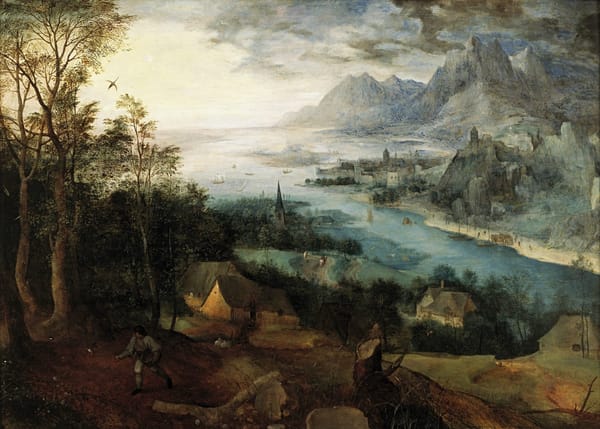
Landscape with the parable of the sower: a farmer casting seed in a vast mountain valley
Gold cross ornament
The Parable of the Sower, Pieter Bruegel the Elder (1525–1569), 1557. Credits

Sexagesima Sunday

The Church offers to our consideration, during this week of Sexagesima, the history of Noah and the deluge. Man has not profited by the warnings already given him. God is obliged to punish him once more, and by a terrible chastisement. There is found out of the whole human race one just man; God makes a covenant with him, and with us through him. But, before He draws up this new alliance, He would show that He is the sovereign Master, and that man, and the earth whereon he lives, subsist solely by His power and permission.

As the ground-work of this week’s instructions, we give a short passage from the Book of Genesis: it is read in the Office of this Sunday’s Matins.

De Libro Genesis.
Cap. vi.
Videns autem Deus quod multa malitia hominum esset in terra, et cuncta cogitatio cordis intenta esset ad malum omni tempore, pœnituit eum quod hominem fecisset in terra. Et tactus dolore cordis intrinsecus: Delebo, inquit, hominem quem creavi, a facie terræ, ab homine usque ad animantia, a reptili usque ad volucres cœli, pœnitet enim me fecisse eos. Noë vero invenit gratiam coram Domino.
Hæ sunt generationes Noë: Noë vir justus atque perfectus fuit in generationibus suis, cum Deo ambulavit. Et genuit tres filios, Sem, Cham, et Japheth. Corrupta est autem terra coram Deo, et repleta est iniquitate. Cumque vidisset Deus terram esse corruptam (omnis quippe caro corruperat viam suam super terrain) dixit ad Noe: Finis universæ carnis venit coram me: repleta est terra iniquitate a facie eorum, et ego disperdam eos cum terra.
From the Book of Genesis.
Ch. vi.
And God seeing that the wickedness of men was great on the earth, and that all the thought of their heart was bent upon evil at all times, it repented him that he had made man on the earth. And being touched inwardly with sorrow of heart, he said: I will destroy man, whom I have created, from the face of the earth, from man even to beasts, from the creeping thing even to the fowls of the air. For it repenteth me that I have made them. But Noah found grace before the Lord.
These are the generations of Noah: Noah was a just and perfect man in his generations: he walked with God. And he begot three sons: Sem, Cham, and Japheth. And the earth was corrupted before God, and was filled with iniquity. And when God had seen that the earth was corrupted (for all flesh had corrupted its way upon the earth), he said to Noah: The end of all flesh is come before me: the earth is filled with iniquity through them, and I will destroy them with the earth.

This awful chastisement of the human race by the deluge was a fresh consequence of sin. This time, however, there was found one just man; and it was through him and his family that the world was restored. Having once more mercifully renewed His covenant with His creatures, God allows the earth to be repeopled, and makes the three sons of Noah become the fathers of the three great families of the human race.

This is the mystery of the Divine Office during the week of Sexagesima. The mystery expressed in to-day’s Mass is of still greater importance, and the former is but a figure of it. The earth is deluged by sin and heresy. But the word of God, the seed of life, is ever producing a new generation: a race of men, who, like Noah, fear God. It is the word of God that produces those happy children, of whom the beloved disciple speaks, saying: ‘They are born not of blood, nor of the will of the flesh, nor of the will of man, but of God.’1 Let us endeavour to be of this family; or, if we are already numbered among its members, let us zealously maintain our glorious position. What we have to do, during these days of Septuagesima, is to escape from the deluge of worldliness, and take shelter in the Ark of salvation; we have to become that good soil, which yields a hundredfold from the heavenly seed. Let us flee from the wrath to come, lest we perish with the enemies of God: let us hunger after that word of God, which converteth and giveth life to souls.2

With the Greeks, this is the seventh day of their week Apocreos, which begins on the Monday after our Septuagesima Sunday. They call this week Apocreos, because they then begin to abstain from flesh-meat, which abstinence is observed till Easter Sunday.

Mass

At Rome the Station is in the basilica of St. Paul outside the walls. It is around the tomb of the Doctor of the Gentiles, the zealous sower of the divine seed, the father by his preaching of so many nations, that the Roman Church assembles her children on this Sunday, whereon she is about to announce to them how God spared the earth on the condition that it should be peopled with true believers and with faithful adorers of His name.

The Introit, which is taken from the Psalms, cries out to our Lord for help. The human race, all but extinct after the deluge, is here represented as beseeching its Creator to bless and increase it. The Church adopts the same prayer, and asks her Saviour to multiply the children of the Word, as He did in former days.

Introit

Exsurge, quare obdormis, Domine? Exsurge, et ne repellas in finem; quare faciem tuam avertis, oblivisceris tribulationem nostram? Adhæsit in terra venter noster: exsurge. Domine adjuva nos, et libera nos. Ps. Deus, auribus nostris audivimus: patres nostri annuntiaverunt nobis. ℣. Gloria Patri. Exsurge.
Arise, why sleepest thou, O Lord? Arise, and cast us not off to the end. Why turnest thou thy face away? and forgettest our tribulation? Our belly cleaveth to the earth. Arise, O Lord, help us, and deliver us. Ps. We have heard, O God, with our ears: our fathers have declared to us thy wonders. ℣. Glory. Arise.

In the Collect, the Church expresses the confidence she puts in the prayers of the great apostle St. Paul, that zealous sower of the divine seed, who laboured more than the other apostles in preaching the word to the Gentiles.

Collect

Deus, qui conspicis quia ex nulla nostra actione confidimus: concede propitius, ut contra adversa omnia, Doctoris Gentium protectione, muniamur. Per Dominum.
O God, who seest that we place no confidence in anything we do: mercifully grant that, by the protection of the Doctor of the Gentiles, we may be defended against all adversity. Through, etc.

Then are added two other Collects, as in the Mass of Septuagesima Sunday, page 120.


The Epistle is that admirable passage from one of St. Paul’s Epistles, in which the great apostle, for the honour and interest of his sacred ministry, is necessitated to write his defence against the calumnies of his enemies. We learn from this his apology what labours the apostles had to go through, in order to sow the word of God in the barren soil of the Gentile world, and make it Christian.

Epistle

Lectio Epistolæ beati Pauli Apostoli ad Corinthios.

2 Cap. xi.Fratres, libenter suffertis insipientes, cura sitis ipsi sapientes. Sustinetis enim si quis vos in servitutem redigit, si quis devorat, si quis accipit, si quis extollitur, si quis in faciem vos cædit. Secundum ignobilitatem dico, quasi nos infirmi fuerimus in hac parte. In quo quis audet (in insipientia dico), audeo et ego. Hebræi sunt, et ego. Israelitse sunt, et ego. Semen Abrahæ sunt, et ego. Ministri Christi sunt (ut minus sapiens dico), plus ego: in laboribus plurimis, in carceribus abundantius, in plagia supra modum, in mortibus frequenter. A Judæis quinquies quadragenas, una minus, accepi. Ter virgis cæsus sum, semel lapidatus sum, ter naufragium feci, nocte et die in profundo maris fui; in itineribus sæpe, periculis fluminum, periculis latronum, periculis ex genere, periculis ex gentibus, periculis in civitate, periculis in solitudine, periculis in mari, periculis in falsis fratribus; in labore et ærumna, in vigiliis multis, in fame et siti, in jejuniis multis, in frigore et nuditate. Præter illa, quæ extrinsecus sunt, instantia mea quotidiana, sollicitudoomnium Ecclesiarum. Quis infirmatur, et ego non infirmor? Quis scandalizatur, et ego non uror? Si gloriari oportet, quæ infirmitatis meæsunt, gloriabor. Deus et Pater Domini nostri Jesu Christi, qui est benedictus in sæcula, scit quod non mentior. Damasci præpositua gentis Aretæ regia, custodiebat civitatem Damascenorum, ut me comprehenderet; et per fenestram in sporta dimissus sum per murum, et sic effugi manus ejus. Si gloriari oportet (non expedit quidem), veniam autem ad visiones et revelationes Domini. Scio hominem in Christo ante annos quatuordecim (sive in corpore nescio, sive extra corpus nescio, Deus scit), raptum hujusmodi usque ad tertium cœlum. Et scio hujusmodi hominem (sive in corpore, sive extra corpus nescio, Deus scit), quoniam raptus est in paradisum, et audivit arcana verba quæ non licet homini loqui. Pro hujusmodi gloriabor; pro me autem nihil gloriabor, nisi in infirmitatibus meis. Nani, et si voluero gloriari, non ero insipiens; veritatem enim dicam: parco autem, ne quis me existimet supra id quod videt in me, aut aliquid audit ex me. Et ne magnitudo revelationum extollat me, datus est mihi stimulus carnis meæ, angelus Satanæ, qui me colaphizet. Propter quod ter Dominum rogavi ut discederet a me: et dixit mihi: Sufficit tibi gratia mea; nam virtus in infirmitate perficitur. Libenter igitur gloriabor in infirmitatibus meis, ut inhabitet in me virtus Christi.
Lesson of the Epistle of Saint Paul the Apostle to the Corinthians.

2 Ch. xi.
Brethren, you gladly suffer the foolish, whereas yourselves are wise. For you suffer if a man bring you into bondage, if a man devour you, if a man take from you, if a man be lifted up, if a man strike you on the face. I speak according to dishonour, as if we had been weak in this part. Wherein if any man dare (I speak foolishly) I dare also. They are Hebrews: so am I. They are Israelites: so am I. They are the seed of Abraham: so am I. They are the ministers of Christ: (I speak as one less wise) I am more: in many more labours, in prisons more frequently, in stripes above measure, in deaths often. Of the Jews five times did I receive forty stripes, save one. Thrice was I beaten with rods, once I was stoned, thrice I suffered shipwreck; a night and a day I was in the depth of the sea. In journeying often, in perils of waters, in perils of robbers, in perils from my own nation, in perils from the Gentiles, in perils in the city, in perils in the wilderness, in perils in the sea, in perils from false brethren. In labour and painfulness, in much watchings, in hunger and thirst, in fastings often, in cold and nakedness. Besides those things which are without: my daily instance, the solicitude for all the churches. Who is weak, and I am not weak? Who is scandalized, and I am not on fire? If I must needs glory, I will glory of the things that concern my infirmity. The God and Father of our Lord Jesus Christ, who is blessed for ever, knoweth that I lie not. At Damascus the governor of the nation under Aretas the king, guarded the city of the Damascenes, to apprehend me; and through a window in a basket was I let down by the wall, and so escaped his hands. If I must glory (it is not expedient indeed), but I will come to the visions and revelations of the Lord. I know a man in Christ about fourteen years ago (whether in the body, I know not, or out of the body, I know not, God knoweth), such an one rapt even to the third heaven. And I know such a man (whether in the body, or out of the body, I cannot tell, God knoweth), that he was caught up into paradise, and heard secret words, which it is not granted to man to utter. For such an one I will glory; but for myself I will glory nothing, but in my infirmities. For though I should have a mind to glory, I shall not be foolish: for I will say the truth. But I forbear, lest any man should think of me above that which he seeth in me, or anything he heareth from me. And lest the greatness of the revelations should exalt me, there was given me a sting of my flesh, an angel of Satan to buffet me. For which thing thrice I besought the Lord that it might depart from me: and he said to me: My grace is sufficient for thee: for power is made perfect in infirmity. Gladly, therefore, will I glory in my infirmities, that the power of Christ may dwell in me.

In the Gradual, the Church beseeches her Lord to give her strength against those who oppose the mission He has entrusted to her, of gaining for Him a new people, adorers of His sovereign Majesty.

Gradual

Sciant gentes, quoniam nomen tibi Deus: tu solus Altissimus super omnem terram. ℣. Deus meus, pone illos ut rotam, et sicut stipulam ante faciem venti.
Let the Gentiles know that God is thy name: thou alone art the Most High over all the earth. ℣. O my God, make them like a wheel, and as stubble before the wind.

Whilst the earth is being moved, and is suffering those terrible revolutions which, deluge-like, come first on one nation and then on another, the Church prays for her faithful children, in order that they may be spared, for they are the elect, and the hope of the world. It is thus she prays in the following Tract, which precedes the Gospel of the word.

Tract

Commovisti, Domine, terram, et conturbasti eam. ℣. Sana contritiones ejus, quia mota est. ℣. Ut fugiant a facie arcus: ut liberentur electi tui.
Thou hast moved the earth, O Lord, and hast troubled it. ℣. Heal the breaches thereof, for it is moved. ℣. That they may flee from before the bow: that thy elect may be delivered.

Gospel

Sequentia sancti Evangelii secundum Lucam.
Cap. viii.
In illo tempore, cum turba plurima convenirent, et de civitatibus properarent ad Jesum, dixit per similitudinem: Exiit, qui seminat, seminare semen suum: et dum seminat, aliud cecidit secus viam, et conculcatum est, et volucres cœli comederunt illud. Et aliud cecidit supra petram: et natum, aruit; quia non habebat humorem. Et aliud cecidit inter spinas, et simul exortæ spinæ suffocaverunt illud. Et aliud cecidit in terram bonam: et ortum fecit fructum centuplum. Hæc dicens clamabat: Qui habet aures audiendi, audiat. Interrogabant autem eum discipuli ejus, quæ esset hæc parabola. Quibus ipse dixit: Vobis datum est nosse mysterium regni Dei, cæteris autem in parabolis; ut videntes non videant, et audientes non intelligant. Est autem hæc parabola. Semen est verbum Dei. Qui autem secus viam, hi sunt qui audiunt: deinde venit diabolus, et tollit verbum de corde eorum, ne credentes salvi fiant. Nam qui supra petram: qui cum audierint, cum gaudio suscipiunt verbum: et hi radices non habent: quia ad tempus credunt, et in tempore tentationis recedunt. Quod autem in spinas cecidit, hi sunt qui audierunt, et a sollicitudinibus, et divitiis, et voluptatibus vitæ, euntes, suffocantur, et non referunt fructmn. Quod autem in bonam terram: hi sunt, qui in corde bono et optimo audientes verbum retinent, et fructum afferunt in patientia.
Sequel of the holy Gospel according to Luke.
Ch. viii.
At that time, when a very great multitude was gathered together, and hastened out of the cities to meet Jesus, he spoke by a similitude. The sower went out to sow his seed; and as he sowed, some fell by the wayside, and it was trodden down, and the fowls of the air devoured it. And other some fell upon a rock: and as soon as it was sprung up, it withered away, because it had no moisture. And other some fell among thorns; and the thorns growing up with it, choked it. And other some fell upon good ground, and being sprung up, yielded fruit a hundred fold. Saying these things he cried out: He that hath ears to hear, let him hear. And his disciples asked him what this parable might be. To whom he said: To you it is given to know the mystery of the kingdom of God; but to the rest in parables: that seeing they may not see, and hearing they may not understand. Now the parable is this: The seed is the word of God. And they by the wayside are they that hear; then the devil cometh, and taketh the word out of their heart, lest believing they should be saved. Now they upon the rock are they who, when they hear, receive the word with joy: and these have no roots; for they believe for a while, and in time of temptation fall away. And that which fell among thorns, are they who have heard, and going their way, are choked with the cares and riches and pleasures of this life, and yield no fruit. But that on the good ground, are they, who in a good and very good heart hearing the word, keep it, and bring forth fruit in patience.

St. Gregory the Great justly remarks, that this parable needs no explanation, since eternal Wisdom Himself has told us its meaning. All that we have to do, is to profit by this divine teaching, and become the good soil, wherein the heavenly seed may yield a rich harvest. How often have we, hitherto, allowed it to be trampled on by them that passed by, or to be torn up by the birds of the air! How often has it found our heart like a stone, that could give no moisture, or like a thorn plot, that could but choke! We listened to the word of God; we took pleasure in hearing it; and from this we argued well for ourselves. Nay, we have often received this word with joy and eagerness. Sometimes, even, it took root within us. But, alas! something always came to stop its growth. Henceforth, it must both grow and yield fruit. The seed given to us is of such quality, that the divine Sower has a right to expect a hundred-fold. If the soil, that is, our heart, be good; if we take the trouble to prepare it, by profiting by the means afforded us by the Church; we shall have an abundant harvest to show our Lord on that grand day, when, rising triumphant from His tomb, He will come to share with His faithful people the glory of His Resurrection.

Inspirited by this hope, and full of confidence in Him who has once more thrown this seed into this long ungrateful soil, let us sing with the Church, in her Offertory, these beautiful words of the royal psalmist: they are a prayer for holy resolution and perseverance.

Offertory

Perfice gressus meos in semitis tuis, ut non moveantur vestigia mea: inclina aurem tuam et exaudi verba mea: mirifica misericordias tuas, qui salvos facis sperantes in te, Domine.
Perfect thou my goings in thy paths; that my footsteps be not moved. O incline thy ear unto me and hear my words. Show forth thy wonderful mercies; who savest them that hope in thee, O Lord.

Secret

Oblatum tibi, Domine, sacrificium vivificet nos semper, et muniat. Per Dominum.
May the sacrifice we have offered to thee, O Lord, always quicken us and defend us. Through, etc.

To this are added the other Secrets, as on Septuagesima Sunday, page 127.


The visit, which our Lord makes to us in the Sacrament of His love, is the grand means whereby He gives fertility to our souls. Hence it is that the Church invites us, in the Communion antiphon, to draw nigh to the altar of our God; there, our heart shall regain all the youthful fervour of its best days.

Communion

Introibo ad altare Dei, ad Deum qui lætificat juventutem meam.
I will go up to the altar of God; to God, who rejoiceth my youth.

Postcommunion

Supplices te rogamus, omnipotens Deus; ut quos tuis reficis sacramentis, tibietiam placitis moribus dignanter deservire concedas. Per Dominum.
Grant, we humbly beseech thee, O almighty God, that those whom thou refreshest with thy sacraments, may, by a life well pleasing to thee, worthily serve thee. Through, etc.

Two other Postcommunions are said after this, as on Septuagesima Sunday, page 128.


Vespers


The psalms and antiphons as on page 72.


Capitulum (2 Cor. xi.)

Fratres, libenter suffertis insipientes, cum sitis ipsi sapientes. Sustinetis enim si quis vos in servitutem redigit, si quis devorat, si quis accipit, si quis extollitur, si quis in faciem vos cædit.
Brethren, you gladly suffer the foolish, whereas yourselves are wise. For you suffer if a man bring you into bondage, if a man devour you, if a man take from you, if a man be lifted up, if a man strike you on the face.

The hymn and versicle, page 79.


Antiphon of the Magnificat

Vobis datum est nosse mysterium regni Dei, cæteris autem in parabolis, dixit Jesus discipulis suis.
Oremus Deus, qui conspicis quia ex nulla nostra actione confidimus: concede propitius, ut contra adversa omnia, Doctoris Gentium protectione, muniamur. Per Dominum.
To you it is given to know the mystery of the kingdom of God, but to the others in parables, said Jesus to his disciples.
Let us prayO God, who seest that we place no confidence in anything we do: mercifully grant that by the protection of the Doctor of the Gentiles, we may be defended against all adversity. Through, etc.

We will end our Sunday by a hymn taken from the ancient breviaries of the Churches of France: it will help us to keep up in our souls the sentiments proper to the season of Septuagesima.

Hymn

Dies absoluti prætereunt; Dies observabiles redeunt.
Tempus adest sobrium: Quæramus puro corde Dominum.
Hymnis et in confessionibus
Judex complacabitur Dominus.
Non negabit hic veniam, Qui vult ut homo quærat gratiam.
Post jugum servile Pharaonis,
Post catenas diræ Babylonis: Liber homo patriam Quærat cœlestem Hierosolymam.
Fugiamus de hoc exilio: Habitemus cum Dei Filio: Hoc decus est famuli Si sit cohæres sui Domini.
Sis Christe nobis dux hujus vitæ:
Memento quod sumus oves tuæ,
Pro quibus ipse tuam Pastor ponebas morte animam.
Gloria sit Patri et Filio: Sancto simul honor Paraclito:
Sicut erat pariter In principio et nunc et semper. Amen.
The days of ease are about to close; the days of holy observance are returning; the time of temperance is at hand; let us seek our Lord in purity of heart.
Our sovereign Judge will be appeased by our hymns and praise. He who would have us sue for grace, will not refuse us pardon.
The slavish yoke of Pharaoh, and the fetters of cruel Babylon, have been borne too long: let man now claim his freedom, and seek his heavenly country, Jerusalem.
Let us quit this place of exile: let us dwell with the Son of God. Is it not the servant’s glory, to be made co-heir with his Lord?
O Jesus! be thou our guide through life. Remember that we are thy sheep, for whom thou, the Shepherd, didst lay down thine own life
Glory be to the Father, and to the Son; honour too be to the holy Paraclete: as it was in the beginning, now is, and shall ever be. Amen.
  1. St. John i. 13. ↩︎
  2. Ps. xviii. ↩︎

February 23: St. Peter Damian, Cardinal and Doctor of the Church
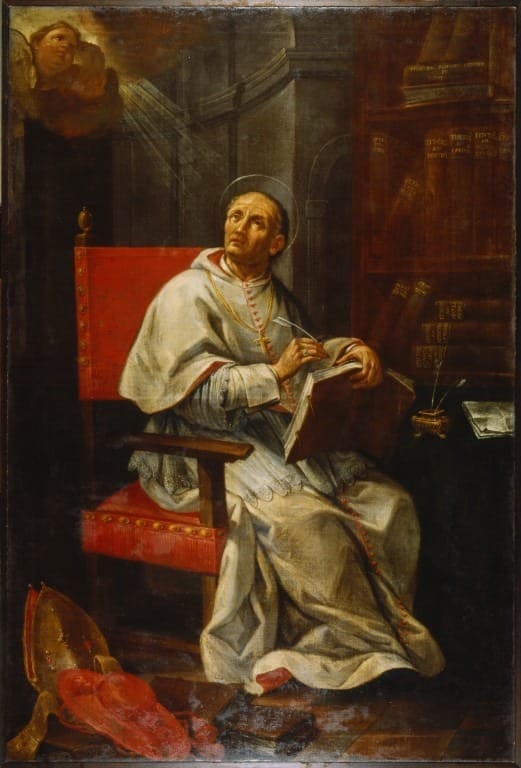
St Peter Damian in white Camaldolese habit writing, mitre and galero on floor
Saint Peter Damian, Andrea Barbiani (1708–1779), 18th century. Credits

It is the feast of the austere reformer of the eleventh century, Peter Damian, the precursor of the holy pontiff Gregory VII., that we are called upon to celebrate to-day. To him is due in part that glorious regeneration, which was effected at that troubled period when judgment had to begin at the house of God.1 The life he had led under the monastic rule had fitted him for the great contest. So zealously did he withstand the disorders and abuses of his times, that we may attribute to him, at least in great measure, the ardent faith of the two centuries which followed the scandals of the tenth. The Church ranks him among her doctors, on account of his admirable writings: and his penitential life ought to excite us to be fervent in the work we have in hand, the work of our conversion.

The following lessons, read by the Church, on this feast, give us a sketch of our saint’s life:

Petrus, Ravennæ honestis parentibus natus, adhuc lactens a matre numerosæ prolis pertæsa abjicitur, sed domesticæ mulieris opera semivivus exceptus ac recreatus, genitrici ad humanitatis sensum revocata redditur. Utroque orbatus parente, tamquam vile mancipium sub aspera fratria tutela duram servitutem exercuit. Religionis in Deum ac pietatis erga patrem egregium tunc specimen dedit; inventum siquidem forte nummum non propriæ mediæ sublevandæ, sed sacerdoti qui divinum sacrificium ad illius expiationem offerret, erogavit. A Damiano fratre, a quo, uti fertur, cognomentum accepit, benigne receptus, ejus cura litteris eruditur, in quibus brevi tantum profecit, ut magistris admirationi esset. Quum autem liberalibus scientiis floreret et nomine, eas cum laude docuit. Interim ut corpus rationi subderet, sub mollibus vesitibus cilicium adhibuit, jejuniis, vigiliis, et orationibus solerter insistens. Calente juventa, dum carnis stimulis acriter urgeretur, insultan tium libidinum faces rigentibus fluvii mersus aquis noctu extinguebat: tum venerabilia quæque loca obire, tofcumque psalterium recitare consueverat. Ope assidua pauperes levabat, quibus frequenter pastis convivio, propriis ipse manibus ministrabat.
Perficiendæ magis vitæ causa, in Avellanensi Eugubinæ diœcesis cœnobio, Ordini monachorum sanctæ Crucis Fontis Avellanæ, a beato Ludulpho sancti Romualdi discipulo fundato, nomen dedit. Non ita multo post in monasterum Pomposianum, mox in cœnobium Sancti Vincentii Petræ Pertusæ ab abbate suo missus, utrumque asceterium verbo sacro, præclaris institutionibus et moribus excoluit. Ad suos revocatus, post præsidis obitum Avellanitarurm familiæ præficitur, quam novis variis in locis extructis domiciliis, et sanctissimis institutis ita auxit, ut alter ejus Ordinis parens ac præcipuum ornamentum jure sit habitus. Salutarem Petri sollicitudinem alia quoque diversi instituti cœnobia, canonicorum conventus, et populi sunt experti. Urbinati diœcesi non uno nomine profuit: Theuzoni episcopo in causa gravissima assedit, ipsumque in recte administrando episcopatu consilio et opera juvit. Divinorum contemplatione, corporis macerationibus, cæterisque spectatæ sanctimoniæ exemplis excelluit. His motus Stephanus Nonus, Pontifex maximus, eum licet invitum et reluctantem sanctæ Komanæ Ecclesiæ Cardinalem creavit, et Ostiensem episcopum. Quas Petrus dignitates splendidissimis virtutibus, et consentaneis episcopali ministerio operibus gessit.
Difficillimo tempore Romanæ Ecclesiæ summisque Pontificibus doctrina, legationibus, aliisque susceptis laboribus mirifice adfuit. Adversus Nicolaitarum et Simoniacam hæreses ad mortem usque strenue decertavit. Hujusmodi depulsis malia, Mediolanen sem Ecclesiæ Komanæ conciliavit. Benedicto, et Cadaloo, falsis Pontificibus, fortiter restitit. Henricum quartum Germaniæ regem ab iniquo uxoris divortio deterruit: Ravennates ad debita Romano Pontifici obsequia revocatos sacris restituit. Canonicos Veliternos ad sanctioris vitæ leges composuit. In provincia prasertim Urbinate vix ulla fuit episcopalis ecclesia, de qua Petrus non sit bene meritus: Eugubinam, quam aliquan do creditam habuit, multis levavit incommodis: alias alibi, quando oportuit, perinde curavit, ac si suæ essent tutelæcommissæ. Cardinalatu, et episcopali dignitate depositis, nihil de pristina juvandi proximos sedulitate remisit. Jejunium sextæ feriæ in honorem sanctæ crucis Jesu Christi, horarias beatæ Dei Genitricis preces, ejusque die Sabbato cultum propagavit. Inferendæ quoque sibi verberationis morem ad patratorum scelerum expiationem provexit. Demum sanctitate, doctrina, miraeulis, et præclare actis illustris, dum e Ravennate legatione rediret, Faventiæ octavo Kalendas Martii migravit ad Christum. Ejus corpus ibidem apud Cistercienses multis miraculis darum frequenti populorum veneratione colitur. Ipsum Faventini non semel in præsenti discrimine propitium experti, patronum apud Deum delegerunt: Leo vero duodecimus, Pontifex maximus, Officium Missamque in ejus honorem tamquam confessoris pontificis, quæ aliquibus in diœcesibus, atque in Ordine Camaldulensium jam celebrabantur, ex Sacroram Rituum Congregationis consulto, addita doctoria qualitate, ad universam extendit Ecclesiam.
Peter was born at Ravenna, of respectable parents. His mother, wearied with the care of a large family, abandoned him when a babe; but one of her female servants found him in an almost dying state, and took care of him, until such time as the mother, repenting of her unnatural conduct, consented to treat him as her child. After the death of his parents, one of his brothers, a most harsh man, took him as a servant, or more truly as his slave. It was about this period of his life that he performed an action, which evinced his virtue and his filial piety. He happened to find a sum of money: but instead of using it for his own wants, he gave it to a priest, begging him to offer up the holy sacrifice for the repose of his father’s soul. Another of his brothers, called Damian (after whom, it is said, he was named), had him educated; and so rapid and so great was the progress he made in his studies, that he was the admiration of his masters. He became such a proficient in the liberal sciences, that he was made to teach them in the public schools, which he did with great success. During all this time, it was his study to bring his body into subjection to the spirit; and to this end, he wore a hair shirt under an out wardly comfortable dress, and practised frequent fasting, watching, and prayer. Being in the very ardour of youth, and being cruelly buffeted by the sting of the flesh, he, during the night, would go and plunge himself into a frozen pool of water, that he might quench the impure flame which tormented him; or he would make pilgrimages to holy sanctuaries, and recite the entire psalter. His charities to the poor were unceasing, and when he provided them with a meal, which was frequently, he would wait upon them himself.
Out of a desire to lead a still more perfect life, he became a religious in the monastery of Avellino, in the diocese of Gubbio, of the Order of the monks of holy Cross of Fontavellana, which was founded by the blessed Ludolphus, a disciple of St. Romuald. Being sent by his abbot, not very long after, first to the monastery of Pomposia, and then to that of Saint Vincent of PietraPertusa, he edified both houses by his preaching, admirable teaching, and holy life. At the death of the abbot of Avellino, he was recalled to that monastery, and was made its superior. The institute was so benefited by his government, not only by the new monasteries which he founded in several places, but also by the very saintly regulations he drew up, that he was justly looked upon as the second founder of the Order, and its brightest ornament. Houses of other Orders, canons, yea, entire congregations of the faithful, were benefited by Peter’s enlightened zeal. He was a benefactor, in more ways than one, to the diocese of Urbino: he aided the bishop Theuzo in a most important suit, and assisted him, both by advice and work, in the right administration of his diocese. His spirit of holy contemplation, his corporal austerities, and the saintly tenor of his whole conduct, gained for him so high a reputation, that Pope Stephen IX., in spite of Peter's extreme reluctance, created him Cardinal of the holy Roman Church and bishop of Ostia. The saint proved himself worthy of these honours by the exercise of the most eminent virtues, and by the faithful discharge of his episcopal office.
It would be impossible to describe the services he rendered to the Church and the sovereign Pontiffs, during those most trying times, by his learning, his prudence as legate, and his untiring zeal. His life was one continued struggle against simony, and the heresy of the Nicolaites. He purged the Church of Milan of these disorders, and brought her into subjection to the Holy See. He courageously resisted the anti-popes Benedict and Cadalous. He deterred Henry IV., king of Germany, from an unjust divorce of his wife. He restored the people of Ravenna to their allegiance to the Roman Pontiff, and absolved them from interdict. He reformed the abuses which had crept in among the canons of Vellotri. There was scarcely a single cathedral church in the province of Urbino that had not experienced the beneficial effects of Peter’s holy zeal: thus, that of Gubbio, which was for some time under his care, was relieved by him of many evils; and other churches, that needed his help, found him as earnest for their welfare as though he were their own bishop. When he obtained permission to resign his dignity as Cardinal and his bishopric, he relented nothing of his former charity, but was equally ready in doing good to all. He was instrumental in propagating many devout practices; among these may be mentioned, fasting on Fridays in honour of the holy cross; the reciting the Little Office of our Lady; the keeping the Saturday as a day especially devoted to Mary; the taking of the discipline in expiation of past Bins. At length, after a life which had edified the world by holiness, learning, miracles, and glorious works, on his return from Ravenna, whither he had been sent as legate, he slept in Christ, on the eighth of the Calends of March (February 23), at Faënza. His relics, which are kept in the Cistercian church of that town, are devoutly honoured by the faithful, and many miracles are wrought at the holy shrine. The inhabitants of Faënza have chosen him as the patron of their city, having several times experienced his protection when threatened by danger. His Mass and Office, which were kept under the rite of confessor and bishop, had been long observed in several dioceses, and by the Camaldolese Order; but they were extended to the whole Church by a decree of the Congregation of Sacred Rites, which was approved by Pope Leo XII., who also added to the name of the saint the title of Doctor.

Thy soul was inflamed by the zeal of God’s house, O Peter! God gave thee to His Church in those sad times when the wickedness of the world had robbed her of well-nigh all her beauty. Thou hadst the spirit of an Elias within thee, and it gave thee courage to waken the servants of the Lord: they had slept, and while they were asleep, the enemy came, and the field was oversown with tares.2 Then did better days dawn for the bride of Christ; the promises made by our Lord were fulfilled; but who was the friend of the bridegroom?3 Who was the chief instrument used by God to bring back to His house its ancient beauty? A saint who bore the glorious name of Peter Damian! In those days, the sanctuary was degraded by secular interference. The princes of the earth said: 'Let us possess the sanctuary of God for an inheritance.’4 The Church, which God intended to be free, was but a slave, in the power of the rulers of this world; and the vices, which are inherent to human weakness, defiled the temple. But God had pity on the bride of Christ, and for her deliverance He would use human agency: He chose thee, Peter, as His principal co-operator in restoring order. Thy example and thy labours prepared the way for Gregory, the faithful and dauntless Hildebrand, into whose hands the keys were no sooner placed, than the work of regeneration was completed. Thou hast fought the good fight; thou art now in thy rest; but thy love of the Church, and thy power to help, are greater than ever. Watch, then, over her interests. Obtain for her pastors that apostolic energy and courage, which alone can cope with enemies so determined as hers are. Obtain for her priests the holiness which God demands from them that are the salt of the earth.5 Obtain for the faithful the respect and obedience they owe to those who direct them in the path of salvation. Thou wast not only the apostle, thou wast moreover the model, of penance in the midst of a corrupt age; pray for us, that we may be eager to atone for our sins by works of mortification. Excite within our souls the remembrance of the sufferings of our Redeemer, that so His Passion may urge us to repentance and hope. Increase our confidence in Mary, the refuge of sinners, and make us, like thyself, full of filial affection towards her, and of zeal that she may be honoured and loved by those who are around us.

  1. 1 St. Peter iv. 17. ↩︎
  2. St. Matt. xiii. 25. ↩︎
  3. St. John iii. 29. ↩︎
  4. Ps. lxxxii. 13. ↩︎
  5. St. Matt. v. 13. ↩︎
Previous
Saturday of Septuagesima Week
Next
February 23: St. Peter Damian, Cardinal and Doctor of the Church