Daily reading
Septuagesima
Double of the II Class · February 24 · Sanctoral
February 24, 2025
From Dom Guéranger’s The Liturgical Year.
A Double of the II Class leads the weekday.Rubric

|
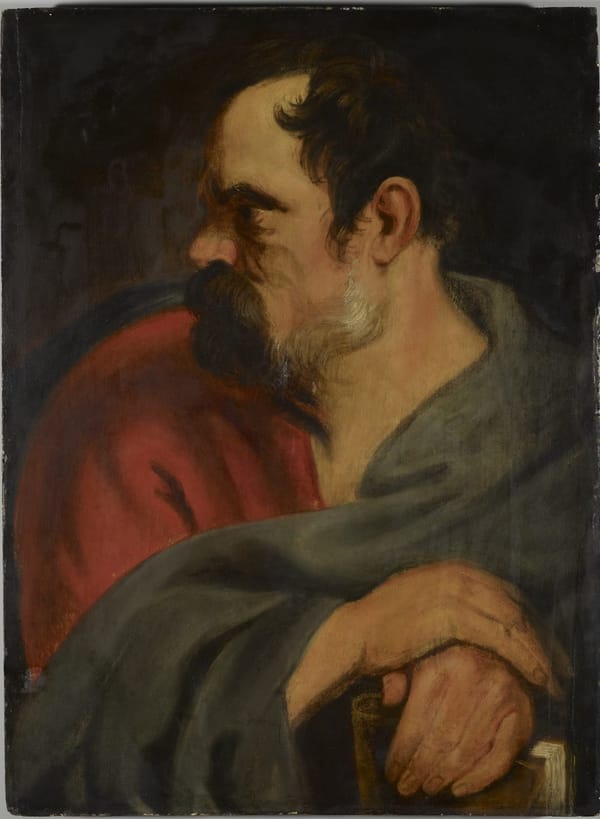
February 24: St. Mathias, Apostle
In leap-year, the feast of St Mathias is kept on February 25.
An apostle of Jesus Christ, St. Mathias, is one of the blessed choir which the Church would have us honour during the season of Septuagesima. Mathias was one of the first to follow our Saviour; and he was an eye-witness of all His divine actions up to the very day of the Ascension. He was one of the seventy-two disciples; but our Lord had not conferred upon him the dignity of an apostle. And yet, he was to have this great glory, for it was of him that David spoke, when he prophesied that another should take the bishopric1 left vacant by the apostasy of Judas the traitor. In the interval between Jesus’ Ascension and the descent of the Holy Ghost, the apostolic college had to complete the mystic number fixed by our Lord Himself, so that there might be the twelve on that solemn day, when the Church, filled with the Holy Ghost, was to manifest herself to the Synagogue. The lot fell on Mathias;2 he shared with his brother-apostles the persecution in Jerusalem, and, when the time came for the ambassadors of Christ to separate, he set out for the countries allotted to him. Tradition tells us that these were Cappadocia and the provinces bordering on the Caspian Sea.
The virtues, labours, and sufferings of St. Mathias have not been handed down to us: this explains the lack of proper lessons on his life, such as we have for the feasts of the rest of the apostles. Clement of Alexandria records in his writings several sayings of our holy apostle. One of these is so very appropriate to the spirit of the present season, that we consider it a duty to quote it. 'It behoves us to combat the flesh, and make use of it, without pampering it by unlawful gratifications. As to the soul, we must develop her power by faith and knowledge.’3 How profound is the teaching contained in these few words! Sin has deranged the order which the Creator had established. It gave the outward man such a tendency to grovel in things which degrade him, that the only means left us for the restoration of the image and likeness of God unto which we were created, is the forcible subjection of the body to the spirit. But the spirit itself, that is, the soul, was also impaired by original sin, and her inclinations were made prone to evil; what is to be her protection? Faith and knowledge. Faith humbles her, and then exalts and rewards her; and the reward is knowledge. Here we have a summary of what the Church teaches us during the two seasons of Septuagesima and Lent. Let us thank the holy apostle, on this his feast, for leaving us such a lesson of spiritual wisdom and fortitude. The same traditions, which give us some Blight information regarding the holy life of St. Mathias, tell us that his apostolic labours were rewarded with the palm of martyrdom. Let us celebrate his triumph by the following stanzas, which are taken from the Menææa of the Greeks.
Hymn (Die IX. Augusti)
Monday of Sexagesima Week
All flesh had corrupted its way upon the earth.1 The terrible lesson, then, which men had received, by being driven out of paradise in the person of our first parents, had been without effect. Neither the certainty of death, when they would have to stand before the divine Judge, nor the humiliations which attend man’s first coming into this world, nor the pains and fatigues and trials which beset the whole path of life, had subdued men’s hearts, or brought them into submission to that sovereign Master whose hand lay thus heavy upon them. They had the divine promise that a Saviour should be given to them, and that this Redeemer (who was to be the Son of her that was to crush the serpent’s head), would not only bring them salvation, but would moreover reinstate them in all the happiness and honours they had lost. But even this was not enough to make them rise above the base passions of corrupt nature. The example of Adam’s nine hundred years’ penance, and the admonitions he could so feelingly give who had received such proofs of God’s love and anger, began to lose their influence upon his children; and when he at last descended into the grave, his posterity grew more and more heedless of what they owed to their Creator. The long life, which had been granted to man in this the first age of the world, was made but a fresh means of offending Him who gave it. When, finally, the sons of Seth took to themselves wives of the family of Cain, the human race reached the height of wickedness, rebelled against the Lord, and made their own passions their god.
Yet, all this while, they had had granted to them the power of resisting the evil propensities of their hearts. God had offered them His grace, whereby they were enabled to conquer pride and concupiscence. The merits of the Redeemer to come were even then present to divine justice, and the Lamb, slain, as St. John tells us, from the beginning of the world,2 applied the merits of His Blood to this as to every generation which existed before the great Sacrifice was really immolated. Each individual of the human family might have been just, as Noah was, and, like him, have found favour with the Most High; but the thought of their heart was bent upon evil, and not upon good, and the earth became peopled with enemies of God. Then it was that it repented God that He had made man,3 as the sacred Scripture forcibly expresses it. He decreed that man’s life on earth should be shortened, in order that the thought of death might be ever before us. He, moreover, resolved to destroy, by a universal deluge, the whole of this perverse generation, saving only one family. The world would thus be renewed, and man would learn from this awful chastisement to serve and love this his sovereign Lord and God.
We find the following liturgical formula in the Mozarabic missal. Nothing could be more appropriate to the season of Septuagesima.
Missa
(Dominica ante carnes tollendas.)
| Previous February 23: St. Peter Damian, Cardinal and Doctor of the Church | Next Monday of Sexagesima Week |