Daily reading
Lent
Double · March 18 · Sanctoral
March 18, 2025
From Dom Guéranger’s The Liturgical Year.
A Double leads the weekday.Rubric
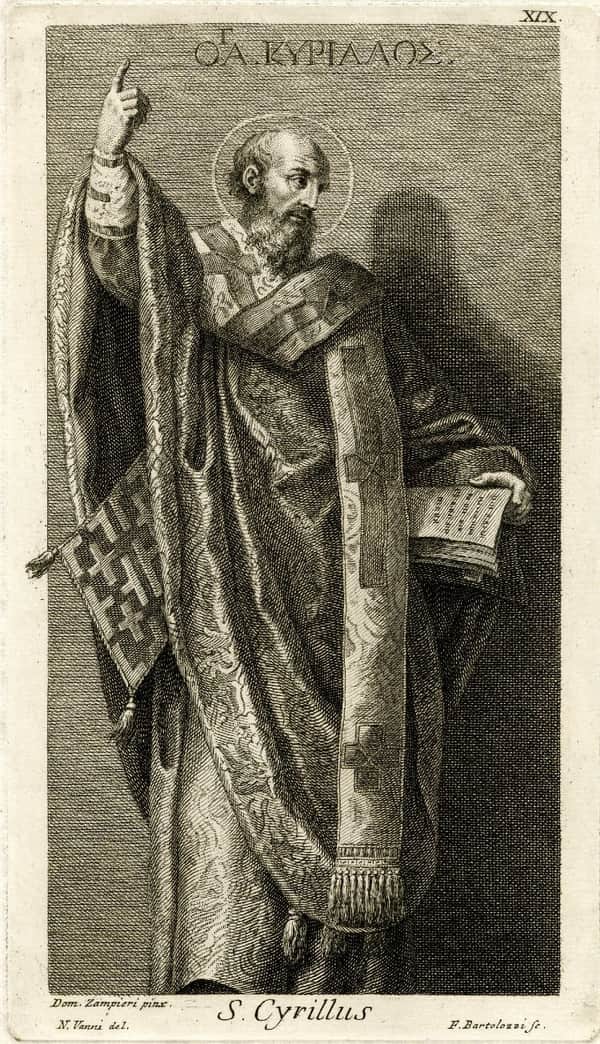 |
March 18: St. Cyril of Jerusalem, Bishop and Doctor of the Church
It was right that the Church should honour, during these days devoted to the instruction of catechumens, the Pontiff whose very name suggests the zeal and knowledge which pastors ought to show in preparing candidates for baptism. He has long had a place in the Martyrology of the Western Church, but to-day, in addition to expressing our gratitude for what he did fifteen hundred years ago, we ask him for aid, which is as necessary now as it was in the first ages of Christianity. It is true that baptism is now administered to infants. The gift of faith then infused puts man in possession of all truth before his intelligence has ever met with falsehood. But it too often happens in our days that children are deprived of the protection their weakness really needs. Modern society has denied Jesus Christ, and strives by the hypocritical neutrality of its laws to stifle the divine seed in the baptized soul before it can grow and bear fruit. Baptism, however, has its rights with regard to society as well as with regard to the individual, and our best way of honouring St. Cyril is to remind ourselves on his feast that this first Sacrament has just claims in respect of the education due to the baptized.
For fifteen centuries the western nations, whose social fabric rested on the solid rock of the faith of Rome, have enjoyed a happy ignorance of the difficulties experienced by a soul in rising out of the abyss of error into the pure light of the truth. Our fathers, like ourselves, were baptized at their entrance into this world. They had, moreover, an advantage which we have not, for, in their day, the civil power joined with the Church to protect that plenitude of truth which was the greatest treasure of men, and the safeguard of the world. The protection of individuals is a duty binding upon all princes and rulers, whatever be their title, and this duty is greater in proportion to the interests to be safeguarded. But this protection gives greater glory to the power which exercises it, when it is extended to the lowly and weak. The law of man never appears more majestic than when standing beside a little child—a new-born babe or a defenceless orphan—to protect its name, its life or its inheritance. A newly-baptized child possesses advantages greater than all those given by noble birth, money or the richest natural gifts. He has a divine life within him; he is the equal of the angels in virtue of his name of Christian; his inheritance is that plenitude of truth of which we spoke above—God Himself, possessed by faith here below until the beatific vision opens out the possession of eternal love. What greatness there is in a little child! But what a responsibility for the world! If God does not wait for the age of reason before bestowing His gifts, this sublime haste is due to the impatience of His love, but at the same time He oounts upon men to reveal in due time their dignity to these children of heaven, to form them to the duties incumbent on them, and to educate them in a way befitting their divine lineage. The education of a king’s son corresponds to the dignity of his birth, and those who have the honour of being his tutors never forget that he is a prince. Instructions, common to all, are presented to him in a way which harmonizes with his exalted destiny, and everything is directed to rendering him capable of wearing his crown with glory. Does the education of a child of God need less care?
Is it right that his teachers should forget his birth and his destiny?
It is true that the Church alone can explain to us the ineffable origin of the sons of God. She alone knows how to use the elements of human knowledge for the supreme end which dominates the life of a Christian. The natural conclusion is, that the Church is by right the first and principal teacher of the nations. When she founds schools, she is on her own ground in all branches of knowledge, and a mission to teach from her is of more value than any diploma. Further, with regard to diplomas, which she herself has not conferred, these official commissions to teach draw their legal value, in the eyes of Christians, from her approval, and they are always by right subject to her supervision. She is the mother of the baptized, and even when a mother does not teach her own children, she has the right to supervise their education.
But the Church is not only the Mother of the Faithful, she is the Bride of the Son of God and the guardian of His sacraments. It is her duty to see that the Precious Blood has not been shed in vain. Our Lord has entrusted these seven fountains to the care of the ministers of His Church, and they must not be opened except when there is good reason to hope that the sacramental grace will be well used. Baptism especially, which raises man out of his own nothingness to a supernatural nobility, must be safeguarded in its administration with a prudence and watchfulness corresponding to the sublime and ineffaceable character which it confers. A baptized Christian who, through his own or others’ fault, is ignorant of his rights and duties, is like a descendant of a noble race who, knowing nothing of his family traditions, is despised by his kinsmen and drags out an aimless existence in a station of life below that to which by birth he is entitled.
The Church is no less vigilant to-day than she was in the time of Cyril. She has never admitted—she cannot admit—anyone to the sacred font without requiring from him a guarantee of sufficient instruction. An adult must give proof of his knowledge before he receives the Sacrament, and if the Church consents to receive an infant into the Christian family, it is because she considers that the Christian faith of those who present him to her and of the society in which they live will assure to him an education conformable to the supernatural life which is about to be given him.
Thus the baptism of infants could not become a general custom until the reign of Jesus Christ was firmly established upon earth. We must not be surprised to find that, as the conversion of the nations was gradually completed, the Church found herself alone in the work of education. The barren classes of grammarians, philosophers, and rhetoricians, who taught everything but the one thing necessary— the end for which man was created—were deserted for the episcopal and monastic schools, where the science of salvation held the first place, radiating its light upon all other branches of knowledge. Knowledge, thus made Christian, gave birth to the Universities, and produced a fruitful union of the sciences which, until then, had been quite unconnected, if not opposed to one another. The Universities were unknown before the establishment of Christianity, for it alone could solve the problem of this union, which is the essence of University life, and hence they remain the inalienable domain of the Church. The State, which to-day is pagan once more, may deny to the Mother of the nations and claim for itself the right to give the name of University to its higher schools, but peoples, which have lost their Christianity, can never have the right to found nor the power to maintain those glorious institutions in the true spirit of the name they bear. A state without faith cannot maintain any union among the sciences but that of Babel. This is already evident. The monument of a pride which rises against God and His Church will only serve to bring back that terrible confusion of tongues from which the Church had snatched the pagan peoples. Any thief or robber can assume the titles of the victim he has robbed, but his inability to display the qualities, which these titles suppose in their bearer, only serves to show more clearly that a theft has been committed.
Are we, then, to deny to a state which is pagan or, as they say nowadays, neutral, the right to educate the infidels which it has produced after its own image? No, the protection which is the right and duty of the Church extends only to the baptized. Moreover, if the Church finds one day that the state of society is no longer a sufficient guarantee for baptism, she will return to the discipline of the early ages, when the grace of this initial Sacrament was not granted indiscriminately to all, but only to those adults who had shown themselves to be worthy of it, or to infants whose families could give an assurance on which she could rely. The nations will then be once more divided into two classes—on the one side the children of God, living His life and heirs of His Kingship; on the other those men who have basely preferred to remain the slaves of the King, although by His Incarnation He has made His palace among the sons of Adam and desires to number them all among His children. An education which is common and neutral will then appear more impossible than ever. A training designed for the servants of the palace can never be suitable for the princes of the bloodroyal.
Are we drawing near to those times when men whom circumstances have unfortunately excluded from baptism at their entrance into this world will have to gain for themselves the privilege of admission into the Christian family? God alone knows, but more than one sign seems to point to it. It is possible that the institution of to-day’s feast is designed by divine Providence to correspond with the new situation which will then be created for the Church. A week ago we paid our homage to St. Gregory the Great, the Doctor of the Christian people; three days earlier our Christian students were honouring St. Thomas Aquinas, the Doctor of the Schools; why do we celebrate to-day, after fifteen centuries, the Doctor of the Catechumens, a class which has now disappeared, if not because the Church sees that St. Cyril of Jerusalem is called to render her new services by his immortal Catechetical Instructions? Even now many wandering Christians have no greater obstacle in the way of their return to God than an ignorance as desperate as, and more profound than, that of the Jews and pagans in the time of Cyril.
The lessons for the feast of this holy Doctor give a splendid account of his life and work.
Thou wert a true child of the light, O Cyril. Thou didst give thy heart to Holy Wisdom, while yet a child, and she set thee up as a lighthouse at the entrance of the harbour to be the guide of unfortunate souls tossing on the sea of error. The Church confided to thee the mission of preparing for baptism those happy multitudes whom her recent victory had won for her from all ranks of society, and this mission was to be accomplished in a century rich in holy doctors and in the region consecrated by the mysteries of our redemption. Thou wast nourished by Holy Scripture and the teaching of the Mother of all mankind, and thy words flowed pure and abundant as water from a spring. History tells us that the many duties of thy holy ministry would not permit thee to devote thyself exclusively to the Catechumens, and thus thou wert led to improvise those admirable instructions wherein the science of salvation is set forth with such clearness. The soundness of thy doctrine and the completeness of thy exposition have never been surpassed. In thy eyes, O holy Pontiff, this science of salvation was the knowledge of God and of His Son Jesus Christ, contained in the creed of Holy Church. Preparation for baptism, for life, for the love of God, was the acquisition of this knowledge, so deep, so far-reaching and so necessary. It was to be acquired, not by the impression of a vain sentimentality, but by the reception of the word of God in the right spirit, and by constant meditation, so that the soul comes to be firmly established in the fullness of truth, in moral rectitude, and in hatred of evil.
Thou wast sure of thy hearers and didst not fear to unveil before their eyes the arguments and abominable devices of their secret enemies. There are times and circumstances, only to be judged by the shepherds of the flock, when it is necessary to disregard the revulsion of feeling caused by such revelations in order to denounce the danger and warn the sheep against intellectual or moral scandals. Thus, O Cyril, thy invectives pursued Manicheism to its most secret haunts. Thou didst see in this heresy the principal agent of that mystery of iniquity which pursues its path of darkness and destruction throughout the ages, until it shall bring the world to decay. In these times the Manichee triumphs openly. The societies founded by him have gained power. The secret of the Lodges still hides from the uninitiated the sacrilegious symbols and dogmas brought once from Persia, but the prince of this world has cleverly united all social forces in the hands of this ally. The first use he makes of his power is to attack the Church out of hatred of Christ. He assails her fruitfulness by denying her the right to teach which she has received from her divine Head. The children, whom she has brought forth and who are hers in virtue of their baptism, are snatched from her by main force, and she is forbidden to preside over their education. She calls thee to her aid, O Cyril, in these unhappy times; do not disappoint her expectations. Thou didst understand so well the claims of the sacrament of regeneration. Protect the baptism of so many innocent souls in whom men seek to stifle the divine germ. Strengthen and rekindle the faith of Christian parents and teach them that if it is their duty to defend their children from death at the risk of their own bodies, they must remember that the souls of these little ones are still more precious. It has greatly consoled us to see how many have understood this and, faithful to the dictates of their conscience, have suffered violence rather than yield to the regulations of a pagan state. Bless them, O Cyril, and increase their number. Bless also, strengthen and multiply those faithful souls who devote themselves to the instruction of poor children whose spiritual interests are betrayed by the secular power. There is no mission to-day more urgent than that of catechists, and none, surely, dearer to thy heart.
Holy Church has just related to us the apparition of the holy Cross, which marked the beginning of thy episcopate, and similar marvels have been witnessed in our own times. But the apparition in thy day announced a triumph—the triumph thou didst foresee when St. Helena discovered the tree of our redemption, the triumph which, at the time of thy death, had been confirmed by the fulfilment of the prophecies concerning the Jewish Temple. Can it be that our times are to witness only defeat and ruin? We have confidence in thy aid, O holy Pontiff. We remember that the triumph which thou didst witness was brought by the sufferings of the whole Church, in which thou thyself didst share by thrice-repeated deposition and twenty years of exile. The Cross, whose great anniversary is now approaching, is not conquered, but triumphs in the sufferings of the faithful and their patient endurance. It will appear once more, as a sign of eternal victory, over the ruins of the world on the Day of Judgment.
Tuesday of the Second Week of Lent
THE Station is in the church of Saint Balbina. This holy virgin of Rome was the daughter of the tribune Quirinus, and suffered martyrdom during the pontificate of Alexander I., in the second century. She consecrated her virginity to God, and led a life rich in good works.
Collect
Epistle
III. Cap. xvii.
The instruction of the catechumens is continued by means of the Gospel facts, which are each day brought before them; and the Church reads to them the prophecies from the old Testament, which are to be fulfilled by the rejection of the Jews, and the vocation of the Gentiles. Elias, who is our faithful companion during Lent, is represented to us to-day as foreshadowing, in his own conduct, the treatment which God is one day to show towards His ungrateful people. A three years’drought had been sent upon the kingdom of Israel; but the people continued obstinate in their sins. Elias goes in search of some one that will provide him with food. It is a great privilege to entertain the prophet; for God is with him. Then, whither will he go? Is it to any family in the kingdom of Israel? Or will he pass into the land of Juda? He neglects them both, and directs his steps towards the land of the Gentiles. He enters the country of Sidon; and coming to the gates of a city called Sarephta, he sees a poor widow; it is to her that he transfers the blessing which Israel had rejected. Our Lord Himself has taken notice of this event in the prophet’s life, which portrays, in such strong colours, the justice of God towards the Jews, and His mercy towards us Gentiles: ‘In truth I say to you, there were many widows in the days of Elias in Israel: and to none of them was he sent, but to Sarephta of Sidon, to a widow woman.’1
So, then, this poor woman is a figure of the Gentiles, who were called to the faith. Let us study the circumstances of this prophetic event. The Woman is a widow; she has no one to defend or protect her: she represents the Gentiles, who were abandoned by all, and had no one that could save them from the enemy of mankind. All the mother and her child have to live upon, is a handful of meal and a little oil: it is an image of the frightful dearth of truth, in which the pagans were living at the time when the Gospel was preached to them. Notwithstanding her extreme poverty, the widow of Sarephta receives the prophet with kindness and confidence; she believes what he tells her, and she and her child are saved: it is thus that the Gentiles welcomed the apostles, when these shook the dust from their feet and left the faithless Jerusalem. But what mean the two pieces of wood, which the widow holds in her hands? St. Augustine, St. Cesarius of Arles, and St. Isidore of Seville (who, after all, are but repeating what was the tradition of the early Church), tell us that this wood is a figure of the cross. With this wood the widow bakes the bread that is to support her; it is from the cross that the Gentiles receive life by Jesus, who is the living Bread. Whilst Israel dies of famine and drought, the Gentile Church feeds abundantly on the heavenly wheat, and on the oil, which is the symbol of strength and charity. Glory then be to Him who hath called us out of darkness into His marvellous light2 of faith! But let us tremble at witnessing the evils which the abuse of grace has brought upon a whole people. If God in His justice has not spared a whole nation, but cast it off; will He spare you or me, if we dare to resist His call?
Gospel
Cap. xxiii.In illo tempore: Locutus est Jesus ad turbas, et ad discipulos suos, dicens: Super cathedram Moysi sederunt scribæ et pharisæi. Omnia ergo quæcumque dixerint vobis, servato et facite: secundum opera vero eorum nolite facere: dicunt enim et non faciunt. Alli· gant enim onera gravia, et importabilia, et imponunt in humeros hominum: digito autem suo nolunt ea movere. Omnia vero opera sua faciunt ut videantur ab hominibus; dilatant enim phylacteria sua, et magnificant fimbrias. Amant autem primos reoubitus in cænis, et primas cathedras dras in synagogis, et salutationes in foro, et vocari ab hominibujB Rabbi. Vos autem nolite vocari Rabbi. Unus est enim Magister vester, omnes autem vos fratres estis. Et patrem nolite vocare vobis super terrain: unus est enim Pater vester qui in cœlis est. Nec vocemini magistri: quia Magister vester unus est, Chris tus. Qui major est vest rum, erit minister vester. Qui autem se exaltaverit, humiliabitur: et qui se humiliaverit, exaltabitur.
Ch. xxiii.At that time: Jesus spoke to the multitudes and to his disciples, saying: The scribes and the pharisees have sitten on the chair of Moses. All things therefore whatsoever they shall say to you, observe and do; but according to their works, do ye not; for they say, and do not. For they bind heavy and insupportable burdens, and lay them on men’s shoulders; but with a finger of theit own they will not move them. And all their works they do to be seen of men: for they make their phylacteries broad, and enlarge their fringes. And they love the first places at feasts, and the first chaira in the synagogues, and salutations in the marketplace, and to be called by men, Rabbi. But be not you called Rabbi; for one is your master, and all you are brethren. And call none your father upon earth; for one is your Father, who is in heaven. Neither be ye called masters; for one is your Master, Christ. He that is the greatest among you, shall be your servant. And whosoever shall exalt himself shall be humbled; and he that shall humble himself shall be exalted.
The doctors of the law were sitting on the chair of Moses; therefore, Jesus bids the people abide by their teachings. But this chair—which, in spite of the unworthiness of them that sit on it, is the chair of truth—is not to remain long in Israel. Caiphas, because he is a high priest for the year, will prophesy; but his crimes have rendered him unworthy of his office; and the chair, on which he sits, is to be taken away and set in the midst of the Gentiles. Jerusalem, which is preparing to deny her Saviour, is to be deprived of her honours; and Rome, the very centre of the pagan world, is to possess within her walls that chair which was the glory of Jerusalem, and from which were proclaimed the prophecies so visibly fulfilled in Jesus. Henceforth, this chair is never to be moved, though all the fury of the gates of hell will seek to prevail against it; it is to be the unfailing source, at which all nations are to receive the teaching of revealed truth. The torch of faith has been removed from Israel, but it has not been extinguished. Let us live in its light, and merit by our humility that its rays ever shine upon us.
What is it that caused Israel’s loss? His pride. The favours he had received from God excited him to self-complacency; he scorned to recognize any one for the Messias, who was not great in this world’s glory; he was indignant at hearing Jesus say that the Gentiles were to participate in the grace of redemption; he sought to imbrue his hands in the Blood of the God-Man, and this because He reproached him for the hardness of his heart. These proud Jews, even when they saw that the day of God’s judgment was close upon them, kept up their stubborn haughtiness. They despised the rest of the world as unclean and sinners. The Son of God became the Son of Man. He is our Master, and yet He ministered to us, as though He were our Servant. Does not this show us how precious a virtue is humility? If our fellow-creatures call us master or father, let us not forget that no one is master or father but by God’s appointment. No one deserves to be called master, but he by whose lips Jesus gives us the lessons of divine wisdom; he alone is truly a father, who acknowledges that his paternal authority comes from God alone; for the apostle says: ‘I bow my knee to the Father of our Lord Jesus Christ, of whom all paternity in heaven and earth is named.’3
Let us continue the hymn which we began yesterday; our readers will remember that it is by Prudentius, the prince of Christian poets.
Hymn
Vetue sacerdos runs hospes aridi:
Fragore ab omni quem remotum et segregem
Sprevisse tradunt crimmum frequentiam?
Cateo fruentem syrtium silentio.
Curruque raptus evolavit præpeti,
Ne de propinquo eordium contagio
Dims quietum mundus afflaret virum,
Olim probatis inclytum jejuniis.
Moses tremendi fidus interpres throni
Potuit viderp, quam decem recursibus
Quater volutis sol peragrans sidera,
Omni carentem cerneret substantia.
Nam flendo pemox irrigatum pulverem,
Humi madentis ore pressit cemuo:
Donee loquentis voce præstrictus Dei
Expavit ignem non ferendum visibus.
Dei perennis præcucurrit Filium,
Curvos viarum qui retorsit tramites,
Et flexuosa corrigens dispendia,
Dedit sequendam calle recto lineam.
Mox affuturo construens iter Deo,
Clivosa planis, confragosa ut lenibus
Converterentur, neve quidquam devium
Illapsa terns in veniret Veritas.
Oblita lactis jam vieto in pectore
Matris tetendit serus infans ubera:
Nec ante partu de senili effusus est,
Quam prædicaret Virginem plenam Deo.
Amictus hirtis bestiarum pellibus,
Setisve tectus, hispida et lanugine,
Secessit,. horrens inquinan ac pollui
Contaminatis oppidorum moribus.
Potum, cibumque vir severæ industriæ
In usque serum respuebat vesperum,
Parvum locustis, et favorum agrestium
Liquore pastum corpori suetus dare.
Fuit salutis: nam sacrato in flumine
Veterum piatas lavit errorum notas:
Sed tincta postquam membra defæcaverat,
Cœlo refulgena influebat Spiritus.
that Elias the venerable priest, the guest of the desert,
received his great glory.
We read that he fled far from the noisy world, and the wickedness of cities,
and lived in the happy innocence of silent deserts.
for so long as he remained nigh this wretched world,
it might breathe something of the contagion of its vices upon the prophet,
though his life was one of retirement,
and his spirit had long been fortified by holy fasts.
was not permitted to see
the King of the seventimes holy heaven,
until the sun had forty times passed over his head
and witnessed him abstaining from every food.
He spent the night in weeping, and lay prostrate on the ground,
which was bedewed with his tears:
till at length, aroused by the voice of God,
he directed his steps towards the fire on which no man could fix his gaze.
He was the precursor of the Son of God,
who was to make the crooked ways straight,
and the rough ways plain,
and was to teach men the right path wherein to walk
of the Lord who was soon to come, exacted this of men:
that every mountain and hill should be made low,
and that all should be in the right path,
when Truth should come down upon the earth.
old as she was, was made to bear this child within her
hitherto barren womb. She fed him, too, at her own breast.
Before his birth, he announced to his mother
the presence of the Virgin that was full of God.
clad in the rough and bristly skins of wild beasts,
and in camels’ hair; for he trembled
lest he might become defiled and contaminated
by the wickedness of them that dwelt in cities.
This man of rigid penance neither ate nor drank
till the evening was far spent;
and then, a few locusts and a little wild honey
were the only refreshment he took.
and the first to invite men to receive it.
In the sacred stream, he washed away the stains of the old errors;
but after he had administered to men this outward baptism,
the heavenly Spirit worked within their souls.
| Previous Monday of the Second Week of Lent | Next Tuesday of the Second Week of Lent |