Daily reading
Simple · Movable from Easter · Temporal
May 14, 2025
From Dom Guéranger’s The Liturgical Year.
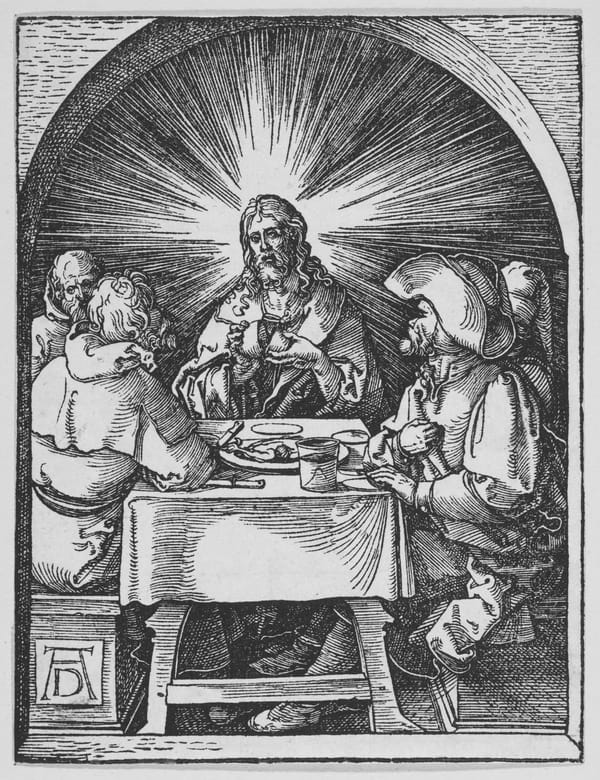
Wednesday of the Fourth Week after Easter
THE Son of God is soon to ascend to his Father. He has said to his Apostles: Going, teach all nations: preach the Gospel to every creature. Thus, then, the nations are not to receive the word from the lips of Jesus, but through his ministers. The glory and happiness of being instructed directly by the Man-God were for none but the Israelites, and even for them for only three short years.
The impious may murmur at this, and say, in their pride:’Why should there be men between God and us?' God might justly answer:’And what right have you to expect me to speak to you myself, seeing that you can otherwise be as certain of my word as though you heard it from myself V Was the Son of God to lose his claim to our faith unless he remained on this earth to the end of time? If we reflect on the infinite distance there is between the Creator and creature, we shall detest such a blasphemy. If we receive the testimony of men, the testimony of God is greater:1 and how can we reject it? Can we call that testimony human, which was given by the Apostles, when, in proof of their being sent by God, they showed the power, conferred on them by their divine Master, of working miracles? Of course the pride of reason may rebel; it may protest, and refuse to believe men who speak in God’s name. Did not the very Son of God meet with more unbelievers than believers? And why? Because he affirmed himself to be God, yet showed nothing exteriorly but his human nature. So that there was an act of faith to be made, even when Jesus himself spoke; and pride might rebel, and say:’I will not believe just as it will do when the Apostles speak in his name. The two cases are alike. God demands of us, as long as we are in this world, that we give him our faith; and faith is not possible without humility. God confirms his word by miracles; but man has always the power to resist, and for that very reason faith is a virtue.
If it be asked—why, when God took his Son from this earth, he did not commission his angels to teach us in his name, instead of giving such a sublime office to men, frail and mortal as we ourselves are who receive their teaching—the reason is, that man could not be raised up from the state of degradation into which he had fallen by pride, except by submission and humility; and consequently, it was fitting that the ministry of the divine word should not be entrusted to angels, inasmuch as our pride might have been flattered by our having for our teachers beings so noble and exalted. We believed the serpent when he spoke to us, and we had the pride to think that we might one day become gods: our merciful Creator, in order to save us, has imposed it as a law upon us, that we should yield submission to men, when they speak in his name.
These men, therefore, are to preach the Gospel to every creature; and he that believeth not, shall be condemned. O word of God! thou heavenly seed planted in the field of the Church, how fruitful hast thou not been! Yet one little while, and the harvest will be ripe. Faith will have spread throughout the world; the faithful shall be found in every land. And how came they by the faith? By hearing, answers the great Apostle of the Gentiles.2 They heard the word, and they believed. How honoured above the rest of our senses is our hearing, at least in this present life! Let us listen to St Bernard, speaking on this subject.’One would have thought that the Truth would have entered into our souls by that noblest of our senses, the eye: but no, my soul! that is reserved for the future life, when we shall see face to face. For the present, let the remedy come in by the same door through which crept the malady; let life, and light, and the antidote of truth, come to us in the track previously taken by death and darkness, and the serpent’s poison. Thus the troubled eye will be cured by the ear, and will see, when calm, what she cannot when troubled. The ear was the first door of death; let it be the first to be opened to life. The ear took away our Light; let it now restore our Light; for unless we believe, we shall not understand.3 Hearing, therefore, is the instrument of our merit; sight is to be our reward . . . . Observe, too, how the Holy Ghost follows this order in the spiritual education of the soul: he forms the ear, before he gladdens the eye. He says to her: Hearken, O daughter, and see!4 Forget thine eye for the present: it is thine ear I now ask for. Dost thou wish to see Christ? First hear him; hear what is said of him: that so, when thou dost see him, thou mayest say: As we have heard, so have we seen!5 The brightness is immense; thine eye is weak; and thou canst not bear the splendour. But what thine eye cannot do, thine ear can; . . . only let this ear of thine be fervent, and watchful, and faithful. Faith will give to thine eye the clearness it lost by sin; disobedience shut it, but obedience will open it.”6
To the glory of him who has sent us his word by his ambassadors, and whom we have received as himself, let us recite this ancient sequence of Saint Gall: it expresses the faith of our fathers, and this faith is ours also.
Sequence
Ac Regi Christo Deo
Solvant omnes insularum incolæ,
Quem exspectatum dies jam tenent, et leges ejus
Mentibus captent promptulis.
Quos derelicto populo
Delegit Judæo,
De Abrahæ carne genito,
Quos Abrahæ natos fecit, et cognatos
Suum sanctum per sanguinem.
O Christe,
Consanguinee naturae nostrae, nos fove,
Tuere ab omni incursu inimici, et insidiis.
Quem per carnis edulium
Delusisti hamo tuae majestatis, Fili Dei.
Tu resurgens imperitas,
Non moriturus amplius.
Tu mortalem nostram
Et terream naturam
Resurgens incorruptivam fecisti,
Atque cœlis invexisti.
render thanks to Christ,
our Saviour, King and God,
The Expected One, who is at length come,
and whose Law is now devoutly obeyed by mankind.
He cast off the Jewish people,
who were born
of Abraham according to the flesh;
And he chose, for his own,
them that he made children of Abraham by faith,
them that he had made his brethren by his precious Blood.
O Jesus
who art united to us by the bond of consanguinity! protect us,
And, by thy divine power,
defend us from every attack and snare of the enemy.
Thou, O Son of God! didst show him the Flesh thou hadst assumed,
and he, taking it, was taken by the hook of thy divinity.
Rising again, thou triumphest,
for death shall never more triumph over thee.
By thy Resurrection,
thou gavest incorruptibility
to our mortal and earthly nature,
and didst raise it to heaven.
May 14: St. Boniface, Martyr
THE Apostle of the Gentiles, explaining the mystery of the Pasch, tells us that baptism is the sepulcher of our sins, and that we rise from it together with our Redeemer, having our souls radiant with the life of grace.* Our holy faith teaches us that he who gives his life for Christ or his Church washes away in his own blood every stain from his soul, and rises to life everlasting: it is as though he received a second baptism, which reproduces all the effects belonging to the great sacrament of regeneration. We have to-day a sinner, who being purified by martyrdom and rebaptized in his own blood, is numbered among the privileged ones who share in the glory of our Risen Jesus. Boniface, by his immoralities, had scandalized the city where he lived; but his repentance was most complete. He longed to suffer the most cruel tortures for the love of the God he had offended, and thus make atonement for the sinful pleasures in which he had indulged. His wish was granted; suffering transformed him into the Saint whose feast is kept on this day, and whose virtues are a homage to the divine conqueror of sin and death.
Holy Church thus commemorates, in her Office, the bravery of this generous-hearted martyr:
The angels rejoiced more at thy conversion, O Boniface, than at the fidelity of the ninety-nine just; but their joy was redoubled when they found that heaven gained in thee not only a penitent, but a martyr too. Receive also the congratulations of holy Church, which celebrates the memory of thy victory. Rome is still in possession of thy holy relics, which repose in the Church on Mount Aventine, where once stood the house of her that imitated thy repentance. In both her and thee, we have a proof of the infinite mercy of our Risen Jesus, who called the two sinners from spiritual death to the life of grace. Have compassion, O holy martyr, on those poor sinners whom this Easter has not yet brought back to their Redeemer. The Alleluia has resounded through the whole universe, and yet it has failed to rouse them from their sleep of sin. Pray for their resurrection. Their days are numbered; and perhaps they are not to see another Easter. Yet do we hope in the divine mercy, which has shown us its power by making thee and Aglaé to be vessels of election. We therefore unite our prayers with thine, O Boniface, that our Lord may grant a resurrection to our brethren. Hope is our armour in this peaceful contest with divine justice, which delights in being vanquished by prayer. Present our prayer before the throne of God; and many of those that are now spiritually dead will rise again, and their conversion will cause joy to the angels, as thine did.
* Rom. vi. ↩︎
| Previous Tuesday of the Fourth Week after Easter | Next May 14: St. Boniface, Martyr |