Daily reading
Semidouble · Movable from Easter · Temporal
May 16, 2025
From Dom Guéranger’s The Liturgical Year.
Friday of the Fourth Week after Easter
PRAISE be to our Risen Jesus, for his having said to us: He that believeth and is baptized, shall be saved!1 Thanks to his infinite mercy, we believe and have been baptized; we are, therefore, in the path of salvation. It is true that faith will not save us without good works; but, on the other hand, good works without faith cannot merit eternal salvation. With what transport of joy ought we not to give thanks to God, for his having produced in us, by his grace, this unspeakable gift,2 this first pledge of our everlasting happiness! How carefully ought we not to strive to keep it pure, yea and increase it by our fidelity! Faith, like other virtues, has its degrees: we should, therefore, frequently use the prayer addressed to Jesus by his Apostles: Lord! increase our faith!3
We are living in an age when faith is weak amongst the majority even of them that believe; and it is one of the greatest dangers that could befall us in this world. When faith is weak, charity must needs grow cold. Our Saviour one day asked his disciples if they thought that he would find faith upon the earth when he should come to judge mankind.4 Have we not reason to fear that we are fast approaching that awful time, when the want of faith will paralyze men's hearts?
Faith proceeds from our will moved by the Holy Ghost. We believe because we wish to believe; and for this reason it is a happiness to believe. The blind man to whom Jesus restored his sight said to him, when he bade him believe in the Son of God: Who is he, Lord? that I may believe in him.5 These same dispositions ought to animate us, when there is question of our making an act of faith—we should believe, in order that we may know that which, without faith, we could not know: then will God manifest himself to both our mind and heart.
You will meet with Christians who seem to make it their business to keep down the faith of their friends as much as possible. They seem to be jealous of faith getting too much; are ever talking about the rights of reason; and will have it that they who are so ready to believe are guilty of underrating the dignity, range, and divine origin of reason. Let them that are thus accused, answer: ‘We are far from denying the existence of that natural light within us, which is called reason. The teaching of the Church is too express on this point to admit of any doubt; but she also teaches us that this light—even had it retained its primal power, and had not been obscured by original sin—is incapable of discovering, by itself alone, the end for which man was created, and the means whereby that end is to be gained. Faith alone can enable man to attain to such sublime knowledge as this.’
Others, again, maintain that as soon as a Christian comes to the full age of reason, he has a right to suspend the exercise of his faith, in order that he may examine for himself whether it be reasonable or not to continue believing. Such an opinion is most false and has made many an apostate. The Church has ever taught from the days of the Apostles down to our own times, and will so teach to the end of the world, that the child who has received holy baptism has also, and at that same instant, received the gift of infused faith; that he thereby became a member of Christ, and child of his Church; and that if, when he comes to the age of reason, he should be tempted with doubts regarding matters of faith, he receives grace to resist those doubts by faith, and that he would be risking his salvation were he to suspend his faith. This does not imply that the Church forbids him to confirm his faith by study and science; far from it. This is a totally different thing from suspension of one’s faith; it is, according to the admirable saying of the great St Anselm,’faith seeking understanding,’ and, we may add, finding it, for God gives this recompense to faith.
You may probably meet with persons who think it right that there should be found among us a class of men, called free-thinking philosophers, that is to say, men without faith, who hold, with regard to God and creatures, doctrines which are wholly independent of revelation, and who teach a morality that entirely ignores the supernatural element. Is it possible that Catholics can not only countenance and praise such men as these, but even defend them, and be partial towards them?
And what must we say of the sad effects resulting from living with heretics? Most of us could give instances of the dangerous compromises and deplorable concessions made in consequence of much intercourse with those who are not of the faith. The terrible line of demarcation specified by St John, in his second Epistle,6 is being forgotten; the very mention of it is offensive to modern ears. A strong indication of this is to be found in the frequency of mixed marriages, which in a number of cases, though often by imperceptible degrees, result in leading the Catholic party to religious indifference. Let us listen to the energetic language of that illustrious ascetical writer, Father Faber:’The old-fashioned hatred of heresy is becoming scarce. God is not habitually looked at as the sole Truth; and so the existence of heresies no longer appals the mind. It is assumed that God must do nothing painful, and his dominion must not allow itself to take the shape of an inconvenience or a trammel to the liberty of his creatures. If the world has outgrown the idea of exclusiveness, God must follow our lead, and lay it aside as a principle in his dealings with us. What the many want they must have at last. This is the rule and the experience of a constitutional country. Thus discord in religion, and untruth in religion, have come to be less odious and less alarming to men, simply because they are accustomed to them. It requires courage, both moral and mental, to believe the whole of a grand nation in the wrong, or to think that an entire country can go astray. But theology, with a brave simplicity, concludes a whole world under sin, and sees no difficulty in the true Church being able to claim only a moderate share of the population of the earth. The belief in the facility of salvation outside the Church is very agreeable to our domestic loves and to our private friendships. Moreover, if we will hold this, the world will pardon a whole host of other superstitions in us, and will do us the honour of complimenting the religion God gave, as if it were some literary or philosophical production of our own. Is this such a huge gain? Many seem amazingly pleased with it, and pay dear for it quite contentedly. Now it is plain that this belief must lower the value of the Church in our eyes. It must relax our efforts to convert others. It must relax our efforts to convert ourselves. Those who use the system of the Church least will of course esteem it least, and see least in it; and are therefore least fitted to be judges of it. Yet it is just these men who are the most forward and the most generous in surrendering the prerogatives of the Church to the exigencies of modern smoothness and universalism.'7 Another sign of the decay of the spirit of faith, even among many of those who do not neglect their religion, is the disregard for, one might almost say the ignorance of, holy practices recommended by the Church. How many Catholic houses are there, where there is never a drop of Holy Water, or a blessed Candle, or a Palm to be seen? These sacred objects, given to us to be a protection, deserve from us that same reverence and love which our forefathers had when they defended them, even at the risk of their lives, against the Protestants of the sixteenth century. What a jeering look of incredulity is evinced by many amongst us, when mention is made of any miracle that is not found in the Bible! With what an air of contemptuous disbelief they hear or read of anything in connection with the mystic life, such as ecstasies, raptures, or revelations! How uneasy they seem, when the subject of the heroic acts of penance done by the Saints, or of the simplest practices of bodily mortification, happens to come across them! How loudly and pathetically do they not protest against the noble sacrifices which some favoured souls are inspired to make, whereby they break asunder the dearest ties, and shut themselves out of the world, behind the grille of a monastery or convent! The spirit of faith makes a true Catholic appreciate the beauty, the reasonableness, and the sublimity of all these practices and acts; whilst the want of this spirit makes them be condemned as extravagant, unmeaning, and folly.
Faith longs to believe; for believing is its life. It limits not itself to the strict Creed promulgated by the Church. It knows that the Spouse of Christ possesses all truths, though she does not solemnly declare them all, nor under the pain of anathema. Faith forestalls the declaration of a dogma; it believes piously, before believing under obligation. A secret instinct draws it towards this as yet veiled truth; and when the dogma is published by a definition of the supreme Pontiff, then does this same faith rejoice in the triumph of the truth which was revealed from the very commencement of the Church; and its joy is great in proportion to the fidelity wherewith it honoured the truth, when only generous and loyal hearts embraced it.
Glory, then, be to our Risen Jesus, who requited his Mother’s faith, who strengthened that of the disciples and the holy women, and who, as we humbly pray, will mercifully reward ours. Let us offer him our homage, in the words of a sequence from the ancient Missal of Saint Gall.
Sequence
Atque Redemptoris gloriam.
Astutia callidi serpentis,
Sua refecit gratia.
Futurum ut germen
Sancta proferret fœmina;
Nociva exsuperaret capita.
Cernunt saecula.
Novo pollet Maria.
Mire edidit miracula.
Sed statim inter suæ nativitatis primordia.
Per Simeonis verba
Judaica ad se vel corda, vel munera
Attrahens nutu gentilia.
Atque Spiritus Sanctus specie, glorificat.
Docent auctoritate sua.
Dona dedit multa,
Doctrinaeque perplura verba
Ore suo promulgavit saluberrima;
Colaphos, et flagella,
Vestem quoque ludo quæsitam,
Et spineum venit sertum
Ad crucis brachia.
A mortuis resurgens,
Sprevit victoria, ducens secum primitiva
Ad coelos membra,
Et nuper dispersa
Revocans ovilia.
Licet ultima membra simus, spondet dona.
of our Creator and Redeemer!
to them whom he had created aright,
yet who were seduced by the cunning of the crafty serpent.
that a holy Woman would,
one day, bring forth a Fruit,
the baneful head of the old enemy.
these promises that were long forgotten.
put forth a new Flower.
and miracles marked his life,
but immediately after his birth.
and by Simeon’s words,
he drew to himself the heart of the Jew
and the gift of the Gentile.
and by the visible form under which the Holy Ghost appeared.
were appointed to teach others in his name.
abundant gifts of salvation,
and promulgating, with his own lips,
the doctrine of eternal life,
in which he was insulted, spit upon,
buffeted, scourged, vested as a mock-king,
crowned with thorns,
and nailed to a Cross.
he rises triumphant from the grave;
he takes them that belonged to the generations of old,
and leads them with himself to heaven;
he forms into one fold
the scattered sheep.
he promises future gifts, and bids us hope.
May 16: St. Ubaldus, Bishop and Confessor
IN order to honour her eternal High Priest, the Church presents to him this day the merits of a pontiff who, after his mortal career, was admitted into a happy immortality. Ubaldus, here on earth, was the image of our Lord Jesus Christ. Like his divine Master, he received the holy anointing of priesthood; he was a mediator between God and man; he was the shepherd of a flock; and now he is united with our Risen Jesus, the great Anointed, the Mediator, the Shepherd. In proof of his influence in heaven, Ubaldus has had given to him a special power against the wicked spirits who lay snares for our perdition. It has frequently happened that the simple invocation of his name has sufficed to foil their machinations. The Church has fixed this day as his feast with the view of encouraging the faithful to have recourse to his protection.
Let us now read the account she gives of the virtues of the saintly bishop:
O blessed Pontiff! be thou our protector against the spirits of hell. They are devoured by envy at seeing how man, that lowly and feeble creature, has become the object of God’s predilection. The incarnation of the Son of God, his death on the cross, his glorious resurrection, the sacraments which give us the life of Grace—all these sublime means, whereby the infinite goodness of God has restored us to our lost dignity,have excited the rage of the old enemy, and he seeks revenge by insulting, in us, the image of our Creator. At times he attacks man with all the frenzy of angry jealousy. To mimic the operations of sanctifying grace, which, so to speak, makes us the instruments of God’s good pleasure, Satan sometimes takes possession of our fellow-creatures, and makes them his slaves. Thy power, O Ubaldus, has often manifested itself by rescuing these unhappy victims of the devil’s jealousy; and Holy Church, on this day, celebrates the special prerogative conferred on thee by our heavenly Father. Relent not in the exercise of thy charitable office. And yet, O holy Pontiff, thou knowest that the snares of the wicked spirits are more inj urious to the souls than to the bodies of men. Have pity, then, on the unhappy slaves of sin, who, though the divine Sun of the Pasch has risen upon them, are still in the darkness of guilt. Pray for them, that they may become once more children of the light, and share in the Easter Resurrection which Jesus offers to all.
May 16 (the Same Day): St. John Nepomucen, Martyr
TO the martyrs who were slain because they refused to adore false gods—to the martyrs whose blood was shed by heretics—there is added to-day another brave soldier of Christ, who won his crown in a very different sort of combat. The sacrament of Penance whereby sinners regain the heaven they had lost claims John Nepomucen as its glorious defender.
A holy secrecy shrouds the reconciliation made between God and the penitent. This sacramental secrecy deserved to have its martyr. When Jesus instituted the sacrament of Penance—that second baptism, wherein the Blood of our Redeemer washes away the sins of the Christian soul—he willed that man should not be deterred from confessing his humiliations to his spiritual physician by the fear of their ever being revealed. How many hidden martyrdoms have there not been, during these eighteen hundred years, for the maintenance of this secret, which, whilst it gives security to the penitent, exposes the confessor to obloquy, injustice, and even death! But the martyr we honour to-day was not one of these hidden sufferers. His testimony to the inviolability of the sacramental seal was public; he gave it amidst cruel tortures; it cost him his life.
All praise, then, to the brave and faithful priest! Right worthy was he to hold in his hands the keys that open or shut the gate of heaven! In this great fact of the observance of the seal of confession, on which depends the salvation of millions of souls, we have a permanent miracle. But there was one thing wanting to it—the glory of martyrdom. The holy priest of Prague gave it that glory; and he offers the fair palm to our Risen Jesus, whom we have seen, during these days between his Resurrection and Ascension, mercifully instituting the sacrament of Penance, wherein he communicates to men his own power of forgiving sin.
We subjoin the Lessons approved by the Holy See for the feast of this great martyr:
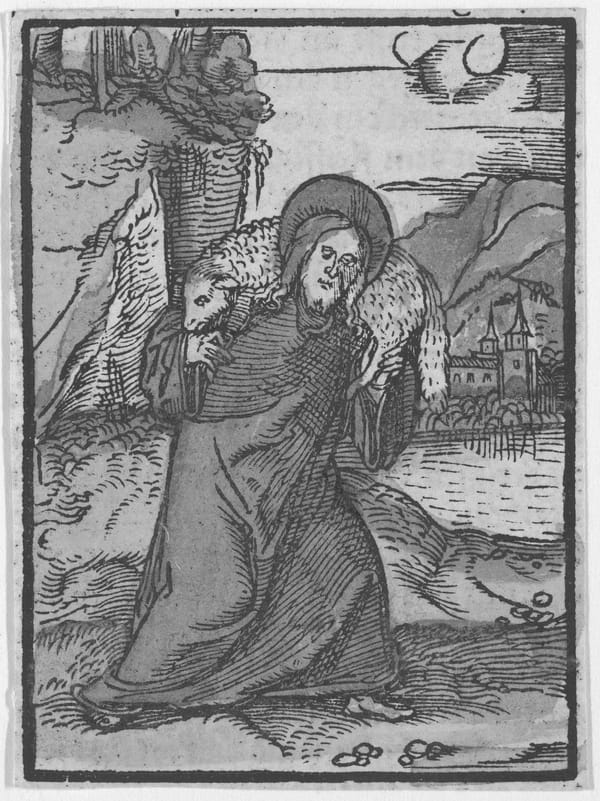
How great, O glorious martyr, was the honour reserved for thee by the Son of God, when he chose thee to be the one who was to attest, by laying down his life, the sacredness of the secret which protects the sacrament of Penance! Other priests, as well as thyself, have bravely suffered persecution for the sake of the secrecy of the mystery of reconciliation: but thou wast the one chosen by heaven to give a solemn testimony of priestly discretion. Thy sufferings were known to more than angels: thy martyrdom was a public one, and the faithful honour thy courage as an eloquent proof of how truly our good Shepherd, Jesus, removes every difficulty that could deter the strayed sheep from returning to the fold.
We address ourselves to thee, O holy martyr, on this day of thy triumph and beseech thee to intercede for sinners. Admirable minister of the sacrament of Penance! thou seest how many Christians there are who neglect to avail themselves of the means of salvation prepared for them by our risen Saviour. Instead of laying hold of this ‘second plank after shipwreck,’ they let themselves be carried on to the deep abyss by the tide of their sinful habits. There are thousands who have turned a deaf ear, even this Easter, to the call of Holy Church, who invited them, as an affectionate Mother, to approach the tribunal of mercy and reconciliation. We beseech thee, intercede for these blind, unwary, ungrateful men. Procure for them the grace which will lead them to the feet of the God of mercy, who is ever ready to grant pardon.
There are others, again, who go to Confession, but who have not the dispositions requisite for receiving the grace of the Sacrament—the justification of their souls. Pray also for these, that they may see the danger they thus incur of profaning the Blood of Christ. Obtain for all them who approach the holy tribunal an honest avowal of their sins, and contrition of heart; that thus the life of our Risen Jesus may be imparted to them and that they may never again lose it. By thy powerful intercession, raise up zealous and faithful ministers of this great sacrament of which thou wast the martyr. Draw down the blessing of heaven on their arduous labour: then will the number of the children of God be increased, and the grace of the Holy Ghost triumph in souls that have long been dead in sin.
Cast, too, an eye of compassion on thy fatherland of Bohemia, where there are so many faithful hearts that love and honour thee. Alas! there are tares which disfigure that portion of the Church. The enemy came, not many years after thy glorious martyrdom, and sowed the baneful weeds of heresy in thy native land. The good seed claims thy protection; but take pity also on the cockle, for even it may be turned, by the true faith, into wheat, and be garnered into the house of our heavenly Father. Secure peace to thy Bohemia and save her from the snares that are laid for her.
| Previous May 15: St. John Baptist de la Salle, Confessor | Next May 16: St. Ubaldus, Bishop and Confessor |