Daily reading
After Pentecost
Double of the II Class · Movable from Easter · Temporal
August 24, 2025
From Dom Guéranger’s The Liturgical Year.

|

The Eleventh Sunday after Pentecost
With the Greeks, this Sunday—their eleventh of Saint Matthew—is called the Parable of the King, who calls his servants to account.1 In the western Church, it has gone under the name of Sunday of the deaf and dumb, ever since the Gospel of the pharisee and the publican has been assigned to the tenth. To-day's Mass, as we now have it, still gives evidence as to what was its ancient arrangement. Our commentary on to-day's liturgy will show us this very plainly.
In the years when Easter falls nearest to March 21 the Books of Kings are continued as lessons of Matins up to, but never beyond, this Sunday. The sickness of the good king Ezechias, and the miraculous cure he obtained by his prayers and tears, are then the subject of the first lessons of the night-Office.2
Mass
The learned and pious Abbot Rupert, writing on this Sunday's Mass previous to the change made in the order of the Gospel lessons, thus explains the Church's reason for selecting the following Introit : ‘The publican in the Gospel accuses himself, saying : “I am not worthy to lift up mine eyes to heaven.” St. Paul, in the Epistle, does in like manner, and says : I am the least of the apostles, who am not worthy to be called an apostle, because I persecuted the Church of God." As, then, this humility, which is set before us that we may practise it, is the guardian of the union between the servants of God, because it keeps them from being puffed up one against the other,3 it is most appropriate that we should first sing the Introit, which tells us that God maketh men, in His house, abide together as though they were all but one soul.’4
Introit
The Collect which follows is most touching, when we see it in the light of the Gospel formerly fixed for this Sunday. Though that connexion has now been broken, yet the appropriateness is still very striking; for the Epistle, as Abbot Rupert was just telling us, continues to urge us to humility by proposing to us the example of St. Paul; the humility of the repentant publican has been anticipated. Our mother the Church is all emotion at beholding this publican, this object of contempt to the Jew, striking his breast, and scarce able to put his sorrow into words : she, with motherly tenderness, comes and takes up his faltering prayer, and gives it her own eloquence. Nothing could exceed the delicate way in which she. asks of the Omnipotent that, in His infinite mercy, He would restore peace to troubled consciences, by pardoning them their sins, and granting them what they, poor sinners, are too afraid to presume to ask for.
Collect
The other Collects, as on page 120.
Epistle
1 Cap. xv.Fratres, Notum vobis facio Evangelium, quod prædicavi vobis, quod et accepistis, in quo et statis, per quod et salvamini : qua ratione prædicaverim vobis, si tenetis, nisi frustra credidistis. Tradidi enim vobis, in primis quod et accepi : quoniam Christus mortuus est pro peccatis nostris secundum Scripturas : et quia sepultus est, et quia resurrexit tertia die secundum Scripturas : et quia visus est Cephæ, et post hoc undecim. Deinde visus est plus quam quingentis fratribus simul: ex quibus multi manent usque adhuc, quidam autem dormierunt. Deinde visus est Jacobo, deinde apostolis omnibus : novissime autem omnium tamquam abortivo visus est et mihi. Ego enim sum minimus apostolorum, qui non sum dignus vocari apostolus, quoniam persecutus sum Ecclesiam Dei. Gratia autem Dei sum id quod sum, et gratia ejus in me vacua non fuit.
1 Ch. xv.Brethren : I make known unto you the Gospel which I preached to you, which also you have received, and wherein you stand, by which also you are saved : if you hold fast after what manner I preached unto you, unless you have believed in vain. For I delivered unto you first of all, which I also received : how that Christ died for our sins according to the Scriptures : and that he was buried, and that he rose again the third day according to the Scriptures : and that he was seen by Cephas; and after that by the eleven. Then he was seen by more than five hundred brethren at once; of whom many remain until this present, and some are fallen asleep. After that he was seen by James, then by all the apostles; and last of all, he was seen also by me, as by one born out of due time. For I am the least of the apostles, who am not worthy to be called an apostle, because I persecuted the Church of God. But by the grace of God I am what I am; and his grace in me hath not been void.
Last Sunday the publican reminded us of the humility which should exist in the sinner; to-day the Doctor of the Gentiles shows us, by his own example, that this virtue is quite as suitable to a man who, though now justified, never forgets how, in the past, he offended his Maker. The sins of the now just man, even though long since forgiven, are always before him.5 Having a tendency to be his own accuser,6 he finds, in the fact that God has pardoned and forgotten his sins,7 nothing but an additional motive for his own unceasing remembrance of them. Heavenly favours may sometimes be granted him as a recompense for the sincerity of his repentance; the manifestation of the secrets of eternal Wisdom may be accorded him;8 he may, perhaps, be permitted to enter into the powers of the Lord, and obtain a keen insight into the rights of infinite justice;9 yet all these favours do but help him to see more clearly the enormity of those voluntary sins of his, which added their own malice to the original stains with which he was born.10 As he progresses in sanctity, humility becomes to him something more than a satisfaction paid to justice and truth, by a mind enlightened from on high : in proportion as he lives with God in closer and closer union, and, by contemplation, goes up higher11 in light and love, divine charity, which is ever pressing him12 on every side, turns the very remembrance of his past sins into what will make that charity more ardent. That burning charity fathoms the deep abyss whence grace has drawn him; and then she darts upwards from those depths of hell, more vehement, more imperious, more active, than ever. Gratitude for the priceless riches he now possesses by the munificence of his divine Benefactor does not satisfy that sinner of former days; the avowal of his past miseries must and does escape from his enraptured soul as a hymn to his God.
Like Augustine, who was but imitating Paul,13 'he glorifies the just and the good God by publishing both the good he has received and the evil of his own acts; and this in order to win over to the one sole Object of his praise and his love the minds and hearts of all who hear him.’14 This illustrious convert of Monica and Ambrose headed the magnificent book of his 'Confessions' with these words of Psalm xlvii., which so admirably express the object he proposed to himself by thus telling all about himself : 'Great art Thou, O Lord, and exceedingly to be praised. Great is Thy power, and of Thy wisdom there is no number,'15 'And yet,’ says the saint, 'man wishes to praise Thee— man, a mere speck of Thy creation, who carries about him his own mortality, and the testimony of his sin, and the testimony that thou resistest the proud;16 and yet this man wishes to praise Thee— man, a mere speck of Thy creation. Thou excitest him to take delight in praising Thee. Receive, then, the homage which is offered Thee by the tongue that was formed for the purpose of praising Thee. Let my flesh and all my bones, that have been healed by Thee, cry out : "Who, O Lord, is like unto Thee?”17 Let my soul praise Thee, that she may love Thee; and, that she may praise Thee, let her confess Thy mercies. I wish now to go over in my mind all my long wanderings, and I will confess the things which fill me with shame, and will make of them a sacrifice of joy.18 Not that I love my sins, but it is that I may love Thee, O my God, that I recall them to mind; it is out of love of Thy love that I now recur to those bitter things, that I may taste Thy delights, O Sweetness that never deceives! Blissful Sweetness, that has no dangers! O Thou that collectest all my powers, and recallest them from the painful scattering into which they had been thrown by my separation from Thee, O Thou one centre of all being! What am I to myself, when I have not Thee, but a guide that leads me to the abyss? Or what am I, when all is well with me, but a little one that is sucking in the milk which Thou providest, or enjoying Thee, the Food that knows not corruption? And what manner of man is any man, for he is but a man? Let them that are strong and mighty—them that have not as yet had the happiness of being laid low and cast down—let them laugh at me! I am a weak man, and poor, and I give Thee praise. For that I need neither voice nor words; the cries of the thought are what Thou hearest. For when I am wicked, my being displeased with myself is a real praise to Thee; but when I am pious, my not attributing it to myself is again a real praise to Thee; for if Thou, O Lord, bless the just man,19 it is because Thou hast first justified20 him when he was ungodly.'21
'By the grace of God, I am what I am.' The just man should make this language of the apostle be his own, and when this fundamental truth is thoroughly impressed upon his soul, then may he fearlessly add with him : 'His grace in me hath not been void.' For humility is based upon truth, as we said last Sunday; and, as it would be contrary to truth were one to refer to man what man has from God, so likewise would it be an injury to truth not to recognize, as the saints did, the works of grace where Goa has wrought them. In the former case justice, in the latter gratitude, would be offended, as well as truth. Now, humility, whose direct aim is to avoid these unjust infringements on the glory due to Goa, by repressing the risings of pride, is also the earnest prompter of gratitude—so truly so, indeed, that a proud man can never be a grateful one, or, to say it in other words, the greatest enemy to the generous virtue of gratitude is pride.
It is quite true that it is good, and prudent, and, generally speaking, necessary, for souls to dwell on the consideration of their faults rather than upon the favours they have received from God, and this more especially in the first beginning of their conversion; still, it is never lawful for any man to forget that, besides being grieved for his past sins and being vigilant as to present temptations, he has also the bounden duty of ceaselessly thanking the divine Benefactor, who gave him both the grace of a change of life and the subsequent progress in virtue.22 When a Christian cannot see a grace or any good in himself without having immediately to struggle against self-complacency and a tendency to prefer himself to others, he must not be troubled, of course, for the sin of pride is not in the evil suggestions which may arise within him, but in the consent which is yielded to such suggestions; and yet this weakness which accompanies the thought of God's graces is not without its dangers in the spiritual life; and the Christian who is resolved on making any advance in perfection must gently endeavour to get altogether rid of such weakness. Aided by grace, he will gradually find the eye of his soul growing stronger by the infirmity of nature being cured, and by the removal of the involuntary remnants of sin, which, as so many vicious humours, falsify the beautiful light of God's gifts, or even sometimes distort it altogether by an unhappy refraction. 'If thine eye be single,' says our Lord, 'thy whole body will be lightsome, having no part of darkness; the whole shall be lightsome';23 the light shall enlighten thee completely and surely, because it will come to thee without obstacle and without deviation.
It is holy simplicity, daughter and inseparable companion of humility, that will show us how, when a soul is what she should be, these two things coexist, and mutually tell on each other, viz., the close, deliberate consideration of the favours she has received from heaven, and the clear consciousness of her own miseries. This admirable simplicity will lead us to the school of the Scriptures and of the saints, there to teach us that the soul's being praised in the Lord,24 and our glorying in the Lord,25 is really a giving praise and glory to God Himself. When our Lady declared, in her canticle, that all generations would call her blessed, the divine enthusiasm which was inspiring her was quite as fully the ecstasy of her humility as of her love.26 The lives of God's best servants are, at every turn, showing us these sublime transports, wherein they make the Magnificat of their Queen become their own hymn of praise to God, magnifying Him for all the great things which He, the mighty One, has vouchsafed to do through their instramentality.27 When St. Paul, after having expressed the low estimation he had of himself compared with the other apostles, adds that grace had not been a failure in him, and that he had even laboured more abundantly than all of them,28 we are not to suppose that he has changed his tone, or that the holy Spirit, who guides him, now wishes to recall his previous words. No; it is one and the same conviction, one and the same desire, which inspires these words, apparently so different and so contrary; the conviction and the desire that God must not, and shall not, be disappointed in His gifts, either by the self-appropriation of pride, or by the silence of ingratitude.
We have purposely limited our reflexions to the truths suggested by the concluding lines of our Epistle, because they complete what we had to say on humility, that indispensable virtue, on which depends, not only all progress, but even all security, in the Christian life. What St. Paul here says regarding the Resurrection of our Lord, which is the basis of the apostolic preaching and of the faith of mankind,29 is a subject of quite equal importance; but this grand doctrine has been treated of during the Easter octave, with all the fullness it deserved; and even were we not compelled from want of space, we could not do better than refer our readers to the paschal volume.30
The Gradual, according to some of our most esteemed liturgists, expresses the thanksgiving of the humble, who are healed by God, according to the hope they had put in Him.31
Gradual
Gospel
Cap. vii.In illo tempore : Exiens Jesus de finibus Tyri, venit per Sidonem ad mare Galilææ inter medios fines Decapoleos. Et adducunt ei surdum et mutum, et deprecabantur eum, ut imponat illi manum. Et apprehendens eum de turba seorsum, misit digitos suos in auriculas ejus : et exspuens, tetigit linguam ejus : et suspiciens in cœlum, ingemuit, et ait illi : Ephpheta, quod est, adaperire. Et statim apertæ sunt aures ejus, et solutum est vinculum linguae ejus, et loquebatur recte. Et præcepit illis, ne cui dicerent. Quanto autem eis præcipiebat, tanto magis plus prædicabant : et eo amplius admirabantur, dicentes : Bene omnia fecit : et surdos fecit audire, et mutos loqui.
Ch. vii.At that time : Jesus going out of the coasts of Tyre, came by Sidon to the sea of Galilee through the midst of the coasts of Decapolis. And they bring to him one deaf and dumb : and they besought him that he would lay his hand upon him. And taking him from the multitude apart, he put his fingers into his ears, and spitting, he touched his tongue; and looking up to heaven, he groaned and said to him : Ephpheta, which is, Be thou opened. And immediately his ears were opened, and the string of his tongue was loosed, and he spoke right. And he charged them that theyshould tell no man. But the more he charged them, so much the more a great deal did they publish it. And so much the more did they wonder, saying : He hath done all things well; he hath made both the deaf to hear and the dumb to speak.
Jesus is no longer in Judea; the names of the places mentioned in the beginning of to-day’s Gospel tell us that the Gentile world has become the scene of the divine operations for man's salvation. What manner of man, then, is this who is led to the Saviour, and the sight of whose miseries makes the Incarnate Word heave a sigh? And what is the meaning of the extraordinary circumstances which produce the cure? A single word of Jesus could have done it all, and His power would have shone forth all the more brightly. But the miracle which is here related contains a great mystery; and the Man-God, who aims mainly at giving us a lesson by this His mercy, makes the exercise of His power subordinate to the teaching which He desires to convey to us.
The holy fathers tell us that this man represents the entire human race,32 exclusive of the Jewish people. Abandoned for four thousand years in the sides, that is, in the countries of the north, where the prince of this world was ruling as absolute master,33 it has been experiencing the terrible effects of the seeming forgetfulness on the part of its Creator and Father, which was the consequence of original sin. Satan, whose perfidious craftiness caused man to be driven out of Paradise, has made him his own prey, and nothing could exceed the artifice he has employed for keeping him in his grasp. Wisely oppressing34 his slave, he adopted the plan of making him deaf and dumb, for this would hold him faster than chains of adamant could ever do. Dumb, he could not ask God to deliver him; deaf, he could not hear the divine voice; and thus the two ways for obtaining his liberty were shut against him. The adversary of God and man, satan, may boast of his tyranny. The grandest of all God’s creations looks like a failure; the human race, in all its branches, and in all nations, seems ruined; for even that people which God had chosen for His own, and which was to be faithful to Him when every other had gone astray,35 has made no other use of its privileges than to deny its Lord and its King, more cruelly than all the rest of mankind.
What, then? Is the bride, whom the Son of God came to seek upon the earth—is the society of saints, to be limited to those few who declared themselves His disciples during the years of His mortal life? Not so; the zeal of the newly formed Church, and the ineffable goodness of God, produced a far grander result. Driven from Jerusalem, as her divine Spouse had been, the Church met the poor captive of satan beyond the boundaries of Judea; she would fain bring him into the kingdom of God: and, through the apostles and their disciples, she brings him to Jesus, beseeching Him to lay His divine hand upon him. No human power could effect his cure. Deafened by the noise of his passions, it is only in a confused way that he can hear even the voice of his own conscience; and, as to the sounds of tradition, or the speakings of the prophets, they are to him but as an echo, very distant and faint. Worst of all, as his hearing, that most precious of our senses, is gone, so, likewise, is gone the power of making good his losses; for, as the apostle teaches, the one thing that could save him is faith, and faith cometh by hearing.36
Our Jesus groans when they have brought this poor creature before Him. He is grieved at seeing the cruelties the enemy has inflicted on this His own privileged being, this beautiful work, of which He Himself served as model and type to the blessed Trinity, at the beginning of the world.37 Raising up to heaven those eyes of His sacred Humanity —those eyes whose language has such resistless power—He sees the eternal Father acquiescing in the intentions of His own merciful compassion.38 Then, resuming the exercise of that creative omnipotence which, in the beginning, had made all things to be very good,39 and all His works to be perfect,40 He, as God and as the Word,41 utters the mighty word of restoration: Ephpheta! Be thou opened! Nothingness, or rather (in this instance) ruin, which is worse than nothingness, obeys the well-known voice; the ears of the poor sufferer are opened, joyfully opened to the teachings, which his delighted mother the Church pours into them. She is all the gladder, because it is her prayers that have won this deliverance; and he, to whom faith comes now through hearing, finding that his tongue can speak, speaks, or rather sings, a canticle of praise to his God.
And yet, as we were observing, our merciful Lord, by this cure, aims not so much at showing the power of His divine word as at giving a glorious teaching to His followers; He wishes to reveal to them, under certain visible symbols, the invisible realities produced by His grace in the secret of the sacraments. It is for the sake of such teaching that the Gospel has mentioned such an apparently trifling detail as this—that when the deaf and dumb man was brought before Him, He took him apart—apart, so to say, from the multitude of the noisy passions and the vain thoughts42 which had made him deaf to heavenly truths. After all, would there be much good in curing him if the occasion of his malady were not removed, and he were to relapse perhaps that same day? So, then, having by this separation taken precautions for the future, Jesus inserts into the man’s ears His own divine fingers which bring the Holy Ghost,43 and make to penetrate right to the ears of his heart the restorative power of this Spirit of love. And finally, more mysteriously, because the truth which was to be expressed is more profound, He touches with the saliva of His sacred mouth that tongue which had become incapable of giving glory and praise; and Wisdom (for it is she that is here mystically signified)—Wisdom, ‘that cometh forth from the mouth of the Most High,’44 and flows for us from the Saviour’s fountains45 as a life-giving drink46— openeth the mouth of the dumb man, just as she maketh eloquent the tongues of speechless infants.47
Therefore it is that the Church—in order to show us that the event recorded in to-day’s Gospel is figurative, and regards not merely one individual man, but all of us—has prescribed that the circumstances which accompanied the cure of this deaf and dumb sufferer shall be expressed in the ceremonies of holy Baptism. The priest, before pouring the water of the sacred font on the person who is presented for Baptism, puts on the catechumen’s tongue the salt of wisdom, and touches his ears, saying : Ephpheta! that is, Be opened!48
There is an instruction of another kind included in our Gospel, and worthy of our notice, as closely bearing on what we have been saying regarding humility. Our Lord imposed silence on those who had been witnesses of the miraculous cure, although He knew that their praiseworthy enthusiasm could never allow them to obey Him. By this injunction, He wished to give a lesson to His followers, that if, at times, it is impossible to keep men from being in admiration at the works they achieve—if, sometimes, the holy Spirit, in opposition to their wishes, forces them to undergo public applause for the greater glory of the God whose instruments they are—yet must they always do all in their power to avoid being noticed; they must prefer to be despised,49 or, at least, not talked of; they must love to be hidden in the secret of the face of God;50 and, after the most brilliant, just as truly as they would after the most menial, duties, they must say from the heartiest conviction: 'We are unprofitable servants, we have but done what we ought to do.’51
It is again the hymn of the humble, whether delivered, or healed, or glorified, by God, which is sung in the Offertory.
Offertory
The assembly of God’s servants beseech Him, in the following Secret, graciously to accept their gifts; and, in this holy sacrifice, to turn them into the homage of their delighted service, and the support of their weakness.
Secret
The other Secrets, as on page 130.
No more appropriate anthem than the following could have been selected as the Communion for the season which finds men busy in harvesting the fruits of the earth. We should make it our first thought to give to God, through His Church and the poor, the first fruits of these blessings which He has bestowed upon us. But, in order becomingly to honour the Lord in this, we must take care not to boast, as the pharisee did, of fulfilling a duty so imperative, and yet so very profitable to ourselves who obey it.
Communion
The heavenly remedy of these sacred mysteries acts upon our body and soul: it is for the salvation of both, and, therefore, we should love these mysteries as our best glory on earth. In the Postcommunion, the Church prays that her children may be blessed with the whole fullness of these blessings.
Postcommunion
The other Postcommunion, as on page 131.
Vespers
The psalms, capitulum, hymn and versicle, as above, pages 71-81.
Antiphon of the Magnificat
- St. Matt. xviii 23-85. ↩︎
- 4 Kings xx. ↩︎
- 1 Cor. iv. 6. ↩︎
- Rup., De Div. Off., xii.11. ↩︎
- Ps. 1. 5. ↩︎
- Prov. xviii. 17. ↩︎
- Ezech. xviii. 22. ↩︎
- Ps. 1. 8. ↩︎
- Ps. lxx.16. ↩︎
- Ps. l. 6, 7. ↩︎
- St. Luke xiv. 10. ↩︎
- 2 Cor. v. 14. ↩︎
- 1 Cor. xv. 8-10. ↩︎
- St. Aug., Retract, ii. 6. ↩︎
- Ps. xlvii. 2; cxlvi. 5. ↩︎
- St. Jas. iv. 6. ↩︎
- Ps. xxxiv. 10. ↩︎
- Ps. cxv. 17. ↩︎
- Ps. v. 13. ↩︎
- Rom. iv. 5. ↩︎
- St. Aug., Confessions, i. 1, ii. 1, iv. 1, v.1, x. 2. ↩︎
- Ps. 1. 16, 17. ↩︎
- St. Luke. xi. 34-36. ↩︎
- Ps. xxxii. 3. ↩︎
- 1 Cor. i. 31. ↩︎
- St. Luke. i. 48. ↩︎
- St. Luke. i. 49. ↩︎
- 1 Cor. xv. 10. ↩︎
- Ibid. 14. ↩︎
- ‘Paschal Time,’ vol. i. ↩︎
- Rup., ubi supra; Durand., Ration., vi. 125. ↩︎
- Ludolph. Carth., Vita J. Chr., i. 90. ↩︎
- Isa. xiv.13. ↩︎
- Exod. i. 10. ↩︎
- Deut. xxxii. 9. ↩︎
- Rom. x. 17. ↩︎
- Gen. i. 26. ↩︎
- St. John. xi. 42. ↩︎
- Gen. i. 31. ↩︎
- Deut. xxxii. 4. ↩︎
- St. John. i. 1. ↩︎
- ℣. Bed., in Marc., ii. ↩︎
- Cf. St. Luke. xi. 20; St. Matt. xii. 28. ↩︎
- Ecclus. xxiv. 5. ↩︎
- Isa. xii. 3. ↩︎
- Ecclus. xv. 3. ↩︎
- Wisd. x. 21. ↩︎
- Rit. rom., Ordo baptism. ↩︎
- Ps. lxxxiii. 11. ↩︎
- Ps. xxx. 21. ↩︎
- St. Luke xvii. 10. ↩︎
August 24: St. Bartholomew, Apostle
|
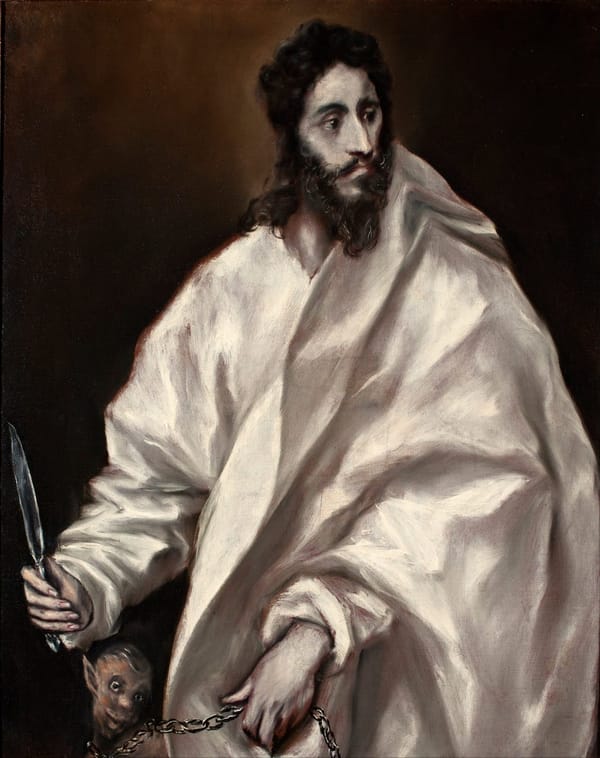
A witness of the Son of God, one of the princes who announced His glory to the nations, lights up this day with his apostolic flame. While his brethren of the sacred college followed the human race into all the lands whither the migration of nations had led it, Bartholomew appeared as the herald of the Lord at the very starting point, the mountains of Armenia, whence the sons of Noe spread over the earth. There had the figurative Ark rested; humanity, everywhere else a wanderer, was there seated in stillness, remembering the dove with its olive branch, and awaiting the consummation of the alliance signified by the rainbow which had there for the first time glittered in the clouds. Behold, blessed tidings awake in those valleys the echoes of ancient traditions: tidings of peace, making the universal deluge of sin subside before the Wood of salvation. The serenity announced by the dove of old, was now far outdone. Love was to take the place of punishment. The ambassador of heaven showed God to the sons of Adam, as the most beautiful of their own brethren. The noble heights whence formerly flowed the rivers of paradise, were about to see the renewal of the covenant annulled in Eden, and the celebration, amid the joy of heaven and earth, of the divine nuptials so long expected, the union of the Word with regenerated humanity.
Personally, what was this apostle whose ministry borrowed such solemnity from the scene of his apostolic labours? Under the name or surname of Bartholomew,1 the only mark of recognition given him by the first three Gospels, are we to see, as many have thought, that Nathaniel, whose presentation to Jesus by Philip forms so sweet a scene in St. John’s Gospel?2 A man full of uprightness, innocence, and simplicity, who was worthy to have had the dove for his precursor, and for whom the Man-God had choice graces and caresses from the very beginning.
Be this as it may, the lot which fell to our saint among the twelve, points to the special confidence of the divine Heart; the heroism of the terrible martyrdom which sealed his apostolate reveals his fidelity; the dignity preserved by the nation he grafted on Christ, in all the countries where it has been transplanted, witnesses to the excellence of the sap first infused into its branches. When, two centuries and a half later, Gregory the Illuminator so successfully cultivated the soil of Armenia, he did but quicken the seed sown by the apostle, which the trials never wanting to that generous land had retarded for a time, but could not stifle.
How strangely sad, that evil men, nurtured in the turmoil of endless invasions, should have been able to rouse and perpetuate a mistrust of Rome among a race whom wars and tortures and dispersion could not tear from the love of Christ our Saviour! Yet, thanks be to God! the movement towards return, more than once begun and then abandoned, seems now to be steadily advancing; the chosen sons of this illustrious nation are labouring perseveringly for so desirable a union, by dispelling the prejudices of her people; by revealing to our lands the treasures of her literature so truly Christian, and the magnificences of her liturgy; and above all by praying and devoting themselves to the monastic state under the standard of the father of western monks.3 Together with these holders of the true national tradition, let us pray to Bartholomew their apostle; to the disciple Thaddeus4 who also shared in the first evangelization; to Ripsima the heroic virgin, who from the Roman territory led her thirty-five companions to the conquest of a new land; and to all the martyrs whose blood cemented the building upon the only foundation set by our Lord. Like these great forerunners, may the leader of the second apostolate, Gregory the Illuminator, who wished to 'see Peter’ in the person of St. Sylvester and receive the blessing of the Roman Pontiff, may the holy kings the patriarchs and doctors of Armenia, become once more her chosen guides, and lead her back entirely and irrevocably to the one fold of the one Shepherd!
We learn from Eusebius5 and from St. Jerome,6 that before going to Armenia, his final destination, St. Bartholomew evangelized the Indies, where Pantænus a century later found a copy of St. Matthew’s Gospel in Hebrew characters, left there by him. St. Denis records a profound saying of the glorious apostle, which he thus quotes and comments: ‘The blessed Bartholomew says of theology, that it is at once abundant and succinct; of the Gospel, that it is vast in extent and at the same time concise; thus excellently giving us to understand that the beneficent Cause of all beings reveals or manifests Himself by many words or by few, or even without any words at all, as being beyond and above all language or thought. For He is above all by His superior essence; and they alone reach Him in His truth, without the veils wherewith He surrounds Himself, who, passing beyond matter and spirit, and rising above the summit of the holiest heights, leave behind them all reflexions and echoes of God, all the language of heaven, to enter into the darkness wherein He dwelleth, as the Scripture says, who is above all.’7
The city of Home celebrates the feast of St. Bartholomew to-morrow, as do also the Greeks who commemorate on August 25 a translation of the apostle’s relics. It is owing, in fact, to the various translations of his holy body and to the difficulty of ascertaining the date of his martyrdom that different days have been adopted for his feast by different Churches, both in the east and in the west. The twenty-fourth of this month, consecrated by the use of most of the Latin Churches, is the day assigned in the most ancient martyrologies, including that of St. Jerome. In the thirteenth century Innocent III, having been consulted as to the divergence, answered that local custom was to be observed.8
The Church gives us the following notice of the apostle of Armenia.
On this day of thy feast, O holy apostle, the Church prays for grace to love what thou didst believe and to preach what thou didst teach.9 Not that the bride of the Son of God could ever fail either in faith or in love; but she knows only too well that,though her Head is ever in the light, and her heart ever united to the Spouse in the holy Spirit who sanctifies her, nevertheless her several members, the particular churches of which she is composed, may detach themselves from their centre of life and wander away in darkness. O thou who didst choose our west as the place of thy rest; thou whose precious relics Rome glories in possessing, bring back to Peter the nations thou didst evangelize; fulfil the now reviving hopes of universal union; second the efforts made by the vicar of the Man-God to gather again under the shepherd's crook those scattered flocks whose pastures have become parched by schism. May thine own Armenia be the first to complete a return which she began long ago; may she trust the mother-Church and no more follow the sowers of discord. All being reunited, may we together enjoy the treasures of our concordant traditions, and go to God, even at the cost of being despoiled of all things, by the course so grand and yet so simple taught us by thy example and by thy sublime theology.
| Previous August 23: St. Philip Benizi, Confessor | Next August 24: St. Bartholomew, Apostle |