Daily reading
After Pentecost
Double · Movable from Advent · Temporal
November 23, 2025
From Dom Guéranger’s The Liturgical Year.

|
The Twenty-Fourth Sunday after Pentecost
The number of the Sundays after Pentecost may exceed twenty-four, and go as far as twenty-eight, according as Easter is each year more or less near to the vernal equinox. But the Mass here given is always reserved for the last; and the intervening ones, be their number what it may, are taken from the Sundays after the Epiphany, which, in that case, were not used at the beginning of the year.1 This, however, does not apply to the Introit, Gradual, Offertory, and Communion, which, as we have already said, are repeated from the twenty-third Sunday.
We have seen how that Mass of the twenty-third Sunday was regarded, by our forefathers, as really the last of the cycle. Abbot Rupert has given us the profound meaning of its several parts. According to the teaching we have already pondered over,2 the reconciliation of Juda was shown us as being, in time, the term intended by God: the last notes of the sacred liturgy blended with the last scene of the world’s history, as seen and known by God. The end proposed by eternal Wisdom in the world’s creation, and mercifully continued, after the fall, by the mystery of Redemption, has now (we speak of the Church’s year and God’s workings) been fully carried out. This end was no other than that of divine union with human nature, making it one in the unity of one only body.3 Now that the two antagonistic people, Gentile and Jew, are brought together in the one same new Man in Christ Jesus their Head,4 the two Testaments, which so strongly marked the distinction between the ages of time, the one called the old, the other the new, fade away, and give place to the glory of the eternal Alliance.
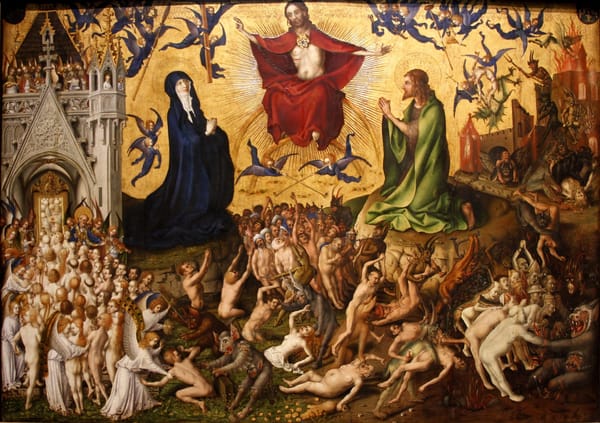
It was here, therefore, that mother Church formerly finished her liturgical year. She was delighted at what she had done during all the past months; that is, at having led her children, not only to have a thorough appreciation of the divine plan, which she had developed before them in her celebrations, but moreover, and more especially, to unite them themselves, by a veritable union, to their Jesus, by a real communion of views, and interests, and loves. On this account, she used not to revert again to the second coming of the God-Man and the last judgment, two great subjects which she had proposed for her children’s reflexions, at the commencement of the purgative life, that is, in her season of Advent. It is only a few centuries ago that, with a view of giving to her year a conclusion more defined and intelligible to the faithful of these comparatively recent times, she chose to conclude the cycle with the prophetic description of the dread coming of her Lord, which is to put an end to time, and to open eternity. From time immemorial, St. Luke had had the office of announcing, in Advent, the approach of the last judgment;5 the evangelist St Matthew was selected for this its second, and more detailed, description, on the last Sunday after Pentecost.
Mass
Introit
Ps. Benedixisti, Domine, terram tuam: avertisti captivitatem Jacob. Gloria Patri. Dicit Dominus.
Ps. Thou, O Lord, hast blessed thy land: thou hast brought back the captive children of Jacob. Glory, etc. The Lord.
The doing of good works, by the help of divine grace, prepares us to receive a still greater grace, for greater works in the future. In the Collect, let us unite with our mother, the Church, in praying for an efficacious influence of the divine Mover upon our wills.
Collect
The other Collects, as on page 120.
Epistle
Cap. i.Fratres, Non cessamus pro vobis orantes et postulantes, ut impleamini agnitione voluntatis Dei in omni sapientia, et intellectu spiritali : ut ambuletis digne Deo per omnia placentes: in omni opere bono fructificantes, et crescentes in scientia Dei : in omni virtute confortati secundum potentiam claritatis ejus, in omni patientia, et longanimitate cum gaudio, gratias agentes Deo Patri, qui dignos nos fecit in partem sortis sanctorum in lumine : qui eripuit nos de potestate tenebrarum, et transtulit in regnum Filii dilectionis suæ; in quo habemus redemptionem per sanguinem ejus, remissionem peccatorum.
Ch. i.Brethren: We cease not to pray for you, and to beg that you may be filled with the knowledge of his will, in all wisdom, and spiritual understanding: that you may walk worthy of God, in all things pleasing: being fruitful in every good work, and increasing in the knowledge of God: strengthened with all might, according to the power of his glory, in all patience and longsuffering with joy. Giving thanks to God the Father, who hath made us worthy to be partakers of the lot of the saints in light: who hath delivered us from the power of darkness, and hath translated us into the kingdom of the Son of his love, in whom we have redemption through his blood, the remission of sins.
Thanksgiving and prayer! There we have the epitome of our Epistle, and an eloquent conclusion of the apostle’s course of instructions: it is also both the summary and the conclusion of the year of the sacred liturgy. The Doctor of the Gentiles has been zealous, beyond measure, in his fulfilment of the task assigned to him by mother Church. Of a certainty, the fault is not his, if the souls he undertook to guide, on the morrow of the descent of the Spirit of love, have not all reached that summit of perfection, which he longed for us all to attain. Those who have gone bravely forward in the path which, a year since, was opened out to them by holy Church, now, by a happy experience, know that that path most surely leads them to the life of union, where divine charity reigns supreme. Who is there that, with anything like earnestness, has allowed his mind and heart to take an interest in the several liturgical seasons which have been brought before us, and been celebrated by the Church during the past twelve months, has not also felt an immense increase of light imparted to him? Now, light is that indispensable element, which delivers us from the power of darkness, and translates us, by the help of God, into the kingdom of the Son of His love. The work of redemption, which this His beloved Son came down upon earth to accomplish for His Father’s glory, could not do otherwise than make progress in those who have, with more or less fervour, entered into the spirit of His Church, during the whole year, that is, from the opening of Advent right up to these the closing days of the sacred cycle. All of us, then, whosoever we may be, should give thanks to this Father of lights,6who hath thus made us worthy to be partakers, somewhat at least, of the lot of the saints.
So, then, all of us, be the share of our participation what it may, must pray that the excellent gift,7 which has been put into our hearts, may fervently yield itself to the still richer development, which the coming new cycle is intended to produce within us.
The just man cannot possibly remain stationary in this world; he must either descend or ascend; and whatever may be the degree of perfection to which grace has led him, he must be ever going still higher as long as he is left in this life.8 The Colossians, to whom the apostle was writing, had fully received the Gospel; the word of truth which had been sown in them had produced abundant fruit in faith, hope, and love;9 and yet, instead of relenting on that account his solicitude in their regard, it is precisely for that reason10 that St. Paul, who had prayed for them up till then, ceases not to pray for them. So let us do: let us go on praying. Let us beg of God, that He will again, and always, fill us with His divine Wisdom, and with the Spirit of understanding. We need all that, in order to correspond with His merciful designs. If the new year of the Church, which is so soon to begin, finds us faithful and making fresh progress, we shall be repaid with new aspects of truth in the garden of the Spouse, and the fruits we shall produce there will be more plentiful, and far sweeter, than in any bygone year. Therefore, let us make up our minds to walk worthy of God, ‘with dilated hearts,’11 and bravely; for the eye of His approving love will be ever upon us, as we toil along. Oh, yes! let us run on in that uphill path, which will lead us to eternal repose in the beatific vision!
Gradual
Gospel
Cap. xxiv.In illo tempore : Dixit Jesus discipulis suis: Cum videritis abominationem desolationis, quæ dicta est a Daniele propheta, stantem in loco sancto, qui legit intelligat: tunc qui in Judæa sunt, fugiant ad montes: et qui in tecto, non descendat tollere aliquid de domo sua: et qui in agro, non revertatur tollere tunicam suam. Væautemprægnantibus, et nutrientibus in illis diebus. Orate autem ut non fìat fuga vestra in hieme, vel Sabbato. Erit enim tunc tribulatio magna, qualis non fuit ab initio mundi usque modo, neque fiet. Et nisi breviati fuissent dies illi, non fìeret salva omnis caro: sed propter electos breviabuntur dies illi. Tunc si quis vobis dixerit : Ecce hic est Christus, aut illic : nolite credere. Surgent enim pseudochristi, et pseudoprophetæ : et dabunt signa magna et prodigia, ita ut in errorem inducantur (si fieri potest) etiam electi. Ecce prædixi vobis. Si ergo dixerint vobis : Ecce in deserto est, nolite exire: Ecce in penetralibus, nolite credere. Sicut enim fulgur exit ab Oriente, et paret usque in Occidentem : ita erit et adventus Filii hominis. Ubicumque fuerit corpus, illic congregabuntur et aquilæ. Statim autem post tribulationem dierum illorum sol obscurabitur, et luna non dabit lumen suum, et stellæ cadent de cœlo, et virtutes cœlorum commovebuntur : et tunc parebit signum Filii hominis in cœlo: et tunc plangent omnes tribus terræ : et videbunt Filium hominis venientem in nubibus cœli cum virtute multa et majestate. Et mittet angelos suos cum tuba, et voce magna: et congregabunt electos ejus a quatuor ventis, a summis cœlorum usque ad terminos eorum. Ab arbore autem fici discite parabolam : cum jam ramus ejus tener fuerit, et folia nata, scitis quia prope est æstas; ita et vos, cum videritis hæc omnia, scitote quia prope est in januis. Amen dico vobis, quia non præteribit generatio hæc, donec omnia hæc fiant. Cœlum et terra transibunt, verba autem mea non præteribunt.
Ch. xxiv.At that time: Jesus said to his disciples: When you shall see the abomination of desolation, which was spoken of by Daniel the prophet, standing in the holy place: he that readeth, let him understand. Then they that are in Judea, let them flee to the mountains; and he that is on the house-top, let him not come down to take anything out of his house; and he that is in the field, let him not go back to take his coat. And wo to them that are with child, and that give suck in those days. But pray that your flight be not in the winter, or on the Sabbath. For there shall be then great tribulation, such as hath not been from the beginning of the world until now, neither shall be. And unless those days had been shortened, no flesh should be saved: but for the sake of the elect, those days shall be shortened. Then if any man shall say to you: Lo! here is Christ, or there: do not believe him. For there shall arise false Christs, and false prophets, and shall shew great signs and wonders, insomuch as to deceive, if possible, even the elect. Behold I have told it to you beforehand; if therefore they shall say to you : Behold he is in the desert, go ye not out: Behold he is in the closets, believe it not. For as lightning cometh out of the east, and appeareth even into the west; so shall also the coming of the Son of Man be. Wheresoever the body shall be there shall the eagles also be gathered together. And immediately after the tribulation of those days, the sun shall be darkened, and the moon shall not give her light, and the stars shall fall from heaven, and the powers of heaven shall be moved: and there shall appear the sign of the Son of Man in heaven: and then shall all tribes of the earth mourn: and they shall see the Son of Man coming in the clouds of heaven with much power and majesty. And he shall send his angels with a trumpet, and a great voice: and they shall gather together his elect from the four winds, from the farthest parts of the heavens to the utmost bounds of them. And from the fig-tree learn a parable: when the branch thereof is now tender and the leaves come forth, you know that summer is nigh. So you also, when you shall see all these things, know ye that it is nigh even at the doors. Amen, I say to you, that this generation shall not pass, till all these things be done. Heaven and earth shall pass, but my words shall not pass.
Several times during Advent we meditated on the circumstances which are to accompany the last coming of Christ our Lord; and in a few days the same great teachings will be again brought before us, filling our souls with a salutary fear. May we, then, be permitted, on this last Sunday of our liturgical year, to address ourselves in a prayer of desire and praise to our adorable Lord and King, the solemn hour of whose judgment is to be the consummation of His work, and the signal of His triumph.
O Jesus! who then art to come to deliver Thy Church, and avenge that God who has so long borne every sort of insult from His creature man, that day of Thy coming will indeed be terrible to the sinner! He will then understand how the Lord hath made all things for Himself—all, even the ungodly, who, on the evil day, are to show forth the divine justice.12 The whole world, fighting on His side against the wicked,13 shall then at last be avenged for that slavery of sin which had been forced upon it.14 Vainly will the wicked cry out to the rocks to fall upon them, and hide them from the face of Him that will then be seated on His throne;15 the abyss will refuse to engulf them; in obedience to Him who holds the keys of death and of hell,16 it will give forth, to a man, its wretched victims, and set them at the foot of the dread tribunal. O Jesus, how magnificent will Thy power then appear! The heavenly hosts will also be standing around Thee, forming Thy brilliant17 court, and assembling Thy elect from the four quarters of the earth.
For we also, Thy redeemed who have become Thy members by becoming the members of Thy beloved Church, we are to be there on that day, and our place (O ineffable mystery!) is to be the one Thou hast reserved for Thy bride; it is to be Thy own throne,18 where seated we shall judge the very angels.19 Even now, all those blessed of the Father,20 all those elect whose youth, like that of the eagle, has been so often renewed by receiving Thy precious Blood,21 have they not had their eyes fitted to gaze without being dazzled on the Sun of justice, when He shall appear in the heavens? The tediousness of their long exile has given such keenness to their hunger that nothing will have power to stay their flight, once the sacred prey of Thy divine Body shall be shown them! What hindrance could be strong enough to check the impetuosity of the love22 which will bring them all together to the banquet of the eternal Pasch? The trumpet of the Archangel, which will ring through the graves of the just, is to be a summons calling them, not to death, but to life; to the sight of the old enemy’s destruction;23 to a redemption which is to include their very bodies;24 to the unimpeded passover to the true Land of promise; in a word, to the Pasch, and this time real, and for all, and for ever. What will be the joy of that true day of the Lord!25 What joy for them that have, by faith, lived in Christ, and loved Him without seeing Him!26 Identifying themselves with Thee, O Jesus, notwithstanding the weakness of the flesh, they have continued here below Thy life of suffering and humiliation. What a triumph when, delivered for ever from sin, and vested in their immortal bodies, they shall be borne aloft before Thy face, that they may for ever be with Thee!27
But their chiefest joy on that great day will be to assist at the glorification of their most dear Lord, by the manifestation of the power which was given to Him over all flesh.28 Then, O Emmanuel! crushing the heads of kings, and making Thine enemies Thy footstool,29 Thou wilt be shown as the one Ruler of all nations.30 Then will heaven, and earth, and hell bow their knee31 before that Son of Man, who heretofore appeared on earth as a slave, and was judged, and condemned, and put to death between two thieves. Then, dear Jesus, Thou wilt judge the unjust judges, to whom, even in the midst of all the humiliations they put on Thee, Thou didst foretell this Thy coming on the clouds of heaven.32 And when, after the irrevocable sentence has been passed, the wicked shall go to everlasting torments, and the just to life eternal,33 Thy apostle tells us that, having conquered Thine enemies and been proclaimed undisputed King, Thou wilt consign to Thy eternal Father this Thy kingdom won over death; it will be the perfect homage of Thee, the Head, and of all Thy faithful members.34 God will thus be all in all. It will be the perfect accomplishment of that sublime prayer Thou taughtest mankind to make,35 which they daily offer up to the Father who is in heaven, saying to Him : 'Hallowed be Thy name! Thy kingdom come! Thy will be done on earth, as it is in heaven!' O blissfully peaceful day, when blasphemy is to cease, and when this poor earth of ours, cleansed by fire from the filth of sin, shall be turned into a new paradise! Where, then, is the Christian, who would not thrill with emotion at the thought of that last of all the days of time, which is to usher in beautiful eternity? Who would not despise the agonies of his own last hour, when he reflects that those sufferings have really only one meaning in them, that the Son of Man, as the Gospel words it, is nigh even at the very doors!
O sweet Jesus, detach us every year more and more from this world, whose fashion passeth away,36 with its vain toils, its false glories, and its lying pleasures. It was Thine own foretelling, that, as in the days of Noe and Sodom, men will go on with their feasting, and business, and amusements, without giving any more thought to Thy approaching coming than their forefathers heeded the threat of the Deluge, or of the fire, which came upon them and destroyed them.37 Let these men go on with their merry-making, and their sending gifts one to the other, as Thine Apocalypse expresses it, because, so they will have it, Christ and His Church are then to be worn-out ideas!38 Whilst they are tyrannizing over Thy holy city in a thousand varied ways, and persecuting her as no past period had ever done, they little think that all this is an announcement of the eternal nuptials, which are nigh at hand. All these trials are the fresh jewels, which the bride is to have given her before her beauty is complete; and the blood of her last martyrs is to incarnadine her already splendid robes with all the richness of royal crimson. As for us, we lend an ear to the echoes of our home above; and, from the throne of our God, we hear going forth the voice heard by Thy beloved prophet of Patmos: 'Give praise unto our God, all ye His servants, and ye that fear Him, little and great! Alleluia! For the Lord our God the almighty hath reigned! Let us be glad and rejoice, and give glory unto Him; for the marriage of the Lamb is come, and His wife hath prepared herself!'39 Yet a little while, till the number of our brethren be made up;40 and then, with the Spirit and the bride, we will say to Thee, in all the ardour of our souls that have long thirsted after Thee: ‘Come, Lord Jesus!41 Come, and perfect us in love, by eternal union, unto the glory of the Father, and of Thyself the Son, and of the Holy Ghost, for ever and ever!'
Offertory
In the Secret, let us ask of God that, at the approach of the last judgment, He would turn all hearts towards Himself, and vouchsafe to make our earthly desires give place to the desire for, and relish of, heavenly things.
Secret
The other Secrets, as on page 130.
Communion
May the divine Sacrament, as the Church prays in the Postcommunion, fully cure, by its virtue, whatsoever may remain faulty in our souls at this close of the year!
Postcommunion
The other Postcommunions, as on page 131.
Vespers
The psalms, capitulum, hymn and versicle, above, pages 71-81.
Antiphon of the Magnificat
- Farther on (vid. inf., pages 496-511) we have given these Sundays, which are the third, fourth, fifth, and sixth, after the Epiphany. When there are twenty-five Sundays after Pentecost, it is the sixth after the Epiphany, which is put after the twenty-third; if the number of Sundays be twenty-six, the fifth after the Epiphany becomes the twenty-fourth after Pentecost; if the number be twenty-seven, we go back to the fourth after the Epiphany, and the rest follow; if it be as high as twenty-eight, we begin with the third. ↩︎
- The thirteenth Sunday after Pentecost. ↩︎
- Eph. ii. 16. ↩︎
- Ibid. 15. ↩︎
- First Sunday of Advent. ↩︎
- St. Jas. i. 17. ↩︎
- Ibid. ↩︎
- Ps. lxxxiii. 6. ↩︎
- Col. i. 4-6. ↩︎
- Ibid. 9. ↩︎
- St. Benedict, The Holy Rule. ↩︎
- Prov. xvi 4. ↩︎
- Wisd. v. 21. ↩︎
- Rom. viii 21. ↩︎
- Apoc. vi. 16. ↩︎
- Ibid. i. 18. ↩︎
- Apoc. xix. 14. ↩︎
- Ibid. iii. 21. ↩︎
- 1 Cor. vi. 3. ↩︎
- St. Matt. xxv. 3. ↩︎
- Ps. cii. 5. ↩︎
- Cant. viii. 6. ↩︎
- 1 Cor. xv. 28. ↩︎
- Rom. viii. 23. ↩︎
- Ps. cxvii. 24. ↩︎
- 1 St. Pet. i. 8. ↩︎
- 1 Thess. iv. 6. ↩︎
- St. John xvii. 2. ↩︎
- Ps. cix. ↩︎
- Ps. ii. ↩︎
- Phil. ii. 10. ↩︎
- St. Matt. xxvi. 64. ↩︎
- Ibid. xxv. 46. ↩︎
- 1 Cor. xv. 24-28. ↩︎
- St. Matt. vi. 9. ↩︎
- 1 Cor. vii. 31. ↩︎
- St. Luke xvii. 26-30. ↩︎
- Apoc. ix. 10. ↩︎
- Apoc. xix. 5-7. ↩︎
- Ibid. vi. 11. ↩︎
- Ibid. xxii. 17. ↩︎
November 23: St. Clement I, Pope and Martyr
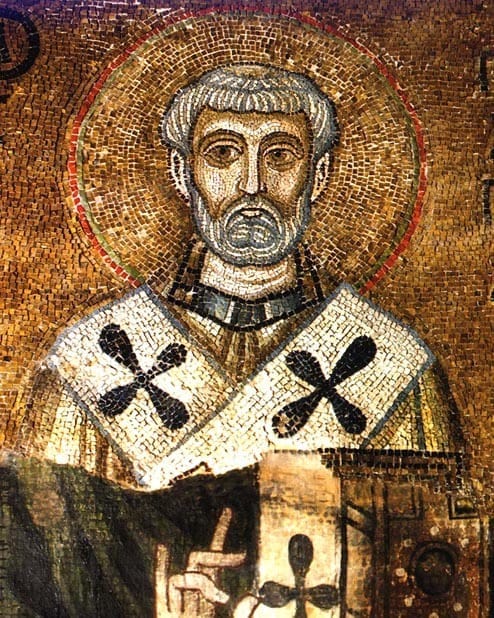 |
THE memory of St. Clement has been surrounded with a peculiar glory from the very beginning of the Roman Church. After the death of the Apostles, he seems to eclipse Linus and Cletus, although these preceded him in the Pontificate. We pass as it were naturally from Peter to Clement; and the East celebrates his memory with no less honour than the West. He was in truth the universal Pontiff, and his acts as well as his writings are renowned throughout the entire Church. This wide-spread reputation caused numbers of apocryphal writings to be attributed to him, which, however, it is easy to distinguish from his own. But is remarkable that all the falsifiers who have thought fit to put his name to their own works, or to invest stories concerning him, agree in declaring that he was of imperial descent.
With only one exception, all the documents which attest Clement’s intervention in the affairs of distant churches, have perished with time; but the one that remains, shows us in full action the monarchical power of the Bishop of Rome at the primitive epoch. The church of Corinth was disturbed with intestine quarrels, caused by jealousy against certain pastors. These divisions, the germ of which had appeared even in St. Paul’s time, had destroyed all peace, and were causing scandal to the very pagans. The Corinthiansat last felt the necessity of putting an end to a disorder, which might be prejudicial to the extension of the Christian faith; and for this purpose, it was requisite to seek assistance from outside. The Apostles had al departed this life, except St. John, who was still the light of the Church. It was no great distance from Corinth to Ephesus, where the Apostle resided; yet it was not to Ephesus but to Rom that the Church of Corinth turned. Clement examined the case referred to his judgment by that Church, and sent to Corinth five commissaries to represent the Apostolic See. They were bearers of a letter, which St. Irenaeus calls potentissimas litteras.,1 It was considered at the time so beautiful and so apostolic, that it was long read in many churches as a sort of continuation of the canonical Scriptures. Its tone is dignified but paternal, according to Saint Peter’s advice to pastors. There is nothing in it of a domineering spirit; but the grave and solemn language bespeaks the universal pastor, whom none can disobey without disobeying God himself. These words so solemn and so firm wrought the desired effect: peace was re‑established in the church of Corinth, and the messengers of the Roman Pontiff soon brought back the happy news. A century later, St. Dionysius, Bishop of Corinth, expressed to Pope St. Soter the gratitude still felt by his flock towards St. Clement for the service he had rendered.
Brought up in the school of the Apostles, Clement had retained their style and manner. These are visible in his two Letters to virgins, which are mentioned by St. Epiphanius and St. Jerome, and were found in the eighteenth century translated into Syriac, in a manuscript brought from Aleppo.2 As St. Cecilia reminded us yesterday, the principle of chastity being vowed to God was, from the very beginning, one of the bases of Christianity, and one of the most effectual means for the transformation of the world. Christ himself had praised the superior merit of this sacrifice; and St. Paul, comparing the two states of life, taught that the virgin is wholly taken up with our Lord, while the married woman, whatever her dignity, is divided.3 Clement had to develop this doctrine, and he did so in these two letters. Anticipating those great doctors of Christina virginity, St. Athanasius, St. Ambrose, St. Jerome, St. John Chrysostom, St. Augustin, he developed the teachings of St. Peter and St. Paul on this import subject. “He or she,” he says, “who aspires to this higher life, must lead like the Angels an existence all divine and heavenly. The virgin cuts herself off from the allurements of the senses; not only does she renounce the right to their even lawful use, but she aspires to that hope which God, who can never deceive, encourages by this promise, and which far surpasses the natural hope of posterity. In return for her generous sacrifice, her portion in heaven is the very happiness of the Angels.”
Thus spoke the Disciple chosen by St. Peter to set his hand to the task of renovating Rome. It needed no less than this strong doctrine, in order to combat the depraved manners of the Empire. Had Christianity been satisfied with inviting men to honour, as the Philosophers had done, its efforts would have been to no purpose. Stoicism, by exciting great pride, could bring some men even to despise death; but it was utterly powerless against sensuality, which we must own to have been the strongest auxiliary to the tyranny of the Caesars. The ideal of chastity, thrown into the midst of that dissolute society, could alone arrest the ignominious torrent that threatened to submerge all human dignity. Happily for the world, Christian morality succeeded in gaining ground; and, its maximums being followed up by striking examples, it at length forced itself upon the public notice. Roman corruption was amazed to hear of virginity being held in honour and practised by a great many followers of the new religion; and that at a time when the greatest privileges and the most terrible chastisements could scarcely keep to their duty the six vestals, upon whose fidelity depended the honour and the safety of the city. Vespasian and Titus were aware of the infringements upon their primary duty committed by these guardians of the Palladium; but they considered that the low level at which morals then stood, forbade them to inflict the ancient penalties upon these traitresses.
The time, however, was at hand, when the emperors, the senate, and all Rome, were to learn from the first Apology of St. Justin the marvels of purity concealed within that Babylon of iniquity. “Among us, in this city,” said the Apologist, “there are many men and women who have reached the age of sixty or seventy years; brought up from infancy under the law of Christ, they have persevered to this day in the state of virginity; and there is not a country where I could not point out many such.” Athenagorus, in a memorial presented a few years later to Marcus Aurelius, was able to say in like manner: “You will find among us a multitude of persons, both men and women, who have passed their life up to old age in the state of virginity, having no ambition but to unite themselves more intimately to God.”
Clement was predestined to the glory of martyrdom; he was banished to the Chersonesus on the Black Sea. The Acts, which relate the details of his sufferings, are very great antiquity; we shall not here enter into discussions concerning them. They tell us how Clement found in the peninsula a considerable number of Christians already transported there, and employed in working the rich and abundant marble quarries. The joy of these Christians on seeing clement is easily conceived; his zeal in propagating the faith in this far-off country, and the success of his apostolate, are no matter for surprise. The miracle of a fountain springing from the rock at Clement’s word, to quench the thirst of the Confessors, is a fact analogous to hundreds of others related in the most authentic Acts of the Saints. Lastly, the apparition of the mysterious Lamb upon the mountain, marking with his foot the spot whence the water was to flow, carries back the mind to the earliest Christian mosaics, on which may still be see the symbol of the lamb standing on a green hillock.4
In the ninth century St. Cyril, apostle of the Slavs, discovered near Cherson the precious remains of the martyr-pontiff. Clement was brought back to Rome; and the great church which had hitherto, according to St. Jerome, preserved the memory of his name5 henceforth possessed a still richer treasure. The very memory, however, was of great value for science no less than for piety: on the testimony of ancient traditions, this church was built on the site of St. Clement’s old home in the region of Monte Coelio, which we know from other sources to have been the quarter preferred by the Roman aristocracy of the period. Modern archeological investigations have discovered beneath the apse of the primitive basilica, and forming a sort of underground Confession or crypt, the rooms of a private dwelling, the style and ornaments of which are of the Flavian period.6
It is time to read the liturgical account of the great Pope of the first century.
The proper Antiphons of St. Clement's Office form a graceful collection, bearing evident signs of antiquity.
Antiphons
We take the following beautiful formulae from the Leonian Sacramentary.
Prayer
Preface
The Lord saith: My words which I have put in thy mouth, shall not depart out of thy mouth: and they gifts shall be accepted upon my alter.7 Thus does the Church open the chants of the great Sacrifice in thy honour, O holy Pontiff! It was indeed a joy and a supreme consolation to her, to experience that after the departure of the Apostles, the word did not fail; for all the fits left her by her divine Spouse at his Ascension into heaven, this was the most indispensable. In thy writings, the word continued to traverse the world, authoritative and respected, directing, pacifying, sanctifying the people, as fully and as surely as in the days of the Apostles or of our Lord himself. Clear and manifest, thanks to thee, was the proof that Jesus, according to this promise, remains with his disciples till the end of the world. Be thou blessed for having thus, in the earliest times, consoled our Mother the Church.
Thou didst understand, O Clement, that the great apostolic work, the diffusion of the Gospel among all nations, was not to be interrupted by the departure of the first labourers. Thou didst cause death and darkness to retreat farther and farther. All nations owe thee a deep debt of gratitude; but especially the French: for thou didst send thy messengers to Paris and its sister cities, crying in thy name: Rise thou that sleepest, and arise from the dead; and Christ shall enlighten thee.8
But the labours of an apostolate attacked in every land by the prince of this world, and the cares of universal government, did not exhaust the zeal that fired thy apostolic soul. Be thou blessed for having reserved thy special teaching and solicitude for the best-loved portion of our Lord’s flock, for them that follow the Lamb on the mountain, where thou didst see him, and whithersoever he goeth. Through thy prayers, may the imitators of Flavia Domitilla increase in number and still more in merit. May every Christian learn from the lesson of thy life, that the nobility of this world is nothing compared with that which is won by the love of Christ. May the world, and its capital, once given to God by the Apostles and the Roman patricians, become once more his undisputed kingdom.
- Contra haereses, iii. 3. ↩︎
- Although modern critics have questioned the authenticity of the text believed by others to be that of St. Clement to virgins, the fact that the holy Pope wrote in favour of virginity still remains, upheld by the concordant testimonies of St. Epiphanius (H. xxx, 15), and St. Jerome (contra Jovinian. 1, 12). ↩︎
- I Cor. vii. ↩︎
- Dom Gueranger, ubi supra. ↩︎
- Hieron. De viris illustribus, xv. ↩︎
- Mullooly, St. Clement and his basilica; de Rossi, Bullet. 1863, 1870 etc. ↩︎
- Introit of the feast, from Isaias. ↩︎
- Eph. v. 14. ↩︎
November 23 (the Same Day): St. Felicitas, Martyr
On the 10th July we honoured St. Felicitas, mother of the Martyrs, giving a second and heavenly birth to her seven sons. But her own recompense was delayed for four long months. The Church has inscribed her name on the sacred diptychs; let us, then, again offer her our prayers and praises on this day, whereon the sword at length fulfilled her desires, and in justification of her name, restored her to her sons in eternal felicity.
Antiphon
et laudent eam in portis opera ejus.℣. Diffusa est gratia in labiis tuis.℟. Propterea benedixit te Deus in aeternum.
and let her works praise her in the gates.℣. Grace is spread abroad in thy lips.℟. Therefore hath God blessed thee forever.
Prayer
| Previous November 22: St. Cecilia, Virgin and Martyr | Next November 23: St. Clement I, Pope and Martyr |