Daily reading
Semidouble · Movable from Advent · Temporal
December 9, 2025
From Dom Guéranger’s The Liturgical Year.
Tuesday of the Second Week of Advent
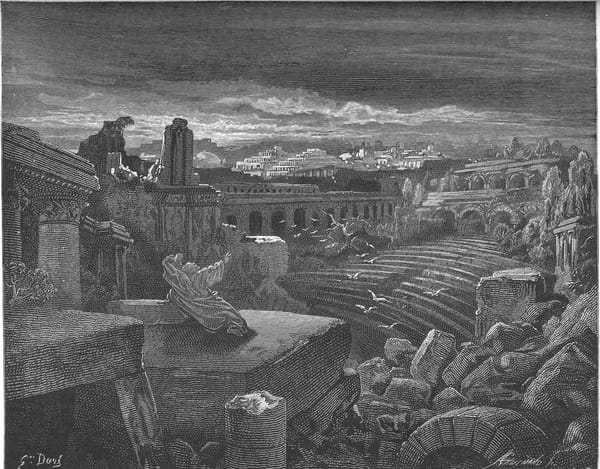
Cap. xiv.Prope est ut veniat tempus ejus, et dies ejus non elongabuntur. Miserebitur enim Dominus Jacob, et eliget adhuc de Israel, et requiescere eos faciet super humum suam: adjungetur advena ad eos, et adhærebit domui Jacob. Et tenebunt eos populi, et adducent eos in locum suum: et possidebit eos domus Israel super terram Domini in servos et ancillas: et erunt capientes eos qui se ceperant, et subjicient exactores suos. Et erit in die illa, cum requiem dederit tibi Deus a labore tuo et a concussione tua, et a servitute dura, qua ante servisti: sumes parabolam istam contra regem Babylonis, et dices: Quomodo cessavit exactor, quievit tributum? Contrivit Dominus baculum impiorum, virgam dominantium, cædentem populos in indignatione, plaga insanabili, subjicientem in furore Gentes, persequentem crudeliter. Quomodo cecidisti de cœlo, Lucifer, qui mane oriebaris? corruisti in terrain, qui vulnerabas gentes: qui dicebas in corde tuo: In cœlum conscendam; super astra Dei exaltabo solium meum, sedebo in monte testamenti, in lateribus aquilonis: ascendam super altitudinem nubium, similis ero Altissimo. Verumtamen ad infernum detraheris in profundum laci.
Ch. xiv.Her time is near at hand, and her days shall not bo prolonged. For the Lord will have mercy on Jacob, and will yet choose out of Israel, and will make them rest upon their own ground: and the stranger shall bo joined with them, and shall adhere to the house of Jacob. And the peoplo shall take them, and bring them into their place: and the house of Israel shall possess them in the land of the Lord for servants and handmaids: and they shall make them captives that had taken them, and shall subdue their oppressors. And it shall come to pass in that day, that when God shall give thee rest from thy labour, and from thy vexation, and from the hard bondage, wherewith thou didst serve before, thou shalt take up this parable against the king of Babylon, and shalt say: How is the oppressor come to nothing? the tribute hath ceased? The Lord hath broken the staff of the wicked, the rod of the rulers, that struck the people in wrath with an incurable wound, that brought nations under in fury, that persecuted in a cruel manner. How art thou fallen from heaven, O Lucifer, who didst rise in the morning? how art thou fallen to the earth, that didst wound the nations? And thou saidst in thy heart: I will ascend into heaven, I will exalt my throne above the stars of God, I will sit in the mountain of the covenant, in the sides of the north: I will ascend above the height of the clouds, I will be like the Most High. But yet thou shalt be brought down to hell, into the depth of the pit.
Thy ruin, O Lucifer, is irreparable! Thou refusedst to humble thyself before God, and thou wast cast into hell. Thy pride then sought a compensation for this thy deep humiliation, and thou causedst the ruin of the human race, out of hatred for God and His creatures. Thou didst succeed in inspiring him, who was formed out of dust, with that same pride which had caused thine own destruction. By thee sin came into this world, and by sin death: the human race seemed now a victim which never could escape thy vengeance. Forced to give up thy hopes of a heavenly royalty, thou aimedst at reigning in hell and destroying the creatures of God as they came from His creating love. But again thou art foiled and conquered. Thy reign was in pride; pride alone could form thy court and give thee subjects; now, see how the sovereign Lord of all things uproots thy kingdom: He Himself comes to teach His creatures humility; and He teaches it, not by laws given with awful majesty, as once on Sinai, but by Himself meekly practising that heavenly humility, which alone can raise up them that had fallen by pride. Tremble, proud spirit, thy sceptre is to be broken!
In thy haughty wisdom, thou disdainest this humble and lowly Virgin of Nazareth, who holds within herself, in adoring silence, the mystery of thy ruin and our salvation. The Child whom she carries in her womb, and who is so soon to be born, has long since been the object of thy contempt. Know, then, that God does not disdain this unborn Child, for this Child is also God! And a single act of adoration and devotedness to His Father, which He is making in the womb of Mary, gives more glory to the Divinity than all thy pride could rob it of, even were thy pride to increase for eternity. Henceforth, men, taught by the lessons of a God the immense power of humility, will have recourse to it as their great remedy. Instead of exalting themselves, as thou didst, by a mad and guilty pride, they will humble themselves with love and pleasure: the lower they humble themselves, the higher will God raise them: the poorer they own themselves, the richer will He make them. It is the glorious Virgin that tells us this in her exquisite canticle. May she be ever blessed, Mother so gentle and sweet to her children, and so terrible to thee, Lucifer! that writhest beneath her as she crushes and conquers thee.
Prose for the Time of Advent
(Composed in the eleventh century, and taken from the ancient Roman-French missals)
Prayer from the Gallican Sacramentary
(Mass for Christmas Eve)
December 9: The Second Day within the Octave of the Immaculate Conception
Let us consider how the immaculate Mary came into this world nine months after her conception, and how each day of her life gave man fresh reason to hope for the great promises made him by God. Let us admire the fulness of grace which God has given to her, and contemplate the respect and the love wherewith the holy angels look upon her as the future Mother of Him who is to be their Head and King, as well as ours. Let us follow this august Queen to the temple of Jerusalem, where she is presented by her parents, St. Joachim and St. Anne. When but three years of age, she was initiated into all the secrets of divine love. 'I always rose at midnight (thus she spoke of herself, in a revelation to St. Elizabeth of Hungary), and went before the altar of the temple, where I besought of God that I might observe all the commandments of His Law, and be enriched with those graces which would render me pleasing to His Majesty. I most earnestly prayed Him, that I might live to see that most holy virgin who was to bring forth into this world His own divine Son. I asked Him to grant me to enjoy the use of my eyes that I might see her, of my tongue that I might praise her, of my hands that I might serve her, of my feet that I might go her errands, and of my knees that I might adore the Son of God resting in her arms.’
Thou, O Mary, thou thyself wast this Virgin, who was worthy of the praises of men and angels! But God had not yet revealed it to thee, and thy heavenly humility forbade thy thinking that the immense dignity, which thou didst so deeply venerate, could ever be thine. Nay, thou wast the first and the only one of the daughters of Israel that had renounced all hope of ever being the Mother of the Messias. To be Mother of the Messias was, indeed, an ineffable honour; but it seemed as though it could only be received on the condition of having another spouse besides God, and this thou wouldst not suffer; thou wouldst be united to God alone, and thy vow of virginity which made thee so, was dearer to thee than the possibility of any privilege, which would rob thee of even a tittle of that. Thy marriage with St. Joseph, therefore, was a fresh lustre added to thy incomparable purity, whilst, in the designs of God, it provided thee with the protection which thy coming honours would soon require. We follow thee, O bride of Joseph, into thy house at Nazareth, where is to be spent thy humble life. There we behold thee diligent in all thy duties, the valiant woman of the Scriptures,1 the object of the admiration of God and of His angels. Suffer us, O Mary! to unite our Advent devotions with the prayers which thou didst offer up for the coming of the Messias; with the veneration wherewith thou didst think upon her that was to be His Mother; and with the inflamed desires wherewith thou didst long for the divine Saviour. We salute thee as the Virgin2 foretold by Isaias; it is thyself, O blessed Mother, that deservest the praise and love of the holy people and city, the redeemed of the Lord.3
Sequence (Taken from the Cluny Missal of 1523)
Genitricem gratiæ,
Salutis dulcedinem,
Fontem Sapientiæ.
Regina prudentiæ,
Virgo plena gratia,
Aurora laetitiae.
Castitatis lilium;
Jaspide splendidior,
Mœroris solatium.
Fidei principium.
Mater admirabilis,
Vas virtutis pretium.
Mater honestissima,
Odor nardi pretiosi,
Rosa suavissima.
Stella fulgentissima,
Generosa Mater, gaude,
Virginum sanctissima.
Regina consilii,
Peperisti florem florum,
Christum fontem gaudii.
Donatrix auxilii,
Memor esto miserorum,
In die judicii.
Charitatis regula,
Victoris stipendium,
Aromatum cellula.
Virgo sine macula,
Honor et imperium,
Per aeterna saecula.
the Mother of grace,
the sweetness of salvation,
the fount of Wisdom.
the Queen of prudence,
the Virgin full of grace,
the aurora of joy.
the lily of chastity;
she is brighter than the jasper,
our solace in sorrow.
source whence came the author of our faith,
Mother most admirable,
precious vessel of virtue.
Mother of the beautiful King;
thou art the perfume of precious ointment;
thou art the sweetest rose.
O brightest of stars,
O noblest of mothers,
O Virgin most holy!
and Queen of counsel,
didst bring forth the flower of flowers,
Jesus the source of our joy.
help of the needy,
be mindful of us sinners
on the day of judgement.
the model of charity,
the encouragement to victory,
the treasury of every fragrance.
immaculate Virgin,
be queenly honour
for ever.
Prayer from the Gregorian Sacramentary
(In the daily Prayers for Advent)
| Previous Monday of the Second Week of Advent | Next December 9: The Second Day within the Octave of the Immaculate Conception |