Daily reading
Temporal
January 11, 2026
From Dom Guéranger’s The Liturgical Year.
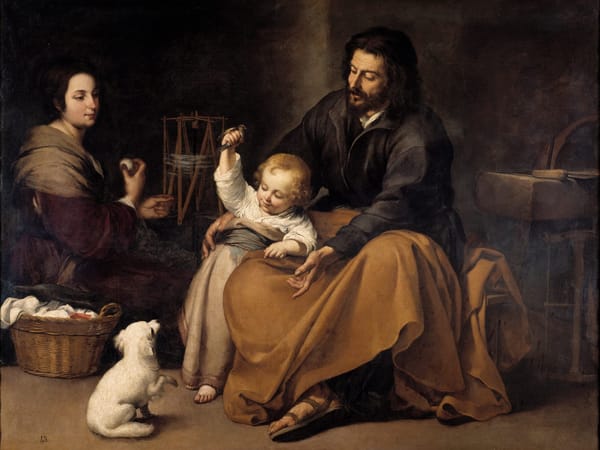
Sunday within the Octave of the Epiphany (or, the Feast of the Holy Family)
THIS Sunday has been chosen by the Church for the celebration of the Feast of the Holy Family; the liturgy of the day, as expressed in the Gospel, harmonizes well with the mystery of the new Feast, for it already carries us forward to the childhood of our Emmanuel and gives us those wonderful words which, after the example of his Blessed Mother, we must ever ponder within our hearts: ‘And he went down with them and came to Nazareth and was subject to them.’
The Feast of the Holy Family is of recent origin. In 1663 Barbara d'Hillehoust founded at Montreal the Association of the Holy Family; this devotion soon spread and in 1893 Leo XIII expressed his approval of a feast under this title and himself composed part of the Office. The Feast was welcomed by succeeding Pontiffs as an efficacious means for bringing home to the Christian people the example of the Holy Family at Nazareth, and by the restoration of the true spirit of family life, stemming, in some measure, the evils of present-day society. These motives led Benedict XV to insert the Feast in the universal Calendar, and from 1921 it has been fixed for this present Sunday.
Mass
The Introit recalls the joy that must have filled the cave of Bethlehem on that Christmas night; let us again rejoice with Mary and Joseph and sing the praises of the resting-place of the Lord of Hosts.
Introit
The Church prays in the Collect that the home life of every Christian family may be sanctified and perfected by the example of that of the Holy Family; this is her unceasing wish for her children.
Collect
Commemoration is made of the Sunday within the Octave:
Then of the Epiphany:
Epistle
Cap. III.Fratres, induite vos, sicut electi Dei, sancti, et dilecti, viscera misericordiæ, benignitatem, humilitatem, modestiam, patientiam, supportantes invicem, et donantes vobismetipsis, si quis adversus aliquem habet querelam: sicut et Dominus donavit vobis, ita et vos. Super omnia autem hæc, caritatem habete, quod est vinculum perfectionis: et pax Christi exsultet in cordibus vestris, in qua et vocati estis in uno corpore; et grati estote. Verbum Christi habitet in vobis abundanter, in omni sapientia, docentes, et commonentes vosmetipsos, psalmis, hymnis, et canticis spiritualibus, in gratia cantantes in cordibus vestris Deo. Omne quodcumque facitis, in verbo aut in opere, omnia in nomine Domini nostri Jesu Christi, gratias agentes Deo et Patri per Jesum Christum Dominum nostrum.
Ch. III.Brethren, put ye on therefore as the elect of God. holy, and beloved, the bowels of mercy, benignity, humility, modesty, patience; bearing with one another, and forgiving one another, if any have a complaint against another; even as the Lord hath forgiven you, so you also. But above all these things have charity, which is the bond of perfection; and let the peace of Christ rejoice in your hearts, wherein also you are called in one body; and be ye thankful. Let the word of Christ dwell in you abundantly in all wisdom, teaching and admonishing one another in psalms, hymns, and spiritual canticles, singing in grace in your hearts to God. All whatsoever you do in word, or in work, all things do ye in the name of the Lord Jesus Christ, giving thanks to God and the Father, through Jesus Christ our Lord.
If we would attain to charity, the bond of perfection which unites all Christians together in the one great family of God, we must pay heed to those virtues which the Epistle puts before us. We must be full of mercy, benignity, humility, modesty and patience; we must bear with one another and forgive one another, after the example of the Incarnate Word. Then the peace of Christ will dwell not only in our hearts, but in those around us, and our homes will truly become like that of Nazareth, where Mary and Joseph were ever singing in grace to the Lord God.
In the Gradual Holy Church again celebrates the praises of the House of the Lord; she proclaims the blessedness of those that obtain lasting fellowship in the heavenly home above; yet in the Alleluia verse she recalls the lowliness of the earthly home of our Emmanuel which made him truly a hidden King.
Gradual (Ps. xxiii)
Alleluia, alleluia. ℣. Isa. 45. Vere tu es Rex absconditus. Deus Isræl Salvator. Alleluia.
Alleluia, alleluia. ℣. Isa. 45. Verily thou art a hidden King, the God of Israel, the Saviour. Alleluia.
Gospel
Cap. II.Cum factus esset Jesus annorum duodecim, ascendentibus illis Jerosolymam secundum consuetudinem diei festi, consummatisque diebus, cum redirent, remansit puer Jesus in Jerusalem, et non cognoveruntparentes ejus. Existimantes autem ilium esse in comitatu, venerunt iter diei, et requirebant eum inter cognatos et notos. Et non invenientes, regressi sunt in Jerusalem, requirentes eum. Et factum est, post triduum invenerunt illum in tempio sedentem in medio doctorum, audientem illos, et interrogantem eos. Stupebant autem omnes, qui eum audiebant, super prudentia et responsis ejus. Et videntes admirati sunt. Et dixit mater ejus ad ilium: Fili, quid fecisti nobis sic? ecce pater tuus et ego dolentes quærebamus te. Et ait ad illos: Quid est quod me quærebatis? Nesciebatis quia in his quæ Patris mei sunt, oportet me esse? Et ipsi non intellexerunt verbum, quod locutus est ad eos. Et descendit cum eis, et venit Nazareth: et erat subditus illis. Et mater ejus conservabat omnia verba hæc in corde suo. Et Jesus proficiebat sapientià, et ætate, et gratia apud Deum et homines.
Ch. II.When Jesus was twelve years old, they went up to Jerusalem, according to the custom of the feast; and having fulfilled the days, when they returned, the Child Jesus remained in Jerusalem, and his parents knew it not. And thinking that he was in the company, they came a day’s journey, and sought him among their kinsfolk and acquaintance. And not finding him, they returned into Jerusalem, seeking him. And it came to pass, that after three days they found him in the temple, sitting in the midst of the doctors, hearing them, and asking them questions. And all that heard him were astonished at his wisdom and his answers. And seeing him, they wondered. And his Mother said to him: Son, why hast thou done so to us? Behold thy father and I have sought thee sorrowing. And he said to them: How is it that you sought me? Did you not know that I must be about my Father’s business? And they understood not the word that he spoke unto them. And he went down with them, and came to Nazareth, and was subject to them. And his Mother kept all these words in her heart. And Jesus advanced in wisdom, and age, and grace with God and men.
Thus, O Jesus! didst thou come down from heaven to teach us. The tender age of Childhood, which thou didst take upon thyself, is no hindrance to the ardour of thy desire that we should know the one only God, who made all things, and thee, his Son, whom he sent to us. When laid in the Crib, thou didst instruct the Shepherds by a mere look; when swathed in thy humble swaddling-clothes, and subjected to the voluntary silence thou hadst imposed on thyself, thou didst reveal to the Magi the light they sought in following the star. When twelve years old, thou explainest to the Doctors of Israel the Scriptures which bear testimony to thee. Thou gradually dispellest the shadows of the Law by thy presence and thy words. In order to fulfil the commands of thy heavenly Father, thou dost not hesitate to occasion sorrow to the heart of thy Mother, by thus going in quest of souls that need enlightening. Thy love of man will pierce that tender Heart of Mary with a still sharper sword, when she shall behold thee hanging on the Cross, and expiring in the midst of crudest pain. Blessed be thou, sweet Jesus, in these first Mysteries of thine Infancy, wherein thou already showest thyself devoted to us, and leavest the company of thy Blessed Mother for that of sinful men, who will one day conspire thy Death.
The Offertory takes us in thought to the Feast of the Purification; let us again offer ourselves to the Lord.
Offertory (Luke ii)
In the Secret the Church again prays that she may be strengthened in peace and grace; these gifts have been purchased for us by our Lord himself; it is through the Holy Mass that we can be more strongly established in them.
Secret
Commemoration of the Sunday
Commemoration of the Epiphany
The Preface is as on the Epiphany, p. 126.
The Communion recalls the subject of to-day's Gospel; let us never cease to meditate on the divine humility shown us in these words.
Communion (Luke ii)
If we have kept before our eyes the example of the holy Family, we may humbly trust that at the hour of our death we shall be helped and consoled and be found worthy to have fellowship with Christ in the eternal dwellings. Such is the last prayer of the Church, and may it be one we love to repeat and dwell on.
Postcommunion
Commemoration of the Sunday
Commemoration of the Epiphany
Vespers
Antiphons
The Psalms are from the Common of the Blessed Virgin Mary, and will be found on the Feast of the Purification, p. 488.
Little Chapter
(Luke ii)
Hymn
Et summa spes mortalium, Jesu,
O cui domestica
Arrisit orto caritas.
O sola quæ casto potes
Fovere Jesum pectore,
Cum lacte donans oscula.
Delecte custos Virginis,
Dulci patris quem nomine
Divina proies invocat.
Nati in salutem gentium,
Audite nos qui supplices
Vestras ad aras sistimus.
Rebus nitorem detrahit,
Nos hic manentes intimo
Ex corde vota fundimus.
Virtutis omnis gratia,
Hanc detur in domesticis
Referre posse moribus.
Qui natus es de Virgine,
Cum Patre, et almo Spiritu,
In sempiterna sæcula.
Sole hope of them that dwell on earth,
The purest love that ever graced
A home, did smile upon thy birth.
Was ever yet so rich in grace?
Didst nourish Christ upon thy knee
And fold him in a sweet embrace?
The Virgin with thy gentle might,
The Infant Jesus smiled on thee
And called thee father as by right.
Were born of David’s noble line,
O hear the humble prayers of all
To-day, who gather round your shrine.
And earth is veiled in shadows gray;
Yet hearts a-fire with joy and love
Still bid us linger on to pray.
Which held the earthly Trinity,
Be shed abroad upon the world
And bless the Christian family.
Immortal glory be to thee;
Praise to the Father infinite
And Holy Ghost eternally.
At the Magnificat
Collect as at Mass, p. 139.
Commemoration of the Epiphany
or—
The Collect as on p. 139.
Commemoration of the Sunday
The Collect as on p. 139.
MASS OF THE SUNDAY WITHIN THE OCTAVE OF THE EPIPHANY
(In some Churches, the Feast of the Holy Family is not observed on this day; the Mass will then be of the Sunday.)
It is the Kingship of the divine Infant that the Church again proclaims in the opening Canticle of the Mass for the Sunday within the Octave of the Epiphany. She sings the praises of her Emmanuel's Throne, and takes her part with the Angels who hymn the glory of Jesus' eternal Empire. Let us do the same, and adore the King of Ages, in his Epiphany.
Introit
The Collect is given on p. 139.
Epistle
Cap. XII.Fratres, obsecro vos per misericordiam Dei, ut exhibeatis corpora vestra hostiamviventem, sanctam, Deo placentem, rationabile obsequium vestrum. Et nolite conformari huic sæculo, sed reformamini in novitate sensus vestii: ut probetis quse sit voluntas Dei bona, et beneplacens, et perfecta. Dico enim per gratiam quæ data est mihi, omnibus qui sunt inter vos: Non plus sapere quam oportet sapere, sed sapere ad sobrietatem: et unicuique sicut Deus divisit mensuram fidei. Sicut enim in uno corpore multa membra habemus, omnia autem membra non eumdem actum habent: ita multi unum corpus sumus in Christo, singuli autem alter alterius membra: in Christo Jesu Domino nostro.
Ch. XII.Brethren, I beseech you, by the mercy of God, that you present your bodies a living sacrifice, holy, pleasing unto God, your reasonable service. And be not conformed to this world, but be reformed in the newness of your mind: that you may prove what is the good, and the acceptable, and the perfect will of God. For I say, by the grace that is given me, to all that are among you, not to be more wise than it behoveth to be wise, but to be wise unto sobriety, and according as God hath divided unto every one the measure of faith. For as in one body we have many members, but all the members have not the same office: so we, being many, are one body in Christ, and every one members of one another, in Jesus Christ our Lord.
The Apostle invites us to make our offering to the new-born King, after the example of the Magi; but the offering which this Lord of all things asks of us is not anything material or lifeless. He that is Life gives his whole self to us; let us, in return, present him our hearts, that is, a living sacrifice, holy, pleasing unto God; whose service may be reasonable, that is, whose obedience to the divine will may be accompanied by a formal intention of offering itself to its Creator. Here again, let us imitate the Magi, who went back another way into their own country—let us not adopt the ideas of this world, for the world is the covert enemy of our beloved King. Let us reform our worldly prudence according to the divine wisdom of Him, who may well be our guide, seeing he is the Eternal Wisdom of the Father. Let us understand, that no man can be wise without Faith, which reveals to us that we must all be united by love, so as to form one body in Christ, partaking of his life, his wisdom, his light, and his kingly character.
In the chant which follows the Epistle, the Church returns to her praise of the ineffable wonders of a God with us: Justice and righteousness have come down from heaven, to take up their abode on our mountains and hills.
Gradual
Alleluia, alleluia. ℣. Jubilate Deo omnis terra: servite Domino in lætitia. Alleluia.
Alleluia, alleluia. ℣. Sing joyfully to the Lord, ail the earth: serve ye the Lord with gladness. Alleluia.
The Gospel is the one for the Feast of the Holy Family, p. 141.
During the Offertory, the Church resumes her canticles of joy; the presence of the Divine Infant fills her with joy.
Offertory
The Secret is given on p. 143.
Whilst distributing the Bread of Life come down from heaven, the Church repeats the words addressed by Mary to her Son: Why hast thou done so to us? I and thy father have sought thee. The Good Shepherd, who feeds his Sheep with his own Flesh, replies, that he must needs do the will of his Father who is in heaven. He is come to be our Life, our light, and our food: he, therefore, leaves everything in order to give himself to us. But, whilst the Doctors in the Temple only saw and heard him, we, in this Living Bread, possess him and are united with him in sweetest union.
Communion
The Postcommunion is given on p. 144.
January 11: The Sixth Day within the Octave of the Epiphany
THE Magi were not satisfied with paying their adorations to the great King whom Mary presented to them. After the example of the Queen of Saba, who paid her homage to the Prince of Peace in the person of King Solomon, these three Eastern Kings opened their treasures and presented their offerings to Jesus. Our Emmanuel graciously accepted these mystic gifts, and suffered them not to leave him until he had loaded them with gifts infinitely more precious than those he had vouchsafed to receive. The Magi had given him of the riches which this earth produces; Jesus repays them with heavenly gifts. He strengthened in their hearts the virtues of faith, hope, and charity; he enriched, in their persons, the Church of which they were the representatives; and the words of the Canticle of Mary were fulfilled in them: He hath filled the hungry with good things, and the rich he hath sent empty away,1 for the Synagogue refused to follow them in their search after the King of the Jews.
But let us consider the gifts made by the Magi, and let us, together with the Church and the Holy Fathers, acknowledge the Mysteries expressed by them. The gifts were three in number, in order to honour the sacred number of the Persons in the divine Essence, as likewise to express the triple character of Emmanuel. He had come that he might be King over the whole world; it was fitting that men should offer gold to him, for it is the emblem of sovereign power. He had come to be High Priest, and, by his mediation, reconcile earth to heaven; incense, then, was an appropriate gift, for the Priest uses it when he offers sacrifice. But thirdly, it was only by his own death that he was to obtain possession of the throne which was prepared for his glorified Human Nature, and the perpetual Sacrifice of the Divine Lamb was to be inaugurated by this same his Death; the gift of Myrrh was expressive of the Death and Burial of an immortal Victim. The Holy Ghost, who inspired the Prophets, had guided the Magi in their selection of these three gifts. Let us listen to St Leo, who, speaking of this Mystery, says with his usual eloquence:
O admirable Faith, which leads to Knowledge and perfect Knowledge, and which was not taught in the school of earthly wisdom, but was enlightened by the Holy Ghost himself! For whence had they learnt the supernatural beauty of their three Gifts? they that had come straight from their own country, and had not as yet seen Jesus, nor beheld in his infant Face the Light which directed them in the choice of their offerings? Whilst the star met the gaze of the bodily eye, their hearts were instructed by a stronger light—the ray of Truth. Before setting out on the fatiguing journey they knew him, to whom were due, by Gold, the honours of a King; by Incense, the worship of God; by Myrrh, the faith in his Mortal Nature.2
But these three gifts, which so sublimely express the three characters of the Man-God, are fraught with instruction for us. They signify three great virtues, which the Divine Infant found in the souls of the Magi, and to which he added increase by his grace. Gold signifies charity, which unites us to God; Frankincense prayer, which brings God into man's heart; and Myrrh self-abnegation, suffering and mortification, whereby we are delivered from the slavery of corrupt nature. Find a heart that loves God, that raises herself up to him by prayer, that understands and relishes the power of the cross—and you have in that heart the worthiest offering which can be made to God, and one which he always accepts.
We, too, O Jesus! offer thee our treasure and our gifts. We confess thee to be God and Priest and Man. We beseech thee to accept the desire we have of corresponding to the love thou showest us by giving thee our love in return; we love thee, dear Saviour! do thou increase our love. Receive also the gift of our Prayer, for though of itself it be tepid and poor, yet it is pleasing to thee because united with the prayer of thy Church: teach us how to make it worthy of thee and how to give it the power of obtaining what thou desirest to grant: form within us the gift of prayer, that it may unceasingly ascend up like sweet Incense in thy sight. And lastly, receive the homage of our contrite and humble hearts, and the resolution we have formed of restraining and purifying our senses by mortification and penance.
The sublime Mysteries which we are celebrating during this holy season have taught us the greatness of our own misery, and the immensity of thy love for us, and we feel more than ever the obligation we are under of fleeing from the world and its concupiscences, and of uniting ourselves to thee. The Star shall not have shone upon us in vain: it has brought us to thee, dear King of Bethlehem! and thou shalt be King of our hearts. What have we that we prize and hold dear, which we can hesitate to give thee in return for the sweet infinite treasure of thyself, which thou hast given to us?
Dear Mother of our Jesus! we put these our offerings into thy hands. The gifts of the Magi were made through thee, and they were pleasing to thy Son; thou must present ours to him, and he will be pleased with them, in spite of their poverty. Our love is deficient; fill up its measure by uniting it with thine own immense love. Second our prayer by thy maternal intercession. Encourage us in our warfare against the world and the flesh. Make sure our perseverance, by obtaining for us the grace of a continual remembrance of the sweet Mysteries which we are now celebrating; pray for us that, after thine own example, we may keep all these things in our hearts. That must be a hard and depraved heart which could offend Jesus in Bethlehem; or refuse him anything now that he is seated on thy lap, waiting for our offering! O Mary! keep us from forgetting that we are the children of the Magi, and that Bethlehem is ever open to receive us.
Let us borrow the language of the ancient Liturgies, in order to give expression to the sentiments awakened in us by all these ineffable Mysteries. Let us begin with this Hymn on the Nativity of our Lord left us by the saintly Bishop of Poitiers, Venantius Fortunatus.
Hymn
Venisse vitæ præmium;
Post hostis asperi jugum
Apparuit redemptio.
Esaias quæ cecinit
Completa sunt in Virgine:
Annuntiavit Angelus,
Sanctus replevit Spiritus.
Maria ventre concipit
Verbi fidelis semine:
Quem totus orbis non capit
Portant puellæ viscera.
Radix Jesse floruit,
Et Virga fructum edidit;
Fœcunda partum protulit,
Et Virgo mater permanet.
Præsepe poni pertulit
Qui lucis auctor exstitit,
Cum Patre cœlos condidit,
Sub Matre pannos induit.
Legem dedit qui sæculo,
Cujus decem præcepta sunt,
Dignando factus est homo
Sub Legis esse vinculo.
Adam novus hoc abluit:
Tumens quod ille dejicit
Humillimus hic erigit.
Jam nata lux est et salus,
Fugata nox et victa mors,
Venite gentes, credite,
Deum Maria protulit.
Amen.
that he is come who is the reward of life.
After mankind had carried the yoke of its cruel enemy,
our Redemption appeared.
has been fulfilled in the Virgin;
an Angel announced the mystery to her,
and the Holy Ghost filled her by his power.
for she believed in the word that was spoken to her:
the womb of a youthful maid
holds him whom the whole earth cannot contain.
and the Branch has borne its fruit:
Mary has given birth to Jesus,
and the Mother is still the spotless Virgin.
suffers himself to be laid in a manger;
he that, with the Father, made the heavens,
is now wrapt by his Mother's hand in swaddling-clothes.
the ten commandments of the law,
deigns, by becoming Man,
to be under the bond of the law.
that the new Adam has purified;
and what the first cast down by his pride,
the second raised up again by his humility.
night is driven away, and death is vanquished:
oh! come, all ye people, believe;
God is born of Mary.
The Mozarabic Breviary contains the following eloquent prayer.
Prayer
We take the following Sequence from the Paris Missal of 1584.
Sequence
Nato Regi gloria,
Per quem terræ redditur
In cœlo concordia.
Jure dies colitur
Christi natalitia,
Quo nascente, nascitur
Novæ legis gratia.
Mediator nobis datus
In salutis præmium,
Non nature, sed reatus
Effugit consortium.
Non amittit claritatem
Stella fundens radium,
Nec Maria castitatem,
Pariendo Filium.
Quis de monte lapis cæsus
Sine manu, nisi Jesus
Qui de Regum linea,
Sine carnis opere,
De carne puerperæ
Processit virginea?
Solitudo gaudeat,
Et desertum floreat:
Virga Jesse floruit.
Radix virgam, virga florem,
Virgo profert Salvatorem,
Sicut Lex præcinuit.
Radix David typum gessit:
Virga, matris quæ processit
Ex regali semine.
Flos est Puer nobis natus,
Jure flori comparatus
Præ mira dulcedine.
In præsepe reclinatur,
Cujus ortus celebratur
Cœlesti præconio.
Cœli cives jubilant,
Dum pastores vigilant
Sub noctis silentio.
Cuncta laudes intonant
Super partum Virginis.
Lex et psalmi consonant
Prophetarum paginis.
Angelorum et pastorum,
Stellæ simul et Magorum
Concordant indicia.
Reges currunt Orientis
Ad præsepe vagientis,
Gentium primordia.
Jesu puer immortalis,
Ex terreno temporalis,
Nos ab hujus vitæ malis
Tu potenter erue.
Tu, post vitam hunc mortalem,
Sive mortem hanc vitalem,
Vitam nobis immortalem
Clementer restitue.
Glory be to the newborn King,
by whom peace is restored
between heaven and earth.
the Birthday of Jesus as a feast;
for by his birth,
the grace of the new law is born.
to be the reward of our salvation:
he takes upon himself our nature,
refusing only to be like us in our sin.
by giving forth its ray;
so neither does Mary suffer the loss of her purity
by giving birth to her Son.
and not by the hand of man, if not our Jesus,
who was of the line of kings.
of his Virgin-Mother,
after she had virginaily conceived?
and the desert bloom;
—the rod of Jesse has flowered.
the Branch its Flower,
and the Virgin our Saviour.
the Branch was the type of Mary,
who was born of a kingly race.
well likened to a flower,
by reason of his wonderful sweetness.
by the heavenly spirits,
is laid in a manger!
whilst the Shepherds are keeping
watch in the still night.
for that the Virgin has given birth to her Son.
with the writings of the Prophets.
the Star and the Magi,
all agree in proclaiming the Birth.
to the Crib of the Babe
—they are the first-fruits of the Gentiles.
born in time because thou wouldst assume our nature,
snatch us, by thy power,
from this life's woes.
or rather this living death,
mercifully restore unto us
that life which is immortal.
Hymn
Magna stella nobis apparuit, reliquis multo splendidior stellis, cujus lumine nostra terra est inflammata, et quod Rex ortus sit, nobis annuntiavit.
Nollem, vos quæso, loquamini hæc in regione nostra, ne sentientes Reges terræ, machinentur sua invidia adversus puerum.
Ne timeas, Virgo, quia omnia diademata solvet Filius tuus, eaque pessumdabit, nec sua invidia nocumentum inferre illi valebunt. Herodem timeo, lupum pollutum, ne me perturbet, gladium stringat, quo præcidat dulcem botrum adhuc immaturum.
Herodem ne timeas: per Filium enim tuum subvertetur ejus thronus, et statim atque regnabit, destruetur, et ejus diadema decidet.
Torrens sanguinis est Hierusalem, in eaque optimi quique cadunt: quare si hoc præsenserit, machinabitur in ilium; ideoque secreto loquamini, precor, et ne tumultuetis.
Torrentes omnes, et lanceæ etiam per manus Filii tui sedabuntur, et Hierosolymæ obstupescet gladius, et nisi voluerit, non cadet.
Scribæ et sacerdotes Hierusalem, qui sanguinem subdole effundere solent, excitabunt forte lethale litigium adversum me, et adversum puerum: Magi, quæso, silete.
Scribæ et sacerdotes nequáquam valebunt sua invidia Filio tuo nocere; et per ipsum solvetur eorum sacerdotium, et solemnitates eorum cessabunt.
Angelus apparuit mihi, quando concepi puerum; quod Rex sit Filius meus, et quod ab alto sit ejus diadema, et non solvetur, ipse quoque explicavit mihi ut et vobis.
Angelus igitur, quem dicis, ipse venit sub specie sideris et apparuit nobis, atque annuntiavit quod Puer major sit et splendidior stellis.
Jam nos prædocuit stella, nativitatem ejus extra ordinem esse naturæ, et super omnia esse Filium tuum, eumdemque etiam Filium esse Dei.
Pacem referte in terram vestram; pax gliscat in finibus vestris: veraces veritatis nuntii habeamini in toto itinere vestro.
Pax Filii tui nos reducat incolumes in regionem nostram, ut duxit; et cum imperium ejus mundo manifestabitur, invisat terram nostram, et benedicat illi.
Gaudeat Persis vestro nuntio, exsultet Assyria vestro reditu; et quando regnum Filii mei manifestabitur, in regione vestra suum collocabit vexillum.
Die XV Januarii
Cum te tamquam rosam redolentem punis ille in convallibus reperisset, o inviolata; in medio tui habitavit, humanum genus suavissimo replens odore.
Dirige motus animæ meæ, o purissima, ad divina illius præcepta qui ex utero tuo coruscavit, atque a tempestate scandalorum hujus vitæ eripe me intercessionibus tuis.
Omnium Dominum Emmanuel sine viri opera peperisti, manens Virgo post partum, o Virgo mater. Eumdem incessanter exora ut ab hostium invasionibus liberentur illi qui confugiunt sub protectionem tuam.
Verbum quod æquale est in operatione et in throno Genitori suo, ex visceribus tuis corporasti, o casta; atque inde propter ineffabilem misericordiam suam, totam naturam nostram assumpsit.
Prolem tuam laudamus, o benedicta, per quam ab antiqua damnatione redempti sumus; te vero beatificamus, o divina felicitate cumulatissima; quam solam dilexit ille qui est benedictus ac supergloriosus.
Fluvium perennem nobis effundis recurrentibus ad te, o casta; cujus uberem gratiam delibantes, partum tuum laudamus, o inviolatissima, et superexaltamus in omnia sæcula.
Lucis habitacuium venter tuus factus est, per quam sedentes in tenebris viderunt lumen: unde te incessabili voce semper laudamus, o Dei Mater; et cum affectu veneramur te spem animarum nostrarum.
When the God of purity found thee, O spotless Virgin, in the lowly valleys as the Rose that breathes forth sweet fragrance, he dwelt within thee, and filled the human race with the most delicious perfume.
Turn the faculties of my soul, O most pure one, to the divine commandments of him who shone forth from thy womb, and by thy prayers deliver me from the storm of this life's scandals.
Thou didst virginally bring forth our Emmanuel, the Lord of all, O Virgin-Mother, and didst remain a Virgin after thy delivery. Pray to him unceasingly, that they who fly to thy protection may be freed from the attacks of their enemies.
O chaste Virgin! thou didst, from thy womb, clothe with a human body him who is the Word equal to his Father in works and in majesty; from thee, by reason of his unspeakable mercy, did he assume our entire human nature.
O Blessed Mother! we praise thy Son, who redeemed us from the old curse. We bless thee, O blessed by God above all women, who art loved above all by him who is blessed and glorious above all.
Thou pourest forth an everflowing stream on us who have recourse to thee, O Virgin-Mother! Refreshed by its plentiful grace, we praise thy Son, O purest Maid, and we extol him above all for ever.
Thy womb was made the dwelling-place of Light, whereby they saw the light that sat in darkness. Therefore do we ever praise thee with our unceasing hymns, O Mother of God, and devoutly venerate thee, the hope of our hearts.
January 11 (the Same Day): St. Hyginus, Pope and Martyr
The Church makes commemoration, to-day, of the holy Pope and Martyr Hyginus. He held the Apostolic Chair under the reign of Antoninus, and closed his four years’ Pontificate by martyrdom. We have no history of his life, but we venerate in him one of the links of that grand chain of Pontiffs which unites us, by St Peter, to our Lord Jesus Christ. The whole weight of the government of the Church was upon his shoulders, and he was courageous and faithful in the discharge of his duties; his reign was during the age of Persecution, when to be Pope was to be a victim of tortures and death. As we have already said, he soon won his Palm, and was associated in heaven with the three Magi, who had, before leaving this world, preached the Gospel in Greece, the country of our Saint. Let us ask him to bless the offerings we are making to the Divine Infant of Bethlehem, and to pray for us, that we may obey this sweet King, who asks us to give him not our blood by martyrdom, but our hearts by charity.
Let us honour the memory of this holy Pope, and say with the Church:
| Previous January 10: The Fifth Day within the Octave of the Epiphany | Next January 11: The Sixth Day within the Octave of the Epiphany |