Daily reading
Movable from Easter · Temporal
February 26, 2026
From Dom Guéranger’s The Liturgical Year.
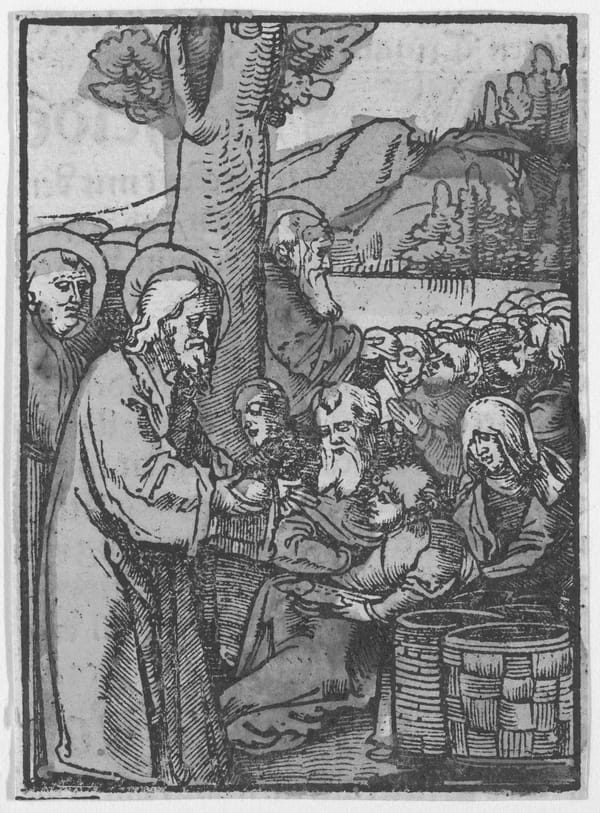
Thursday of the First Week of Lent
To-day’s Station is in the church of St. Laurence in Paneperna, one of those which the piety of the faithful of Rome has built in honour of this the most celebrated of the martyrs of the holy city.
Collect
Epistle
Cap. xviii.In diebus illis: Factus est eermo Domini ad me, dicens: Quid est quod inter os parabolam vertitis in proverbium istud in terra Israël, dicentes: Patres comederunt uvam acerbam, et dentes filiorum obstupescunt? Vivo ego, dicit Dominus Deus, si erit ultra vobis parabola hæc in proverbium in Israël. Ecce omnes animæ mese sunt; ut anima patris, ita et anima filii mea est: anima quæ peccaverit, ipsa morietur. Et vir, si fuerit justus, et fecerit judicium et justitiam, in montibus non comederit, et oculos suos non leva verit ad idola domus Israël: et uxorem proximi sui non violaverit, et ad mulierem menstruatam non accesserit: et hominem non contrista verit: pignus debitori reddiderit: per vim nihil rapuerit: panem suum esurienti dederit, et nudum operuerit vestimento: ad usuram non commodaverit, et amplius non acceperit: ab iniquitate averterit ma· num suam, et judicium verum fecerit inter virum et virum: in præceptis meis ambulaverit, et judicia mea custodierit, ut faciat veritatem: hic justus est, vita vivet, ait Dominus omnipotens.
Ch. xviii.In those days: The word of the Lord came to me, saying: What is the meaning that you use among you this parable as a proverb in the land of Israel, saying: The fathers have eaten sour grapes, and the teeth of the children are set on edge? As I live, saith the Lord God, this parable shall be no more to you a proverb in Israel. Behold all souls are mine; as the soul of the father, so also the soul of the son is mine; the soul that sinneth, the same shall die. And if a man be just, and do judgment and justice, and hath not eaten upon the mountains, nor lifted up his eyes to the idols of the house of Israel, and hath not defiled his neighbour’s wife, nor come near to a men etruous woman; and hath not wronged any man, but hath restored the pledge to the debtor, hath taken nothing away by violence, hath given his bread to the hungry, and hath covered the naked with a garment, hath not lent upon usury, nor taken any increase, hath withdrawn his hand from iniquity, and hath executed true judgment between man and man, hath walked in my commandments, and kept my judgments, to do truth; he is just, he shall surely live, saith the Lord God.
These words of the prophet declare to us the wonderful mercy of God towards the Gentiles, who are preparing to pass from darkness to light by the grace of holy Baptism. The Jews had a favourite proverb: The fathers have eaten sour grapes, and the teeth of the children are set on edge: but God assures us, even in the old Testament, that sins are personal, that is, they belong to him who commits them, and to no one else; so that the son of a wicked father, if he walk in the path of righteousness, shall find mercy and salvation. The apostles and their disciples preached the Gospel to the Gentiles, and the Gentiles were obedient to the call; they were the children of idolaters, and yet they were seen flocking to the font of regeneration, abjuring the evil ways of their fathers, and becoming the objects of God’s love. The same happened in the conversion of the barbarians of the west; it is happening now in our own times among infidel nations; and many will be the catechumens who, at the coming Easter, will receive the sacrament of Baptism.
God frequently visits children with temporal punishments, because of the sins of their parents; it is a providence, which acts as a check upon men, deterring them from evil out of fear of bringing misery upon their families. But in the moral order, each individual is treated according to his own merits or demerits; and as God does not impute to a virtuous son the iniquities of the father, so neither do the virtues of the father cover the son’s iniquity. Philip the Fair was the grandson of St. Louis; and Wulfere, the wicked king of Mercia, was father of the two saints, Wulfhad and Ruffin. Similar contrasts are often found in families, for, as the Scripture says,’God hath left man in the hand of his own counsel…. Before man is life and death, good and evil; that which he shall choose, shall be given unto him.’1 And yet, such is the mercy of the Lord our God, that, if a man have made a bad choice, but afterwards cast away from himself the evil, and turn to what is good, he shall surely live, and his repentance shall restore to him what he had forfeited.
Gospel
Cap. XV.In illo tempore: egressus Jesus, secessit in partes Tyri et Sidonis. Et ecce mulier Chananæa a finibus illis egressa clamavit, dicens ei: Miserere mei, Domine, fill David: filia mea male a dæmonio vexatur. Qui non respondit ei verbum. Et accedentes discipuli ejus rogabant eum, dicentes: Dimitte eam, quia clamat post nos. Ipse autem responded, ait: Non sum missus nisi ad oves quæ perierunt domus Israël. At ilia venit, et adoravit eum, dicens: Domine, adjuva me. Qui responded, ait: Non est bonum sumere panem filiorum et mittere canibus. At ilia dixit: Etiam, Domine; nam et catelli edunt de micis quæ cadunt de mensa dominorum suorum. Tunc respondens Jesus, ait illi: O mulier, magna est tides tua: fiat tibi sicut vis. Et sanata est filia ejus ex illa hora.
Ch. XV.At that time: Jesus went from thence, and retired into the coasts of Tyre and Sidon. And behold a woman of Canaan who came out of those coasts, crying out, said to him: Have mercy on me, O Lord, thou Son of David: my daughter is grievously troubled by a devil. Who answered her not a word. And his disciples came and besought him, saying: Send her away, for she crieth after us. And he answering, said: I was not sent but to the sheep that are lost of the house of Israel. But she came, and adored him, saying: Lord, help me. Who answering said: It is not good to take the bread of the children, and to cast it to the dogs. But she said: Yea, Lord; for the whelps also eat of the crumbs that fall from the table of their masters. Then Jesus answering, said to her: O woman, great is thy faith: be it done to thee as thou wilt. And her daughter was cured from that hour.
Jesus is in admiration at the woman’s faith: He praises her for it; He would have us imitate her. And yet she was a Gentile; probably, she had been an idolatress; but maternal love induces her to come to Jesus, and throw herself at His feet. She obtains from Him her daughter’s cure, and, undoubtedly, her own conversion. It is an illustration of the consoling promise we have just been hearing from the prophet Ezechiel: there are chosen souls in every race, even in that cursed one of Canaan. Our Lord treats this woman with apparent harshness, although He intends to grant her what she asks: He would have her faith gain strength by being tried, and thus deserve to be rewarded. Let us pray, during these days of mercy, with persevering confidence. The daughter of this Canaanite woman was troubled by a devil, that is, her body was possessed by an evil spirit. How many are there, everywhere in the Church, whose souls are a prey to satan, by being in the state of mortal sin! Are they conscious of their misery? Do they beg of our Lord to have mercy on them, and deliver them? And if, at first, He defer their pardon, do they humble themselves like this woman of our Gospel, who confesses that she quite deserves this contempt wherewith Jesus seems to treat her? Lost sheep of the house of Israel! make good use of this holy season, when your good Shepherd is so nigh unto you. Before forty days have elapsed, He will be put to death, and the people that shall deny Him shall not be His.2 Before forty days are over, we shall be celebrating the anniversary of this great sacrifice; and the sinner that shall not be converted from the error of his ways, and shall not have come to Jesus, as did this humble woman of Canaan, will deserve to be for ever rejected. Let us, then, be earnest in the great work of our conversion, and fit ourselves for pardon. Such is the generosity of our heavenly Father, that if we desire, with all the sincerity of our soul, to be once more His faithful children, He will give us more than the crumbs which fall from His table; He will give us Jesus, the Bread of life; and oh, what a pledge of reconciliation is that!
Let us read this admirable preface, taken from the Mozarabic missal. It shows us how Jesus is the Bread of life, which supports us during our fast. It will not be the less acceptable, because it is almost word for word a repetition of one already given from the Ambrosian rite.
Preface (Illatio. Dominica III. Quadragesimæ)
February 26: St. Margaret of Cortona, Penitent
Close to the faithful virgins, who form the court of Jesus, there stand those holy women, whose repentance has merited for them a prominent place in the calendar of the Church. They are the bright trophies of God’s mercy. They expiated their sins by a life of penance; the tears of their compunction wiped away their guilt; He that is purity itself has found them worthy of His love, and, when pharisees affect to be shocked at His allowing them to be near Him, He warmly defends them. Foremost among these is Mary Magdalene, to whom much was forgiven, because she loved much;1 but there are two on the list of penitent saints whose names shine most brightly on the calendar of this portion of the year; and who were, like Mary Magdalene, ardent in their love of the divine Master, whom they had once offended: these are, Mary of Egypt, and Margaret of Cortona. It is the second of these who to-day tells us the consoling truth that if sin separate us from God, penance has the power not only of disarming His anger, but of forming between God and the sinner that ineffable bond of love, which the apostle alludes to when he says: ‘Where sin hath abounded, grace hath more abounded.'2
Let us study the virtues of the illustrious penitent of the thirteenth century. They are thus summed up by the Church in the lessons of to-day’s feast.
If the angels of God rejoiced on the day of thy conversion, when Margaret the sinner became the heroic and saintly penitent, what a grand feast must they have kept when thy soul left this world, and they led thee to the eternal nuptials with the Lamb! Thou art one of the brightest trophies of divine mercy, and when we think of the saint of Cortona, our hearts glow with hope. We are sinners; we have deserved hell; and yet, when we hear thy name, heaven and mercy seem so near to us, yea, even to us. Margaret of Cortona! see how like we are to thee in thy weakness, and thy wanderings from the fold; but thou forcest us to hope that we may, like thee, be converted, do penance, and reach heaven at last. The instrument of thy conversion was death; and is not death busy enough around us? The sight of that corpse taught thee, and with an irresistible eloquence, that sin is madness, for it exposes the soul to fall into infinite misery; how comes it that death is almost daily telling us that life is uncertain, and that our eternal lot may be decided at any hour, and yet the lesson is so lost upon us? We are hard-hearted sinners, and we need thy prayers, O fervent lover of Jesus! The Church will soon preach to us the great Memento; she will tell us that we are but dust, and into dust must speedily return. Oh that this warning might detach us from the world and ourselves, and man us to the resolution of penance, that port of salvation for them that have suffered shipwreck! Oh that it might excite within us the desire of returning to that God, who knows not how to resist the poor soul who comes to Him after all her sins, throws herself into the bosom of His mercy, and asks Him to forgive! Thy example proves that we may hope for every grace. Pray for us, and exercise in our favour that maternal charity which filled thy heart even when thou wast living here below.
| Previous Wednesday in Ember Week of Lent | Next February 26: St. Margaret of Cortona, Penitent |