Daily reading
Passiontide
Double of the I Class · March 25 · Sanctoral
March 25, 2026
From Dom Guéranger’s The Liturgical Year.
A Double of the I Class leads the weekday.Rubric

|
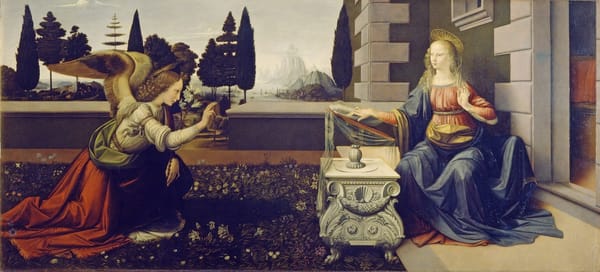
March 25: The Annunciation of the Ever Blessed Virgin
Including:
Feast of the Annunciation during Lent
This is a great day, not only to man, but even to God Himself; for it is the anniversary of the most solemn event that time has ever witnessed. On this day, the divine Word, by whom the Father created the world, was made flesh in the womb of a virgin, and dwelt among us.1 We must spend it in joy. Whilst we adore the Son of God who humbled Himself by thus becoming Man, let us give thanks to the Father, who so loved the world, as to give His only-begotten Son;2 let us give thanks to the Holy Ghost, whose almighty power achieves the great mystery. We are in the very midst of Lent, and yet the ineffable joys of Christmas are upon us: our Emmanuel is conceived on this day, and, nine months hence, will be born in Bethlehem, and the angels will invite us to come and honour the sweet Babe.
During Septuagesima week, we meditated upon the fall of our first parents, and the triple sentence pronounced by God against the serpent, the woman, and Adam. Our hearts were filled with fear as we reflected on the divine malediction, the effects of which are to be felt by all generations, even to the end of the world. But in the midst of the anathemas then pronounced against us, a promise was made us by our God; it was a promise of salvation, and it enkindled hope within us. In pronouncing sentence against the serpent, God said that his head should one day be crushed, and that, too, by a woman.
The time has come for the fulfilment of this promise. The world has been in expectation for four thousand years; and the hope of its deliverance has been kept up, in spite of all its crimes. During this time, God has made use of miracles, prophecies, and types, as a renewal of the engagement He has entered into with mankind. The blood of the Messias has passed from Adam to Noe; from Sem to Abraham, Isaac and Jacob; from David and Solomon to Joachim; and now it flows in the veins of Mary, Joachim’s daughter. Mary is the woman by whom is to be taken from our race the curse that lies upon it. God has decreed that she should be Immaculate; and has thereby set an irreconcilable enmity between her and the serpent. She, a daughter of Eve, is to repair all the injury done by her mother’s fall; she is to raise up her sex from the degradation into which it has been cast; she is to co-operate, directly and really, in the victory which the Son of God is about to gain over His and our enemy.
A tradition, which has come down from the apostolic ages, tells us that the great mystery of the Incarnation was achieved on the twenty-fifth day of March.3 It was at the hour of midnight, when the most holy Virgin was alone and absorbed in prayer, that the Archangel Gabriel appeared before her, and asked her, in the name of the blessed Trinity, to consent to become the Mother of God. Let us assist, in spirit, at this wonderful interview between the angel and the Virgin: and, at the same time, let us think of that other interview which took place between Eve and the serpent. A holy bishop and marytr of the second century, Saint Irenæus, who had received the tradition from the very disciples of the apostles, shows us that Nazareth is the counterpart of Eden.4
In the garden of delights there is a virgin and an angel; and a conversation takes place·between them. At Nazareth a virgin is also addressed by an angel, and she answers him; but the angel of the earthly paradise is a spirit of darkness, and he of Nazareth is a spirit of light. In both instances it is the angel that has the first word. ‘Why,’ said the serpent to Eve, ‘hath God commanded you, that you should not eat of every tree of paradise?’ His question implies impatience and a solicitation to evil; he has contempt for the frail creature to whom he addresses it, but he hates the image of God which is upon her.
See, on the other hand, the angel of light; see with what composure and peacefulness he approaches the Virgin of Nazareth, the new Eve; and how respectfully he bows himself down before her: ‘Hail, full of grace! The Lord is with thee! Blessed art thou among women! Such language is evidently of heaven: none but an angel could speak thus to Mary.
Eve imprudently listens to the tempter’s words; she answers him; she enters into conversation with one that dares to ask her to question the justice of God’s commands. Her curiosity urges her on. She has no mistrust in the serpent; this leads her to mistrust her Creator.
Mary hears what Gabriel has spoken to her; but this most prudent Virgin is silent. She is surprised at the praise given her by the angel. The purest and humblest of virgins has a dread of flattery; and the heavenly messenger receives no reply from her, until he has fully explained his mission by these words: ‘Fear not, Mary, for thou hast found grace with God. Behold, thou shalt conceive in thy womb, and shalt bring forth a Son: and thou shalt call His name Jesus. He shall be great, and shall be called the Son of the Most High, and the Lord God shall give unto Him the throne of David His father: and He shall reign in the house of Jacob for ever, and of His kingdom there shall be no end.’
What magnificent promises are these, which are made to her in the name of God! What higher glory could she, a daughter of Juda, desire, knowing, as she does, that the fortunate Mother of the Messias is to be the object of the greatest veneration? And yet it tempts her not. She has for ever consecrated her virginity to God, in order that she may be the more closely united to Him by love. The grandest possible privilege, if it is to be on the condition of violating this sacred vow, would be less than nothing in her estimation. She thus answers the angel: ‘How shall this be done? because I know not man.’
The first Eve evinces no such prudence or disinterestedness. No sooner has the wicked spirit assured her that she may break the commandment of her divine Benefactor and not die; that the fruit of her disobedience will be a wonderful knowledge, which will put her on an equality with God Himself: than she immediately yields; she is conquered. Her self-love has made her at once forget both duty and gratitude: she is delighted at the thought of being freed from the twofold tie which binds her to her Creator.
Such is the woman that caused our perdition. But how different is she that was to save us! The former cares not for her posterity; she looks but to her own interests: the latter forgets herself to think only of her God, and of the claims He has to her service. The angel, charmed with this sublime fidelity, thus answers the question put to him by Mary, and reveals to her the designs of God: ‘The Holy Ghost shall come upon thee, and the power of the Most High shall overshadow thee. And therefore also the Holy which shall be born of thee shall be called the Son of God. And behold thy cousin Elizabeth, she also hath conceived a son in her old age; and this is the sixth month with her that is called barren; because no word shall be impossible with God.’ This said, he is silent, and reverently awaits the answer of the Virgin of Nazareth.
Let us look once more at the virgin of Eden. Scarcely has the wicked spirit finished speaking than Eve casts a longing look at the forbidden fruit: she is impatient to enjoy the independence it is to bring her. She rashly stretches forth her hand; she plucks the fruit; she eats it, and death takes possession of her: death of the soul, for sin extinguishes the light of life; and death of the body, which, being separated from the source of immortality, becomes an object of shame and horror, and finally crumbles into dust.
But let us turn away our eyes from this sad spectacle, and fix them on Nazareth. Mary has heard the angel’s explanation of the mystery; the will of heaven is made known to her, and how grand an honour it is to bring upon her! She, the humble maid of Nazareth, is to have the ineffable happiness of becoming the Mother of God, and yet the treasure of her virginity is to be left to her! Mary bows down before this sovereign will, and says to the heavenly messenger: ‘Behold the handmaid of the Lord: be it done to me according to thy word.’
Thus, as the great St. Irenæus and so many of the holy fathers remark, the obedience of the second Eve repaired the disobedience of the first: for no sooner does the Virgin of Nazareth speak her fiat, ‘be it done,’ than the eternal Son of God (who, according to the divine decree, awaited this word) is present, by the operation of the Holy Ghost, in the chaste womb of Mary, and there He begins His human life. A Virgin is a Mother, and Mother of God; and it is this Virgin’s consenting to the divine will that has made her conceive by the power of the Holy Ghost. This sublime mystery puts between the eternal Word and a mere woman the relations of Son and Mother; it gives to the almighty God a means whereby He may, in a manner worthy of His majesty, triumph over satan, who hitherto seemed to have prevailed against the divine plan.
Never was there a more entire or humiliating defeat than that which this day befel satan. The frail creature, over whom he had so easily triumphed at the beginning of the world, now rises and crushes his proud head. Eve conquers in Mary. God would not choose man for the instrument of His vengeance; the humiliation of satan would not have been great enough; and therefore she who was the first prey oi hell, the first victim of the tempter, is selected to give battle to the enemy. The result of so glorious a triumph is that Mary is to be superior not only to the rebel angels, but to the whole human race, yea, to all the angels of heaven. Seated on her exalted throne, she, the Mother of God, is to be the Queen of all creation. Satan, in the depths of the abyss, will eternally bewail his having dared to direct his first attack against the woman, for God has now so gloriously avenged her; and in heaven, the very Cherubim and Seraphim reverently look up to Mary, and deem themselves honoured when she smiles upon them, or employs them in the execution of any of her wishes, for she is the Mother of their God.
Therefore is it that we, the children of Adam, who have been snatched by Mary’s obedience from the power of hell, solemnize this day of the Annunciation. Well may we say of Mary those words of Debbora, when she sang her song of victory over the enemies of God’s people: ‘The valiant men ceased, and rested in Israel, until Debbora arose, a mother arose in Israel. The Lord chose new wars, and He Himself overthrew the gates of the enemies.’5 Let us also refer to the holy Mother of Jesus these words of Judith, who by her victory over the enemy was another type of Mary: ‘Praise ye the Lord our God, who hath not forsaken them that hope in Him. And by me, His handmaid, He hath fulfilled His mercy, which He promised to the house of Israel; and He hath killed the enemy of His people by my hand this night . . . . The almighty Lord hath struck him, and hath delivered him into the hands of a woman, and hath slain him.’6
First Vespers
When the Annunciation falls on any other day than Monday, the first Vespers of this feast are sung before midday, according to the rule prescribed for fast-days of Lent: but when it falls on a Monday, this Office is celebrated at the ordinary time of Vespers, and only & commemoration is made of the Sunday by the Magnificat antiphon and the prayer.
The Office of first Vespers is always the commencement of a feast. The antiphons of the Vespers, at which we are going to assist, are taken from the Gospel of St. Luke, where the evangelist reveals to us the sublime interview between the angel and the Virgin. The psalms are those which tradition has consecrated to the celebration of Mary’s glories. We have elsewhere7 shown how each of the five refers to the Mother of God.
Psalm 109
Donec ponam inimicos tuos: * scabellum pedum tuorum.
Virgam virtutis tuæ emittet Dominus ex Sion: * dominare in medio inimicorum tuorum.
Tecum principium in die virtutis tuæ in splendoribus sanctorum: * ex utero ante luciferum genui te.
Juravit Dominus, et non pœnitebit eum: * Tu es Sacerdos in æternum secundum ordinem Melchisedech.
Dominus a dextris tuis: * confregit in die iræ suæ reges.
Judicabit in nationibus, implebit ruinas: * conquassabit capita in terra multorum.
De torrente in via bibet: * propterea exaltabit caput.
Until, on the day of thy last earning, I make thy enemies thy footstool.
O Christ! the Lord thy Father, will send forth the sceptre of thy power out of Sion: from thence rule thou in the midst of thy enemies.
With thee is the principality in the day of thy strength, in the brightness of the Saints: For the Father hath said to thee: From the womb, before the day-star, I begot thee.
The Lord hath sworn, and he will not repent: he hath said, speaking of thee, the God-Man: Thou art a Priest for ever, according to the order of Melchisedech.
Therefore, O Father, the Lord, thy Son, is at thy right hand: he hath broken kings in the day of his wrath.
He shall also judge among nations: he shall fill the ruins of the world: he shall crush the heads in the land of many.
He cometh now in humility: he shall drink, in the way, of the torrent of sufferings: therefore, shall he lift up the head.
Ant. Ave, Maria, gratia plena, Dominus tecum: nenedicta tu in mulieribus.
Ant. Hail, Mary, full of grace, the Lord is with thee: blessed art thou among women.
Psalm 112
Sit nomen Domini benedictum: * ex hoc nunc et usque in sæculum.
A solis ortu usque ad occasum: * laudabile nomen Domini.
Excelsus super omnes gentes Dominus: * et super cælos gloria ejus.
Quis sicut Dominus Deus noster qui in altis habitat: * et humilia respicit in cœlo et in terra?
Suscitans a terra inopem: * et de stercore erigens pauperem.
Ut collocet eum cum principibus: * cum principibus populi sui.
Qui habitare facit sterilem in domo: * matrem filiorum lætantem.
Blessed be the name of the Lord: from henceforth, now and for ever.
From the rising of the sun unto the going down of the same, the name of the Lord is worthy of praise.
The Lord is high above all nations: and his glory above the heavens.
Who is as the Lord our God, who dwelleth on high: and looketh down on the ow things in heaven and in earth, nay, who cometh down amidst us?
Raising up the needy from the earth: and lifting up the poor out of the dunghill.
That he may place him with princes: with the princes of his people.
Who maketh a barren woman to dwell in a house, the joyful mother of children.
Ant. Ne timeas, Maria; invenisti gratiam apud Dominum: ecce concipies, et paries filium.
Ant. Fear not, Mary; thou hast found grace with God: behold thou shalt conceive, and shalt bring forth a Son.
Psalm 121
Stantes erant pedes nostri: * in atriis tuis, Jerusalem.
Jerusalem quæ ædificatur at civitas: * cujus participate ejus in idipsum.
Illuc enim ascenderunt tribus, tribus Domini: * testimonium Israël ad confiten dum nomini Domini.
Quia illic sederunt sedes in judicio: * sedes super domum David.
Rogate quæ ad pacem sunt Jerusalem: * et abundantia diligentibus te.
Fiat pax in virtute tua: * et abundantia in turribus tuis.
Propter fratres meos et proximos meos: * loque bar pacem de te.
Propter domum Domini Dei nostri: * quæsivi bona tibi.
Our feet were standing in thy courts, O Jerusalem! Our heart loves and confides in thees O Mary.
Mary is like to Jerusalem, that is built as a city; which is compact together.
For thither did the tribes go up, the tribes of the Lord: the testimony of Israel, to praise the name of the Lord.
Because seats sat there in judgment; seats upon the house of David, and Mary is of a kingly race.
Pray ye, through Mary, for the things that are for the peace of Jerusalem: and may abundance be on them that love thee, O Church of our God!
The voice of Mary: Let peace be in thy strength, O thou new Sion! and abundance in thy towers.
I, a daughter of Israel, for the sake of my brethren and of my neighbours, spoke peace of thee.
Because of the house of the Lord our God, I have sought good things for thee.
Ant. Dabit ei Dominus sedem David patris ejus, et regnabit in aeternum.
Ant. And the Lord shall give unto him the throne of David his father, and he shall reign for ever.
Psalm 126
Nisi Dominus custodierit civitatem: * frustra vigilat qui custodit eam.
Vanum est vobis ante luoem surgere: * eurgite postquam sederitis, qui manducatis panem doloris.
Cum dederit dilectis suis somnum: * ecce hæreditas Domini filii, merces, fructus ventris.
Sicut sagittae in manu potentis: * ita filii excussorum.
Beatus vir, qui implevit desiderium suum ex ipsis: * non confundetur cum loquetur inimicis suis in porta.
Unless the Lord keep the city, he watcheth in vain that keepeth it.
It is vain for you to rise before light; rise ye after you have sit ten, you that eat of the bread of sorrow.
When he shall give sleep to his beloved: behold the inheritance of the Lord are children; the reward, the fruit of the womb.
As arrows in the hand of the mighty, so the children of them that have been shaken.
Blessed is the man that hath filled his desire with them; he shall not be confounded when he shall speak to his enemies in the gate.
Ant. Ecce ancilla Domini: fiat mihi secundum verbum tuum.
Ant. Behold the handmaid of the Lord: be it done to me according to thy word.
Psalm 147
Quoniam confortavit seras portarum tuarum: * benedixit filiis tuis in te.
Qui posuit fines tuos pacem: * et adipe frumenti satiat te.
Qui emittit eloquium suum terræ: * velociter currit sermo ejus.
Qui dat nivem sicut lanam: * nebulam sicut cinerem spargit.
Mittit crystallum suam sicut buccellas: * ante faciem frigoris ejus quis sustinebit?
Emittet verbum suum, et liquefaciet ea: * flabit spiritus ejus, et fluent aquæ.
Qui annuntiat verbum suum Jacob: * justitias, et judicia sua Israël.
Non fecit taliter omni nationi: * et judicia sua non manifestavit eis.
Because he hath strengthened against sin the bolts of thy gates: he hath blessed thy children within thee.
Who hath placed peace in thy borders, and filleth thee with the fat of com, toith Jesus, who is the Bread of life.
Who sendeth forth, by thee, his Word to the earth: his word runneth swiftly.
Who giveth snow like wool; scattereth mists like ashes.
He sendeth his crystal like morsels; who shall stand before the face of his cold?
He shall send forth his Word by Mary, and shall melt them: his Spirit shall breathe, and the waters shall run.
Who declareth his word to Jacob: his justices and his judgments to Israel.
He hath not done in like manner to every nation: and his judgments he hath not made manifest to them.
Capitulum (Is . vii.)
Hymn8
Dei Mater alma,
Atque semper Virgo,
Felix cœli porta.
Gabrielis ore,
Funda nos in pace,
Mutans Evæ nomen.
Profer lumen cæcis,
Mala nostra pelle,
Bona cuneta posee.
Sumat per te preces,
Qui pro nobis natus,
Tulit esse tuus.
Inter omnes mitis,
Nos culpis solutos
Mites fac et castos.
Iter para tutum;
Ut videntes Jesum,
Semper collætemur.
Summo Christo decus,
Spiritui sancto,
Tribus honor unus.
Blessed Mother of God,
yet ever a Virgin!
O happy gate of heaven!
from Gabriel’s lips,
confirm us in peace,
and so let Eva be changed into an Ave of blessing for us.
bring light to the blind,
drive from us our evils,
and ask all good things for us.
and offer our prayers to him,
who would be born of thee,
when born for us.
and meekest of the meek,
obtain us the forgiveness of our sins,
and make us meek and chaste.
and a safe pilgrimage;
that we may be united with thee
in the blissful vision of Jesus.
and to the Lord Jesus,
and to the Holy Ghost:
to the Three one self-same praise.
Antiphon of the Magnificat
Mass
The Church has taken most of the chants of today’s Mass from the forty-fourth Psalm, wherein the royal prophet celebrates the mystery of the Incarnation. In the Introit, she greets Mary as the Queen of the human race, to whom every creature should pay respectful homage. It is her virginity that fitted Mary to become the Mother of God. This virtue will be imitated in the Church, and each generation will produce thousands of holy virgins, who will walk in the footsteps of her who is their Mother and their model.
Introit
In the Collect, the Church glories in her faith in the divine maternity; she puts it forward as a claim to Mary’s interceding for her with God, who is her Son. This dogma of Mary’s being the Mother of God is founded on the mystery of the Incarnation, which is the basis of our faith, and which was accomplished on this twenty-fifth of March.
Collect
To this is added the Collect for the feria of Lent.
Epistle
Cap. vii.In diebus illis: Locutus est Dominus ad Achaz, dicens: Pete tibi signum a Domino Deo tuo, in profundum infemi, sive in excelsum supra. Et dixit Achaz: Non petam, et non tentabo Dominum. Et dixit: Audite ergo domua David: Numquid parum vobis est, molestos esse hominibus, quia molesti estis et Deo meo? Propter hoc dabit Dominus ipse vobis signum. Ecce Virgo concipiet, et pariet filium: et vocabitur nomen ejus Emmanuel. Butyrum et mel comedet, ut sciat reprobare malum et eligere bonum.
Ch. vii.In those days: the Lord spoke unto Achaz, saying: Ask thee a sign of the Lord thy God, either unto the depth of hell, or unto the height above. And Achaz said: I will not ask, and I will not tempt the Lord. And he (Isaias) said: Hear ye therefore, O house of David: Is it a small thing for you to be grievous to men, that you are grievous to my God also? Therefore the Lord himself shall give you a sign. Behold a Virgin shall conceive and bear a son, and his name shall be called Emmanuel. He shall eat butter and honey, that he may know to refuse the evil and to choose the good.
The prophet is speaking to a wicked king, who refused to accept a miraculous proof of God’s merciful protection over Jerusalem; and he makes this an opportunity for announcing to Juda the great portent which we are celebrating to-day: A Virgin shall conceive, and hear a Son. And when was it, that God fulfilled the prophecy? It was in an age, when mankind seemed to have reached the highest pitch of wickedness, and when idolatry and immorality reigned throughout the whole world. The fulness of time came, and the tradition, which had found its way into every country, that a Virgin should bring forth a Son, was exciting much interest. This is the day on which the mystery was accomplished; let us adore the power of God, and the fidelity wherewith He fulfils His promises. The Author of the laws of nature suspends them; He acts independently of them: virginity and maternity are united in one and the same creature, for the Child that is to be born is God. A Virgin could not bring forth other than God Himself: the Son of Mary is therefore called Emmanuel, that is, God with us.
Let us adore this God, the Creator of all things visible and invisible, who thus humbles Himself. Henceforth, He will have every tongue confess, not only His Divinity, but also His human Nature, which He has assumed in order that He might redeem us. From this day forward He is truly the Son of Man. He will remain nine months in His Mother’s womb, as other children. Like them, He will, after His birth, be fed on milk and honey. He will sanctify all stages of human life, from infancy to perfect manhood, for He is the New Man, who has come down from heaven that He might restore the old. Without losing aught of His Divinity, He shares in our weak finite being, that He may make us partakers of the divine nature.9
In the Gradual, the Church unites with David in praising the beauty of the Emmanuel, His kingdom and His strength; for He comes in humility, that He may rise again in glory; He comes to give battle that He may conquer and triumph.
Gradual
The Church continues the same canticle in the Tract, but it is in praise of Mary, the Virgin and Mother. The Holy Ghost loves her for her incomparable beauty; it is on this day that He overshadows her and she conceives the Word. Where is there a glory like that of Mary, who is an object of complacency to the three Persons of the Trinity? God could create nothing more exalted than the Mother of God. David foretells how this, his daughter, was to receive homage from the great ones of the earth, and how she was to be surrounded by holy virgins, who would follow her as their Queen and model. This day is also the triumph of her virginity, for it is raised to the dignity of divine maternity! Her triumph frees her sex from slavery, and renders it capable of everything that is honourable and great.
Tract
Gospel
Cap. i.In illo tempore: Missus est angelus Gabriel a Deo in civitatem Galilææ, cui nomen Nazareth, ad virginem desponsatam viro, cui nomen erat Joseph, de domo David: et nomen virginis, Maria. Et ingressus angelus ad eam, dixit: Ave, gratia plena; Dominus tecum: benedicta tu in mulieribus. Quæ cum audisset, turbata est in sermone ejus: et cogitabat qualis esset ista salutatio. Et ait angelus ei: Ne timeas, Maria: invenisti enim gratiam aqud Deum. Ecce concipies in utero, et paries filium: et vocabis nomen ejus Jesum. Hic erit magnus: et Filius Altissimi vocabitur. Et dabit illi Dominus Deus sedem David patris ejus: et regnabit in domo Jacob in æternum; et regni ejus non erit finis. Dixit autem Maria ad angelum: Quomodo fiet istud? quoniam virum non cognosco. Et respondens angelus, dixit ei: Spiritus sanctus superveniet in te; et virtue Altissimi obumbrabit tibi. Ideoque et quod nascetur ex te sanctum, vocabitur Filius Dei. Et ecceElisabeth cognata tua: et ipsa concepit filium in senectute sua. Et hic mensis sertufl est illi, quse vocatur sterilis; quia non erit impossibile apud Deum omne verbum. Dixit autem Maria: Ecce ancilla Domini: fiat mihi secundum verbum tuum.
Ch. i.At that time: the angel Gabriel was sent from God into a city of Galilee, called Nazareth, to a Virgin espoused to a man whose name was Joseph, of the house of David; and the Virgin’s name was Mary. And the angel being come in, said unto her: Hail, full of grace, the Lord is with thee: blessed art thou among women. Who having heard, was troubled at his saying, and thought with herself what manner of salutation this should be. And the angel said to her: Fear not, Mary, for thou hast found grace with God. Behold thou shalt conceive in thy womb, and shalt bring forth a son, and thou shalt call his name Jesus. He shall be great, and shall be called the Son of the Most High, and the Lord God shall give unto him the throne of David his father: and he shall reign in the house of Jacob for ever, and of his kingdom there shall be no end. And Mary said to the angel: How shall this be done, because I know not man? And the angel answering, said to her: The Holy Ghost shall come upon thee, and the power of the Most High shall overshadow thee. And therefore also the Holy which shall be born of thee, shall be called the Son of God. And behold thy cousin Elizabeth she also hath conceived a son in her old age; and this is the sixth month with her that is called barren: because no word shall be impossible with God. And Mary said: Behold the handmaid of the Lord, be it done to me according to thy word.
By these last words of thine, O Mary! our happiness is secured. Thou consentest to the desire of heaven, and thy consent brings us our Saviour. O Virgin-Mother! Blessed among women! we unite our thanks with the homage that is paid thee by the angels. By thee is our ruin repaired; in thee is our nature restored; for thou hast wrought the victory of man over satan! St. Bernard, in one of his homilies on this Gospel, thus speaks: ‘Rejoice, O thou our father Adam! but thou, O mother Eve, still more rejoice! You were our parents, but you were also our destroyers; and, what is worse, you had wrought our destruction before you gave us birth. Both of you must be consoled in such a daughter as this: but thou, O Eve, who wast the first cause of our misfortune, and whose humiliation has descended upon all women, thou hast a special reason to rejoice in Mary. For the time has now come, when the humiliation is taken away; neither can man any longer complain against the woman, as of old, when he foolishly sought to excuse himself, and cruelly put all the blame on her, saying: “The woman, whom Thou gavest me, gave me of the tree, and I did eat.” Go, Eve, to Mary; go, mother, to thy daughter; let thy daughter take thy part, and free thee from thy disgrace, and reconcile thee to her father: for, if man fell by a woman, he is raised up by a woman.
‘What is this thou sayest, Adam? “The woman, whom Thou gavest me, gave me of the tree, and I did eat?” These are wicked words; far from effacing thy fault, they aggravate it. But divine Wisdom conquered thy wickedness, by finding in the treasury of His own inexhaustible mercy a motive for pardon, which He had in vain sought to elicit by questioning thee. In place of the woman, of whom thou complainest, He gives thee another: Eve was foolish, Mary is wise; Eve was proud, Mary is humble; Eve gave thee of the tree of death, Mary will give thee of the Tree of life; Eve offered thee a bitter and poisoned fruit, Mary will give thee the sweet Fruit she herself is to bring forth, the Fruit of everlasting life. Change, then, thy wicked excuse into an act of thanksgiving, and say: “ The Woman, whom Thou hast given me, O Lord, hath given me of the Tree of life, and I have eaten thereof; and it is sweeter than honey to my mouth, for by it Thou hast given me life.” ’10
In the Offertory, the Church addresses Mary in the words spoken to her by the Archangel, to which she also adds those used by Elizabeth, when she saluted the Mother of her God.
Offertory
In the Secret, the Church renews her profession of faith in the mystery of the Incarnation; she confesses the reality of the two Natures, divine and human, in Jesus Christ, the Son of God, and Son of Mary.
Secret
To this is added the Secret for the feria of Lent.
The greatness of the solemnity obliges the Church to substitute, for the lenten Preface, the one she uses on our Lady’s feasts.
Preface
The Communion-anthem repeats the prophetic words of the Epistle. It is a Virgin that has conceived and brought forth Him, who, being God and Man, is also the living Bread that came down from heaven, whereby God is with us, and in us.
Communion
In the Postcommunion, the Church gratefully recalls to mind all the mysteries which God has achieved for our salvation, and which are the consequences of the one we honour to-day. After the Incarnation, which unites the Son of God to our human nature, we have had the Passion of this our divine Redeemer; and His Passion was followed by His Resurrection, whereby He triumphed over our enemy death.
Postcommunion
To this is added the Postcommunion of the feria of Lent.
Second Vespers
The antiphons, psalms, hymn, and versicle, are the same as in the first Vespers, pages 449-455.
The Magnificat antiphon alone is changed, and is as follows:
Antiphon of the Magnificat
Let us now bring together the different liturgies, and hear them celebrate the great mystery of this glad feast. First of all, let us listen to the Church of Rome, who, in her Office of Matins, thus proclaims the praises of Mary, the Mother of God:
Hymn
Colunt, adorant, prædicant,
Trinam regentem machinam,
Claustrum Mariæ bajulat.
Deserviunt per tempora,
Perfusa cceli gratia,
Gestant puellæ viscera.
Cujus, supernus artifex
Mundum pugillo contincns,
Ventris sub area clausus est.
Fœcunda eancto Spiritu,
Desideratus gentibus
Cujus per alvum fusus est.
Qui natus es de Virgine;
Cum Patre et almo Spiritu,
In sempiterna sæcula.
worship, adore, and praise;
he, the King of the triple kingdom,
is carried in Mary’s womb.
with heavenly grace, bears him,
whom the moon, and sun, and all creatures
serve in the order marked for them.
He, the sovereign Creator,
who holds the world in the palm of his hand,
is enclosed in the tabernacle of her womb.
proclaims her blessed;
the holy Spirit makes her fruitful;
and the Desired of nations is born of her.
that wast born of the Virgin!
and to the Father, and to the Spirit of love,
for everlasting ages.
Many of the Latin Churches, in the middle ages, used to recite, in the Mass of the Annunciation, the following sequence, which is thought to have been composed by Peter Abailard.
Sequence
Non quemvis Angelum,
Sed Fortitudinem
Suum Archangelum,
Amator hominis.
Pro nobis nuntium,
Naturae faciat
Ut præjudicium
In partu Virginis.
Natus Rex gloriæ:
Regnet et imperet,
Et zyma scoriæ
Tollat de medio.
Terat fastigia:
Colla sublimium
Calcet vi propria,
Potens in prælio.
Mundanum principem:
Secumque faciat
Matrem participem
Patris imperii.
Hæc dona dissere:
Revela veteris
Velamen litteræ
Virtute nuncii.
Dic: Ave, cominus,
Dic: Plena gratia,
Dic: Tecum Dominus,
Et dic: Ne timeas.
Dei depositum,
In quo perficiae
Casta propoeitum,
Et votum teneas.
Puella nuntium:
Credit et concipit,
Et parit Filium,
Sed admirabilem.
Humani generis:
Deum et hominem,
Et Patrem posteris,
In pace stabilem.
Nos reddat stabiles,
Ne nos labilitas
Humana labiles
Secum praecipitet.
Concessa venia,
Per matrem gratiæ
Obtenta gratia,
In nobis habitet.
Peccati veniam:
Reatue deleat,
Donet et patriam
In arce siderum.
sends to the Virgin
no less an angel than him
who is called God's Strength,
the Archangel Gabriel.
be speedily at his work;
may he stay the rights
and laws of nature
in the Virgin’s delivery.
when born, triumph over nature;
may he reign and command;
may he take away from the midst of men
all leaven and rust.
proud heads;
may this God, mighty in war,
trample in his power
on the necks of the haughty.
the prince of this world;
and make his Mother
share with him the empire
which his Father has given him.
announce these gifts;
lift up, by the virtue
of thy Annunciation,
the veil of the ancient Scripture.
say, when thou art in her presence, ‘Hail!’
Say: ‘O full of grace!’
Say: ‘The Lord is with thee!’
And then: ‘Fear not!’
the divine deposit;
by him fulfil
thy chaste purpose,
and keep thy vow.
the announcement;
she believes and conceives,
and brings forth a Son,
but he is the Admirable.
of mankind,
God and Man,
Father of the world to come,
the Prince of peace.
render us firm,
lest human frailty
should make us stumble
into the abyss.
of pardon, granting us pardon
and grace, obtained by
the Mother of grace,
dwell within us.
us pardon of our sins,
wipe away all our guilt,
and give us the country
in the starry heaven.
The Ambrosian liturgy gives us this fine Preface, which is used in its celebration of to-day’s mystery.
Preface
The Mozarabic liturgy (which, as we have already observed, keeps the feast of the Annunciation on December 18) has several admirable prayers touching this mystery: we select the following:—
Prayer
The Greek liturgy, with its wonted abundance, celebrates the glory of Mary in the Incarnation of the Word. We give the following hymn, which comes in the Office of the vigil of the Annunciation. In our opinion, it is finer than the one on the feast itself.
Hymn (Die XXIV. Martii)
O Emmanuel, God with us! who, as Thy Church says in her hymn, ‘being to take upon Thee to deliver man, didst not disdain the Virgin’s womb,’ the whole human race gives thanks to Thee on this day, for Thy merciful coming. O eternal Word of the Father! it was not enough for Thee to have drawn man out of nothing by Thy power; Thine exhaustless love would follow him even to the abyss of misery into which he had fallen. By sin man had forfeited the dignity Thou hadst given him: that he might regain it, Thou didst come in person and assume his nature, so to raise him up again to Thyself. In Thee, from this day forward unto all eternity, God is made man, and man is made God. Thy Incarnation is the fulfilment of the promises made in the canticle; Thou unitest Thyself to human nature, and it is in the virginal womb of a daughtei of David that Thou celebratest these ineffable espousals. O incomprehensible humiliation! O ineffable glory! The humiliation is for the Son of God, the glory is for the Son of man. Thus hast Thou loved us, O divine Word, thus hast Thou removed from us the degradation of our fall! The rebel angels fell, and Thou didst leave them in the abyss; we fell, and Thou hadst mercy on us. A single look of Thy pity would have sufficed to save us; but it would not satisfy Thy love: therefore d dst Thou descend into this world of sin, take upon Thyself the form of a slave,11 and lead a life of humiliation and suffering. O Word made Flesh, who comest not to judge, but to save,12 we adore Thee, we praise Thee, we love Thee. Make us worthy of all that Thy love has led Thee to do for us.
We salute thee, O Mary, full of grace, on this day whereon thou didst receive thy sublime dignity of Mother of God. Thy incomparable purity drew down upon thee the love of the great Creator, and thy humility drew Him into thy womb; His presence within thee increased the holiness of thy spirit and the purity of thy body. What must have been thy happiness in knowing that this Son of God was living by thy life, and was taking from thine own substance the new being, which His love for us induced Him to assume! Between thee and Him is formed that ineffable union which is granted to none else but to thee: He is thy Creator, and thou art His Mother; He is thy Son, and thou art His creature. Every knee bows down before Him, O Mary! for He is the great God of heaven and earth; but every creature reveres thee, also, for thou hast carried Him in thy womb, thou hast fed Him at thy breast; thou alone canst say to Him, as does His heavenly Father: ‘Thou art my Son!’ O Mother of Jesus! thou art the greatest of God’s works: receive the humble homage of mankind, for thou art most dear to us, seeing that thou art of the same flesh and blood as ourselves.
Thou art a daughter of Eve, but without her sin. By thy obedience to the divine decrees, thou savest thy mother and her race; thou restorest Adam and his children to the innocence they had lost. Jesus, whom thou bearest in thy womb, is our pledge that all these blessings are to be ours; and it is by thee that He comes to us. Without Jesus, we should abide in death; without thee, we should not have had Him to redeem us. It is from thy virginal womb that He receives the precious Blood which is to be our ransom, that Blood whose purity He protected in thy Immaculate Conception, and which becomes the Blood of God by the union, that is consummated in thee, of the divine with the human Nature.
To-day, O Mary! is fulfilled in thee the promise made by God after Adam's sin, that He would put enmity between the woman and the serpent. Up to this time, the human race had not the courage to resist the enemy; it was subservient to him, and everywhere were altars raised up in his honour; but, on this day, his head is crushed beneath thy foot. Thy humility, thy purity, thy obedience, have conquered him; his tyranny is checked. By thee we areelivered from his sway; and nothing but our own perversity and ingratitude could again give him the mastery. Let not this be, O Mary! Come to our assistance. During this season of repentance, we humbly acknowledge that we have abused the grace of God; we beseech thee, on this the feast of thy Annunciation, intercede for us with Him, who, on this day, became thy Son. Holy Mother of God! by the salutation addressed to thee by the angel Gabriel, by thy virginal fear, by thy fidelity to God, by thy prudent humility, by thy consent, obtain for us conversion of heart, and sincere repentance; prepare us for the great mysteries we are about to celebrate. These mysteries are so full of sorrow to thy maternal heart; and yet thou wouldst have us rejoice on this day, as we think on the ineffable happiness which filled thy soul at the solemn moment when the Holy Ghost overshadowed thee, and the Son of God became thine. Yes, blessed Mother of Jesus! we will spend the whole of this day near thee, in thy humble dwelling at Nazareth. Nine months hence, we will follow thee to Bethlehem, and there, in company with the shepherds and the angels, we will prostrate ourselves in adoration before the Infant-God, our Saviour: we will join our voices with those of the heavenly host, and we will thus express our gladness: ‘Glory be to God in the highest, and peace on earth to men of good will!’
Feast of the Annunciation during Paschaltide
IT very frequently happens that March 25 falls between Palm Sunday and Low Sunday: on these occasions, the feast of our Lady’s Annunciation, being out of keeping both with the dolorous mysteries of Holy Week and with the splendour of the Resurrection, is deferred to the Monday following Low Sunday. For the convenience of the faithful, we have here repeated the Vespers and Mass of this great feast. As to the instructions we gave upon the mystery of the Annunciation, our readers must refer to our volume on Lent.
First Vespers
The Office of First Vespers is always the commencement of a feast. The Antiphons of the Vespers at which we are going to assist are taken from the Gospel of St Luke, where the Evangelist reveals to us the sublime interview between the angel and the Virgin. The Psalms are those which tradition has consecrated to the celebration of Mary’s glories. We have elsewhere13 shown how each of the five refers to the Mother of God.
Psalm 109
Donec ponam inimicos tuos: * scabellum pedum tuorum.
Virgam virtutis tuæ emittet Dominus ex Sion: * dominare in medio inimicorum tuorum.
Tecum principium in die virtutis tuæ in splendoribus sanctorum: * ex utero ante luciferum genui te.
Juravit Dominus, et non pœnitebit eum: * Tu es Sacerdos in æternum secundum ordinem Melchisedech.
Dominus a dextris tuis: * confregit in die iræ suæ reges.
Judicabit in nationibus, implebit ruinas: * conquassabit capita in terra multorum.
De torrente in via bibet: * propterea exaltabit caput.
Until, on the day of thy last earning, I make thy enemies thy footstool.
O Christ! the Lord thy Father, will send forth the sceptre of thy power out of Sion: from thence rule thou in the midst of thy enemies.
With thee is the principality in the day of thy strength, in the brightness of the Saints: For the Father hath said to thee: From the womb, before the day-star, I begot thee.
The Lord hath sworn, and he will not repent: he hath said, speaking of thee, the God-Man: Thou art a Priest for ever, according to the order of Melchisedech.
Therefore, O Father, the Lord, thy Son, is at thy right hand: he hath broken kings in the day of his wrath.
He shall also judge among nations: he shall fill the ruins of the world: he shall crush the heads in the land of many.
He cometh now in humility: he shall drink, in the way, of the torrent of sufferings: therefore, shall he lift up the head.
Ant. Ave, Maria, gratia plena, Dominus tecum: nenedicta tu in mulieribus.
Ant. Hail, Mary, full of grace, the Lord is with thee: blessed art thou among women.
Psalm 112
Sit nomen Domini benedictum: * ex hoc nunc et usque in sæculum.
A solis ortu usque ad occasum: * laudabile nomen Domini.
Excelsus super omnes gentes Dominus: * et super cælos gloria ejus.
Quis sicut Dominus Deus noster qui in altis habitat: * et humilia respicit in cœlo et in terra?
Suscitans a terra inopem: * et de stercore erigens pauperem.
Ut collocet eum cum principibus: * cum principibus populi sui.
Qui habitare facit sterilem in domo: * matrem filiorum lætantem.
Blessed be the name of the Lord: from henceforth, now and for ever.
From the rising of the sun unto the going down of the same, the name of the Lord is worthy of praise.
The Lord is high above all nations: and his glory above the heavens.
Who is as the Lord our God, who dwelleth on high: and looketh down on the ow things in heaven and in earth, nay, who cometh down amidst us?
Raising up the needy from the earth: and lifting up the poor out of the dunghill.
That he may place him with princes: with the princes of his people.
Who maketh a barren woman to dwell in a house, the joyful mother of children.
Ant. Ne timeas, Maria; invenisti gratiam apud Dominum: ecce concipies, et paries filium.
Ant. Fear not, Mary; thou hast found grace with God: behold thou shalt conceive, and shalt bring forth a Son.
Psalm 121
Stantes erant pedes nostri: * in atriis tuis, Jerusalem.
Jerusalem quæ ædificatur at civitas: * cujus participate ejus in idipsum.
Illuc enim ascenderunt tribus, tribus Domini: * testimonium Israël ad confiten dum nomini Domini.
Quia illic sederunt sedes in judicio: * sedes super domum David.
Rogate quæ ad pacem sunt Jerusalem: * et abundantia diligentibus te.
Fiat pax in virtute tua: * et abundantia in turribus tuis.
Propter fratres meos et proximos meos: * loque bar pacem de te.
Propter domum Domini Dei nostri: * quæsivi bona tibi.
Our feet were standing in thy courts, O Jerusalem! Our heart loves and confides in thees O Mary.
Mary is like to Jerusalem, that is built as a city; which is compact together.
For thither did the tribes go up, the tribes of the Lord: the testimony of Israel, to praise the name of the Lord.
Because seats sat there in judgment; seats upon the house of David, and Mary is of a kingly race.
Pray ye, through Mary, for the things that are for the peace of Jerusalem: and may abundance be on them that love thee, O Church of our God!
The voice of Mary: Let peace be in thy strength, O thou new Sion! and abundance in thy towers.
I, a daughter of Israel, for the sake of my brethren and of my neighbours, spoke peace of thee.
Because of the house of the Lord our God, I have sought good things for thee.
Ant. Dabit ei Dominus sedem David patris ejus, et regnabit in aeternum.
Ant. And the Lord shall give unto him the throne of David his father, and he shall reign for ever.
Psalm 126
Nisi Dominus custodierit civitatem: * frustra vigilat qui custodit eam.
Vanum est vobis ante luoem surgere: * eurgite postquam sederitis, qui manducatis panem doloris.
Cum dederit dilectis suis somnum: * ecce hæreditas Domini filii, merces, fructus ventris.
Sicut sagittae in manu potentis: * ita filii excussorum.
Beatus vir, qui implevit desiderium suum ex ipsis: * non confundetur cum loquetur inimicis suis in porta.
Unless the Lord keep the city, he watcheth in vain that keepeth it.
It is vain for you to rise before light; rise ye after you have sit ten, you that eat of the bread of sorrow.
When he shall give sleep to his beloved: behold the inheritance of the Lord are children; the reward, the fruit of the womb.
As arrows in the hand of the mighty, so the children of them that have been shaken.
Blessed is the man that hath filled his desire with them; he shall not be confounded when he shall speak to his enemies in the gate.
Ant. Ecce ancilla Domini: fiat mihi secundum verbum tuum.
Ant. Behold the handmaid of the Lord: be it done to me according to thy word.
Psalm 147
Quoniam confortavit seras portarum tuarum: * benedixit filiis tuis in te.
Qui posuit fines tuos pacem: * et adipe frumenti satiat te.
Qui emittit eloquium suum terræ: * velociter currit sermo ejus.
Qui dat nivem sicut lanam: * nebulam sicut cinerem spargit.
Mittit crystallum suam siout buccellas: * ante faciem frigoris ejus quis sustinebit?
Emittet verbum suum, et liquefaciet ea: * flabit spiritus ejus, et fluent aquæ.
Qui annuntiat verbum suum Jacob: * justitias, et judicia sua Israël.
Non fecit taliter omni nationi: * et judicia sua non manifestavit eis.
Because he hath strengthened against sin the bolts of thy gates: he hath blessed thy children within thee.
Who hath placed peace in thy borders, and filleth thee with the fat of com, toith Jesus, who is the Bread of life.
Who sendeth forth, by thee, his Word to the earth: his word runneth swiftly.
Who giveth snow like wool; scattereth mists like ashes.
He sendeth his crystal like morsels; who shall stand before the face of his cold?
He shall send forth his Word by Mary, and shall melt them: his Spirit shall breathe, and the waters shall run.
Who declareth his word to Jacob: his justices and his judgments to Israel.
He hath not done in like manner to every nation: and his judgments he hath not made manifest to them.
Capitulum (Isa. vii.)
Hymn14
Dei Mater alma,
Atque semper Virgo,
Felix cœli porta.
Gabrielis ore,
Funda nos in pace,
Mutans Evæ nomen.
Profer lumen cæcis,
Mala nostra pelle,
Bona cuneta posee.
Sumat per te preces,
Qui pro nobis natus,
Tulit esse tuus.
Inter omnes mitis,
Nos culpis solutos
Mites fac et castos.
Iter para tutum;
Ut videntes Jesum,
Semper collætemur.
Summo Christo decus,
Spiritui sancto,
Tribus honor unus.
Blessed Mother of God,
yet ever a Virgin!
O happy gate of heaven!
from Gabriel’s lips,
confirm us in peace,
and so let Eva be changed into an Ave of blessing for us.
bring light to the blind,
drive from us our evils,
and ask all good things for us.
and offer our prayers to him,
who would be born of thee,
when born for us.
and meekest of the meek,
obtain us the forgiveness of our sins,
and make us meek and chaste.
and a safe pilgrimage;
that we may be united with thee
in the blissful vision of Jesus.
and to the Lord Jesus,
and to the Holy Ghost:
to the Three one self-same praise.
Then is made a commemoration of Low Sunday, as on p. 307.
Mass
The Church has taken most of the chants of to-day’s Mass from the forty-fourth Psalm, wherein the royal prophet celebrates the mystery of the Incarnation. In the Introit, she greets Mary as the Queen of the human race, to whom every creature should pay respectful homage. It was her virginity that fitted Mary to become the Mother of God. This virtue will be imitated in the Church, and each generation will produce thousands of holy virgins, who will walk in the footsteps of her that is their Mother and their model.
Introit
Ps. Eructavit cor meum verbum bonum: dico ego opera mea Regi. ℣. Gloria Patri. Vultum tuum.
Ps. My heart hath uttered a good word: I speak my works to the King. ℣. Glory, etc. All the rich.
In the Collect, the Church glories in her faith in the divine maternity; she puts it forward as a claim to Mary’s interceding for her with God, who is her Son. This dogma of Mary’s being the Mother of God is founded on the mystery of the Incarnation, which is the basis of our faith.
Collect
Epistle
Cap. vii.In diebus illis: Locutus est Dominus ad Achaz dicens: Pete tibi signum a Domino Deo tuo, in profundum inferni sive in excelsum supra. Et dixit Achaz: Non petam, et non tentabo Dominum. Et dixit: Audite ergo domus David: Numquid parum vobis est, molestos esse hominibus, quia molestiestis et Deo meo? Propter hoc dabit Dominus ipse vobis signum. Ecce virgo concipiet, et pariet filium: et vocabitur nomen ejus Emmanuel. Butyrum et mel comedet, ut sciat reprobare malum et eligere bonum.
Ch. vii.In those days: The Lord spoke unto Achaz, saying: Ask thee a sign of the Lord thy God, either unto the depth of hell, or unto the height above. And Achaz said: I will not ask, and I will not tempt the Lord. And he (Isaias) said: Hear ye, therefore, O house of David: Is it a small thing for you to be grievous to men, that you are grievous to my God, also? Therefore the Lord himself shall give you a sign. Behold a virgin shall conceive and bear a son, and his name shall be called Emmanuel. He shall eat butter and honey, that he may know to refuse the evil, and to choose the good.
The prophet is speaking to a wicked king, who refused to accept a miraculous proof of God's merciful protection over Jerusalem; and he makes this an opportunity for announcing to Juda the great portent which we are celebrating to-day: A virgin shall conceive and bear a son. And when was it that God fulfilled the prophecy? It was in an age when mankind seemed to have reached the highest pitch of wickedness, and when idolatry and immorality reigned throughout the whole world. 'The fulness of time came,' and the tradition, which had found its way into every country, that a virgin should bring forth a son, was exciting much interest. To-day we are celebrating the sublime mystery; let us adore the power of God, and the fidelity wherewith he fulfils his promises. The author of the laws of nature suspends them; he acts independently of them: virginity and maternity are united in one and the same creature, for the Child that is to be bom is God. A virgin could not bring forth other than God himself: the Son of Mary is, therefore, called Emmanuel, that is, God with us.
Let us adore this God, the Creator of all things visible and invisible, who thus humbles himself. Henceforth, he will have every tongue confess, not only his divinity, but also his human nature, which he has assumed in order that he might redeem us. From this day forward, he is truly the Son of Man. He will remain nine months in his Mother's womb, as other children. Like them, he will, after his birth, be fed on milk and honey. He will sanctify all stages of human life, from infancy to perfect manhood, for he is the New Man, who has come down from heaven that he might restore the old. Without losing aught of his divinity, he shares in our weak finite being, that he may make us ‘partakers of the divine nature.’15
The first Alleluia Versicle repeats the angel's salutation to Mary. Let us, with Gabriel, bow down before this holy Virgin, the masterpiece of nature and grace, predestined from all eternity to be the Mother of God.
The second Versicle celebrates in sublime and enthusiastic words, the effects of the divine mystery of the Incarnation—peace between God and man re-established in the virginal womb of Mary, wherein the divine and human nature are united in the Person of the Child, whom she conceives the very instant she consents to the will of the Most High.
Gospel
Cap. i.In illo tempore: Missus est angelus Gabriel a Deo in civitatem Galilææ, cui nomen Nazareth, ad virginem desponsatam viro cui nomen erat Joseph, de domo David: et nomen virginis Maria. Et ingressus angelus ad eam, dixit: Ave, gratia plena; Dominus tecum: benedicta tu in mulieribus. Quæ cum audisset, turbata est in sermone ejus: et cogitabat qualis esset ista salutatio. Et ait angelus ei: Ne timeas, Maria: invenisti enim gratiam apud Deum. Ecce concipies in utero, et paries filium: et vocabis nomen ejus Jesum. Hic erit magnus: et Filius Altissimi vocabitur. Et dabit illi Dominus Deus sedem David patris ejus: et regnabit in domoJacob in æternam; et regni ejus non erit finis. Dixit autem Maria ad angelum: Quomodo fiet istud? quoniam virum non cognosco. Et respondens angelus, dixit ei: Spiritus Sanctus superveniet in te; et virtus Altissimi obumbrabit tibi. Ideoque et quod nascetur ex te sanctum, vocabitur Filius Dei. Et ecce Elisabeth cognata tua: et ipsa concepit filium in senectute sua. Et hic mensis sextus est illi, quæ vocatur sterilis; quia non erit impossibile apud Deum omne verbum. Dixit autem Maria: Ecce ancilla Domini: fiat mihi secundum verbum tuum.
Ch. i.At that time: The angel Gabriel was sent from God into a city of Galilee, called Nazareth, to a virgin espoused to a man whose name was Joseph, of the house of David; and the virgin's name was Mary. And the angel being come in, said unto her: Hail, Mary, full of grace, the Lord is with thee: blessed art thou among women. Who having heard, was troubled at his saying, and thought with herself what manner of salutation this should be. And the angel said to her: Fear not, Mary, for thou hast found grace with God. Behold thou shalt conceive in thy womb, and shalt bring forth a son, and thou shalt call his name Jesus. He shall be great, and shall be called the Son of the Most High, and the Lord God shall give unto him the throne of David his father: and he shall reign in the house of Jacob for ever, and of his kingdom there shall be no end. And Mary said to the angel: How shall this be done, because I know not man? And the angel answering, said to her: The Holy Ghost shall come upon thee, and the power of the Most High shall overshadow thee. And therefore also the Holy which shall be born of thee shall be called the Son of God. And behold, thy cousin Elizabeth, she also hath conceived a son in her old age; and this is the sixth month with her that is called barren: because no word shall be impossible with God. And Mary said: Behold the handmaid of the Lord; be it done to me according to thy word.
By these last words of thine, O Mary! our happiness is secured. Thou consentest to the desire of heaven, and thy consent brings us our Saviour. O Virgin-Mother! Blessed among women! we unite our thanks with the homage that is paid thee by the angels. By thee is our ruin repaired; in thee is our nature restored; for thou hast wrought the victory of man over Satan! St Bernard, in one of his homilies on this Gospel, thus speaks: 'Rejoice, O thou our father Adam! but thou, O mother Eve, still more rejoice! You were our parents, but you were also our destroyers; and what is worse, you had wrought our destruction before you gave us birth. Both of you must be consoled in such a daughter as this: but thou, O Eve, who wast the first cause of our misfortune, and whose humiliation has descended upon all women, thou hast a special reason to rejoice in Mary. For the time is now come when the humiliation is taken away, neither can man any longer complain against the woman, as of old, when he foolishly sought to excuse himself, and cruelly put all the blame on her, saying: “The woman whom thou gavest me, gave me of the tree, and I did eat.” Go, Eve, to Mary; go, mother, to thy daughter; let thy daughter take thy part, and free thee from thy disgrace, and reconcile thee to her father: for if man fell by a woman, he is raised up by a woman.
'What is this thou sayest, Adam? “The woman whom thou gavest me, gave me of the tree, and I did eat?" These are wicked words; far from effacing thy fault, they aggravate it. But divine Wisdom conquered thy wickedness, by finding in the treasury of his own inexhaustible mercy a motive for pardon, which he had in vain sought to elicit by questioning thee. In place of the woman of whom thou complainest, he gives thee another: Eve was foolish, Mary is wise; Eve was proud, Mary is humble; Eve gave thee of the tree of death, Mary will give thee of the tree of life; Eve offered thee a bitter and poisoned fruit, Mary will give thee the sweet fruit she herself is to bring forth, the fruit of everlasting life. Change, then, thy wicked excuse into an act of thanksgiving, and say: “The woman, whom thou hast given me, O Lord, hath given me of the tree of life, and I have eaten thereof; and it is sweeter than honey to my mouth, for by it thou hast given me life.”‘16
In the Offertory, the Church addresses Mary in the words spoken to her by the archangel, to which she also adds those used by Elizabeth, when she saluted the Mother of her God.
Offertory
In the Secret, the Church renews her profession of faith in the mystery of the Incarnation; she confesses the reality of the two natures, divine and human, in Jesus Christ, the Son of God and Son of Mary.
Secret
The greatness of the solemnity obliges the Church to substitute for the Paschal Preface, the one she uses on our Lady's feasts.
Preface
The Communion Anthem repeats the prophetic words of the Epistle. It is a virgin that has conceived and brought forth him who, being God and man, is also the living Bread that came down from heaven, whereby God is with us, and in us.
Communion
In the Postcommunion the Church gratefully recalls to mind all the mysteries which God has achieved for our salvation, and which were the consequences of the one of to-day. After the Incarnation, which unites the Son of God to our human nature, we have had the Passion of this our divine Redeemer; and his Passion was followed by his Resurrection, whereby he triumphed over our enemy, death.
Postcommunion
Second Vespers
The Antiphons, Psalms, Hymn, and Versicle are the same as in the First Vespers, pp. 310-315.
The Magnificat Antiphon is alone changed, and is as follows:
Antiphon of the Magnificat
- St. John i. 14. ↩︎
- Ibid. iii. 16. ↩︎
- St. Augustine, De Trinitate, Lib. iv. cap. v. ↩︎
- Adv. hæreses. Lib. v. cap. xix. ↩︎
- Judges v. 7, 8. ↩︎
- Judith xiii. 17, 18; xvi. 7. ↩︎
- See our volume for Advent, in the Vespers for December 8. ↩︎
- In monastic churches it is preceded by this responsory:—,℟. breve. Angelus Domini * Nuntiavit Mariæ. Angelus. ℣. Et concepit de Spiritu sancto. * Nuntiavit. Gloria Patri. Angelus, ↩︎
- 2 St. Peter i. 4. ↩︎
- St. Bernard. Homil. II. super Missus est. ↩︎
- Phil, ii, 7. ↩︎
- St. John xii. 47. ↩︎
- See our volume for Advent, in the Vespers for December 8. ↩︎
- In monastic churches it is preceded by this Responsory: ℟. breve. Angelus Domini nuntiavit Mariæ. * Alleluia, alleluia. Angelus ℣. Et concepit de Spiritu Sancto. * Alleluia. Gloria Patri. Angelus. ↩︎
- 2 St Pet. i 4. ↩︎
- St Bernard, Homil. ii super Missus est. ↩︎
Wednesday in Passion Week
At Rome, the Station is in the church of Saint Marcellus, Pope and Martyr. This church was once the house of the holy lady Lucina, who gave it to the Pontiff, that he might consecrate it to God.
Collect
Epistle
Cap. xix.In diebus illis: Locutus eat Dominus ad Moysen, dicens: Loquere ad omnem cœtum filiorum Israel, et dices ad eos: Ego Dominus Deus vester. Non facietis furtum. Non mentiemini, nec decipiet unuequisque proximum suum. Non perjurabis in nomine meo, nec pollues nomen Dei tui. Ego Dominus. Non facies calumniam proximo tuo, nec vi opprimes eum. Non morabitur opus mercenarii tui apud to usque mane. Non maledices surdo, nec coram cæco pones offendiculum: sed timebis Dominum Deum tuum, quia ego sum Dominus. Non facies quod iniquum est, nec injuste judicabis. Non consideres personam pauperis, nec honores vultum potentis. Juste judica proximo tuo. Non eris criminator, nec susurro in populo. Non stabis contra sanguinem proximi tui. Ego Dominus. Non oderis fratrem tuum in corde tuo, sed publice argue eum, ne habeas super illo peccatum. Non quæras ultionem, nec memor eris injuriæ civium tuorum. Diliges amicum tuum sicut teipsum. Ego Dominas. Leges meas custodite. Ego enim sum Dominus Deus vester.
Ch. xix.In those days: the Lord spake to Moses, saying: Speak to all the assembly of the children of Israel, and thou shalt say to them: I am the Lord your God. You shall not steal. You shall not lie: neither shall any man deceive his neighbour. Thou shalt not swear falsely by my name, nor profane the name of thy God. I am the Lord. Thou shalt not calumniate thy neighbour, nor oppress him by violence. The wages of him that has been hired by thee, shall not abide with thee until the morning. Thou shalt not speak evil of the deaf, nor put a stumbling block before the blind: but thou shalt fear the Lord thy God, because I am the Lord. Thou shalt not do that which is unjust, nor judge unjustly. Respect not the person of the poor, nor honour the countenance of the mighty. Judge thy neighbour according to justice. Thou shalt not be a detractor nor a whisperer among the people. Thou shalt not stand against the blood of thy neighbour. I am the Lord. Thou shalt not hate thy brother in thy heart, but reprove him openly, lest thou incur sin through him. Seek not revenge, nor be mindful of the injury of thy citizens. Thou shalt love thy friend as thyself. I am the Lord. Keep ye my laws, for I am the Lord your God.
This passage from Leviticus, wherein our duties to our neighbour are so dearly and so fully defined, is read to us to-day, in order that we may see how we fulfil these important duties, and correct whatever short-comings we may discover in ourselves. It is God who here speaks; it is God who commands. Observe that phrase: I am the Lord: He repeats it several times, to show us that if we injure our neighbour, He, God Himself, will become the avenger. How strange must this doctrine have seemed to the catechumens, who had been brought up in the selfish and heartless principles of paganism! Here they are told that all men are brethren, and that God is the common Father of all, commanding all to love one another with sincere charity, and without distinction of nation or class. Let us Christians resolve to fulfil this precept to the letter: these are days for good resolutions. Let us remember that the commandments we have been reading were given to the Israelite people, many ages before the preaching of the law of love. If, then, God exacted from the Jew a cordial love of his fellow-men, when the divine law was written on mere tablets of stone; what will He not require from the Christian, who can now read that law in the Heart of the Man-God, who has come down from heaven and made Himself our Brother, in order that we might find it easier and sweeter to fulfil the precept of charity? Human nature united in His Person to the divine, is henceforth sacred; it has become an object of the heavenly Father’s love. It is out of fraternal love for this our nature that Jesus suffered death, teaching us, by His own example, to have such love for our brethren, that, if necessary, we ought to lay down our lives for them.* It is the beloved disciple that teaches us this, and he had it from his divine Master.
Gospel
Cap. x.In illo tempore: Facta sunt encœnia in Jerosolymis: et hiems erat. Et ambulabat Jesus in templo, in porticu Salomonis. Circumdederunt ergo eum Judæi, et dicebant ei: Quousque animam nostram tollis? Si tu es Christus, dic nobis palam. Respondit eis Jesus: Loquor vobis, et non creditis. Opera quæ ego facio in nomine Patris mei, hæc testimonium perhibent de me. Sed vos non creditis, quia non estis ex ovibus meis. Oves meæ vocem meam audiunt: et ego cognosco eas, et sequuntur me: et ego vitam æternam do eis: et non peribunt in æternam, et non rapiet eas quisquam de manu mea. Pater meus quod dedit mihi, majus omnibus est: et nemo potest rapere de manu Patris mei. Ego, et Pater unum sumus. Sustulerunt ergo lapides Judæi, ut lapidarent eum. Respondit eis Jesus: Multa bona opera ostendi vobis ex Patre meo; propter quod eorum opus me lapidatis? Responderunt ei Judæi: De bono opere non lapidamus te, sed de blasphemia, et quia tu homo cum sis, facis teipsum Deum. Respondit eis Jesus: Nonne scriptum est in lege vestra: Quia ego dixi, dii estis? Si illos dixit deos, ad quos sermo Dei factus est, et non potest solvi Scriptura: quem Pater sanctificavit, et misit in mundum, vos dicitis: Quia blasphemas; quia dixi, Filius Dei sum? Si non facio opera Patris mei, nolite credere mihi. Si autem facio, et si mihi non vultis credere, operibus credite, ut cognoscatis, et credatis, quia Pater in me est, et ego in Patre.
Ch. x.At that time: it was the feast of the Dedication at Jerusalem: and it was winter. And Jesus walked in the temple in Solomon’s porch. The Jews therefore came round about him, and said to him: How long dost thou hold our souls in suspense? If thou be the Christ, tell us plainly. Jesus answered them: I speak to you and you believe not. The works that I do in the name of my Father, they give testimony of me. But you do not believe because you are not of my sheep. My sheep hear my voice: and I know them, and they follow me: and I give them eternal life: and they shall not perish for ever, and no man shall pluck them out of my hand. That which my Father hath given me, is greater than all: and no man can snatch it out of the hand of my Father. I and the Father are one. The Jews then took up stones to stone him. Jesus answered them: Many good works I have showed you from my Father; for which of those works do you stone me? The Jews answered him: For a good work we stone thee not, but for blasphemy: and because that thou, being a man, makest thyself God. Jesus answered them: Is it not written in your law: I said you are gods? If he called them gods, to whom the word of God was spoken, and the Scripture cannot be broken; do you say of him whom the Father hath sanctified and sent into the world: Thou blasphemest: because I said I am the Son of God? If I do not the works of my Father, believe me not. But if I do, though you will not believe me believe the works, that you may know, and believe that the Father is in me, and I in the Father.
After the feast of tabernacles came that of the Dedication, and Jesus remained in Jerusalem. The hatred His enemies bore Him is greater than ever. They come round about Him, that they may make Him say He is the Christ, and then accuse Him of claiming a mission which does not belong to Him. Jesus deigns not to reply to their question, but tells them that they have seen His works, and that these give ample testimony of His being Christ, the Son of God. It is by faith, and by faith alone, that man can here know his God. God manifests Himself by His divine works: man sees them, and is bound to believe the truth to which they bear testimony. By thus believing, he has both the certitude of what he believes, and the merit of believing. The proud Jew rebels against this: he would fain dictate to God how He should act, and sees not that such a pretension is impious and absurd.
But, if Jesus openly declare the truth, He will scandalize these evil-minded men! Be it so; the truth must be preached. Our Lord has others to consult besides them; there are the well-intentioned, who will believe what He teaches. He, therefore, utters these sublime words, whereby He declares, not only that He is Christ, but that He is God: I and the Father are one. He knew that this would enrage His enemies; but He had to make Himself known to the world, and to arm the Church against the false doctrines of heretics, who would rise up in future ages. One of these is to be Arius, who will teach that Jesus is not God, but only the most perfect of creatures: the Church will answer, that Jesus is one with the Father, consubstantial with the Father: and then, after causing much trouble and sin, Arianism will die out and be forgotten. The Jews mentioned in to-day’s Gospel are the fore-runners of Arius; they understand what our Lord says: He says He is God, and they seek to stone Him. Jesus gives them a fresh grace; He shows them why they should receive what He here teaches; He reminds them, by the Scriptures they know off by heart, that the name god has sometimes been applied, in a limited sense, to men who had certain high offices put upon them by heaven; and then, He bids them think of all the miracles they have seen Him work, which so plainly testify to His being assisted by His Father, and once more declares Himself to be God, saying: The Father is in Me, and I in the Father. But men hardened in obstinacy, as these are, cannot be convinced: and the sin they have committed against the Holy Ghost is working its effects. How different is it with the sheep of this divine Shepherd! They hear His voice; they follow Him; He gives them eternal life; no man shall pluck them out of His hand. Happy sheep indeed! They believe, because they love; and as it is through the heart that truth gains ascendancy over them, so is it by pride of intellect that darkness gains admission into the soul of the unbeliever, and lasts as long as pride lasts. Alas! poor unbeliever! he loves his darkness; he calls it light; he blasphemes when he thinks he reasons, just as these Jews crucified the Son of God, that, as they said, they might give glory to God.
The Mozarabic breviary gives us the following beautiful prayer, which consists of exclamations to our suffering Jesus.
Prayer (Sabbato Dominicæ V. Quadragesimæ)
Let us now turn towards the holy cross. These words of the Greek Church, in her Triodion, will assist our devotion.
Hymn (Feriæ V. mediæ Septimanæ)
* 1 St. John iii. 16. ↩︎
| Previous March 24: St. Gabriel, the Archangel | Next Wednesday in Passion Week |