Daily reading
Semidouble · Movable from Easter · Temporal
March 28, 2026
From Dom Guéranger’s The Liturgical Year.
Saturday in Passion Week
To-day we begin, as does the holy Gospel, to number the days which precede the death, the sacrifice, of the Lamb of God. St. John, in the twelfth chapter of his Gospel, tells us that this is the sixth day before the Pasch.
Jesus is in Bethania, where a feast is being given in His honour. Lazarus, whom Jesus has restored to life, is present at this repast, which is given in the house of Simon the leper. Martha is busy looking after the various arrangements; her sister, Mary Magdalene, has a heavenly presentiment that the death and burial of her beloved Master are soon to be, and she has poured upon Him a precious perfume. The holy Gospel, which ever preserves such a mysterious reserve with regard to the Mother of Jesus, does not tell us that Mary was at Bethania on this occasion, but there can be no doubt of her being present. The apostles were also there, and partook of the repast. Whilst the friends of our Saviour are thus grouped around Him, in this village, which is about two thousand paces from Jerusalem, the aspect of the faithless city becomes more and more threatening; and yet, though His disciples are not aware of it, Jesus is to enter the city to-morrow, and in a most public manner. The heart of Mary is a prey to sadness; Magdalene is absorbed in grief; everything announces that the fatal day is near.
The Church has reserved for Monday next the Gospel which relates the history of this Saturday. The reason is that, formerly, and up to the twelfth century, there was no Station held on this day in Rome: it was left free, in order that the Pope might rest before the great fatigues of Holy Week, whose long and solemn services were to begin on the morrow. But, although he did not preside over the assembly of the faithful, he had to observe two usages, which had been handed down by tradition, and had almost become of liturgical importance in the Church at Rome.
During the whole year, the Pope used, every Sunday, to send a portion of the sacred Species consecrated by him, to each of the priests of the presbyterial titles, or parochial churches of the city. But it was to-day that this distribution was made for the whole of Holy Week, perhaps on account of to-morrow’s long service. We know from the ancient liturgical books of Rome, that it was in the Lateran consistory that to-day’s sacred distribution was made, and it is probable (as the blessed Cardinal Tommasi and Benedict XIV tell us) that the bishops of the suburbicarian churches were of the number of those who received it. We have several instances proving that, formerly, bishops occasionally sent to one another the blessed Sacrament, as a sign of the union that existed between them. With regard to the priests of the city parochial churches, to whom a Particle was sent by the Pope, they put a portion of it in the chalice before receiving the precious Blood.
The other custom, peculiar to this day, consisted in giving alms to all the poor. The Pope presided at this distribution, which was no doubt made ample enough to last the whole of the coming week, when, on account of the long ceremonies, it would scarcely be possible to attend to individual cases of poverty. The liturgists of the middle-ages allude to the beautiful appropriateness of the Roman Pontiff’s distributing alms with his own hand to the poor, on this day, the same on which Mary Magdalene embalmed with her perfumes the feet of Jesus.
Since the twelfth century, a Station has been assigned to this Saturday; it takes place in the Church of St. John before the Latin Gate. This ancient basilica is built near the spot where the beloved disciple was, by Domitian’s order, plunged into the cauldron of boiling oil.
Collect
Epistle
Cap. xviii.In diebus illis: Dixerunt impii Judæi ad invicem: Venite, et cogitemus contra Justum cogitationes: non enim peribit lex a sacerdote, neque consilium a sapiente, nec sermo a propheta: venite, et percutiamus eum lingua, et non attendamus ad universos sermones ejus. Attende, Domine, ad me; et audi vocem adversariorum meorum. Numquid redditur pro bono malum, quia foderunt foveam animæ meæ? Recordare quod steterim in conspectu tuo, ut loquerer pro eis bonum, et averterem indignationem tuam ab eis. Propterea da filios eorum in famem, et deduc eos in manus gladii; fiant uxores eorum absque liberis, et viduæ: et viri earum interficiantur morte: juvenes eorum confodiantur gladio in prælio. Audiatur clamor de domibus eorum: adduces enim super eos latronem repente: quia foderunt foveam ut caperent me, et laqueos absconderunt pedibus meis. Tu autem, Domine, scis omne consilium eorum adversum me in mortem: ne propitieris iniquitati eorum, et peccatum eorum a facie tua non deleatur: fiant comientes in conspectu tuo, in tempore furoris tui abutere eis, Domine Deus noster.
Ch. xviii.In those days, the wicked Jews said to one another: Come, and let us invent devices against the Just: for the law shall not perish from the priest, nor counsel from the wise, nor the word from the prophet. Come, and let us strike him with the tongue, and let us give no heed to all his words. Give heed to me, O Lord, and hear the voice of my adversaries. Shall evil be rendered for good, because they have digged a pit for my soul? Remember that I have stood in thy sight to speak good for them, and to turn away thy indignation from them. Therefore deliver up their children to famine, and bring them into the hands of the sword; let their wives be bereaved of children, and widows; and let their husbands be slain by death; let their young men be stabbed with the sword in battle. Let a cry be heard out of their houses; for thou shalt bring the robber upon them suddenly, because they have digged a pit to take me, and have hid snares for my feet. But thou, O Lord, knowest all their counsel against me unto death; forgive not their iniquity, and let not their sin be blotted out from thy sight: let them be overthrown before thy eyes, in the time of thy wrath do thou destroy them, O Lord our God.
It makes us tremble to read these awful anathemas, which Jeremias, the figure of Christ, speaks against his enemies, the Jews. This prophecy, which was literally fulfilled at the first destruction of Jerusalem by the Assyrians, received a more terrible fulfilment at the second visitation of God’s anger upon this city of malediction. This time, it was not because the Jews had persecuted a prophet; it was because they had rejected and crucified the very Son of God. It was to their long-expected Messias that they had rendered evil for good. It was not a saint, like Jeremias, that had spoken good for them to the Lord, and besought Him to turn away His indignation from them; the Man-God Himself had, without ceasing, made intercession for them, and treated them with the tenderest mercy. But all was in vain; this ungrateful people seemed to hate their divine Benefactor in proportion to His love for them; and at length, in the transport of their fury, they cried out: ‘His Blood be upon us and upon our children!’1 What a frightful chastisement they entailed on themselves by this imprecation! God heard and remembered. Alas! the sinner, who knows Jesus and the worth of His Blood, yet who again sheds this precious Blood, does not he expose himself to the severity of that same justice which fell so heavily on the Jews? Let us tremble and pray: let us implore the divine mercy in favour of those many obstinately blind and hardened sinners, who are hastening to destruction. Oh! that by the fervour of our supplications addressed to the merciful Heart of our common Redeemer, we could obtain a reversion of their sentence, and secure them pardon!
Gospel
Cap. xii.In illo tempore: Cogitaverunt principes sacerdotum, ut et Lazarum interficerent: quia multi propter ilium abibant ex Judæis, et credebant in Jesum. In crastinum autem turba multa, quæ venerat ad diem festum, cum audissent quia venit Jesus Jerosolymam: acceperunt ramos palmarum, et processerunt obviam ei, et clamabant: Hosanna: benedictus qui venit in nomine Domini, Rex Israel. Et invenit Jesus asellum, et sedit super eum, sicut scriptum est: Noli timere, filia Sion: ecce Rex tuus venit sedens super pullum asinæ. Hæc non cognoverunt discipuli ejus primum: sed quando glorificatus est Jesus, tunc recordati sunt quia hæcerant scripta de eo: et hæc fecerunt ei.
Testimonium ergo perhibebat turba, quæ erat cum eo quando Lazarum vocavit de monumento, et suscitavit eum a mortuis. Propterea et obviam venit ei turba: quia audierunt eum fecisse hoc signum. Pharisæi ergo dixerunt ad semetipsos: Videtie quia nihil proficimus? Ecce mundus totus post eum abiit. Erant autem quidam Gentiles ex his, qui ascenderant ut adorarent in die festo. Hi ergo accesserunt ad Philippum, qui erat a Bethsaida Galilææ, et rogabant eum, dicentes: Domine, volumus Jesum videre. Venit Philippus, et dicit Andreæ: Andreas rursum et Philippus dixerunt Jesu.
Ch. xii.At that time: The chief priests thought to kill Lazarus also, because many of the Jews by reason of him went away, and believed in Jesus. And on the next day a great multitude, that was come to the festival day, when they had heard that Jesus was coming to Jerusalem, took branches of palm trees, and went forth to meet him, and cried: Hosanna, blessed is he that cometh in the name of the Lord, the King of Israel! And Jesus found a young ass, and sat upon it, as it is written: Fear not, daughter of Sion; behold thy king cometh sitting on an ass’s colt. These things his disciples did not know at first; but when Jesus was glorified, they then remembered that these things were written of him, and that they had done these things to him.
The multitude therefore gave testimony, which was with him, when he called Lazarus out of the grave, and raised him from the dead. For which reason also the people came to meet him, because they heard that he had done this miracle. The pharisees therefore said among themselves: Do you see that we prevail nothing? behold the whole world is gone after him. Now there were certain Gentiles among them, who came up to adore on the festival day. These therefore came to Philip, who was of Bethsaida of Galilee, and desired him saying: Sir, we would see Jesus. Philip cometh, and telleth Andrew. Again Andrew and Philip told Jesus.
The enemies of Jesus have come to that pitch of hatred, which robs a man of his senses. Lazarus, who has been restored from death to life, is here standing before them; and instead of his resuscitation convincing them of Jesus’ being the Messias, it sets them thinking how best to make away with this irresistible witness. O senseless men! that Jesus who raised him to life when dead, can again bring him to life if you murder him. Jesus’ triumphant entry into Jerusalem, which we are solemnly to commemorate to-morrow, adds to their jealousy and hatred. Behold! say they, 'We prevail nothing: the whole world goes after Him.' Alas! this ovation is to be soon followed by one of those reverses to which a populace is so subject. Meanwhile, however, we have certain Gentiles who desire to see Jesus. It is the beginning of the fulfilment of Jesus’ prophecy: ‘The kingdom of God shall be taken from you, and shall be given to a nation yielding the fruits thereof.’2 Then shall the Son of man be glorified; then shall all nations, by their humble homage to the Crucified, protest against the sinful blindness of the Jews. But, before this comes to pass, it is requisite that the divine Wheat be cast into the ground, and die. Then, the glorious harvest; and the beautiful seed shall yield a hundredfold.
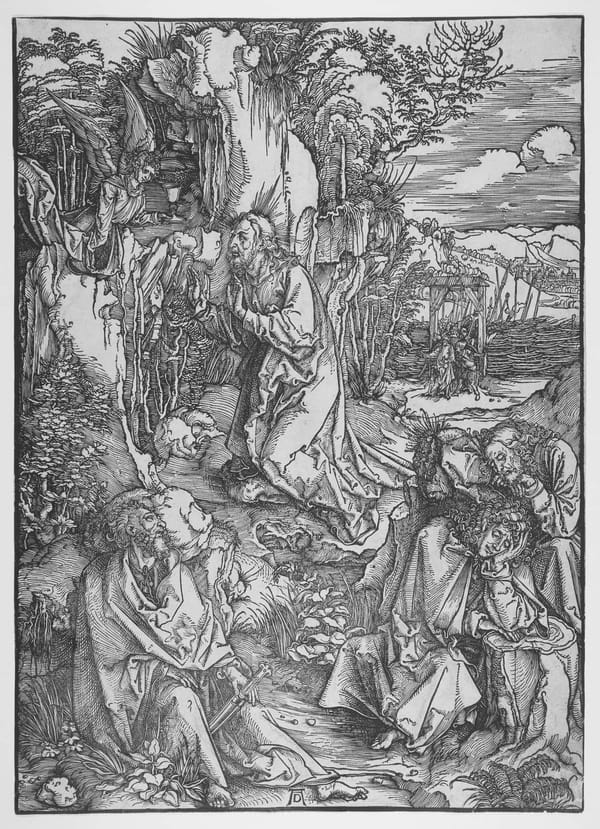
And yet, Jesus feels, in His human nature, a momentary fear at the thought of this death He is to undergo. It is not the agony in the garden; it is a trouble of soul. Let us listen to His words: 'Father! save Me from this hour.' It is our God who foresees all that He is about to suffer for our sake, and it fills Him with fear: He asks to be freed from it, though His will has decreed and accepted it. He immediately adds: 'But for this cause I came unto this hour: Father! glorify Thy name.' His soul is now calm; He once more accepts the hard conditions of our salvation. After this, His words bespeak a triumph; by virtue of the sacrifice about to be offered, satan shall be dethroned: the prince of this world shall be cast out. But the defeat of satan is not the only fruit of our Saviour’s immolation: man, earthly and depraved creature as he is, is to be raised from this earth to heaven. The Son of God is to be the heavenly loadstone, attracting man to Himself: 'And I, if I be lifted up from the earth, will draw all things to Myself.' He forgets His sufferings, and the terrible death which just now troubled Him; He thinks but of the defeat of our implacable enemy, and of our being saved and glorified by His cross. These few words reveal the whole Heart of our Redeemer: if we attentively weigh them, they will suffice to inflame us with devotion as we celebrate the ineffable mysteries of Holy Week.
Let us sue for mercy from the Saviour of our souls, in these words of supplication used in the Gothic liturgy of Spain.
Supplication
(Feria VI Dominicæ V)
The following sequence, in praise of Mary, is most appropriate for this Saturday of Passion-week. It sweetly blends together the homages we owe to the cross of Jesus and to the dolours of Mary. We have taken it from the Horæ of the sixth century.
Sequence
Qui vitam amisimus
Fructu ligni vetiti.
Qui fructum non viderit
Adhærentem stipiti.
Pendet, sicut creditur,
Virginis ad ubera.
Inter viros scelerum,
Passus quinque vulnera.
Hic crux salutifera:
Ambo ligna mystica.
Illa cedrue nobilis:
Utraque vivifica.
Quo me vertam nescio.
Dulcis est collatio.
Modis vagit variis.
Complexurus omnia.
Novit hic tenere.
Nescit hie latere.
Pascitur ab ubere.
Pascit nos ex vulnere.
Fructu nos reficiens.
Fructum nobis nutriens.
Finalis sententia.
Quod nemo consequitur
Unam sine alia.
Nec sic Matrem deserit:
Cuna ad crucem venerit,
Matrem ibi poterit
Stantem invenire.
Crucem prorsus abigit,
Si modum intelligit
Quo per Matrem contigit
Gladium transire.
Matris crucifixæ,
Nos de cruce respice,
Fili crucifixe.
Fructus ligni vitæ,
Nos teipso refice,
Nobis da frui te.
lost our life,
now seek the tree of life.
who sees the branch
whereon is fixed the fruit.
that the fruit, that gives us life,
hangs on Mary’s breast.
between two thieves,
though here he is pierced with five wounds.
and the saving cross,
both are mystic trees;
Mary, noble as the cedar:
both are trees of life.
I know not to which to turn.
O sweet comparison!
a weeping little Babe;
calling all to his embrace.
sweet to a Mother’s love;
too ardent to be hid.
he is fed at her breast;
he feeds us from his wounds.
the food of its refreshing fruit;
feeding the very fruit, feeding him for us.
is my decision:
we cannot have the one
without the other.
must have the Mother;
for when he comes to the cross,
he will find the Mother
standing at the foot.
meets the cross as well,
for it was while standing at the cross,
that the Mother’s heart
was pierced.
of a crucified Mother!
look upon us
from thy cross.
O fruit of the tree of life!
refresh us with thyself,
give us the enjoyment of thine own dear self.
March 28: St. John Capistran, Confessor
|
The nearer the Church approaches to the end of her earthly existence, the more she seems to love to enrich her cycle with feasts that recall the glorious past. Indeed, one of the objects of the sacred Liturgy is to keep before our minds all that God has done for us. ‘Remember the days of old: think upon every generation,’1 said God to His people in the alliance of Sinai. It was a law in Jacob that the fathers should hand on these traditions to their children, who were in their turn to transmit them to their descendants.2 The Church has taken the place of the ancient Israel and her annals speak, even more than those of the Jewish people, of the manifestations of divine power. The children of the new Sion have more right than the sons and daughters of Juda to say, as they look back on the past: ‘Thou art thyself my king and my God, who commandest the saving of Jacob.’
At the time when the defeat of the Iconoclasts was being completed in the East, a new and most terrible war was beginning in which the West was to fight for the sake of civilization and for the cause of the Incarnate Word of God. Like a sudden torrent, Islam overwhelmed Eastern Europe, reaching even to Gaul, and for a thousand years it disputed, foot by foot, with Christ and His Chutch, the land occupied by the Latin races. The glorious Crusades of the twelfth and thirteenth centuries, which attacked this power in its very centre, only succeeded in paralyzing it for the time being. In Spain the struggle continued until the triumph of the Cross was complete, but in other parts of Europe Christian princes forgot the traditions of Charlemagne and St. Louis, grew weary of the holy war, and gave themselves up to the pursuit of their private ambition, so that the Crescent was able once more to defy the Christian powers and renew its plan of universal conquest.
In 1453 Byzantium, the capital of the Eastern empire, fell before the Turkish janissaries, and three years later Mahomet II. invested Belgrade on the very outskirts of the Western empire. It might have been expected that all Europe would hasten to the aid of the besieged fortress, for if this last dyke were to fall, Hungary, Austria and Italy would be overwhelmed and the peoples of the North and West would share the fate of the East, that life in death, that irremediable sterility of soil and intelligence which still holds captive the once brilliant Greece. But this imminent danger only resulted in deepening the breach in Christian unity, and the Christian nations were at the mercy of a few thousand infidels. Only the Papacy was true to itself in the midst of all this egoism and perfidy. Truly Catholic in its thoughts, its labours, its sufferings, as in its joys and triumphs, it took up the common cause which had been basely betrayed by kings and princes. The powerful were deaf to the Pope’s appeals, but he turned to the humble and, trusting more in prayer to the God of armies than in military tactics, he sought for the deliverers of Christendom among the poor.
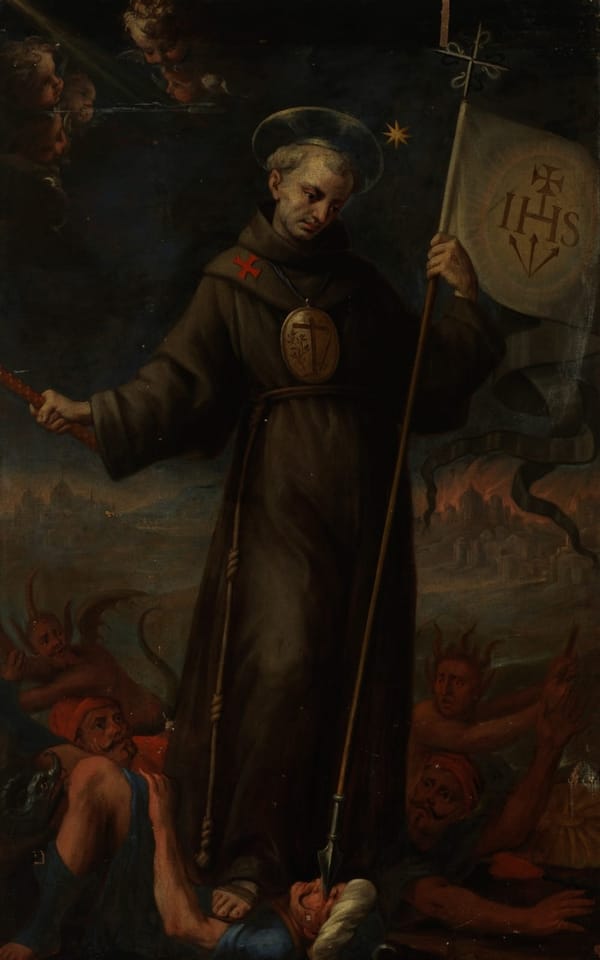
It was then that John Capistran, the saint of to-day, attained the consummation of his glory and his sanctity. At the head of a few poor men of good-will, unknown peasants gathered together by the Franciscan Friars, this ‘poor man of Christ’ undertook to defeat the strongest and best organized army of the century. On July 14, 1456, he broke through the Ottoman lines with John Hunyades, the only one of the Hungarian nobles who would accompany him, and revictualled Belgrade; and on July 22, feeling that he could no longer endure the defensive, he threw himself, to the stupefaction of Hunyades, on the enemy entrenchments. His troops were armed only with flails and pitchforks, and their only strategy was the name of Jesus. John had inherited this victorious battle-cry from his master, Bernardine of Siena. The Psalmist said: ‘Some trust in chariots and some in horses: but we will call upon the name of the Lord our God.’3 This name, so holy and so terrible, proved once more the salvation of the people. At the end of that memorable day twenty-four thousand Turks lay dead on the field of battle; three hundred cannon and all the spoils of the infidels were in the hands of the Christians, and Mahomet II. was seeking a distant hiding-place for his shame. The news of this victory, so like that of Gedeon,4 reached Rome on August 6, and Pope Callistus III. decreed that henceforth the Universal Church should keep a solemn commemoration of the Transfiguration of Our Lord on that day, for it was with the soldiers of the Cross as with the heroes of Israel,5 ‘they got not the possession of the land by their own sword: neither did their own arm save them, but thy right hand and thy arm and the light of thy countenance because thou wast pleased with them,’ as with Thy beloved Son on Mount Thabor.6
Let us read the life of St. John Capistran as related in the Liturgy:
‘The Lord is with thee, O most valiant of men. Go in this thy strength and thou shalt deliver Israel out of the hand of Madian. Know that I have sent thee.’7 Thus did the angel of the Lord salute Gedeon when he chose him from among the least of his people8 to fulfil a high destiny. Thus do we in our turn salute thee, O glorious son of St. Francis of Assisi, and we beseech thee to be our constant aid. The enemy whom thou didst defeat on the field of battle is no longer an imminent peril for the West, but there is a greater danger, as Moses said to his people after their deliverance from Egypt: ‘Take heed and beware lest at any time thou forget the Lord thy God . . . lest after thou hast eaten and art filled, hast built goodly houses . . . and shalt have herds of oxen and flocks of sheep and plenty of gold and of silver, and of all things; thy heart be lifted up and thou remember not the Lord who brought thee out of the house of bondage.’9 If the Turk had conquered in that struggle of which thou wert the hero, what would have become of the civilization of which we are so proud? Since thy day the Church has had once more to champion the cause of Society, which the heads of the nations no longer seem to understand. May the need of giving expression to the gratitude which is due to her preserve her children from the forgetfulness which is the great evil of the present generation. We thank God for the feast of to-day; it is a perpetual memorial of His goodness and of the noble deeds of His saints. Help us to conquer in that warfare which is being incessantly carried on within our own souls against the world, the flesh, and the devil. May the name of Jesus put our enemies to flight, may His Cross be our standard and lead us through the death of self-love to the triumph of the Resurrection.
| Previous March 27: St. John Damascene, Confessor and Doctor of the Church | Next March 28: St. John Capistran, Confessor |