lyp.network

Daily reading

Semidouble · Movable from Easter · Temporal

May 15, 2026

From Dom Guéranger’s The Liturgical Year.
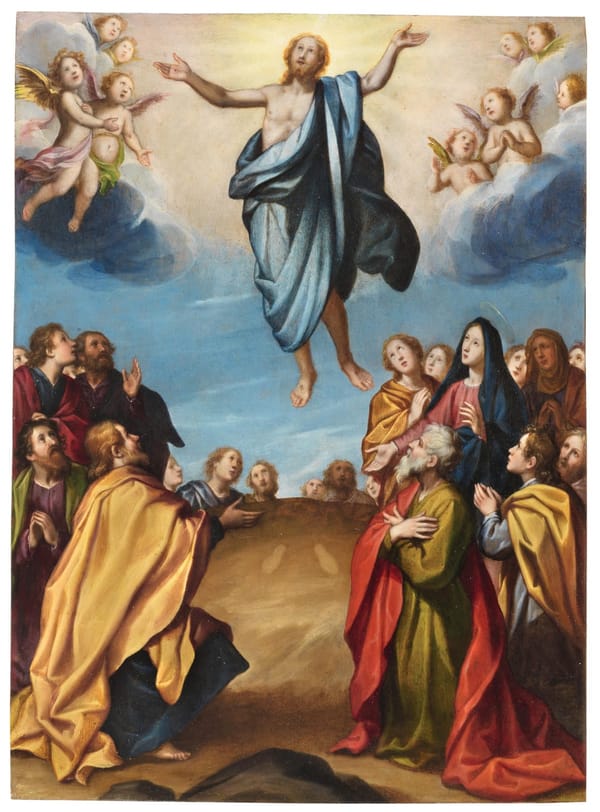
Friday within the Octave of the Ascension

O Rex gloriæ, Domine virtutum, qui triumphator hodie super omnes cœlos ascendisti, ne derelinquas nos orphanos; sed mitte promissum Patris in nos, Spiritum veritatis, alleluia.
O King of glory, Lord of hosts, who didst this day ascend in triumph above all the heavens! leave us not orphans, but send upon us the Spirit of truth, promised by the Father, alleluia.

The feast of the Ascension shows us the work of God in its completion. Hence it is that the Church, in her daily offering of the holy sacrifice, thus addresses the eternal Father: the words occur immediately after the consecration, and contain the motives of her confidence in the divine mercy: ‘Wherefore, O Lord, we Thy servants, as also Thy holy people, calling to mind the blessed Passion of Christ Thy Son our Lord, His Resurrection from the dead, and His admirable Ascension into heaven, offer unto Thy most excellent Majesty a pure, holy, and unspotted Host.’ It is not enough for man to hope in the merits of his Redeemer’s Passion, which cleansed him from his sins; it is not enough for him to add to the commemoration of the Passion that of the Resurrection, whereby our Redeemer conquered death; man is not saved, he is not reinstated, except by uniting these two mysteries with a third: the Ascension of the same Jesus who was crucified and rose again. During the forty days of His glorified life on earth, Jesus was still an exile; and, like Him, we also are exiles until such time as the gate of heaven, which has been closed for four thousand years, shall be thrown open, both for Him and for us.

God, in His infinite goodness, made man for a nobler end than that of being mere lord of creation; He gave him a higher destiny than that of knowing such truths as his natural powers could grasp, and of practising virtues that were within the reach of his moral capabilities, and of paying to his Creator an imperfect worship. In His omnipotence and love, He gave to this frail creature an end far above his nature. Though inferior to the angel, and uniting in himself the two natures of matter and spirit, man was created to the same end as the angel. Both were to dwell for eternity in heaven; both were to be eternally happy in the face-to-face vision of God, that is, in the closest union with the sovereign Good. Grace—that wondrous and divine power—was to fit them for the supernatural end prepared for them by the gratuitous goodness of their Creator. This was the design which God had decreed from all eternity: to raise up to Himself these creatures that He had drawn out of nothingness, and to enrich them, agreeably to their sublime destiny, with the treasures of His love and His light.

We know the history of the fallen angels. They revolted against the commandment given them by God as a test of their fidelity, and as a condition of their being admitted into eternal happiness. Rebels were found in each of the choirs. They fell; but the fall and its punishment were personal, and injured none but the actual transgressors. The angels who remained faithful were at once rewarded with the beatific vision and possession of the sovereign Good. Thus did God vouchsafe to make created beings partake in His own infinite happiness: the first elect were the good angels of the nine choirs.

Man was created after the angels; he too fell, and his sin severed the link which united him with God. The human race was, at that time, represented by one man and woman; when they fell, all fell. The gate of heaven was then shut against mankind, for the fall of Adam and Eve implicated us their children; neither could they transmit to us an inheritance which they themselves had lost. Instead of a quick and happy passage through this world, and then a glorious ascension into heaven, we were to have a life short indeed but full of misery, a grave, and corruption. As to our soul, even had she aspired to the supernatural happiness for which she was created, she could never have attained to it. Man had preferred earth for his portion, and the earth was given to him; but this only for a few short years, after which others would take his place, disappear in their turn, and so on to the end, as long as it should please God to perpetuate this fallen portion of His creation.

Yes, it is thus we deserved to be treated; but our merciful Creator had compassion upon us. He hated sin; but He had created us that He might make us partakers of His own glory, and He would not have His design frustrated. The earth was not to be an abode for man to be merely born, live a few days, and then die. When the fulness of time should come, there was to appear in the world a Man, not indeed the first of a new creation, but one like ourselves and of our own race, or, as the apostle expresses it, ‘made of a woman.’1 This Man, who was to be heavenly and yet of earth, would share our misfortunes with us; He would die like us; He would be buried like us; but, on the third day, He would rise again, and men would see Him resplendent with glory and immortality. What a joy for us, who have within us ‘the answer of death,’ to see such a victory gained by One, who is one of ourselves, ‘flesh of our flesh!’

Thus were the divine intentions to be realized in our regard. Our earth presents to our Creator a new Adam. He cannot stay here, for He has conquered death; He must ascend to heaven, and if her gates be closed, she must open them and receive Him. ‘Lift up your gates, O ye princes! and be ye lifted up, O eternal gates! and the King of glory shall enter in!'2 Oh that He would take us thither with Him, for He is our brother, and He assures us that His ‘delight is to be with the children of men’!3 But what a joy it is for us to see our Jesus ascend to heaven! He is the holiest, the purest, the loveliest, of our race; He is the Son of a spotless Mother: let Him go and represent us in the kingdom of our inheritance. It is our own earth that sends Him; she is no longer a desert, now that she has produced such a flower, and such a fruit, for heaven. A flood of light poured into this lowly vale of tears, when the gates of heaven were raised up to receive Him. ‘Be Thou exalted, O Lord, in Thine own strength! and we, who are still on the earth, will sing and praise Thy power ’!4 Receive, O eternal Father, the brother whom we send to Thee; sinners though we are, this brother of ours is infinitely holy and perfect. Where is the curse that once fastened on our earth?’The earth hath given her fruit’!5 And if we may presume so far as to see in Him the first-fruits of a future harvest to be gathered into Thy house, may we not rejoice in the thought that the Ascension of our Jesus was the day whereon Thy primal work was restored to Thee?

Let us, to-day, borrow from the Armenian Church one of her sweetest hymns. Let us unite with her in sharing in the joy felt by the holy angels, when they saw the God-Man rising from earth, and taking possession of the highest throne in heaven.

Potestates cœli territæ sunt, videntes ascensum tuum, Christe: alter ad alterum pavescentes dicebant: quis est iste rex gloriæ?
Hic est incarnatus Deus Verbum, qui in cruce peccatum occidit, et supervolans gloriose, venit in cœlum, Dominus fortis virtute sua.
Hic est qui de monumento surrexit, et destruxit infernum, atque superseandens gloriose venit ad Patrem, Dominus potens in praelio.
Qui ascendit hodie divina potestate in patrio curru, ministrantibus ei angelicis choris, qui canebant dicentes: Attollite portas, principes, vestras, et introibit rex gloriae.
Stupuerunt supernae Potestates, et tremenda voce clamabant ad invicem: Quis est iste rex gloriae, qui venit in carne et mira virtute? Attollite, attollite portas, principes, vestras, et introibit rex gloriae.
Modulabantur superni Principatus, mirabili voce cantabant canticum novum, dicentes: Ipse est rex gloriae, salvator mundi et liberator generis humani; attollite portas, principes, vestras, et introibit rex gloriæ.
Qui complantati facti sumus similitudinis mortis tuæ, Fili Dei, dignos fac nos conformes fieri tibi, gloriæ rex; tibi cantent Ecclesiæ sanctorum cantica spiritualia.
Veterem hominem concrucifixum tibi fecisti et stimulum peccati extinxisti; liberasti nos vivifico ligno, cui affixus es, et guttæ sanguinis tui inebriarunt orbem; tibi cantent Ecclesiæ sanctorum cantica spiritualia.
Propter miserationem divinae humamtionis tuæ participes fecisti nos corporis tui et sanguinis, per sacrificium tuum Patri in odorem suavitatis oblatum, corporis a nobis sumpti, et ascendisti pellucidis nubibus, manifestatus Potestatibus ac Principatibus, qui stupefacti interrogabant: Quis est iste qui properans venit de Edom? Et per Ecclesiam tuam didicerunt multiformem sapientiam tuam; tibi cantent Ecclesiae sanctorum cantica spiritualia.
The Powers of heaven trembled, when they witnessed thine Ascension, O Christ, and said to each other in fear, 'Who is this king of glory?'
This is God the Word made Flesh, who put sin to death upon the cross, and ascending in glory, entered heaven: the Lord, mighty in his power.
This is he that rose from the tomb, and destroyed death, and now comes by a glorious Ascension, to the Father: he is the Lord, mighty in war.
This is he that ascended today, by his divine power, in his Father’s chariot: choirs of angels ministered to him, and sang, saying: ‘Lift up your gates, O ye princes, and the King of glory shall enter in!’
The heavenly powers were amazed, and cried unto each other with tremulous voice: ‘Who is this king of glory, that cometh in the flesh and in wondrous power? Lift up, lift up your gates, O ye princes, and the King of glory shall enter in!’
The Principalities of heaven were heard singing a new canticle, and saying in a tone of glad admiration: ‘It is the King of glory, the Saviour and deliverer of mankind! Lift up your gates, O ye princes, and the King of glory shall enter in!
We have been planted together in the likeness of thy death, O Son of God! Make us worthy to be made like unto thee, O King of glory! Let the Churches of the saints sing to thee their spiritual canticles!
Thou didst crucify together with thyself the old man, and thou tookest away the sting of sin; thou gavest us liberty, by the life-giving tree to which thou wast fastened, and thy Blood has inebriated the whole earth. Let the Churches of the saints sing to thee their spiritual canticles.
Through the mercy that led thy divine nature to assume ours, thou hast made us partakers of thy Body and Blood, by the sacrifice of the Body thou hadst taken to thyself, a sacrifice which thou offeredst to the Father in an odour of sweetness. Then didst thou ascend, on a bright cloud, and wast seen by the Powers and Principalities, who asked each other in wonderment: 'Who is this that cometh, in haste, from Edom?’ The faithful have been taught thy manifold wisdom. Let the Churches of the saints sing to thee their spiritual canticles!
  1. Gal. iv. 4. ↩︎
  2. Ps. xxiii. 7. ↩︎
  3. Prov. viii. 31. ↩︎
  4. Ps. xx. 14. ↩︎
  5. Ibid lxvi 7. ↩︎

May 15: St. John Baptist de la Salle, Confessor

JOHN Baptist de la Salle, the teacher of the humble, takes his place to-day beside Leo the Great, Athanasius, and Gregory of Nazianzum. He has no fear. The victor of Paschal Time is the same Jesus who said during his mortal life: ‘Suffer the little children to come unto me,'1 and ‘unless you be converted and become as little children, you shall not enter into the kingdom of heaven,'2 that kingdom of heaven which, after entering into his glory, he manifests so fully upon earth. On the other hand, the Lion of Juda is never more terrible in his anger than when he beholds evil men conspiring to keep from him the little ones of whom he forms his court.3

The promise made in Holy Scripture that ' they that instruct many to justice shall shine as stars for all eternity'4 is addressed not only to the great doctors of the science of salvation, but also to the humblest Christian teacher, and the supreme Pontiff, when inscribing the name of the saint of to-day among those of the blessed, declared that the inspired words ' apply in an especial manner to those who, like him, have left all things and devoted themselves to the instruction of the baptized from earliest infancy in the teaching of the Gospel and the precepts which lead to life eternal.’5

John Baptist de la Salle was a true disciple of our blessed Lord, and entered so fully into the thought of his Master that no sacrifice was too great for him if only he might carry it out, and no suffering, humiliation, or persecution could hinder him from persevering in the accomplishment of his works of love. He suffered from misunderstanding and lack of support all through his life, but is he less great in heaven to-day on that account?

The following account of him is given in the Breviary:

Joannes Baptista de la Salle, Rhemis claro genere ortus, puer adhuc moribus et factis in sortem Domini se vocandum et sanctimoniae laude honestandum portendit. Adolescens in Rhemensi Academia litteras ac philosophicas disciplinas didicit; quo tempore etsi ob animi virtutes et alacre ingenium ac suave omnibus carus esset, ab aequalium tamen societate abhorrebat, ut solitudini addictus facilius Deo vacaret. In clericalem militiam jampridem cooptatus, sextodecimo aetatis anno inter Rhemenses Canonicos adscriptus est. Lutetiam Parisiorum, theologiae in Sorbonica universitate daturus operam, contendit atque in Sulpitianum seminarium adscitus est. At brevi parentibus orbatus, domum regredi coactus, fratres educandos suscepit: quod scientiarum interim sacrarum studia non intermittens, optimo cum fructu praestitit, uti exitus comprobavit.
Sacerdotio demum auctus, qua praestanti fide animique ardore primum ad aram fecit, eisdem toto vitæ tempore sacris est operatus. Interea salutis animarum studio incensus, totum in earumdem utilitatem sese impendit. Sororum a Jesu Infante, puellis educandis institutarum regimen suscepit, easque non modo prudentissime est moderatus, sed ab excidio vindicavit. Hinc porro animum advertit ad pueros de plebe religione bonisque moribus informandos. Atque in hoc quidem illum suscitaverat Deus, ut scilicet nova in Ecclesia sua religiosorum hominum familia condita puerorum, praesertim pauperum, scholis perenni efficacique ratione consuleret. Demandatum vero a Dei providentia munus, per contradictiones plurimas magnasque aerumnas feliciter implevit, fundata Fratrum sodalitate, quam a scholis Christianis nuncupavit.
Adjunctos igitur sibi homines in gravi opere et arduo, apud se primum suscepit; tum aptiori in sede constitutos disciplina sua optime imbuit iis legibus sapientibusque institutis, quæ postea a Benedicto decimo tertio sunt confirmata. Ex demissione animi ac paupertatis amore primum canonicatu se abdicavit, omniaque sua bona in pauperes erogavit; quin etiam serius, quod frustra saepius tentaverat, fundati a se instituti regimen sponte deposuit. Nihil tamen interim de Fratrum sollicitudine remittens, deque scholis ab eo, pluribus jam locis, apertis, impensius Deo vacare cœpit. Assidue jejuniis, flagellis, aliisque asperitatibus in se ipsum saeviens, noctes orando ducebat. Donec virtutibus omnibus conspicuus, praesertim obedientia, studio divinae voluntatis implendae, amore ac devotione in Apostolicam Sedem, meritis onustus, sacramentis rite susceptis, obdormivit in Domino, annos natus duo de septuaginta. Eum Leo decimus tertius Pontifex Maximus Beatorum catalogo inseruit; novisque fulgentem signis, anno jubilaei millesimo nongentesimo Sanctorum honoribus decoravit
John Baptist de la Salle was born of a noble family at Rheims. When quite a child he showed by his ways and actions that he would be called to follow our Lord and attain great sanctity. He studied literature and philosophy at Rheims, and though his virtues and quick intelligence endeared him to all, he avoided the company of his fellows that he might be free to contemplate God in solitude. He was made a cleric when very young, and was only sixteen when given the rank of a Canon at Rheims. He went to Paris to study theology at the Sorbonne, and was received at the Seminary of St Sulpice. He was soon forced to return home by the death of his parents, whereupon he undertook the education of his brothers, which he carried on, without interrupting his own studies, to the great advantage of his pupils, as soon became evident.
He was ordained priest, and said his first Mass with the intense faith and love which, throughout his life, he brought to the holy Mysteries; but his zeal for the salvation of souls made him devote himself wholly to the service of his neighbour. He was made superior of the Sisters of the Holy Child, founded for the education of girls, and by his prudent government saved their institute from dissolution. From this he turned his attention to the education of poor boys. God had raised him up for this very end, namely that he should found in the Church a new family of religious men devoted to the training of children, particularly the poor. This work, which had been entrusted to him by divine Providence, was successfully accomplished in spite of many trials and contradictions by the establishment of the Institute of the Brothers of the Christian Schools.
His first helpers in this great and arduous work he received into his own house, and then, establishing them in a more suitable dwelling, gave them a careful training in those wise laws and regulations which were afterwards confirmed by Pope Benedict XIII. His humility and love of poverty caused him first of all to resign his canonry and to distribute all his property among the poor; and. finally, after many unsuccessful attempts to do so, he spontaneously resigned the government of the Institute which he had founded. His solicitude for the Brethren and for the schools which he had opened in various places suffered no diminution, though he began to give himself more assiduously to the direct service of God in fasting, watching, and other austerities. He spent his nights in prayer. His virtues were conspicuous, especi ally his obedience, conformity to the will of God, and love of the Holy See. At length, full of merits, and fortified with the Sacraments of the Church, he fell asleep in the Lord in the sixty-eighth year of his age. Pope Leo XIII beatified him and, after fresh miracles had been worked through his intercession, proceeded to his canonization in the year of Jubilee, 1900.

O God, who hast raised up the holy Confessor John Baptist to promote the Christian education of the poor and to confirm the young in the way of truth, and, through him, hast gathered together a new family within thy Church: mercifully grant through his intercession and example that we may bum with zeal for thy glory in saving souls, and may share his crown in heaven. Through Christ our Lord.

Thus, O father of Christian schools, does Holy Church pray to-day in thy honour. She is as full of confidence as though the trials of thy mortal life had been sufficient to guard thy sons against similar sufferings; as serene as though the future of thy work were assured. And yet, might we not say that the culminating point of thy glorification on earth seems to have given the signal for the triumph of hell over thy labours? But the Church is strong in her experience of twenty centuries, and she fears no persecution. She knows that if the tree be planted by God, the hurricane will but strengthen its roots, and that a house built upon a rock can brave the wind and the floods. We too, like the Church, are full of hope, trusting in thy merits and thy intercession. Even if min seem complete, the divine Head of all who suffer persecution assures us that the tomb itself, though sealed by the powers of this world, cannot guarantee to Death the secure possession of his victim.

  1. St Mark x 14. ↩︎
  2. St Matt. xviii 3. ↩︎
  3. Ibid. xviii 6. ↩︎
  4. Dan. xii 3. ↩︎
  5. Decree of Beatification. ↩︎
Previous
May 14: St. Boniface, Martyr
Next
May 15: St. John Baptist de la Salle, Confessor