lyp.network

Daily reading

Semidouble · Movable from Easter · Temporal

May 16, 2026

From Dom Guéranger’s The Liturgical Year.
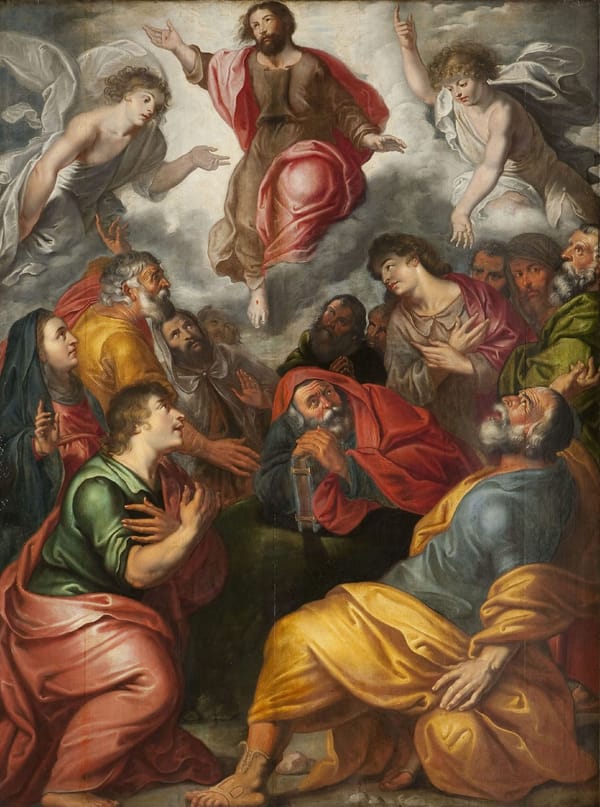
Saturday within the Octave of the Ascension

O Rex gloriæ, Domine virtutum, qui triumphator hodie super omnes cœlos ascendisti, ne derelinquas nos orphanos; sed mitte promissum Patris in nos Spiritum veritatis, alleluia.
O King of glory, Lord of hosts, who didst this day ascend in triumph above all the heavens! leave us not orphans, but send upon us the Spirit of truth, promised by the Father, alleluia.

Jesus, then, the Man who dwelt on the earth and was perfect in all holiness, has ascended into heaven. This earth, accursed of God as it was, has produced the fairest fruit of heaven; and heaven with its gates shut against our race, has had to open them for the entrance of a Son of Adam. It is the mystery of the Ascension; but it is only a part, and it behoves us to know the mystery in its fulness. Let us give ear to the apostle of the Gentiles: ‘God who is rich in mercy, through His exceeding charity wherewith He loved us even when we were dead in sins, hath quickened us together with Christ: and hath raised us up together with Him, and hath made us sit in the heavenly places together with Him.’1 We have celebrated the Pasch of our Saviour’s Resurrection as our own resurrection; we must, agreeably to the apostle’s teaching, celebrate also His Ascension as our own. Let us weigh well the expression: ‘God hath made us sit in the heavenly places together with Christ.’ So then in the Ascension, it is not Jesus alone who ascends into heaven; we ascend thither with Him. It is not He alone that is enthroned there in glory; we are enthroned through and together with Him.

That we may the better understand this truth, let us remember that the Son of God did not assume our human nature with a view to the exclusive glorification of the Flesh which He united to His own divine Person. He came to be our Head. We, consequently, are His members; and where He is, we also are to be; at least, such is His intention, as He implied at the last Supper, when He said: ‘Father! I will that where I am, they also whom Thou hast given Me may be with Me, that they may see My glory which Thou hast given Me.’2 And what is the glory given to Him by His Father? Let us hearken to the royal prophet, who, speaking of the future Ascension, says: ‘The Lord said to my Lord: Sit Thou at My right hand!’3

It is, then, on the very throne of the eternal Father, it is at His right hand, that we shall see Him whom the apostle calls our forerunner.4 We shall be united with Jesus, as members to our Head; so that His glory will be ours; we shall be kings, with His kingship; He will make us partake of all that He Himself has, for He tells us that we are His joint-heirs.5

From this it follows that the august mystery of the Ascension, which began on the day of Jesus’ entrance into heaven, will continue, until His mystical body has received its completion by the ascension of the last of the elect. Look at that countless host of holy souls who were the earliest companions of His triumph: foremost are our first parents; then the patriarchs, the prophets, and the just of every generation of the preceding four thousand years! They had been imprisoned in limbo, but He liberated them, gave them of His own brightness, and made them His partners in the glory of His Ascension. They were His trophy; they formed His court, as He passed from earth to heaven. Well did we exclaim in the words of holy David: ‘Sing to God, ye kingdoms of the earth! Sing ye to the Lord. Sing ye to God, who mounteth above the heaven of heavens, towards the east.’6

The angels were ready to receive our Emmanuel; and then began that sublime dialogue, which the royal psalmist was permitted to hear and prophesy. The glad countless legion of the holy souls, who escorted the divine conqueror, cried out to the guardians of the heavenly Jerusalem: ‘Lift up your gates, O ye princes! Be ye lifted up, O eternal gates! and the King of glory shall enter in.’ The faithful angels replied: ‘Who is this King of glory?’ ‘It is the Lord,’ responded the elect of earth: ‘It is the Lord who is strong and mighty; the Lord mighty in battle.’ Well might they say this of our Jesus, who had vanquished satan, death and hell, and brought themselves to the city’s gate as a sample of His stupendous conquest. The angels repeated their question; the saints re-echoed their reply; the eternal gates were thrown open, and the King and His courtiers entered into heaven.7

The gates, then, are opened to receive our Redeemer, and opened He would have them remain for us to follow Him. Admirable Ascension! oh, let us linger in its contemplation! Jesus inaugurates the grand mystery by His own entrance into heaven, and then perpetuates it by the ascension of His elect of each successive generation. There is a ceaseless procession up to heaven; for some happy souls are ever finishing their purification in purgatory, while some still happier ones are winging their rapid flight direct from this earthly vale of sorrows. Hail, then, O glorious mystery! fruit of the flowers of so many mysteries; term, fulfilment, perfection of our Creator’s decree! Alas! thou hadst a long interruption by Adam’s sin; but Jesus’ triumph restored thy reign on earth, and this earth shall live in thy beauty and grace till that word shall be uttered by the angel: ‘Time shall be no more!’8 O mystery of joy and hope, be thou accomplished in me!

Permit us, then, O Jesus, to apply to ourselves what Thou saidst to Thine apostles: ‘I go to prepare a place for you!’9 This has been Thy aim in all Thou hast done for us: Thou camest into this world to open heaven for us. Thy holy bride, the Church, bids us fix our eyes on heaven; she points to its opened gates, and shows us the bright track through which is passing up from earth an unbroken line of souls. We are still in exile; but the eye of our faith sees Thee in that land above, Thee the Son of Man throned at the right hand of the Ancient of days.10 How are we to reach Thee, dear Jesus? We cannot, as Thou didst, ascend by our own power: Thou must needs fulfil Thy promise, and our desire, of drawing us to Thyself.11 It was the object after which Thy blessed Mother also sighed, when Thou didst leave her on earth; she longed for the blissful hour of Thy taking her to Thyself, and awaited Thy call with faith, labouring meanwhile for Thy glory, and living with Thee, though not seeing Thee. Give us to imitate the faith and love of this Thy Mother, that so we may apply to ourselves those words of Thine apostle: ‘We are already saved, by hope.’12 Yes, we shall be so, if Thou send us, according to Thy promise, the holy Spirit whom we so ardently desire to receive; for He is to confirm within us all that Thy mysteries have produced in our souls; He is to be to us a pledge of our future glorious ascension.

In presenting our petitions this day to heaven, let us take, as addressed to ourselves, the sublime instructions given by the Gothic Church of Spain, on the Ascension feast, to her children.

Missa

Placeat, dilectissimi fratres, saecularium cogitationum fasce deposito, erectis in sublime mentibus subvolare: et impositam aetheris fastigio assumpti hominis communionem, sequacibus cordis oculis contueri. Ad incomparabilem nobis claritatem attonitus vocandus aspectus, est Jesus Dominus noster: humilitatem nobis terrarum cœlorum dignitate commutat: acutus necesse est visus esse respicere quo sequimur. Hodie salvator noster post assumptionem carnis, sedem repetit deitatis. Hodie hominem suum intulit Patri, quem obtulit passioni. Hunc exaltans in cœlis, quem humiliaverat in infernis. Hic visurus gloriam, qui viderat sepulturam. Et qui adversus mortem mortis suæ dedit beneficium, ad spem vitae donavit resurrectionis exemplum. Hodie rediit ad Patrem, cum tamen sine Patris, qui sibi aequalis est, potestate non venerit. Hodie ascendit in cœlum qui obsequia cœlestium cum descenderet, non amisit. Ita in Patris natura unitate consistens, ut cum homo cœlum novus intraret, novum tamen Deus hominem non haberet. Petamus igitur ab omnipotentia Patris, per nomen Filii salvatoris, gratiæ spiritalis ingressum, aeternæ beatitu- dinis donum, beatae mansionis ascensum, catholicae credulitatis augmentum, haereticae infidelitatis, excidium. Audiet profecto in confessione, quos in perditione quaesivit. Adstitit suis, qui non destitit alienis. Aderit agnitus, qui non defuit agnoscendus. Non patietur orphanos esse devotos, qui filios facere dignatus est inimicos. Dabit effectum supplicationis, qui promisit Spiritum sanctitatis. Amen.
We beseech you, dearly beloved brethren, that, laying aside the weight of worldly thoughts, you would raise up your minds, and soar to heavenly things, and see, with the attentive eye of the heart, how Christ placed your own human nature, which he had assumed, in the highest heavens. The incomparable brightness on which we are invited to fix our astonished gaze, is Jesus our Lord. He exchanges the lowliness of this earthly dwelling for the glory of heaven. How quick must our sight be, that it may see the land, whither we are to follow him! To-day our Saviour, after assuming our human nature, returned to the throne of the Godhead. Today, he offered to his Father that same human nature, which he had previously offered to the endurance of his Passion. He exalted in heaven the Humanity that he had humbled in limbo. He well deserved to see glory, who had seen the tomb. He who conferred on us his own death, that he might put ours to death, gave us the example of his Resurrection, that he might gladden us with the hope of life. To-day, he returned to the Father, though he had not been here on earth without possessing all the power of the Father, who is co-equal with him. To-day, he ascended into heaven, though he had not lost the adoration of the angels when he descended upon our earth. One with the Father in unity of substance, he so entered into heaven as the new Man, that he was not new to God. Let us, therefore, ask the almighty Father, through the name of his Son, our Saviour, that he grant us admission into a spiritual life of grace, the gift of eternal happiness, an ascension into the mansion of bliss, an increase of Catholic faith, and the destruction of heretical disbelief. He, surely, will hear us, now that we praise him who went in search of us when we were lost. He will assist us that are now his people, who abandoned us not when we were aliens. He will be with us now that we know him, for he was not absent from us even when we knew him not. He will not suffer us to be orphans now that we are devoted to him, for he vouchsafed to make us his children when we were his enemies. He will grant us what we ask, for he has promised to send us the Holy Ghost. Amen.
  1. Eph. ii. 4,6. ↩︎
  2. St. John, xvii. 24. ↩︎
  3. Ps. cix. 1. ↩︎
  4. Heb. vi. 20. ↩︎
  5. Rom. viii. 17. ↩︎
  6. Ps. lxvii. 33, 34. ↩︎
  7. Ibid xxiii. ↩︎
  8.  Apoc. x, 6. ↩︎
  9.  St. John, xiv. 2. ↩︎
  10.  Dan. vii. 13. ↩︎
  11.  St. John, xii. 32. ↩︎
  12.  Rom. viii. 24. ↩︎

May 16: St. Ubaldus, Bishop and Confessor

IN order to honour her eternal High Priest, the Church presents to him this day the merits of a pontiff who, after his mortal career, was admitted into a happy immortality. Ubaldus, here on earth, was the image of our Lord Jesus Christ. Like his divine Master, he received the holy anointing of priesthood; he was a mediator between God and man; he was the shepherd of a flock; and now he is united with our Risen Jesus, the great Anointed, the Mediator, the Shepherd. In proof of his influence in heaven, Ubaldus has had given to him a special power against the wicked spirits who lay snares for our perdition. It has frequently happened that the simple invocation of his name has sufficed to foil their machinations. The Church has fixed this day as his feast with the view of encouraging the faithful to have recourse to his protection.

Let us now read the account she gives of the virtues of the saintly bishop:

Ubaldus, Eugubii in Umbria nobili genere natus, a primis annis pietate et litteris egregie est institutus. Jamque adolescens, ut uxorem duceret saepe tenta tus, nunquam tamen a proposito servandae virginitatis recessit. Sacerdos effectus, patrimonium suum pauperibus et Ecclesiis distribuit, et Canonicorum Regularium Ordinis sancti Augustini institutum suscipiens, illud in patriam transtulit, atque in eo aliquandiu sanctissime vixit. Cujus sanctitatis opinione evulgata, ab Honorio Secundo summo Pontifice Ecclesiae Eugubinæ invitus praeficitur, et Episcopalis consecrationis munere decoratur.
Ad suam itaque revertens Ecclesiam, quum de consueta vivendi ratione nihil admodum immutasset, in omni tamen virtutum genere eo magis eminere coepit, quo efficacius aliorum etiam salutem verbo et exemplo procuraret, factus forma gregis ex animo. Nam victu-parco, vestitu moderato, lectulo aspero et pauperrimo, crucis mortificationem jugiter in suo corpore circumferebat, dum inexplebili orationis studio spiritum quotidie recrearet. Hinc admirabilem illam mansuetudinem est adeptus, qua gravissimas injurias et contumelias non modo aequanimiter tulit, verum etiam mirifico dilectionis affectu persecutores suos omni benignitatis testimonio complectebatur.
Biennio antequam ex hac vita migraret, quum diutinis afflictaretur infirmitatibus, inter acerbissimos corporis cruciatus, velut aurum in fornace purgatum, Deo gratias indesinenter agebat. Adveniente autem sacro Pentecostes die, quum multis annis Ecclesiam sibi commissam summa cum laude gubernasset, sanctis operibus ac miraculis clarus, quievit in pace: quem Cœlestinus Papa Tertius in Sanctorum numerum retulit. Ejus virtus prœcipue in effugandis spiritibus immundis elucet. Corpus vero per tot saecula incorruptum magna fidelium veneratione in patria colitur, quam non semel a praesenti discrimine liberavit.
Ubaldus was born at Gubbio in Umbria, of a noble family. He was from childhood formed in the most admirable way to piety and learning. When grown up, he was frequently urged to marry; but nothing could shake his resolution of leading a life of celibacy. On being ordained priest, he divided his fortune between the poor and the Churches, and entered among the Canons Regular of the Order of St Augustine. He established that Institute in his own country, and was for some time a most fervent observer of all its regulations. The fame of his virtue spread far and wide. Pope Honorius the Second compelled him to accept the charge of the Church of Gubbio; and, accordingly, he was consecrated bishop.
When he took possession of his see, he changed little or nothing of his mode of life; but he began to apply himself more than ever to the practice of every virtue, in order that he might the more effectually, both by word and example, procure the salvation of souls, for he was a pattern of the flock in all earnestness. His food was scanty, his dress unpretending, his bed hard and most poor. Whilst always bearing about in his body the mortification of the Cross, he refreshed his spirit every day with prayer, in which he seemed insatiable. The result of such a life was a meekness so admirable that he not only bore the worst injuries and insults with patience, but even treated his persecutors with surprising affection and showed them all possible kindness.
During the last two years of his life he suffered much from sickness. In the midst of the most acute pains, whereby he was made pure as gold that is cleansed in the furnace, he ceased not to give thanks to God. Finally, on the holy feast of Pentecost, after governing for many years and in a most laudable manner the diocese that had been entrusted to him, he slept in peace, venerated for his holy life and miracles. He was canonized by Pope Celestine the Third. God has given him a special power for driving away unclean spirits. His body, which has remained incorrupt for several centuries, is honoured with much devotion by the faithful of the city of Gubbio, which he has more than once rescued from the calamities that threatened it.

O blessed Pontiff! be thou our protector against the spirits of hell. They are devoured by envy at seeing how man, that lowly and feeble creature, has become the object of God’s predilection. The incarnation of the Son of God, his death on the cross, his glorious resurrection, the sacraments which give us the life of Grace—all these sublime means, whereby the infinite goodness of God has restored us to our lost dignity,have excited the rage of the old enemy, and he seeks revenge by insulting, in us, the image of our Creator. At times he attacks man with all the frenzy of angry jealousy. To mimic the operations of sanctifying grace, which, so to speak, makes us the instruments of God’s good pleasure, Satan sometimes takes possession of our fellow-creatures, and makes them his slaves. Thy power, O Ubaldus, has often manifested itself by rescuing these unhappy victims of the devil’s jealousy; and Holy Church, on this day, celebrates the special prerogative conferred on thee by our heavenly Father. Relent not in the exercise of thy charitable office. And yet, O holy Pontiff, thou knowest that the snares of the wicked spirits are more inj urious to the souls than to the bodies of men. Have pity, then, on the unhappy slaves of sin, who, though the divine Sun of the Pasch has risen upon them, are still in the darkness of guilt. Pray for them, that they may become once more children of the light, and share in the Easter Resurrection which Jesus offers to all.


May 16 (the Same Day): St. John Nepomucen, Martyr

TO the martyrs who were slain because they refused to adore false gods—to the martyrs whose blood was shed by heretics—there is added to-day another brave soldier of Christ, who won his crown in a very different sort of combat. The sacrament of Penance whereby sinners regain the heaven they had lost claims John Nepomucen as its glorious defender.

A holy secrecy shrouds the reconciliation made between God and the penitent. This sacramental secrecy deserved to have its martyr. When Jesus instituted the sacrament of Penance—that second baptism, wherein the Blood of our Redeemer washes away the sins of the Christian soul—he willed that man should not be deterred from confessing his humiliations to his spiritual physician by the fear of their ever being revealed. How many hidden martyrdoms have there not been, during these eighteen hundred years, for the maintenance of this secret, which, whilst it gives security to the penitent, exposes the confessor to obloquy, injustice, and even death! But the martyr we honour to-day was not one of these hidden sufferers. His testimony to the inviolability of the sacramental seal was public; he gave it amidst cruel tortures; it cost him his life.

All praise, then, to the brave and faithful priest! Right worthy was he to hold in his hands the keys that open or shut the gate of heaven! In this great fact of the observance of the seal of confession, on which depends the salvation of millions of souls, we have a permanent miracle. But there was one thing wanting to it—the glory of martyrdom. The holy priest of Prague gave it that glory; and he offers the fair palm to our Risen Jesus, whom we have seen, during these days between his Resurrection and Ascension, mercifully instituting the sacrament of Penance, wherein he communicates to men his own power of forgiving sin.

We subjoin the Lessons approved by the Holy See for the feast of this great martyr:

Joannes Nepomuci Bohemiae oppido, unde Nepomuceni cognomen duxit, a parentibus aetate provectis, non sine futurae sanctitatis praesagio, flammis supra nascentis domum mirabiliter collucentibus, ortus est. Quum infans in gravem morbum incidisset, beatæ Virginis ope, cui natum parentes referebant acceptum, e vitæ periculo evasit incolumis. Egregia indole, piaque institutione coelestibus indiciis Obsequente, inter sanctas religiosasque exercitationes pueritiam egit: nam ecclesiam frequenter adire, ac sacerdotibus ad aras operantibus ministrare in deliciis habebat. Zatecii politioribus litteris ad humanitatem informatus, Pragœ vero gravioribus disciplinis excultus, philosophiae, theologiae, sacrorumque canonum magisterium et lauream emeruit. Sacerdotio initiatus atque a scientia sanctorum ad lucra animarum rite comparatus, ministerio verbi Dei se penitus addixit. Quum igitur in vitiis exstirpandis, et revocandis in viam salutis errantibus, eloquentia et pietate uberes ederet fructus, inter canonicos metropolitanae Ecclesiae Pragensis cooptatus, mox sibi demandatam Evangelii coram rege Wenceslao Quarto praedicandi provinciam suscepit, eo successu ut Joannis suasu multa rex faceret, magnoque in honore ejus virtues haberet. Conspicuas tamen, quas ille obtulit, dignitates Dei servus, ne a divini verbi praeconio avocaretur, constantissime recusavit.
Regiis illum eleemosynis in pauperes erogandis praefectum, Joanna regina conscientiae sibi moderatorem adscivit. Quum autem Wenceslaus ab officio institutoque decessisset, atque in vitia praeceps abriperetur, piae vero conjugis obtestationes et monita gravate ferret, contendere ausus est ut in sacramentali judicio sacerdoti credita reginae arcana sibi a Joanne panderentur. At Dei minister, blanditiis primum, tormentis deinde et carceris squalore tentatus, nefariae regis cupiditati fortiter obstitit. Furentem tamen Wenceslai animum quum ab execrando proposito nec humana nec divina jura deterrerent, supremum agonem, quem instare sibi athleta Christi noverat, populo in concione de impendentibus etiam regni calamitatibus admonito, non obscure praenuntiavit. Mox Boleslaviam profectus, ad beatæ Virginis imaginem antiquo cultu celebrem, cœleste praesidium ad certandum bonum certamen effusis precibus imploravit. Inde vespere revertentem in pervigilio Dominicae Ascensionis, rex e fenestra conspicatus arcessit; quumque vehementius urgeret, et proximam in aquis, si obluctari pergeret, submersionem intentaret, Joannes invicta constantia terrores minasque refutavit. Itaque, regis imperio, in Moldavam, flumen Pragam interfluens, noctu dejectus, illustrem martyrii coronam est consecutus.
Sacrilegum facinus clam patratum et martyris gloriam insigne prodigium divinitus patefecit. Ubi enim exanime corpus secundo flumine vehi cœpit, ardentes faces aquis supernatantes et discurrentes apparuerunt. Quamobrem ex arena postridie mane corpus elatum canonici deinde, regis iram nihil timentes, in metropolitanam ecclesiam solemni pompa intulerunt, et sepulturae mandarunt. Quum autem in dies invicti sacerdotis memoria miraculis et maxima fidelium, eorum praecipue qui fama periclitantur, veneratione cresceret, post annos demum amplius trecentos, in juridica recognitione corporis, quod sub humo tamdiu jacuerat, lingua ejus incorrupta et vivida reperta est: quæ, sexto post anno judicibus a Sede Apostolica delegatis exhibita, novo prodigio repente intumuit, et subobscurum ruborem in purpureum commutavit. His itaque aliisque signis rite probatis, Benedictus Decimus tertius, Pontifex Maximus, die decima nona mensis Martii, anno salutis millesimo septingentesimo vigesimo nono, primum hunc sacramentalis sigilli assertorem, arcani fidem sanguine obsignantem, sanctorum martyrum catalogo adscripsit.
John was born of parents who were advanced in years, at Nepomuk, a town in Bohemia, from which he took the name of Nepomucen. His future sanctity was foretold by the appearance of bright rays miraculously shining over the house wherein he was born. When an infant, he was seized with a dangerous illness; but was delivered from death by the protection of the blessed Virgin, to whom his parents considered themselves indebted for his birth. He was blessed with an excellent disposition, and received a pious training, in keeping with the indications given from heaven. He spent his boyhood in the practice of religious exercises; it was his delight to be frequently in church and serve the priests at Mass. He went through his humanities at Zatek, and the higher studies at Prague, where he took his degrees in Philosophy, Theology, and Canon law. He was ordained priest; and being, by his proficiency in the science of the Saints, well fitted for gaining souls, he devoted himself entirely to preaching the word of God. In consideration of the great fruits produced by his eloquence and piety, which extirpated vice and brought sinners back to the way of salvation, he was made a Canon of the Metropolitan Church of Prague. Being afterwards chosen as preacher to King Wenceslaus the Fourth, he so far succeeded, that the king had a great regard for his virtue, and often followed his advice. He offered him several high dignities; but the saint always refused to accept them, fearing that they would interfere with his preaching the divine word.
He was entrusted w'ith the distribution of the royal alms to the poor, and Queen Jane chose him as her own spiritual director. Wenceslaus, who had given himself up to vices, which disgraced his character both as a king and a Christian, was displeased at the entreaties and counsels of his wife, and even dared to insist on John’s revealing to him the secrets, told to him as priest, by the queen in the sacrament of Penance. The minister of God courageously resisted the king’s impious request, and neither bribes, nor tortures, nor imprisonment, could make him yield. Seeing that the king had reached such a pitch of rage that the laws of neither man nor God made him relent, the soldier of Christ plainly foretold in one of his sermons his own approaching death, and the calamities that were to befall the kingdom. He then set out for Buntzel, where is kept an image of the blessed Virgin that has been venerated for centuries: he there implored heaven in fervent prayer, to grant him the assistance he needed, in order to fight the good fight. As he was returning home, on the evening before the Vigil of the Ascension, the king, who was standing at the palace window, saw him, and sent word that he was to repair to him. The king was more than ever urgent in his demand, and threatened John with immediate drowning, if he continued to refuse compliance. The saint was not to be conquered, and showed the king that he was not afraid of his threats. Wherefore, by the king's orders, he was thrown that same night into the river Moldau, which flows through Prague; and thus obtained the glorious crown of martyrdom.
The sacrilegious crime thus privately committed was miraculously revealed, as was also the great glory of the martyr. For as soon as life was extinct, and the corpse began to float down the stream, flaming torches were seen following it on the surface of the water. The next morning, the Canons went and took the body from the sand on which it lay, and heedless of the king's displeasure, had it carried with much solemnity to the metropolitan Church, and gave it burial. The memory of this courageous priest became most venerable in course of time both through the miracles that were wrought, and through the devotion of the faithful—of those especially whose good name is injured by evil report. After upwards of three hundred years, a juridical examination was made of his body (which, during all the time, had lain under the ground), and his tongue was found to be incorrupt and like that of a living man. Six years later the tongue was shown to judges delegated by the Apostolic See; when, by a fresh miracle, it immediately resumed the fulness of life, and, from being of a brownish colour, became perfectly red. These and other miracles having been authentically proved, he was canonized by Pope Benedict the Thirteenth, on the nineteenth day of March, in the year of our Lord 1729, as the defender of the seal of confession, and the first martyr to shed his blood for the maintenance of its holy secrecy.

How great, O glorious martyr, was the honour reserved for thee by the Son of God, when he chose thee to be the one who was to attest, by laying down his life, the sacredness of the secret which protects the sacrament of Penance! Other priests, as well as thyself, have bravely suffered persecution for the sake of the secrecy of the mystery of reconciliation: but thou wast the one chosen by heaven to give a solemn testimony of priestly discretion. Thy sufferings were known to more than angels: thy martyrdom was a public one, and the faithful honour thy courage as an eloquent proof of how truly our good Shepherd, Jesus, removes every difficulty that could deter the strayed sheep from returning to the fold.

We address ourselves to thee, O holy martyr, on this day of thy triumph and beseech thee to intercede for sinners. Admirable minister of the sacrament of Penance! thou seest how many Christians there are who neglect to avail themselves of the means of salvation prepared for them by our risen Saviour. Instead of laying hold of this ‘second plank after shipwreck,’ they let themselves be carried on to the deep abyss by the tide of their sinful habits. There are thousands who have turned a deaf ear, even this Easter, to the call of Holy Church, who invited them, as an affectionate Mother, to approach the tribunal of mercy and reconciliation. We beseech thee, intercede for these blind, unwary, ungrateful men. Procure for them the grace which will lead them to the feet of the God of mercy, who is ever ready to grant pardon.

There are others, again, who go to Confession, but who have not the dispositions requisite for receiving the grace of the Sacrament—the justification of their souls. Pray also for these, that they may see the danger they thus incur of profaning the Blood of Christ. Obtain for all them who approach the holy tribunal an honest avowal of their sins, and contrition of heart; that thus the life of our Risen Jesus may be imparted to them and that they may never again lose it. By thy powerful intercession, raise up zealous and faithful ministers of this great sacrament of which thou wast the martyr. Draw down the blessing of heaven on their arduous labour: then will the number of the children of God be increased, and the grace of the Holy Ghost triumph in souls that have long been dead in sin.

Cast, too, an eye of compassion on thy fatherland of Bohemia, where there are so many faithful hearts that love and honour thee. Alas! there are tares which disfigure that portion of the Church. The enemy came, not many years after thy glorious martyrdom, and sowed the baneful weeds of heresy in thy native land. The good seed claims thy protection; but take pity also on the cockle, for even it may be turned, by the true faith, into wheat, and be garnered into the house of our heavenly Father. Secure peace to thy Bohemia and save her from the snares that are laid for her.

Previous
May 15: St. John Baptist de la Salle, Confessor
Next
May 16: St. Ubaldus, Bishop and Confessor