Daily reading
Advent
Double · December 4 · Sanctoral
December 4, 2026
From Dom Guéranger’s The Liturgical Year.
A Double leads the weekday; St. Barbara is commemorated.Rubrics
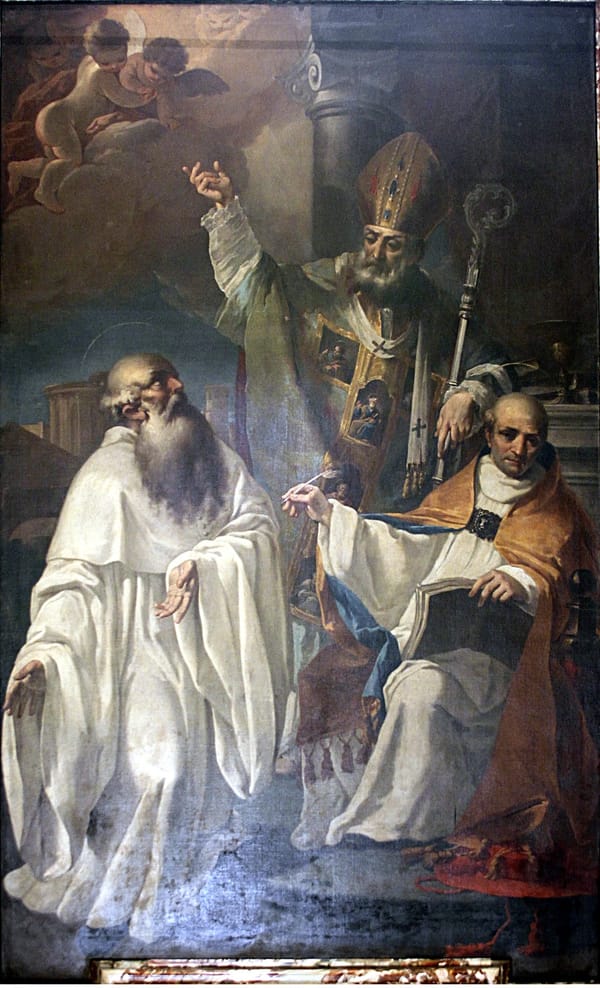 |
December 4: Saint Peter Chrysologus, Bishop and Doctor of the Church
The same divine Providence, which would not that the Church should be deprived of the consolation of keeping, during Advent, the feast of some of the apostles, who announced to the Gentiles the coming of the Messias, has also willed that the holy doctors, who defended the true faith against heretics, should be represented in this important season of the Catholic year. Two of them, Saint Ambrose and Saint Peter Chrysologus, shine as two brilliant stars in the firmament of the Church during Advent. It is worthy of note, that both of them were the zealous avengers of that Son of God whom we are preparing to receive. The first was the valiant opponent of the Arians, whose impious doctrine taught that Jesus, the object of our hopes, is merely a creature and not God; the second was the adversary of Eutyches, whose sacrilegious system robs the Incarnation of the Son of God of all its glory, by asserting that, in this mystery, the human nature was absorbed by the Divinity.
It is this second doctor, the holy bishop of Ravenna, that we are to honour to-day. His pastoral eloquence gained for him a great reputation, and a great number of his sermons have been handed down to us. In almost every page we find passages of the most exquisite beauty, though we also occasionally meet with indications of the decay of literature, which began in the fifth century. The mystery of the Incarnation is a frequent subject of the saint’s sermons, and he always speaks upon it with a precision and enthusiasm, which show his learning and piety. His veneration and love towards Mary, the Mother of God, who, in that very age, had triumphed over her enemies by the decree of the Council of Ephesus, inspire him with thoughts and language which are extremely fine. Let us take a passage from the sermon on the Annunciation. ‘God sends to the Virgin an angelic messenger, who, whilst he brings graces, gives her the entrusted pledge, and receives hers. Then does Gabriel return with Mary’s plighted troth. But, before ascending to heaven, there to tell the consent promised him by the Virgin, he delivers to her the gifts due to her virtues. Swiftly does this ambassador fly to the bride, that he may assert God’s claim to her as His own. Gabriel takes her not from Joseph, but he restores her to Christ, to whom she was espoused when she was first formed in the womb.1 Christ, therefore, did but take His own, when He thus made Mary His bride. It is not a separation that He thus produces, but a union with Himself of His own creature by becoming Incarnate in her womb.
‘But let us hearken to the angel’s words. Being come in, he said unto her: Hail, full of grace! the Lord is with thee! These words are not a mere salutation; they convey the heavenly gift. Hail! that is, Take, O Mary, the grace I bring thee; fear not; this is not the work of nature. Full of grace! that is, thou art not in grace as others are; thou art to be filled with it. The Lord is with thee! What means this, but that He is coming to thee not merely to visit thee, but to enter within thee by the new mystery of becoming thy Child? Blessed art thou among women. How fittingly does he add these words! They imply, that they who heretofore were mothers with the curse of Eve upon them, now have the blessed Mary as their joy, and honour, and type: and whereas Eve was by nature the mother of children of death, Mary is by grace the mother of children of life.’2
In the following passage from another sermon, the holy doctor teaches us with what profound veneration we ought to contemplate Mary during these days when God is still residing in her womb. ‘What reverence and awe are shown to that inner chamber of a king, where he sits in all the majesty of his power! Therein no man may enter that is a stranger, or unclean, or unfaithful. The usages of courts require, that when men come to pay their homage, everything must be the best, and fairest, and most loyal. Who would go to the palace-gate in rags? Who would go, that knew he was odious to the prince? So it is with the sanctuary of the divine Spouse. No one is permitted to come nigh, but he that is of God’s family, and is intimate, and has a good conscience, and has a fair name, and leads a holy life. Within the holy place itself God receives but the Virgin, and spotless virginity. Hence learn, O man, to examine thyself: who thou art, and what thou art, and what merits thou hast. Ask thyself, after this, if thou mayst dare to penetrate into the mystery of the birth of thy Lord, or canst be worthy to approach that living sanctuary, wherein reposes the whole majesty of thy King, and thy God.’3 Let us now listen to our holy mother the Church, who thus speaks of our saint:
Holy pontiff, who didst open thy lips and pour out on the assembly of the faithful, in the streams of thy golden eloquence, the knowledge of Jesus, cast an eye of compassion on the Christians throughout the world, who are watching in expectation of that same God-Man, whose two Natures thou didst so courageously confess. Obtain for us grace to receive Him with the sovereign respect which is due to a God who comes down to His creatures, and with the loving confidence which is due to a Brother who comes to offer Himself in sacrifice for His most unworthy brethren. Strengthen our faith, most holy doctor! for the love we stand in need of comes from faith. Destroy the heresies which lay waste the vineyard of our Father; and uproot that frightful pantheism, which is the form under which the heresy thou didst combat is still among us. May the numerous Churches of the East abjure that heresy of Eutyches which reigns so supreme amongst them, and gives them the knowledge of the ineffable mystery of the Incarnation only to blaspheme it. Pray that the children of the Church may show to the judgements of the apostolic See that perfect obedience, to which thou didst so eloquently urge the heresiarch Eutyches, in the epistle thou didst address to him, and which will ever be precious to the world: ‘We exhort thee above all things, most honoured brother, that thou receive with obedience whatsoever has been written by the most blessed Pope of the city of Rome: for, blessed Peter, who lives and presides in his own See, shows the truth of faith to all them that seek it.’ (Letter 25.)
Friday of the First Week of Advent
Cap. vi.In anno, quo mortuus est rex Ozias, vidi Dominum sedentem super solium excelsum et elevatum: et ea quæ sub ipso erant, replebant templum. Seraphim stabant super illud: sex alæ uni, et sex alæ alteri: duabus velabant faciem ejus, et duabus velabant pedes ejus, et duabus volabant. Et clamabant alter ad alterum, et dicebant: Sanctus, sanctus, sanctus Dominus Deus exercituum: plena est omnis terra gloria ejus.
Ch. vi.In the year that king Ozias died, I saw the Lord sitting upon a throne high and elevated: and his train filled the temple. Upon it stood the Seraphim: the one had six wings, and the other had six wings: with two they covered his face, and with two they covered his feet, and with two they flew. And they cried one to another and said: Holy, holy, holy the Lord God of hosts: all the earth is full of his glory.
Such is the glory of the Lord in the highest heavens: who could see it and live? But now, contemplate this same Lord upon our earth, during the days which have dawned upon us. The womb of a Virgin contains Him, whom heaven cannot contain. To angels His beauty is visible, but it dazzles them not; to men, it is not even visible. Not a single voice is heard saying unto Him those words of heaven: Holy, holy, holy is the Lord God of hosts! The angels no longer say of Him: All the earth is full of His glory; for the earth is witness of His abasement, and an abasement so abject and low, that the inhabitants of the earth do not even know it. At first, there was but one who knew the divine secret: the Virgin Mother; after her, Elizabeth was admitted to know that her cousin was Mother of God; and then, after the most painful and humiliating suspicions, the great mystery was revealed by an angel to Joseph. So that only three on earth know that God has come down upon it! Thus humbly did He re-enter the world, after the sin of pride had driven Him out of it. O God of the ancient Covenant, how great Thou art! and who would not tremble before Thee? O God of the new Covenant, how little Thou hast made Thyself! who would not love Thee? Heal my pride, the source of all my sins! teach me to value what Thou didst so much value. By Thy Incarnation Thou dost a second time create the world; and in this second creation, more excellent than the first, Thou workest by silence, and Thy triumph is won by self-annihilation. I wish to humble myself after Thine example, and to profit by the lessons which a God came down so low to give me. Lay low all that is high and lifted up within me, O my Jesus, for this is one of the ends of Thy coming. I abandon myself to Thee as to my sovereign Master! do with me and in me what Thou wilt.
Hymn taken from the Anthology of the Greeks
(December 23)
Prayer from the Mozarabic Missal
(In the Mass of the fifth Sunday of Advent)
December 4 (the Same Day): Saint Barbara, Virgin and Martyr
|
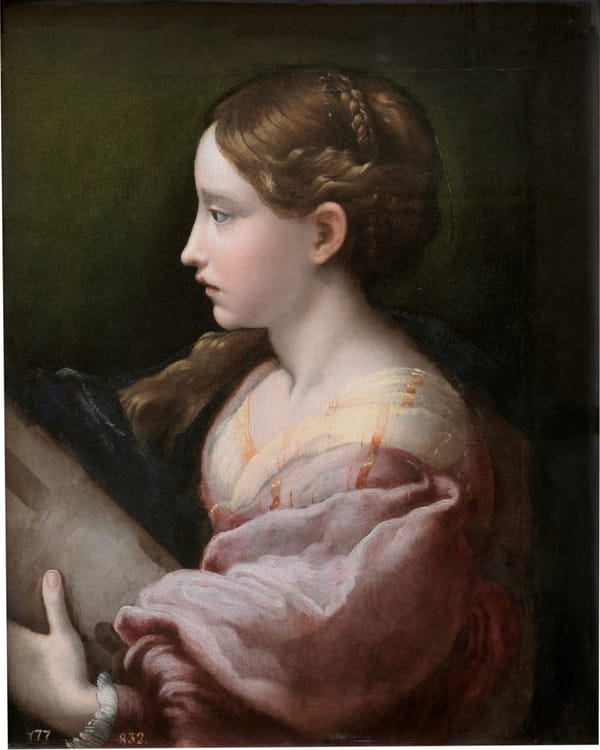
Although, in the Roman liturgy, St. Barbara is merely commemorated in the Office of St. Peter Chrysologus, yet the Church has approved an entire Office for the use of those Churches which honour the memory of this illustrious virgin in a special manner. The legend which follows, although of considerable weight, has not, consequently, the authority of those which are promulgated for the use of the whole Church, in the Roman breviary. Let us not, on this account, be less fervent in honouring this glorious martyr, so celebrated in the east, and whose feast has been for so many ages admitted, with more or less solemnity, into the Roman Church. The acts of her martyrdom, though not of the highest antiquity, contain nothing in them but what redounds to the glory of God and the honour of the saint. We have already shown the liturgical importance which attaches to St. Barbara in this season of Advent. Let us admire the constancy wherewith this virgin waited for her Lord, who came at the appointed hour, and was for her, as the Scripture speaks, a Spouse of blood, because He put the strength of her love of Him to the severest of all tests.
Such is the account of the life and martyrdom of the courageous virgin of Nicomedia. She is invoked in the Church against lightning, on account of the punishment inflicted by divine justice on her execrable father. This same incident of the saint’s history has suggested several Catholic customs: thus her name is sometimes given to the hold of men-of-war where the ammunition is stowed; she is the patroness of artillery men, miners, etc.; and she is invoked by the faithful against the danger of a sudden death.
Of the liturgical pieces, used in our western Churches in honour of St. Barbara, we will content ourselves with the following beautiful antiphon, composed in the days of chivalry.
Antiphon
The Greek Church is profuse in its praises of St. Barbara. We will take from the Menæa a few out of the many strophes which are sung in honour of the holy martyr:
Hymn of the Greek Church
To this the voice of so many Churches we join ours, O faithful virgin! and though we are unworthy, yet do we offer thee our praise and our prayers. Behold! our Lord cometh, and the darkness of the night is upon us; give to our lamp both the light which will guide us, and the oil which will keep in the light. Thou knowest that He who came for love of thee, and with whom thou art now united for all eternity, is coming to visit us too; pray for us that nothing may keep us from receiving Him. May we go towards Him courageously and swiftly as thou didst; and being once with Him, may we never be separated from Him again, for He is the centre where we creatures find our only rest. Pray also, O glorious martyr, that the faith in the blessed Trinity may be ever increasing in this world. May our enemy, satan, be confounded by every tongue confessing the threefold light, and the triumphant cross which sanctifies the waters of Baptism. Remember, O blessed Barbara, thou bride of Jesus, that He has put in thy gentle hands the power not of hurling, but of staying and averting, the thunderbolt. Protect our ships against the fires of heaven and of war. Shield by thy protection the arsenals where are placed the defences of our country. Hear the prayers of them that invoke thee, whether in the fierceness of the storm, or in the dark depths of the earth; and save us all from the awful chastisement of a sudden death.
Let us consider how the various nations on the face of the earth, though differing in customs, and speech, and interests, are all united in the expectation of a Deliverer soon to come. Neither the frightful corruption of morals, nor the long ages which have passed since the promises were given, have been able to efface the tradition, or the hope it inspired. At the very time when the world seems crumbling into dissolution, a strong symptom of vigour is evinced, and from one end of the earth to the other there is heard this cry: The King of the universe is soon to appear; a new empire, holy and everlasting, is to bring all peoples into one. It is thus, O Jesus! that Jacob prophesied on his dying bed, when he said, speaking of Thee: 'He shall be the expectation of nations.’* Men have, indeed, searched after, and found, the way to the lowest degradation; but they could not prevent the fulfilment of this prophecy: and by their expectation of a happier state of things, they themselves fulfil it; and by fulfilling it, are confessing that their misery has no remedy save Thyself. Come, then, O Son of God! and cherish this ray of hope of the ancient world, which renders Thee this its only homage, even whilst falling under the weight of its own wretchedness. The expectation of a Deliverer is the bond of union between the two great divisions of the human race, those who preceded and those who have lived since Thy Nativity. But if the pagan world, from the depth of its vices and errors, could sigh after Thee, O Jesus! what shall we not do, who have inherited what was promised, now that Thou art preparing to come and take possession of our souls? We already know Thee, for Thou hast initiated us into Thy mysteries; we cannot do less, dear Jesus! we are longing for Thee during these days of Advent. When the beautiful day of Thy visit comes, mayst Thou find that Thy love is already in our hearts. Make our expectation more fervid, increase our faith, and come!
A Responsory of Advent
(The Roman breviary, Matins of the first Sunday)
* Gen. xlix. 10. ↩︎
| Previous Thursday of the First Week of Advent | Next Friday of the First Week of Advent |