Daily reading
Advent
Double of the II Class · December 21 · Sanctoral
December 21, 2026
From Dom Guéranger’s The Liturgical Year.
A Double of the II Class leads the weekday.Rubric
December 21: Saint Thomas, Apostle
The Church announces to us, to-day, in her Office of Lauds, these solemn words:
This is the last feast the Church keeps before the great one of the Nativity of her Lord and Spouse. She interrupts the greater ferias in order to pay her tribute of honour to Thomas, the apostle of Christ, whose glorious martyrdom has consecrated this twenty-first day of December, and has procured for the Christian people a powerful patron, who will introduce them to the divine Babe of Bethlehem. To none of the apostles could this day have been so fittingly assigned as to St. Thomas. It was St. Thomas whom we needed; St. Thomas, whose festal patronage would aid us to believe and hope in that God whom we see not, and who comes to us in silence and humility in order to try our faith. St. Thomas was once guilty of doubting, when he ought to have believed, and learnt the necessity of faith only by the sad experience of incredulity: he comes then most appropriately to defend us, by the power of his example and prayers, against the temptations which proud human reason might excite within us. Let us pray to him with confidence. In that heaven of light and vision, where his repentance and love have placed him, he will intercede for us, and gain for us that docility of mind and heart, which will enable us to see and recognize Him, who is the Expected of nations, and who, though the King of the world, will give no other signs of His majesty, than the swaddling-clothes and tears of a Babe. But let us first read the acts of our holy apostle. The Church has deemed it prudent to give us them in an exceedingly abridged form, which contains only the most reliable facts, gathered from authentic sources; and thus she excludes all those details, which have no historic authority.
The Great Antiphon of St. Thomas
Prayer
The following prayer is from the Matins of the Gothic, or Mozarabic, breviary:
The Greek Church celebrates, with her usual solemnity, the feast of St. Thomas; but she keeps it on the sixth of October. We extract the following stanzas from her hymns.
Hymn of St. Thomas
(Taken from the Menæa of the Greeks)
O glorious apostle, Thomas! who didst lead to Christ so many unbelieving nations, hear now the prayers of the faithful, who beseech thee to lead them to that same Jesus, who, in five days, will have shown Himself to His Church. That we may merit to appear in His divine presence, we need, before all other graces, the light which leads to Him. That light is faith; then, pray that we may have faith. Heretofore, our Saviour had compassion on thy weakness, and deigned to remove from thee the doubt of Hishaving risen from the grave; pray to Him for us, that He will mercifully come to our assistance, and make Himself felt by our heart. We ask not, O holy apostle! to see Him with the eyes of our body, but with those of our faith; for He said to thee, when He showed Himself to thee: ‘Blessed are they who have not seen, and have believed!’ Of this happy number we desire to be. We beseech thee, therefore, pray that we may obtain the faith of the heart and will, that so, when we behold the divine Infant wrapped in swaddling-clothes and laid in a manger, we may cry out: ‘My Lord! and my God!’ Pray, O holy apostle, for the nations thou didst evangelize, but which have fallen back again into the shades of death. May the day soon come, when the Sun of justice will once more shine upon them. Bless the efforts of those apostolic men, who have devoted their labours and their very lives to the work of the missions; pray that the days of darkness may be shortened, and that the countries, which were watered by thy blood, may at length see that kingdom of God established amongst them, which thou didst preach to them, and for which we also are in waiting.
December 21 (the Same Day): Fifth Antiphon
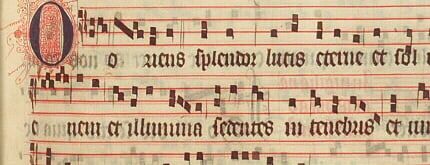
O Jesus, divine Sun! Thou art coming to snatch us from eternal night: blessed for ever be Thy infinite goodness! But Thou puttest our faith to the test, before showing Thyself in all Thy brightness. Thou hidest Thy rays, until the time decreed by Thy heavenly Father comes, in which all Thy beauty will break upon the world. Thou art traversing Judea; Thou art near Jerusalem; the journey of Mary and Joseph is nigh its term. Crowds of men pass or meet Thee on the road, each one hurrying to his native town, there to be enrolled, as the edict commands. Not one of all these suspects that Thou, O divine Orient! art so near him. They see Thy Mother Mary, and they see nothing in her above the rest of women; or if they are impressed by the majesty and incomparable modesty of this august Queen, it is but a vague feeling of surprise at there being such dignity in one so poor as she is; and they soon forget her again. If the Mother is thus an object of indifference to them, it is not to be expected that they will give even so much as a thought to her Child, that is net yet born. And yet this Child is Thyself, O Sun of justice! Oh! increase our faith, but increase, too, our love. If these men loved Thee, O Redeemer of mankind, Thou wouldst give them the grace to feel Thy presence. Their eyes, indeed, would not yet see Thee, but their hearts, at least, would burn within them, they would long for Thy coming, and would hasten it by their prayers and sighs. Dearest Jesus! who thus traversest the world Thou hast created, and who forcest not the homage of Thy creatures, we wish to keep near Thee during the rest of this Thy journey: we kiss the footsteps of her that carries Thee in her womb; we will not leave Thee, until we arrive together with Thee at Bethlehem, that house of bread, where, at last, our eyes will see Thee, O splendour of eternal light, our Lord and our God!
Prayer for the Time of Advent
(The Mozarabic breviary, Monday of the fifth week. Oratio)
Monday of the Fourth Week of Advent
Cap. xli.Et tu Israel, serve meus, Jacob quem elegi, semen Abraham amici mei; in quo apprehendi te ab extremis terræ, et a longinquis ejus vocavi te, et dixi tibi: Servus meus es tu, elegi te, et non abjeci te, Ne timeas, quia ego tecum sum: ne declines, quia ego Deus tuus: confortavi te, et auxiliatus sum tibi, et suscepit te dextera Justi mei. Ecce confundentur et erubescent omnes qui pugnant adversum te: erunt quasi non sint, et peribunt viri qui contradicunt tibi. Quæres eos, et non invenies, viros rebelles tuos; erunt quasi non sint, et veluti consumptio homines bellantes adversum te: quia ego Dominus Deus tuus apprehendens manum tuam, dicensque tibi: Ne timeas, ego adjuvi te. Noli timere, vermis Jacob, qui mortui estis ex Israel: ego auxiliatus sum tibi, dicit Dominus, et redemptor tuus Sanctus Israel Ego posui te quasi plaustrum triturans novum, habens rostra serrantia: triturabis montes, et comminues, et colles quasi pulverem pones. Ventilabis eos, et ventus tollet, et turbo disperget eos: et tu exsultabis in Domino, in Sancto Israel lætaberis.
Ch. xli.But thou, Israel, art my servant, Jacob whom I have chosen, the seed of Abraham my friend; in whom I have taken thee from the ends of the earth, and from the remote parts thereof have called thee, and said to thee: Thou art my servant, I have chosen thee, and have not cast thee away. Fear not, for I am with thee; turn not aside, for I am thy God: I have strengthened thee, and have helped thee, and the right hand of my just One hath upheld thee. Behold all that fight against thee shall be confounded and ashamed: they shall be as nothing, and the men shall perish that strive against thee. Thou shalt seek them, and shalt not find the men that resist thee: they shall be as nothing, and as a thing consumed the men that war against thee: for I am the Lord thy God, who take thee by the hand, and say to thee: Fear not, I have helped thee. Fear not, thou worm of Jacob, you that are dead of Israel: I have helped thee, saith the Lord, and thy Redeemer, the holy One of Israel. I have made thee as a new thrashing wain with teeth like a saw: thou shalt thrash the mountains, and break them in pieces: and shalt make the hills as chaff. Thou shalt fan them, and the wind shall carry them away, and the whirlwind shall scatter them: and thou shalt rejoice in the Lord, in the holy One of Israel thou shalt be joyful.
It is thus Thou raisest us up from our abject lowliness, O eternal Son of the Father! It is thus Thou consolest us under the fear we so justly feel by reason of our sins. Thou sayest to us: Israel, my servant!Jacob, whom I have chosen! seed of Abraham, in whom I have called thee from the remote farts of the earth! fear not, for I am with thee. But, O divine Word, how low Thou hast had to come, that Thou mightest be thus with us! We could never have come to Thee, for between us and Thee there was fixed an immense chaos. Nay, we had not so much as the desire to see Thee, so dull of heart had sin made us: and had we desired it, our eyes could never have borne the splendour of Thy majesty. Then it was, that Thou didst descend to us in person, yet so that our weakness could look fixedly upon Thee, because veiled under the cloud of Thy Humanity. 'Who could doubt,’ says St. Bernard,1 ‘of there being some great cause pending, seeing that so great a Majesty deigned to come down, from so far off, into so unworthy a place? Oh yes, there is some great thing at stake, for the mercy is great, and the commiseration is extreme, and the charity is abundant. And why, think you, did He come? He came from the mountain to seek the hundredth sheep that was lost. O wonderful condescension, a God seeking! O wonderful worth of man, that he should be sought by God! If man should therefore boast, he is surely not unwise; for he boasts not for aught that he sees in himself as of himself, but for his very Maker making such account of him. All the riches and all the glory of the world, and all that men covet in it, all is less than his glory, nay, is nothing, when compared to it. What is man, O Lord, that Thou shouldst magnify him? or why dost Thou set Thy Heart upon him?'2 Delay not, then, good Shepherd! show Thyself to Thy sheep. Thou knowest them; not only hast Thou seen them from heaven, Thou also lookest on them with love, from the womb of Mary where Thou still art concealed. They also wish to know Thee; they are impatient to behold Thy divine features, to hear Thy voice and to follow Thee to the pastures that Thou hast promised them.
Hymn for the Time of Advent
(Composed by St Ambrose. It is in the Ambrosian breviary for the sixth Sunday of Advent)
Hymnum Christo referimus,
Quem genuit Puerpera
Verbum Patris in filio.
Electa es in sæculo:
Et meruisti Dominum
Sancto portare in utero.
Mariae quod concessum est,
Ut Deum per quem omnia
Ex se videret prodire.
Et gloriosa permanes,
Quia ex te natus est Christus
Per quem facta sunt omnia.
Dei Matrem et Virginem,
Ut ipsa nobis impetret,
Pacem et indulgentiam.
Qui natus es de Virgine,
Cum Patre et sancto Spiritu,
In sempiterna sæcula.
it is a hymn that we sing to Christ,
the Word of the Father,
become the Son of a Virgin.
wast chosen in this world,
and wast made worthy to carry in thy holy womb
him who is thy Lord.
that she should see the
God, who created all things,
become her own Child!
ever glorious Virgin!
for of thee is born the Christ,
by whom all things were made.
let us pray to the Virgin Mother of God,
that she would obtain for us
peace and indulgent mercy.
who wast born of the Virgin!
and to the Father and the Holy Ghost,
for everlasting ages.
Prayer from the Ambrosian Missal
(In the Mass of the fifth Sunday of Advent)
| Previous December 20: The Fourth Antiphon | Next December 21 (the Same Day): Fifth Antiphon |