Daily reading
Septuagesima
Double · January 28 · Sanctoral
February 9, 2027
From Dom Guéranger’s The Liturgical Year.
St. Peter Nolasco transferred from Sexagesima. St. Apollonia is commemorated.Rubric
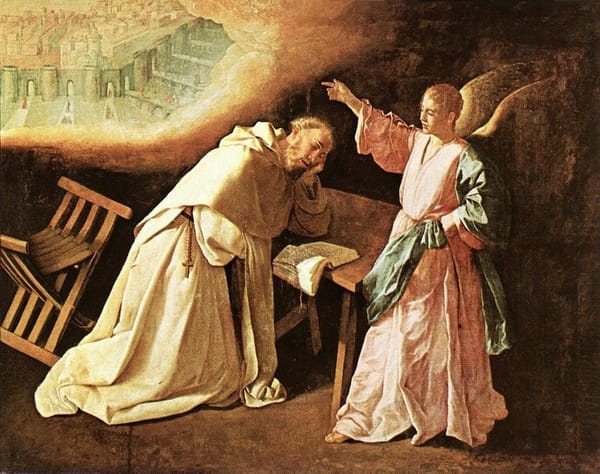 |
January 28 [January 31]: St. Peter Nolasco, Confessor
[This feast day, originally kept on January 31, was moved to January 28 when St. John Bosco was placed on January 31.-Ed.]
From Dom Guéranger's The Liturgical Year.
THE Ransomer of Captives, Peter Nolasco, is thus brought before us by the Calendar, a few days after the Feast of his master, Raymund of Pennafort. Both of them offer to the Divine Redeemer the thousands of Christians they ransomed from slavery. It is an appropriate homage, for it was the result of the Charity which first began in Bethlehem, in the heart of the Infant Jesus, and was afterwards so fervently practiced by these two Saints.
Peter was born in France, but made Spain his adopted country, because it offered him such grand opportunities for zeal and self-sacrifice. In imitation of our Redeemer, he devoted himself to the ransom of his brethren; he made himself a prisoner to procure them their liberty; and remained in exile, that they might once more enjoy the happiness of home. His devotedness was blessed by God. He founded a new Religious Order in the Church, composed of generous-hearted men, who for six hundred years prayed, toiled, and spent their lives in obtaining the blessing of liberty for countless captives, who would else have led their whole lives in chains, exposed to the imminent danger of losing their faith.
Glory to the Blessed Mother of God, who raised up these ransomers of Captives! Glory to the Catholic Church, whose children they were! But above all glory be to our Emmanuel, who, on his entrance into this world, thus spoke to his Eternal Father: Sacrifice and oblation thou wouldst not, neither are they pleasing to thee; but a Body thou hast fitted unto me. Then said I, Behold I come:1 that is, Behold, I come to offer myself as a Sacrifice. The Divine Infant has deigned to call us his brethren, and has given himself for our salvation; it is this same spirit of charity which made St Peter Nolasco devote his life to his suffering fellow-men.
Our Lord rewarded him by calling him to heaven at that very hour wherein twelve hundred years before he himself had been born at Bethlehem. It was during the joyful celebrations of Christmas night that the liberator of so many from bodily captivity was united for ever to the Divine Liberator of souls.
Peter’s last hymn on earth was the 110th Psalm: and as his faltering voice uttered the words: He hath sent redemption to his people; he hath commanded his covenant for ever, his soul took its flight to heaven.
The Church, in fixing a day for the feast of our Saint, could not of course take the anniversary of his death, which belongs so exclusively to Jesus: but it was just that he, who had been honoured with being born to heaven at the very hour which God had chosen for the Birth of his Son upon the earth, should receive the tribute of our festive commemoration on one of the forty days of Christmas; this last day of January was selected.
Let us now learn from the Liturgy the claims of Peter Nolasco to our veneration and love.
Thou, O Jesus! camest to cast fire upon the earth, and thy desire is that it be enkindled in the hearts of men. Thy desire was accomplished in Peter Nolasco, and the children of his Order. Thus dost thou permit men to co-operate with thee in the designs of thy sweet mercy, and, by thus restoring harmony between man and his Creator, thou hast once more given to the earth the blessing of fraternal love between man and man. Sweet Infant Jesus! we cannot love thee without loving all mankind; and thou, who art our Ransom and our Victim, willest that we also be ready to lay down our lives for one another.
Thou, O Peter! wast the Apostle and the model of this fraternal charity; and our God rewarded thee by calling thee to himself on the anniversary of the Birth of Jesus. That sweet Mystery, which so often encouraged thee in thy holy labours, has now been revealed to thee in all its glory. Thy eyes now behold that Jesus as the great King, the Son of the Eternal Father, before whom the very Angels tremble. Mary is no longer the poor humble Mother, leaning over the Crib where lies her Son; she now delights thy gaze with her queenly beauty, seated as she is on a throne nearest to that of the divine Majesty. Thou art at home amidst all this glory, for heaven was made for souls that love as thine did. Heaven is the land of love, and love so filled thy heart even when on earth, that it was the principle of thy whole life.
Pray for us, that we may have a clearer knowledge of this love of God and our neighbour, which makes us like to God. It is written that he that abideth in charity abideth in God, and God in him;2 intercede for us, that the Mystery of Charity which we are now celebrating may transform us into him who is the one object of all our love during this season of grace. May we love our fellow-creatures as ourselves; bear with them, excuse their weaknesses, and serve them. May our good example encourage them, and our words edify them; may we comfort them and win them to the service of God by our kindness and our charities.
Pray for France, which is thy country, and for Spain, where thou didst institute thy grand Order. Protect the precious remnants of that Order, by whose means thou didst work such miracles of charity. Console all prisoners and captives. Obtain for all men that holy Liberty of Children of God, of which the Apostle speaks,3 which consists in obedience to the law of God. When this liberty is in man's soul, he never can be a slave; but when the inner man is enslaved, the outward man never can be free. Oh! pray that the fetters of false doctrines and passions may be broken, and then the world will enjoy that true liberty, which would soon put an end to tyranny, and make tyrants impossible.
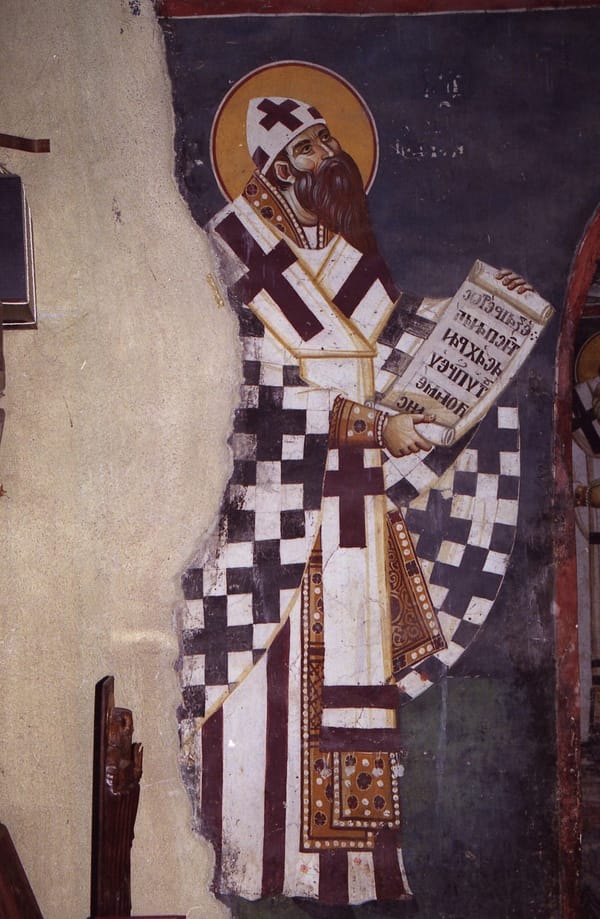
February 9: St. Cyril of Alexandria, Bishop and Doctor of the Church
 |
I will put enmities between thee and the woman, and thy seed and her seed: she shall crush thy head, and thou shalt lie in wait for her heel.1
These words, addressed to the serpent in the days which the Church now seeks to bring before the minds of her children, have dominated the world’s history. The woman, who was the first to fall victim to Satan’s deceits, was, in Mary, the first to rise. In her Immaculate Conception, in her virginal motherhood, in her offering of the new Adam to God on the mount of expiation, the new Eve made the enemy of mankind feel the power of her victorious foot; and so the rebel angel, who by man’s complicity has become the prince of this world, has never ceased to direct against the woman who has triumphed over him the united forces of his double empire, over the legions of hell and the children of darkness. Mary in heaven continues the conflict she began on earth. As queen of the blessed spirits and of the children of light she leads to battle as one army the heavenly hosts and the battalions of the Church Militant. The triumph of these faithful soldiers is that of their sovereign lady—it is a continual crushing of the head of the father of lies by the defeat of error and the exaltation of truth, the victory of the Divine Word, who is both Son of Mary and Son of God.
But the connection between the victory of the Divine Word and the triumph of his glorious Mother has never been more manifest than in the combats sustained by the Pontiff whom we are to honour today. Cyril of Alexandria is the Doctor of the Divine Maternity as his predecessor Athanasius was that of the Consubstantiality of the Word. The dogma of the Incarnation is founded upon these two ineffable mysteries, which they confessed and defended in two succeeding centuries. As Son of God Christ must be consubstantial with the Father, for the infinite simplicity of the divine essence excludes all idea of division. To deny the unity of substance and principle in Jesus, the Divine Word, was to deny His divinity. As Son of Man, as well as true God of true God, Jesus was to be born on earth of a daughter of Adam, and yet in His humanity be still one Person with the Word which is consubstantial with the Father. To deny the personal union of the two natures in Christ was again equivalent to denying His divinity; it was also equivalent to declaring that the Blessed Virgin, who until then had been honoured as having given birth to God in the nature which He assumed for our salvation, was only the mother of a man.
Three centuries of persecution had not been able to wring from the Church a denial of the divinity of her Spouse. But hardly had the world witnessed the triumph of the Incarnate Word, when the enemy turned the victory to his own advantage. Profiting by the new position of Christianity and its security from public violence, he sought to win in the domain of false science the denial which had been refused him on the field of martyrdom. Apostasy did less to serve the hostile influence of the serpent and foster the growth of his accursed race than the bitter zeal of heretics for the reform of the Church’s faith.
Arius was the first of these teachers of the doctrines of hell—a worthy first in his pride. He carried his questionings into the very depths of the divine essence, and rejected consubstantiality on the evidence of texts which he misunderstood. Upheld principally by the powers of this world, Arianism fell at the end of a century, having no root but in recently converted nations who had not had to shed their blood for the divinity of the Son of God.
It was then that Satan produced Nestorius, crowned with a fictitious halo of sanctity and knowledge. This man, who was to give the clearest expression to the hatred of the serpent for the woman, was enthroned in the Chair of Constantinople amid the applause of the whole East, which hoped to see in him a second Chrysostom. The joy of the good was of short duration. In the very year of his exaltation, on Christmas Day 428, Nestorius, taking advantage of the immense concourse which had assembled in honour of the Virgin Mother and her Child, pronounced from the episcopal pulpit the blasphemous words: ‘Mary did not bring forth God; her Son was only a man, the instrument of the Divinity.’ The multitude shuddered with horror. Eusebius, a simple layman, rose to give expression to the general indignation, and protested against this impiety. Soon a more explicit protest was drawn up and disseminated in the name of the members of this grief-stricken Church, launching an anathema against anyone who should dare to say: 'The Only-begotten Son of the Father and the Son of Mary are different persons.' This generous attitude was the safeguard of Byzantium, and won the praise of Popes and Councils. When the shepherd becomes a wolf, the first duty of the flock is to defend itself. It is usual and regular, no doubt, for doctrine to descend from the bishops to the faithful, and those who are subject in the faith are not to judge their superiors. But in the treasure of revelation there are essential doctrines which all Christians, by the very fact of their title as such, are bound to know and defend. The principle is the same whether it be a question of belief or conduct, dogma or morals. Treachery like that of Nestorius is rare in the Church, but it may happen that some pastors keep silence for one reason or another in circumstances when religion itself is at stake. The true children of Holy Church at such times are those who walk by the light of their baptism, not the cowardly souls who, under the specious pretext of submission to the powers that be, delay their opposition to the enemy in the hope of receiving instructions which are neither necessary nor desirable.
The emotion produced by the blasphemy of Nestorius spread through the East and soon reached Alexandria. Cyril was then ruling the see which had been founded by Mark in the name of Peter and raised to the second place by the Head of the Church. The union of Athanasius and the Roman Pontiffs had overcome Arianism in the previous century, and now Rome and Alexandria were once more to unite in crushing heresy. But the enemy had learnt by experience and acted with infernal foresight. When the future champion of the Mother of God was raised to the Chair of St. Athanasius, this formidable alliance was a thing of the past. Theophilus, the late Patriarch, who was the principal author of the condemnation of St. John Chrysostom at the Pseudo-council 'of the Oak,’ had refused to subscribe to the rehabilitation of his victim by the Holy See, and Rome had been obliged to break with her eldest daughter. Cyril was the nephew of Theophilus. He knew nothing of the secret motives by which his uncle had been governed. He had been brought up to honour him as his superior, his benefactor, and his master in sacred science, and when, in his turn, he became Patriarch, he had no thought of reversing the decisions of one whom he had always regarded as a father. Alexandria remained separated from the Church of Rome. Like the serpent, whose venom poisons all that it touches, Satan turned the most noble sentiments against the cause of God, but our Lady, who loves an upright heart, did not abandon her champion. After a few years of mishaps, which taught him to know men, the young Patriarch had his eyes opened to the truth by a holy monk named Isidore of Pelusium. Once convinced, he did not hesitate to restore the name of John Chrysostom to the sacred diptychs. The schemes of hell came to naught. Rome found a new Athanasius on the banks of the Nile to assist her in her new combats for the faith.
Cyril, restored to Christian unity by a monk, showed as great a devotion to the holy solitaries as his predecessor had done. He confided to them his grief at the first news of Nestorius’ impiety. The letter in which he appeals to their faith and warns them of the danger which threatens the Church has become celebrated. ‘Those,’ he says, ‘who have embraced in Christ the noble and enviable lot which is yours, ought to shine most brilliantly with the light of a perfect and unhesitating faith, and add to this light the special radiance of virtue. Then they ought to employ their wealth in increasing in themselves the knowledge of the mysteries of Christ, and striving to understand them perfectly. This,’ says the holy Doctor, ‘is what I think St. Paul means when he speaks of the development of the perfect man,2 the way to arrive at the measure and the fullness of Christ.’3
The Patriarch of Alexandria could not rest content with opening his heart to those of whose sympathy he was assured. He strove to win back Nestorius by letters, in which his personal meekness is only rivalled by the vigour and breadth of his doctrine. But Nestorius was obdurate. Having no arguments at his command, he complained of the Patriarch’s interference. As it always happens, there were pacifists who, though not sharing Nestorius’ errors, thought it would be best not to answer him for fear of embittering him, increasing the scandal, and wounding charity. Cyril thus answers that singular virtue which fears the affirmations of the Christian faith more than the audacity of heresy: 'What! Nestorius dares to suffer men to say in public and in his presence that he who calls Mary the Mother of God is to be anathema! He hurls his anathema, through his partisans, at us, at the other Bishops of the Universal Church and the ancient Fathers, who in all ages and all places with one accord have acknowledged and honoured the holy Mother of God! And have we not the right to repay him in his own coin and say, “If anyone denies that Mary is the Mother of God let him be anathema”? Nevertheless, out of regard for him, I have not yet uttered these words.’4
Men of another type, also represented in all ages, revealed the true motive of their hesitation when, after insisting on the advantages of peace and their ancient friendship with Nestorius, they suggested timidly that it would be dangerous to oppose so powerful an adversary. ‘Could I but satisfy the Bishop of Constantinople and heal the wounded spirit of my brother by suffering the loss of all my possessions!’ was Cyril’s reply. ‘But the faith is at stake. The scandal has spread through the Church, and all men are inquiring about the new doctrine. If we, who have received from God the office of teacher, fail to remedy such great evils, will there be flames enough for us at the Day of Judgment? I have already been struck by insult and calumny—let it pass. If only the faith be safe, I will yield to none in my love of Nestorius. But if the faith suffers through the deeds of some —let there be no doubt about it—I will not risk my soul even if instant death threaten me. If the fear of some disturbance is stronger than our zeal for God’s glory and prevents us from speaking the truth, how shall we dare in the presence of the Christian people to celebrate the holy martyrs, whose glory lies in the very fact that they carried out in their lives the words5: “Even unto death fight for justice”?’6
When the combat became inevitable, he organized the forces of the Church, and summoned monks and Bishops to his side. He did not attempt to conceal the holy enthusiasm which filled his heart. 'As far as I am concerned,’ he writes to the clerics who represent him in the imperial city, ‘my greatest desire is to suffer, live and die for the faith of Jesus Christ. As it is written: “If I shall give sleep to my eyes, or slumber to my eyelids, or rest to my temples”7 until I have fought the battle which is necessary for the well-being of all. Therefore let your hearts be full of the same spirit and do manfully. Watch the enemy and inform us of his slightest movements. As soon as I can, I will send you some Bishops and monks, pious and prudent men, chosen out of many. I am already preparing my letters. I have resolved to labour without truce for the faith of Christ and to suffer all torments, yea death itself, which in such a cause would be sweet to me.'8
Informed of these troubles by the Patriarch of Alexandria, Pope St. Celestine I. condemned the new heresy, and commissioned Cyril to depose the Bishop of Constantinople in the name of the Roman Pontiff. But Nestorius prolonged the contest by his intrigues. At this point there appears at the side of Cyril the figure of a saintly woman who for forty years was the terror of hell, and who twice crushed the head of the hateful serpent in the name of the Queen of heaven. Pulcheria had assumed the reins of government at the age of fifteen. It was a time of disasters, but she arrested interior disturbances by her prudence and energy, and in union with her sisters, virgins like herself, held back the barbarian hordes by the might of divine Psalmody. While the West was in its last agony, the East, thanks to its gifted empress, was enjoying once more the prosperity of its best days. The sight of a granddaughter of Theodosius the Great, who employed her private wealth in multiplying churches in honour of our Lady, taught Byzantium that devotion to Mary which was her safeguard in evil days, and which obtained for her from Mary’s Son a thousand years of mercy and incomprehensible patience. General Councils have hailed St. Pulcheria as the guardian of faith and the bulwark of unity.9 St. Leo says that the greatest share in the defence of divine truth was hers.10 ‘A double palm is in her hands,’ says this great Pope, ‘a double crown on her head, for the Church owes to her a double victory over impiety in the persons of Nestorius and Eutyches, who from different sides tended towards the same point—the denial of the Incarnation of the Son of God and of the share of the Virgin Mother in the salvation of mankind.’11
But we must not overstep our limits. The summary of the life of this great Pontiff read by the Church at Matins will give us some idea of those glorious combats witnessed by the city of Ephesus when Cyril, supported by Rome and upheld by Pulcheria, established for ever our Lady’s title to the most noble diadem that a mere creature can ever wear:
O holy Pontiff, the heavens rejoice and the earth is glad at the thought of that conflict in which the Queen of heaven and earth chose thee as the instrument of her triumph. The East has ever honoured thee as her light; the West has long hailed thee as champion of the Mother of God, and now seeks to give stronger expression to her gratitude. A new flower has appeared in our day in Mary’s crown, and it springs from the very soil cultivated by thee. When thou didst proclaim the divine maternity in the name of Peter and Celestine thou wast preparing for our Lady another triumph, which was to be the consequence of the first. The Mother of God must be immaculate. The definition of Pius IX. completes the work done by Celestine and thee. The two days—June 22, 431, and December 8, 1854—are equally glorious in heaven, and were celebrated with like manifestations of joy and love on earth. And so, O Cyril, the whole Church turns to thee after fourteen centuries and proclaims thee Doctor. She sees that thy work is complete, and will have nothing lacking in the homage rendered to thee on earth. Devotion to thee has found its fullest expression at the same time as devotion to the Mother of God. Thy glory is an extension of her glory.
We understand that the greatest honour we can pay to thee is to sing the praises of thy sovereign Lady. We therefore repeat the burning words which the Holy Ghost put upon thy lips on that day of triumph at Ephesus: ‘We hail thee, O Mary, Mother of God, as the bright gem of the whole creation; the lamp whose light shall never be put out, the crown of virginity, the sceptre of orthodox faith, the indestructible temple and shrine of the Infinite, through whom we have received Him whom the Gospels call Blessed, Him who comes in the name of the Lord. Hail Mary, whose spotless and virginal womb bore that Infinite One, by whom the Trinity is glorified and the precious Cross honoured and adored throughout the earth. Hail Mary, joy of heaven, peace of angels and archangels, terror of demons. Through thee the tempter fell from heaven, through thee the fallen are raised up to heaven. The world was held captive in idolatrous folly, and thou hast opened its eyes to the truth. To thee the faithful owe their baptism, to thee they owe the oil of gladness. Throughout all the earth thou foundest churches and leadest the nations to penance. What shall I say more? It was through thee that the only-begotten Son of God shone forth as the light of those who sat in darkness and in the shadow of death; through thee that the prophets foretold things to come; through thee that the Apostles preached salvation to the nations; through thee that the dead rise again; through thee that kings reign by the grace of the Holy Trinity. What man could ever adequately praise Mary, who is worthy of all praise?'12
If then, O Cyril, the dignity of the Mother of God surpasses all praise, beseech her to raise up among us men capable of praising her as thou didst. May the power with which she armed thee against her foes descend to those who in our days have to carry on the age-long combat between the woman and the serpent. The adversary has grown bolder. This age has surpassed in its denial of Jesus not only Nestorius, but also the apostate Emperor Julian, against whom thou didst defend the divinity of the Son of the Virgin Mother. Thou didst rain terrible blows upon error. Teach our Doctors how to conquer; teach them to lean upon Peter, to interest themselves in all that concerns the Church, to look upon her foes as their personal enemies, and the only real enemies they have. Our pastors will draw from thy sublime writings that true knowledge of sacred Scripture without which their zeal would be powerless. Christians will learn from thee that they cannot grow in virtue without first increasing their faith and their knowledge of the mysteries of the Incarnate Word. Many souls in these times content themselves with vague ideas. Let them learn from thee that it is the love of truth which leads us to life.13 The approach of Lent reminds us of these Paschal Letters which at this season carried to all the announcement of the Feast of Feasts and an exhortation to penance. Our souls have grown soft. Obtain for us a sense of the seriousness of the Christian life, so that we may enter valiantly upon the holy campaign which is to win back our peace with God through the triumph of the spirit over the flesh.
- Gen. iii. 15. ↩︎
- Eph. iv. 13. ↩︎
- Cyr. Al. Ep. 1 ad monach. ↩︎
- Ep viii. al. vi. ↩︎
- Ecclus. iv. 33. ↩︎
- Cyr. Al. Ep. ix. al. vii. ↩︎
- Ps. cxxxi. 4, 5. ↩︎
- Cyr. Al. Ep. x. al. viii. ↩︎
- Labbe, Conc. iv. 464. ↩︎
- Leo. Ep. xxxi. al. xxvii. ↩︎
- Leo. Ep. xxxi. al. xxvii. and Ep. lxxix. al. lix. ↩︎
- Cyr. al. Hom. iv. Ephesi habita ad St. Mariam. ↩︎
- Cyr. Al. Hom., div. 1. ↩︎
February 9 (the Same Day): St. Apollonia, Virgin and Martyr
The holy virgin who this day claims the homage of our devotion and praise, is offered to us by the Church of Alexandria. Apollonia is a martyr of Christ; her name is celebrated and honoured throughout the whole world; and she comes to us on this ninth day of February, to add her own example to that which we have so recently had from her sister saints, Agatha and Dorothy; like them, she bids us fight courageously for heaven. To her this present life was a thing of little value, and no sooner did she receive God’s inspiration to sacrifice it, than she did what her would-be executioners intended doing: she threw herself into the flames prepared for her. It is no unusual thing, nowadays, for men that are wearied of the trials, or afraid of the humiliations, of this world, to take away their own lives, and prefer suicide to the courageous performance of duty: but Apollonia’s motive for hastening her death by a moment’s anticipation, was to testify her horror of the apostasy that was proposed to her. This is not the only instance we meet with, during times of persecution, of the holy Spirit’s inspiring this lavish sacrifice to saintly virgins, who trembled for their faith or their virtue. It is true, such examples are rare; but they teach us, among other things, that our lives belong to God alone, and that we should be in readiness of mind to give them to Him, when and as He pleases to demand them of us.
There is one very striking circumstance in the martyrdom of St. Apollonia. Her executioners, to punish the boldness wherewith she confessed our Lord Jesus Christ, beat out her teeth. This has suggested to the faithful, when suffering the cruel pain of toothache, to have recourse to St. Apollonia; and their confidence is often rewarded, for God would have us seek the protection of His saints, not only in our spiritual, but even in our bodily sufferings and necessities.
The liturgy thus speaks the praises of our saint.
What energy was thine, Apollonia! Thy persecutors threaten thee with fire; but far from fearing it, thou art impatient for it, as though it were a throne, and thou ambitious to be queen. Thy dread of sin took away the fear of death, nor didst thou wait for man to be thy executioner. This thy courage surprises our cowardice; and yet, the burning pile into which thou didst throw thyself when asked to apostatize, and which was a momentary pain leading thy soul to eternal bliss, was nothing when we compare it with that everlasting fire, to which the sinner condemns himself almost every day of his life. He heeds not the flames of hell, and deems it no madness to purchase them at the price of some vile passing pleasure. And with all this, worldlings can be scandalized at the saints, and call them exaggerated, extravagant, imprudent; because they believed that there is but one thing necessary! Awaken in our hearts, Apollonia, the fear of sin; for sin gnaws eternally the souls of them who die with its guilt upon them. If the fire, which had a charm for thee, seems to us the most frightful of tortures, let us turn our fear of suffering and death into a preservative against sin, which plunges men into that abyss, whence the smoke of their torments shall ascend for ever and ever,* as St. John tells us in his Revelation. Have pity on us, most brave and prudent martyr. Pray for sinners. Open their eyes to see the evils that threaten them. Procure for us the fear of God, that so we may merit His mercies, and may begin in good earnest to love Him.
* Apoc. xiv. 11. ↩︎
Tuesday of Quinquagesima Week (Fat Tuesday)
The fundamental rule of Christian life is, as almost every page of the Gospel tells us, that we should live out of the world, separate ourselves from the world, hate the world. The world is that ungodly land which Abraham, our sublime model, is commanded by God to quit. It is that Babylon of our exile and captivity, where we are beset with dangers. The beloved disciple cries out to us: 'Love not the world, nor the things which are in the world. If any man love the world, the charity of the Father is not in him.’1 Our most merciful Jesus, at the very time when He was about to offer Himself as a sacrifice for all men, spoke these awful words: 'I pray not for the world.'2 When we were baptized, and were signed with the glorious and indelible character of Christians, the condition required of us, and accepted, was that we should renounce the works and pomps of the world (which we expressed under the name of Satan); and this solemn baptismal promise we have often renewed.
But what is the meaning of our promise to renounce the world? Is it that we cannot be Christians, unless we flee into the desert and separate ourselves from our fellow-creatures? Such cannot be God’s will for all, since, in that same Scripture, wherein He commands us to flee from the world, He also tells us what are our duties to each other, and sanctions and blesses those ties which He Himself has willed should exist among us. His apostle, also, tells us to use this world as though we did not use it.3 It is not, therefore, forbidden us to live in, and to use, the world. Then, what means this renouncing of the world? Can there be contradiction in God’s commandments? Is it possible that we are condemned to wander blindly on the brink of a precipice, into which we must at last inevitably fall?
There is neither contradiction nor snare. If by the world, we mean these visible things around us which God created in His power and goodness; if we mean this outward world, which He made for His own glory and our benefit; it is worthy of its divine Author, and to us, if we but use it aright, is a ladder whereby our souls may ascend to their God. Let us gratefully use this world; go through it, without making it the object of our hope; not waste upon it that love, which God alone deserves; and ever be mindful, that we are not made for this, but for another and a happier, world.
But the majority of men are not thus prudent in their use of the world. Their hearts are fixed upon it, and not upon heaven. Hence it was, that when the Creator deigned to come into this world, in order that He might save it, the world knew Him not.4 Men were called after the name of the object of their love. They shut their eyes to the light; they became darkness; God calls them 'the world.’
In this sense, then, the world is everything that is opposed to our Lord Jesus Christ, that refuses to recognize Him, and that resists His divine guidance. Those false maxims which tend to weaken the love of God in our souls; which recommend the vanities that fasten our hearts to this present life; which cry down everything that can raise us above our weaknesses or vices; which decoy and gratify our corrupt nature by dangerous pleasures, which, far from helping us to the attainment of our last end, only mislead us—all these are ‘the world.’
This world is everywhere, and holds a secret league within our very hearts. Sin has brought it into this exterior world created by God for Himself, and has given it prominence. Now, we must conquer it, and trample upon it, or we shall perish with it. There is no being neutral; we must be its enemies, or its slaves. During these three days, its triumphs are fearful; and thousands of those who, at their Baptism, swore eternal enmity to it, are enrolling themselves its votaries. Let us pray for them; but let us also tremble for ourselves; and that our courage may not fail us, let us ponder those consoling words, which our Saviour, at His last Supper, addressed to His eternal Father. He is speaking of His disciples, and He says: 'Father! I have given them Thy word, and the world hath hated them, because they are not of the world, as I also am not of the world. I pray not, that Thou shouldst take them out of the world, but that Thou shouldst keep them from evil.'5
As an appropriate conclusion of this day, we may use this formula of the Ambrosian liturgy. It puts two truths in contrast: the spiritual indifference of worldlings, and the dread severity of God’s future judgment.
Ingressa
(Dominica in Quinquagesima)
| Previous Monday of Quinquagesima Week | Next February 9: St. Cyril of Alexandria, Bishop and Doctor of the Church |