Daily reading
Lent
Double of the II Class · February 24 · Sanctoral
February 24, 2027
From Dom Guéranger’s The Liturgical Year.
A Double of the II Class leads the weekday.Rubric

|
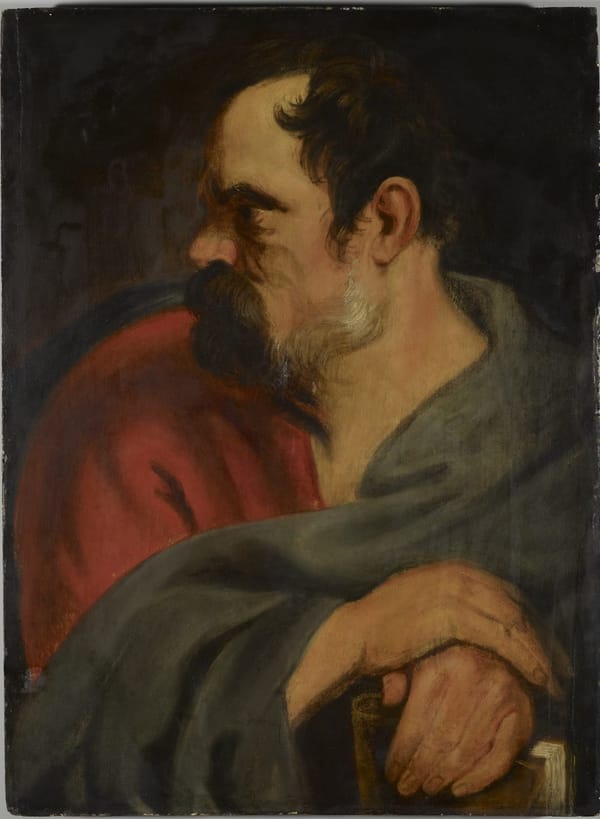
February 24: St. Mathias, Apostle
In leap-year, the feast of St Mathias is kept on February 25.
An apostle of Jesus Christ, St. Mathias, is one of the blessed choir which the Church would have us honour during the season of Septuagesima. Mathias was one of the first to follow our Saviour; and he was an eye-witness of all His divine actions up to the very day of the Ascension. He was one of the seventy-two disciples; but our Lord had not conferred upon him the dignity of an apostle. And yet, he was to have this great glory, for it was of him that David spoke, when he prophesied that another should take the bishopric1 left vacant by the apostasy of Judas the traitor. In the interval between Jesus’ Ascension and the descent of the Holy Ghost, the apostolic college had to complete the mystic number fixed by our Lord Himself, so that there might be the twelve on that solemn day, when the Church, filled with the Holy Ghost, was to manifest herself to the Synagogue. The lot fell on Mathias;2 he shared with his brother-apostles the persecution in Jerusalem, and, when the time came for the ambassadors of Christ to separate, he set out for the countries allotted to him. Tradition tells us that these were Cappadocia and the provinces bordering on the Caspian Sea.
The virtues, labours, and sufferings of St. Mathias have not been handed down to us: this explains the lack of proper lessons on his life, such as we have for the feasts of the rest of the apostles. Clement of Alexandria records in his writings several sayings of our holy apostle. One of these is so very appropriate to the spirit of the present season, that we consider it a duty to quote it. 'It behoves us to combat the flesh, and make use of it, without pampering it by unlawful gratifications. As to the soul, we must develop her power by faith and knowledge.’3 How profound is the teaching contained in these few words! Sin has deranged the order which the Creator had established. It gave the outward man such a tendency to grovel in things which degrade him, that the only means left us for the restoration of the image and likeness of God unto which we were created, is the forcible subjection of the body to the spirit. But the spirit itself, that is, the soul, was also impaired by original sin, and her inclinations were made prone to evil; what is to be her protection? Faith and knowledge. Faith humbles her, and then exalts and rewards her; and the reward is knowledge. Here we have a summary of what the Church teaches us during the two seasons of Septuagesima and Lent. Let us thank the holy apostle, on this his feast, for leaving us such a lesson of spiritual wisdom and fortitude. The same traditions, which give us some Blight information regarding the holy life of St. Mathias, tell us that his apostolic labours were rewarded with the palm of martyrdom. Let us celebrate his triumph by the following stanzas, which are taken from the Menææa of the Greeks.
Hymn (Die IX. Augusti)
Wednesday of the Second Week of Lent
THE Station is in the basilica of Saint Cecily. This church, one of the most venerable in Rome, was the house of the illustrious virgin and martyr whose name it bears. The body of Saint Cecily is under the high altar, together with those of Saints Valerian, Tiburtius, and Maximus, and of the holy Popes Urban and Lucius, all martyrs.
Collect
Epistle
Cap. xiii.In diebus illus: Oravit Mardochæus ad Dominum, dicens: Domine, Domine, Rex omnipotens, in ditione enim tua cuneta sunt posita, et non est qui possit tuæ resistero voluntad, si decreveris salvare Israël. Tu fecisti cœlum et terrain, et quidquid cœli ambitu continetur. Dominus omnium es, nec est qui resistat majestad tuæ. Et nunc, Domine Rex, Deus Abraham, miserere populi tui, quia volunt nos inimici nostri perdere, et hæreditatem tuam delere. Ne despicias partern tuam, quam redemisti tibi de Ægypto. Exaudi deprecationem meam, et propitius esto sorti et funiculo tuo, et converte luctum nostrum in gaudium, ut viventes laudemus nornen tuum, Domine, et ne claudas ora te canentium, Domine Deus noster.
Ch. xiii.In those days: Mardochai besought the Lord, and said: O Lord, Lord, almighty King, for all things are in thy power, and there is none that can resist thy will, if thou determine to save Israel. Thou hast made heaven and earth, and all things that are under the cope of heaven. Thou art Lord of all, and there is none that can resist thy majesty. And now, O Lord, O King, O God of Abraham, have mercy on thy people, because our enemies resolve to destroy us, and extinguish thine inheritance. Despise not thy portion, which thou hast redeemed for thyself out of Egypt. Hear my supplication and be merciful to thy lot and inheritance, and turn our mourning into joy, that we may live and praise thy name, O Lord, and shut not the mouths of them that sing to thee, O Lord, our God.
This petition, which Mardochai presented to God in favour of a whole nation that was doomed to destruction, represents the prayers which the saints of the old Testament offered for the salvation of the world. The human race was, to a great extent, in the power of satan, who is figured by Aman. The almighty King had given sentence against mankind: ‘Ye shall die the death.’Who was there that could induce Him to revoke the sentence? Esther made intercession with Assuerus, her lord; and she was heard. Mary presented herself before the throne of the eternal God: and it is she that, by her divine Son, crushes the head of the serpent, who was to have tormented us for ever. The sentence, then, is to be annulled; all shall live that wish to live.
To-day we have the Church praying for her children who are in the state of sin. She trembles at seeing them in danger of being eternally lost. She intercedes for them, and she uses Mardochai’s prayer. She humbly reminds her divine Spouse, that He has redeemed them out of Egypt; and, by Baptism, has made them His members, His inheritance. She beseeches Him to change their mourning into joy, even into the great Easter joy. She says to Him: Oh! shut not the mouths of them that sing to Thee! It is true, these poor sinners have in past times offended their God by word, as well as by deed and thought; but now they speak but words of humble prayer for mercy; and, when they shall have been pardoned, how fervently will they sing to their divine Deliverer, and bless Him in canticles of grateful love!
Gospel
Cap. xx.In illo tempore: Ascendena Jesus Jerosolymam, assumpsit duodecim discipulos secreto, et ait illis: Ecce ascendimus Jerosolymam, et Filius hominis tradetur principibus sacerdotum et scribis, et condemnabunt eum morte, et tradent eum gentibus ad illudendum, et flagellandum, et crucifigendum, et tertia die resurget. Tunc accessit ad eum mater filiorum Zebedæi cum filiis suis, adorans et petens aliquid ab eo. Qui dixit ei: Quid vis? Ait illi: Die ut sedeant hi duo filii mei, unus ad dexteram tuam, et unus ad sinistram, in regno tuo. Respondens autem Jesus, dixit: Nescitis quid petatis. Potestis bibere calicem, quem ego bibiturus sum? Dicunt ei: Possumue. Ait illis: Calicem quidem meum bibetis: sedere autem ad dexteram meam vel sinistram, non est meum dare vobis, sed quibus paratum est a Patre meo. Et audientes decem, indignati sunt de duobus fratribus. Jesus autem vocavit eos ad se, et ait: Scitis quia principes gentium dominantur eorum: et qui majores sunt, potestatem exercent in eos. Non ita erit inter vos: sed quicumque voluerit inter vos major fieri, sit vester minister: et qui voluerit inter vos primus esse, erit vester servus. Sicut Filius hominis non venit ministran, sed ministrare, et dare animam suam redemptionem pro multis.
Ch. xx.At that time: Jesus going up to Jersualem, took the twelve disciples apart, and said to them: Behold we go up to Jerusalem, and the Son of Man shall be betrayed to the chief priests and the scribes, and they shall condemn him to death, and shall deliver him to the Gentiles, to be mocked, and scourged, and crucified, and the third day he shall rise again. Then came to him the mother of the sons of Zebedee, with her sons, adoring and asking something of him. Who said to her: What wilt thou? She saith to him: Say that these my two sons may sit, the one on thy right hand, and the other on thy left, in thy kingdom. And Jesus answering, said: You know not what you ask. Can you drink the chalice that I shall drink? They said to him: We can. He saith to them: My chalice, indeed, you shall drink; but to sit on my right or left hand, is not mine to give to you, but to them for whom it is prepared by my Father. And the ten hearing it, were moved with indignation against the two brethren. But Jesus called them to him, and said: You know that the princes of the gentiles lord it over them; and they that are the greater, exercise power over them. It shall not be so among you, but whosoever will be the greater among you, let him be your minister; and he that will be first among you, shall be your servant. Even as the Son of Man is not come to be ministered unto, but to minister, and to give his life a redemption for many.
This is He that gave His own life in order to appease the anger of the almighty King, and redeem His people from death. It is Jesus, the Son of the new Esther, and the Son of God, who comes forward to humble the pride of Aman, at the very time when this perfidious enemy of ours is making sure of his victory. He goes up to Jerusalem, for it is there that the great battle is to be fought. He foretells to His disciples all that is to happen. He will be delivered up to the chief priests, who will condemn Him to death, and hand Him over to the Roman governor and soldiers. He will be mocked, scourged, and crucified; but He will rise again on the third day. The apostles heard this prophecy, for the Gospel says, that Jesus took the twelve apart, in order to tell them these things. Judas, consequently, was present; so were Peter, James, and John, the three that had witnessed the Transfiguration of their Master on Thabor, and had a clearer knowledge of His Divinity. And yet, all abandoned Him. Judas betrayed Him, Peter denied Him, and the whole flock fled away in fear, when the Shepherd was in the power of His enemies. Not one of them recollected how He had said that on the third day He would rise again: unless it were Judas, who was perhaps encouraged to commit his crime by the reflection that Jesus would soon triumph over His enemies and be again free. The rest could see no further than the scandal of the cross; that put an end to all their faith, and they deserted their Master. What a lesson for all future generations of Christians! How very few there are who look upon the cross, either for themselves or for others, as a sign of God’s special love!
We are men of little faith; we cannot understand the trials God sends to our brethren, and we are often tempted to believe that He has forsaken them, because He sends them the cross. We are men of little love, too; worldly tribulation seems an evil to us, and we think ourselves hardly dealt with, at the very time when our God is showing us the greatest mercy. We are like the mother of the sons of Zebedee: we would hold a high and conspicuous place near the Son of God, forgetting that we must first merit it, by drinking of the chalice that He drank, that is, the chalice of suffering. We forget, too, that saying of the apostle: ‘That we may be glorified with Jesus, we must suffer with Him!’* He, the just and All holy, entered not into His rest by honours, and pleasures: the sinner cannot follow Him, save by treading the path of penance.
The Christian poet continues his subject—the merits of fasting. To-day he is going to show us how Jesus consecrated it by His own practice of it.
Pridem caducis quum gravatus artubus
Jesus, dicato corde jejunaverit:
Prænuncupatus ore qui prophetico
Emmanuel est, sive nobiscum Deus.
Captumque laxo sub voluptatum jugo,
Virtutis arcta lege fecit liberum,
Emancipator servientis plasmatis,
Regnantis ante victor et cupidinis.
Quinis diebus octies labentibus,
Nullam ciborum vindicavit gratiam,
Firmans salubri scilicet jejunio
Vas appetendis imbecillum gaudiis.
Tantum laboris sustinere ac perpeti.
Explorat arte sciscitator callida,
Deusne membris sit receptus terreis:
Sed, increpata fraude, post tergum ruit.
Jesus, whom the prophet had announced to the world as the Emmanuel,
that is, God with us, when here on earth
sharing the miseries of our mortality,
fasted rigidly out of love for us.
set these our bodies free from their natural effeminacy,
and from the yoke of unbridled indulgence.
He emancipated his creatures from their slavery;
he conquered the tyrant concupiscence, that had reigned till then.
and for forty days refused himself the use of food.
By this salutary fast,
he strengthened the weakness of our bodies,
which crave after gratification.
that is but clay, can bear and suffer pain as long and sharp as this.
He, by cunning craft, contrives a plot,
whereby to sift this Jesus, and see if he perchance be God in human form.
But, rebuked and foiled, he flees away with shame.
* Rom. viii. 17. ↩︎
| Previous Tuesday of the Second Week of Lent | Next Wednesday of the Second Week of Lent |