lyp.network

Daily reading

Lent

Double · March 8 · Sanctoral

March 8, 2027

From Dom Guéranger’s The Liturgical Year.

A Double leads the weekday.Rubric
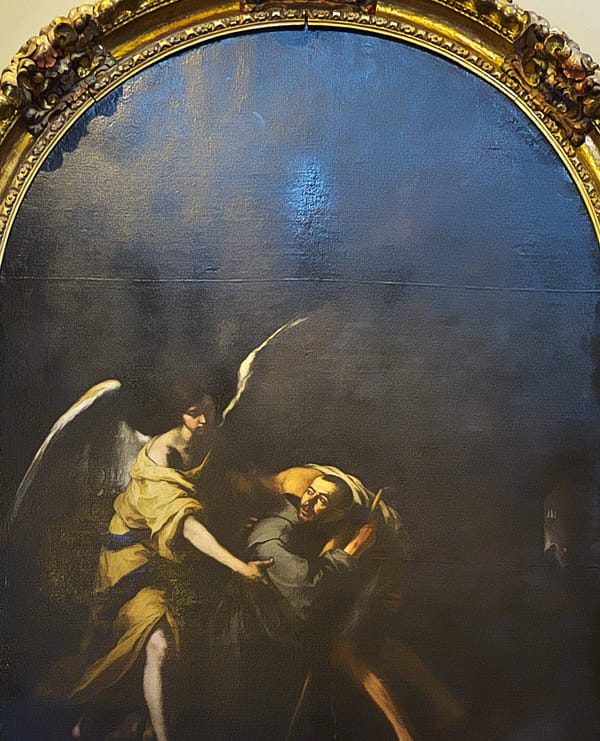
St John of God carrying a sick man aided by an angel
Saint John of God, Bartolomé Esteban Murillo (1617–1682). Credits

March 8: St. John of God, Confessor

This day month we were keeping the feast of St. John of Matha, whose characteristic virtue was charity; our saint of to-day was like him: love for his neighbour led him to devote himself to the service of them that most needed help. Both are examples to us of what is a principal duty of this present season; they are models of fraternal charity. They teach us this great lesson, that our love of God is false if our hearts are not disposed to show mercy to our neighbour, and help him in his necessities and troubles. It is the same lesson as that which the beloved disciple gives us, when he says: 'He that hath the substance of this world, and shall see his brother in need, and shall put up his mercy from him, how doth the charity of God abide in him?’* But if there can be no love of God where there is none for our neighbour, the love of our neighbour itself is not genuine unless it be accompanied by a love of our Creator and Redeemer. The charity which the world has set up, which it calls philanthropy, and which it exercises not in the name of God, but solely for the sake of man, is a mere delusion; it is incapable of producing love between those who give and those who receive, and its results must necessarily be unsatisfactory. There is but one tie which can make men love one another: that tie is God, who created them all, and commands them all to be one in Him. To serve mankind for its own sake, is to make a god of it; and even viewing the workings of the two systems in this single point of view—the relief they afford to temporal suffering—what comparison is there between mere philanthropy, and that supernatural charity of the humble disciples of Christ, who make Him the very motive and end of all they do for their afflicted brethren? The saint we honour today, was called John of God, because the name of God was ever on his lips. His heroic acts of charity had no other motive than that of pleasing God; God alone was the inspirer of the tender love he had for his suffering fellow-creatures. Let us imitate his example, for our Lord assures us that He considers as done to Himself whatsoever we do even for the least of His disciples.

The liturgy thus portrays the virtues of our saint:

Joannes de Deo, ex Catholicis piisque parentibus in oppido Montis-Majoris, junioris regni Lusitaniæ natus, quam sublimiter in sortem Domini fuerit electus, insuetus splendor super ejus domo refulgens, sonitusque æris campani sua sponte emissus, ab ipso ejus nativitatis tempore non obscure prænuntiarunt. A laxiorisvivendi ratione, divina operante virtute, revocatus, magnæ sanetilatis exhibere specimen cœpit, et ob auditam prædicationem verbi Dei sic ad meliora se excitatum sensit, ut jam ab ipso sanctioris vitæ rudimento consummatum aliquid, perfectumque visus sit attigisse. Bonis omnibus in pauperes carceribus inclusos erogatis, admirabilis pœnitentiæ, suique ipsius contemptus cuncto populo spectaculum factus, a plerisque ceu demena graviter afflictus, in carcorem amentibus deslinatum conjicitur. At Joannes cœlesti charitate magis incensus, gemino atque ampio valetudinario ex piorum eleemosynis in civitate Granatensi exstructo, jactoque novi Ordinis fundamento, Ecclesiam nova prole fœcundavit, Fratrum hospitalitatis, infirmis præclaro animarum corporumque profectu inservientium, et longe lateque per orbem diffusorum.
Pauperibus ægrotis, quos propriis quandoque humeris domum deferebat, nulla re ad animæ corporisque salutem proficua deerat. Effusa quoque extra nosocomium charitate, indigentibus mulieribus viduis, et præcipue virginibus periclitantibus, clam alimenta subministrabat, curamque indefessam adhibehat ut carnis coneupiscentiam a proximis hujusmodi vitio inquinatis exterminaret. Cum autem maximum in regio Granatensi valetudinario excitatum fuisset ineendium, Joannes impavidus prosiliit in ignem, hue illuc diseurrens, quousque tum infirmos humeris exportatos, tum lectulos e fenestris projectos ab igne vindicavit, ac per dimidiam horam inter flammas jam in immensum succrescentes versatus, exinde divinitus incolumis, universis civibus admirantibus, exivit, in schola cliaritatis edocens, segniorem in eum fuisse ignem qui foris usserat, quam qui intus accen derat.
Multiplici aspcritatum genere, demississiiua obcdientia, extrema paupertate, orandi studio, rerum divinarum contemplatione, ac in beatam Virginem pietate mirifico excelluit, et lacrymarum dono enituit. Denique gravi morbo correptus, omnibus Ecclcsiae sacramentis rite sancteque refcctus, viribus licet destitutus. propriis indulus vestibus e lectulo surgens, ac provolutus in genua, manu et corde Christum Dominum e cruce pendentem perstringens: octavo Idus Martii, anno millesimo quingentesimo quinquagesimo, obiit in osculo Domini: quem etiam mortuus tenuit nec dimisit, et in eadem corporis constitutione sex circiter horas, quousque inde dimotus fuisset, tota civitate inspectante, mirabiliter permansit, odorem mire fragrantem diffundens. Quem ante et post obitum plutimis miraculis darum Alexander octavus, Pontifex maximus, in sanctorum numerum retulit; et Leo decimus tertius, ex sacrorum catholici orbis antistitum voto, ac rituum congregationis con sulto, cœlestem omnium hospitalium et infirmorum ubique degentium patronum declaravit, ipsiusque nomen in agonizantium litaniis invocari præcepit.
John of God was born of Catholic and virtuous parents, in Portugal, in the town of Montemor. At his birth, a bright light shone upon the house, and the church bell was heard to ring of itself; God thus evincing to what great things he destined this his servant. For some time he fell into a lax way of living; but was reclaimed by God’s grace, and led a very holy life. His conversion was effected by his hearing a sermon, and so fervently did he practise the exercises of a devout life, that, from the very first, he seemed to have attained the height of perfection. He gave whatsoever he possessed to the poor who were in prison. Extraordinary were the penances he inflicted on himself; and the contempt he had for himself induced him to do certain things, which led some people to accuse him of madness, so that he was for some time confined in a madhouse. His charity only increased by such treatment. He collected alms sufficient to build two large hospitals in the city of Granada, where also he began the new Order, wherewith he enriched the Church. This Order was called the Institute of Friars Hospitallers. Its object was to assist the sick, both in their spiritual and corporal wants. Its success was very great, and it had houses in almost all parts of the world.
The saint often carried the sick poor on his own shoulders to the hospital, and there he provided them with everything they could want, whether for soul or body. His charity was not confined within the limits of his hospitals. He secretly provided food for indigent widows, and girls whose virtue was exposed to danger. Nothing could exceed the zeal wherewith he laboured to reclaim such as had fallen into sins of impurity. On occasion of an immense fire breaking out in the royal hospital of Granada, John fearlessly threw himself into the midst of the flames. He went through the several wards, taking the sick upon his shoulders, and throwing the beds through the windows, so that all were saved. He remained half an hour amidst the flames, which raged with wildest fury in every part of the building. He was miraculously preserved from the slightest injury, and came forth to the astonishment of the whole city, teaching the people, who had witnessed what had happened, that the disciples of charity have a fire within their hearts more active than any which could burn the body.
Among the virtues wherein he wonderfully excelled, may be mentioned his many practices of bodily mortilication, profound obedience, extreme poverty, love of prayer, contemplation, and devotion to the blessed Virgin. He also possessed, in an extraordinary degree, the gift of tears. At length, falling seriously ill, he fervently received the last Sacraments. Though reduced to a state of utter weakness, he dressed himself, rose from his bed, fell on his knees, devoutly took the crucifix into his hands, pressed it to his heart, and kissing it, died on the eighth of the Ides of March (March 8) in the year 1550. He remained in this same attitude with the crucifix still in his hand, for about six hours after his death. The entire city came to see the holy corpse, which gave forth a heavenly fragrance. The body was then removed, in order that it might be buried. God honoured his servant by many miracles, both before and after his death, and he was canonized by Pope Alexander VIII. Leo XIII., at the desire of the bishops of the Catholic world, and having consulted the sacred congregation of rites, declared him the heavenly patron of all hospitals and of the sick in all places, and ordered his name to be inserted in the litany for the dying.

What a glorious life was thine, O John of God! It was one of charity, and of miracles wrought by charity. Like Vincent of Paul thou wast poor, and, in thy early life, a shepherd-boy like him; but the charity which filled thy heart gave thee a power to do what worldly influence and riches never can. Thy name and memory are dear to the Church; they deserve to be held in benediction by all mankind, for thou didst spend thy life in serving thy fellow-creatures, for God’s sake. That motive gave thee a devotedness to the poor, which is an impossibility for those who befriend them from mere natural sympathy. Philanthropy may be generous, and its workings may be admirable for ingenuity and order; but it never can look upon the poor man as a sacred object, because it refuses to see God in him. Pray for the men of this generation, that they may at length desist from perverting charity into a mere mechanism of relief. The poor are the representatives of Christ, for He Himself has willed that they be such; and if the world refuse to accept them in this their exalted character, if it deny their resemblance to our Redeemer, it may succeed in degrading the poor, but by this very degradation it will make them its enemies. Thy predilection, O John of God, was for the sick; have pity, therefore, on our times, which are ambitious to eliminate the supernatural, and exclude God from the world by what is called secularization of society. Pray for us, that we may see how evil a thing it is to have changed the Christian for the worldly spirit. Enkindle holy charity within our hearts, that during these days, when we are striving to draw down the mercy of God upon ourselves, we also may show mercy. May we, as thou didst, imitate the example of our blessed Redeemer, who gave Himself to us His enemies, and deigned to adopt us as His brethren. Protect also the Order thou didst institute, which has inherited thy spirit; that it may prosper, and spread in every place the sweet odour of that charity, which is its very name.


* 1 St. John iii. 17 ↩︎


Monday of the Fourth Week of Lent

The Station is in the venerable church of the Four Crowned (brothers); their names are, Severus, Severianus, Carpophorus, and Victorious; they suffered martyrdom under the persecution of Diocletian. Their bodies, as also the head of the great martyr St. Sebastian, are among the relics of this church.

Collect

Præsta, quæsumus, omnipotens Deus: ut observations sacras annua devotione recolentes, et corpore tibi placeamua et mente. Per Christum Dominum nostrum. Amen.

Grant, we beseech thee, O almighty God, that we, who annually celebrate this holy fast, may be well pleasing to thee, both in body and mind. Through Christ our Lord. Amen.

Epistle

Lectio libri Regum.

3. Cap. iii.
In diebus illis: Venerunt duæ mulieres meretrices ad regem Salomonem, steteruntque coram eo, quarum una ait: O bsecro, mi Domine: ego et mulier hæc habitabamus in domo una, et peperi apud eam in cubiculo. Tertia autem die postquam ego peperi, peperi t et hæc: et eramus simul, nullusque alius nobiscum in domo, exceptis nobis duabus. Mortuus est autem filius mu· lieris hujus nocte; dormiens quippe oppressit eum. Et consurgens intempestæ noctis eilentio, tulit filium meum de latere meo ancillæ tuæ dormientis; et collocavit in sinu suo: suum autem filium, qui erat mortuus, posuit in sinu meo. Cumque surrexissem mane ut darem lac filio meo, apparuit mortuus: quem diligentius intuens clara luce, deprehendi non esse meum, quem genueram. Respondit altera mulier: Non est ita ut dicis, sed filius tuus mortuus est, meus autem vivit. E contrario illa dicebat: Mentiris: filius quippe meus vivit, et filius tuus mortuus est. Atque in hunc modum contendebant coram rege. Tunc rex ait: Hæc dicit: Filius meus vivit et filius tuus mortuus est. Et ista respondit: Non, sed filius tuus mortuus est, meus autem vivit. Dixit ergo rex: Afferte mihi gladium. Cumque attulissent gladium coram rege: Dividite, inquit, infantem vivum in duas partes, et date dimidiam partem uni, et dimidiam partem alteri. Dixit autem mulier, cujus filius erat vivus, ad regem (commota sunt quippe viscera ejus super filio suo): Obsecro, Domine, date illi infantem vivum, et nolite interficere eum. E contrario illa diccbat: Nec mihi, nec tibi sit, eed dividatur. Responds rex et ait: Date huic infantem vivum, et non occidatur: hæc est enim mater ejus. Audivit itaque omnis Israël judicium quod judicasset rex, et timuerunt regem, videntes sapientiam Dei esse in eo ad faciendum judicium.
Lesson from the Book of Kings.
3. Ch. iii.
In those days: Two women that were harlots, came to king Solomon, and stood before him; and one of them said: I beseech thee, my lord, I and this woman dwelt in one house, and I was delivered of a child with her in the chamber. And the third day after that I was delivered she also was delivered; and we were together, and no other person with us in the house, only we two. And this woman’s child died in the night, for in her sleep she, overlaid him; and rising in the dead time of the night she took my child from my side, while I thy handmaid was asleep, and laid it in her bosom, and laid her dead child in my bosom. And when I rose in the morning to give my child suck, behold it was dead; but considering him more diligently when it was clear day, I found that it was not mine which I bore. And the other woman answered: It is not so as thou sayest, but thy child is dead, and mine is alive. On the contrary she said: Thou best, for my child liveth, and thy child is dead. And in this manner they strove before the king. Then said the king: The one saith my child is alive, and thy child is dead; and the other answereth: Nay, but thy child is dead, and mine liveth. The king therefore said: Bring me a sword. And when they had brought a sword before the king, Divide, said he, the living child in two, and give half to the one, and half to the other. But the woman, whose child was alive, said to the king (for her bowels were moved upon her child), I beseech thee, my lord, give her the child alive, and do not kill it. But the other said: Let it be neither mine nor thine, but divide it. The king answered and said: Give the living child to this woman and let it not be killed, for she is the mother thereof. And all Israël heard the judgment which the king had judged, and they feared the king, seeing that the wisdom of God was in him to do judgment.

St. Paul explained to us, in yesterday’s Epistle, the antagonism that there is between the Synagogue and the Church; he showed us how Sara’s son, who was the father’s favourite, was persecuted by the son of Agar. The two women, who appear before Solomon, are another figure of the same truth. The child whom they both claim is the Gentile people, which has been brought to the knowledge of the true God. The Synagogue, typified by the woman who has caused death to her child, has misled the people confided to her care; and now unjustly claims one that does not belong to her. And whereas it is not from any motherly affection, but only from pride, that she puts forward such a claim, it matters little to her what becomes of the child, provided only he be not given to the true mother, the Church. Solomon, the king of peace, who is one of the Scriptural types of Christ, adjudges the child to her that has given him birth, and nourished him; and the pretensions of the false mother are rejected. Let us, then, love our mother, the holy Church, the bride of Jesus. It is she that has made us children of God by Baptism. She has fed us with the Bread of life; she has given us the holy Spirit; and, when we had the misfortune to relapse into death by sin, she, by the divine power given to her, has restored us to life. A filial love for the Church is the sign of the elect; obedience to her commandments is the mark of a soul in which God has set His kingdom.

Gospel

Sequentia sancti Evangelii secundum Joannem.
Cap. ii.
In illo tempore: Prope erat Pascha Judaeorum, et ascendit Jesus Jerosolymam: et invenit in templo vendentes boves, et oves, et columbas, et nummularios sedentes. Et cum fecisset quasi flagellum de funiculis, omnes ejecit de templo, oves quoque, et boves, et nummulariorum effudit aes, et mensas subvertit. Et his, qui columbas vendebant, dixit: Auferte ista hine, et nolite facere domum Patris mei, domum negotiationis. Recordati sunt vero discipuli ejus quia scriptum est: Zelus domus tuae comedit me. Responderunt ergo Judæi, et dixerunt ei: Quod signum ostendis nobis quia hæc facis? Respondit Jesus, et dixit eis: Solvite templum hoc, et in tribus diebus excitabo illud. Dixerunt ergo Judæi: Quadraginta et sex annis ædificatum est templum hoc, et tu in tribus diebus excitabis illud? Ille autem dicebat de templo corporis sui. Cum ergo resurrexisset a mortuis, recordati sunt discipuli ejus, quia hoc dicebat, et crediderunt Scripturæ, et sermoni quem dixit Jesus. Cum autem esset Jerosolymis in Pascha in die festo, multi crediderunt in nomine ejus, videntes signa ejus, quæ faciebat. Ipse autem Jesus non credebat semetipsum eis, eo quod ipse nosset omnes, et quia opus ei non erat ut quis testimonium perhiberet de homine, ipse enim sciebat quid esset in homine.
Sequel of the holy Gospel according to John.
Ch. ii.
At that time the Pasch of the Jews was at hand, and Jesus went up to Jerusalem And he found in the temple them that sold oxen, and sheep, and doves, and the changers of money sitting. And when he had made as it were a scourge of little cords, he drove them all out of the temple, the sheep also and the oxen; and the money of the changers he poured out, and the tables he overthrew. And to them that sold doves he said: Take these things hence, and make not the house of my Father a house of traffic. And his disciples remembered that it was written: The zeal of thy house hath eaten me up. The Jews therefore answered, and said to him: What sign dost thou shew unto us, seeing thou dost these things? Jesus answered and said to them: Destroy this temple, and in three days I will raise it up. The Jews then said: Six and forty years was this temple in building, and wilt thou raise it up in three days? But he spoke of the temple of his body. When therefore he was risen again fromthe dead, hic disciples remembered that he had said this, and they believed the Scripture, and the word that Jesus had said. Now when he was at Jerusalem, at the Pasch, upon the festival day, many believed in his name, seeing his signs which he did. But Jesus did not trust himself to them, for that he knew all men, and because he needed not that any should give testimony of man, for he knew what was in man.

We read in the Gospel of the first Tuesday of Lent, that Jesus drove from the temple them that were making it a place of traffic. He twice showed this zeal for His Father’s house. The passage we have just read from St. John refers to the first time. Both occasions are brought before us during this season of Lent, because this conduct of our Saviour shows us with what severity He will treat a soul that harbours sin within her. Our souls are the temple of God, created and sanctified by God to the end that He might dwell there. He would have nothing to be in them, which is unworthy of their destination. This is the season for self-examination; and if we have found that any passions are profaning the sanctuary of out souls, let us dismiss them; let us beseech our Lord to drive them out by the scourge of His justice, for we, perhaps, might be too lenient with these sacrilegious intruders. The day of pardon is close at hand; let us make ourselves worthy to receive it. There is an expression in our Gospel which deserves a special notice. The evangelist is speaking of those Jews who were more sincere than the rest, and believed in Jesus, because of the miracles He wrought; he says: Jesus did not trust Himself to them, because He knew all men. So that there may be persons who believe in and acknowledge Jesus, yet whose hearts are not changed! Oh the hardness of man’s heart! Oh cruel anxiety for God’s priests! Sinners and worldlings are now crowding round the confessional; they have faith, and they confess their sins: and the Church has no confidence in their repentance! She knows that, a very short time after the feast of Easter, they will have relapsed into the same state in which they were on the day when she marked their foreheads with ashes. These souls are divided between God and the world; and she trembles as she thinks on the danger they are about to incur by receiving holy Communion without the preparation of a true conversion. Yet, on the other hand, she remembers how it is written that the bruised reed is not to be broken, nor the smoking flax to be extinguished.* Let us pray for these souls, whose state is so full of doubt and danger. Let us, also, pray for the priests of the Church, that they may receive from God abundant rays of that light, whereby Jesus knew what was in man.

Humiliate capita vestra Deo.Deprecationem nostram, quæsumus, Domine, benignus exaudi: et quibus supplicandi præstas affectum, tribue defeneionis auxilium. Per Cnrietum Dominum nostrum. Amen.
Bow down your heads to God.We beseech thee, O Lord, hear our prayer, and grant us thy protection, as it is thou who inspirest us to ask it. Through Christ our Lord. Amen.

Let us pray for the conversion of sinners, using the beautiful Preface given us by the Roman pontifical, and formerly recited during the reconciliation of the public penitents.

Preface

Vere dignum et justum est, æquum et salutare, nos tibi semper, et ubique gratias agere, Domine sanete, Pater omnipotens, æterne Deus, per Christum Dominum nostrum: Quem, omnipotens Genitor, ineffabiliter naeci voluisti, ut debitum Adæ tibi persolveret ætemo Patri, mortemque noetram sua interficeret, et vulnera nostra in suo corpora ferret, nostrasque maculas sanguine suo dilueret; ut qui antiqui hostia corrueramue invidia, et ipsius reeurgeremus clementia. Te per eum, Domine, supplices rogamue ac petimus, ut pro aliorum excessibus nos digneris exaudire, qui pro noetris non sufficimus exorare. Tu igitur, clementissime Domine, hos famulos tuos, quos a te separaverunt flagitia, ad te revoca pietate solita. Tu namque nec Achab scelestiesimi humiliationem despexisti, sed vindictam debitamprotelasti. Petrum quo que lacrymantem exaudisti, clavesque postmodum cœlestis regni ipsi tradidisti; et confitenti latroni ejusdem regni præmia promisisti. Ergo, clementissime Domine, hos, pro quibus preces tibi fundimus, demens recollige, et tuæ Ecclesiæ gremio redde, ut nequaquamde eis valeat triumphare hostis, sed tibi reconciliet Filius tibi coæqualifl, emundetque eos ab omni facinore, et ad tuæ sacratissimæ Cœnæ dapes dignetur admittere. Sicque ευ a came, et sanguine reficiat ut post huj us vitæ cursum ad cælestia regna perducat.
It is truly meet and just, right and available to salvation, that we should always and in all places give thanks to thee,Oholy Lord, almighty Father, eternal God, through Christ our Lord: Whom thou,Oalmighty Father, didst will to be bom among us by an ineffable Birth, that so he might pay to thee, his eternal Father, the debt contracted by Adam, and put our death to death by his own, and bear our wounds in his own Flesh, and cleanse away our stains by his Blood; hereby enabling us, who had fallen by the envy of the old enemy, to rise again by his mercy. Through him, O Lord, we suppliantly beseech and pray thee that thou graciously hear us making intercession for the sins of others, who are not worthy to plead for our own. Do thou, O most merciful Lord, recall to thyself, with thy wonted goodness, these thy servants, who have separated themselves from thee by their sins. For neither didst thou reject the most wicked Achab when he humbled himself before thee, but didst avert from him the punishment he had deserved. So, likewise, didst thou graciously hear Peter, when he wept, and didst afterwards give to him the keys of the kingdom of heaven; and thou didst promise the reward of that same kingdom to the thief when he trusted in thee. Therefore, O most merciful Lord! mercifully welcome back these for whom we offer to thee our prayers, and restore them to the bosom of thy Church, that the enemy may not triumph over them, but that they may be reconciled unto thee by thy coequal Son, and by him be cleansed from their guilt, and graciously admitted by him to the banquet of thy most holy Supper. May he in such wise refresh them by his Flesh and Blood, as to lead them, after this life’s course is run, to the kingdom of heaven.

* Is. xlii. 3. ↩︎

Previous
March 7: St. Thomas of Aquin, Doctor of the Church
Next
Monday of the Fourth Week of Lent