Daily reading
Movable from Easter · Temporal
March 24, 2027
From Dom Guéranger’s The Liturgical Year.
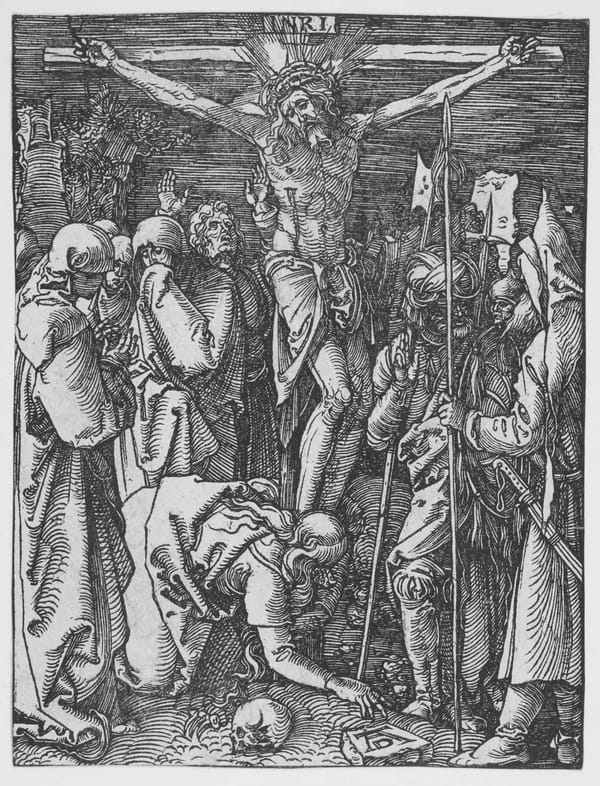
Wednesday in Holy Week
The chief priests and the ancients of the people have met to-day in one of the rooms adjoining the temple, for the purpose of deliberating on the best means of putting Jesus to death. Several plans are discussed. Would it be prudent to lay hands upon Him at this season of the feast of the Pasch, when the city is filled with strangers, who have received a favourable impression of Jesus from the solemn ovation given to Him three days back? Then, too, are there not a great number of the inhabitants of Jerusalem, who took part in that triumph, and whose enthusiastic admiration of Jesus might excite them to rise up in His defence? These considerations persuade them not to have recourse to any violent measure, at least for the present, as a sedition among the people might be the consequence, and its promoters, even were they to escape being ill-treated by the people, would be brought before the tribunal of the Roman governor, Pontius Pilate. They therefore come to the resolution of letting the feast pass quietly over, before apprehending Jesus.
But these blood-thirsty men are making all these calculations as though they were the masters. They are, if they will, shrewd assassins, who put off their murder to a more convenient day: but the divine decrees, which from all eternity have prepared a Sacrifice for the world’s salvation, have fixed this very year’s Pasch as the day of the Sacrifice, and to-morrow evening the holy city will re-echo with the trumpets which proclaim the opening of the feast. The figurative lamb is now to make way for the true one; the Pasch of this year will substitute the reality for the type; and Jesus’ Blood, shed by the hands of wicked priests, is soon to flow simultaneously with that of victims, which have been hitherto acceptable to God only because they prefigured the Sacrifice of Calvary. The Jewish priesthood is about to be its own executioner, by immolating Him, whose Blood is to abrogate the ancient Alliance, and perpetuate the new one.
But how are Jesus’ enemies to get possession of their divine Victim, so as to avoid a disturbance in the city? There is only one plan that could succeed, and they have not thought of it: it is treachery. Just at the close of their deliberations, they are told that one of Jesus’ disciples seeks admission. They admit him, and he says to them: 'What will you give me, and I will deliver Him unto you?’1 They are delighted at this proposition: and yet, how is it that they, doctors of the law, forget that this infamous bargain between themselves and Judas has all been foretold by David, in Psalm cviii? They know the Scriptures from beginning to end: how comes it that they forget the words of the Prophet, who even mentions the sum of thirty pieces of silver?2 Judas asks them what they will give him; and they give him thirty pieces of silver! All is arranged; tomorrow, Jesus will be in Jerusalem, eating the Pasch with His disciples. In the evening He will go, as usual, to the garden on Mount Olivet. But how shall they, who are sent to seize Him, be able to distinguish Him from His disciples? Judas will lead the way; he will show them which is Jesus, by going up to Him and kissing Him!
Such is the impious scheme devised on this day, within the precincts of the temple of Jerusalem. To testify her detestation at it, and to make atonement to the Son of God for the outrage thus offered Him, the holy Church, from the earliest ages, has consecrated the Wednesday of every week to penance. In our own times, the fast of Lent begins on a Wednesday; and when the Church ordained that we should commence each of the four seasons of the year with fasting, Wednesday was chosen to be one of the three days thus consecrated to bodily mortification.
On this day, in the Roman Church, was held the sixth scrutiny, for the admission of catechumens to Baptism. Those about whom there had been previous doubts were now added to the number of the chosen ones, if they were found worthy. There were two Lessons read in the Mass, as on the day of the great scrutiny, the Wednesday of the fourth week of Lent. As usual, the catechumens left the Church after the Gospel; but, as soon as the holy Sacrifice was over, they were brought back by the door-keeper, and one of the priests addressed them in these words: ‘On Saturday next, the Eve of Easter, at such an hour, you will assemble in the Lateran basilica, for the seventh scrutiny; you will then recite the Symbol, which you must have learned; and lastly, you will receive, by God’s help, the sacred laver of regeneration. Prepare yourselves, zealously and humbly, by persevering fasts and prayers, in order that, having been buried, by this holy Baptism, together with Jesus Christ, you may rise again with Him, unto life everlasting. Amen.’
At Rome, the Station for to-day is in the basilica of St. Mary Major. Let us compassionate with our holy Mother, whose heart is filled with poignant grief at the foresight of the Sacrifice which is preparing.
Mass
The Church commences her chants with one to the glory of the holy name of Jesus, outraged as it is, on this day, by them that plot His death. This name which was given Him by heaven, and signifies that He is our Saviour, is now being blasphemed by His enemies: in a few hours, their crime will bring its full meaning before us, for His death will have worked the salvation of the world.
Introit
Recording of the Introit:
https://www.youtube.com/watch?v=fHlvlYJUiso
In the first Collect, the Church acknowledges to God that her children have sinned against Him: but she reminds Him of the Passion endured for their sake, by His only-begotten Son; and this revives her hope.
℣. Flectamus genua.
℣. Let us kneel down.
Cap. lxii. et lxiii.Hæc dicit Dominus Deus: Dicite filiæ Sion: Ecce Salvator tuus venit, ecce merces ejus cum eo. Quis eat iste qui venit de Edom, tinctis vestibus de Boera? Iste formosus in stola sua, gradiens in multitudine fortitudinis suæ? Ego, qui loquor justitiam: et propugnator sum ad salvandum. Quare ergo rubrum est indumentum tuum, et vestimenta tua sicut calcantium in torculari? Torcular calcavi solus: et de gentibus non est vir mecum. Calcavi eos in furore meo: et conculcavi eos in ira mea. Et asperSus est sanguis eorum super vestimenta mea, et omnia indumenta mea inquinavi. Dies enim ultionis in corde meo: annus redemptionis meæ venit. Circumspexi, et non erat auxiliator: quæsivi, et non fuit qui adjuvaret. Et salvavit mihi brachium meum: et indignatio mea ipsa auxiliata est mihi. Et conculcavi populos in furore meo: et inebriavi eos in indignatione mea, et detraxi in terram virtutem eorum. Miserationum Domini recordabor, laudem Domini super omnibus, quæ reddidit nobis Dominus Deus noster.
Ch. lxii. and lxiii.Thus saith the Lord God: Tell the daughter of Sion: Behold thy Saviour cometh: behold his reward is with him. Who is this that cometh from Edom, with dyed garments from Bosra, this beautiful one in his robe, walking in the greatness of his strength? I, that speak justice, and am a defender to save. Why then is thy apparel red, and thy garments like theirs that tread in the wine-press? I have trodden the wine press alone, and of the Gentiles there is not a man with me; I have trampled on them in my indignation, and have trodden them down in my wrath, and their blood is sprinkled upon my garments, and I have stained all my apparel. For the day of vengeance is in my heart, the year of my redemption is come. I looked about, and there was none to help; I sought, and there was none to give aid; and my own arm hath saved for me, and my indignation itself hath helped me. And I have trodden down the people in my wrath, and have made them drunk in my indignation, and have brought down their strength to the earth. I will remember the tender mercies of the Lord, the praise of the Lord, for all the things that the Lord hath bestowed on us.
How terrible is this our Defender, who tramples His enemies beneath His feet, as they that tread in the wine-press; so that their blood is sprinkled upon His garments! But is not this the fittest time for us to proclaim His power, now that He is being treated with ignominy, and sold to His enemies by one of His disciples? These humiliations will soon pass away; He will rise in glory, and His might will be shown by the chastisements wherewith He will crush them that now persecute Him. Jerusalem will stone them that shall preach in His name; she will be a cruel stepmother to those true Israelites, who, docile to the teaching of the prophets, have recognized Jesus as the promised Messias. The Synagogue will seek to stifle the Church in her infancy; but no sooner shall the Church, shaking the dust from her feet, turn from Jerusalem to the Gentiles, than the vengeance of Christ will fall on the city which bought, betrayed, and crucified Him. Her citizens will have to pay dearly for these crimes. We learn from the Jewish historian Josephus, who was an eye-witness to the siege, that the fire which was raging in one of the streets was quenched by the torrents of their blood. Thus were fulfilled the threats pronounced by our Lord against this faithless city, as He sat on Mount Olivet, the day after His triumphant entry.
And yet, the destruction of Jerusalem was but a faint image of the terrible destruction which is to befall the world at the last day. Jesus, who is now despised and insulted by sinners, will then appear on the clouds of heaven, and reparation will be made for all these outrages. Now He suffers Himself to be betrayed, scoffed at, and spit upon; but when the day of vengeance is come, happy they that have served Him, and have compassionated with Him in His humiliations and sufferings! Woe to them that have treated Him with contempt! Woe to those who, not content with refusing to bear His yoke, have led others to rebel against Him! For He is King; He came into this world that He might reign over it; and they that despise His mercy shall not escape His justice.
The Gradual, which immediately follows upon this sublime passage from Isaias, is a prayer addressed by Jesus to His eternal Father: the words are taken from one of the Psalms.
Gradual
Recording of the Gradual:
https://www.youtube.com/watch?v=JRyyGQsOWiU
In the second Collect, the Church again reminds our heavenly Father of the death which His divine Son deigned to suffer in order to set us free from the yoke of satan; she prays that we may have a share in the glorious Resurrection of this our Redeemer.
Collect
For the other Collect, page see 108.
Epistle
Cap. liii.In diebus illis: Dixit Isaias: Domine, quis credidit auditui nostro; et brachium Domini cui revelatum est? Et ascendet sicut virgultum coram eo: et sicut radix de terra sitienti. Non est species ei, neque decor. Et vidimus eum; et non erat aspectus, et desideravimus eum: despectum, et novissimum virorum, virum dolorum, et scientem infirmitatem. Et quasi absconditus vultus ejus, et despectus, unde nec reputavimus eum. Vere languores nostros ipse tulit: et dolores nostros ipse portavit. Et nos putavimus eum quasi leprosum, et percussum a Deo, et humiliatum. Ipse autem vulneratus est propter iniquitates nostras: attritus est propter scelera nostra; discipline pacis nostræ super eum: et livore ejus sanati sumus. Omnes nos quasi oves erravimus: unusquisque in viam suam declinavit: et posuit Dominus in eo iniquitatem omnium nostrum. Oblatus est, quia ipse voluit: et non aperuit os suum. Sicut ovis ad occisionem ducetur: et quasi agnus coram tondente se, obmutescet: et non aperiet os suum. De angustia, et de judicio sublatns est. Generationem ejus quis enarrabit? Quia abscissus est de terra viventium. Propter scelus populi mei percussi eum. Et dabit impios pro sepultura, et divitem pro morte sua: eo quod iniquitatem non fecerit, neque dolus fuerit in ore ejus. Et Dominus voluit contere eum in infirmitate. Si posuerit pro peccato animam suam, videbit semen longævum: et voluntas Domini in manu ejus dirigetur. Pro eo quod laboravit anima ejus, videbit et saturabitur. In scientia sua justificabit ipse justus servus meus multos: et iniquitates eorum ipse portabit. Ideo dispertiam ei plurimos, et fortium dividet spolia: pro eo quod tradidit in mortem animam suam, et cum sceleratis reputatus est. Et ipse peccata multorum tulit: et pro transgressoribus rogavit
Ch. liii.In those days: Isaias said: Who hath believed our report? and to whom is the arm of the Lord revealed? And he shall grow up as a tender plant before him, and as a root out of a thirsty ground. There is no beauty in him, nor comeliness. And we have seen him, and there was no sightliness that we should be desirous of him; despised, and the most abject of men, a man of sorrows, and acquainted with infirmity. And his look was as it were hidden and despised; whereupon we esteemed him not. Surely he hath borne our infirmities, and carried our sorrows. And we have thought him as it were a leper, and as one struck by God and afflicted. But he was wounded for our iniquities, he was bruised for our sins; the chastisement of our peace was upon him, and by his bruises we are healed. All we like sheep have gone astray, every one hath turned aside into his own way: and the Lord hath laid upon him the iniquity of us all. He was offered because it was his own will, and he opened not his mouth. He shall be led as a sheep to the slaughter, and shall be dumb as a lamb before his shearer; and he shall not open his mouth. He was taken away from distress, and from judgment. Who shall declare his generation? because he is cut off out of the land of the living. For the wickedness of my people have I struck him. And he shall give the ungodly for his burial, and the rich for his death; because he hath done no iniquity, neither was there deceit in his mouth. And the Lord was pleased to bruise him in infirmity. If he shall lay down his life for sin, he shall see a long-lived seed, and the will of the Lord shall be prosperous in his hand. Because his soul hath laboured, he shall see and be filled: by his knowledge shall this my just servant justify many, and he shall bear their iniquities. Therefore will I distribute to him very many, and he shall divide the spoils of the strong, because he hath delivered his soul unto death, and was reputed with the wicked; and he hath borne the sins of many, and hath prayed for the transgressors.
Again it is Isaias that instructs us, not indeed upon the triumph which our Emmanuel is to win over His enemies, but upon the sufferings of the Man of sorrows. So explicit is his description of our Lord's Passion, that the holy fathers have called him the fifth evangelist. What could he more sublimely plaintive than the language here used by the son of Amos? And we, after hearing both the old and new Testament upon the sufferings which Jesus went through for our sins, how shall we sufficiently love this dear Redeemer, who bore our infirmities and carried our sorrows, so as to look as a leper, and as one struck by God and afflicted?
We are healed by His bruises! O heavenly Physi cian, who takes upon Himself the sufferings of those He comes to cure! But not only was He bruised for our sins; He was also slaughtered as a lamb: and this not merely as a Victim submitting to the inflexible will of His Father who hath laid upon Him the iniquity of us all, but (as the prophet here assures us) because it was His own will, His love for us, as well as His submission to His Father, led Him to the great Sacrifice. Observe, too, how He refuses to defend Himself before Pilate, who could so easily deliver Him from His enemies: He shall be dumb as a lamb before his shearers, and He shall not open His mouth. Let us love and adore this divine silence, which works our salvation. Let us not pass over an iota of the devotedness which Jesus shows us—a devotedness which never could have existed save in the heart of a God. Oh! how much He has loved us, His children, the purchase of His Blood, His seed, as the prophet here calls us. O holy Church! thou longlived seed of Jesus, who laid down His life, thou art dear to Him, for He bought thee at a great price. Faithful souls! give Him love for love. Sinners! be converted to this your Saviour; His Blood will restore you to life, for if we have all gone astray like sheep, remember what is added: The Lord hath laid upon Him the iniquity of us all. There is no sinner, however great may be his crimes, there is no heretic, or infidel, who has not his share in this precious Blood, whose infinite merit is such, that it could redeem a million worlds more guilty even than our own.
The Tract, which follows this Lesson, is taken from Psalm ci, in which the royal prophet expresses the sufferings of body and mind endured by Jesus in His human Nature.
Tract
℣. Ne avertas faciem tuam a me; in quacumque die tribulor, inclina ad me aurem tuam. ℣. In quacumque die invocavero te, velociter exaudi me.℣. Quia defecerunt sicut fumus dies mei: et ossa mea sicut in frixorio confrixa sunt.℣. Percussus sum sicut fœnum, et aruit cor meum, quia oblitus sum manducare panem meum.℣. Tu exsurgens, Domine, misereberis Sion, quia venit tempus miserendi ejus.
℣. Thou, O Lord, arising, wilt have mercy on Sion, for the time to have mercy on her is come.
Recording of the antiphon:
https://www.youtube.com/watch?v=CvJZ12IfmH0
The Church then gives us the history of the Passion according to St. Luke. This evangelist mentions several details not given by Saints Matthew and Mark, which will assist us to a fuller understanding of the divine mystery of the sufferings and Sacrifice of the Man-God.
THE PASSION AND GOSPEL
Venit autem dies azymorum, in qua necesse erat occidi Pascha. Et misit Petrum et Joannem, dicens: Euntes parate nobis Pascha, ut manducemus. At illi dixerunt: Ubi vis paremus? Et dixit ad eos: Ecce introeuntibus vobis in civitatem, occurret vobis homo quidam amphoram aquæ portans; sequimini eum in domum, in quam intrat, et dicetis patrifamilias domus: Dicit tibi Magister: Ubi est diversorium, ubi Pascha cum discipulis meis manducem? Et ipse ostendet vobis cœnaculum magnum stratum, et ibi parate.
Here a pause is made, as on Palm Sunday. All kneel down, and, if such be the custom of the place, they prostrate and kiss the ground.
Here the deacon offers the incense to the priest, that he may bless it; and, having himself received a blessing, he concludes the history of the Passion, observing the ceremonies used for singing the Gospel at High Mass.
The words of the Offertory are those of Jesus, suppliantly beseeching His eternal Father not to turn away His face from His own Son, who is a prey to every suffering, both of body and mind.
Offertory
Recording of the antiphon:
https://www.youtube.com/watch?v=TCVJXCjKpJU
In the Secret the Church prays that we may have a tender devotion for the holy Sacrifice of the Mass, in which the Passion of our Saviour is daily commemorated.
Secret
For the other Secret, see page 116.
The Church takes her Communion-anthem from the same Psalm, which supplied her with the Tract and Offertory, namely Psalm ci.
Communion
Recording of the antiphon:
https://www.youtube.com/watch?v=koaV7pbggZY
The death of Jesus should be to us an unceasing motive for confidence in the divine mercy. This confidence is one of the first conditions of our salvation. The Church asks it for us in the Postcommunion.
Postcommunion
See the other Postcommunion on page 117.
On this and the two following days, the Church anticipates the night Office; she celebrates it on the previous evening of each day, and this in order that the faithful may be present at it. The Matins and Lauds of Maundy Thursday, are, therefore, said this afternoon. The faithful should make every effort to assist at this solemn Office, seeing it is on their account that the Church has changed her usual hours. As to the merit there is in joining in it, there can be no doubt that it is to be preferred to any private devotions. The surest means for obtaining favours from God, and winning Him to our requests, is to approach Him through the Church. And as regards the feelings of devotion wherewith we ought to celebrate the mysteries of these three great days, the Offices of the Church are, ordinarily speaking, a surer and richer source than the exercises of piety composed by men. The soul that feeds on the words and ceremonies of the holy liturgy, will be all the more disposed to profit by the private devotions she practises at home. The prayer of the Church will thus become the basis, whereon is built the edifice of Christian piety during these glorious anniversaries of our Redemption: and we shall be imitating our forefathers who lived in the ages of faith, and who were such admirable Christians because they lived the life of the Church, by means of the sacred liturgy.
The Office of Tenebræ for to-day is given below, on Maundy Thursday, page 301.
As an appropriate exercise for the close of this day, we offer our readers the following stanzas from a hymn of the Greek liturgy; they allude to the mysteries we have been explaining.
Hymn (In Parasceve)
We subjoin the following beautiful Preface from the Ambrosian missal: it expresses, in a most touching manner, the sentiments which a Christian should have within him on this vigil of our Lord’s Supper.
Preface
The Night Office of Maundy Thursday (Tenebrae of Wednesday Evening)
The Office of Matins and Lauds, for the last three days of Holy Week, differs, in many things, from that of the rest of the year. All is sad and mournful, as though it were a funeral-service: nothing could more emphatically express the grief that now weighs down the heart of our holy mother the Church. Throughout all the Office of Thursday, Friday, and Saturday, she forbids herself the use of those formulas of joy and hope, wherewith, on all other days, she begins her praise of God. The Domine, labia mea aperies (O Lord, thou shalt open my lips): the Deus, in adjutorium meum intende (Incline unto mine aid, O God): the Gloria Patri, at the end of the psalms, canticles, and responsories—all are taken away. So likewise are those soul-stirring additions, which have been gradually made in the different ages; and nothing is left but what is essential to the form of the Divine Office: psalms, lessons, and chants expressive of grief. Each Canonical Hour ends with the psalm Miserere, and with a commemoration of the death and cross of our Redeemer.
The name of Tenebræ has been given to the Matins and Lauds of the last three days of Holy Week, because this Offioe used formerly to be celebrated during the night; and even when the hour was anticipated, the name of Tenebrœ was kept up for another reason, namely, that it began with day-light, but ended after the sun had set. There is an impressive ceremony, peculiar to this Office, which tends to perpetuate its name. There is placed in the sanctuary, near the altar, a large triangular candlestick, holding fifteen candles. These candles, and the six that are on the altar, are of yellow wax, as in the Office for the dead. At the end of each psalm or canticle, one of these fifteen candles is extinguished; but the one which is placed at the top of the triangle is left lighted. During the singing of the Benedictus, at Lauds, the six candles on the altar are also put out. Then the master of ceremonies takes the lighted candle from the triangle, and holds it upon the altar, on the epistle side, while the choir repeats the antiphon after the canticle: after which he hides it behind the altar during the recitation of the Miserere and the prayer which follows the psalm. As soon as this prayer is finished, a noise is made with the seats of the stalls in the choir, which continues until the candle is brought from behind the altar, and shows, by its light, that the Office of Tenebrœ is over.
Let us now study the meaning of these ceremonies. The glory of the Son of God was obscured, and, so to say, eclipsed, by the ignominies He endured during His Passion. He, the Light of the world, powerful in word and work, who, but a few days ago, was proclaimed King by the citizens of Jerusalem, is now robbed of all His honours; He is, says Isaias, the Man of sorrows, a leper;1 He is, says the royal prophet, a worm of the earth, and no man;2 He is, as He says of Himself, an object of shame even to His own disciples, for they are all scandalized in Him,3 and abandon Him; yea, even Peter protests that he never knew Him. This desertion on the part of His apostles and disciples is expressed by the candles being extinguished, one after the other, not only on the triangle, but on the altar itself. But Jesus, our Light, though despised and hidden, is not extinguished. This is signified by the candle which is momentarily placed on the altar; it figures our Redeemer suffering and dying on Calvary. In order to express His burial, the candle is hidden behind the altar; its light disappears. A confused noise is heard in the house of God, where all is now darkness. This noise and gloom express the convulsions of nature, when Jesus expired on the cross: the earth shook, the rocks were split, the dead came forth from their tombs. But the candle suddenly reappears; its light is as fair as ever; the noise is hushed, and homage is paid to the Conqueror of death.
After having given these general explanations we now offer the faithful the text of the liturgy, to which we subjoin a few words of commentary, where we think it needed.
Matins
After the Pater, Ave, and Credo, have been said secretly, the first Nocturn begins as follows.
The First Nocturn
The first psalm was written by David, when obliged to flee from the persecution of his son Absalom, who sought his death. It refers to Christ, and describes various incidents of His Passion. The gall and vinegar, here mentioned, show us that this psalm is prophetic, for David never received any such treatment from his enemies.
Psalm 68
Infixus sum in limo profundi: et non est substantia.
Veni in altitudinem maris: et tempestas demersit me.
Laboravi damans, raucæ factæ sunt fauces meæ: defecerunt oculi mei, dum spero in Deum meum.
Multiplicati sunt super capillos capitis mei: qui oderunt me gratis.
Confortati sunt qui persecuti sunt me inimici mei injuste: quæ non rapui, tunc exsolvebam.
Deus, tu scis insipientiam meam: et delicta mea a te non sunt abscondita.
Non erubescant in me, qui exspectant te, Domine: Domine virtutum.
Non confundantur super me: qui quærunt te Deus Israel.
Quoniam propter te sustinui opprobrium: operuit confusio faciem meam.
Extraneus factus sum fratribus meis: et peregrinus filiis matris meæ.
Quoniam zelus domus tuæ comedit me: et opprobria exprobrantium tibi ceciderunt super me.
Et operui in jejunio ani-
mam meam: et factum est in opprobrium mihi.
Et posui vestimentum meum cilicium: et factus sum illis in parabolam.
Adversum me loquebantur qui sedebant in porta: et in me psallebant qui bibebant vinum.
Ego vero orationem meam ad te, Domine: tempus beneplaciti Deus.
In multitudine misericordiæ tuæ exaudi me: in veritate salutis tuæ.
Eripe me de luto, ut non infigar: libera me ab iis qui oderunt me, et de profundis aquarum.
Non me demergat tempestas aquæ, neque absorbeat me profundum: neque urgeat super me puteus os suum.
Exaudi me, Domine, quoniam benigna est misericordia tua: secundum multitudinem miserationum tuarum respice in me.
Et ne avertas faciem tuam a puero tuo: quoniam tribulor, velociter exaudi me.
Intende animæ meæ et libera eam: propter inimicos meos eripe me.
Tu scis improperium meum, et confusionem meam: et reverentiam meam.
In conspectu tuo sunt omnes qui tribulant me: improperium exspectavit cor meum et miseriam.
Et sustinui qui simul contristaretur, et non fuit: et qui consolaretur, et non inveni.
Et dederunt in escam meam fel: et in siti mea potaverunt me aceto.
Fiat mensa eorum coram ipsis in laqueum: et in retributiones, et in scandalum.
Obscurentur oculi eorum ne videant: et dorsum eorum semper incurva.
Effunde super eos iram tuam: et furor iræ tuæ comprehendat eos.
Fiat habitatio eorum deserta: et in tabernaculis eorum non sit qui inhabitet.
Quoniam quem tu percussisti, persecuti sunt: et super dolorem vulnerum meorum addiderunt.
Appone iniquitatem super iniquitatem eorum: et non intrent injustitiam tuam.
Deleantur de libro viventium: et cum justis non scribantur.
Ego sum pauper et dolens: salus tua Deus suscepit me.
Laudabo nomen Dei cum cantico: et magnificabo eum in laude.
Et placebit Deo super vitulum novellum: cornua producentem et ungulas.
Videant pauperes et lætentur: quærite Deum, et vivet anima vestra.
Quoniam exaudivit pauperes Dominus: et vinctos suos non despexit.
Laudent ilium cœli et terra: mare et omnia reptilia in eis.
Quoniam Deus salvam faciet Sion: et ædificabuntur civitates Juda.
Et inhabitabunt ibi: et hæreditate acquirent eam.
Et semen servorum ejus possidebit eam: et qui diligunt nomen ejus habitabunt in ea.
I stick fast in the mire of the deep: and there is no sure standing.
I am come into the depth of the sea: and a tempest hath overwhelmed me.
I have laboured with crying: my jaws are become hoarse: my eyes have failed, whilst I hope in my God.
They are multiplied above the hairs of my head, who hate me without cause.
My enemies are grown strong, who have wrongfully persecuted me: then did I pay that which I took not away.
O God thou knowest my foolishness; and my offences, the offences which I have taken upon myself, are not hid from thee.
Let them not be ashamed for me, who look for thee, O Lord, the Lord of hosts.
Let them not be confounded on my account, who seek thee, O God of Israel.
Because for thy sake I have borne reproach: shame hath covered my face.
I am become a stranger to my brethren, and an alien to the sons of my mother.
For the zeal of thy house hath eaten me up: and the reproaches of them that reproached thee, are fallen upon me.
And I covered my soul in
fasting and it was made a reproach to me.
And I made hair-cloth my garment: and I became a byword to them.
They that sat in the gate spoke against me: and they that drank wine made me their song.
But as for me, my prayer is to thee, O Lord: for the time of thy good pleasure, O God.
In the multitude of thy mercy hear me, in the truth of thy salvation.
Draw me out of the mire, that I may not stick fast: deliver me from them that hate me, and out of the deep waters.
Let not the tempest of water drown me, nor the deep swallow me up: and let not the pit shut her mouth upon me.
Hear me, O Lord, for thy mercy is kind: look upon me according to the multitude of thy tender mercies.
And turn not away thy face from thy servant: for I am in trouble, hear me speedily.
Attend to my soul, and deliver it; save me because of my enemies.
Thou knowest my reproach, and my confusion, and my shame.
In thy sight are all they that afflict me; my heart hath experienced reproach and misery.
And I looked for one that would grieve together with me, but there was none: and for one that would comfort me, and I found none.
And they gave me gall for my food, and in my thirst they gave me vinegar to drink.
Let their table become as a snare before them, and a recompense, and a stumbling block.
Let their eyes be darkened that they see not: and their back bow thou down always.
Pour out thy indignation upon them: and let thy wrathful anger take hold of them.
Let their habitation be made desolate: and let there be none to dwell in their tabernacles.
Because they have persecuted him whom thou hast smitten: and they have added to the grief of my wounds.
Add thou iniquity upon their iniquity: and let them not come into thy justice.
Let them be blotted out of the book of the living: and with the just let them not be written.
But I am poor and sorrowful: thy salvation, O God, hath set me up.
I will praise the name of God with a canticle: and I will magnify him with praise.
And it shall please God better than a young calf, that bringeth forth horns and hoofs.
Let the poor see and rejoice: Seek ye God, and your soul shall live.
For the Lord hath heard the poor, and hath not despised his prisoners.
Let the heavens and the earth praise him; the sea, and every thing that creepeth therein.
For God will save Sion: and the cities of Juda shall be built up.
And they shall dwell there, and acquire it by inheritance.
And the seed of his servants shall possess it: and they that love his name shall dwell therein.
The second psalm was written by David, under the same circumstances as the previous one. He begs God to defend him against the enemies that are seeking to destroy him. This psalm is prophetic of the lot reserved to the Messias.
Psalm 69
Confundantur et revereantur: qui quærunt animam meam.
Avertantur retrorsum, et erubescant: qui volunt mihi mala.
Avertantur statim erubescentes: qui dicunt mihi: Euge, euge.
Exsultent et lætentur in te omnes qui quærunt te: et dicant semper: Magnificetur Dominus, qui diligunt salutare tuum.
Ego vero egenus et pauper sum: Deus adjuva me.
Adjutor meus et liberator meus es tu: Domine ne moreris.
Lot them be confounded and ashamed that seek my soul.
Let them be turned backward, and blush for shame, that desire evils to me.
Let them presently be turned away blushing for shame, that say to me: ‘Tis well, ‘tis well.
Let all that seek thee rejoice and be glad in thee: and let such as love thy salvation say always: The Lord be magnified.
But I am needy and poor; O God, help me.
Thou art my helper and my deliverer: O Lord make no delay.
The third psalm refers to the same period of David’s life; but whilst it describes the dangers to which this holy king was exposed, it also expresses the wonderful confidence he had that God would crown him with victory over all his enemies. In its prophetic signification, this psalm shows us how the Man-God, even in the lowest depths of His anguish, confided in His Father’s help.
Psalm 70
Inclina ad me aurem tuam: et salva me.
Esto mihi in Deum protectorem et in locum munitum: ut salvum me facias.
Quoniam firmamentum meum: et refugium meum es tu.
Deus meus, eripe me de manu peccatoris: et de manu contra legem agentis et iniqui.
Quoniam tu es patientia mea, Domine: Domine, spes mea a juventute mea.
In te confirmatus sum ex utero: de ventre matris meæ tu es protector meus.
In te cantatio mea semper: tamquam prodigium factus sum multis; et tu adjutor fortis.
Repleatur os meum laude, ut cantem gloriam tuam: tota die magnitudinem tuam.
Ne projicias me in tempore senectutis: cum defecerit virtus mea, ne derelinquas me.
Quia dixerunt inimici mei mihi: et qui custodiebant animam meam consilium fecerunt in unum.
Dicentes: Deus dereliquit eum, persequimini et comprehendite eum: quia non est qui eripiat.
Deus ne elongeris a me: Deus meus in auxilium meum respice.
Confundantur et deficiant detrabentes animæ meæ: operiantur confusione et pudore, qui quærunt mala mihi.
Ego autem semper sperabo: et adjiciam super omnem laudem tuam.
Os meum annuntiavit justitiam tuam: tota die salutare tuum.
Quoniam non cognovi litteraturam, introibo in potentias Domini: Domine, memorabor justitiæ tuæ solius.
Deus docuisti me a juventute mea: et usque nunc pronuntiabo mirabilia tua.
Et usque in senectam et senium: Deus ne derelinquas me.
Donec annuntiem brachium tuum: generationi omni, quæ ventura est.
Potentiam tuam, et justitiam tuam Deus usque in altissima, quæ fecisti magnalia: Deus quis similis tibi?
Quantas ostendisti mihi tribulationes multas et malas: et conversus vivificasti me: et de abyssis terræ iterum reduxisti me.
Multiplicasti magnificentiam tuam: et conversus consolatus es me.
Nam et ego confitebor tibi in vasis psalmi veritatem tuam: Deus, psallam tibi in cithara, sanctus Israel.
Exsultabunt labia mea cum cantavero tibi; et anima mea, quam redemisti.
Sed et lingua mea tota die meditabitur justitiam tuam: cum confusi et re venti fuerint qui quærunt mala mihi.
Incline thine ear unto me, and save me.
Be thou unto me a God, a protector, and a place of strength, that thou mayst make me safe.
For thou art my firmament and my refuge.
Deliver me, O my God, out of the hand of the sinner, and out of the hand of the transgressor of the law, and of the unjust.
For thou art my patience, O Lord: my hope, O Lord, from my youth.
By thee have I been confirmed from the womb: from my mother’s womb thou art my protector.
Of thee shall I continually sing: I am become unto many as a wonder: but thou art a strong helper.
Let my mouth be filled with praise, that I may sing thy glory: thy greatness all the day long.
Cast me not off in the time of old age; when my strength shall fail, do not thou forsake me.
For my enemies have spoken against me; and they that watched my soul have consulted together.
Saying: God hath forsaken him: pursue and take him, for there is none to deliver him.
O God, be not thou far from me: O my God, make haste to help me.
Let them be confounded and come to nothing that detract my soul: let them be covered with confusion and shame that seek my hurt.
But I will always hope: and will add to thy praise.
My mouth shall show forth thy justice: thy salvation all the day long.
Because I have not known learning, I will enter into the powers of the Lord: O Lord, I will be mindful of thy justice alone.
Thou hast taught me, O God, from my youth, and till now I will declare thy wonderful works.
And unto old age and grey hairs, O God, forsake me not.
Until I show forth thy arm to all the generation that is to come.
Thy power, and thy justice, O God, even to the highest; great things thou hast done; O God, who is like to thee?
How great troubles hast thou showed me, many and grievous: and turning thou hast brought me to life, and hast brought me back again from the depths of the earth.
Thou hast multiplied thy magnificence; and turning to me, thou hast comforted me.
I will also give praise to thee: I will extol thy truth with the instruments of psaltery: O God, I will sing to thee with the harp, thou holy one of Israel.
My lips shall greatly rejoice when I shall sing to thee: and my soul which thou hast redeemed.
Yea and my tongue also shall meditate on thy justice ail the day: when they shall be confounded and put to shame that seek evils to me.
Here is said the Pater noster, but all in secret.
The lessons of the first nocturn for each of these three days are taken from the Lamentations of Jeremias, which describe the miserable state of Jerusalem, when, in punishment for her idolatry, her people were led captive into Babylon. How visibly is the anger of God shown in these ruins of the great city, over which Jeremias pours forth his inspired words of mourning! And yet, this first disaster was but a figure of a more terrible one to come. When the Assyrians took Jerusalem, and well nigh reduced her to a wilderness, she lost not her name; and the very prophet who laments over her destruction had foretold that the desolation was not to last beyond seventy years. But in her second destruction, the faithless city forfeited even her name. Rebuilt by her conquerors, she went, for two hundred years, under the name of Ælia Adriana; and when, after peace was granted to the Church, she was again called Jerusalem, it was not a restitution of honour to Juda, but a homage that was paid to the God of the Christians, whom Juda had crucified in her capital. Neither St. Helen’s and Constantine’s devotedness, nor the heroism of the crusaders, could raise Jerusalem to the position of even a second-rate city; she is doomed to be a slave, and a slave to infidels, to all but the very end of time. She drew this frightful curse upon herself by the crimes she committed against the Son of God; and nothing could give us a better idea of the enormity of those crimes, than the plaintive words of such a prophet as Jeremias. This is the reason that his Lamentations are chosen for the lessons of Tenebræ. The mournful chant to which they are sung is probably the one used by the Jews themselves. The names of the letters of the Hebrew alphabet, which divide the stanzas of this inspired elegy, show us that it was written by the prophet as an acrostic. The Jewish custom of singing these Lamentations has been retained in the Christian Church.
First Lesson
(Cap. i.)
(Ch. i.)
Recording of the Lamentation (Tallis), Aleph-Beth:
https://www.youtube.com/watch?v=dbczcKGgcwM
Recording of the Lamentation (Tallis) Ghimel-Heth:
https://www.youtube.com/watch?v=BkcBLz9K2Sc
Recording of the responsory (chant):
https://www.youtube.com/watch?v=P49Fcd8dB5c
Recording of the responsory (Lassus):
https://www.youtube.com/watch?v=NlifGKHmzLc
Second Lesson
Recording of the Lamentation (Palestrina) Vau-Heth:
https://www.youtube.com/watch?v=6FZPcnc8hrs
Third Lesson
Recording of the Lamentation (Palestrina) Jod-Lamed:
https://www.youtube.com/watch?v=S01IMqzIJFQ
The Second Nocturn
The fourth psalm, which celebrates in such glowing terms the glories of the Son of David, would seem, at first sight, to be inappropriate for this Office, which commemorates only His humiliations. We sang this fine canticle on the night of our Emmanuel’s birth at Bethlehem; how comes it to be among our present chants, which are all so sorrowful? The Church has chosen it, because one of the glories here prophesied of Jesus is, that He shall deliver the poor from the mighty; and the needy that had no helper. Mankind is this poor one; satan is the mighty one; Jesus is about to deliver us from his power, by suffering what we have deserved by our sins.
Psalm 71
Judicare populum tuum in justitia: et pauperes tuos in judicio.
Suscipiant montes pacem populo: et colles justitiam.
Judicabit pauperes populi, et salvos faciet filios pauperum: et humiliabit calumniatorem.
Et permanebit cum sole, et ante lunam: in generatione et generationem.
Descendet sicut pluvia in vellus: et sicut stillicidia stillantia super terram.
Orietur in diebus ejus justitia, et abundantia pacis: donec auferatur luna.
Et dominabitur a mari usque ad mare: et a flumine usque ad terminos orbis terrarum.
Coram illo procident Æthiopes: et inimici ejus terram lingent.
Reges Tharsis et insulæ munera offerent reges Arabum et Saba dona adducent.
Et adorabunt eum omnes reges terræ: omnes gentes servient ei.
Quia liberabit pauperem a potente: et pauperem cui non erat adjutor.
Parcet pauperi et inopi: et animas pauperum salvas faciet.
Ex usuris et iniquitate redimet animas eorum: et honorabile nomen eorum coram illo.
Et vivet, et dabitur ei de auro Arabiæ, et adorabunt de ipso semper: tota die benedicent ei.
Et erit firmamentum in terra in summis montium, superextolletur super Libanum fructus ejus: et florebunt de civitate sicut fœnum terræ.
Sit nomen ejus benedictum in sæcula: ante solem permanet nomen ejus.
Et benedicentur in ipso omnes tribus terræ: omnes gentes magnificabunt eum.
Benedictus Dominus Deus Israel: qui facit mirabilia solus.
Et benedictum nomen majestatis ejus in æternum: et replebitur majestate ejus omnis terra: fiat, fiat.
To judge thy people with justice, and thy poor with judgment.
Let the mountains receive peace for the people, and the hills justice.
He shall judge the poor of the people, and he shall save the children of the poor, and he shall humble the oppressor.
And his kingdom on earth shall continue with the sun; and before the moon, throughout all generations.
He shall come down like rain upon the fleece: and as showers falling gently upon the earth.
In his days justice shall spring up, and abundance of peace: till the moon be taken away.
And he shall rule from sea to sea: and from the river Jordan to the ends of the earth.
Before him the Ethiopians shall fall down: and his enemies shall lick the ground.
The kings of Tharsis and the islands shall offer presents: the kings of the Arabians and of Saba shall bring gifts.
And all kings of the earth shall adore him; all nations shall serve him.
For he shall deliver the poor from the mighty: and the needy that had no helper.
He shall spare the human race which is poor and needy: and he shall save the souls of the poor.
He shall redeem their souls from the usuries and iniquity of Satan: and their name shall be honourable in his sight.
And he shall live, and to him shall be given of the gold of Arabia: for him they shall always adore: they shall bless him all the day.
He is the Bread of life; therefore, under his reign there shall be a firmament on the earth, on the tops of mountains: above Libanus shall the fruit thereof be exalted: and they of the city shall flourish like the grass of the earth.
Let his name be blessed for evermore: his name continueth before the sun.
And in him shall all the tribes of the earth be blessed: all nations shall magnify him.
Blessed be the Lord the God of Israel, who alone doth wonderful things.
And blessed be the name of his majesty for ever: and the whole earth shall be filled with his majesty. So be it. So be it.
The fifth psalm conveys a moral teaching, which, if listened to, would correct many a false judgment of the world. It often happens that men are shaken at seeing the wicked prosperous, and the virtuous afflicted. It was the temptation which overcame the apostles, when, seeing their divine Master in the hands of His enemies, they lost their faith in Him as the Messias. The psalmist owns that he himself was troubled by the same kind of thought; but God enlightened him to see the truth, that if divine Providenoe permit iniquity to triumph for a time, the day is sure to come when He will punish the wicked, and avenge the just that have suffered persecution.
Psalm 72
Mei autem pene moti sunt pedes: pene effusi sunt gressus mei:
Quia zelavi super iniquos, pacem peccatorum videns.
Quia non est respectus morti eorum: et firmamentum in plaga eorum.
In labore hominum non sunt: et cum hominibus non flagellabuntur.
Ideo tenuit eos superbia: operti sunt iniquitate et impietate sua.
Prodiit quasi ex adipe iniquitas eorum: transierunt in affectum cordis.
Cogitaverunt et locuti sunt nequitiam: iniquitatem in excelso locuti sunt.
Posuerunt in cœlum os suum: et lingua eorum transivit in terra.
Ideo convertetur populus meus hic: et dies pieni invenientur in eis.
Et dixerunt: Quomodo scit Deus: et si est scientia in Excelso?
Ecce ipsi peccatores, et abundantes in sæculo: obtinuerunt divitias.
Et dixi: Ergo sine causa justificavi cor meum: et lavi inter innocentes manus meas.
Et fui flagellatus tota die: et castigatio mea in matutinis.
Si dicebam: Narrabo sic: ecce nationem filiorum tuorum reprobavi.
Existimabam ut cognoscerem hoc: labor est ante
me:
Donec intrem in sanctuarium Dei: et intelligam in novissimis eorum.
Verumtamen propter dolos posuisti eis: dejecisti eos dum allevarentur.
Quomodo facti sunt in desolationem, subito defecerunt: perierunt propter iniquitatem suam.
Velut somnium surgentium, Domine: in civitate
tua imaginem ipsorum ad nihilum rediges.
Quia inflammatum est cor meum, et renes mei commutati sunt: et ego ad nihilum redactus sum, et nescivi.
Ut jumentum factus sum apud te: et ego semper tecum.
Tenuisti manum dexteram meam: et in voluntate tua deduxisti me: et cum gloria suscepisti me.
Quid enim mihi est in cœlo: et a te quid volui super terrain?
Defecit caro mea, et cor meum: Deus cordis mei et pars mea Deus in æternum.
Quia ecce, qui elongant se a te, peribunt: perdidisti omnes qui fornicantur abs te.
Mihi autem adhærere Deo bonum est: ponere in Domino Deo spem meam.
Ut annuntiem omnes prædicationes tuas: in portis filiæ Sion.
But my feet were almost moved; my steps had well nigh slipt:
Because I had a zeal on occasion of the wicked, seeing the prosperity of sinners.
For there is no regard to their death; nor is there strength in their stripes.
They are not in the labour of men: neither shall they be scourged like other men.
Therefore pride hath held them fast: they are covered with their iniquity and their wickedness.
Their iniquity hath come forth, as it were from fatness: they have passed into the affection of the heart.
They have thought and spoken wickedness: they have spoken iniquity on high.
They have set their mouth against heaven: and their tongue hath passed through the earth.
Therefore will my people return here: and full days shall be found in them.
And they said: How doth God know, and is there knowledge in the Most High?
Behold these are sinners; and yet abounding in the world, they have obtained riches.
And I said: Then have I in vain justified my heart, and washed my hands among the innocent.
And I have been scourged all the day, and my chastisement hath been in the mornings.
If I said: I will speak thus: behold I should condemn the generation of thy children.
I studied that I might know this thing: it is as labour in my sight:
Until I go into the sanctuary of God, and understand concerning their last ends.
But indeed for deceits thou hast put it to them: when they were lifted up thou hast cast them down.
How are they brought to desolation! they have suddenly ceased to be: they have perished by reason of their iniquity.
As the dream of them that awake, O Lord, so in thy city
thou shalt bring their image to nothing.
For my heart hath been inflamed, and my reins have been changed: and I am brought to nothing, and I knew not.
I am become as a beast before thee: and I am always with thee.
Thou hast held me by my right hand: and by thy will thou hast conducted me: and with glory thou hast received me.
For what have I in heaven? and besides thee, what do I desire upon earth?
For thee my flesh and my heart hath fainted away: thou art the God of my heart, and the God that is my portion for ever.
For behold they that go far from thee shall perish: thou hast destroyed all them that are disloyal to thee.
But it is good for me to stick close to my God, to put my hope in the Lord God.
That I may declare all thy praises in the gates of the daughter of Sion.
The sixth psalm is a reproach made to the enemies of the divine worship. The Jews used it for many ages against the Gentiles; the Christians now apply it to the Synagogue, which, after having crucified the Son of God, did its utmost to destroy His Church, by putting many of her children to death, and for bidding the apostles to preach the name of Christ.
Psalm 73
Memor esto congregationis tuæ: quam possedisti ab initio.
Redemisti virgam hæreditatis tuæ: mons Sion in quo habitasti in eo.
Leva manus tuas in superbias eorum in finem: quanta malignatus est inimicus in saneto.
Et gloriati sunt qui oderunt te: in medio solemnitatis tuæ.
Posuerunt signa sua, signa: et non cognoverunt sicut in exitu super summum.
Quasi in silva lignorum securibus exciderunt januas ejus in idipsum: in securi et ascia dejecerunt eam.
Incenderunt igni sanctuarium tuum: in terra polluerunt tabernaculum nominis tui.
Dixerunt in corde suo cognatio eorum simul: Quiescere faciamus omnes dies festos Dei a terra.
Signa nostra non vidimus, jam non eat propheta: et nos non cognoscet amplius.
Usquequo Deus improperabit inimicua: irritat adversarius nomen tuum in finem.
Ut quid avertis manum tuam, et dexteram tuam: de medio sinu tuo in finem.
Deus autem rex noater ante sæcula: operatus eat salutem in medio terræ.
Tu confirmasti in virtute tua mare: contribulasti capita draconum in aquis.
Tu confregisti capita draconis: dedisti eum escam populis Æthiopum.
Tu dirupisti fontes, et torrentes: tu siccasti fluvios Ethan.
Tuus eat dies, et tua est nox: tu fabricatus es auroram et solem.
Tu fecisti omnea terminos terrae: æstatem et ver tu plasmasti ea.
Memor esto hujus, inimicua improperavit Domino: et populus insipiens incitavit nomen tuum.
Ne tradas bestiis animas confitentes tibi: et animas pauperum tuorum ne obliviscaris in finem.
Respice in testamentum tuum: quia repleti sunt qui obscurati sunt terræ, domibus iniquitatum.
Ne avertatur humilis factus confusus: pauper et inops laudabunt nomen tuum.
Exsurge Deus judica causam tuam: memor esto improperiorum tuorum, eorum quæ ab insipiente sunt tota die.
Ne obliviscaris voces inimicorum tuorum: superbia eorum qui te oderunt, ascendit semper.
Remember thy congregation, which thou hast possessed from the beginning.
The sceptre of thy inheritance which thou hast redeemed: Mount Sion, in which thou hast dwelt.
Lift up thy hands against their pride unto the end: see what things the enemy hath done wickedly in the sanctuary.
And they that hate thee have made their boasts, in the midst of thy solemnity.
They have set up their ensigns for signs: and they knew not: both in the going out and on the highest top.
As with axes in a wood of trees, they have cut down at once the gates thereof: with axe and hatchet they have brought it down.
They have set fire to thy sanctuary: they have defiled the dwelling-place of thy name on the earth.
They said in their heart, the whole kindred of them together: Let us abolish all the festival days of God from the land.
Our signs we have not seen, there is now no prophet: and he will know us no more.
How long, O God, shall the enemy reproach? Is the adversary to provoke thy name for ever?
Why dost thou turn away thy hand; and thy right hand out of the midst of thy bosom for ever?
But God is our king before ages: he hath wrought salvation in the midst of the earth.
Thou by thy strength didst make the sea firm: thou didst crush the heads of the dragons in the waters.
Thou hast broken the heads of the dragon: thou hast given him to be meat for the Ethiopian people.
Thou hast broken up the fountains, and the torrents: thou hast dried up the Ethan rivers.
Thine is the day, and thine is the night: thou hast made the dawn and the sun.
Thou hast made all the borders of the earth: the summer and the spring were formed by thee.
Remember this, the enemy hath reproached the Lord: and a foolish people bath provoked thy name.
Deliver not up to beasts the souls that confess to thee: and forget not to the end the souls of thy poor.
Have regard to thy covenant: for they that are the obscure of the earth have been filled with the dwellings of iniquity.
Let not the humble be turned away with confusion: the poor and the needy shall praise thy name.
Arise, O God, judge thy own cause: remember the reproaches with which the foolish man hath reproached thee all the day.
Forget not the voices of thy enemies: the pride of them that hate thee ascendeth continually.
Here is said, in secret, the Pater noster.
For the lessons of the second nocturn the Church reads, each of these three days, a passage from Saint Augustine’s Enarrations on the psalms which are prophetic of our Lord’s Passion.
Fourth Lesson
(Ps. liv.)
multa patiens, de malo liberari desiderans. Superest ut videamus in quo malo sit; et cum dicere cœperit, agnoscamus ibi nos esse: ut communicata tribulatione, conjungamus orationem. Contristatus sum, inquit, in exercitatione mea, et conturbatus sum. Ubi contristatus? ubi conturbatus? In exercitatione mea, inquit. Homines malos, quos patitur, commemorat us est: eamdemque passionem malorum hominum, exercitationem suam dixit. Ne putetis gratis esse malos in hoc mundo, et nihil boni de illis agere Deum. Omnis malus, aut ideo vivit, ut corrigatur: aut ideo vi vit, ut per ilium bonus exerceatur.
(Ps. liv.)
desiring to be freed from some evil. Let us now see what evil he lies under: and when he has told it to us, let us acknowledge ourselves in it: that by partaking of the affliction, we may join in his prayer. I am become sorrowful in my exercise, says he, and I am troubled. Where is he become sorrowful? Where is he troubled? He says, In my exercise. He speaks of the wicked men whom he suffers, and calls such suffering of wicked men his exercise. Think not that the wicked are in the world for nothing, and that God works no good with them. Every wicked man lives, either to amend his life, or to exercise the good man.
Fifth Lesson
Sixth Lesson
The Third Nocturn
The seventh psalm declares the vengeance of God on those that excite His anger. It shows us what will happen to the Synagogue; after having obliged the Messias to drink the bitter chalice of His Passion, its own turn shall come, and it shall drink the cup of God’s wrath, even to the very dreys thereof.
Psalm 74
Narrabimus mirabilia tua: cum accepero tempus, ego justitias judicabo.
Liquefacta est terra, et omnes qui habitant in ea: ego confirmavi columnas ejus.
Dixi iniquis: Nolite inique agere: et delinquentibus: Nolite exaltare cornu.
Nolite extollere in altum cornu vestrum: Nolite loqui adversus Deum iniquitatem.
Quia neque ab oriente, neque ab occidente, neque a desertis montibus: quoniam Deus judex est.
Hunc humiliat, et hunc exaltat: quia calix in manu Domini vini meri plenus mixto.
Et inclinavit ex hoc in hoc: verumtamen fæx ejus non est exinanita: bibent omnes peccatores terræ.
Ego autem annuntiabo in sæculum: cantabo Deo Jacob.
Et omnia cornua peccatorum confringam: et exalta buntur cornua justi.
We will relate thy wondrous works: when, says the Lord, I shall take a time, I will judge justice.
The earth is melted and all that dwell therein: I have established the pillars thereof.
I said to the wicked: Do not act wickedly: and to the sinners: Lift not up the horn.
Lift not up your horn on high: speak not iniquity against God.
For neither from the east, nor from the west, nor from the desert hills: for God is the judge.
One he putteth down, and another he lifteth up. For in the hand of the Lord there is a cup of strong wine full of mixture.
And he hath poured it out from this to that: but the dregs thereof are not emptied: all the sinners of the earth shall drink.
But I will declare for ever: I will sing to the God of Jacob.
And I will break all the horns of sinners: but the horns of the just shall be exalted.
The eighth psalm was written after David had conquered his enemies. He speaks of the peace that was restored to Sion, and of the sudden vengeance of God that overtook the wicked. The enemies of our Saviour were sleeping their sleep; when suddenly, the earth trembled, and God arose to judge them.
Psalm 75
Et factus est in pace locus ejus: et habitatio ejus in Sion.
Ibi confregit potentias arcuum: scutum, gladium, et bellum.
Illuminans tu mirabiliter a montibus æternis: turbati sunt omnes insipientes corde.
Dormierunt somnum suum: et nihil invenerunt omnes viri divitiarum in manibus suis.
Ab increpatione tua Deus Jacob: dormitaverunt qui ascenderunt equos.
Tu terribilis es, et quis resistet tibi: ex tunc ira tua.
De cœlo auditum fecisti judicium: terra tremuit et quievit.
Cum exsurgeret in judicium Deus: ut salvos facerei omnes mansuetos terræ.
Quoniam cogitatio hominis confìtebitur tibi: et reliquiae cogitationis diem festum agent tibi.
Vovete et reddite Domino Deo vestro: omnes qui in circuitu ejus affertis munera.
Terribili et ei qui aufert spiritum principum: terribili apud reges terrae.
And his place is in peace, and his abode in Sion.
There hath he broken the power of bows, the shield, the sword, and the battle.
Thou enlightenest wonderfully from the everlasting hills: all the foolish of heart were troubled.
They have slept their sleep; and all the men of riches have found nothing in their hands.
At thy rebuke, O God of Jacob, they have all slumbered that mounted on horseback.
Thou art terrible, and who shall resist thee? from that time thy wrath.
Thou hast caused judgment to be heard from heaven: the earth trembled and was still.
When God arose in judgment, to save all the meek of the earth.
For the thought of man shall give praise to thee: and the remainders of the thought shall keep holyday to thee.
Vow ye, and pay to the Lord your God: all you that round about him bring presents.
To him that is terrible, even to him who taketh away the spirit of princes; to the terrible with the kings of the earth.
The ninth psalm tells us of David’s tribulation when his son Absalom, the type of the Jewish people, raised the standard of revolt against him The royal prophet, who is the figure of Christ, loses not his confidence in the midst of his trials. The recollection of the wonderful works wrought by God in favour of His people, animates his courage, and he feels that this same merciful God will deliver him.
Psalm 76
In die tribulationis meæ Deum exquisivi, manibus meis nocte contra eum: et non sum deceptus.
Renuit consolari anima mea: memor fui Dei, et delectatua sum, et exercitatus sum, et defecit spiritus meus.
Anticipaverunt vigilias oculi mei: turbatus sum, et non sum locutus.
Cogitavi dies antiquos: et annos æternos in mente habui.
Et meditatus sum nocte cum corde meo: et exercitabar, et scopebam spiritum meum.
Numquid in æternum projiciet Deus: aut non apponet ut complacitior sit adhuc?
Aut in finem misericordiam suam abscindet: a generatione in generationem?
Aut obliviscetur misereri Deus: aut continebit in ira sua misericordias suas?
Et dixi: nunc cœpi: hæc mutatio dexteræ excelsi.
Memor fui operum Domini: quia memor ero ab initio mirabilium tuorum.
Et meditabor in omnibus operibus tuis: et in adinventionibus tuis exercebor.
Deus in sancto via tua: quis Deus magnus sicut Deus noster? Tu es Deus, qui fads mirabilia.
Notum fecisti in populis virtutem tuam: redemisti in brachio tuo populum tuum, filios Jacob et Joseph.
Viderunt te aquæ Deus, viderunt te aquæ: et timuerunt, et turbatæ sunt abyssi.
Multitudo sonitus aquarum: vocem dederunt nubes.
Etenim sagittæ tuæ transeunt: vox tonitrui tui in rota.
Illuxerunt coruscationes tuæ orbi terrae: commota est et contremuit terra.
In mari via tua, et semitæ tuæ in aquis multis: et vestigia tua non cognoscentur.
Deduxisti sicut oves populum tuum: in manu Moysi et Aaron.
In the day of my trouble I sought God: with my hands lifted up to him in the night, and I was not deceived.
My soul refused to be comforted; I remembered God, and was delighted, and was exercised, and my spirit swooned away.
My eyes prevented the watches: I was troubled, and I spoke not.
I thought upon the days of old: and I had in my mind the eternal years.
And I meditated in the night with my own heart, and I was exercised, and I swept my spirit.
Will God then cast off for ever? or will he never be more favourable again?
Or will he cut off his mercy for ever, from generation to generation?
Or will God forget to show mercy? or will he in his anger shut up his mercies?
And I said: Now have I begun: this is the change of the right hand of the Most High.
I remembered the works of the Lord; for I will be mindful of thy wonders from the beginning.
And I will meditate on all thy works; and will be employed in thy inventions.
Thy way, O God is in the holy place: who is the great God like our God? Thou art the God that dost wonders.
Thou hast made thy power known among the nations: with thy arm thou hast redeemed thy people, the children of Jacob and Joseph.
The waters saw thee, O God, the waters saw thee; and they were afraid, and the depths were troubled.
Great was the noise of the waters: the clouds sent out a sound.
For thy arrows pass: the voice of thy thunder in a wheel.
Thy lightnings enlightened the world, the earth shook and trembled,
Thy way is in the sea, and thy paths in many waters; and thy footsteps shall not be known.
Thou hast conducted thy people like sheep, by the hand of Moses and Aaron.
Here is said the Pater noster in secret.
The lessons of the third nocturn are taken from St. Paul. After having reproved the faithful of Corinth for the abuses which bad crept into their assemblies, he relates the institution of the holy Euoharist, which took place to-day (Thursday); and after showing us the dispositions wherewith we should approach the holy Table, he speaks of the enormity of the crime of an unworthy Communion.
Seventh Lesson
Cap. xi.Hoc autem præcipio: non laudans quod non in melius, sed in deterius convenitis. Primum quidem convenientibus vobis in ecclesiam, audio scissuras esse inter vos, et ex parte credo. Nam oportet et hæreses esse, ut et qui probati sunt, manifesti fiant in vobis. Convenientibus ergo vobis in unum, jam non est Dominicam Cœnam manducare. Unusquisque enim suam cœnam præsumit ad manducandum. Et alius quidem esurit, alius autem ebrius est. Numquid domos non habetis ad manducandum et bibendum? Aut Ecclesiam Dei contemnitis, et confunditis eos qui non habent? Quid dicam vobis? Laudo vos? In hoc non laudo.
Ch. xi.Now this I ordain: not praising you that you come together, not for the better, but for the worse. For first of all I hear that when you come together in the church, there are schisms among you, and in part I believe it. For there must be, also, heresies; that they also, who are approved, may be made manifest among you. When you therefore come together into one place, it is not now to eat the Lord’s Supper. For every one taketh before his own supper to eat. And one indeed is hungry, and another is drunk. What, have you not houses to eat and drink in? Or despise ye the Church of God, and put them to shame that have not? What shall I say to you? Do I praise you? In this I praise you not.
Eighth Lesson
Ninth Lesson
Lauds
The first psalm is the one written by David after his sin, in which he so feelingly and so humbly breathes forth his repentance. The Church invariably makes use of this psalm, when she sues to God for mercy; and of all the canticles of the royal prophet there is not one so familiar to the faithful as this.
Psalm 50
Et secundum multitudinem miserationum tuarum: dele iniquitatem meam.
Amplius lava me ab iniquitate mea: et a peccato meo munda me.
Quoniam iniquitatem meam ego cognosco: et peccatum meum contra me est semper.
Tibi soli peccavi, et malum coram te feci: ut justificeris in sermonibus tuis, et vincas cum judicaris.
Ecce enim in iniquitati bus conceptus sum: et in peccatis concepii me mater mea.
Ecce enim veritatem dilexisti: incerta et occulta sapientiæ tuæ manifestasti mihi.
Asperges me hyssopo, et mundabor: lavabis me, et super nivem dealbabor.
Auditui meo dabis gaudium et lætitiam: et exsultabunt ossa humiliata.
Averte faciem tuam a peccatis meis: et omnes iniquitates meas dele.
Cor mundum crea in me, Deus: et spiritum rectum innova in visceribus meis.
Ne projicias me a facie tua: et spiritum sanctum tuum ne auferas a me.
Redde mihi lætitiam salutaris tui: et spiritu principali confirma me.
Docebo iniquos vias tuas: et impii ad te convertentur.
Libera me de sanguinibus Deus, Deus salutis meæ: et exsultabit lingua mea justitiam tuam.
Domine, labia mea aperies: et os meum annuntiabit laudem tuam.
Quoniam si voluisses sacrificium dedissem utique; holocaustis non delectaberis.
Sacrificium Deo spiritus contribulatus: cor contri tum et humiliatum, Deus, non despides.
Benigne fac Domine in bona voluntate tua Sion: ut ædificentur muri Jerusalem.
Tunc acceptabis sacrificium justitiæ, oblationes, et holocausta: tunc imponent super altare tuum vitulos.
And according to the multitude of thy tender mercies, blot out my iniquities.
Wash me yet more from my iniquity: and cleanse me from my sin.
For I know my iniquity: and my sin is always before me.
To thee only have I sinned, and have done evil before thee: I confess it: do thou pardon me, that thou mayst be justified in thy words, and mayst overcome when thou art judged.
For behold I was conceived in iniquities: and in sins did my mother conceive me.
For behold thou hast loved truth: the uncertain and hidden things of thy wisdom thou bast made manifest to me.
Thou shalt sprinkle me with hyssop, as a leper, and I shall be cleansed: thou shalt wash me, and I shall be made whiter than snow.
To my hearing thou shalt give joy and gladness: and the bones that have been humbled shall rejoice.
Turn away thy face from my sins: and blot out all my iniquities.
Create a clean heart in me, O God: and renew a right spirit within my bowels.
Cast me not away from thy face: and take not thy holy Spirit from me.
Restore unto me the joy of thy salvation: and strengthen me with a perfect spirit.
I will teach the unjust thy ways: and the wicked shall be converted to thee.
Deliver me from blood, O God, the God of my salvation: and my tongue shall extol thy justice.
O Lord, thou wilt open my lips: and my mouth shall declare thy praise.
For if thou hadst desired sacrifice, I would indeed have given it: with burnt-offerings thou wilt not be delighted.
A sacrifice to God is an afflicted spirit: a contrite and humble heart, O God, thou wilt not despise.
Deal favourably, O Lord, in thy good-will with Sion: that the walls of Jerusalem may be built up.
Then shalt thou accept the sacrifice of justice, oblations and whole-burnt offerings: then shall they lay calves upon thine altar.
The second psalm is one of those fixed for the Thursday of each week: it is a prayer suitable for the morning. The psalmist confesses the nothingness of man, and the shortness of his life: he asks God to bless the actions of the day. The faithful must not forget that the Office of Lauds is the morning service, and its being said over night, during these three days, is exceptional.
Psalm 89
Priusquam montes fierent, aut formaretur terra et orbis: a sæculo et usque in sæcnlum tu es Deus.
Ne avertas hominem in humilitatem: et dixisti: Convertimini filii hominum.
Quoniam mille anni ante oculos tuos: tanquam dies hesterna quæ præteriit.
Et custodia in nocte: quæ pro nihilo habentur, eorum anni erunt.
Mane sicut herba transeat, mane floreat, et transeat: vespere decidat, induret, et arescat.
Quia defecimus in ira tua: et in furore tuo turbati sumus.
Posuisti iniquitates nostras in conspectu tuo: sæculum nostrum in illuminatione vultus tui.
Quoniam omnes dies nostri defecerunt: et in ira tua defecimus.
Anni nostri sicut aranea meditabuntur: dies annorum nostrorum in ipsis Septuaginta anni.
Si autem in potentatibus, octoginta anni: et amplius eorum labor et dolor.
Quoniam supervenit mansuetudo: et corripiemur.
Quis novit potestatem iræ tuæ: et præ timore tuo iram tuam dinumerare?
Dexteram tuam sic notam fac: et eruditos corde in sapientia.
Convertere, Domine, usquequo: et deprecabilis esto super servos tuos.
Repleti sumus mane misericordia tua: et exsultavimus, et delectati sumus omnibus diebus nostris.
Lætati sumus pro diebus quibus nos humiliasti: annis, quibus vidimus mala.
Respice in servos tuos, et in opera tua: et dirige filios eorum.
Et sit splendor Domini Dei nostri super nos, et opera manuum nostrarum dirige super nos: et opus manuum nostrarum dirige.
Before the mountains were made, or the earth and the world was formed: from eternity, and to eternity thou art God.
Turn not man away to be brought low; and thou hast said: Be converted, O ye sons of men.
For a thousand years, in thy sight, are but as yesterday which is past and gone.
And as a watch in the night: as things that are counted nothing, so shall their years be.
In the morning, man shall grow up like grass, in the morning he shall flourish and pass away: in the evening he shall fall, grow dry, and wither.
For in thy wrath we are quickly consumed: and are troubled in thy indignation.
Thou hast set our iniquities before thy eyes: our life in the light of thy countenance.
For all our days are spent: and in thy wrath we have fainted away.
Our years shall be considered as a spider: the days of our years in them are threescore and ten years.
But if in the strong they be fourscore years: and what is more of them is labour and sorrow.
For mildness is come upon us: and we shall be corrected.
Who knoweth the power of thy anger: and, for thy fear, can number thy wrath?
So make thy right hand known: and make us learned in heart in wisdom.
Return, O Lord, how long? and be entreated in favour of thy servants.
We are filled in the morning with thy mercy: and we are rejoiced and are delighted all our days.
We have rejoiced for the days in which thou hast humbled us: for the years in which we have seen evils.
Look upon thy servants, and upon their works: and direct their children.
And let the brightness of the Lord our God be upon us, and direct thou the works of our hands over us: yea, the work of our hands do thou direct.
The following psalm, like the former, belongs to the Lauds of Thursdays. It speaks of the wicked man rising in the morning with his mind bent upon the evil deeds he has resolved on during the night; it implores God’s protection against him, and sings of the life, the true light, and the abundance of good things reserved for the just in heaven.
Psalm 85
Quoniam dolose egit in conspectu ejus: ut in veniatur iniquitas ejus ad odium.
Verba oris ejus iniquitas, et dolus: noluit intelligere ut bene ageret.
Iniquitatem meditatus est in cubili suo: astitit omni vise non bonæ, malitiam autem non odivit.
Domine, in cœlo misericordia tua: et veritas tua usque ad nubes.
Justitia tua sicut montes Dei: judicia tua abyssus multa.
Homines, et jumenta salvabis, Domine: quemadmodum multiplicasti misericordiam tuam, Deus.
Filii autem hominum in tegmine alarum tuarum sperabunt.
Inebriabunturab ubertate domus tuæ: et torrente voluptatis tuæ potabis eos.
Quoniam apud te est fons vitæ: et in lumine tuo videbimus lumen.
Prætende misericordiam tuam scientibus te, et justitiam tuam his, qui recto sunt corde.
Non veniat mihi pes superbiæ: et manus peccatoris non moveat me.
Ibi ceciderunt qui operantur iniquitatem: expulsi sunt, nec potuerunt stare.
For in his sight he hath done deceitfully: that his iniquity may be found unto hatred.
The words of his mouth are iniquity and guile: he would not understand that he might do well.
He hath devised iniquity on his bed: he hath set himself on every way that is not good; but evil he hath not hated.
O Lord, thy mercy is in the heavens: and thy truth reacheth even unto the clouds.
Thy justice is as the mountains of God: thy judgments are a great deep.
Men and beasts thou wilt preserve, O Lord: O how hast thou multiplied thy mercy, O God!
But the children of men shall put their trust: under the covert of thy wings.
They shall be inebriated with the plenteousness of thy house: and thou shalt make them drink of the torrent of thy pleasure.
For with thee is the well of life: and in thy light we shall see light.
Stretch forth thy mercy unto them that know thee: and thy justice unto them that are right of heart.
Let not the foot of pride come unto me: and let not the hand of the sinner move me.
There are the workers of iniquity fallen: they are cast out, and they could not stand.
The sublime Canticle of Moses, which was sung after the passage through the Red Sea, forms part of Thursday’s Lauds for penitential seasons. It is peculiarly appropriate now, when our catechumens are about to receive holy Baptism. The font will be their Red Sea, wherein all their sins will be drowned, as the Egyptians of old. The Israelites, after having offered the sacrifice of the Paschal Lamb, passed safely between the waves: our catechumens will come to the laver of regeneration full of hope in the Sacrifice of the true Lamb, for His Blood has imparted to the element of water the power of purifying the soul.
Canticle of Moses (Exod. xv.)
Fortitudo mea et laus mea Dominus: et factus est mihi in salutem.
Iste Deus meus, et glorifica bo eum: Deus patris mei, et exaltabo eum.
Dominus quasi vir pugnator, Omnipotens nomen ejus: currus Pharaonis, et exercitum ejus projecit in mare.
Electi principes ejus submersi sunt in Mari Rubro: abyssi operuerunt eos, descenderunt in profundum quasi lapis.
Dextera tua, Domine, magnificata est in fortitudine: dextera tua, Domine, percussit inimicum: et in multitudine gloriæ tuæ deposuisti adversarios tuos.
Misisti iram tuam, quæ deyoravit eos sicut stipulam: et in spiritu furoris tui congregatæ sunt aquæ.
Stetit unda fluens: congregata sunt abyssi in medio mari.
Dixit inimicus: persequar et comprehendam: dividam spolia, implebitur anima mea.
Evaginabo gladium meum: interficiet eos manus mea.
Flavit spiritus tuus, et operuit eos mare: submersi sunt quasi plumbum in aquis vehementibus.
Quis similis tui in fortibus, Domine: quis similis tui, magnificus in sanctitate, terribilis atque laudabilis, faciens mirabilia?
Extendisti manum tuam, et devoravit eos terra: dux fuisti in misericordia tua populo quem redemisti.
Et portasti eum in fortitudine tua: ad habitaculum sanctum tuum.
Ascenderunt populi et irati sunt: dolores obtinuerunt habitatores Philisthiim.
Tunc conturbati sunt principes Edom, robustos Moab obtinuit tremor: obriguerunt omnes habitatores Chanaan.
Irruat super eos formido et pavor: in magnitudine brachii tui.
Fiant immobiles quasi lapis, donec pertranseat populus tuus Domine: donec pertranseat populus tuus iste, quem possedisti.
Introduces eos, et plantabis in monte hæreditatis tuæ: firmissimo habitaculo tuo, quod operatus es, Domine:
Sanctuarium tuum, Domine, quod firmaverunt manus tuæ: Dominus regnabit in æternum, et ultra.
Ingressus est enim eques Pharao cum curribus et equitibus ejus in mare: et reduxit super eos Dominus aquas maris.
Filii autem Israel ambulaverunt per siccum: in medio ejus.
The Lord is my strength and my praise: and he is become salvation to me.
He is my God, and I will glorify him: the God of my father, and I will exalt him.
The Lord is as a man of war, Almighty is his name. Pharaoh’s chariots and his army he bath cast into the sea.
His chosen captains are drowned in the Red Sea. The depths have covered them, they are sunk to the bottom like a stone.
Thy right hand, O Lord, is magnified in strength; thy right hand, O Lord, hath slain the enemy. And in the multitude of thy power thou hast put down thy adversaries.
Thou hast sent thy wrath, which hath devoured them like stubbie. And with the blast of thy anger the waters were gathered together.
The flowing waters stood, the depths were gathered together in the midst of the sea.
The enemy said: I will pursue and overtake, I will divide the spoils, my soul shall have its fill.
I will draw my sword, my hand shall slay them.
Thy wind blew, and the sea covered them: they sank as lead in the mighty waters.
Who is like to thee among the strong, O Lord? who is like to thee, glorious in holiness, terrible and praiseworthy, doing wonders?
Thou stretchedst forth thy hand, and the earth swallowed them. In thy mercy thou hast been a leader to the people whom thou hast redeemed:
And in thy strength thou hast carried them to thy holy habitation.
Nations rose up and were angry: sorrows took hold of the inhabitants of Philisthiim.
Then were the princes of Edom troubled, trembling seized on the stout men of Moab: all the inhabitants of Canaan became stiff.
Let fear and dread fall upon them in the greatness of thy arm.
Let them become immovable as a stone, until thy people, O Lord, pass by; until this thy people pass by, which thou hast possessed.
Thou shalt bring them in and plant them in the mountain of thy inheritance, in thy most firm habitation, which thou hast made, O Lord:
Thy sanctuary, O Lord, which thy hands have established. The Lord shall reign for ever and ever.
For Pharaoh went in on horseback with his chariots and horsemen into the sea: and the Lord brought back upon them the waters of the sea.
But the children of Israel walked on dry ground in the midst thereof.
Though varying according to the days of the week, the last psalm of the morning Office is always one of praise, which is expressed in its very first word; whence this Hour has received its beautiful name of Lauds.
Psalm 146
Ædificans Jerusalem Dominus: dispersiones Israelis congregabit.
Qui sanat contritos coi de: et alligat contritiones corum.
Qui numerat multitudinem stellarum: et omnibus eis nomina vocat.
Magnus Dominus noster, et magna virtus ejus: et sapientiæ ejus non est numerus.
Suscipiens mansuetos Dominus: humilians autem peccatores usque ad terram.
Præcinite Domino in confessione: psallite Deo nostro in cithara.
Qui operit cœlum nubibus: et parat terræ pluviam.
Qui producit in montibus fœnum: et herbam servituti hominum.
Qui dat jumentis escam ipsorum: et pullis corvorum invocantibus eum.
Non in fortitudine equi Voluntatem habebit: nec in tibiis viri beneplacitum erit ei.
Beneplacitum est Domino super timentes eum: et in eis qui sperant super misericordia ejus.
The Lord buildeth up Jerusalem: he will gather together the dispersed of Israel.
Who healeth the broken of heart: and bindeth up their bruises.
Who telleth the number of the stars: and calleth them all by their names.
Great is our Lord, and great is his power: and of his wisdom there is no measure.
The Lord lifteth up the meek: and bringeth the wicked down even to the ground.
Sing ye to the Lord with praise: sing unto our God upon the harp.
Who covereth the heaven with clouds: and prepareth rain for the earth.
Who maketh grass to grow on the mountains: and herbs for the service of men.
Who giveth to beasts their food: and to the young ravens that call upon him.
He shall not delight in the strength of the horse: nor take pleasure in the legs of a man.
The Lord taketh pleasure in them that fear him: and in them that hope in his mercy.
℣. Homo pacis meæ, in quo speravi. ℟. Qui edebat panes meos, ampliavit adversum me supplantationem.
℣. The man of my peace, in whom I trusted. ℟. Who ate my bread, hath greatly supplanted me.
The Church now intones the sweet canticle of Zachary, which she repeats every morning. Its joyous accents strangely contrast with the sadness caused in us by the Passion of our Jesus, the Sun of justice. It was during these very days, that the remission of sins was wrought through the bowels of the mercy of our God; but the divine Orient rises not upon us from on high and in His splendour; He is about to set on Calvary by the most cruel of deaths. Let us weep for ourselves, while we weep for Him; but let us look forward to His Resurrection, which is to be ours also.
Canticle of Zachary (St. Luke, i.)
Et erexit cornu salutis nobis: in domo David pueri sui.
Sicut locutus est per os sanctorum, qui a sæculo sunt prophetarum ejus:
Salutem ex inimicis nostris: et de manu omnium qui oderunt nos.
Ad faciendam misericordiam cum patri bus nostris: et memorari testamenti sui sancti.
Jusjurandum, quod juravit ad Abraham patrem nostrum: daturum se nobis.
Ut sine timore, de manu inimicorum nostrorum liberati: serviamus illi.
In sanctitate et justitia coram ipso: omnibus diebus nostris.
Et tu puer, propheta Altissimi vocaberis: præibis enim ante faciem Domini parare vias ejus.
Ad dandam scientiam salutis plebi ejus: in remissionem peccatorum eorum.
Per viscera misericordiæ Dei nostri: in quibus visitavit nos Oriens ex alto.
Illuminare his, qui in tenebris et in umbra mortis sedent: ad dirigendos pedes nostros in viam pacis.
And hath raised up a horn of salvation to us, in the house of David his servant.
As he spoke by the mouth of his holy prophets, who are from the beginning:
Salvation from our enemies, and from the hand of all that hate us.
To perform mercy to our fathers; and to remember his holy covenant.
The oath which he swore to Abraham our father, that he would grant to us.
That being delivered from the hands of our enemies, we may serve him without fear.
In holiness and justice before him, all our days.
And thou, child, shalt be called the prophet of the Highest: for thou shaft go before the face of the Lord to prepare his ways.
To give knowledge of salvation to his people, unto the remission of their sins.
Through the bowels of the mercy of our God: in which the Orient from on high hath visited us.
To enlighten them that sit in darkness, and in the shadow of death: to direct our feet in the way of peace,
As soon as the antiphon is finished, the choir sings, to a most plaintive chant, the following words, which are continually on the lips of the Church, during these three days:
Immediately after this the Pater noster is said in secret, which is followed by the Psalm Miserere (page 336); it is recited with a suppressed voice, by alternate choirs. Finally the first in dignity says the following prayer:
(then the rest in secret:)
The ceremonies of gradually putting out the candles, of taking the one that is left lighted, concealing it and then showing it again, and of making a noise at the end of the Office, have already been explained (see page 301).
March 24: St. Gabriel, the Archangel
So far in the Church’s calendar, we have not met with any feast in honour of the holy angels. Amidst the ineffable joys of Christmas night, we mingled our timid but glad voices with the hymns of these heavenly spirits, who sang around the crib of our Emmanuel. The very recollection brings joy to our hearts, saddened as they now are by penitential feelings and by the near approach of the mournful anniversary of our Jesus’ death. Let us, for a moment, interrupt our sadness, and keep the feast of the Archangel Gabriel. Later on, we shall have Michael, Raphael, and the countless host of the angel guardians; but to-day, the eve of the Annunciation, it is just that we should honour Gabriel. Tomorrow we shall see this heavenly ambassador of the blessed Trinity coming down to the Virgin of Nazareth; let us, therefore, recommend ourselves to him, and beseech him to teach us how to celebrate, in a becoming manner, the grand mystery of which he was the messenger.
Gabriel is one of the first of the angelic kingdom. He tells Zachary that he stands before the face of God.1 He is the angel of the Incarnation, because it is in this mystery, which apparently is so humble, that the power of God is principally manifested: and Gabriel signifies the strength of God. We find the Archangel preparing for this sublime office, even in the old Testament. First of all, he appeared to Daniel, after this prophet had had the vision of the Persian and Grecian empires; and such was the majesty of his person that Daniel fell on his face trembling.2 Shortly afterwards, he appeared again to the same prophet, telling him the exact time of the coming of the Messias: ‘Know thou and take notice: that from the going forth of the word to build up Jerusalem again, unto Christ the Prince, there shall be seven weeks and sixty-two weeks,’3 that is, sixty-nine weeks of years.
When the fulness of time had come, and heaven was about to send the last of the prophets, who, after preaching to men the approach of the Messias, is to show Him to the people, saying: ‘Behold the Lamb of God, who taketh away the sins of the world,’ Gabriel descends from heaven to the temple of Jerusalem, and prophesies to Zachary the birth of John the Baptist,4 which was to be followed by that of Jesus Himself.
Six months later on, the holy Archangel again appears on the earth; and this time it is Nazareth that he visits. He brings the great message from heaven. Angel as he is, he reveres the humble Maid, whose name is Mary; he has been sent to her by the most high God, to offer her the immense honour of becoming the Mother of the eternal Word. It is Gabriel that receives the great Fiat, the consent of Mary; and when he quits this earth, he leaves it in possession of Him, for whom it had so long prayed in those words of Isaias: Drop down Dew, O ye heavens!5
The hour at length came, when the Mother of the Emmanuel was to bring forth the blessed Fruit of her virginal womb. Jesus was born amidst poverty; but heaven willed that His crib should be surrounded by fervent adorers. An angel appeared to some shepherds, inviting them to go to the stable near Bethlehem. He is accompanied by a multitude of the heavenly army, sweetly singing their hymn: ‘Glory to God in the highest, and on earth peace to men of good will!’ Who is this angel that speaks to the shepherds, and seems as the chief of the other blessed spirits that are with him? In the opinion of several learned writers, it is the Archangel Gabriel, who is continuing his ministry as messenger of the good tidings.6
Lastly, when Jesus is suffering His agony in the garden of Gethsemani, an angel appears to Him, not merely as a witness of His sufferings, but that he might strengthen Him under the fear His human nature felt at the thought of the chalice of the Passion He was about to drink.7 Who is this angel? It is Gabriel, as we learn not only from the writings of several holy and learned authors, but also from a hymn which the holy See has permitted to be used in the liturgy, and which we give below.
These are the claims of the great Archangel to our veneration and love; these are the proofs he gives of his deserving his beautiful name, the strength of God. God has employed him in each stage of the great work, in which He has chiefly manifested His power; for Jesus, even on His cross, is the Power of God,8 as the apostle tells us. Gabriel prepares the way for Jesus. He foretells the precise time of His coming; he announces the birth of His Precursor; he is present at the solemn moment when the Word is made Flesh; he invites the shepherds of Bethlehem to come to the crib, and adore the divine Babe; and when Jesus, in His agony, is to receive strength from one of His own creatures, Gabriel is found ready in the garden of Gethsemani, as he had been at Nazareth and Bethlehem.
Let us, then, honour the angel of the Incarnation. For this purpose, let us recite in his praise some of the pieces which liturgical piety has composed for his feast. The two following hymns are from the old Franciscan breviary:
Hymn I
Plectra tangentes fidibus canoris,
Inclytus quando Gabriel ab alto
Fulget Olympo.
Hodie nobis, simul Angelorum,
Plurimis Christum venerans triumphis,
Concio tota.
Concinat noster chorus, ipse quando est
Unus ex septem, Domino qui adstant
Jussa sequentes.
Exstat a summis Gabriel ubique
Lætus, et mundo reserat secreta
Omnipotentis.
Pacis æternæ speciale munus,
Quo poli tandem teneamus aulam
Semper ovantes.
Patris, ac Nati, pariterque sancti
Spiritus cujus resonat per omnem
Gloria mundum.
and strike the tuneful lyre;
’tis the great Gabriel that comes in all his brightness
from the high heavens.
and with him comes the whole
host of angels, singing in varied hymns
the praise of Christ.
sing the praises of Gabriel the prince,
for he is one of the seven
that stand before the Lord and do his biddings.
for he is the messenger of heaven,
nay the mediator that reveals to the world
the secret decrees of the omnipotent God.
messenger to us of the special gift of eternal peace,
wherewith we may finally reach heaven,
and everlastingly rejoice.
Son, and Holy Ghost, whose glory is proclaimed
through the whole world,
grant us this our prayer.
Hymn II
Cantemus Domino jam nova cantica;
Hac hora Gabriel nam fuit omnibus
Vitæ nuntius optimus.
Humano generi protulit; insuper
Devictis pariter funditus hostibus,
Victor surgit ab inferis.
Oremus precibus ccelica Numina:
Praesertim Dominum, qui dedit angelum
Curam qui gerit hominum.
Quæ mundo Gabriel munera conferat?
Banctas hic animas visere Dominum
Præsto ducit in æthera.
Pro nobis miseris poscito gratiam;
Fac et propitium, qui valet omnia,
Nobis ut veniam afferat.
and sing your new canticles to the Lord;
for it is at this hour that was sent
the most welcome messenger of life to the world.
brought forth our Lord, for the salvation of mankind:
and at the same, that he arose from the grave,
having defeated his enemies.
make supplication to the heavenly spirits;
let us pray especially to the God
who gave us an angel to guard us.
brought by Gabriel to the world?
He it is that leads holy souls to heaven,
there to contemplate our Lord.
pray for us miserable sinners.
Propitiate him that can do all things,
and obtain for us his pardon.
The Dominican breviary contains this beautiful hymn in honour of the holy Archangel:
Hymn
Quem de principibus signat Emmanuel:
A. quo promeruit discere Daniel
Hirci prodigium feri.
Monstras hebdomadum sacrata tempora:
Quæ nos ætherei germine Principis,
Ditabunt bene gaudiis.
Affers a superis lætaque nuntia,
Quod mater, sterili corpore, pignora
Longævo pariet patri.
Hoc sacræ veniens tu piene Virgini
Longo mysterium pandis ab ordine,
Verum quod pariet Deum.
Implesti, reserans ccelica nuntia:
Et tecum celebrat turba canentium
Nati mysterium Dei.
Dum sudor madidum sanguine conficit,
Adstas a superis, ut calicem bibat,
Assensum Patris indicans.
Confirma fidei munere cælico:
Da nobis gratiam, nos quoque gloriam
Per cuncta tibi sæcula.
whom our Emmanuel selected from the rest of the heavenly princes,
that thou shouldst expound unto Daniel
the mystery of the savage goat.
and didst tell him of the sacred weeks,
which were to give us the birth of the King of heaven,
and enrich us with plenteous joy.
the wondrous and gladsome tidings that Elizabeth,
though barren, and Zachary,
though old, should have a son.
this thou didst announce in all the fulness
of the mystery to the holy virgin,
telling her that she was to be the true Mother of God.
when thou didst tell them the heavenly tidings;
and with thee a host of angels sang
the praises of the newborn God.
when a bloody sweat bathed his limbs,
thou didst leave heaven to be near him,
and offer him the chalice that his Father willed him to drink.
strengthen Catholic hearts with the heavenly gift of faith.
Give us grace,
as we to thee give glory for ever.
The whole human race is indebted to thee, O Gabriel! and, on this day, we would fain pay thee the honour and gratitude we owe thee. Thou wast moved to holy compassion on seeing the miseries of the world; for all flesh had corrupted its way, and the forgetfulness of God increased with each new generation of men. Then did the Most High commission thee to bring to the world the good tidings of its salvation. How beautiful thy steps, O prince of the heavenly court, as thou earnest down to this our humble sphere! How tender and fraternal is thy love of man, whose nature, though so inferior to thine own, was to be raised, by the mystery of the Incarnation, to union with God Himself! With what respectful awe didst thou approach the Virgin, who surpassed all the angels in holiness!
Blessed messenger of our redemption, whom God selects as His minister when He would show His power, we beseech thee, offer the homage of our gratitude to Him that thus sent thee. Help us to pay the immense debt we owe to the Father, who so loved the world, as to give it His only-begotten Son;9 to the Son, who emptied Himself, taking the form of a servant;10 and to the Holy Ghost, who rested on the Flower that sprang up out of the root of Jesse.11
’Tis thou, O Gabriel! that taughtest us the salutation wherewith we should greet Mary full of grace. Thou wast the first to pronounce these sublime words, which thou broughtest from heaven. The children of the Church are now, day and night, repeating these words of thine; pray for us that we may say them in such a manner, that our blessed Mother may find them worthy of her acceptance.
Angel of strength, friend of mankind! continue thy ministry of aiding us. We are surrounded by terrible enemies: our weakness makes them bold; come to our assistance, procure us courage. Pray for us during these days of conversion and penance. Obtain for us the knowledge of all we owe to God in consequence of that ineffable mystery of the Incarnation, of which thou wast the first witness. We have forgotten our duties to the Man-God, and we have offended Him: enlighten us, that so, henceforth, we may be faithful to His teachings and examples. Raise up our thoughts to the happy abode where thou dwellest; assist us to merit the places left vacant by the fallen angels, for God has reserved them for His elect among men.
Pray, O Gabriel, for the Church militant, and defend her against the attacks of hell. The times are evil; the spirits of malice are let loose, nor can we make stand against them, unless with God’s help. It is by His holy angels that He gives victory to His bride. Be thou, O strength of God! foremost in the ranks. Drive heresy back, keep schism down, foil the false wisdom of men, frustrate the policy of the world, arouse the well-minded from apathy; that thus the Christ whom thou didst announcemay reign over the earth He has redeemed, and that we may sing together with thee and the whole angelic choir: ‘Glory be to God, peace to men!’
| Previous Tuesday in Holy Week | Next The Night Office of Maundy Thursday (Tenebrae of Wednesday Evening) |