Daily reading
Advent
Double of the II Class · December 21 · Sanctoral
December 21, 2027
From Dom Guéranger’s The Liturgical Year.
A Double of the II Class leads the weekday.Rubric
December 21: Saint Thomas, Apostle
The Church announces to us, to-day, in her Office of Lauds, these solemn words:
This is the last feast the Church keeps before the great one of the Nativity of her Lord and Spouse. She interrupts the greater ferias in order to pay her tribute of honour to Thomas, the apostle of Christ, whose glorious martyrdom has consecrated this twenty-first day of December, and has procured for the Christian people a powerful patron, who will introduce them to the divine Babe of Bethlehem. To none of the apostles could this day have been so fittingly assigned as to St. Thomas. It was St. Thomas whom we needed; St. Thomas, whose festal patronage would aid us to believe and hope in that God whom we see not, and who comes to us in silence and humility in order to try our faith. St. Thomas was once guilty of doubting, when he ought to have believed, and learnt the necessity of faith only by the sad experience of incredulity: he comes then most appropriately to defend us, by the power of his example and prayers, against the temptations which proud human reason might excite within us. Let us pray to him with confidence. In that heaven of light and vision, where his repentance and love have placed him, he will intercede for us, and gain for us that docility of mind and heart, which will enable us to see and recognize Him, who is the Expected of nations, and who, though the King of the world, will give no other signs of His majesty, than the swaddling-clothes and tears of a Babe. But let us first read the acts of our holy apostle. The Church has deemed it prudent to give us them in an exceedingly abridged form, which contains only the most reliable facts, gathered from authentic sources; and thus she excludes all those details, which have no historic authority.
The Great Antiphon of St. Thomas
Prayer
The following prayer is from the Matins of the Gothic, or Mozarabic, breviary:
The Greek Church celebrates, with her usual solemnity, the feast of St. Thomas; but she keeps it on the sixth of October. We extract the following stanzas from her hymns.
Hymn of St. Thomas
(Taken from the Menæa of the Greeks)
O glorious apostle, Thomas! who didst lead to Christ so many unbelieving nations, hear now the prayers of the faithful, who beseech thee to lead them to that same Jesus, who, in five days, will have shown Himself to His Church. That we may merit to appear in His divine presence, we need, before all other graces, the light which leads to Him. That light is faith; then, pray that we may have faith. Heretofore, our Saviour had compassion on thy weakness, and deigned to remove from thee the doubt of Hishaving risen from the grave; pray to Him for us, that He will mercifully come to our assistance, and make Himself felt by our heart. We ask not, O holy apostle! to see Him with the eyes of our body, but with those of our faith; for He said to thee, when He showed Himself to thee: ‘Blessed are they who have not seen, and have believed!’ Of this happy number we desire to be. We beseech thee, therefore, pray that we may obtain the faith of the heart and will, that so, when we behold the divine Infant wrapped in swaddling-clothes and laid in a manger, we may cry out: ‘My Lord! and my God!’ Pray, O holy apostle, for the nations thou didst evangelize, but which have fallen back again into the shades of death. May the day soon come, when the Sun of justice will once more shine upon them. Bless the efforts of those apostolic men, who have devoted their labours and their very lives to the work of the missions; pray that the days of darkness may be shortened, and that the countries, which were watered by thy blood, may at length see that kingdom of God established amongst them, which thou didst preach to them, and for which we also are in waiting.
December 21 (the Same Day): Fifth Antiphon
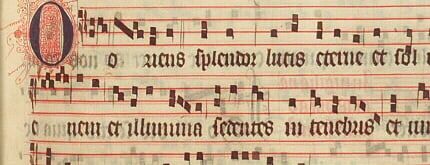
O Jesus, divine Sun! Thou art coming to snatch us from eternal night: blessed for ever be Thy infinite goodness! But Thou puttest our faith to the test, before showing Thyself in all Thy brightness. Thou hidest Thy rays, until the time decreed by Thy heavenly Father comes, in which all Thy beauty will break upon the world. Thou art traversing Judea; Thou art near Jerusalem; the journey of Mary and Joseph is nigh its term. Crowds of men pass or meet Thee on the road, each one hurrying to his native town, there to be enrolled, as the edict commands. Not one of all these suspects that Thou, O divine Orient! art so near him. They see Thy Mother Mary, and they see nothing in her above the rest of women; or if they are impressed by the majesty and incomparable modesty of this august Queen, it is but a vague feeling of surprise at there being such dignity in one so poor as she is; and they soon forget her again. If the Mother is thus an object of indifference to them, it is not to be expected that they will give even so much as a thought to her Child, that is net yet born. And yet this Child is Thyself, O Sun of justice! Oh! increase our faith, but increase, too, our love. If these men loved Thee, O Redeemer of mankind, Thou wouldst give them the grace to feel Thy presence. Their eyes, indeed, would not yet see Thee, but their hearts, at least, would burn within them, they would long for Thy coming, and would hasten it by their prayers and sighs. Dearest Jesus! who thus traversest the world Thou hast created, and who forcest not the homage of Thy creatures, we wish to keep near Thee during the rest of this Thy journey: we kiss the footsteps of her that carries Thee in her womb; we will not leave Thee, until we arrive together with Thee at Bethlehem, that house of bread, where, at last, our eyes will see Thee, O splendour of eternal light, our Lord and our God!
Prayer for the Time of Advent
(The Mozarabic breviary, Monday of the fifth week. Oratio)
Tuesday of the Fourth Week of Advent
Cap. xli.Ecce servus meus, suscipiam eum, electus meus, complacuit sibi in illo anima mea: dedi spiritum meum super eum, judicium Gentibus proferet. Non clamabit, neque accipiet personam, nec audietur vox ejus foris. Calamum quassatum non conteret, et linum fumigans non exstinguet: in veritate educet judicium. Non erit tristis, neque turbulentus, donec ponat in terra judicium: et legem ejus insulæ exspectabunt. Hæc dicit Dominus Deus creans cœlos, et extendens eos: firmans terram, et quæ germinant ex ea: dans flatum populo qui est super eam, et spiritum calcantibus eam. Ego Dominus vocavi te in justitia, et apprehendi manum tuam, 'et servavi te. Et dedi te in foedus populi, in lucem Gentium: ut aperires oculos cæcorum, et educeres de conclusione vinctum, de domo carceris sedentes in tenebris.
Ch. xli.Behold my servant, I will uphold him; my elect, my soul delighteth in him; I have given my spirit upon him, he shall bring forth judgement to the Gentiles. He shall not cry, nor have respect to person, neither shall his voice be heard abroad. The bruised reed he shall not break, and the smoking flax he shall not quench: he shall bring forth judgement unto truth. He shall not be sad, nor troublesome, till he set judgement in the earth: and the islands shall wait for his law. Thus saith the Lord God that created the heavens, and stretched them out: that established the earth, and the things that spring out of it: that giveth breath to the people upon it, and spirit to them that tread thereon. I the Lord have called thee in justice, and taken thee by the hand, and preserved thee. And I have given thee for a covenant of the people, for a light of the Gentiles: that thou mightest open the eyes of the blind, and bring forth the prisoner out of prison, and them that sit in darkness out of the prison-house.
How sweet and peaceful is Thy entrance into this world, O Jesus! Thy voice is not heard giving its commands; and Thy hands, the hands of a yet unborn Babe, seem too weak to break the reed, so frail, that a breath would break it. What is it Thou hast come to do in this first coming? Thy heavenly Father tells us by the prophet. Thou art coming that Thou mayst be the pledge of a covenant between heaven and earth. O divine Infant! Son of God, and yet Son of man, blessed be Thy coming among us! Thy crib will be the ark which will save us; and when Thou walkest on our earth, it will be to give us light, and set us free from our prison-house of darkness. It is just, therefore, that we should rise and meet Thee on Thy approach, seeing that Thou hast come all this way to us. ‘If the sick man cannot go out some distance to meet so great a Physician,’ says St. Bernard, ‘let him, at least, make an effort to raise his head and turn towards Him as He enters. It is not required of thee, O man! to pass the seas, or ascend the clouds, or cross the Alps. The way that is shown unto thee is not a long one; go as far as thine own self, and there meet thy God: for the word is nigh thee, even in thy mouth, and in thy heart.1 Meet Him at least at thy heart’s compunction, and thy mouth’s confession, that thou mayst at least go out of the filth of thy guilty conscience, for into that thou surely never wouldst make the author of purity enter!’2 Glory, then, be to Thee, O Jesus, for sparing the broken reed, that so it may regain its verdure and strength on the banks of the stream of which Thou art the source! Glory be to Thee, for having checked the breath of Thy almighty justice, and so cherishing the last spark left in the smoking flax, that it might burn up again, and give light at the Bridegroom’s feast.
Hymn in Honour of the Blessed Virgin
(Composed by St. Peter Damian)
Hæc Virgo Verbo gravida, Fit paradisi janua;
Quæ Deum mundo reddidit, cœlum nobis aperuit.
Felix ista Puerpera, Evæ lege liberrima, Concepit sine masculo, Peperit absque gemitu.
Amen.
Amen.
Prayer from the Gallican Sacramentary
(In Adventu Domini, Oratio post Prophetiam)
| Previous Monday of the Fourth Week of Advent | Next December 21 (the Same Day): Fifth Antiphon |