Daily reading
Simple · February 18 · Sanctoral
February 18, 2028
From Dom Guéranger’s The Liturgical Year.
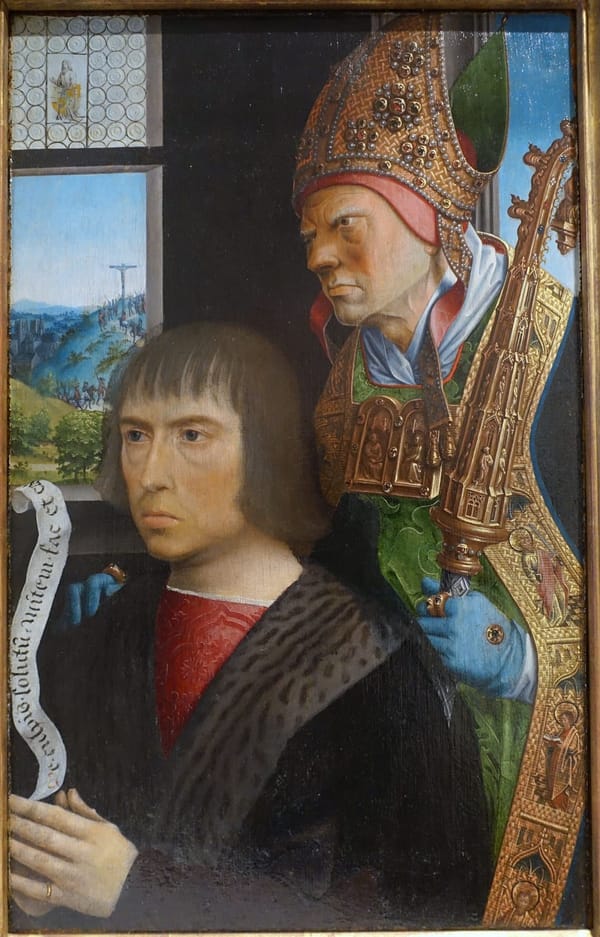
February 18: St. Simeon, Bishop and Martyr
How venerable our saint of to-day, with his hundred and twenty years, and his episcopal dignity, and his martyr-crown! He succeeded the apostle St. James in the see of Jerusalem; he had known Jesus, and had been His disciple; he was related to Jesus, for he was of the house of David; his father was Cleophas, and his mother that Mary, whom the tie of kindred united so closely to the blessed Mother of God that she has been called her sister. What grand titles these of Simeon who comes with all our other martyrs of Septuagesima, to inspirit us to penance! Such a veteran, who had been a contemporary of the Saviour of the world, and was a pastor who could repeat to his flock the very lessons Jesus had given him, could never rejoin his divine Master save by the path of martyrdom, and that martyrdom must be the cross. Like Jesus, then, he dies on a cross; and his death, which happened in the year 106, closes the first period of the Christian era, or, as it is called, the apostolic age. Let us honour this venerable pontiff, whose name awakens within us the recollection of all that is dear to our faith. Let us ask him to extend to us that fatherly love, which nursed the Church of Jerusalem for so many long years. He will bless us from that throne which he won by the cross, and will obtain for us the grace we so much need, the grace of conversion.
The following is the lesson given on St. Simeon:
Receive, most venerable saint, the humble homage of our devotion. What is all human glory compared with thine? Thou wast of the family of Christ; thy teaching was that which His divine lips had given thee; thy charity for men was formed on the model of His sacred Heart; and thy death was the closest representation of His. We may not claim the honour thou hadst, of calling ourselves brothers of the Lord Jesus: but pray for us, that we may be of those of whom He thus speaks: ‘Whosoever shall do the will of My Father that is in heaven, he is My brother, and sister, and mother.’* We have not, like thee, received the doctrine of salvation from the very lips of Jesus; but we have it in all its purity, by means of holy tradition, of which thou art one of the earliest links; oh, obtain for us a docility to this word of God, and pardon for our past disobedience. We have not to be nailed to a cross, as thou wast; but the world is thickly set with trials, to which our Lord Himself gives the name of the cross. These we must bear with patience, if we would have part with Jesus in His glory. Pray for us, O Simeon, that henceforth we may be more faithful; that we may never more become rebels to our duty; and that we may repair the faults we have so often committed by infringing the law of our God.
* St. Matt. xii. 50. ↩︎
Friday of Septuagesima Week
The curse, which is henceforth to lie so heavily on every human being, has been expressed in the sentence pronounced against Eve; the curse, to which the earth itself is to be subjected, is Adam’s sentence. ‘Because thou hast hearkened to the voice of thy wife, and hast eaten of the tree, whereof I commanded thee that thou shouldst not eat, cursed is the earth in thy work (that is, on account of what thou hast done).’1 Adam had excused his sin. God does not admit his excuse; yet He mercifully makes allowance for him, seeing that he sinned, not so much to gratify himself, as to please the frail creature that had been formed out of his own substance. He is not the originator of the disobedient act. God, therefore, sentences him to the personal humiliation of labour and toil, and of eating his bread in the sweat of his brow.2 Outside the garden of Eden, there lies the immense desert of the earth. It is to be the valley of tears; and there must Adam dwell in exile for upwards of nine hundred years, with the sad recollection in his heart of the few happy days spent in paradise! This desert is barren: Adam must give it fruitfulness by his toil, and draw from it, by the sweat of his brow, his own and his children’s nourishment. If, in after ages, some men shall live without toil, they are the exception confirming the general law and chastisement. They rest, because others have laboured long and hard for them; neither will God ratify their exceptional dispensation from labour, except on the condition that they give encouragement, by their charity and other virtues, to their fellow-men, in whom Adam’s sentence is literally carried out. Such is the necessity of toil, that if it be refused, the earth will yield but thorns and thistles;3 such, too, the importance of this law imposed on fallen man, that idleness shall not only corrupt his heart, it shall also enervate his bodily strength.
Before his sin, the trees of paradise bent down their branches, and man fed on their delicious fruits; but now he must till the earth and draw from it, with anxiety and fatigue, the seed which is to give him bread. Nothing could better express the penal relation between him and the earth, from which he was originally formed, and which is henceforth to be his tomb, than this law to which God sentences him, of being indebted to the earth for the nourishment which is to keep him in life. And yet here also divine mercy shall show itself; for, when God shall have been appeased, it shall be granted to man to unite himself to his Creator by eating the Bread of life, which is to come down from heaven, and whose efficacy for the nourishing of our souls shall be greater than ever the fruit of the tree of life could have been for the immortalizing of our bodily existence.
In Dominica Tyrophagi
| Previous Thursday of Septuagesima Week | Next Friday of Septuagesima Week |