Daily reading
Semidouble · Movable from Easter · Temporal
March 10, 2028
From Dom Guéranger’s The Liturgical Year.
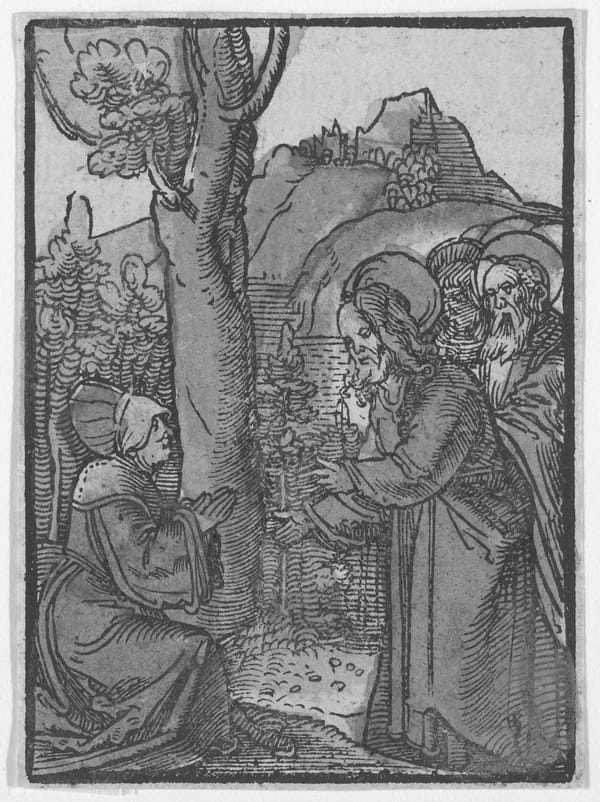
Friday in Ember Week of Lent
The Station is in the basilica of the twelve apostles; it is one of the grandest of the churches of Rome, and is enriched by the bodies of the two apostles, St. Philip and St. James the less.
Collect
Epistle
Cap. xviii.Hæc dicit Dominus Deus: Anima quæ peccaverit, ipsa morietur: filius non portabit iniquitatem patris, et pater non portabit iniquitatem filii: justitia justi super eum erit, et impietas impii erit super eum. Si autem impius egerit pœnitentiam ab omnibus peocatis suis, quæ operatus est, et custodierit omnia præcepta mea, et fecerifc judicium et justitiam: vita vivet, et non morietur. Omnium iniquitatum ejus, quas operatus est, non recordabor: in justitia sua, quam operatus est, vivet. Numquid voluntatis meæ est mors impii, dicit Dominus Deus, et non ut convertatur a viis suis, et vivat? Si autem averterit se justus a justitia sua, et fecerit iniquitatem secundum omnes abominationes quas operari solet impius, numquid vivet? Omnes justitiæ ejus, quas fecerat, non recordabuntur: in prævaricatione qua prævaricatus est, et in peccato suo quod peccavit, in ipsis morietur. Et dixistis: Non est æqua via Domini. Audite ergo, domus Israël: Numquid via mea non est æqua, et non magis vise vestræ pravse sunt? Cum enim averterit se justus a justitia sua, et fecerit iniquitatem, morietur in eis: in in justitia, quam operatus est, morietur. Et cum averterit se impius ab impietate sua, quam operatus est, et fecerit judicium et justitiam: ipse animam suam vivificabit. Considerans enim, et avertens se ab omnibus iniquitatibus suis, quas operatus est, vita vivet, et non morietur, ait Dominus omnipotens.
Ch. xviii.Thus saith the Lord God: The soul that sinneth, the same shall die: the son shall not bear the iniquity of the father, and the father shall not bear the iniquity of the son: the justice of the just shall be upon him, and the wickedness of the wicked shall be upon him. But if the wicked do penance for all his sins, which he hath committed, and keep all my commandments, and do judgment and justice; living he shall live, and shall not die. I will not remember all his iniquities that he hath done; in his justice, which he hath wrought, he shall live. Is it my will that a sinner should die, saith the Lord God, and not that he should be converted from his ways and live? But if the just man turn himself away from his justice, and do iniquity according to all the abominations which the wicked man useth to work, shall he live? All his justices which he hath done, shall not be remembered; in the prevarication, by which he hath prevaricated, and in his sin, which he hath committed, in them he shall die. And you have said: The way of the Lord is not right. Hear ye, therefore, O house of Israel: Is it my way that is not right, and are not rather your ways perverse? For when the just turneth himself away from his justice, and committeth iniquity, he shall die therein; in the injustice that he hath wrought, he shall die. And when the wicked turneth himself away from his wickedness, which he hath wrought, and doeth judgment and justice, he shall save his soul alive. Because he considereth and tumeth away himself from all his iniquities, which he hath wrought, he shall surely live, and not die, saith the Lord almighty.
Let us not forget the ancient discipline of the Church, during Lent. We should frequently be at a loss to understand her liturgy of this season, unless we picture her to ourselves as preparing the public penitents for a renewed participation in the mysteries. But first they must be reconciled with God, whom they have offended. Their soul is dead by sin; can it be restored to life? Yes; we have God’s word for it. The lesson from the prophet Ezechiel, which the Church began yesterday for the catechumens, is continued to-day for the benefit of the public penitents. If the wicked do penance for all his sins, which he hath committed, and keep all my commandments, and do judgment and justice; living he shall live, and shall not die. But his iniquities are upon him, and rise up against him, crying to heaven for eternal vengeance! And yet God, who knows all things, and forgets nothing, assures us that He will not remember iniquities which have been redeemed by penance. Such is the affection of His fatherly Heart, that He will forget the outrage offered Him by His son, if this son will but return to his duty. Thus, then, our penitents are to be reconciled; and on the feast of the Resurrection they will be associated with the just, because God will have forgotten their iniquities; they themselves will be just men. Thus it is that the liturgy, which never changes, brings frequently before us the ancient discipline of pubhc penance. Nowadays, sinners are not visibly separated from the faithful; the Church doors are not closed against them; they frequently stand near the holy altar, in the company of the just; and when God’s pardon descends upon them, the faithful are not made cognizant of the grace by any special and solemn rite. Let us here admire the wonderful mercy of our heavenly Father, and profit by the indulgent discipline of our holy mother the Church. The lost sheep may enter the fold at any hour and without any display; let him take advantage of the condescension thus shown him, and never more wander from the Shepherd, who thus mercifully receives him. Neither let the just man be puffed up with self-complacency, by preferring himself to the lost sheep; let him rather reflect on those words of to-day’s lesson: If the just man turn himself away from his justice, and do iniquity . . . the justices which he hath done shall not he remembered. Let us, therefore, tremble for ourselves, and have compassion on sinners. One of the great means on which the Church rests her hopes for the reconciliation of sinners is the fervent prayers offered up for them by the faithful during Lent.
Gospel
Cap. v.In illo tempore: Erat dies festus Judæorum, et aseen dit Jesus Jerosolymam. Est autem Jerosolymis Probatica piscina, quæ cognominatur hebraice Bethsaida, quinque porticus habens. In his jacebat multitudo magna languentium, cæcorum, claudorum, aridorum, exspectantium aquæ motum. Angelus autem Domini descendebat secundum tempus in piscinam: et movebatur aqua. Et qui prior descendisset in piscinam post motionem aquæ, sanus fiebat a quacumque detinebatur infirmitate. Erat autem quidam homo ibi, triginta et octo annos habens in infirmitate sua. Hunc cum vidisset Jesus jacentem, et cognovisset quia jam multum tempus haberet, dicit ei: Vis sanus fieri? Respondit ei languidus: Domine, hominem non habeo, ut cum turbata fuerit aqua, mittat me in piscinam: dum venio enim ego, alius ante me descendit. Dicit ei Jesus: Surge, tolle grabatum tuum, et ambula. Et statim sanus factus est homo ille: et sustulit grabatum suum, et ambulabat. Erat autem sabbatum in die illo. Dicebant ergo Judæi illi qui sanatus fuerat: Sabbatum est, non licet tibi tollere grabatum tuum. Respondit eis: Qui me sanum fecit, ille mihi dixit: Tolle grabatum tuum et ambula. Interrogaverunt ergo eum: Quis est ille homo qui dixit tibi: Tolle grabatum tuum, et ambula? Is autem qui sanus fuerat effectus, nesciebat quis esset. Jesus enim declinavit a turba constituta in loco. Postea invenit eum Jesus in templo, et dixit illi: Ecce sanus factus es: jam noli pec care, ne de terms tibi aliquid contingat. Abiit ille homo, et nuntiavit Judaeis quia Jesus esset, qui fecit eum sanum.
Ch. v.At that time: There was a festival day of the Jews, and Jesus went up to Jerusalem. Now there is at Jerusalem a pond, called Probatica, which in Hebrew is named Bethsaida, having five porches. In these lay a great multitude of sick, of blind, of lame, of withered, waiting for the moving of the water. And an angel of the Lord descended at certain times into the pond; and the water was moved. And he that went down first into the pond after the motion of the water, was made whole of whatsoever infirmity he lay under. And there was a certain man there, that had been eight-and-thirty years under his infirmity. Him, when Jesus had seen lying, and knew that he had been now a long time, he saith to him: Wilt thou be made whole? The infirm man answered him: Sir, I have no man, when the water is troubled, to put me into the pond; for whilst I am coming, another goeth down before me. Jesus saith to him: Arise, take up thy bed, and walk. And immediately the man was made whole; and he took up his bed and walked. And it was the Sabbath that day. The Jews therefore said to him that was healed: It is the Sabbath, it is not lawful for thee to take up thy bed. He answered them: He that made me whole, he said to me: Take up thy bed and walk. They asked him, therefore: Who is that man who said to thee: Take up thy bed, and walk? But he who was healed, knew not who it was: for Jesus went aside from the multitude standing in the place. Afterwards Jesus findeth him in the temple, and saith to him: Behold thou art made whole: sin no more, lest some worse thing happen to thee. The man went his way, and told the Jews that it was Jesus who had made him whole.
Let us return to our penitents of the ancient discipline of the Church; those of the present day, and we ourselves, can easily make a practical application of the reflections suggested by the Gospel. We have just been told by the prophet that God is ever ready to pardon a penitent sinner. But how is this pardon to be administered? Who is to pronounce the sentence of absolution? The answer is given in our Gospel. He that had been eight-and-thirty years under his infirmity, is a figure of the inveterate sinner: and yet he is made whole, and recovers the use of his limbs. How has the cure been wrought? First of all, the infirm man says to Jesus: I have no man, when the water is troubled, to put me into the pond. The water would have cured him; but observe, he has need of some man to lead him to the water. This Man is the Son of God, and He became Man in order to heal us. As Man, He has received power to forgive sins; and, before leaving this earth, He gives that same power to other men, and says to them: ‘Whose sins ye shall forgive, they are forgiven them.’* Our penitents, then, are to be reconciled with God by virtue of this supernatural power; and the infirm man, who takes up his bed and walks, is a figure of the sinner, whose sins have been forgiven him by the Church, by the divine power of the keys.
In the third century, a heretic, named Novatian, taught that the Church has not the power to forgive sins committed after Baptism. This doctrine was condemned by the Councils and the holy doctors of the Church; and in order to offer to the faithful some outward expression of the power given to the Son of Man of forgiving sins to such as repent, there was painted on the walls of the places where the Christians used to assemble, the infirm man of our Gospel, walking with his bed upon his shoulders. This consoling symbol is frequently met with in the frescoes which were painted, even in the age of the martyrs, in the Roman catacombs. They show us how the early Christians were taught to understand this passage of the Gospel, which the Church, so many centuries ago, assigned to this day.
The water of the Probatica was also a symbol; and here our Gospel conveyed a special instruction to the catechumens. By water they were to be made whole, and by water endowed with a supernatural virtue. The miraculous pond of Jerusalem could cure only the body, and that at rare intervals, and the favour could be conferred only upon a single individual; but now that the angel of the Great Counsel has come down from heaven, and sanctified the waters of the Jordan, the Probatica is everywhere; it is giving health to the souls of men, without any limitation either of time or of number. Man is the minister of this grace; but it is the Son of God, become the Son of Man, that works by the human minister.
Let us also consider the multitude of sick, who, as the Gospel tells us, were waiting for the moving of the water. They represent the various classes of sinners, who are seeking, during this holy time, to be converted to their God. There are the sick, or, as the Latin word has it, the languid; these are the tepid, who never thoroughly give up their evil habits; there are the blind; these are they whose spiritual eye is dead; there are the lame, who limp and falter in the path of salvation; and, lastly, there are the withered, who seem incapable of doing a single good action. All are waiting for the favourable moment. Jesus will soon be with them, and will say to each of them: Wilt thou be made whole? Let them answer this question with love and confidence, and they will be healed.
Let us address ourselves to the heavenly Physician of our souls, in these words of the Triodion of the Greek Church.
Hymn
(Feria VI. Hebdomadæ I. Jejuniorum.)
Puritatis fons, conserva nos, misericors, jejunii ope, respice ad nos ante te procidentes, attende elevationi manuum nostrarum, qui manus tuas in ligno pro mortalibus omnibus crucifixus expandisti, angelorum unus Dominus.
The snares of the enemy have involved me in darkness: enlighten me, O Christ, who, when hanging on the cross, didst obscure the sun, and bring to thy faithful the rays of pardon. May I walk in the light of thy commandments and, being purified, come to the brightness of thy saving Resurrection.
* St. John xx. 23. ↩︎
March 10: The Forty Martyrs
|
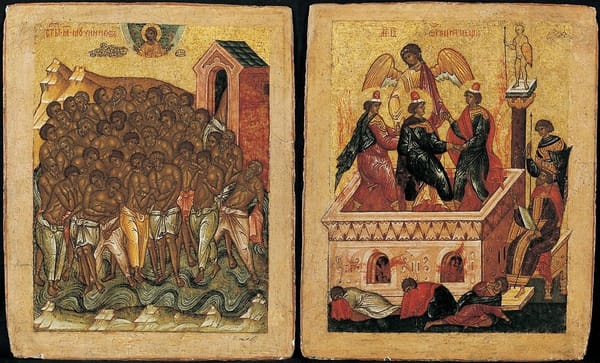
We know the mystery of the number forty. This tenth of March brings it before us. Forty new advocates! Forty encouraging us to enter bravely on our career of penance! On the frozen pool, which was their field of battle, these martyrs reminded one another that Jesus had fasted for forty days, and that they themselves were forty in number! Let us, in our turn, compare their sufferings with the lenten exercises which the Church imposes upon us; and humble ourselves on seeing our cowardice; or, if we begin with fervour, let us remember that the grand thing is to be faithful to the end, and bring to the Easter solemnity the crown of our perseverance. Our forty martyrs patiently endured the cruellest tortures; the fear of God, and their deep-rooted conviction that He had an infinite claim to their fidelity, gave them the victory. How many times we have sinned, and had not such severe temptations as theirs to palliate our fall! How can we sufficiently bless that divine mercy, which spared us, instead of abandoning us as it did that poor apostate, who turned coward and was lost! But, on what condition did God spare us? That we should not spare ourselves, but do penance. He put into our hands the rights of His own justice; justice, then, must be satisfied, and we must exercise it against ourselves. The lives of the saints will be of great help to us in this, for they will teach us how we are to look upon sin, how to avoid it, and how strictly we are bound to do penance for it after having committed it.
The Church, in her liturgy, thus relates to us the martyrdom of the soldiers of Sebaste.
That we may the more worthily celebrate the memory of the forty martyrs, we borrow a few stanzas from the hymn in which the Greek liturgy so enthusiastically sings their praises.
Hymn (Die IX . Martii)
Valiant soldiers of Christ, who meet us, with your mysterious number, at this commencement of our forty days’ fast, receive the homage of our devotion. Your memory is venerated throughout the whole Church, and your glory is great in heaven. Though engaged in the service of an earthly prince, you were the soldiers of the eternal King: to Him were you faithful, and from Him did you receive your crown of eternal glory. We, also, are His soldiers; we are fighting for the kingdom of heaven. Our enemies are many and powerful; but, like you, we can conquer them, if, like you, we use the arms which God has put in our hands. Faith in God’s word, hope in His assistance, humility, and prudence, with these we are sure of victory. Pray for us, O holy martyrs, that we may avoid all compromise with our enemies; for our defeat is certain, if we try to serve two masters. During these forty days, we must put our arms in order, repair our lost strength, and renew our engagements; come to our assistance, and get us a share in your brave spirit. A crown is also prepared for us: it is to be won on easier terms than yours; and yet we shall lose it, unless we keep up within us an esteem for our vocation. How many times, in our past lives, have we forfeited that glorious crown! But God, in His mercy, has offered it to us again, and we are resolved on winning it. Oh, for the glory of our common Lord and Master, make intercession for us.
Our work of preparation is over: we are ready to obey our mother’s call to Lent. During the three past weeks, we have studied the fall of our first parents, and the miseries it brought upon man; the necessity of a Saviour; the justice of God, against which the human race dared to rebel; the terrible chastisement of the deluge, wherewith that revolt was punished; and finally, the covenant made by God, through Abraham, with those who are faithful to Him, and shun the maxims of a perverse and guilty world.
Now we are to see the accomplishment of the great mysteries, whereby the wounds of our fall were healed, the divine justice was disarmed, and God’s grace was poured out upon us, delivering us from the yoke of Satan and the world.
The Man-God, whose sweet presence has been less sensible during this Septuagesima season, is now about to show Himself to us again, but this time it is on His way to Calvary, where He is to be immolated for our redemption. The dolorous Passion, which our sins have imposed upon Him, is about to be brought before us: the greatest of anniversaries will soon be upon us.
Let us be all attention to the mysteries: let us be fervent in the great work of our own purification. Let us walk on courageously in the path of penance, so that each day the burden of our sins may be lightened, and after we have partaken, by heartfelt compassion, of the cup of our Redeemer’s Passion, our lips will be once more permitted to sing the songs of joy, and our hearts will thrill at Easter with the loud burst of the Church’s Alleluia!
| Previous Thursday of the First Week of Lent | Next March 10: The Forty Martyrs |