Daily reading
Lent
Double · Movable from Easter · Temporal
March 12, 2028
From Dom Guéranger’s The Liturgical Year.

|
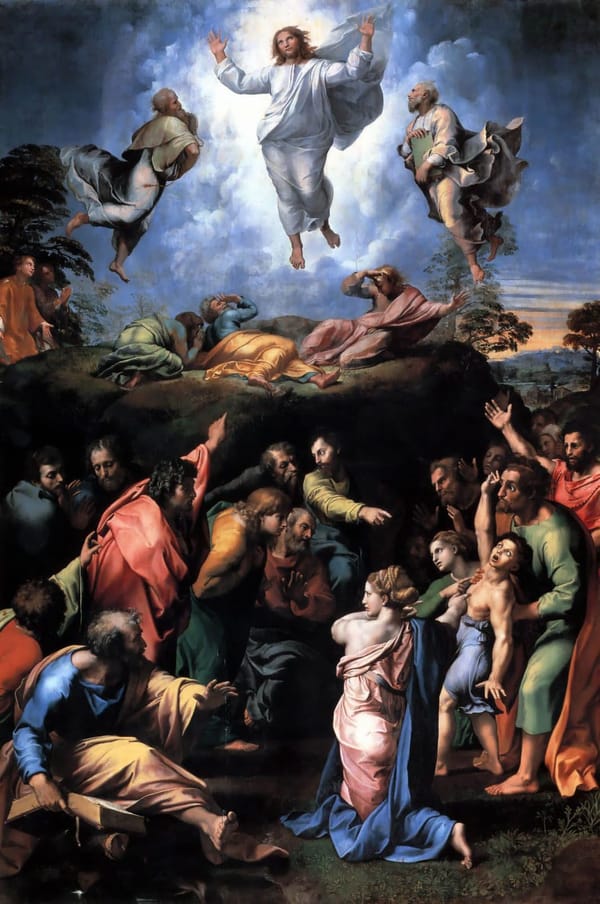
The Second Sunday of Lent
The subject offered to our consideration, on this second Sunday, is one of the utmost importance for the holy season. The Church applies to us the lesson which our Saviour gave to three of His apostles. Let us endeavour to be more attentive to it than they were.
Jesus was about to pass from Galilee into Judea, that He might go up to Jerusalem and be present at the feast of the Pasch. It was that last Pasch, which was to begin with the immolation of the figurative lamb, and end with the sacrifice of the Lamb of God, who taketh away the sins of the world. Jesus would have His disciples know Him. His works had borne testimony to Him, even before those who were, in a manner, strangers to Him; but as for His disciples, had they not every reason to be faithful to Him, even to death? Had they not listened to His words, which had such power with them that they forced conviction? Had they not experienced His love, which it was impossible to resist? And had they not seen how patiently He had borne with their strange and untoward ways? Yes, they must have known Him. They had heard one of their company, Peter, declare that He was the Christ, the Son of the living God.1 Notwithstanding this, the trial to which their faith was soon to be put was of such a terrible kind, that Jesus would mercifully arm them against temptation by an extraordinary grace.
The cross was to be a scandal and a stumbling block2 to the Synagogue, and alas! to more than it. Jesus said to His apostles at the last Supper: ‘All of you shall be scandalized in Me this night.’3 Carnal minded as they then were, what would they think when they should see Him seized by armed men, handcuffed, hurried from one tribunal to another, and doing nothing to defend Himself! And when they found that the high priests and pharisees, who had hitherto been so often foiled by the wisdom and miracles of Jesus, had now succeeded in their conspiracy against Him, what a shock to their confidence! But there was to be something more trying still: the people, who, but a few days before, greeted Him so enthusiastically with their Hosannas, would demand His execution; and He would have to die, between two thieves, on the cross, amidst the insults of His triumphant enemies.
Is it not to be feared that these disciples, when they witness His humiliations and sufferings, will lose their courage? They have lived in His company for three years; but when they see that the things He foretold would happen to Him are really fulfilled, will the remembrance of all they have seen and heard keep them loyal to Him? Or will they turn cowards and flee from Him? Jesus selects three out of the number, who are especially dear to Him: Peter, whom He has made the rock, on which His Church is to be built, and to whom He has promised the keys of the kingdom of heaven; James, the son of thunder, who is to be the first martyr of the apostolic college; and John, James’s brother, and His own beloved disciple. Jesus has resolved to take them aside, and show them a glimpse of that glory, which, until the day fixed for its manifestation, He conceals from the eyes of mortals.
He therefore leaves the rest of His disciples in the plain near Nazareth, and goes in company with the three privileged ones towards a high hill called Thabor, which is a continuation of Libanus, and which the psalmist tells us was to rejoice in the name of the Lord.4 No sooner has He reached the summit of the mountain, than the three apostles observe a sudden change come over Him; His Face shines as the sun, and His humble garments become white as snow. They observe two venerable men approach and speak with Him upon what He is about to suffer in Jerusalem. One is Moses, the lawgiver; the other is Elias, the prophet, who was taken up from earth on a fiery chariot without having passed through the gates of death. These two great representatives of the Jewish religion, the Law and the Prophets, humbly adore Jesus of Nazareth. The three apostles are not only dazzled by the brightness which comes from their divine Master; but they are filled with such a rapture of delight, that they cannot bear the thought of leaving the place. Peter proposes to remain there for ever and build three tabernacles, for Jesus, Moses, and Elias. And while they are admiring the glorious sight, and gazing on the beauty of their Jesus’ human Nature, a bright cloud overshadows them, and a voice is heard speaking to them: it is the voice of the eternal Father, proclaiming the Divinity of Jesus, and saying: ‘This is My beloved Son!’
This transfiguration of the Son of Man, this manifestation of His glory, lasted but a few moments: His mission was not on Thabor; it was humiliation and suffering in Jerusalem. He therefore withdrew into Himself the brightness He had allowed to transpire; and when He came to the three apostles, who, on hearing the voice from the cloud, had fallen on their faces with fear, they could see no one save only Jesus. The bright cloud was gone; Moses and Elias had disappeared. What a favour they have had bestowed upon them! Will they remember what they have seen and heard? They have had such a revelation of the Divinity of their dear Master! Is it possible that, when the hour of trial comes, they will forget it, and doubt His being God? And when they see Him suffer and die, will they be ashamed of Him and deny Him? Alas! the Gospel has told us what happened to them.
A short time after this, our Lord celebrated His last Supper with His disciples. When the supper was over, He took them to another mount, Mount Olivet, which lies to the east of Jerusalem. Leaving the rest at the entrance of the garden, He advances with Peter, James, and John, and then says to them: ‘My soul is sorrowful even unto death: stay you here and watch with Me.’5 He then retires some little distance from them, and prays to His eternal Father. The Heart of our Redeemer is weighed down with anguish. When He returns to His three disciples, He is enfeebled by the agony He has suffered, and His garments are saturated with Blood. The apostles are aware that He is sad even unto death, and that the hour is close at hand when He is to be attacked: are they keeping watch? are they ready to defend Him? No: they seem to have forgotten Him; they are fast asleep, for their eyes are heavy.6 Yet a few moments, and all will have fled from Him; and Peter, the bravest of them all, will be taking his oath that he never knew the Man.
After the Resurrection our three apostles made ample atonement for this cowardly and sinful conduct, and acknowledged the mercy wherewith Jesus had sought to fortify them against temptation, by showing them His glory on Thabor a few days before His Passion. Let us not wait till we have betrayed Him: let us at once acknowledge that He is our Lord and our God. We are soon to be keeping the anniversary of His Sacrifice; like the apostles, we are to see Him humbled by His enemies and bearing, in our stead, the chastisements of divine justice. We must not allow our faith to be weakened, when we behold the fulfilment of those prophecies of David and Isaias, that the Messias is to be treated as a worm of the earth,7 and be covered with wounds, so as to become like a leper, the most abject of men, and the Man of sorrows.8 We must remember the grand things of Thabor, and the adorations paid Him by Moses and Elias, and the bright cloud, and the voice of the eternal Father. The more we see Him humbled, the more must we proclaim His glory and divinity; we must join our acclamations with those of the angels and the four-and-twenty elders, whom St. John, one of the witnesses of the Transfiguration, heard crying out with a loud voice: ‘The Lamb that was slain, is worthy to receive power and divinity, and wisdom, and strength, and honour, and glory, and benediction!’9
The second Sunday of Lent is called, from the first word of the Introit, Reminiscere; and also Transfiguration Sunday, on account of the Gospel which is read in the Mass.
The Station at Rome is in the church of St. Mary in Dominica, on Monte Celio. Tradition tells us that in this basilica was the diaconicum of which St. Laurence had charge, and from which he distributed to the poor the alms of the Church.
Mass
The Church, in the Introit, encourages us to confidence in God, who will deliver us from our enemies, if we ask it of Him with fervent prayer. There are two favours which, during Lent, we ought to beseech Him to grant us: the pardon of our sins, and His help to avoid a relapse.
Introit
In the Collect, we beg of God to watch over us in all our necessities, of both body and soul. If our prayer be humble and earnest, it will be granted. God will provide for us in our corporal necessities, and will defend our souls against the suggestions of our enemy, who strives to sully even our thoughts.
Collect
The second and third Collects are given on the first Sunday of Lent, page 129.
Epistle
1 Cap. iv.Fratres: Rogamus vos et obsecramus in Domino Jesu, ut quemadmodum accepistis a nobis, quomodo oporteat vos ambulare, et placere Deo, sic et ambuletis, ut abundetis magis. Scitis enim quæ præcepta dederim vobis per Dominum Jesum. Hæc est enim voluntas Dei sanctificatio vestra: ut abstineatis vos a fomicatione, ut sciat unusquisque vestrum vas suum possidere in sanctificatione et honore: non in passione desiderii, sicut et Gentes quæ ignorant Deum: et ne quis supergrediatur, neque circumveniat in negotio fratrem suum: quoniam vindex est Dominus de his omnibus, sicut prædiximus vobis, et testificati sumus. Non enim vocavit nos Deus in immunditiam, sed in sanctificationem: in Christo Jesu Domino nostro.
1 Ch. iv.Brethren: We pray and beseech you in the Lord Jesus, that as you have received of us, how you ought to walk and to please God, so also you would walk, that you may abound the more. For you know what precepts I have given to you by the Lord Jesus. For this is the will of God, your sanctification; that you should abstain from fornication; that every one of you should know how to possess his vessel in sanctification and honour, not in the passion of lust, like the Gentiles, that know not God; and that no man over-reach, nor circumvent his brother in business; because the Lord is the avenger of all these things, as we have told you before, and have testified. For God hath not called us unto uncleanness, but unto sanctification: in Christ Jesus our Lord.
Here the apostle shows what manner of life should be followed by Christians; and the Church, by repeating his words, exhorts the faithful to profit of the present season of grace, and regain all the beauty of the image of God, which the grace of Baptism first gave them. A Christian is a’vessel of honour,’formed and enriched by the hand of God; let him, therefore, shun whatsoever would degrade his noble origin, and turn him into a vessel of dishonour, fit only to be broken and cast with the unclean into the sink of hell. The Christian religion has so far ennobled man, that even his very body may share in the soul’s sanctity; on the other hand it teaches us that this sanctity of the soul is impaired, yea altogether effaced, by the loss of the body’s purity. The whole man, therefore, both body and soul, is to be reformed by the practices of this holy season. Let us purify the soul by the confession of our sins, by compunction of heart, by the love of God; and let us give back its dignity to the body, by making it bear the yoke of penance, that so it may be, henceforth, subservient and docile to the soul, and, on the day of the general resurrection, may partake in her endless bliss.
In the Gradual, man cries out to his God to deliver him from the evils that threaten him, and give him victory over the invisible enemy, who so cruelly humbles and insults him.
The Tract is both a canticle of confidence in the divine mercy, and a prayer addressed by the Church to her Saviour, beseeching Him to visit and save her faithful children on the great feast, which is still so far off, but towards which each day brings us nearer.
Gradual
Tract
Gospel
Cap. xvii.In illo tempore: Assumpsit Jesus Petrum, et Jacobum, et Joannem fratrem ejus, et duxit illos in montem excelerum eeorsum: et transfiguratus est ante eos. Et resplenduit facies ejus sicut sol: vestimenta autem ejus facta sunt alba sicut nix. Et ecce apparuerunt illis Moyses et Elias cum eo loquentes. Respondens autem Petrus, dixit ad Jesum: Domine, bonum est nos hic esse: si vis, faciamus hic tria tabernacula, tibi unum, Moysi unum, et Eliæ unum. Adhuc eo loquente ecce nubes lucida obumbravit eos. Et ecce vox de nube, dicens: Hic est Filius meus dilectus in quo mihi bene complacui: ipsum audite. Et audientes discipuli, ceciderunt in faciem suam, et timuerunt valde. Et accessit Jesus, et tetigit eos, dixitque eis: Surgite et nolite timere. Levantes autem oculos suos, neminem viderunt nisi solum Jesum. Et descendentibus illis de monte, præcepit eis Jesus, dicens: Nemini dixeritis visionem, donee Filius hominis a mortuis resurgat.
Ch. xvii.At that time: Jesus taketh unto him Peter and James, and John his brother, and bringeth them up into a high mountain apart: and he was transfigured before them. And his face did shine as the sun: and his garments became white as snow. And behold there appeared to them Moses and Elias talking with him. Then Peter answering, said to Jesus: Lord, it is good for us to be here: if thou wilt, let us make here three tabernacles, one for thee, and one for Moses, and one for Elias. And as he was yet speaking, behold, a bright cloud overshaded them. And lo, a voice out of the cloud, saying: This is my beloved Son, in whom I am well pleased: hear ye him. And the disciples hearing, fell upon their face, and were very much afraid. And Jesus came and touched them, and said to them: Arise and fear not And they lifting up their eyes saw no one, but only Jesus. And as they came down from the mountain, Jesus charged them, saying: Tell the yision to no man, till the Son of Man be risen from the dead.
Thus did Jesus encourage His apostles, when the time of temptation was near; He sought to impress them with His glory, that it might keep up their faith in that trying time, when the outward eye would see nothing in His Person but weakness and humiliation. Oh, the loving considerateness of divine grace, which is never wanting, and which shows us in so strong a light the goodness and the justice of our God! Like the apostles, we also have sinned; like them, we have neglected to profit of the help that was sent us from heaven; we have shut our eyes against the light; we have forgotten the fair vision that was granted us, and which made us so fervent and happy; and we fell. We have not, then, been tempted above our strength10 and it is indeed our own fault that we committed sin. The three apostles were exposed to a terrible temptation, when they beheld their divine Master robbed of all His majesty; but how easy for them to resist the temptation, by thinking of what they had seen, but a few days before! Instead of that, they lost their courage, and forgot prayer, which would have brought their courage back; and thus the favoured witnesses of Thabor became cowards and deserters in the garden of Mount Olivet. There was but one thing left them to do: throw themselves upon the loving mercy of their Jesus, as soon as He had triumphed over His enemies; they did so, and His generous Heart pardoned them.
Let us imitate them here too. We have abused the grace of God and rendered it fruitless, by our want of correspondence. The fountain of this grace is not yet dried up; as long as we are in this world, we may always draw from this source, which comes from the Blood and merits of our Redeemer. It is grace that is now urging us to the amendment of our lives. It is given to us in abundance during the present time, and it is given mainly by the holy exercises of Lent. Let us go up the mountain with Jesus; there we shall not be disturbed by the noise of earthly things. Let us there spend our forty days with Moses and Elias, who long ago sanctified this number by their fasts. Thus, when the Son of Man shall have risen from the dead, we will proclaim the favours He has mercifully granted us on Thabor.
In the Offertory, the Church bids us meditate on the commandments of God. Would that we might love them as fervently as the royal prophet, whose words these are!
Offertory
The holy Sacrifice of the Mass is a source of devotion; let us, as the Church, in the Secret, prays we may, profit by our to-day’s assistance at it. It contains the pledge and price of our salvation, and, if we put no obstacle in the way, it will complete our reconciliation with our Lord.
Secret
The other Secrets as on the first Sunday, page 136.
The penitent soul, having seen how this ineffable mystery has given her to enjoy the presence of Him who is her Saviour and her Judge, offers to Him her prayers with all the fervour of confidence. She says to Him these words of the psalmist, which form the Communion antiphon:
Communion
In the Postcommunion, the Church prays especially for those of her children who have partaken of the Victim she has just been offering. Jesus has nourished them with His own Flesh; it behoves them to prove themselves worthy of Him by the renewal of their lives.
Postcommunion
The other Postcommunions as on the first Sunday, page 138.
Vespers
The psalms and antiphons are given on page 99.
Capitulum (1 Thess , iv.)
For the hymn and versicle, see page 106.
Antiphon of the Magnificat
We may close our Sunday by reciting the following beautiful prayer taken from the Mozarabic breviary.
Capitulum (In II. Dominica Quadragesimæ)
March 12: St. Gregory the Great, Pope and Doctor of the Church
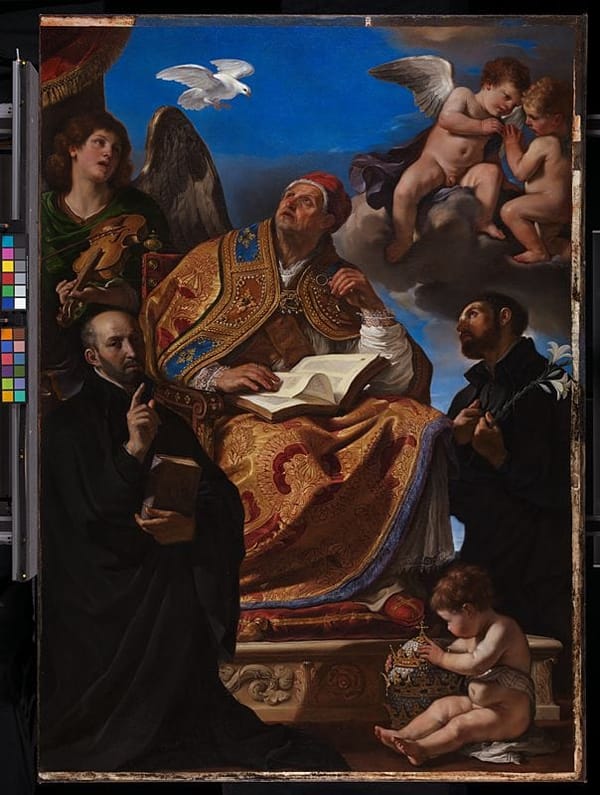 |
Among all the pastors whom our Lord Jesus Christ has placed, as His vicegerents, over the universal Church, there is not one whose merits and renown have surpassed those of the holy Pope, whose feast we keep to-day. His name is Gregory, which signifies watchfulness; his surname is ‘the Great,’ and he was in possession of that title, when God sent the Seventh Gregory, the glorious Hildebrand, to govern His Church.
In recounting the glories of this illustrious Pontiff, it is but natural we should begin with his zeal for the services of the Church. The Roman liturgy, which owes to him some of its finest hymns, may be considered as his work, at least in this sense, that it is he who collected together and classified the prayers and rites drawn up by his predecessors, and reduced them to the form in which we now have them. He collected also the ancient chants of the Church, and arranged them in accordance with the rules and requirements of the divine Service. Hence it is, that our sacred music, which gives such solemnity to the liturgy, and inspires the soul with respect and devotion during the celebration of the great mysteries of our faith, is known as the Gregorian chant.
He is, then, the apostle of the liturgy, and this alone would have immortalized his name; but we must look for far greater things from such a Pontiff as Gregory. His name was added to the three, who had hitherto been honoured as the great Doctors of the Latin Church. These three are Ambrose, Augustine, and Jerome; who else could be the fourth but Gregory? The Church found in his writings such evidence of his having been guided by the Holy Ghost, such a knowledge of the sacred Scriptures, such a clear appreciation of the mysteries of faith, and such unction and authority in his teachings, that she gladly welcomed him as a new guide for her children.
Such was the respect wherewith everything he wrote was treated, that his very letters were preserved as so many precious treasures. This immense correspondence shows us that there was not a country, scarcely even a city, of the Christian world, on which the Pontiff had not his watchful eye steadily fixed; that there was not a question, however local or personal, which, if it interested religion, did not excite his zeal and arbitration as the Bishop of the universal Church. If certain writers of modern times had but taken the pains to glance at these letters, written by a Pope of the sixth century, they would never have asserted, as they have, that the prerogatives of the Roman Pontiff are based on documents fabricated, as they say, two hundred years after the death of Gregory.
Throned on the apostolic See, our saint proved himself to be a rightful heir of the apostles, not only as the representative and depositary of their authority, but as a fellow-sharer in their mission of calling nations to the true faith. To whom does England owe her having been, for so many ages, ‘the island of saints’? To Gregory, who, touched with compassion for those Angli, of whom, as he playfully said, he would fain make Angeli, sent to their island the monk Augustine with forty companions, all of them, as was Gregory himself, children of St. Benedict. The faith had been sown in this land as early as the second century, but it had been trodden down by the invasion of an infidel race. This time the seed fructified, and so rapidly that Gregory lived to see a plentiful harvest. It is beautiful to hear the aged Pontiff speaking with enthusiasm about the results of his English mission. He thus speaks in the twenty-seventh Book of his Morals: ‘Lo! the language of Britain, which could once mutter naught save barbarous sounds, has long since begun to sing, in the divine praises, the Hebrew Alleluia! Lo! that swelling sea is now calm, and saints walk on its waves. The tide of barbarians, which the sword of earthly princes could not keep back, is now hemmed in at the simple bidding of God’s priests.’*
During the fourteen years that this holy Pope held the place of Peter, he was the object of the admiration of the Christian world, both in the east and in the west. His profound learning, his talent for administration, his position, all tended to make him beloved and respected. But who could describe the virtue of his great soul? That contempt for the world and its riches, which led him to seek obscurity in the cloister; that humility, which made him flee the honours of the papacy, and hide himself in a cave, where, at length, he was miraculously discovered, and God Himself put into his hands the keys of heaven, which he was evidently worthy to hold, because he feared the responsibility; that zeal for the whole flock, of which he considered himself not the master, but the servant, so much so indeed that he assumed the title, which the Popes have ever since retained, of ‘servant of the servants of God’ that charity which took care of the poor throughout the whole world; that ceaseless solicitude, which provided for every calamity, whether public or private; that unruffled sweetness of manner, which he showed to all around him, in spite of the bodily sufferings which never left him during the whole period of his laborious pontificate; that firmness in defending the deposit of the faith, and crushing error wheresoever it showed itself; in a word, that vigilance with regard to discipline, which made itself felt for long ages after in the whole Church? All these services and glorious examples of virtue have endeared our saint to the whole world, and will cause his name to be blessed by all future generations, even to the end of time.
Let us now read the abridged life of our saint, as given us in the liturgy.
To these admirable lessons we subjoin a selection of antiphons and responsories, which are taken from an Office approved of by the holy See, for this feast of so great a saint.
Antiphons and Responsories*
St. Peter Damian, whose feast we kept a few days back, composed the following hymn in honour of our apostle:
Nunc angelorum eocius,
Ut tunc, Gregori, gentibus
Succurre jam credentibus.
Omnemque mundi gloriam
Spernis, ut inops inopem
Jesum sequaris principem.
Dum stipem petit angelus;
Tu munus jam post geminum,
Præbes et vas argenteum.
Suæ præfert Ecclesiæ:
Sic Petri gradum percipis,
Cujus et normam sequeris.
Lux et decus Ecclesiæ,
Non sinas in periculis,
Quos tot mandatis instruis.
Tua distillant labia,
Fragrantum vim aromatum
Tuum vincit eloquium.
Mire solvis ænigmata,
Theorica mysteria
Te docet ipsa Veritas.
Vicem simul et gloriam,
Nos solve culpæ nexibus,
Redde polorum sedibus.
Sit decus Unigenito,
Sit utriusque pariti
Majestas summa Flamini.
and now art a companion of the angels!
protect now, as of old, the nations
that believe in Christ.
and all the glory of the world,
that so thou, being poor,
mayst follow the Lord Jesus, who was poor.
in the garb of one that was shipwrecked, and asks an alms;
thou first makest him a double gift,
and then thou givest him a silver vase.
for thou didst imitate the virtues,
and now thou hast
the honours, of Peter.
Light and ornament of the Church!
Thou hast so richly instructed us,
assist us in our dangers.
that brings sweetness to the heart.
Thy words are more fragrant
than the richest perfume.
the obscure figures of sacred Writ.
The divine mysteries are taught thee
by him that is the very Truth.
the office and the glory of the apostles,
pray for us, that we may be loosed from the bonds of sin,
and obtain the thrones prepared for us above.
and to his only-begotten Son,
and to the Spirit of them
both be praise and highest kingship.
Father of the Christian people! Vicar of the charity, as well as of the authority, of Christ! O Gregory, vigilant Pastor! the Church, which thou hast so faithfully loved and served, turns to thee with confidence. Thou canst not forget the flock, which keeps up such an affectionate remembrance of thee; hear the prayer she offers thee on this thy solemnity. Protect and guide the Pontiff, who now holds the place of Peter, as thou didst; enlighten and encourage him in the difficulties wherewith he is beset. Bless the hierarchy of the pastors, which has received from thee such magnificent teachings and such admirable examples. Assist it to maintain inviolate the sacred trust of faith; bless the eSorts it is now making for the restoration of ecclesiastical discipline, without which all is disorder and confusion. God chose thee as the regulator of the divine service, the holy liturgy; foster, by thy blessing, the zeal which is now rising up among us for those holy traditions of prayer, which have been so neglected; teach us the long-forgotten secret, that the best way of praying is to use the prayers of the Church. Unite all Churches in obedience to the apostolic See, which is the ground and pillar of faith, and the fountain of spiritual authority.
But there is one country which was most dear to thee—our own native land. O apostle of England! look down with aSection on this island, which has now rebelled from Rome, and has become the resort of countless false religions. But now, after three centuries of apostasy from the true faith, the hand of God’s mercy is pressing her to conversion. She is thine own child in Christ Jesus: wilt thou not aid her to return to Him? Wilt thou not guide her, by thy prayers, to come forth out of the darkness, which still so thickly clouds her, and follow the light which heaven holds out to her? Oh! if England were once more Catholic, who can tell the good she would do? For what country is there that can do grander things for the propagation of the faith? Pray for her, then; she may regain her glorious title of Isle of Saints, for she has thee for her apostle!
These are the days of salvation; pray for the faithful, who have entered on their career of penance. Obtain for them compunction of heart, love of prayer, and an appreciation of the liturgy and its mysteries. The solemn ami devout homilies which thou didst address, at this season, to the people of Rome, are still read to ns; may they sink into our hearts and fill them with fear of God’s justice, and hope in His mercy, for His justice and mercy change not to suit the time. We are weak and timid, and this makes us count as harsh the laws of the Church which oblige us to fasting and abstinence; get us brave hearts, brave with the spirit of mortification. Thy holy life is an example to us, and thy writings are our instruction; what we still want is to be made true penitents, and this thy intercession must do for us: that so we may return, with the joy of a purified conscience, to the divine Alleluia, which thou hast taught us to sing on earth, and which we hope to chant together with thee in heaven.
* We may be permitted to express a hope, that the day is not far distant, when the Proper Offices, approved of by the holy See, will be adopted in England, for those saints in whom England has a special interest. Proper hymns, &c., have been composed and approved for St. Augustine of Canterbury and St. Anselm. [TRANSULATOR.]
* Moral, in Job. Lib. xxvii. Cap. xi. ↩︎
| Previous Saturday in Ember Week of Lent | Next March 12: St. Gregory the Great, Pope and Doctor of the Church |