Daily reading
Lent
Double · March 18 · Sanctoral
March 18, 2028
From Dom Guéranger’s The Liturgical Year.
A Double leads the weekday.Rubric
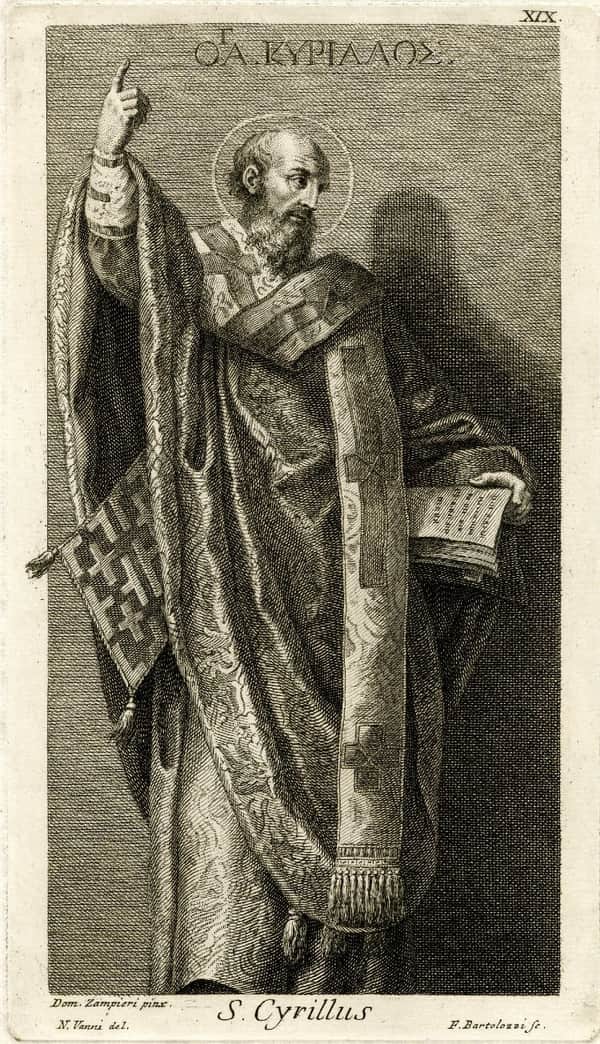 |
March 18: St. Cyril of Jerusalem, Bishop and Doctor of the Church
It was right that the Church should honour, during these days devoted to the instruction of catechumens, the Pontiff whose very name suggests the zeal and knowledge which pastors ought to show in preparing candidates for baptism. He has long had a place in the Martyrology of the Western Church, but to-day, in addition to expressing our gratitude for what he did fifteen hundred years ago, we ask him for aid, which is as necessary now as it was in the first ages of Christianity. It is true that baptism is now administered to infants. The gift of faith then infused puts man in possession of all truth before his intelligence has ever met with falsehood. But it too often happens in our days that children are deprived of the protection their weakness really needs. Modern society has denied Jesus Christ, and strives by the hypocritical neutrality of its laws to stifle the divine seed in the baptized soul before it can grow and bear fruit. Baptism, however, has its rights with regard to society as well as with regard to the individual, and our best way of honouring St. Cyril is to remind ourselves on his feast that this first Sacrament has just claims in respect of the education due to the baptized.
For fifteen centuries the western nations, whose social fabric rested on the solid rock of the faith of Rome, have enjoyed a happy ignorance of the difficulties experienced by a soul in rising out of the abyss of error into the pure light of the truth. Our fathers, like ourselves, were baptized at their entrance into this world. They had, moreover, an advantage which we have not, for, in their day, the civil power joined with the Church to protect that plenitude of truth which was the greatest treasure of men, and the safeguard of the world. The protection of individuals is a duty binding upon all princes and rulers, whatever be their title, and this duty is greater in proportion to the interests to be safeguarded. But this protection gives greater glory to the power which exercises it, when it is extended to the lowly and weak. The law of man never appears more majestic than when standing beside a little child—a new-born babe or a defenceless orphan—to protect its name, its life or its inheritance. A newly-baptized child possesses advantages greater than all those given by noble birth, money or the richest natural gifts. He has a divine life within him; he is the equal of the angels in virtue of his name of Christian; his inheritance is that plenitude of truth of which we spoke above—God Himself, possessed by faith here below until the beatific vision opens out the possession of eternal love. What greatness there is in a little child! But what a responsibility for the world! If God does not wait for the age of reason before bestowing His gifts, this sublime haste is due to the impatience of His love, but at the same time He oounts upon men to reveal in due time their dignity to these children of heaven, to form them to the duties incumbent on them, and to educate them in a way befitting their divine lineage. The education of a king’s son corresponds to the dignity of his birth, and those who have the honour of being his tutors never forget that he is a prince. Instructions, common to all, are presented to him in a way which harmonizes with his exalted destiny, and everything is directed to rendering him capable of wearing his crown with glory. Does the education of a child of God need less care?
Is it right that his teachers should forget his birth and his destiny?
It is true that the Church alone can explain to us the ineffable origin of the sons of God. She alone knows how to use the elements of human knowledge for the supreme end which dominates the life of a Christian. The natural conclusion is, that the Church is by right the first and principal teacher of the nations. When she founds schools, she is on her own ground in all branches of knowledge, and a mission to teach from her is of more value than any diploma. Further, with regard to diplomas, which she herself has not conferred, these official commissions to teach draw their legal value, in the eyes of Christians, from her approval, and they are always by right subject to her supervision. She is the mother of the baptized, and even when a mother does not teach her own children, she has the right to supervise their education.
But the Church is not only the Mother of the Faithful, she is the Bride of the Son of God and the guardian of His sacraments. It is her duty to see that the Precious Blood has not been shed in vain. Our Lord has entrusted these seven fountains to the care of the ministers of His Church, and they must not be opened except when there is good reason to hope that the sacramental grace will be well used. Baptism especially, which raises man out of his own nothingness to a supernatural nobility, must be safeguarded in its administration with a prudence and watchfulness corresponding to the sublime and ineffaceable character which it confers. A baptized Christian who, through his own or others’ fault, is ignorant of his rights and duties, is like a descendant of a noble race who, knowing nothing of his family traditions, is despised by his kinsmen and drags out an aimless existence in a station of life below that to which by birth he is entitled.
The Church is no less vigilant to-day than she was in the time of Cyril. She has never admitted—she cannot admit—anyone to the sacred font without requiring from him a guarantee of sufficient instruction. An adult must give proof of his knowledge before he receives the Sacrament, and if the Church consents to receive an infant into the Christian family, it is because she considers that the Christian faith of those who present him to her and of the society in which they live will assure to him an education conformable to the supernatural life which is about to be given him.
Thus the baptism of infants could not become a general custom until the reign of Jesus Christ was firmly established upon earth. We must not be surprised to find that, as the conversion of the nations was gradually completed, the Church found herself alone in the work of education. The barren classes of grammarians, philosophers, and rhetoricians, who taught everything but the one thing necessary— the end for which man was created—were deserted for the episcopal and monastic schools, where the science of salvation held the first place, radiating its light upon all other branches of knowledge. Knowledge, thus made Christian, gave birth to the Universities, and produced a fruitful union of the sciences which, until then, had been quite unconnected, if not opposed to one another. The Universities were unknown before the establishment of Christianity, for it alone could solve the problem of this union, which is the essence of University life, and hence they remain the inalienable domain of the Church. The State, which to-day is pagan once more, may deny to the Mother of the nations and claim for itself the right to give the name of University to its higher schools, but peoples, which have lost their Christianity, can never have the right to found nor the power to maintain those glorious institutions in the true spirit of the name they bear. A state without faith cannot maintain any union among the sciences but that of Babel. This is already evident. The monument of a pride which rises against God and His Church will only serve to bring back that terrible confusion of tongues from which the Church had snatched the pagan peoples. Any thief or robber can assume the titles of the victim he has robbed, but his inability to display the qualities, which these titles suppose in their bearer, only serves to show more clearly that a theft has been committed.
Are we, then, to deny to a state which is pagan or, as they say nowadays, neutral, the right to educate the infidels which it has produced after its own image? No, the protection which is the right and duty of the Church extends only to the baptized. Moreover, if the Church finds one day that the state of society is no longer a sufficient guarantee for baptism, she will return to the discipline of the early ages, when the grace of this initial Sacrament was not granted indiscriminately to all, but only to those adults who had shown themselves to be worthy of it, or to infants whose families could give an assurance on which she could rely. The nations will then be once more divided into two classes—on the one side the children of God, living His life and heirs of His Kingship; on the other those men who have basely preferred to remain the slaves of the King, although by His Incarnation He has made His palace among the sons of Adam and desires to number them all among His children. An education which is common and neutral will then appear more impossible than ever. A training designed for the servants of the palace can never be suitable for the princes of the bloodroyal.
Are we drawing near to those times when men whom circumstances have unfortunately excluded from baptism at their entrance into this world will have to gain for themselves the privilege of admission into the Christian family? God alone knows, but more than one sign seems to point to it. It is possible that the institution of to-day’s feast is designed by divine Providence to correspond with the new situation which will then be created for the Church. A week ago we paid our homage to St. Gregory the Great, the Doctor of the Christian people; three days earlier our Christian students were honouring St. Thomas Aquinas, the Doctor of the Schools; why do we celebrate to-day, after fifteen centuries, the Doctor of the Catechumens, a class which has now disappeared, if not because the Church sees that St. Cyril of Jerusalem is called to render her new services by his immortal Catechetical Instructions? Even now many wandering Christians have no greater obstacle in the way of their return to God than an ignorance as desperate as, and more profound than, that of the Jews and pagans in the time of Cyril.
The lessons for the feast of this holy Doctor give a splendid account of his life and work.
Thou wert a true child of the light, O Cyril. Thou didst give thy heart to Holy Wisdom, while yet a child, and she set thee up as a lighthouse at the entrance of the harbour to be the guide of unfortunate souls tossing on the sea of error. The Church confided to thee the mission of preparing for baptism those happy multitudes whom her recent victory had won for her from all ranks of society, and this mission was to be accomplished in a century rich in holy doctors and in the region consecrated by the mysteries of our redemption. Thou wast nourished by Holy Scripture and the teaching of the Mother of all mankind, and thy words flowed pure and abundant as water from a spring. History tells us that the many duties of thy holy ministry would not permit thee to devote thyself exclusively to the Catechumens, and thus thou wert led to improvise those admirable instructions wherein the science of salvation is set forth with such clearness. The soundness of thy doctrine and the completeness of thy exposition have never been surpassed. In thy eyes, O holy Pontiff, this science of salvation was the knowledge of God and of His Son Jesus Christ, contained in the creed of Holy Church. Preparation for baptism, for life, for the love of God, was the acquisition of this knowledge, so deep, so far-reaching and so necessary. It was to be acquired, not by the impression of a vain sentimentality, but by the reception of the word of God in the right spirit, and by constant meditation, so that the soul comes to be firmly established in the fullness of truth, in moral rectitude, and in hatred of evil.
Thou wast sure of thy hearers and didst not fear to unveil before their eyes the arguments and abominable devices of their secret enemies. There are times and circumstances, only to be judged by the shepherds of the flock, when it is necessary to disregard the revulsion of feeling caused by such revelations in order to denounce the danger and warn the sheep against intellectual or moral scandals. Thus, O Cyril, thy invectives pursued Manicheism to its most secret haunts. Thou didst see in this heresy the principal agent of that mystery of iniquity which pursues its path of darkness and destruction throughout the ages, until it shall bring the world to decay. In these times the Manichee triumphs openly. The societies founded by him have gained power. The secret of the Lodges still hides from the uninitiated the sacrilegious symbols and dogmas brought once from Persia, but the prince of this world has cleverly united all social forces in the hands of this ally. The first use he makes of his power is to attack the Church out of hatred of Christ. He assails her fruitfulness by denying her the right to teach which she has received from her divine Head. The children, whom she has brought forth and who are hers in virtue of their baptism, are snatched from her by main force, and she is forbidden to preside over their education. She calls thee to her aid, O Cyril, in these unhappy times; do not disappoint her expectations. Thou didst understand so well the claims of the sacrament of regeneration. Protect the baptism of so many innocent souls in whom men seek to stifle the divine germ. Strengthen and rekindle the faith of Christian parents and teach them that if it is their duty to defend their children from death at the risk of their own bodies, they must remember that the souls of these little ones are still more precious. It has greatly consoled us to see how many have understood this and, faithful to the dictates of their conscience, have suffered violence rather than yield to the regulations of a pagan state. Bless them, O Cyril, and increase their number. Bless also, strengthen and multiply those faithful souls who devote themselves to the instruction of poor children whose spiritual interests are betrayed by the secular power. There is no mission to-day more urgent than that of catechists, and none, surely, dearer to thy heart.
Holy Church has just related to us the apparition of the holy Cross, which marked the beginning of thy episcopate, and similar marvels have been witnessed in our own times. But the apparition in thy day announced a triumph—the triumph thou didst foresee when St. Helena discovered the tree of our redemption, the triumph which, at the time of thy death, had been confirmed by the fulfilment of the prophecies concerning the Jewish Temple. Can it be that our times are to witness only defeat and ruin? We have confidence in thy aid, O holy Pontiff. We remember that the triumph which thou didst witness was brought by the sufferings of the whole Church, in which thou thyself didst share by thrice-repeated deposition and twenty years of exile. The Cross, whose great anniversary is now approaching, is not conquered, but triumphs in the sufferings of the faithful and their patient endurance. It will appear once more, as a sign of eternal victory, over the ruins of the world on the Day of Judgment.
Saturday of the Second Week of Lent
The Station is in the church of Saints Peter and Marcellinus, two celebrated martyrs of Rome under the persecution of Diocletian. Their names are inserted in the Canon of the Mass.
Collect
Epistle
Cap. xxvii.In diebus illis: Dixit Rebecca filio suo Jacob: Audivi patrem tuum loquentem cum Esaü fratre tuo et dicentem ei: Affer mihi de venatione tua, et fac cibos ut comedam, et benedioam tibi coram Domino antequam moriar. Nunc ergo, fili mi, acquiesce consiliis meis: et pergens ad gregem, affer mihi duos hcedos optimos, ut faciam ex eis escas patri tuo, quibus libenter vescitur: quas cum intuleris, et comederit derit, benedicat tibi priusquam moriatur. Cui ille reepondit: Nosti quod Esaü frater meus homo pilosus sit, et ego lenis: si attrecta verit me pater meus, et senserit, timeo ne putet me sibi voluisse illudere, et inducam super me maledictionem pro benedictione. Ad quem mater: In me sit, inquit, ista maledictio, fill mi: tantum audi vocem meam, et pergens affer quæ dixi. Abiit, et attulit, deditque matri. Paravit illa cibos eicut velle noverat patrem illius. Et vestibus Esaü valde bonis, quas apud se habebat domi, induit eum: pelliculasque hædorum circumdedit manibus, et colli nuda protexit. Deditque pulmentum, et panes quos coxerat tradidit. Quibus illatis dixit: Pater mi! At ille respondit: Audio. Quis es tu, fili mi? Dixitque Jacob: Ego sum primogenitus tuus Esaü: feci sicut præcepisti mihi: surge, eede, et comede de venatione mea, ut benedicat mihi anima tua. Kursumque Isaac ad filium suum: Quomodo, inquit, tam cito invenire potuisti fili mi? Qui respondit: Voluntas Dei fuit, ut cito occurreret mihi quod volebam. Dixitque Isaac: Accede hue, ut tangam te, fili mi, et probem utrum tu sis filiue meus Esaü, an non. Accessit ille ad patrem, et palpato eo, dixit Isaac: Vox quidem, vox Jacob est: sed manus, manus sunt Esaü. Et non cognovit eum, quia pilosæ manus similitudinem majoris expresserant. Benedicens ergo illi, ait: Tu es filiua meufl Esaü? Respondit: Ego sum. At ille: Affer mihi, inquit, cibos de venatione tua, fill mi, ut benedicat tibi anima mea. Quos cum oblatos comedieset, obtulit ei etiam vinum. Quo hausto, dixit ad eum: Accede ad me, et da mihi osculum, fili mi. Accessit, et osculatus est eum. Statimque ut sensit vestimentorum illius fragrantiam, benedicens illi, ait: Ecco odor filii mei, sicut odor agri pleni, cui benedixit Dominus. Det tibi Deus de rore cœli, et de pinguedine terræ, abundantiam frumenti et vini. Et serviant tibi populi, et adorent te tribus: esto dominus fratrum tuorum, et incurventur ante te filii matris tuæ. Qui maledixerit tibi, sit ille maledictus: et qui benedixerit tibi, benedictionibus repleatur. Vix Isaac sermone m impleverat: et egresso Jacob foras, venit Esaü, coctoeque de venatione cibos intulit patri, dicens: Surge, pater mi, et comede de venatione filii tui, ut benedicat mihi anima tua. Dixitque illi Isaac: Quis enim es tu? Qui respondit: Ego sum filius tuus primogenitus Esaü. Expavit Isaac stupore vehementi, et ultra quam credi potest, admirans, ait: Quis igitur ille est, qui dudum captam venationem attulit mihi, et comedi ex omnibus priusquam tu venires? Benedixique ei, et erit benedictus. Auditie Esaü sermonibus patris, irrugiit clamore magno: et conetematus, ait: Benedio etiam et mihi, pater mi. Qui ait: Venit germanus tuus fraudulenter, et accepit benedictionem tuam. At ille subjunxit: Juste vocatum est nomen ejus Jacob: supplantavit enim me in altera vice: primogenita mea ante tulit, et nunc secundo surripuit benedictionem meam. Rursumque ad patrem: Numquid non reservasti, ait, et mihi benedictionem? Respondit Isaac: Dominum tuum ilium conetitui, et omnes fra tres ejus servituti illius subjugavi: frumento et vino stabilivi eum; et tibi post haec, fili mi, ultra quid faciam? Cui Esaü: Num unam, inquit, tan turn benedictionem habes, pater? Mihi quoque obsecro ut benedicas. Cumque ejulatu magno fleret, motus Isaac, dixit ad eum: In pinguedine terræ, et in rore caeli desuper erit benedictio tua.
Ch. xxvii.In those days: Rebecca said to her son Jacob: I heard thy father talking with Esau thy brother, and saying to him: Bring me of thy hunting, and make me meats that I may eat, and bless thee in the sight of the Lord before I die. Now, therefore, my son, follow my counsel: and go thy way to the flock, bring me two kids of the best, that I may make of them meat for thy father, such as he gladly eateth; which when thou hast brought in, and he hath eaten, he may bless thee before he die. And he answered her: Thou knowest that Esau my brother is a hairy man, and I am smooth; if my father shall feel me, and perceive it, I fear lest he will think I would have mocked him, and I shall bring upon me a curse instead of a blessing. And his mother said to him: Upon me be this curse, my son; only hear thou my voice, and go, fetch me the things which I have said. He went, and brought, and gave them to his mother. She dressed meats such as she knew his father liked. And she put on him very good garments of Esau, which she had at home with her; and the little skins of the kids she put about his hands, and covered the bare of his neck. And she gave him the savoury meat, and delivered him bread that she had baked. Which when he had carried in, he said: My father? But he answered: I hear; who art thou, my son? And Jacob said: I am Esau thy first-born; I have done as thou didst command me; arise, sit and eat of my venison, that thy soul may bless me. And Isaac said to his son: How couldst thou find it so quickly, my son? He answered: It was the will of God, that what I sought came quickly in my way. And Isaac said: Come hither, that I may ioel thee, my sun. and may prove whether thou be my son Esau or not. He came near to his father, and when he had felt him, Isaac said: The voice, indeed, is the voice of Jacob, but the hands are the hands of Esau. And he knew him not, because his hairy hands made him like to the elder. Then blessing him, he said: Art thou my son Esau? He answered: I am. Then he said: Bring me the meats of thy hunting, my son, that my soul may bless thee. And when they were brought and he had eaten, he offered him wine also; which after he had drunk, he said to him: Come near me, and give me a kiss, my son. He came near, and kissed him. And immediately as he smelled the fragrant smell of his garments, blessing him, he said: Behold the smell of my son is as the smell of a plentiful field, which the Lord hath blessed. God give thee of the dew of heaven, and of the fatness of the earth, abundance of com and wine. And let peoples serve thee, and tribes worship thee; be thou lord of thy brethren, and let thy mother’s children bow down before thee. Cursed be he that curseth thee, and let him that blesseth thee be filled with blessings. Isaac had scarce ended his words when Jacob being now gone out abroad, Esau came, and brought in to his father meats made of what he had taken in hunting, saying: Arise, my father, and eat of thy son’s venison; that thy seul may bless me. And Isaac said to him: Why! who art thou? He answered: I am thy firstborn son Esau. Isaac was struck with fear, and astonished exceedingly, and wondering beyond what can be believed, said: Who is he then that even now brought me venison that he had taken and I ate of all before thou earnest? and I have blessed him and he shall be blessed. Esau having heard his father’s words, roared out with a great cry, and being in a consternation, said: Bless me also, my father. And he said: Thy brother came deceitfully and got thy blessing. But he said again: Rightly is his name called Jacob, for he hath supplanted me, lo! this second time; my first birth-right he took away before, and now this second time he hath stolen away my blessing. And again he said to his father: Hast thou not reserved me also a blessing? Isaac answered: I have appointed him thy lord, and have made all his brethren his servants: I have established him with corn and wine, and after this, what shall I do more for thee, my son? And Esau said to him: Hast thou only one blessing, father? I beseech thee, bless me also. And when he wept with a loud cry, Isaac being moved, said to him: In the fat of the earth and in the dew of heaven from above, shall thy blessing be.
The two sons of Isaac are another illustration of God’s judgments upon Israel, and His vocation of the Gentiles. The instruction contained in this passage from Genesis was intended for the catechumens. Here we have two brothers, Esau the elder, and Jacob the younger; Esau represents the Jewish people; he is his father’s heir, and, as such, he has a glorious future before him. Jacob, though twin-brother to Esau, is the second-born, and has no right to the special blessing which Esau claimed; he is the figure of the Gentiles. How, then, is it that Jacob receives the blessing and not Esau? The sacred volume tells us that Esau is a carnal-minded man. Rather than deny himself the momentary gratification of his appetite, he sacrifices the spiritual advantages which his father’s blessing is to bring him; he sells his birthright to Jacob for a mess of pottage. We know the mother’s plan for securing Jacob’s claim; and how the aged father is, unsuspectingly, the instrument in God’s hands, ratifying and blessing this substitution, of which he himself has no knowledge. Esau, having returned home, is made aware of the greatness of his loss; but it is too late, and he becomes an enemy to his brother. The same thing happens with the Jewish people; they are carnal-minded and lose their birthright, their pre-eminence over the Gentiles. They refuse to acknowledge a Messias who is poor and persecuted; their ambition is for earthly triumph and earthly greatness; and the only kingdom that Jesus holds out to His followers is a spiritual one. The Jews, then, reject this Messias; but the Gentiles receive Him, and they become the first-born, the favoured people. And, whereas the Jews repudiate this substitution (to which, however, they assented, when they said to Pilate: ‘We will not have this Man to reign over us’),1 they are indignant at seeing the heavenly Father bestowing all His love and blessings on the Christian people. They that are children of Abraham according to the flesh are disinherited; and they that are the children of Abraham by faith alone are evidently the children of the promise; according to those words of the Lord, which He spoke to that great patriarch: ‘I will multiply thy seed as the stars of heaven, and as the sand that is by the sea-shore . . . . In thy seed (that is, in Him who is to be born of thy race) all the nations of the earth shall be blessed.’2
Gospel
Cap. xv.In illo tempore: Dixit Jesus pharisæis et scribis parabolam istam: Homo quidam habuit duos filios: et dixit adolescentior ex illis patri: Pater, da mihi portionem substantiae quæ me contingit. Et divisit illis substantiam. Et non post multos dies, congregatis omnibus, adolescentior filius peregre profectus est in regionem longinquam, et ibi dissipavit substantiam suam vivendo luxuriose. Et postquam omnia consummasset, facta est fames valida in regione ilia, et ipse coepit egere. Et abiit, et adhæsit uni civium regionis illius. Et misit ilium in villain suam ut pasceret porcos. Et cupiebat implere ventre m suum de siliquis quas porci manducabant: et nemo illi dabat. In se autem reversus, dixit: Quanti mercenarii in domo patrie mei abundant panibus: ego autem hicfame pereo! Surgam, et ibo ad patrem meum, et dicam ei: Pater, peccavi in cœlum et coram te; jam non sum dignus vocan filius tuus: fac me sicut unum de mercenariis tuis. Et surgens venit ad patrem suum. Cum autem adhue longe esset, vidit ilium pater ipsius, et misericordia motus est, et accurrens cecidit super collum ejus, et osculatus est eum. Dixitque ei filius: Pater, peccavi in ccelum, et coram te: jam non sum dignus vocari filius tuus. Dixit autem pater ad servos suos: Cito proferte stolam primam, et induite ilium, et date annulum in manum ejus, et calceamenta in pedes ejus: et * adducite vitulum saginatum, et occidite, et manducemus et epulemur: quia hicfilius meus mortuus erat, et revixit: perierat, et inventus est. Et coeperunt epulari. Erat autem filius ejus senior in agro: et cum veniret, et appropinquaret domui, audivit symphoniam, et chorum; et vocavit unum de servis, et interrogavit quid hæc essent. Isque dixit illi: Frater tuus venit, et occidit pater tuus vitulum saginatum, quia salvum ilium recepit. Indignatus est autem, et nolebat introire. Pater ergo illius egressus, cœpit rogare ilium. At file respondens, dixit patri suo: Ecce tot annis servio tibi, et numquam mandatum tuum præterivi, et numquam dedisti mihi hcedum, ut cum amicis meis epularer: sed postquam filius tuus hie, qui devoravit substantiam suam cum meretricibus, venit, oceidisti illi vitulum saginatum. At ipse dixit illi: Fili, tu semper mecum es, et omnia mea tua sunt: epulari autem et gaudere oportebat, quia frater tuus hic mortuus erat, et revixit: perierat et inventus est.
Ch. xv.At that time: Jesus spoke to the scribes and pharisees this parable: A certain man had two sons; and the younger of them said to his father: Father, give me the portion of substance that falleth to me. And he divided unto them his substance. And not many days after, the younger son, gathering all together, went abroad into a far country, and there wasted his substance, living riotously. And, after he had spent all, there came a mighty famine in that country, and he began to be in want. And he went and cleaved to one of the citizens of that country. And he sent him into his farm to feed swine. And he would fain have filled his belly with the husks the swine did eat; and no man gave unto him. And returning to .himself hesaid: How many hired servants in my father’s house abound with bread, and I here perish with hunger! I will arise and will go to my father, and say to him: Father, I have sinned against heaven, and before thee; I am not now worthy to be called thy son; make me as one of thy hired servants. And rising up, he came to his father. And when he was yet a great way off, his father saw him, and was moved with compassion; and running to him, fell upon his neck, and kissed him. And the son said to him: Father, I have sinned against heaven, and before thee; I am not now worthy to be called thy son. But the father said to his servants: Bring forth quickly the first robe, and put it on him, and put a ring on his hand, and shoes on his feet; and bring hither the fatted calf, and kill it, and let us eat, and make merry; because this my son was dead, and is come to life again, was lost, and is found. And they began to be merry. Now his elder son was in the field: and when he came and drew nigh to the house, he heard music and dancing, and he called one of the servants, and asked what these things meant. And he said to him: Thy brother is come, and thy father hath killed the fatted calf, because he hath received him safe. And he was angry, and would not go in. His father therefore coming out began to entreat him. And he answering said to his father: Behold for so many years do I serve thee, and I have never transgressed thy commandment, and yet thou hast never given me a kid to make merry with my friends; but as soon as this thy son is come, who hath devoured his substance with harlots, thou hast killed for him the fatted calf. But he said to him: Son, thou art always with me, and all I have is thine. But it was fit that we should make merry and be glad; for this thy brother was dead, and is come to life again, he was lost, and is found.
The mystery brought before us in the Epistle is repeated in our Gospel. Again it is the history of two brothers; the elder is angry at seeing his father show mercy to the younger. This younger brother has gone abroad into a far country; he has quitted his father’s house, that he might be under no control, and indulge in every kind of disorder. But when a mighty famine came, and he was perishing with hunger, he remembered that he had a father; and, at once, he arose, and humbly besought his father to receive him, and give him the last place in that housey which, but for his own folly, might have been all his own. The father received the prodigal with the tenderest affection; not only did he pardon him, he restored him to all his family rights; nay, he would have a feast kept in honour of this happy return. The elder brother, hearing what the father had done, was indignant, and conceived the bitterest jealousy against his younger brother. Let the Jews be jealous, if they will; let them be indignant with their God for showing His mercy to any but themselves. The time has come when all the nations of the earth are to be called to the one fold. The Gentiles, notwithstanding all the misery into which their errors and their passions had led them, are to receive the preaching of the apostles. Greeks and Romans, Scythians and barbarians, are to come, humbly acknowledging the evil of their ways, and ask to share in the favours offered to Israel. Not only are they to be allowed to eat of the crumbs that fall from the table, which was all the poor woman of Chanaan dared to hope for; they are to be made sons and heirs of the Father, with all the attendant rights and privileges. Israel will be jealous, and will protest; but to no purpose. He will refuse to take part in the feast; it matters not, the feast is to be. This feast is the Pasch. The prodigals that have come, starved and naked, to the Father’s house, are our catechumens, on whom God is about to bestow the grace of adoption.
But there are also the public penitents, who are being prepared by the Church for reconciliation; they, too, are the frodigals, who come seeking mercy from their offended Father. This Gospel was intended for them as well as for the catechumens. But now that the Church has relaxed her severe discipline, she offers this parable to all those who are in the state of sin, and are preparing to make their peace with God. They know not, as yet, how good is the God from whom they have strayed by sin: let them read to-day’s Gospel, and see how mercy exalteth itself above judgment,3 in that God, who so loved the world as to give His only-begotten Son.4 How far soever they may have gone astray, or how great soever may have been their ingratitude, let them take courage; a feast is being prepared in their Father’s house, to welcome them home again. The loving Father is waiting at the door to receive and embrace them; the first robe, the robe of innocence, is to be restored to them; the ring, which they alone wear that are of God’s family, is to be once more placed on their hand. There is a banquet being prepared for them, at which the angels, out of joy, will sing their glad songs. Let these poor sinners, then, cry out with a contrite heart: Father! I have sinned against heaven, and before Thee; I am not now worthy to be called Thy son: make me as one of Thy hired servants. This tender-hearted Father asks only this much of them: sincere sorrow for their sins, humble confession, and a firm resolution of being faithful for the time to come. Let them accept these easy terms, and He will receive them, once more, as His dearest children.
This being Saturday, let us have recourse to Mary the Queen of mercy. Let us address ourselves to her in these devout words of a sequence, taken from the ancient Cluny missals. This is our request: that she would obtain for us the pardon of our sins.
Sequence
Stella promens radium,
Quo nostræ propaginis
Deletur opprobrium.
Tu nostrum refugium,
In hora discriminis
Placa nobis Filium.
Vera veris primula,
Salutem initians.
Tota sine macula,
Maculosos expians.
Fons hortorum, puteus
Aquarum viventium.
In quo Rex æthereus
Coronavit Filium.
Quam arte mirifica
Fecit summus Artifex.
Sumpta camis tunica,
Consecratur Pontifex.
Imo rorem melleum,
Per amoris fistulas.
Purgans omne felleum,
Et peccati maculas.
Penetrarunt vulnera
Patientis Filii.
Nos a pænis libera
Tremendi judicii.
that yieldest a ray of new light,
whereby is blotted out
the shame of our race.
O thou our refuge!
Appease thy Son,
at the hour of our judgment.
thou art the true first spring-flower,
bringing us our Jesus.
there is not a stain upon thee,
and thy Fruit taketh our stains away.
the source of him
that is the water of life.
whereon the King of heaven
crowned his Son.
formed with exquisite skill
by the hand of the great Artificer;
having put on the garment of our flesh,
was consecrated High Priest.
yea, a dew sweet as honey;
for thou art all love.
that washeth away
the bitterness and the stains of sin.
was pierced by the wounds
of thy suffering Son.
and when the dread judgment comes,
deliver us from punishment.
| Previous Friday of the Second Week of Lent | Next Saturday of the Second Week of Lent |