Daily reading
Passiontide
Double · Movable from Easter · Temporal
April 2, 2028
From Dom Guéranger’s The Liturgical Year.

|
Passion Sunday
The holy Church begins her night Office of this Sunday with these impressive words of the royal prophet. Formerly, the faithful considered it their duty to assist at the night Office, at least on Sundays and feasts; they would have grieved to lose the grand teachings given by the liturgy. Such fervour has long since died out; the assiduity at the Offices of the Church, which was the joy of our Catholic forefathers, has now become a thing of the past; and even in countries which have not apostatized from the faith, the clergy have ceased to celebrate publicly Offices at which no one assisted. Excepting in cathedral churches and in monasteries, the grand harmonious system of the divine praise has been abandoned, and the marvellous power of the liturgy has no longer its full influence upon the faithful.
This is our reason for drawing the attention of our readers to certain beauties of the Divine Office, which would otherwise be totally ignored. Thus, what can be more impressive than this solemn Invitatory of to-day’s Matins, which the Church takes from one of the psalms, and which she repeats on every feria between this and Maundy Thursday? She says: To-day, if ye shall hear the voice of the Lord, harden not your hearts! The sweet voice of your suffering Jesus now speaks to you, poor sinners! be not your own enemies by indifference and hardness of heart. The Son of God is about to give you the last and greatest proof of the love that brought Him down from heaven; His death is nigh at hand: men are preparing the wood for the immolation of the new Isaac: enter into yourselves, and let not your hearts, after being touched with grace, return to their former obduracy; for nothing could be more dangerous. The great anniversaries we are to celebrate have a renovating power for those souls that faithfully correspond with the grace which is offered them; but they increase insensibility in those who let them pass without working their conversion. To-day, therefore, if you hear the voice of the Lord, harden not your hearts!
During the preceding four weeks, we have noticed how the malice of Jesus' enemies has been gradually increasing. His very presence irritates them; and it is evident that any little circumstance will suffice to bring the deep and long-nurtured hatred to a head. The kind and gentle manners of Jesus are drawing to Him all hearts that are simple and upright; at the same time, the humble life He leads, and the stem purity of His doctrines, are perpetual sources of vexation and anger, both to the proud Jew that looks forward to the Messias being a mighty conqueror, and to the pharisee, who corrupts the Law of God, that he may make it the instrument of his own base passions. Still, Jesus goes on working miracles; His discourses are more than ever energetic; His prophecies foretell the fall of Jerusalem, and such a destruction of its famous temple, that not a stone is to be left on a stone. The doctors of the Law should, at least, reflect upon what they hear; they should examine these wonderful works, which render such strong testimony in favour of the Son of David; and they should consult those divine prophecies which, up to the present time, have been so literally fulfilled in His person. Alas! they themselves are about to carry them out to the very last iota. There is not a single outrage or suffering foretold by David and Isaias, as having to be put upon the Messias, which these blind men are not scheming to verify.
In them, therefore, was fulfilled that terrible saying: ‘He that shall speak against the Holy Ghost, it shall not be forgiven him, neither in this world, nor in the world to come.’1 The Synagogue is nigh to a curse. Obstinate in her error, she refuses to see or to hear; she has deliberately perverted her judgment: she has extinguished within herself the light of the holy Spirit; she will go deeper and deeper into evil, and at length fall into the abyss. This same lamentable conduct is but too often witnessed nowadays in those sinners, who, by habitual resistance to the light, end by finding their happiness in sin. Neither should it surprise us, that we find in people of our own generation a resemblance to the murderers of our Jesus: the history of His Passion will reveal to us many sad secrets of the human heart and its perverse inclinations; for what happened in Jerusalem, happens also in every sinner’s heart. His heart, according to the saying of St. Paul, is a Calvary, where Jesus is crucified. There is the same ingratitude, the same blindness, the same wild madness, with this difference: that the sinner who is enlightened by faith, knows Him whom he crucifies; whereas the Jews, as the same apostle tells us, knew not the Lord of glory.2 Whilst, therefore, we listen to the Gospel, which relates the history of the Passion, let us turn the indignation which we feel for the Jews against ourselves and our own sins; let us weep over the sufferings of our Victim, for our sins caused Him to suffer and die.
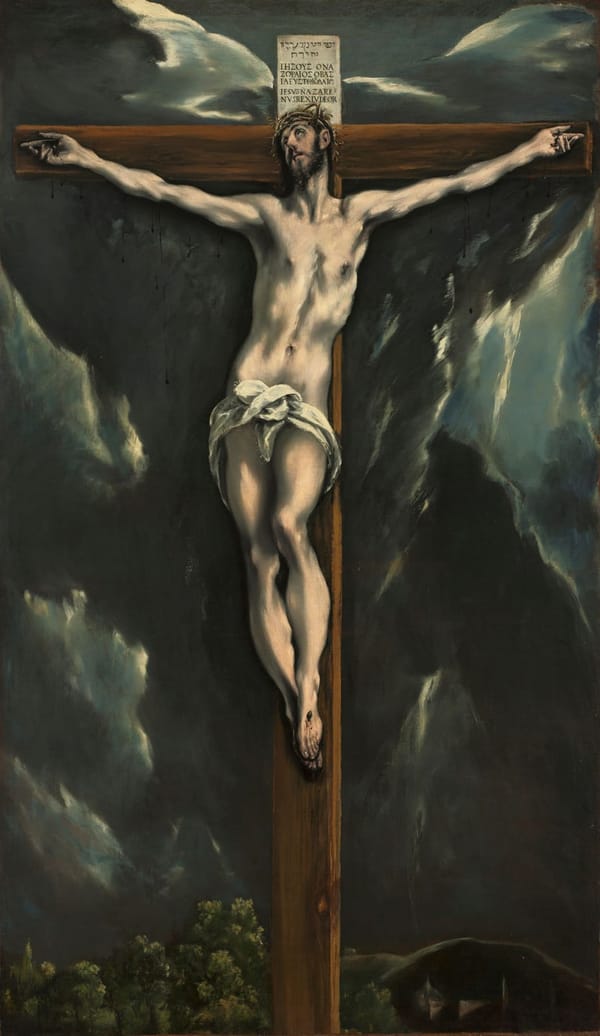
Everything around us urges us to mourn. The images of the saints, the very crucifix on our altar, are veiled from our sight. The Church is oppressed with grief. During the first four weeks of Lent, she compassionated her Jesus fasting in the desert; His coming sufferings and crucifixion and death are what now fill her with anguish. We read in to-day’s Gospel, that the Jews threaten to stone the Son of God as a blasphemer: but His hour is not yet come. He is obliged to flee and hide Himself. It is to express this deep humiliation, that the Church veils the cross. A God hiding Himself, that He may evade the anger of men—what a mystery! Is it weakness? Is it, that He fears death? No; we shall soon see Him going out to meet His enemies: but at present He hides Himself from them, because all that had been prophesied regarding Him has not been fulfilled. Besides, His death is not to be by stoning: He is to die upon a cross, the tree of malediction, which, from that time forward, is to be the tree of life. Let us humble ourselves, as we see the Creator of heaven and earth thus obliged to hide Himself from men, who are bent on His destruction! Let us go back, in thought, to the sad day of the first sin, when Adam and Eve hid themselves because a guilty conscience told them they were naked. Jesus has come to assure us of our being pardoned, and lo! He hides Himself, not because He is naked—He that is to the saints the garb of holiness and immortality—but because He made Himself weak, that He might make us strong. Our first parents sought to hide themselves from the sight of God; Jesus hides Himself from the eye of men. But it will not be thus for ever. The day will come when sinners, from whose anger He now flees, will pray to the mountains to fall on them and shield them from His gaze; hut their prayer will not be granted, and they shall see the Son of Man coming in the clouds of heaven, with much power and majesty.3
This Sunday is called Passion Sunday, because the Church begins, on this day, to make the sufferings of our Redeemer her chief thought. It is called also, Judica, from the first word of the Introit of the Mass; and again Neomania, that is, the Sunday of the new (or the Easter) moon, because it always falls after the new moon which regulates the feast of Easter.
In the Greek Church, this Sunday goes under the simple name of the fifth Sunday of the holy fasts.
Mass
At Rome, the Station is in the basilica of St. Peter. The importance of this Sunday, which never gives way to any feast, no matter what its solemnity may be, required that the place for the assembly of the faithful should be in one of the chief sanctuaries of the holy city.
The Introit is taken from the first verses of Psalm xlii. The Messias appeals to God’s tribunal, and protests against the sentence about to be pronounced against Him by men. He likewise expresses His confidence in His Father’s help, who, after His sufferings and death, will lead Him in triumph into the holy mount.
Introit
The Gloria Patri is not said during Passiontide and Holy Week (unless a saint’s feast be kept), but the Introit is repeated immediately after the Psalm.
In the Collect, the Church prays that there may be produced in her children that total reformation, which the holy season of Lent is intended to produce. This reformation is such, that it will not only subject the body to the spirit, but preserve also the spirit itself from those delusions and passions, to which it has been, hitherto, more or less a slave.
Collect
Then is added one of the following prayers:
Against the Persecutors of the Church
For the Pope
Epistle
Cap. IX.Fratres: Christus assistens Pontifex futurorum bonorum, per amplius et perfectius tabernaculum non manufactum, id est, non hujus creationis: neque per sanguinem hircorum aut vitulorum, sed per proprium Sanguinem introivit semel in Sancta, æterna redemptione inventa. Si enim sanguis hircorum et taurofum, et cinis vitulæ aspersus inquinatos sanctificat ad emundationem carnis: quanto magis Sanguis Christi, qui per Spiritum sanctum semetipsum obtulit immaculatum Deo, emundabit conscientiam nostram ab operibus mortuis, ad serviendum Deo viventi? Et ideo novi Testamenti mediator est: ut morte intercedente, in redemptionem earum prævaricationum, quæ erant sub priori Testamento, repromissionem accipiant, qui vocati sunt, æternæ hæreditatis: in Christo Jesu Domino nostro
Ch. IX.Brethren: Christ being come, an High Priest of the good things to come, by a greater and more perfect tabernacle not made with hands, that is, not of this creation, neither by the blood of goats or of calves, but by his own Blood, entered once into the Holies, having obtained eternal redemption. For, if the blood of goats and of oxen, and the ashes of an heifer being sprinkled, sanctify such as are defiled, to the cleansing of the flesh; how much more shall the Blood of Christ (who by the Holy Ghost offered himself unspotted unto God), cleanse our conscience from dead works to serve the living God? And therefore, he is the mediator of the new Testament: that by means of his death, for the redemption of those transgressions which were under the former Testament, they that are called may receive the promise of eternal inheritance, in Christ Jesus our Lord.
It is by blood alone that man is to be redeemed. He has offended God. This God cannot be appeased by anything short of the extermination of His rebellious creature, who, by shedding his blood, will give an earnest of his repentance and his entire submission to the Creator, against whom he dared to rebel. Otherwise, the justice of God must be satisfied by the sinner’s suffering eternal punishment. This truth was understood by all the people of the ancient world, and all confessed it by shedding the blood of victims, as in the sacrifices of Abel at the very commencement of the world, in the hecatombs of Greece, in the countless immolations whereby Solomon dedicated the temple. And yet God thus speaks to His people: ‘Hear, O My people, and I will speak: O Israel, and I will testify to thee: I am God thy God. I will not reprove thee for thy sacrifices, and thy burnt-offerings are always in my sight. I will not take calves out of thy house, nor he-goats out of thy flocks. I need them not: for all the beasts of the woods are Mine. If I should be hungry I would not tell thee; for the world is Mine, and the fullness thereof. Shall I eat the flesh of bullocks? or shall I drink the blood of goats?’4 Thus, God commands the blood of victims to be offered to Him, and, at the same time, declares that neither it nor they are precious in His sight. Is this a contradiction? No: God would hereby have man understand that it is only by blood that he can be redeemed, but that the blood of brute animals cannot effect this redemption. Can the blood of man himself bring him his own redemption, and appease God’s justice? No, not even man’s blood, for it is defiled; and even were it undefiled, it is powerless to compensate for the outrage done to God by sin. For this there was needed the Blood of a God; such was the Blood of Jesus, and He has come that He may shed it for our redemption.
In Him is fulfilled the most sacred of the figures of the old Law. Once each year, the high-priest entered into the Holy of holies, there to make intercession for the people. He went within the veil, even to the Ark of the Covenant; but he was not allowed to enjoy this great privilege, unless he entered the holy place carrying in his hands the blood of a newly-offered victim. The Son of God, the true High Priest, is now about to enter heaven, and we are to follow Him thither; but unto this, He must have an offering of blood, and that Blood can be none other than His own. We are going to assist at this His compliance with the divine ordinance. Let us open our hearts, that this precious Blood may, as the apostle says in to-day’s Epistle, cleanse our conscience from dead works to serve the living God.
The Gradual is taken from the Psalms. Our Saviour here prays to be delivered from His enemies, and protected from the rage of them that have risen up against Him; yet is He ready to do the will of His Father, by whom He will be avenged.
In the Tract, which is also taken from the Psalms, the Messias, under the name of Israel, complains of the persecution He has met with from the Jews, even from His youth. They are now about to scourge Him in a most cruel manner. But He also foretells the punishment their deicide is to bring upon them.
Gradual
Tract
Gospel
Cap. viii.In illo tempore: Dicebat Jesus turbis Judæorum: Quis ex vobis arguet me de peccato? Si veritatem dico vobis, quare non creditis mihi? Qui ex Deo est, verba Dei audit. Propterea vos non auditis, quia ex Deo non estis. Responderunt ergo Judæi, et dixerunt ei: Nonne bene dicimus nos quia Samaritanus es tu, et dæmonium habes? Respondit Jesus: Ego dæmonium non habeo: sed honorifico Patrem meum, et vos inhonorastis me. Ego autem non quæro gloriam meam: est qui quærat et judicet. Amen, amen dico vobis: Si quis sermonem meum servavaverit, mortem non videbit in æternum. Dixerunt ergo Judæi: Nunc cognovimus quia dæmonium habes. Abraham mortuus est, et prophetæ: et tu dicis: Si quis sermonem meum servaverit, non gustabit mortem in æternum. Numquid tu major es patre nostro Abraham, qui mortuus est? et prophetæ mortui sunt. Quem teipsum facis? Respondit Jesus: Si ego glorifico meipsum, gloria mea nihil est: est Pater meus, qui glorificat me, quem vos dicitis quia Deus vester est, et non cognovistis eum; ego autem novi eum: et si dixero quia non scio eum, ero similis vobis mendax. Sed scio eum, et sermonem ejus servo. Abraham pater vester exsultavit ut videret diem meum: vidit, et gavisus est. Dixerunt ergo Judæi ad eum: Quinquaginta armos nondum habes, et Abraham vidisti? Dixit eis Jesus: Amen, amen, dico vobis, antequam Abraham fieret, ego sum. Tulerunt ergo lapides ut jacerent in eum: Jesus autem abscondit se, et exivit de templo.
Ch. viii.At that time: Jesus said to the multitude of the Jews: Which of you shall convince me of sin? If I say the truth to you, why do you not believe me? He that is of God, heareth the words of God. Therefore you hear them not, because you are not of God. The Jews, therefore, answered and said to him; Do not we say well that thou art a Samaritan, and hast a devil? Jesus answered: I have not a devil; but I honour my Father, and you have dishonoured me. But I seek not my own glory: there is one that seeketh and judgeth. Amen, amen, I say to you: If any man keep my word, he shall not see death for ever. The Jews therefore said: Now we know that thou hast a devil. Abraham is dead, and the prophets: and thou sayest: If any man keep my word, he shall not taste death for ever. Art thou greater than our father Abraham, who is dead? And the prophets are dead. Whom dost thou make thyself? Jesus answered: If I glorify myself my glory is nothing. It is my Father that glorifieth me, of whom you say that he is your God; and you have not known him, but I know him. And if I shall say that I know him not, I shall be like to you, a liar. But I do know him, and do keep his word. Abraham your father rejoiced that he might see my day: he saw it, and was glad. The Jews therefore said to him: Thou art not yet fifty years old, and hast thou seen Abraham? Jesus said to them: Amen, amen, I say to you, before Abraham was made, I am. They took up stones therefore to cast at him. But Jesus hid himself, and went out of the temple.
The fury of the Jews is evidently at its height, and Jesus is obliged to hide Himself from them. But He is to fall into their hands before many days are over; then will they triumph and put Him to death. They triumph, and Jesus is their victim: but how different is to be His lot from theirs! In obedience to the decrees of His heavenly Father, and out of love for men, He will deliver Himself into the hands of His enemies, and they will put Him to death; but He will rise victorious from the tomb, He will ascend into heaven, He will be throned on the right hand of His Father. His enemies, on the contrary, after having vented all their rage, will live on without remorse, until the terrible day come for their chastisement. That day is not far off, for observe the severity wherewith our Lord speaks to them: 'You hear not the words of God, because you are not of God' Yet there was a time when they were of God, for the Lord gives His grace to all men; but they have rendered this grace useless; they are now in darkness, and the light they have rejected will not return.
You say that My Father is your God, and you have not known Him; but I know Him. Their obstinacy in refusing to acknowledge Jesus as the Messias, has led these men to ignore that very God, whom they boast of honouring; for if they knew the Father, they would not reject His Son. Moses, and the Psalms, and the Prophets, are all a dead letter to them; these sacred Books are soon to pass into the hands of the Gentiles, who will both read and understand them. If, continues Jesus, I should say that I know Him not, I should be like to you, a liar. This strong language is that of the angry Judge who is to come down, at the last day, to destroy sinners. Jerusalem has not known the time of her visitation: the Son of God has visited her, He is with her, and she dares to say to Him: Thou hast a devil! She says to the eternal Word, who proves Himself to be God by the most astonishing miracles, that Abraham and the prophets are greater than He! Strange blindness, that comes from pride and hardness of heart! The feast of the Pasch is at hand; these men are going to eat, and with much parade of religion, the flesh of the figurative lamb; they know full well that this lamb is a symbol, or a figure, which is to have its fulfilment. The true Lamb is to be sacrificed by their hands, and they will not know Him. He will shed His Blood for them, and it will not save them. How this reminds us of those sinners, for whom this Easter promises to be as fruitless as those of the past years! Let us redouble our prayers for them, and beseech our Lord to soften their hearts, lest trampling the Blood of Jesus under their feet, they should have it to cry vengeance against them before the throne of the heavenly Father.
At the Offertory, confiding in the merits of the Blood that has redeemed us, let us, in the words of the Psalm, give praise to God, and proclaim Him to be the author of that new life, of which the sacrifice of the Lamb is the never-failing source.
Offertory
The Sacrifice of the spotless Lamb has produced two effects upon the sinner: it has broken his fetters, and has made him the object of God’s love. The Church prays, in the Secret, that the Sacrifice which she is about to offer, and which is one with that of the cross, may work the same results in us.
Secrets
Against the Persecutors of the Church
For The Pope
The Communion-antiphon is formed out of the very words spoken by Jesus, when instituting the august Sacrifice which has just been celebrated, and of which the priest and people have partaken, in memory of the Passion, for it renews both the remembrance and the merits of the Passion.
Communion
In the Postcommunion, the Church prays to God, that He would maintain in the faithful the fruits of the visit He has so graciously paid them; for, by their participation in the sacred mysteries, He has entered into them.
Postcommunions
Against the Persecutors of the Church
For the Pope
Vespers
The psalms and antiphons are given on page 81.
Capitulum (Heb. ix)
For the hymn and versicle, see page 89.
Antiphon of the Magnificat
The following, appropriate prayer is from the Mozarabic breviary.
Capitulum
That we may the better honour the holy cross, we give, for each day of this week, an appropriate hymn from one or other of the various ancient liturgies. The one we have selected for to-day is the composition of St. Venantius Fortunatus, bishop of Poitiers.
Hymn
Atque cruore suo vulnera nostra lavat.
Traxit ab ore lupi qua sacer Agnus oves.
Atque suo clausit funere mortis iter.
Quæ eripuit Paulum crimine, morte Petrum.
Quando tuis ramis tam nova poma geris.
Et redeunt vitæ qui caruere die.
Luna nec in noctem, sol neque meridie.
Spargis et ornatas flore recente comas.
Dulcia sanguineo vina rubore fluunt.
April 2: St. Francis of Paula
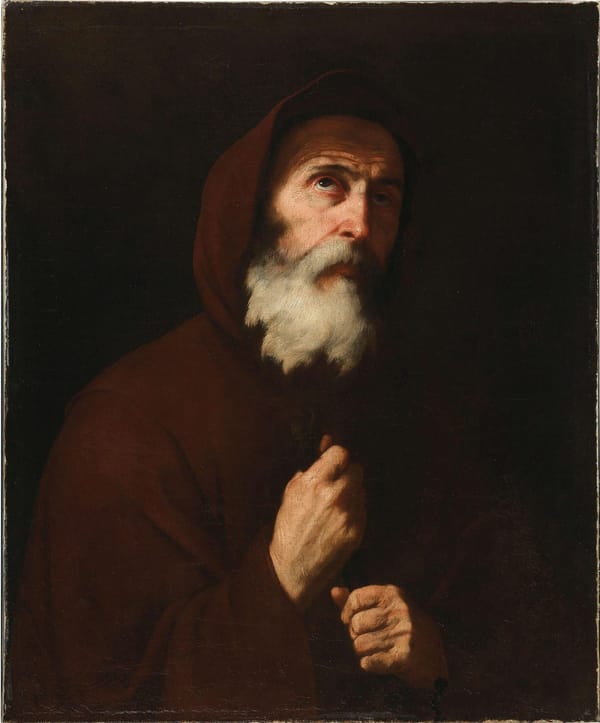 |
The founder of a religious Order, whose distinguishing characteristics were humility and penance, comes before us to-day; it is Francis of Paula. Let us study his virtues and beg his intercession. His whole life was one of great innocence; and yet we find him embracing, from his earliest youth, mortifications which, nowadays, would not be expected from the very worst sinners. How was it that he could do so much? and we, who have so often sinned, do so little? The claims of divine justice are as strong now as ever they were; for God never changes, nor can the offence we have committed against Him by our sins be pardoned, unless we make atonement. The saints punished themselves, with life-long and austere penances, for the slightest sins; and the Church can scarcely induce us to observe the law of Lent, though it is now reduced to the lowest degree of severity.
What is the cause of this want of the spirit of expiation and penance? It is that our faith is weak, and our love of God is cold, because our thoughts and affections are so set upon this present life, that we seldom if ever consider things in the light of eternity. How many of us are like the king of France, who having obtained permission from the Pope that St. Francis of Paula should come and live near him, threw himself at the saint's feet, and besought him to obtain of God, that he, the king, might have a long life! Louis XI. had led a most wicked life; but bis anxiety was, not to do penance for his sins, but to obtain, by the saint's prayers, a prolongation of a career which had been little better than a storing up of wrath for the day of wrath. We, too, love this present life; we love it to excess. The laws of fasting and abstinence are broken, not because the obeying them would endanger life, or even seriously injure health—for where either of these is to be feared, the Church does not enforce her lenten penances—but people dispense themselves from fasting and abstinence, because the spirit of immortification renders every privation intolerable, and every interruption of an easy comfortable life insupportable. They have strength enough for any fatigue that business or pleasure calls for; but the moment there is question of observing those laws which the Church has instituted for the interest of the body as well as of the soul, all seems impossible; the conscience gets accustomed to these annual transgressions, and ends by persuading the sinner that he may be saved without doing penance.
St. Francis of Paula was of a very different way of thinking and acting. The Church gives us the following abridged account of his life:
Apostle of penance: thy life was always that of a saint, and we are sinners: yet do we presume, during these days, to beg thy powerful intercession, in order to obtain of God that this holy season may not pass without having produced within us a true spirit of penance, which may give us a reasonable hope of receiving His pardon. We admire the wondrous works which filled thy life—a life that resembled, in duration, that of the patriarchs, and prolonged the privilege the world enjoyed of having such a saint to teach and edify it. Now that thou art enjoying in heaven the fruits of thy labours on earth, think upon us, and hearken to the prayers addressed to thee by the faithful. Gain for us the spirit of compunction, which will add earnestness to our works of penance. Bless and preserve the Order thou hast founded. Thy holy relics have been destroyed by the fury of heretics; avenge the injury thus offered to thy name, by praying for the conversion of heretics and sinners, and drawing down upon the world those heavenly graces, which will revive among us the fervour of the ages of faith.
April 2 (the Same Day, in Some Dioceses): St. Mary of Egypt, Penitent
One of the most striking examples of penance ever witnessed, is this day proposed for our consideration: Mary, the sinner and penitent of Egypt, comes to animate us to persevere in our lenten exercises. Like Magdalene and Margaret of Cortona, she had sinned grievously; like them she repented, atoned for her guilt, and is now the associate of angels. Let us adore the omnipotence of our God, who thus changed a vessel of dishonour into one of honour; let us lovingly contemplate the riches of His mercy, and hope for our own participation in them. At the same time, let us remember that pardon is not granted save where there is repentance; and that repentance is not genuine, unless it produce an abiding spirit and deeds of penance. Mary of Egypt had the misfortune to lead a life of sin for seventeen years; but her penance lasted forty: and what kind of penance must hers have been, living alone in a desert, under a scorching sun, without the slightest human consolation, and amidst every sort of privation! The pledge of pardon—the holy Communion —which we received so soon after our sins, was not granted to Mary, till she had done penance for nearly half a century. That pledge of Jesus' forgiveness, which He has given us in the Sacrament of His love, and which was communicated to us so promptly, was withheld from this admirable penitent, so that she received it for the second time only at the moment when death was on the point of separating her soul from her body which was worn out by austerities! Let us humble ourselves at such a comparison; let us think with fear on this great truth—that God’s justice will require an exact account of all the graces He has heaped upon us; and with this thought, let us rouse ourselves to a determination to merit, by the sincerity of our repentance, a place near the humble penitent of the desert.
We take the lessons of the Office of St. Mary of Egypt from the ancient Roman-French breviaries:
In praise of our incomparable penitent, we offer to the reader the following beautiful sequence, taken from the ancient missals of Germany:
Sequence
In amplexum Salomonis
Nostri transit filia;
Ex abjecta fit electa,
Ex rugosa fit formosa,
Ex lebete phiala.
Ad dilectum quam conduxit
Pacia nectens fædera;
Matre Dei mediante,
Peccatrici, Christo dante,
Sunt dimissa scelera.
Pervenit in Jerusalem,
Nuptura Pacifico;
Hinc excluso adultero
Maritatur Sponso vero
Ornata mirifico.
Dum laborat, mox redire
Necdum digna cogitur;
Ad cor suum revertitur,
Fletu culpa submergitur,
Fletu culpa teritur.
Leviathan conteritur,
Mundus, caro vincitur,
Domus patris postponitur,
Vultus mentis componitur,
Decor camis spernitur.
Tuia ornata tympanis,
Lauda quondam sterilis,
Gaude, plaude, casta, munda,
Virtutum prole fœcunda,
Vitis meri fertilis.
Umbilicus est præcisus
Tuus continentia;
Aquis lotam, pulchram totam
Te salivit, te condivit
Sponsi sapientia.
Intus tota delibuta
Oleo lætitiæ;
Croco rubene charitatis;
Bysso cincta castitatis,
Zona pudicitiæ.
Dum superna contemplaris,
Mutatis affectibus;
Vestiris discoloribus,
Cubile vernat floribus,
Fragat aromatibus.
Decoravit et amavit
Sic te Christi gratia,
Memor semper peccatorum,
Et cunctorum populorum,
Plaude nunc in gloria.
to the espousals with Jesus,
our true Solomon.
She that was abject, is made a chosen one;
she that was deformed, is made fair;
the vessel of dishonour is made one of honour.
and leading her to her beloved Son,
has knit the bond of peace.
The Mother of God interceded;
Christ forgave;
the sinner’s sins are pardoned.
came to Jerusalem,
to be espoused to the King of peace;
leaving her false lover,
she is united to the true Spouse,
honoured by the wonderful One.
but her unworthiness forbids it;
she is compelled to retire.
Then does she return to her own heart;
she weeps for her sins,
and her weeping blots them out.
tramples on Leviathan;
conquers the world and the flesh;
forgets her father’s house:
neglects the beauty of the body,
that her spirit may be made comely.
Thou, that once wast barren,
take up thy harp, and sing.
Exult and be joyful, for now thou art chaste and pure,
fruitful in virtue,
a vine that yields a precious fruit.
the shame of thy disorders
is effaced by the merit of thy purity.
The wisdom of thy heavenly Spouse has given thee,
cleansed and all fair,
the incorruption of his grace.
thou wast anointed with the oil of gladness.
The scarlet of charity,
the lily of chastity,
the girdle of modesty
—all were upon thee.
for thy affections were changed
from earthly to heavenly things.
Thy vesture was of every richest hue,
and thy couch was decked with flowers,
sweeter than those of spring.
in that Christ so loved thee,
and beautified thee with grace.
Be mindful of us sinners;
pray for all mankind;
feast now in thy eternal glory!
Thou wilt sing for all eternity, O Mary, the mercies of the Lord, who changed thee from a sinner into so glorious a saint; we join thee in thy praises, and we give Him thanks for having shown us so evidently, in thy person, that a true penitent, whatever and how great soever may have been his sins, may not only avoid eternal torments, but merit everlasting bliss. How light must now appear to thee, O Mary, that forty years’ penance, the very thought of which terrifies us! How short a time, when compared with eternity! How insignificant its austerity, if we think of hell! And how rich must its reward seem to thee, now that thou art face to face with infinite Beauty! We, too, are sinners; dare we say that we are penitents? Aid our weakness, O Mary! Thou wast made known to the world at the close of thy hidden life, in order that Christians might learn from thee the grievousness of sin, of which they make so little account; the justice of God, of which they are so apt to form so false an idea; ¿md the goodness of that Father, whom they cease not to offend. Pray for us, O Mary, that we may profit by the instructions given to us so profusely during this holy season. Pray that our conversion may be complete; that we may leave our pride and our cowardice; that we may appreciate the grace of reconciliation with our Maker; and, lastly, that we may ever approach to the holy Table with compunction and love such as thou hadst, when, in thy last happy Communion, Jesus gave Himself to thee in His Sacrament, and then took thee to Himself in the kingdom of everlasting rest and joy.
| Previous Saturday of the Fourth Week of Lent | Next April 2: St. Francis of Paula |