Daily reading
Passiontide
Double · April 5 · Sanctoral
April 5, 2028
From Dom Guéranger’s The Liturgical Year.
A Double leads the weekday.Rubric
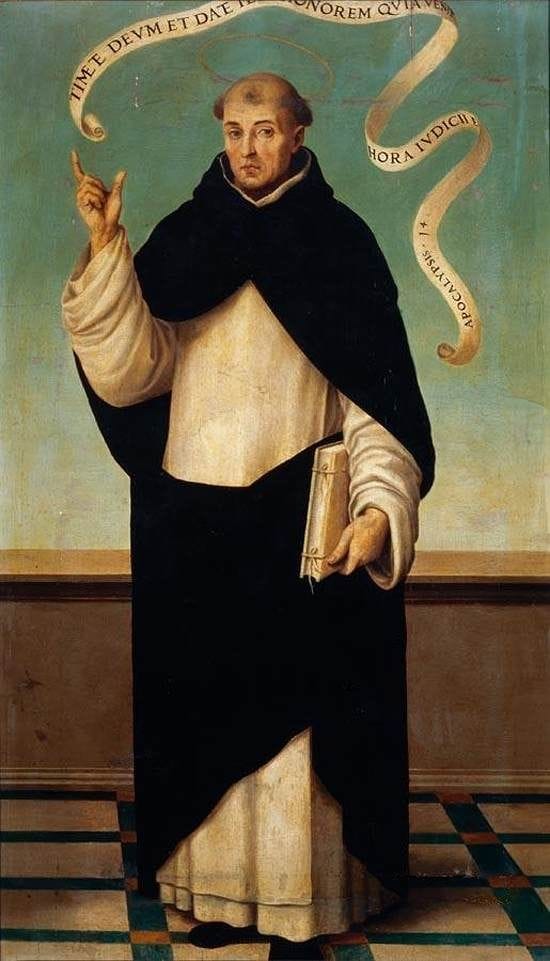 |
April 5: St. Vincent Ferrer, Confessor
To-day, again, it is Catholic Spain that offers one of her sons to the Church, that she may present him to the Christian world as a model and a patron. Vincent Ferrer, or, as he was called, the angel of the judgment, comes to us proclaiming the near approach of the Judge of the living and the dead. During his lifetime, he traversed almost every country of Europe, preaching this terrible truth; and the people of those times went from his sermons striking their breasts, crying out to God to have mercy upon them—in a word, converted. In these our days, the thought of that awful day, when Jesus Christ will appear in the clouds of heaven to judge mankind, has not the same effect upon Christians. They believe in the last judgment, because it is an article of faith; but, we repeat, the thought produces little impression. After long years of a sinful life, a special grace touches the heart, and we witness a conversion; there are thousands thus converted, but the majority of them continue to lead an easy, comfortable life, seldom thinking on hell, and still less on the judgment wherewith God is to bring time to an end.
It was not thus in the Christian ages; neither is it so now with those whose conversion is solid. Love is stronger in them than fear; and yet the fear of God’s judgment is ever living within them, and gives stability to the new life they have begun. Those Christians who have heavy debts towards divine justice, because of the sins of their past lives, and who, notwithstanding, make the time of Lent a season for evincing their cowardice and tepidity, surely such Christians as these must very rarely ask themselves what will become of them on that day, when the sign of the Son of Man shall appear in the heavens, and when Jesus, not as Saviour, but as Judge, shall separate the goats from the sheep. One would suppose that they have received a revelation from God, that, on the day of judgment, all will be well with them. Let us be more prudent; let us stand on our guard against the illusions of a proud, self-satisfied indifference; let us secure to ourselves, by sincere repentance, the well-founded hope, that on the terrible day, which has made the very saints tremble, we shall hear these words of the divine Judge addressed to us: ‘Come, ye blessed of My Father, possess the kingdom prepared for you from the foundation of the world!’1 Vincent Ferrer leaves the peaceful cell of his monastery, that he may go and rouse men to the great truth they had forgotten —the day of God’s inexorable justice; we have not heard his preachings, but, have we not the Gospel? Have we not the Church, who, at the commencement of this season of penance, preached to us the terrible truth, which St. Vincent took as the subject of his instructions? Let us, therefore, prepare ourselves to appear before Him, who will demand of us a strict account of those graces which He so profusely poured out upon us, and which were purchased by His Blood. Happy they that spend their Lents well, for they may hope for a favourable judgment!
The liturgy gives us, in the Matins of to-day, the following abridged account of the life of this holy servant of God:
The Dominican breviary contains the following responsories and antiphon in honour of this illustrious preacher:
How grand must have been thine eloquence, O Vincent, that could rouse men from their lethargy, and give them to feel all the terrors of that awful judgment. Our forefathers heard thy preaching, and returned to God, and were pardoned. We, too, were drowsy of spirit when, at the commencement of this holy season, the Church awakened us to the work of our salvation, by sprinkling our heads with ashes, and pronouncing over us the sentence of our God, whereby we are condemned to die. Yes, we are to die; we are to die soon; and a judgment is to be held upon us, deciding our eternal lot. Then, at the moment fixed in the divine decrees, we shall rise again, in order that we may assist at the solemn and terrible judgment. Our consciences will be laid open, our good and bad actions will be weighed, before the whole of mankind; after which, the sentence already pronounced upon us in our particular judgment will be made public. Sinners as we are, how shall we be able to bear the eye of our Redeemer, who will then be our inexorable Judge? How shall we endure even the gaze of our fellow-creatures, who will then behold every sin we have committed? But above all, which of the two sentences will be ours? Were the Judge to pronounce it at this very moment, would He place us among the blessed of His Father, or among the cursed? on His right, or on His left?
Our fathers were seized with fear when thou, O Vincent, didst put these questions to them. They did penance for their sins, and, after receiving pardon from God, their fears abated, and holy joy filled their souls. Angel of God's judgment! pray for us, that we may be moved to salutary fear. A few days hence we shall behold our Redeemer ascending the hill of Calvary, with the heavy weight of His cross upon Him; we shall hear Him thus speaking to the daughters of Jerusalem: ‘Weep not over Me, but weep for yourselves and for your children: for if in the green wood they do these things, what shall be done in the dry?’2 Help us, O Vincent, to profit by these words of warning. Our sins have reduced us to the condition of dry dead branches, that are good for nought but to bum in the fire of divine vengeance; help us, by thy intercession, to be once more united to Him who will give us life. Thy zeal for souls was extreme; take ours under thy care, and procure for them the grace of perfect reconciliation with our offended Judge. Pray, too, for Spain, the country that gave thee life and faith, thy religious profession and thy priesthood. The dangers that are now threatening her require all thy zeal and love; exercise them in her favour, and be her faithful protector.
Wednesday in Passion Week
At Rome, the Station is in the church of Saint Marcellus, Pope and Martyr. This church was once the house of the holy lady Lucina, who gave it to the Pontiff, that he might consecrate it to God.
Collect
Epistle
Cap. xix.In diebus illis: Locutus eat Dominus ad Moysen, dicens: Loquere ad omnem cœtum filiorum Israel, et dices ad eos: Ego Dominus Deus vester. Non facietis furtum. Non mentiemini, nec decipiet unuequisque proximum suum. Non perjurabis in nomine meo, nec pollues nomen Dei tui. Ego Dominus. Non facies calumniam proximo tuo, nec vi opprimes eum. Non morabitur opus mercenarii tui apud to usque mane. Non maledices surdo, nec coram cæco pones offendiculum: sed timebis Dominum Deum tuum, quia ego sum Dominus. Non facies quod iniquum est, nec injuste judicabis. Non consideres personam pauperis, nec honores vultum potentis. Juste judica proximo tuo. Non eris criminator, nec susurro in populo. Non stabis contra sanguinem proximi tui. Ego Dominus. Non oderis fratrem tuum in corde tuo, sed publice argue eum, ne habeas super illo peccatum. Non quæras ultionem, nec memor eris injuriæ civium tuorum. Diliges amicum tuum sicut teipsum. Ego Dominas. Leges meas custodite. Ego enim sum Dominus Deus vester.
Ch. xix.In those days: the Lord spake to Moses, saying: Speak to all the assembly of the children of Israel, and thou shalt say to them: I am the Lord your God. You shall not steal. You shall not lie: neither shall any man deceive his neighbour. Thou shalt not swear falsely by my name, nor profane the name of thy God. I am the Lord. Thou shalt not calumniate thy neighbour, nor oppress him by violence. The wages of him that has been hired by thee, shall not abide with thee until the morning. Thou shalt not speak evil of the deaf, nor put a stumbling block before the blind: but thou shalt fear the Lord thy God, because I am the Lord. Thou shalt not do that which is unjust, nor judge unjustly. Respect not the person of the poor, nor honour the countenance of the mighty. Judge thy neighbour according to justice. Thou shalt not be a detractor nor a whisperer among the people. Thou shalt not stand against the blood of thy neighbour. I am the Lord. Thou shalt not hate thy brother in thy heart, but reprove him openly, lest thou incur sin through him. Seek not revenge, nor be mindful of the injury of thy citizens. Thou shalt love thy friend as thyself. I am the Lord. Keep ye my laws, for I am the Lord your God.
This passage from Leviticus, wherein our duties to our neighbour are so dearly and so fully defined, is read to us to-day, in order that we may see how we fulfil these important duties, and correct whatever short-comings we may discover in ourselves. It is God who here speaks; it is God who commands. Observe that phrase: I am the Lord: He repeats it several times, to show us that if we injure our neighbour, He, God Himself, will become the avenger. How strange must this doctrine have seemed to the catechumens, who had been brought up in the selfish and heartless principles of paganism! Here they are told that all men are brethren, and that God is the common Father of all, commanding all to love one another with sincere charity, and without distinction of nation or class. Let us Christians resolve to fulfil this precept to the letter: these are days for good resolutions. Let us remember that the commandments we have been reading were given to the Israelite people, many ages before the preaching of the law of love. If, then, God exacted from the Jew a cordial love of his fellow-men, when the divine law was written on mere tablets of stone; what will He not require from the Christian, who can now read that law in the Heart of the Man-God, who has come down from heaven and made Himself our Brother, in order that we might find it easier and sweeter to fulfil the precept of charity? Human nature united in His Person to the divine, is henceforth sacred; it has become an object of the heavenly Father’s love. It is out of fraternal love for this our nature that Jesus suffered death, teaching us, by His own example, to have such love for our brethren, that, if necessary, we ought to lay down our lives for them.* It is the beloved disciple that teaches us this, and he had it from his divine Master.
Gospel
Cap. x.In illo tempore: Facta sunt encœnia in Jerosolymis: et hiems erat. Et ambulabat Jesus in templo, in porticu Salomonis. Circumdederunt ergo eum Judæi, et dicebant ei: Quousque animam nostram tollis? Si tu es Christus, dic nobis palam. Respondit eis Jesus: Loquor vobis, et non creditis. Opera quæ ego facio in nomine Patris mei, hæc testimonium perhibent de me. Sed vos non creditis, quia non estis ex ovibus meis. Oves meæ vocem meam audiunt: et ego cognosco eas, et sequuntur me: et ego vitam æternam do eis: et non peribunt in æternam, et non rapiet eas quisquam de manu mea. Pater meus quod dedit mihi, majus omnibus est: et nemo potest rapere de manu Patris mei. Ego, et Pater unum sumus. Sustulerunt ergo lapides Judæi, ut lapidarent eum. Respondit eis Jesus: Multa bona opera ostendi vobis ex Patre meo; propter quod eorum opus me lapidatis? Responderunt ei Judæi: De bono opere non lapidamus te, sed de blasphemia, et quia tu homo cum sis, facis teipsum Deum. Respondit eis Jesus: Nonne scriptum est in lege vestra: Quia ego dixi, dii estis? Si illos dixit deos, ad quos sermo Dei factus est, et non potest solvi Scriptura: quem Pater sanctificavit, et misit in mundum, vos dicitis: Quia blasphemas; quia dixi, Filius Dei sum? Si non facio opera Patris mei, nolite credere mihi. Si autem facio, et si mihi non vultis credere, operibus credite, ut cognoscatis, et credatis, quia Pater in me est, et ego in Patre.
Ch. x.At that time: it was the feast of the Dedication at Jerusalem: and it was winter. And Jesus walked in the temple in Solomon’s porch. The Jews therefore came round about him, and said to him: How long dost thou hold our souls in suspense? If thou be the Christ, tell us plainly. Jesus answered them: I speak to you and you believe not. The works that I do in the name of my Father, they give testimony of me. But you do not believe because you are not of my sheep. My sheep hear my voice: and I know them, and they follow me: and I give them eternal life: and they shall not perish for ever, and no man shall pluck them out of my hand. That which my Father hath given me, is greater than all: and no man can snatch it out of the hand of my Father. I and the Father are one. The Jews then took up stones to stone him. Jesus answered them: Many good works I have showed you from my Father; for which of those works do you stone me? The Jews answered him: For a good work we stone thee not, but for blasphemy: and because that thou, being a man, makest thyself God. Jesus answered them: Is it not written in your law: I said you are gods? If he called them gods, to whom the word of God was spoken, and the Scripture cannot be broken; do you say of him whom the Father hath sanctified and sent into the world: Thou blasphemest: because I said I am the Son of God? If I do not the works of my Father, believe me not. But if I do, though you will not believe me believe the works, that you may know, and believe that the Father is in me, and I in the Father.
After the feast of tabernacles came that of the Dedication, and Jesus remained in Jerusalem. The hatred His enemies bore Him is greater than ever. They come round about Him, that they may make Him say He is the Christ, and then accuse Him of claiming a mission which does not belong to Him. Jesus deigns not to reply to their question, but tells them that they have seen His works, and that these give ample testimony of His being Christ, the Son of God. It is by faith, and by faith alone, that man can here know his God. God manifests Himself by His divine works: man sees them, and is bound to believe the truth to which they bear testimony. By thus believing, he has both the certitude of what he believes, and the merit of believing. The proud Jew rebels against this: he would fain dictate to God how He should act, and sees not that such a pretension is impious and absurd.
But, if Jesus openly declare the truth, He will scandalize these evil-minded men! Be it so; the truth must be preached. Our Lord has others to consult besides them; there are the well-intentioned, who will believe what He teaches. He, therefore, utters these sublime words, whereby He declares, not only that He is Christ, but that He is God: I and the Father are one. He knew that this would enrage His enemies; but He had to make Himself known to the world, and to arm the Church against the false doctrines of heretics, who would rise up in future ages. One of these is to be Arius, who will teach that Jesus is not God, but only the most perfect of creatures: the Church will answer, that Jesus is one with the Father, consubstantial with the Father: and then, after causing much trouble and sin, Arianism will die out and be forgotten. The Jews mentioned in to-day’s Gospel are the fore-runners of Arius; they understand what our Lord says: He says He is God, and they seek to stone Him. Jesus gives them a fresh grace; He shows them why they should receive what He here teaches; He reminds them, by the Scriptures they know off by heart, that the name god has sometimes been applied, in a limited sense, to men who had certain high offices put upon them by heaven; and then, He bids them think of all the miracles they have seen Him work, which so plainly testify to His being assisted by His Father, and once more declares Himself to be God, saying: The Father is in Me, and I in the Father. But men hardened in obstinacy, as these are, cannot be convinced: and the sin they have committed against the Holy Ghost is working its effects. How different is it with the sheep of this divine Shepherd! They hear His voice; they follow Him; He gives them eternal life; no man shall pluck them out of His hand. Happy sheep indeed! They believe, because they love; and as it is through the heart that truth gains ascendancy over them, so is it by pride of intellect that darkness gains admission into the soul of the unbeliever, and lasts as long as pride lasts. Alas! poor unbeliever! he loves his darkness; he calls it light; he blasphemes when he thinks he reasons, just as these Jews crucified the Son of God, that, as they said, they might give glory to God.
The Mozarabic breviary gives us the following beautiful prayer, which consists of exclamations to our suffering Jesus.
Prayer (Sabbato Dominicæ V. Quadragesimæ)
Let us now turn towards the holy cross. These words of the Greek Church, in her Triodion, will assist our devotion.
Hymn (Feriæ V. mediæ Septimanæ)
* 1 St. John iii. 16. ↩︎
| Previous Tuesday in Passion Week | Next Wednesday in Passion Week |