lyp.network

Daily reading

Holy Week

Double · Movable from Easter · Temporal

April 11, 2028

From Dom Guéranger’s The Liturgical Year.
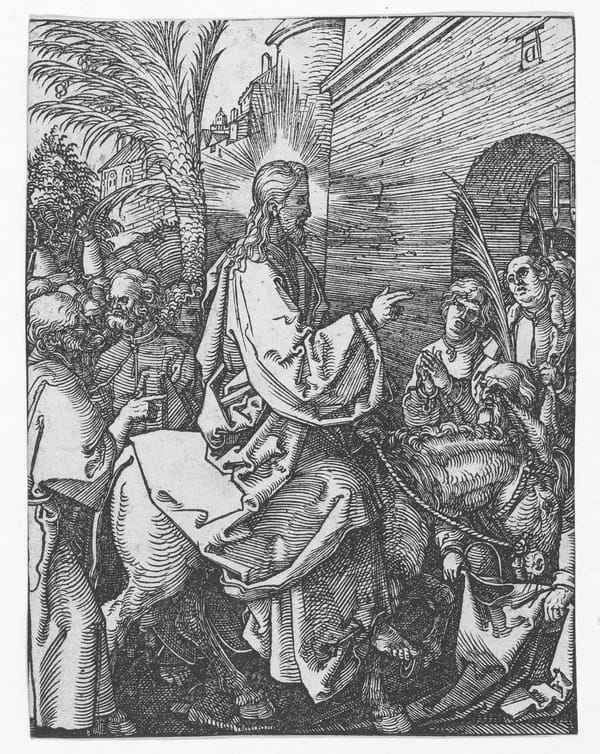
Christ entering Jerusalem on a donkey
Christ's Entry into Jerusalem, Albrecht Dürer (1471–1528), ca. 1508. Credits

Tuesday in Holy Week

To-day, again, our Saviour sets out in the morning for Jerusalem. His intention is to repair to the temple, and continue His yesterday’s teachings. It is evident that His mission on earth is fast drawing to its close. He says to His disciples: ‘You know that after two days shall be the Pasch, and the Son of Man shall be delivered up to be crucified.’1

On the road from Bethania to Jerusalem, the disciples are surprised at seeing the fig-tree, which their divine Master had yesterday cursed, now dead. Addressing himself to Jesus, Peter says: ‘Rabbi, behold, the fig-tree, which Thou didst curse, is withered away.’2 In order to teach us that the whole of material nature is subservient to the spiritual element when this last is united to God by faith, Jesus replies: ‘Have the faith of God. Amen I say to you, that whosoever shall say to this mountain: Be thou removed and oast into the sea! and shall not stagger in his heart, but believe that whatsoever he saith shall be done, it shall be done unto him.’3

Having entered the city, Jesus directs His steps towards the temple. No sooner has He entered, than the chief priests, the scribes, and the ancients of the people, accost Him with these words: ‘By what authority dost Thou these things? and who has given Thee this authority, that Thou shouldst do these things?’4 We shall find our Lord’s answer given in the Gospel. Our object is to mention the leading events of the last days of our Redeemer on earth; the holy volume will supply the details.

As on the two preceding days, Jesus leaves the city towards evening: He passes over Mount Olivet, and returns to Bethania, where He finds His blessed Mother and His devoted friends.

In to-day’s Mass, the Church reads the history of the Passion according to St. Mark, who wrote his Gospel the next after St. Matthew; hence it is that the second place is assigned to him. His account of the Passion is shorter than St. Matthew’s, of which it would often seem to be a summary; and yet certain details peculiar to this evangelist were evidently furnished by an eye-witness. Our readers are aware that St. Mark was a disciple of St. Peter, and that his Gospel was written under the very eye of the prince of the apostles.

In Rome, the Station for to-day is in the church of St. Prisma, which is said to have been the house of Alula and his wife Prisma, to whom St. Paul sends his salutations in his Epistle to the Romans. In the third century, Pope St. Eustachian had translated thither, on account of the sameness of the name, the body of St. Prisca, a virgin and martyr of Rome.


Mass

Three days hence, the cross will be lifted up on Calvary bearing upon itself the Author of our salvation. The Church, in the Introit of to-day’s Mass, bids us at once pay our homage to this trophy of our victory, and glory in it.

Introit

Nos autem gloriari oportet in cruce Domini nostri Jesu Christi: in quo est salus, vita, et resurrectio nostra, per quem salvati, et liberati sumus.

Ps.
Deus misereatur nostri, et benedicat nobis; illuminet vultum suum super nos, et misereatur nostri. Nos autem.
We ought to glory in the cross of our Lord Jesus Christ, in whom is our salvation, life and resurrection; by whom we have been saved and delivered.
Ps. May God have mercy on us, and bless us; may his countenance shine upon us, and may he have mercy on us. We ought, &c.

Recording of the Introit:

https://www.youtube.com/watch?v=VlK4mWCNQJw


In the Collect, the Church prays that the sacred anniversaries of our Saviour’s Passion may be to us a source of pardon; and that they may work in us a full reconciliation with the divine justice.

Collect

Omnipotens sempiterne Deus, da nobis ita Dominicæ Passionissacramenta peragere, ut indulgentiam percipere mereamur. Per eumdem.
O almighty and everlasting God, grant that we may so celebrate the mysteries of our Lord’s Passion, as to obtain thy pardon. Through the same, &c.

For the other Collect, see page 108.


Epistle

Lectio Jeremiæ Prophetæ.
Cap. xi.
In diebus illis: dixit Jeremias: Domine, demonstrasti mihi et cognovi; tunc ostendisti mihi studia eorum. Et ego quasi agnus mansuetus, qui portatur ad victimam: et non cognovi quia cogitaverunt super me consilia, dicentes: Mittamus lignum in panem ejus, et eradamus eum de terra viventium, et nomen ejus non memoretur amplius. Tu autem, Domine Sabaoth, qui judicas juste, et probas renes et corda, videam ultionem tuam ex eis: tibi enim revelavi causam meam, Domine Deus meus.
Lesson from Jeremias the Prophet.
Ch. xi.
In those days: Jeremias said: Thou, O Lord, hast shown me, and I have known: then thou shewedst me their doings. And I was as a meek lamb, that is carried to be a victim; and I knew not that they had devised counsels against me, saying: Let us put wood on his bread, and cut him off from the land of the living, and let his name be remembered no more. But thou, O Lord of Sabaoth, who judgest justly, and triest the reins and the hearts, let me see thy revenge on them; for to thee have I revealed my cause, O Lord, my God!

Again we have the plaintive words of Jeremias: he gives us the very words used by his enemies, when they conspired his death. It is evident, however, that the prophet is here the figure of one greater than himself. Let us, say these enemies, put wood upon his bread: that is, let us put poisonous wood into what he eats, that so we may cause his death. This is the literal sense of these words, as applied to the prophet; but how much more truly were they fulfilled in our Redeemer! He tells us that His divine Flesh is the true Bread that came down from heaven. This Bread, this Body of the Man-God, is bruised, torn, and wounded; the Jews nail it to the wood; so that, it is, in a manner, made one with the woody and the wood is all covered with Jesus’ Blood. This Lamb of God was immolated on the wood of the cross: it is by His immolation, that we have had given to us a Sacrifice which is worthy of God; and it is by this Sacrifice that we participate in the Bread of heaven, the Flesh of the Lamb, our true Pasch.

The Gradual, which is taken from Psalm xxxiv, shows us the humility and meekness of Jesus under His sufferings. How they contrast with the haughty pride of his enemies!

Gradual

Ego autem, dum mihi molesti essent, induebam me cilicio, et humiliabam in jejunio animam meam; et oratio mea in sinu meo convertetur.℣. Judica, Domine, nocentes me, expugna impugnantes me; apprehende arma et scutum, et exsurge in adjutorium mihi.
When they were troublesome to me, I clothed myself with hair-cloth, and I humbled my soul with fasting; and I will yet continue to pour forth my prayer in my bosom.℣. Judge thou, O Lord, them that wrong me, overthrow them that fight against me; take hold of arms and shield, and rise to help me.

After the Gradual, is sung the Passion according to St. Mark. The same ceremonies are observed as during the Passion which was read to us on Sunday, excepting only what regarded the palms.

THE PASSION AND GOSPEL

Passio Domini nostri Jesu Christi secundum Marcum.Cap. xiv. et xv.In illo tempore: Erat Pascha, et Azyma post biduum: et quærebant summi sacerdotes et scribæ quomodo Jesum dolo tenerent, et occiderent. Dicebant autem: Non in die festo ne forte tumultus fieret in populo.

Et cum esset Jesus Bethaniæ in domo Simonis leprosi, et recumberet: venit mulier habens alabastrum unguenti nardi spicati pretiosi, et fracto alabastro, effudit super caput ejus. Erant autem quidam indigne ferentes intra semetipsos, et dicentes: Ut quid perditio ista unguenti facta est? Poterat enim unguentum istud venundari plus quam trecentis denariis, et dari pauperibus. Et fremebant in eam. Jesus autem dixit: Sinite eam: quid illi molesti estis? Bonum opus operata est in me. Semper enim pauperes habetis vobiscum, et cum volueritis, potestis illis benefacere: me autem non semper habetis. Quod habuit hæc, fecit: prævenit ungere corpus meum in sepulturam. Amen dico vobis: Ubicumque prædicatum fuerit evangelium istud in universo mundo, et quod fecit hæc, narrabitur in memoriam ejus.
Et Judas Iscariotes unus de duodecim abiit ad summos sacerdotes, ut proderet eum illis. Qui audientes, gavisi sunt: et promiserunt ei pecuniam se daturos. Et quærebat, quomodo illum opportune traderet.
Et primo die Azymorum, quando Pascha immolabant, dicunt ei discipuli: Quo vis eamus, et paremus tibi, ut manduces Pascha? Et mittit duos ex discipulis suis, et dicit eis: Ite in civitatem: et occurret vobis homo lagenam aquæ bajulans; sequimini eum: et quocumque introierit, dicite domino domus, quia Magister dicit: Ubi est refectio mea, ubi Pascha cum discipulis meis manducem? Et ipse vobis demonstrabit cœnaculum grande, stratum, et illic parate nobis. Et abierunt discipuli ejus, et venerunt in civitatem: et invenerunt sicut dixerat illis, et paraverunt Pascha.
Vespere autem facto, venit cum duodecim. Et discumbentibus eis, et manducantibus ait Jesus: Amen dico vobis, quia unus ex vobis tradet me, qui manducat mecum. At illi cœperunt contristari, et dicere ei singulatim: numquid ego? Qui ait illis: unus ex duodecim, qui intingit mecum manum in catino. Et Filius quidem hominis vadit, sicut scriptum est de eo; væ autem homini illi, per quem Filius hominis tradetur. Bonum erat ei, si non esset natus homo ille. Et manducantibus illis, accepit Jesus panem: et benedicens fregit, et dedit eis, et ait: Sumite: hoc est corpus meum. Et accepto calice, gratias agens dedit eis: et biberunt ex illo omnes. Et ait illis: Hic est sanguis meus novi testamenti, qui promultis effundetur. Amen dico vobis: quia jam non bibam de hoc genimine vitis, usque in diem ilium, cum illud bibam novum in regno Dei.
Et hymno dicto, exierunt in montem Olivarum. Et ait eis Jesus: Omnes scandalizabimini in me, in nocte ista, quia scriptum est: Percutiam pastorem, et dispergentur oves: sed postquam resurrexero, præcedam vos in Galilæam. Petrus autem ait illi: Et si omnes scandalizati fuerint in te, sed non ego. Et ait illi Jesus: Amen dico tibi, quia tu hodie in nocte hac, priusquam gallus vocem bis dedcrit, ter me es negaturus. At ille amplius loquebatur: Et si opportuerit me simul commori tibi, non te negabo. Similiter autem et omnes dicebant.
Et veniunt in prædium, cui nomen Gethsemani, et ait discipulis suis: Sedete hic donec orem. Et assumit Petrum, et Jacobum et Joannem secum: et cœpit pavere, et tædere. Et ait illis: Tristis est anima mea usque ad mortem. Sustinete hic, et vigilate. Et cum processisset paululum, procidit super terram: et orabat, ut si fieri posset, transiret ab eo hora: et dixit: Abba Pater, omnia tibi possibilia sunt: transfer calicem hunc a me. Sed non quod ego volo: sed quod tu. Et venit, et invenit eos dormientes. Et ait Petro: Simon dormis? Non potuisti una hora vigilare? Vigilate, et orate, ut non intretis in tentationem. Spiritus quidem promptus est, caro vero infirma. Et iterum abiens oravit, eumdem sermonem dicens. Et re versus, denuo invenit eos dormientes (erant enim oculi eorum gravati), et ignorabant quid responderent ei. Et venit tertio, et ait illis: Dormite jam, et requiescite. Sufficit: venit hora: ecce Filius hominis tradetur in manus peccatorum. Surgite, eamus: ecce, qui me tradet, prope est.
Et adhuc eo loquente venit Judas Iscariotes unus de duodecim, et cum eo turba multa cum gladiis et lignis a summis sacerdotibus, et scribis et senioribus. Dederat antem traditor ejus signum eis, dicens: Quemcumque osculatus fuero, ipse est: tenete eum, et ducite caute. Et cum venisset, statini accedens ad eum ait: Ave Rabbi! Et osculatus est eum. At illi manus injecerunt in eum et tenuerunt eum. Unus autem quidam de circumstantibus educens gladium, percussit servum summi sacerdotis: et amputavit illi auriculam. Et respondens Jesus ait illis: Tanquam ad latronem existis cum gladiis et lignis comprehendere me? Quotidie eram apud vos in tempio docens, et non me tenuistis. Sed ut impleantur Scripturæ. Tunc discipuli ejus relinquentes eum, omnes fugerunt. Adolescens autem quidam sequebatur eum amictus sindone super nudo: et tenuerunt eum. At ille rejecta sindone, nudus profugit ab eis.
Et adduxerunt Jesum ad summum sacerdotem: et convenerunt omnes sacerdotes, et scribæ et seniores. Petrus autem a longe secutus est eum, usque intro in atrium summi sacerdotis: et sedebat cum ministris ad ignem, et calefaciebat se. Summi vero sacerdotes et omne concilium quærebant adversus Jesum testimonium, ut eum morti traderent; nec inveniebant.
Multi enim testimonium falsum dicebant adversus eum: et convenientia testimonia non erant. Et quidam surgentes, falsum testimonium ferebant adversus eum, dicentes: Quoniam nos audivimus eum dicentem: Ego dissolvam templum hoc manufactum: et per triduum, aliud non manufactum ædificabo. Et non erat conveniens testimonium illorum.
Et exsurgens summus sacerdos in medium, interrogavit Jesum, dicens: Non respondes quidquam ad ea, quæ tibi objiciuntur ab his? Ille autem tacebat, et nihil respondit. Rursum summus sacerdos interrogabat eum, et dixit ei: Tu es Christus Filius Dei benedicti? Jesus autem dixit illi: Ego sum. Et videbitis Filium hominis sedentem a dextris virtutis Dei, et venientem cum nubibus cœli. Summus autem sacerdos scindens vestimenta sua, ait: Quid adhuc desideramus testes? Audistis blasphemiam. Quid vobis videtur? Qui omnes condemnaverunt eum esse reum mortis. Et cœperunt quidam conspuere eum, et velare faciem ejus, et colaphis eum cædere, et dicere ei: Prophetiza. Et ministri alapis eum cædebant.
Et cum esset Petrus in atrio deorsum, venit una ex ancillis summi sacerdotis: et cum vidisset Petrum calefacientem se, aspiciens illum, ait: Et tu cum Jesu Nazareno eras. At ille negavit, dicens: Neque scio, neque novi quid dicas. Et exiit foras ante atrium: et gallus cantavit. Rursus autem, cum vidisset illum ancilla, cœpit dicere circumstantibus: Quia hic ex illis est. At ille iterum negavit. Et post pusillum, rursus qui astabant, dicebant Petro: Vere ex illis es: nam et Galilæus es. Ille autem cœpit anathematizare et jurare: quia nescio hominem istum quem dicitis. Et statim gallus iterum cantavit. Et recordatus est Petrus verbi, quod dixerat ei Jesus: Priusquam gallus cantet bis, ter me negabis. Et cœpit fiere.
Et confestim mane consilium facientes summi sacerdotes cum senioribus, et scribis, et universo concilio, vincientes Jesum, duxerunt, et tradiderunt Pilato. Et interrogavit eum Pilatus: Tu es Rex Judæorum? At ille respondens, ait illi: Tu dicis. Et accusabant eum summi sacerdotes in multis. Pilatus autem rursum interrogavit eum, dicens: Non respondes quidquam? Vide, in quantis te accusant. Jesus autem amplius nihil respondit: ita ut miraretur Pilatus.
Per diem autem festum solebat dimittere illis unum ex vinctis quemcumque petiissent. Erat autem qui dicebatur Barabbas, qui cum seditiosis erat vinctus, qui in seditione fecerat homicidium. Et cum ascendisset turba, cœpit rogare, sicut semper faciebat illis. Pilatus autem respondit eis, et dixit: Vultis dimittam vobis Regem Judæorum? Sciebat enim quod per invidiam tradidissent eum summi sacerdotes. Pontifices autem concitaverunt turbam ut magis Barabbam dimitteret eis. Pilatus autem iterum respondens, ait illis: Quid ergo vultis faciam Regi Judæorum? At illi iterum clamaverunt: Crucifige eum. Pilatus vero dicebat illis: Quid enim mali fecit? At illi magis clamabant: Crucifige eum.
Pilatus autem volens populo satisfacere, dimisit illis Barabbam, et tradidit Jesum flagellis cæsum, ut crucifigeretur. Milites autem duxerunt eum in atrium prætorii, et convocant totam cohortem: et induunt eum purpura, et imponunt ei plectentes spineam coronam, Et coeperunt salutare eum: Ave, Rex Judæorum. Et percutiebant caput ejus arundine: et conspuebant eum, et ponentes genua, adorabant eum.
Et postquam illuserunt ei, exuerunt ilium purpura, et induerunt eum vestimentis suis, et educunt illum, ut crucifigerent eum. Et angariaverunt præteruntem quempiam Simonem Cyrenæum venientem de villa, patrem Alexandri et Rufi, ut tolleret crucem ejus. Et perducunt illum in Golgotha locum: quod est interpretatum, Calvariæ locus. Et dabant ei bibere myrrhatum vinum: et non accepit. Et crucifigentes eum diviserunt vestimenta ejus, mittentes sortem super eis, quis quid tolleret. Erat autem hora tertia: et crucifixerunt eum. Et erat titulus causæ ejus inscriptus: Rex Judæorum. Et cum eo crucifigunt duos latrones: unum a dextris, et alium a sinistris ejus. Et impleta est Scriptura, quæ dicit: et cum iniquis reputatus est.
Et prætereuntes blasphemabant eum, moventes capita sua, et dicentes: Vah, qui destruis templum Dei et in tribus diebus reædificas: salvum fac temetipsum, descendens de cruce. Similiter
et summi sacerdotes illudentes, ad alterutrum cum scribis dicebant: Alios salvos fecit, seipsum non potest salvum facere. Christus Rex Israel descendat nunc de cruce, ut videamus, et credamus. Et qui cum eo crucifixi erant, conviciabantur ei.
Et facta hora sexta, tenebræ factæ sunt per totam terram, usque in horam nonam. Et hora nona exclamavit Jesus voce magna, dicens: Eloï, Eloï, lamma sabacthani? Quod est interpretatum: Deus meus, Deus meus, ut quid dereliquisti me? Et quidam de circumstantibus audientes dicebant: Ecce Eliam vocat. Currens autem unus, et implens spongiam aceto, circumponensque calamo, potum dabat ei, dicens: Sinite, videamus si veniat Elias ad deponendum eum. Jesus autem emissa voce magna, expiravit.
The Passion of our Lord Jesus Christ, according to Mark.Ch. xiv. and xv.At that time, the feast of the Pasch and of Azymes was after two days; and the chief priests and the scribes sought how they might by some wile lay hold on Jesus, and kill him. But they said: Not on the festival day, lest there should be a tumult among the people.
And when Jesus was in Bethania, in the house of Simon the leper, and was at meat, there came a woman having an alabaster box of ointment of precious spikenard; and breaking the alabaster box, she poured it out upon his head. Now there were some that had indignation within themselves, and said: Why was this waste of the ointment made? For this ointment might have been sold for more than three hundred pence, and given to the poor. And they murmured against her. But Jesus said: Let her alone, why do you molest her? She hath wrought a good work upon me. For the poor you have always with you, and whensoever you will, you may do them good; but me you have not always. What she had, she hath done; she is come beforehand to anoint my body for the burial. Amen I say to you, wheresoever this gospel shall be preached in the whole world, that also which she hath done shall be told for a memorial of her.
And Judas Iscariot, one of the twelve, went to the chief priests, to betray him to them. Who hearing it were glad; and they promised him they would give him money. And he sought how he might conveniently betray him.
Now on the first day of the unleavened bread, when they sacrificed the Pasch, the disciples say to him: Whither wilt thou that we go and prepare for thee to eat the Pasch? And he sendeth two of his disciples and saith to them: Go ye into the city, and there shall meet you a man carrying a pitcher of water; follow him; and whithersoever he shall go in, say to the master of the house: The Master saith: Where is my refectory, where I may eat the Pasch with my disciples? And he will show you a large dining-room furnished; and there prepare ye for us. And his disciples went their way, and came into the city; and they found as he had told them, and they prepared the Pasch.
And when evening was come, he cometh with the twelve. And when they were at table and eating, Jesus saith: Amen I say to you, one of you that eateth with me shall betray me. But they began to be sorrowful, and to say to him one by one: Is it I? Who saith to them: One of the twelve who dippeth with me his hand in the dish. And the Son of Man indeed goeth, as it is written of him; but wo to that man by whom the Son of Man shall be betrayed. It were better for him, if that man had not been born. And whilst they were eating, Jesus took bread: and blessing, broke, and gave to them, and said: Take ye, this is my body. And having taken the chalice, giving thanks, he gave it to them, and they all drank of it; and he said to them: This is my blood of the new testament, which shall be shed for many. Amen I say to you, that I will drink no more of the fruit of the vine, until that day when I shall drink it new in the kingdom of God.
And when they had said an hymn, they went forth to the mount of Olives. And Jesus saith to them: You will all be scandalized in my regard this night, for it is written: I will strike the shepherd, and the sheep shall be dispersed. But after I shall be risen again, I will go before you into Galilee. But Peter saith to him: Although all shall be scandalized in thee, yet not I. And Jesus saith to him: Amen I say to thee, to-day, even in this night, before the cock crow twice, thou shalt deny me thrice. But he spoke the more vehemently: Although I should die together with thee, I will not deny thee. And in like manner also said they all.
And they came to a farm called Gethsemani. And he saith to his disciples: Sit you here, while I pray. And he taketh Peter, and James, and John with him; and he began to fear and to be heavy. And he saith to them: My soul is sorrowful even unto death, stay you here, and watch. And when he had gone forward a little, he fell flat on the ground; and he prayed that, if it might be, the hour might pass from him: and he saith: Abba, Father, all things are possible to thee, remove this chalice from me; but not what I will but what thou wilt. And he cometh and findeth them sleeping. And he saith to Peter: Simon, sleepest thou? couldst thou not watch one hour? Watch ye, and pray, that you enter not into temptation. The spirit indeed is willing, but the flesh is weak. And going away again, he prayed saying the same words. And when he returned, he found them again asleep (for their eyes were heavy), and they knew not what to answer him. And he cometh the third time, and saith to them: Sleep ye now, and take your rest. It is enough, the hour is come; behold the Son of man shall be betrayed into the hands of sinners. Rise up, let us go. Behold he that will betray me is at hand.
And while he was yet speaking, cometh Judas Iscariot, one of the twelve, and with him a great multitude with swords and staves, from the chief priests, and the scribes, and the ancients. And he that betrayed him had given them a sign, saying: Whomsoever I shall kiss, that is he, lay hold on him, and lead him away carefully. And when he was come, immediately going up to him, he saith: Hail Rabbi; and he kissed him. But they laid hands on him and held him. And one of them that stood by, drawing a sword, struck a servant of the chief priest, and cut off his ear. And Jesus answering, said to them: Are you come out as to a robber with swords and staves to apprehend me? I was daily with you in the temple teaching, and you did not lay hands on me. But, that the scriptures may be fulfilled. Then his disciples leaving him, all fled away. And a certain young man followed him, having a linen cloth cast about his naked body; and they laid hold on him. But he casting off the linen cloth, fled from them naked.
And they brought Jesus to the high priest; and all the priests and the scribes and the ancients assembled together. And Peter followed him afar off even into the court of the high priest; and he sat with the servants at the fire and warmed himself. And the chief priests and all the council sought for evidence against Jesus that they might put him to death, and found none,
For many bore false witness against him, and their evidences were not agreeing, And some rising up, bore false witness against him, saying: We heard him say: I will destroy this temple made with hands, and within three days I will build another not made with hands. And their witness did not agree.
And the high priest rising up in the midst, asked Jesus, saying: Answerest thou nothing to the things that are laid to thy charge by these men? But he held his peace, and answered nothing. Again the high priest asked him, and said to him: Art thou the Christ the Son of the blessed God? And Jesus said to him: I am. And you shall see the Son of Man sitting on the right hand of the power of God, and coming with the clouds of heaven. Then the high priest rending his garments saith: What need we any further witnesses? You have heard the blasphemy. What think you? Who all condemned him to be guilty of death. And some began to spit on him, and to cover his face, and to buffet him, and to say unto him: Prophesy! And the servants struck him with the palms of their hands.
Now when Peter was in the court below, there cometh one of the maid servants of the high priest; and when she had seen Peter warming himself, looking on him, she saith: Thou also wast with Jesus of Nazareth. But he denied, saying: I neither know nor understand what thou sayest. And he went forth before the court, and the cock crew. And again a maidservant seeing him, began to say to the standers-by: This is one of them. But he denied again. And after a while, they that stood by said again to Peter: Surely thou art one of them, for thou art also a Galilean. But he began to curse and to swear, saying: I know not this man of whom you speak. And immediately the cock crew again. And Peter remembered the word that Jesus had said unto him: Before the cock crow twice, thou shalt thrice deny me. And he began to weep.
And straightway in the morning, the chief priests holding a consultation with the ancients and the scribes, and the whole council, binding Jesus, led him away, and delivered him to Pilate. And Pilate asked him: Art thou the king of the Jews? But he answering, saith to him: Thou sayest it. And the chief priests accused him in many things. And Pilate again asked him, saying: Answerest thou nothing? Behold in how many things they accuse thee. But Jesus still answered nothing: so that Pilate wondered.
Now on the festival day he was wont to release unto them one of the prisoners, whomsoever they demanded. And there was one called Barabbas, who was put in prison with some seditious men, who in the sedition had committed murder. And when the multitude was come up, they began to desire that he would do as he had ever done unto them. And Pilate answered them and said: Will you that I release to you the King of the Jews? For he knew that the chief priests had delivered him up out of envy. But the chief priests moved the people that he should rather release Barabbas to them. And Pilate again answering, saith to them: What will you then that I do to the King of the Jews? But they again cried out: Crucify him. And Pilate saith to them: Why, what evil hath he done? But they cried out the more: Crucify him.
And so Pilate being willing to satisfy the people, released to them Barabbas, and delivered up Jesus, when he had scourged him, to be crucified. And the soldiers led him away into the court of the palace, and they called together the whole band; and they clothed him with purple, and platting a crown of thorns, they put it upon him. And they began to salute him: Hail, king of the Jews. And they struck his head with a reed, and they did spit on him; and bowing their knees, they adored him.
And after they had mocked him, they took off the purple from him, and put his own garments on him, and they led him out to crucify him. And they forced one Simon, a Cyrenean, who passed by, coming out of the country, the father of Alexander and of Rufus, to take up his cross. And they bring him into the place called Golgotha, which being interpreted is, The place of Calvary. And they gave him to drink wine mingled with myrrh; but he took it not. And crucifying him, they divided his garments casting lots upon them, what every man should take. And it was the third hour, and they crucified him. And the inscription of his cause was written over, The King of the Jews. And with him they crucify two thieves, the one on his right hand and the other on his left. And the scripture was fulfilled which saith: And with the wicked he was reputed.
And they that passed by blasphemed him, wagging their heads, and saying: Vah, thou that destroyest the temple of God, and in three days buildest it up again; save thyself, coming down from the cross,
In like manner also the chief priests mocking, said with the scribes one to another: He saved others, himself he cannot save. Let Christ the King of Israel come down now from the cross, that we may see and believe. And they that were crucified with him reviled him.
And when the sixth hour was come, there was darkness over the whole earth until the ninth hour; and at the ninth hour Jesus cried out with a loud voice, saying; Eloï, Eloï, lamma sabacthani? which is, being interpreted: My God, my God, why hast thou forsaken me? And some of the standers-by hearing, said: Behold, he calleth Elias. And one running and filling a sponge with vinegar, and putting it upon a reed, gave him to drink, saying: Stay, let us see if Elias will come to take him down. And Jesus having cried out with a loud voice, gave up the ghost.

Here a pause is made, as on Palm Sunday. All kneel down, and, if such be the custom of the place, prostrate and kiss the ground.

Et velum templi scissum est in duo, a summo usque deorsum. Videns autem centuno, qui ex adverso stabat, quia sic clamans expirasset, ait: Vere hic homo Filius Dei erat. Erant autem et mulieres de longe aspicientes: inter quas erat Maria Magdalene, et Maria Jacobi minoris et Joseph mater, et Salome: et cum esset in Galilæa, sequebantur eum, et ministrabant ei: et aliæ multæ, quaæ simul cum eo ascenderant Jerosolymam.
And the veil of the temple was rent in two from the top to the bottom; and the centurion who stood over against him, seeing that crying out in this manner he had given up the ghost, said: Indeed this man was the Son of God. And there were also women looking on afar off, among whom was Mary Magdalene, and Mary the mother of James the Less and of Joseph, and Salome; who also when he was in Galilee followed him, and ministered to him; and many other women that came up with him to Jerusalem.

Here the deacon presents the incense to the priest, that it may be blessed; and, after having himself received a blessing, he terminates the Passion, observing the ceremonies which are used at the singing of the Gospel in a High Mass.

Et quum jam sero esset factum (quia erat Parasceve, quod est ante Sabbatum) venit Joseph ab Arimathæa, nobilis decurio, qui et ipse erat exspectans regnum Dei. Et audacter introivit ad Pilatum, et petiit corpusJesu. Pilatus autem mirabatur si jam obiisset. Et accersito centurione, interrogavit eum, si jam mortuus esset. Et cum cognovisset a centurione, donavit corpus Joseph. Joseph autem mercatus sindonem, et deponens eum, involvit sindone: et posuit eum in monumento, quod erat excisum de petra, et advolvit lapidem ad ostium monumenti..
And when evening was now come, (because it was the Parasceve, that is, the day before the Sabbath,) Joseph of Arimathea, a noble counsellor, who was also himself looking for the kingdom of God, came and went in boldly to Pilate, and begged the body of Jesus. But Pilate wondered that he should be already dead; and sending for the centurion, he asked him if he were already dead. And when he had understood it by the centurion, he gave the body to Joseph. And Joseph buying fine linen, and taking him down, wrapped him up in the fine linen, and laid him in a sepulchre which was hewn out of a rock, and he rolled a stone to the door of the sepulchre.

Recording of St. Mark Passion (Perosi):

https://www.youtube.com/watch?v=f3KgE1vZtvs


At the Offertory, the Messias asks His eternal Father to defend Him from the enemies that are preparing His destruction.

Offertory

Custodi me Domine, de manu peccatoris: et ab hominibusiniquis eripe me.
Keep me, O Lord, from the hands of the sinful man; and from unjust men deliver me.

In the Secret, the Church offers to the Majesty of God the tribute of our fasts, in union with the holy Host on our altar, from which they derive all their merit and efficacy.

Secret

Sacrificia nos quæsumus Domine, propensius ista restaurent: quæ medicinalibus sunt instituta jejuniis. Per Dominum.
May these sacrifices, O Lord, we beseech thee, which are accompanied with healing fasts, mercifully repair us. Through, &c.

For the other Secret, see page 116.


The words of the psalmist, used by the Church in her Communion-anthem, show us the blasphemous daring of our Saviour’s enemies, as also the dispositions in which this dear Jesus Himself was during His sacred Passion.

Communion

Adversum me exercebantur, qui sedebant in porta: et in me psallebant, qui bibebant vinum: ego vero orationem meam ad te, Domine: tempus beneplaciti Deus, in multitudine misericordiæ tuæ.
The judges in the gate spoke against me, and they that drank wine made songs against me. But I poured forth my prayer to thee, O Lord: it is time, O God, to show thy good will to me, according to the multitude of thy mercies.

Recording of the antiphon:

https://www.youtube.com/watch?v=4d6hI45ZyUM


In the Postcommunion the Church prays that by the merits of the Sacrifice she has just offered, we may obtain the perfect cure of our spiritual infirmities; for the Blood of the Lamb takes away the sins of the world.

Postcommunion

Sanctificationibus tuis, omnipotens Deus, et vitia nostra curentur: et remedia nobis sempiterna proveniant. Per Dominum.
May these thy holy mysteries, O almighty God, both cure our vices and become an eternal remedy to us. Through, &c.

See the other Postcommunion on page 117.


OremusHumiliate capita vestra Deo.Tua nos misericordia, Deus, et ab omni subreptione vetustatis expurget, et capaces sanctæ novitatis efficiat. Per Dominum.
Let us prayBow down your heads to God.May thy mercy, O God, purify us from the corruption of the old man, and enable us to put on the new. Through, &c.

We may close this day by saying these few verses taken from a hymn of the Greek Church on the Passion of our Lord.

Hymn (In Parasceve)

Vitale latus tuum, tanquam fons ex Eden scaturiens, Ecclesiam tuam, Christe, tanquam rationalem hortum adaquat: inde tanquam in quædam initia se dividens in quatuor Evangelia: mundum irrigans, creaturam lætificans, gentesque fideliter docens venerari regnum tuum.
Crucifixus es propter me; ut velut ex fonte mihi effunderes remissionem. Punctus es in latere, ut mihi vitæ scaturigines aperires; clavis confixus es, ut ego in passionum tuarum profundo altitudinem tuæ potentiæ confessus, clamem ad te, vitæ largitor Christe: Gloria cruci tuæ Salvator, ac Passioni tuæ.
Chirographum nostrum in cruce dirupisti, Christe: et inter mortuos reputatus, tyrannum illic ligasti, liberatis omnibus ex vinculis mortis resurrectione tua. Per quam illuminati sumus, o amans hominum Domine! tibique clamamus: Memento et nostri Salvator in regno tuo.
Tuam, Christe, Matrem, quæ te in carne sine virili semine peperit, et vere virgo etiam post partum incorrapta permansit; hanc tibi adducimus ad intercessionem, Domine multum misericors: ut offensarum condonationem jugiter largiaris iis qui clamant: Memento et nostri Domine in regno tuo.
The life-giving wound of thy side, O Jesus! like the fountain that sprang from Eden, waters the spiritual garden of thy Church. Thence, dividing itself into the four Gospels, as into so many master-streams, it freshens the world, gladdens creation, and teaches all nations to bow down in faith, and venerate thy kingdom.
Thou wast crucified for me. that thou mightest be to me as a fountain pouring out forgiveness upon me. Thou wast wounded in thy side, that thou mightest open to me the sources of life. Thou wast nailed to the cross, that I, confessing the greatness of thy power in the depth of thy Passion, might sing to thee, O Christ, thou giver of life: Glory be to thy cross and Passion, O Saviour!
Thou, O Christ, didst, on thy cross, tear the hand-writing that was against us. Thou wast numbered among the dead, and there didst bind down the tyrant, and, by thy Resurrection, didst set us all free from the chains of death. It is thy Resurrection that has given us light, O God, thou lover of mankind! To thee do we sing: Remember us, also, O Saviour, in thy kingdom!
To thee, most merciful Lord, we bring thy Mother, that she may intercede for us, she that conceived thee and was a Virgin, she that gave thee birth and was a spotless Virgin. May her prayers obtain from thee the unceasing pardon of sin to all that cry out to thee: Remember us, also, O Lord, in thy kingdom.
  1. St. Matt. xxvi. 2. ↩︎
  2. St. Mark xi. 21. ↩︎
  3. St. Mark xi. 22, 23. ↩︎
  4. Ibid. 28. ↩︎

April 11: St. Leo the Great, Pope and Doctor of the Church
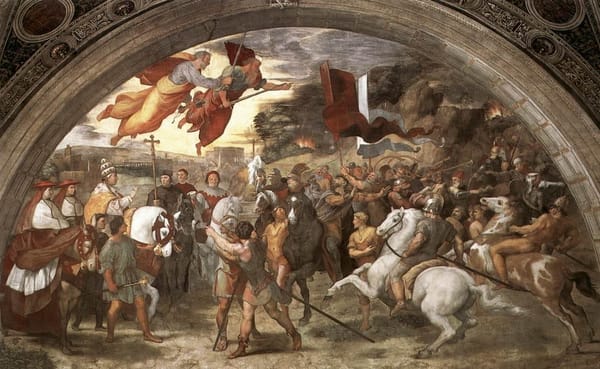
Pope Leo the Great confronting Attila; SS Peter and Paul above
The Meeting of Leo the Great and Attila, Raphael (1483–1520). Credits

ONE of the grandest Saints in the Church’s Calendar is brought before us to-day. Leo, the Pontiff and Doctor, rises on the Paschal horizon, and calls for our admiration and love. As his name implies, he is the Lion of Holy Church; thus representing, in his own person, one of the most glorious of our Lord’s titles. There have been thirteen Popes who have had this name, and five of the number are enrolled in the catalogue of Saints; but not one of them has so honoured the name as he whose feast we keep to-day: hence he is called ‘Leo the Great.’

He deserved the appellation by what he did for maintaining the faith regarding the sublime mystery of the Incarnation. The Church had triumphed over the heresies that had attacked the dogma of the Trinity, when the gates of hell sought to prevail against the dogma of God having been made Man. Nestorius, a bishop of Constantinople, impiously taught that there were two distinct Persons in Christ the Person of the Divine Word, and the Person of Man. The Council of Ephesus condemned this doctrine, which, by denying the unity of Person in Christ, destroyed the true notion of the Redemption. A new heresy, the very opposite of that of Nestorianism, but equally subversive of Christianity, soon followed. The monk Eutyches maintained that in the Incarnation the human nature was absorbed by the Divine. The error was propagated with frightful rapidity. There was needed a clear and authoritative exposition of the great dogma, which is the foundation of all our hopes. Leo arose, and, from the Apostolic Chair, on which the Holy Ghost had placed him, proclaimed with matchless eloquence and precision the formula of the ancient faith—ancient indeed, and ever the same, yet ever acquiring greater and fresher brightness. A cry of admiration was raised at the General Council of Chalcedon, which had been convened for the purpose of condemning the errors of Eutyches. ' Peter,' exclaimed the Fathers, ‘Peter has spoken by the mouth of Leo!’ As we shall see further on, the Eastern Church has kept up the enthusiasm thus excited by the magnificent teachings given by Leo to the whole world.

The barbarian hordes were invading the West; the Empire was little more than a ruin: and Attila, ‘the Scourge of God,’ was marching on towards Rome. Leo's majestic bearing repelled the invasion, as his word had checked the ravages of heresy. The haughty king of the Huns, before whose armies the strongest citadels had fallen, granted an audience to the Pontiff on the banks of the Mincio, and promised to spare Rome. The calm and dignity of Leo—who thus unarmed confronted the most formidable enemy of the Empire, and exposed his life for his flock—awed the barbarian, who afterwards told his people that, during the interview, he saw a venerable person standing in an attitude of defence, by the side of Rome’s intercessor: it was the Apostle St Peter. Attila not only admired, he feared the Pontiff. It was truly a sublime spectacle, and one that was full of meaning—a priest, with no arms save those of his character and virtues, forcing a king, such as Attila, to do homage to a devotedness which he could ill understand, and recognize by submission the influence of a power which had heaven on its side. Leo, singlehanded and at once, did what it took the whole of Europe several ages to accomplish in later times.

That the aureole of Leo’s glory might be complete, the Holy Ghost gifted him with an eloquence which, on account of its majesty and richness, might deservedly be called papal. The Latin language had at that time lost its ancient vigour; but we frequently come across passages in the writings of our Saint which remind us of the golden age.

In exposing the dogmas of our holy faith, he uses a style so dignified and so impregnated with the savour of sacred antiquity, that it seems made for the subject. He has several admirable sermons on the Resurrection; and speaking of the present season of the liturgical year, he says: ‘The days that intervened between our Lord's Resurrection and Ascension were not days on which nothing was done: on the contrary, great were the sacraments then confirmed, and great were the mysteries that were revealed.'1

Let us now read the sketch of the Saint’s life given by the Church in the Matins of the feast.

Leo Primus, Etruscus, eo tempore præfuit Ecclesiæ, cum rex Hunnorum Attila, cognomento Flagellimi Dei, in Italiani invadens, Aquileiam triennii obsidione captam diripuit et incendit: unde cum Romam ardenti furore raperetur, jamque copias ubi Mincius in Padum influit, trajicere pararet, occurrit ei Leo, malorum Italiæ impendentium misericordia permotus: cujus divina eloquentia persuasum est Attilæ, ut regrederetur. Qui interrogatus a suis, quid esset quod præter consuetudinem tam humiliter romani Pontificis imperata faceret, respondit se astantem quemdam alium, illo loquente, sacerdotali habitu veritum esse, sibi stricto gladio minitantem mortem nisi Leoni obtemperar et. Quare in Pannoniam reversus est.
Leo autem Romæ omnium lætitia exceptus, paulo post invadenti Urbem Genserico, eadem eloquentiævi et sanctitatis opinione persuasit, ut ab incendio, ignominiis, ac cædibus abstineret. Sed cum Ecclesiam a multis hæresibus oppugnari, maximeque a Nestorianis et Eutychianis exagitari videret; ad eam purgandam, et in fide Catholica confirmandam, Concilium Chalcedonense indixit. Ubi sexcentis triginta coactis Episcopis, Eutyches et Dioscorus, et iterum Nestorius condemnati sunt: ejusdemque Concilii decreta sua auctoritate confirmavit.
His actis, sanctus Pontifex se ad reficiendas et ædificandas ecclesias convertit. Cujus suasu Demetria, pia femina, sancti Stephani Ecclesiam construxit in suo fundo via Latina, tertio ab Urbe miliario; ipse via Appia sub nomine sancti Cornelii alteram condidit. Multas præterea et sacras ædes et sacra earum vasa restituit. In tribus basilicis Petri, Pauli, et Constantiniana, cameras exstruxit: ædificavit monasterium vicinum basilicæ sancti Petri: sepulchris Apostolorum custodes adhibuit, quos Cubicularios appellavit. Statuit, ut in actione mysterii diceretur, Sanctum sacrificium, immaculatam hostiam. Sancivit ne monacha benedictum capitis velamen reciperet, nisi quadraginta annorum virginitatem probasset. His et aliis præclare gestis, cum multa sancte et luculenter scripsisset, quarto Idus Novembris obdormivit in Domino. Sedit in Pontificatu annos viginti unum, mensem unum, dies tredecim.
Leo the First, a Tuscan by birth, governed the Church at the period when Attila, the king of the Huns, surnamed the Scourge of God, was invading Italy. Attila pillaged and burned the city of Aquileia, which he took after a three years’ siege. This done, he rushed on Rome like a wild firebrand. He had reached the place where the Mincio joins the Po, and was on the point of ordering his troops to pass the river, when he was met by Leo, who was moved with compassion at the misfortunes that were threatening Italy. Such was his superhuman eloquence, that he induced Attila to retrace his steps. When asked by his people how it was that, contrary to his custom, he had yielded such ready obedience to the demands of the Roman Pontiff, the king answered, that he beheld, whilst Leo was speaking, a personage clad in priestly robes, who stood near, with a naked sword in his hand, and threatened him with death unless he obeyed the Pontiff. Whereupon he returned to Pannonia.
Leo was welcomed back to Rome amidst the exceeding joy of all. A short time after, when the city was invested by Genseric, the Pontiff’s eloquence and reputation for sanctity had such influence on the barbarian, that he abstained from setting fire to the buildings, and forbade his troops to insult or massacre the inhabitants. Seeing the Church attacked by several heresies, and mainly by the followers of Nestorius and Eutyches, he called the Council of Chalcedon, in order to remove error and vindicate the Catholic faith. Six hundred and thirty bishops assisted at this Council, in which Eutyches and Dioscorus and Nestorius were condemned (the latter for the second time). The decrees of the Council were confirmed by the authority of Leo.
The holy Pontiff then turned his attention to repairing and building churches. It was through his persuasion that a pious lady called Demetria built the Church of Saint Stephen on her own land on the Latin Way, three miles out of the city. He himself built one on the Appian Way, and dedicated it to Saint Cornelius. He repaired several others, and refurnished them with all the sacred vessels needed for the divine service. He built vaults under the Basilicas of S Peter, S Paul, and S John Lateran, and a monastery near the Vatican. He appointed guards, to whom he gave the name of Cubicularii, to watch at the Tombs of the Apostles. He ordered that these words should be added to the Canon of the Mass: Holy Sacrifice, spotless Host. He decreed that a nun should not receive the blessed veil unless she had observed virginity for forty years. After these and other similar admirable acts, and after writing much that was replete with piety and eloquence, he slept in the Lord, on the fourth of the Ides of November (November 10). He reigned as Sovereign Pontiff twenty-one years, one month, and thirteen days.

The Greek Church, in her Memea, has an office in honour of St Leo: we take from it the following stanzas. As they were composed before the Schism, they show us that the ancient Church of Constantinople believed the supremacy of the Roman Pontiff, and that it is not the Latins that have changed the faith. The Greeks keep the Feast of St Leo on February 18.

Hymn (Die XVIII Februarii)

O felix Pontifex, Leo inclyte, fidelibus sacerdotibus et martyribus consors effectus es; invictus enim in præliis apparuisti, et immobilis ut turris et arx pietatis; orthodoxissime et sapientissime Domini ineffabilem generationem prædicasti.
Orthodoxiæ rector, pietatis magister et sanctitatis, universe terre lumen, orthodoxorum Deo inspirata gloria, sapiens Leo, tuis doctrinis omnes illuminasti, lyra Spiritus Sancti.
Principis Apostolorum Petri cathedre heres factus, Ecclesie prefuisti; illius mente preditus, et zelo pro fide inflammatus.
Splendidissimo lumine refulgens, sancte Leo, ineffabilis et divinæ incarnationis sermonem clarescere fecisti, duplicem prædicans naturam, et duplicem incarnati Dei voluntatem.
Divinis resplendens dogmatibus, fulgorem orthodoxiae undique sparsisti, et hæreseos tenebras dispulisti; et vita discedens, o beate, lumen quod vesperam nescit inhabitas.
Filium unicum Christum et Dominum, ante sæcula ex Patre genitum, et propter nos ex Virgine natum et nobis similem in terris apparentem, mirabiliter praedicasti, o minister mysteriorum Deo inspirate.
Super thronum pontificata sedens gloriose, et ora leonum obturans, divinis veneranda Trinitatis dogmatibus, ovili tuo lumen Dei cognitionis splendescere fecisti. Ideo glorificatus fuisti, ut divinus Dei gratiæ initiatus sacerdos.
Velut sol omnisplendens ex occidente ortus es, mixtionem et confusionem Eutychetis sapienter dissipans, et Nestorii divisionem rejiciens; unum Christum in duabus substantiis indi visibili ter, immutabiliter, inconfuse venerari docens.
A Deo inspiratus, pietatis præcepta velut in tabulis descriptis figurasti, ut alter Moyses apparens divino populo; et in venerabilium conventu magistrorum exclamasti: Laudate, sacerdotes, benedicite; superexaltate Christum in sæcula.
Nunc coruscas, sacerdos Christi, pulchritudinis corona decoratus, et ut fidelis sacerdos, justitiam induisti, et in paradiso voluptatis mirabiliter exsultans, pro ovili tuo Dominum incessanter deprecare.
Nunc ubi sunt cathedrae, throni et ordines Patriar charum, beatissime Leo, tu etiam Pater dignanter intrasti ut verus Patriarcha, et fide et gratia circumsplendens: ideo omnes te semper beatificamus.
O happy Pontiff! glorious Leo! thou hast been made companion of the faithful priests and martyrs; for thou wast most invincible in battle, and immovable as a tower and fortress of religion. Thou didst proclaim, with most perfect orthodoxy and wisdom, the unspeakable generation of Christ.
O ruler of orthodoxy, teacher of religion and holiness, light of the whole earth, divinely inspired glory of true believers, wise Leo! thou enlightenest all men by thy teachings, O harp of the Holy Ghost!
Heir of the See of Peter, the Prince of the Apostles, thou didst preside over the Church: thou hadst his spirit, and wast inflamed with zeal for the faith.
Beaming with most bright light, thou, O holy Leo, didst admirably preach the ineffable and divine Incarnation, teaching the two natures, and the two wills of the Incarnate God.
Resplendent with the knowledge of divine truths, thou didst scatter on all sides the brightness of orthodoxy, and dispel the darkness of heresy. Departing this life, thou, O blessed one! now dwellest in the light that knows no setting.
O inspired minister of God’s mysteries, thou didst admirably preach that Christ is the Only Son and Lord, begotten of the Father before all ages, born for us of the Virgin, and dwelling on earth like unto us.
Seated with glory upon the throne of the pontificate, thou didst stop the mouths of lions, and madest to shine upon thy flock the light of the knowledge of God, by proclaiming the divine dogma of the adorable Trinity. Therefore hast thou been glorified as a holy Pontiff initiated in the grace of God.
Thou, as a dazzling sun, didst rise in the west and wisely dispel the error of Eutyches, who mingled and confused the two natures, and that of Nestorius, who divided them as though they were two Persons. Thou taughtest us to adore one Christ in two natures, inseparably, unchangeably, unconfusedly united.
Inspired of God, thou didst appear to the people of God as another Moses, showing them the commandments of religion written, as it were, on tables. Thou didst exclaim in the assembly of the venerable masters: ' Praise, O ye priests! and bless, and extol Christ for ever.'
Now, O priest of Christ! thou art brightly decked with a crown of beauty. As a faithful priest, thou hast put on justice. Pray unceasingly for thy flock, now that thou hast entered into the admirable joy of the Paradise of delights.
Thou, O most blessed Leo! hast worthily entered the abode where are the seats and thrones and ranks of the patriarchs; thou hast entered as a true patriarch, all resplendent with faith and grace. Therefore do we all celebrate thy name for ever.

Glory be to thee, O Jesus, Lion of the Tribe of Juda! that hast raised up in thy Church a Lion to defend her in those dark times, when holy Faith was most exposed to danger. Thou didst charge Peter to confirm his brethren2 and we have seen Leo, in whom Peter lived, fulfil his office with sovereign authority. We have heard the acclamation of the holy Council, which, in admiration at the heavenly teachings of Leo, proclaimed the signal favour thou didst confer on thy flock, when thou badest Peter feed both sheep and lambs.

O holy Pontiff Leo! thou worthily didst represent Peter in his Chair, whence thy apostolic teaching ceased not to flow, ever beautiful in its truth and majesty. The Church of thine own day honoured thee as the great teacher of faith; and the Church of every succeeding age has recognized thee as one of the most learned Doctors and preachers of the divine word. From thy throne in heaven, where now thou reignest, pour forth upon us the understanding of the great mystery, which thou wast called on to defend. Under thy inspired pen, this mystery grows clear; we see how sublimely it harmonizes with all other mysteries; and faith delights at gaining so close a view of the divine object of its belief. Oh! strengthen this faith within us. The Incarnate Word is blasphemed in our own times; avenge his glory, by sending us men of thy zeal and learning.

Thou didst triumph over barbarian invaders: Attila acknowledged the influence of thy sanctity and eloquence, by withdrawing his troops from the Christian land they infested. In these our days, there have risen up new barbarians—civilized barbarians, who would persuade us that religion should be eliminated from education. and that the State, in its laws and institutions, should simply ignore our Lord Jesus Christ, the King to whom all power has been given, not only in heaven but on earth also.3 Oh! help us by thy powerful intercession, for our danger is very great. Many are seduced, and have fallen into apostasy, whilst flattering themselves that they are still Christians. Pray that the light that is left within us may not be extinguished, and that the public scandals which now exist may be brought to an end. Attila was but a pagan; our modem statesmen and governments are, or at least call themselves, Christians: have pity cn them, and gain for them light to see the precipice to which they are hurrying society.

These days of Paschal Time remind thee, O holy Pontiff! of the Easters thou didst once spend here on earth, when, surrounded by the neophytes, thou gavest them the nourishment of thy magnificent discourses: pray for the faithful, who have this Easter risen to a new life with Christ. What they most need is a fuller and better knowledge of this their Saviour, in order that they may cling more closely to him, and persevere in his holy service. Thy prayers must obtain for them this knowledge; by thy prayers thou must teach them what he is both in his Divine and Human Nature: that as God he is their Last End, and their Judge after death; as Man, their Brother, their Redeemer, their Model. Bless, O Leo! and help the Pontiff who is now thy successor on the Chair of Peter. Show now thy love for that Rome whose sacred and eternal destinies were so frequently the subject of thy glowing and heavenly eloquence.

  1. Sermo lxxiii. ↩︎
  2. St Luke xxii 32. ↩︎
  3. St Matt. xxviii 18. ↩︎
Previous
Monday in Holy Week
Next
April 11: St. Leo the Great, Pope and Doctor of the Church