Daily reading
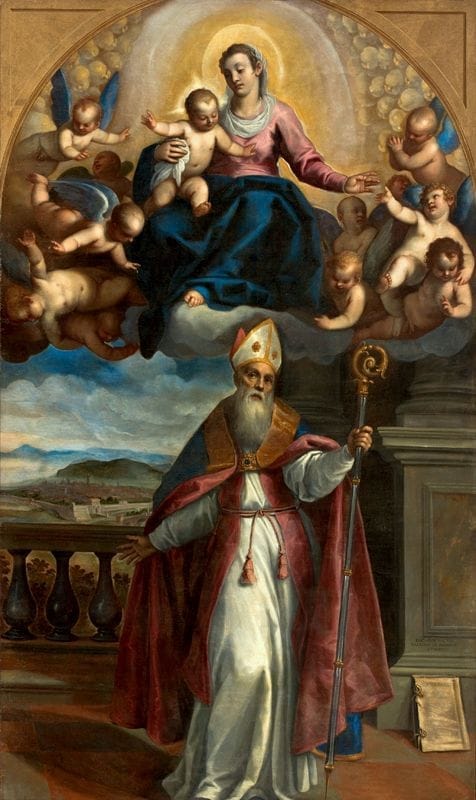
May 16: St. Ubaldus, Bishop and Confessor
IN order to honour her eternal High Priest, the Church presents to him this day the merits of a pontiff who, after his mortal career, was admitted into a happy immortality. Ubaldus, here on earth, was the image of our Lord Jesus Christ. Like his divine Master, he received the holy anointing of priesthood; he was a mediator between God and man; he was the shepherd of a flock; and now he is united with our Risen Jesus, the great Anointed, the Mediator, the Shepherd. In proof of his influence in heaven, Ubaldus has had given to him a special power against the wicked spirits who lay snares for our perdition. It has frequently happened that the simple invocation of his name has sufficed to foil their machinations. The Church has fixed this day as his feast with the view of encouraging the faithful to have recourse to his protection.
Let us now read the account she gives of the virtues of the saintly bishop:
O blessed Pontiff! be thou our protector against the spirits of hell. They are devoured by envy at seeing how man, that lowly and feeble creature, has become the object of God’s predilection. The incarnation of the Son of God, his death on the cross, his glorious resurrection, the sacraments which give us the life of Grace—all these sublime means, whereby the infinite goodness of God has restored us to our lost dignity,have excited the rage of the old enemy, and he seeks revenge by insulting, in us, the image of our Creator. At times he attacks man with all the frenzy of angry jealousy. To mimic the operations of sanctifying grace, which, so to speak, makes us the instruments of God’s good pleasure, Satan sometimes takes possession of our fellow-creatures, and makes them his slaves. Thy power, O Ubaldus, has often manifested itself by rescuing these unhappy victims of the devil’s jealousy; and Holy Church, on this day, celebrates the special prerogative conferred on thee by our heavenly Father. Relent not in the exercise of thy charitable office. And yet, O holy Pontiff, thou knowest that the snares of the wicked spirits are more inj urious to the souls than to the bodies of men. Have pity, then, on the unhappy slaves of sin, who, though the divine Sun of the Pasch has risen upon them, are still in the darkness of guilt. Pray for them, that they may become once more children of the light, and share in the Easter Resurrection which Jesus offers to all.
May 16 (the Same Day): St. John Nepomucen, Martyr
TO the martyrs who were slain because they refused to adore false gods—to the martyrs whose blood was shed by heretics—there is added to-day another brave soldier of Christ, who won his crown in a very different sort of combat. The sacrament of Penance whereby sinners regain the heaven they had lost claims John Nepomucen as its glorious defender.
A holy secrecy shrouds the reconciliation made between God and the penitent. This sacramental secrecy deserved to have its martyr. When Jesus instituted the sacrament of Penance—that second baptism, wherein the Blood of our Redeemer washes away the sins of the Christian soul—he willed that man should not be deterred from confessing his humiliations to his spiritual physician by the fear of their ever being revealed. How many hidden martyrdoms have there not been, during these eighteen hundred years, for the maintenance of this secret, which, whilst it gives security to the penitent, exposes the confessor to obloquy, injustice, and even death! But the martyr we honour to-day was not one of these hidden sufferers. His testimony to the inviolability of the sacramental seal was public; he gave it amidst cruel tortures; it cost him his life.
All praise, then, to the brave and faithful priest! Right worthy was he to hold in his hands the keys that open or shut the gate of heaven! In this great fact of the observance of the seal of confession, on which depends the salvation of millions of souls, we have a permanent miracle. But there was one thing wanting to it—the glory of martyrdom. The holy priest of Prague gave it that glory; and he offers the fair palm to our Risen Jesus, whom we have seen, during these days between his Resurrection and Ascension, mercifully instituting the sacrament of Penance, wherein he communicates to men his own power of forgiving sin.
We subjoin the Lessons approved by the Holy See for the feast of this great martyr:
How great, O glorious martyr, was the honour reserved for thee by the Son of God, when he chose thee to be the one who was to attest, by laying down his life, the sacredness of the secret which protects the sacrament of Penance! Other priests, as well as thyself, have bravely suffered persecution for the sake of the secrecy of the mystery of reconciliation: but thou wast the one chosen by heaven to give a solemn testimony of priestly discretion. Thy sufferings were known to more than angels: thy martyrdom was a public one, and the faithful honour thy courage as an eloquent proof of how truly our good Shepherd, Jesus, removes every difficulty that could deter the strayed sheep from returning to the fold.
We address ourselves to thee, O holy martyr, on this day of thy triumph and beseech thee to intercede for sinners. Admirable minister of the sacrament of Penance! thou seest how many Christians there are who neglect to avail themselves of the means of salvation prepared for them by our risen Saviour. Instead of laying hold of this ‘second plank after shipwreck,’ they let themselves be carried on to the deep abyss by the tide of their sinful habits. There are thousands who have turned a deaf ear, even this Easter, to the call of Holy Church, who invited them, as an affectionate Mother, to approach the tribunal of mercy and reconciliation. We beseech thee, intercede for these blind, unwary, ungrateful men. Procure for them the grace which will lead them to the feet of the God of mercy, who is ever ready to grant pardon.
There are others, again, who go to Confession, but who have not the dispositions requisite for receiving the grace of the Sacrament—the justification of their souls. Pray also for these, that they may see the danger they thus incur of profaning the Blood of Christ. Obtain for all them who approach the holy tribunal an honest avowal of their sins, and contrition of heart; that thus the life of our Risen Jesus may be imparted to them and that they may never again lose it. By thy powerful intercession, raise up zealous and faithful ministers of this great sacrament of which thou wast the martyr. Draw down the blessing of heaven on their arduous labour: then will the number of the children of God be increased, and the grace of the Holy Ghost triumph in souls that have long been dead in sin.
Cast, too, an eye of compassion on thy fatherland of Bohemia, where there are so many faithful hearts that love and honour thee. Alas! there are tares which disfigure that portion of the Church. The enemy came, not many years after thy glorious martyrdom, and sowed the baneful weeds of heresy in thy native land. The good seed claims thy protection; but take pity also on the cockle, for even it may be turned, by the true faith, into wheat, and be garnered into the house of our heavenly Father. Secure peace to thy Bohemia and save her from the snares that are laid for her.
Tuesday of the Fifth Week after Easter
THE third sacrament—the Holy Eucharist—is so intimately connected with our Redeemer's Passion that its institution could not be deferred till the Resurrection had taken place. On Maundy Thursday, we honoured the solemn act whereby our Jesus prepared for the morrow’s sacrifice, by instituting the mystery of his Body and Blood, which are really immolated in the Eucharistic Supper. The Apostles were not only admitted, as all future generations were to be, to partake of the divine Food, which giveth life to the world,1 but they moreover received power from Jesus, the Priest for ever,2 to do what he himself had just done. The great Mystery was inaugurated; the new priesthood was instituted: and now that Jesus is risen from the dead, he makes known to his Apostles the whole importance of the gift bestowed upon mankind at the Last Supper; he bids them begin the exercise of the sublime power conferred on them, as soon as the Holy Ghost, by descending upon the earth, shall give to the Church the signal for her using the prerogatives wherewith she has been endowed; and, finally, he teaches how they are to perform this special function of their Priesthood.
At the Last Supper, the Apostles were still carnal-minded men. They were taken up with the sad event that was about to happen, and overcome with grief at their divine Master telling them that that was the last Pasch he was to keep with them. They were not, therefore, in a fit state to appreciate what it was that Jesus had done for them, when he uttered those words: Take ye and eat; this is my Body. Drink ye all of this; for this is my Blood. Still less did they understand the greatness of the power they received, of doing what their Lord himself had just done in their presence. Now that Jesus is risen from the grave, he unfolds all these mysteries to them. The sacrament of the Eucharist was not instituted during these days, but it was made known, explained, and glorified by its divine institutor: and this circumstance gives a fresh lustre to the sacred season we are now going through.
Of all the sacraments, there is not one that can be compared in dignity to that of the Eucharist. The others give grace; this gives us the very Author of grace. The others are only sacraments; this is both a sacrament and a sacrifice. We will endeavour to explain it in all its magnificence, when we come to the bright feast of Corpus Christi. Let us for the present pay the tribute of our loving adoration to our Jesus, the Living Bread, that giveth life to the world.3 Let us acknowledge his immense love for his sheep. He seems to be on the point of leaving them that he may return to his Father, and yet his love retains him amongst them by means of this august mystery, wherein he is truly though invisibly present.
Be thou blessed, then, O Son of the Eternal Father! who, even in the days of the ancient covenant, didst assure us that thy delights are to be with the children of men.4 Thou provest it now by this wonderful sacrament, which reconciles thy two announcements, apparently so contradictory: thy leaving us, and thy abiding ever in our midst.
Be thou blessed for having provided for the nourishment of our souls as well as for that of our bodies. At Christmas we welcomed thy birth at Bethlehem, which signifies a House of Bread. Thou wast both the Saviour who was born for us, and the Food that came down from heaven to nourish our souls.
Be thou blessed, who, not satisfied with working the greatest of wonders at the Last Supper, by changing bread into thy Body and wine into thy Blood, hast also willed that this same miracle should be renewed, everywhere and to the end of time, for the support and consolation of our souls.
Be thou blessed in that thou hast put no limits to our longing after this Bread of Life. On the contrary, thou biddest us make it our daily Bread, and this in order that we may not faint in the way of this our exile.
Be thou blessed for the generosity wherewith, out of thy desire to communicate thyself unto us, thou hast exposed thyself to the blasphemies of heretics, to the sacrileges of bad Christians, and to the indifference of the tepid.
Be thou blessed, O divine Lamb, who enrichest the new Pasch by the shedding of thy Blood, and invitest the new Israel to a banquet where thy sacred Body is offered as nourishment to thy faithful; there do they receive life at its very source, and share in the ineffable joys of thy Resurrection.
Be thou blessed, O Jesus, for having instituted, in the Holy Eucharist, not only the greatest of the sacraments, but also a sacrifice which surpasses all others; a sacrifice whereby we are enabled to offer to the divine Majesty the only homage that is worthy of him, give him thanks in keeping with his favours to us, make him a superabundant atonement for our sins, and finally beg and obtain from him all the graces of which we stand in need.
Be thou blessed, O Emmanuel, who, having promised to give us this heavenly Food, didst fulfil thy promise on the eve of thy Passion, and gavest us this adorable sacrament as the testament of thy love. In the interval between thy Resurrection and Ascension, thou didst reveal to thine Apostles the excellency of thy gift, that so we might receive it with becoming faith.
We offer thee, dear Jesus, this homage of our faith. We confess that in this august Mystery the bread is changed into thy Body, and the wine into thy Blood: and we believe it, because thou hast said it, and because thou canst do all things.
In praise of our Paschal Lamb, who gives himself to us to be our nourishment, let us recite the following beautiful canticle, composed by Notker for the Church of Saint Gall.
Sequence
Esu potuque dignas,
Praebeant omnes se Christianae animae.
Ipse summus Pontifex.
Ejus illita sacrosancto cruore, tuta a clade Canopica,
In mari rubro sunt obruti.
Pedes tutentur adversus viperas;
Contra canes jugiter manu bajulent;
Quo de barathro victor rediit.
Ornatibus Christo consurgens, fideles admonet,
Cum eo victuros.
to partake of the Paschal Lamb,
by holy lives.
for their sakes, as an oblation to the Father.
of the Lamb; they are protected from the slaughter that fell upon Egypt,
were engulfed in the Red Sea.
let them protect their feet against vipers;
to defend themselves against dogs;
whereby he rose again victorious from the tomb.
rises together with Christ. She teaches us,
are to share in Jesus’ victory.
| Previous Monday of the Fifth Week after Easter | Next May 16 (the Same Day): St. John Nepomucen, Martyr |