Daily reading
Paschal Time
Double of the I Class · Movable from Easter · Temporal
June 5, 2028
From Dom Guéranger’s The Liturgical Year.

|
Monday in Whitsun Week
YESTERDAY, the Holy Ghost took possession of the world: His commencement of the mission given Him by the Father and the Son was such as to indicate His power over the human heart, and prepare us for His future triumphs. The days of this solemn octave are a fitting occasion for our respectfully considering the progress of His workings in the Church and in the souls of men.
Jesus, our Emmanuel, is the King of the whole earth; His Father gave Him all nations for His inheritance. He Himself tells us that all power is given to Him in heaven and in earth. But He ascended into heaven before establishing His kingdom here below. The very Israelites—to whom He preached His Gospel, and under whose eyes He wrought such stupendous miracles in attestation of His being the Messias—have refused to acknowledge Him, and have ceased to be His people. A few have been faithful, and others will follow their example: but the mass of the people of Israel have impiously resolved not to have this Man to reign over them.
As to the Gentiles, what likelihood is there of their accepting the Son of Mary for their Master? They know nothing whatsoever of Him, of His teaching, or His mission. They have lost all their primitive religious traditions. Materialism reigns supreme in every country, whether civilized or barbarian; and every creature is made an object for adoration. The very first principles of morality have been corrupted. The insignificant minority, who proudly call themselves philosophers, have the strangest theories: they became vain in their thoughts, as St. Paul says of them, and their foolish heart was darkened. Races, once distinct, have been gradually fused into each other by conquest. Revolution after revolution has habituated mankind to respect no power but that of might. The colossal Roman empire, with despotic Cæsars at its head, crushes the whole earth beneath its sway. And this is the time chosen by the heavenly Father for sending His Son into the world! Jesus is to reign over men, and His reign must be accepted: but there seems to be little chance of any welcome being given to a King who claims to rule the minds and hearts of His subjects.
During these long sad ages, another master has presented himself to the nations, and they have enthusiastically hailed him as their king. It is satan. So firmly, indeed, has he established his rule, that our Lord calls him the prince of this world. He must be cast out; that is, he must be driven from the temples men have built to him, from society, from the soul, from literature, from art, from political life, all of which are under his sway. There will be resistance from the world he has corrupted; nay, he himself the strong armed one will resist, and so powerfully that no mere created power shall ever make him yield.
So, then, everything is against the kingdom of Christ, and nothing is favourable. And yet, if we are to believe certain modern writers, the world was in a fit state for a total and complete reformation! Impious and absurd assertion! Are we to deny the evidence of facts? Or must we admit that error and vice are the best preparation for truth and virtue? Man may know that he is in a state of wretchedness, and yet not know that his wretchedness comes from sin, still less be resolved to become, at once, and at every sacrifice, a hero in virtue.
No: in order that Jesus might reign over a world such as ours was, there was need of a miracle; nay, of a miracle, as Bossuet observes, comparable to that of creation, whereby God draws being out of nothingness. Now, it was the Holy Ghost who worked this miracle. He willed that we, who have never seen the Lord Jesus, should be as certain of His being our Messias and God, as though we had witnessed His wonderful works, and heard His divine teachings. For this end, He achieved the master-miracle of the conversion of the world, wherein God chose the weak things of the world, that He might confound the strong; and the things that are not, that He might bring to nought the things that are. By this stupendous fact, which was evident to men as the noon-day sun, the Holy Ghost made His presence known and felt by the world.
Let us consider the means He took for establishing the kingdom of Jesus upon the earth. And first, let us return to the cenacle. Look at these men now ‘endued with power from on high’ : what were they a while ago? Men without influence, poor, ignorant, and, as we all know, easily intimidated. But now, the Holy Ghost has changed them into other men: they have an eloquence which it is hard to resist; they are heedless of every threat or peril; they are soon to stand before the world, yea, and conquer it with a victory such as no monarch ever won or fancied. The fact is too evident for the blindest incredulity to deny: the world has been transformed, and transformed by these poor Jews of the cenacle. They received the Holy Ghost on the day of Pentecost, and He has done through them the work He came to do.
He gave them three things on that day: the power to preach the word, which was signified by the tongues that sat upon them; the ardour of love, expressed by the fire; and the gift of miracles, which they exercised that very morning. The word is the sword wherewith they are armed; love is the source of their dauntless courage; miracles win man’s attention to their teachings. These are the means used for driving satan from the world, and for establishing the kingdom of Jesus; and these means are all provided by the Holy Ghost.
But He does not confine His action to this. It is not enough for men to hear the word, and admire the courage, and witness the miracles, of the apostles. Neither is it sufficient that they should see the force of truth and the beauty of virtue, or acknowledge the disgrace and sinfulness of their own manner of life. In order to a conversion of heart—to confess that the Jesus who is preached to them is God, to love Him, be baptized, promise fidelity to Him, even to martyrdom if required—for all this there is need of the grace of the Holy Ghost. He alone can take away the stony heart, as the prophet expresses it, and give a heart of flesh, filled with supernatural faith and love. Hence, He will accompany His ministers wheresoever they preach the Gospel; the visible working is theirs, the invisible is His; man’s salvation is to be the result of the two united. They must be applied to each individual, and each individual must freely yield his assent to the exterior preaching of the apostle, and to the interior action of the holy Spirit. Truly it is an undertaking of extreme difficulty, to bring mankind to receive Jesus as its Lord and King: but after three centuries of contest, the cross of our Redeemer will be the standard round which the whole civilized world will be rallied.
It was just that the holy Spirit and the apostles should first turn to the Israelites. They were the people to whom were committed the words of God; and the Messias was born of their race. Jesus had said that He was not sent but to the sheep that were lost of the house of Israel. Peter, His vicar, inherited the glory of being the apostle of the Jews; although it was also by his ministry that the Gentiles, in the person of Cornelius the centurion, were first admitted into the Church; and again, it was by him, at the Council of Jerusalem, that the baptized Gentiles were declared emancipated from the Jewish Law. We repeat it: the first preaching of the Christian Law was an honour due to the children of Abraham, Isaac, and Jacob: hence, our first Pentecost is a Jewish one, and the first to celebrate it are Jews. It is upon the people of Israel that the holy Spirit first pours forth His divine gifts.
As soon as the solemnity was over, these men, who have received the faith, and are now truly children of Abraham by holy Baptism, return to the several provinces of the Gentile world whence they came; they return, bearing in their hearts that Jesus whom they have acknowledged to be the Messias, their God and their Saviour. Let us honour these first-fruits of holy Church, these trophies of the Paraclete Spirit, these messengers of the good tidings. They will soon be followed by the disciples of the cenacle, who, after using in vain every means that zeal could devise for the conversion of the proud and ungrateful Jerusalem, will turn to the Gentiles.
So that, of the Jewish nation a very small minority has acknowledged the Son of David as the heir of the Father of the family; the body of the people has rebelled against Him, and is running headlong to destruction. By what name are we to call their crime? The Protomartyr St. Stephen, speaking to these unworthy children of Abraham, says: ‘O stiffnecked and uncircumcized in heart and ears! ye always resist the Holy Ghost!’ Resistance, then, to the Spirit of God is their crime; and the apostles, finding the favoured people determined to refuse the truth, turn to them that are sitting in darkness and in the shadow of death. These are the Gentiles; and upon them the apostles are henceforward to lavish the torrents of grace, which Jesus has merited for mankind by His sacrifice on the cross.
These messengers of the word of life carry the treasure to pagan lands. Every opposition in man’s power is made against them, but they triumph over all. The holy Spirit gives efficacy to His own indwelling within them; He acts Himself on the souls of their hearers; and rapid is the spread of faith in Jesus. A Christian colony is soon formed at Antioch, then at Rome, and then at Alexandria. The tongue of fire runs through the world, beyond even the farthest limits of the Roman empire, which, as the prophets had foretold, was to serve as an instrument for establishing the kingdom of Christ. India, China, Ethiopia, and a hundred other distant countries, hear the word of the heralds of the Gospel of peace.
But they have another testimony, besides their word, to give to Jesus, their King: they owe Him the testimony of their blood, and they give it. The fire that was enkindled within them on the day of Pente- cost, consumes them in the holocaust of martyrdom.
And yet, observe the power and fruitfulness of the holy Spirit! To these first apostles He raises up successors, in whom He continues His influence and work. So will it be to the end of time; for Jesus is to be acknowledged as Lord and Saviour by all generations, and the Holy Ghost has been sent into the world in order to effect this.
The prince of this world, the old serpent, makes use of the most violent means for staying the conquests of these messengers of the holy Spirit. He has had Peter crucified, and Paul beheaded: he spared not one of the glorious chieftains. They are gone, and yet his defeat is terrible to his pride. The mystery of Pentecost has created a new people; the seed sown by the apostles has produced an immense harvest. Nero’s persecution has swept away the Jewish leaders of the Christian host; but they had done their grand work, they had established the Church among the Gentiles. We sang their triumph in our yesterday’s Introit: ‘The Spirit of the Lord hath filled the whole earth! Alleluia! ’ Towards the close of the first century, Domitian finds Christians even in the imperial family; he makes them martyrs. Trajan, Adrian, Antoninus, Marcus Aurelius, all are jealous of the growing power of Jesus of Nazareth; they persecute His flock, and yet they see it multiply. Their master, the prince of this world, gives them political influence and philosophy; but the Holy Ghost brings both to nought, and the truth spreads through the universe. Other emperors, such as Severus, Decius, Gallus, Valerian, and Maximian, with the sterner course of cruelty unrefined by sophistry, order a universal massacre of the Christians, for the empire is filled with them. And when this, too, fails, satan brings all his power to bear in the last persecution, which is decreed by Dioclesian and his fellow- Cæsars. It is to be the extermination of the Christian name. It deluges the empire with the blood of martyrs; but the victory is for the Church, and her enemies die, despairing and baffled.
How magnificent, O holy Spirit, is Thy triumph! How divine is this kingdom of Jesus, which Thou thus foundest in spite of human folly and malice, or of satan’s power, strong as it then was upon the earth! Thou infusest into millions of souls the love of a religion which demands the most heroic sacrifices from its followers. Thou answerest the specious objections of man’s reason by the eloquence of miracles: and hearts, that once were slaves to concupiscence and pride, are inflamed by Thee with such a love of Jesus, that they cheerfully suffer every torture, yea and death itself, for His dear sake!
Then was fulfilled the promise made by our Saviour to His disciples: ‘When they shall deliver you up, take no thought how or what to speak, for it shall be given to you, in that hour, what to speak; for it is not you that speak, but the Spirit of your Father that speaketh in you.’ We have a proof of it in the ‘Acts of the martyrs’, where we read their simple and sublime answers, when questioned by their persecutors, and this frequently in the midst of the most excruciating torments. It is the word of the Spirit, combating and conquering the world. The bystanders would frequently exclaim: ‘Great is the God of the Christians!’ At times, the executioners, incited by the heavenly eloquence of the victims they were torturing, cried out that they too would he disciples of such a God. We are told by authors who lived in those times, that the arena of martyrdom was the forum of faith, and that the blood and testimony of the martyrs was the seed of Christians.
For three centuries did these prodigies of the holy Spirit continue, and then the victory was complete. Jesus was acknowledged as the King and Saviour of the world, as the Teacher and Redeemer of mankind; satan was driven from the kingdom he had usurped; and idolatry was either abolished by the faith in the one true God, or they that still kept it up were looked upon as ignorant and depraved beings. Now, this viotory—which was gained first over the Roman empire, and since then over so many other infidel nations—is the work of the Holy Ghost. The miraculous manner of its accomplishment, is one of the chief arguments whereon our faith rests. We have not seen or heard Jesus; and yet we confess Him to be our God, because of the evident testimony given of Him by the Spirit whom He sent to us. May all creatures, then, give glory, thanks, and love to this holy Paraclete, who has thus put us in possession of the salvation brought us by our Emmanuel!
Mass
The Station for to-day is in the basilica of Saint Peter ad vincula. This church, which is also called, after the name of the empress who built it, the basilica of Eudoxia, possesses the precious relic of the chains (vincula) wherewith St. Peter was bound at Jerusalem by order of Herod, and at Rome by order of Nero. The faithful would be reminded, on being assembled in this church, of the fortitude wherewith the apostles were endowed by the Holy Ghost, on the day of Pentecost. Peter was bound with chains, because he laboured in the service of his divine Master; he felt it an honour to be thus fettered. He that once trembled at being questioned about Jesus by a woman, rejoices, now that he has received the gift of the Holy Ghost, at being loaded with chains for Jesus’ sake. The prince of this world thought he might enchain the word of God; but no, this word is free, even under the shackles forged by a Nero.
The Introit is taken from the Psalms, and is an allusion to the newly baptized, who are present at the holy Sacrifice, vested in their white garments. After their Baptism, they were fed with the fat of wheats the Bread of life. They received honey out of the rock: the rock is Christ, as St. Paul tells us, and Christ permitted Simon, the son of Jonas, to share with Him the honour; He made him the rock, when He said to him: Thou art PETER! Would we have a proof of Simon’s staunch fidelity to his Master? Look at these chains! Now, the same holy Spirit who manned Peter for the combat, is now resting on the neophytes of Pentecost.
Introit
In the Collect, holy Church commemorates the descent of the Holy Ghost upon the apostles; and whilst thanking God for the gift of faith, which He has bestowed on the newly baptized, she beseeches Him to bless them with that peace which our risen Jesus gave His disciples.
Collect
Epistle
Cap. x.In diebus illis: Aperiens Petrus os suum dixit: Viri fratres, nobis praecepit Dominus praedicare populo, et testificari quia ipse est, qui constitutus est a Deo judex vivorum et mortuorum. Huic omnes prophetae testimonium perhibent, remissionem peccatorum accipere per nomen ejus omnes qui credunt in eum. Adhuc loquente Petro verba haec, cecidit Spiritus sanctus super omnes qui audiebant verbum. Et obstupuerunt ex circumcisione fideles qui venerant cum Petro: quia et in nationes gratia Spiritus sancti effusa est. Audiebant enim illos loquentes linguis, et magnificantes Deum. Tunc respondit Petrus: Numquid aquam quis prohibere potest, ut non baptizentur hi, qui Spiritum sanctum acceperunt sicut et nos? Et jussit eos baptizari in nomine Domini Jesu Christi.
Ch. x.In those days: Peter opening his mouth, said: Brethren, the Lord commanded us to preach to the people, and to testify that it is he who was appointed by God to be judge of the living and of the dead. To him all the prophets give testimony, that by his name all receive remission of sins, who believe in him. While Peter was yet speaking these words, the Holy Ghost fell on all them that heard the word. And the faithful of the circumcision, who came with Peter, were astonished, for that the grace of the Holy Ghost was poured out upon the Gentiles also. For they heard them speaking with tongues, and magnifying God. Then Peter answered: Can any man forbid water, that these should not be baptized, who have received the Holy Ghost as well as we? And he commanded them to be baptized in the name of the Lord Jesus Christ.
This passage from the Acts of the Apostles, read on such a day as this, and in such a place, is most appropriate. Peter, the vicar of Christ, is accompanied by 6ome Jews, who have been converted to the Christian faith. In their presence, several Gentiles, who have been touched by grace, on hearing Peter preaching profess themselves believers in Jesus, the Son of God: the moment has come for the apostle to throw the Church open to the Gentile world. Knowing that the Jewish converts would be tempted to jealousy, he appeals to the prophets. What say these prophets? That all without distinction, who shall believe in Jesus, shall receive forgiveness of their sins in His name. While Peter is thus arguing with his audience, the Holy Ghost removes every objection, by falling, as He did at Pentecost, on these humble and believing Gentiles. As soon as the Jewish converts perceive the miracle, they are astonished, and exclaim: ‘What! is the grace of the Holy Ghost poured out on the Gentiles also?’ Peter replies: ‘Who dares to refuse Baptism to these men, who have received the Holy Ghost as well as we?’ And without waiting for an answer, he gives the order, as head of the Church, that Baptism be immediately conferred upon these privileged catechumens.
Nothing, then, could be more appropriate than this passage of sacred Scripture, read in Rome, the centre of the Gentile world, in a basilica dedicated to St. Peter, and in the presence of the newly baptized, who had so recently received the gifts of the Holy Ghost. We, also, have our lesson to learn from this Epistle: we must fervently thank our heavenly Father for having vouchsafed to call our ancestors to the true faith, and make us also partakers of the graces of the Holy Ghost.
Here all kneel.
Then follows the Sequence, Veni, sancte Spiritus; page 305.
Gospel
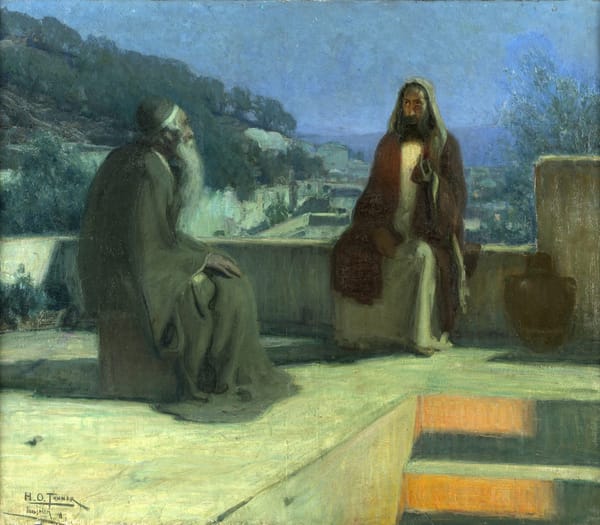
Cap. iii.In illo tempore: Dixit Jesus Nicodemo: Sic Deus dilexit mundum, ut Filium suum unigenitum daret: ut omnis qui credit in eum, non pereat, sed habeat vitam æternam. Non enim misit Deus Filium suum in mundum, ut judicet mundum, sed ut salvetur mundus per ipsum. Qui credit in eum, non judicatur: qui autem non credit, jam judicatus est: quia non credit in nomine unigeniti Filii Dei. Hoc est autem judicium: quia lux venit in mundum, et dilexerunt homines magis tenebras quam lucem: erant enim eorum mala opera. Omnis enim qui male agit, odit lucem, et non venit ad lucem, ut non arguantur opera ejus: qui autem facit veritatem, venit ad lucem, ut manifestentur opera ejus, quia in Deo sunt facta.
Ch. iii.At that time, Jesus said to Nicodemus: God so loved the world, as to give his only- begotten Son; that whosoever believeth in him, may not perish, but may have life everlasting. For God sent not his Son into the world, to judge the world, but that the world may be saved by him. He that believeth in him is not judged. But he that doth not believe, is already judged: because he believeth not in the name of the only-begotten Son of God. And this is the judgment: because the light is come into the world, and men loved darkness rather than the light: for their works were evil. For every one that doth evil hateth the light, and cometh not to the light, that his works may not be reproved. But he that doth truth, cometh to the light, that his works may be made manifest, because they are done in God.
The Holy Ghost creates faith within our souls, and by faith we obtain life everlasting; for faith is not the intellect’s assent to a proposition logically demonstrated, but a virtue which proceeds from the will vivified by grace. Nowadays, faith is rare. Pride of intellect is at its height, and docility to the Church’s teachings is far from being general. A man calls himself a Christian and a Catholic, and yet he has his own views upon certain subjects, which he would very reluctantly give up, were they to be condemned by the only authority on earth which has power to guide us in what we are to hold or reject in matters pertaining to faith. He reads dangerous, sometimes even bad, books, without thinking of inquiring if the laws of the Church forbid such books. His religious instruction has been of a very meagre kind, and he seems to wish it to remain so, for he takes no pains to come to a solid and perfect knowledge of his religion; the result is, that his mind is filled with the fashionable prejudices of the world he lives in, and, on more than one point, he may depend upon his having imbibed heretical notions. He is looked upon as a Catholic; he satisfies the exterior obligations of his religion, either because of his early training, or because the rest of his family do so, or because he feels more satisfied to do than to omit them: and yet—how sad it is to say it!—he is not a Catholic, for his faith is gone.
Faith is the first link that unites us to God; for, as the apostle says, he that cometh to God, must believe. It brings us to God, and keeps us there. Our Saviour here tells us that he who believeth is not judged: and the reason is, that he, whose faith is what our Gospel implies it to be, does not only assent to a doctrine, but he embraces it with his whole heart and mind; he believes it, because he wishes to love what he believes. Faith works, and is perfected, by charity; but it is itself a foretaste of charity. Therefore does our Lord promise salvation to him that believeth. This faith meets with obstacles, because of our fallen nature. As we have just been told, light is come into the world, and men loved darkness rather than the light. In this our age, darkness is prevalent. Even false lights are seen to rise up, and mislead thousands. We repeat it: faith—that faith which brings us to God and saves us from His judg- ments—is now rare. O divine Spirit! deliver us from the darkness of the times in which our lot has been cast. Humble the pride of our minds. Save us from that false religious liberty, which is one of the idols of our generation, and which keeps men from the true faith. We wish to love, and possess, and keep up within us, the glorious light: we wish to merit, by the docility and child-like simplicity of our faith, to enjoy the full cloudless vision of this divine light in heaven.
The Offertory is taken from one of the sublimest of the psalms. It speaks of the tempest, which heralded the coming of the holy Spirit; and of the fountains of the living waters of Baptism, which sprang up and covered the earth with spiritual verdure.
Offertory
In the Secret the Church prays that, by the operation of the holy Spirit, our hearts, as well as the sacred elements on the altar, may be an offering well pleasing to God.
Secret
The Preface is given page 310.
The Communion-anthem is formed of the words spoken by Jesus to His disciples, wherein He explains to them the ministry which the Holy Ghost has come to fulfil: He will provide for the teaching of the truths which Jesus has revealed.
Communion
In the Postcommunion, the Church prays for us all, but in a special manner for her dear neophytes. They have just been receiving the sacred mysteries; but their virtue and constancy will soon be put to the test: Satan, the world, and persecution, await them. The holy mother asks of God that He would have pity on these tender plants, and shelter them under the cover of His fostering care.
Postcommunion
Vespers
They are the same as yesterday’s, on page 311, with the exception of the Magnificat antiphon and the Prayer.
Antiphon of the Magnificat
The Prayer is the Collect of the Mass, given above, page 346.
The Armenian Church gives us, for the Monday within the octave, the following beautiful hymn, wherein is celebrated the mission of the Holy Ghost.
Hymn (Canon secundæ diei)
The following sequence was composed in the eleventh century, by the pious and learned Hildebert, bishop of Le Mans, and afterwards archbishop of Tours. It will show us what an enlightened appreciation of the mystery of the Holy Ghost was possessed by the Christians of the ages of faith, and how fervently they celebrated it.
Sequence
Amor Patris et Filii,
Nexus Gignentis et Geniti.
Et amborum essentiæ puritas;
Benignitas, suavitas, Jocunditas.
Deum homini,
Virtus adunans
Hominem Numini.
Cum Patre Filioque Jugis cultus,
Honor multus Sit semper
Procedenti ab utroque.
Amabilis, laudabilis,
Vanitatis mundator,
Munditiæ amator.
Melodiæ civium Gaudentium.
Istis solamen, Ne desperent de te,
Istis juvamen, Ut suspirent ad te.
Inspirator bonorum,
Consiliator mœstorum,
Eruditor ignotorum,
Declarator perplexorum.
Devium colligens,
Errantem corrigens,
Sustines labantem.
Perficis amantem.
Perfectum educis
De lacu fæcis, Et miseriæ.
Pacis et lætitiæ:
Inducis sub nube
In aulam sapientiæ.
Alimentum castitatis,
Ornamentum lenitatis,
Lenimentum paupertatis,
Supplementum largitatis,
Munimentum probitatis.
Miserorum refugium,
Captivorum suffragium.
Istis promptissimus.
Spiritus veritatis,
Nodus fraternitatis,
Ab eodem missus
A quo et promissus.
Omnium judex,
Qui crederis
Omnium opifex.
Onustans immeritos Supplicio.
Spiras ubi vis
Et quando vis;
Doces quos vis
Et quantum vis.
Certos in dubiis,
Firmas in subitis,
Regis in licitis.
Decor ordinans et ornans Omnia,
Dicta, facta, cogitata,
Dicta veritate,
Facta honestate,
Cogitata puritate.
Bonum perfectum,
Dans intellectum,
Dans et affectum.
Formans affectum,
Firmans provectum,
Et ad portas Paradisi
Coronans dilectum.
Love of the Father and Son!
Link of the Begetting and the Begotten!
the purity of their essence;
benignity, sweetness, joy!
God to man;
the power that unitest
man to God!
with the Father and the Son, art alone worthy
of adoration; to thee that proceedest from both,
be worship and honour for ever!
worthy of love and praise.
Thou cleansest the soul from vanity.
Thou art the lover of purity.
thou art the melody of them that are in joy.
To the former thou art a comforter, lest they should despair of thy help;
to the latter, a helper, that they may long to behold thee.
the inspirer of the good,
the counsellor of the afflicted!
the teacher of the ignorant,
the solver of doubts!
guidest the wanderer,
bringest back him that is astray,
holdest him that is falling,
perfectest him that loves.
‘Twas thou that broughtest from the pit of corruption
and misery him that is now perfect.
of peace and joy,
and admittest him, under the cloud (of faith),
into the sanctuary of wisdom.
the nourishment of chastity,
the beauty of meekness,
the solace of poverty,
the treasury of munificence,
the bulwark of honesty.
Thou art the refuge of the miserable,
and the deliverer of captives;
to the second, most prompt.
Thou art the Spirit of truth,
and the bond of brotherly love.
He that sent thee,
is the same that gave us the promise.
to be the Judge of all men,
as we believe thee
to be their Creator.
thou inflictest chastisement on them that have no merit.
Thou breathest where and when thou wilt;
thou teachest whom thou wilt,
and as much as thou wilt.
to thy faithful servants when in doubt;
thou strengthenest them when taken unawares;
thou guidest them when doing what is right.
thou art beauty, that ordainest all things,
said, done, or thought;
giving truth to what is said,
honesty to what is done,
purity to what is thought.
and perfect Gift,
giving both understanding
and love.
thou formest his love.
Thou confirmest him in good, and,
having made him deserving of thy love,
thou crownest him at heaven’s gate.
Monday in Whitsun Week: The Gift of Godliness
The gift of the fear of God is intended as a cure for our pride; the gift of godliness is infused into our souls by the Holy Ghost, in order that we may resist self-love, which is one of the passions of our fallen nature, and the second hindrance to our union with God. The heart of a Christian is not made to be either cold or indifferent; it must be affectionate and devoted; otherwise, it can never attain the perfection for which God, who is love, has graciously created it.
The Holy Ghost, therefore, puts the gift of godliness into the soul, by inspiring her with a filial affeotion for her Creator. ‘You have received’, says the apostle, ‘the Spirit of adoption of sons, whereby we cry to our God, Abba! Father!’1 This disposition makes the soul alive to whatsoever regards God’s honour. It enables man to nourish within him a sorrow for his sins, in consideration of the divine mercy which has borne with and forgiven him, and of the sufferings and death of his Redeemer. It makes him thirst for God’s glory to be ever spreading; he would, if he could, bring all his fellow- creatures to adore this God; he feels most keenly every insult that is offered to so dear a King. His greatest joy is to see others growing in their love and devotedness in the service of the sovereign Good. He is filled with filial submission to his heavenly Father, whose every will he is most ready to do, cheerfully resigned to whatsoever He may appoint.
His faith is unhesitating and fervent. Affectionately docile to the Church, he is always in the disposition of mind to abandon his most cherished ideas the moment he discovers them to be, in any way, out of harmony with her teaching or practice; for he has an instinctive horror of novelties and insubordination.
This devotedness to God, which results from the gift of godliness, and unites the soul to her Creator by filial love, makes her love all God’s creatures, inasmuch as they are the work of His hands, and belong to Him.
The blessed in heaven hold the first place in the fraternal affection of such a Christian, He has a most tender love for the holy Mother of God, and is zealous for her honour; he venerates the saints; he is a warm admirer of the courage of the martyrs, and of the heroic actions of the servants of God; he delights in reading of their miracles, and has a devotion to their sacred relics.
B ut his love is not limited to the citizens of heaven; it is extended also to his fellow-creatures here on earth, for the gift of godliness makes him find Jesus in them. He is kind to every one, without exception. He forgives injuries, hears with the imperfections of others, and, where an excuse is possible for his neighbour, he makes it. He has compassion on the poor, and is attentive to the sick. His whole conduct is the index of a sterling warm-heartedness, that weeps with them that weep, and rejoices with them that rejoice.
All this is found in those, who use Thy gift of godliness, O holy Spirit! By infusing it into our souls, Thou enablest us to withstand the workings of our self-love, which would corrupt the heart; Thou pre- servest us from that odious indifference to every one around us, which dries up all feeling; Thou drivest from us the sentiments of jealousy and hatred. Yes, godliness inspired us with a filial love for our Creator, that softened the heart; and every creature of God became dear to us. O blessed Paraclete, grant that this gift may produce its rich fruits in us! Never permit us to stifle it by the love of self. Our Jesus has told us that His heavenly Father maketh His sun to rise upon the good and bad:2 He would have us take this divine generosity as our model: do Thou, therefore, foster within us that germ of devotedness, kindness, and sympathy, which we received from Thee on the day of our Baptism, when Thou first tookest possession of our souls!
June 5: St. Boniface, Apostle of Germany, Bishop and Martyr
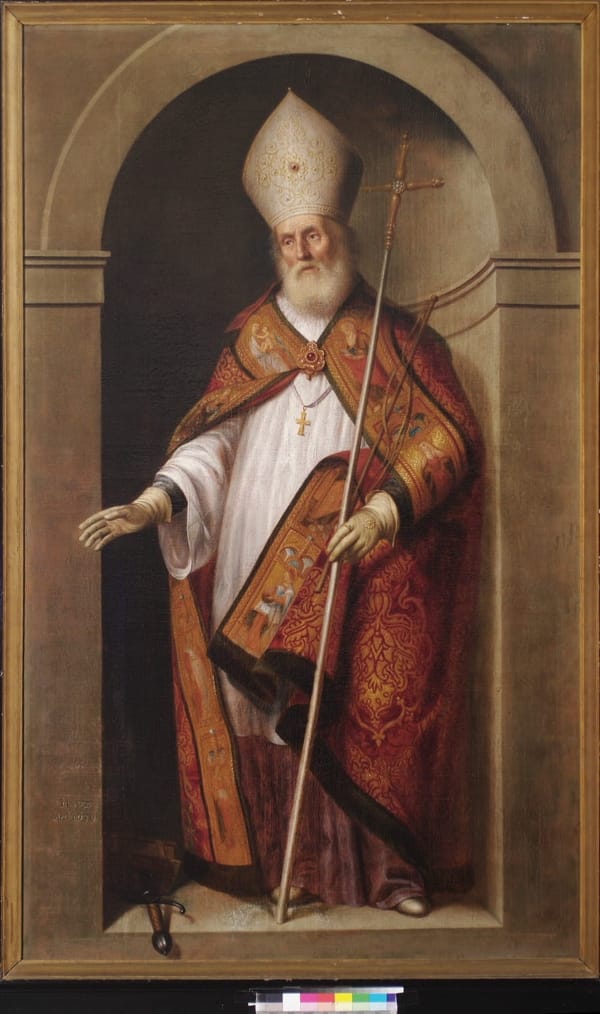 |
THE Son of Man, proclaimed King in the highest heavens on his triumphant Ascension day, leaves to his bride on earth the task of making his sovereign dominion recognized here below: this is her glory. Pentecost gives the signal for the Church's work of conquest; now does she awake, aroused by the breath of the Holy Ghost; replenished with this Spirit of love, she is all eagerness, as he is, to be possessed at once of the whole earth. We have already seen the Franks and the Anglo-Saxons pledging in her hands their oath of fealty to Christ, ‘to whom is given all power on earth and in heaven.’1 To-day we see how Winfrid realizes the fair name of Boniface, or well-doer, given him by Pope Gregory II. He presents himself before us, surrounded by the multitudes he has snatched at one blow from paganism and barbarism. Thanks to the Apostle of Germany, the hour is nigh when the Church may constitute in this world, apart from the spiritual dominion of souls, an empire more powerful than any that has ever been or is to be.
The eternal Father draws to his Son2 not men only but nations; these are his inheritance on earth no less than heaven is in eternity. The good pleasure that God takes in the Word made Flesh could never be content with merely seeing nations come, one here, another there, offering an isolated homage of recognition to Christ, as their Lord and Master. It was the whole world that was promised as his possession, without distinction of nations, without limits, save those of the earth itself:3 recognized or not, his power is universal. In the case of many, no doubt, the contempt or the ignorance of this regal claim of the Man-God is to last on throughout ages; for revolt, alas! is always possible to all. But it was the duty of the Church to exercise her influence over baptized nations, so as to gather them together in one public acknowledgement of the royalty of Christ, which is the source of every kingly power. At the Pontiff’s side there seemed to be a fitting place for a mailed chieftain of Christendom to be the lieutenant of Christ, who alone is Lord of lords and King of kings. Thus would be realized, in all its plenitude, the magnificent principality announced by the prophets for the Son of David.4
Such an institution was indeed worthy of the name it was to receive, that of the Holy Empire: in it we have the final result of our glorious Pentecost, the consummation of the testimony rendered by the Holy Ghost to Jesus, both as Pontiff and as King.5 In a few days, Leo III, the illustrious Pope called by the Holy Spirit to crown this his divine work, will proclaim, to the joy of the whole world, the establishment of this new empire beneath the sceptre-sway of the Man-God, in the person of Charlemagne, the representative of the King of kings. This marvellous work was not prepared all at once. Vast regions, destined to form the very nucleus of this future empire, for long centuries knew not so much as the very name of the Lord Jesus; or, at best, preserved but confused notions of truth, derived from some earlier evangelization that had been stifled in its birth by the turmoil of invasions—a mere mixture of Christian practices and idolatrous superstitions. At length we behold Boniface arise, endued with power from on high,6 the worthy precursor of St Leo III. Bom of those angelfaced Angles, by whom ancient Britain was transformed into the Island of Saints, he bums to carry into the heart of Germany, whence his ancestors had sprung, the light which first shone upon them in the land of their conquest.
Thirty years of monastic life, begun in childhood despite the tears and caresses of a tender father, had braced his soul. Prepared by this long period of retreat and silence, filled with divine science, and accompanied by the prayers of his cloistered brethren, he could now in all security set forth to follow the attraction of a divine call. But, first and foremost, Rome beholds him at the feet of the Sovereign Pontiff, submitting his plans and prospects to him who is the only source of all mission in the Church. Gregory II, in every way worthy of the great Popes that have borne that name, was at that time watching with apostolic vigilance over the Christian world, and preparing for the glorious sovereignty that awaited the Church in the coming eighth century. In the humble monk prostrate at his feet, the immortal Pontiff recognizes a powerful auxiliary sent to him by heaven; and so, armed with the apostolic benediction, Winfrid, now become Boniface, feels the powerful attraction of the Holy Spirit drawing him irresistibly to conquests of which ancient Rome had never dreamed.
Beyond the Rhine, farther than Roman legions ever penetrated, the Church now advances into this barbarous land, along pathways tracked for her by Boniface; overturning in her victorious march the last idols of the false gods, civilizing and sanctifying those savage hordes, the scourge of the old world. This Anglo-Saxon, a true son of St Benedict, gives to his work a stability that will defy the lapse of ages. Everywhere monasteries arise, taking root in the very soil, for God's sake; and, by force of example and beneficence, fixing around them its various nomad tribes. From the river banks, from the forest depths, instead of cries of war and of vengeance, is wafted the accent of prayer and of praise to the Most High. Sturm, the beloved disciple of St Boniface, presides over these peaceful colonies far superior to those of pagan Rome, planted though they were by her noblest veterans and manned by the best forces of her empire.
Here, too, where violence has hitherto reigned supreme, in these savage wilds, a novel kind of army is organized, formed of the gentle brides of Christ. The Spirit of Pentecost, like a mighty wind, has blown over the land of the Angles; and, even as in the cenacle holy women had a share in its influence, consecrated virgins, obedient to the heavenly impulse, have quitted the land of their birth, even the monastery that has sheltered them from childhood. Having for a while administered only at a distance to Winfrid's needs, and copied out for him the sacred books in letters of gold, they at length come to join the apostle. Fearlessly have they crossed the sea, and, guided by their divine Spouse, have come to share the labours undertaken for his glory. Lioba is at their head; she whose gentle majesty, whose heavenly aspect, uplifts the mind from earthly thoughts, and who by her knowledge of the scriptures, of the fathers, and of the sacred canons, is equal to any of the most celebrated doctors. But the Holy Ghost has still more richly gifted the soul of Lioba with humility and Christian heroism. Behold the chosen mother of the German nation! Germany's proud daughters, athirst for blood, who on their wedding-day disdained all other gift save a steed, a buckler, and a lance,7 are to learn from her the true qualities of the valiant woman. No more shall they be seen, intoxicated with slaughter, leading back to the field of battle their vanquished husbands; but the virtues of the wife and of the mother shall replace in them the fury of the camp; family life is to be founded on German soil, and through it the fatherland.
This was Boniface's intention when he called to his aid Lioba, Walburga, and their companions. Worn out with toil, but still more with the incessant wear and fret of petty jealousies (never spared to men of God by such as would cover their paltry complaints under the cloak of false zeal), our athlete of Christ was not ashamed to come to Lioba, his well-beloved daughter, humbly seeking from her that enlightened counsel and comfort which was never denied. Estimating at its true worth the share she had borne in his work, he was desirous that she should be laid to rest in the same tomb prepared for him in his abbey of Fulda.
But not yet was his labour ended, nor was the evening of life at hand. The spiritual welfare of his numberless converts must be secured, and at their head must be placed such as the Holy Ghost designated for the government of God's Church.8 By his means the hierarchy was constituted and developed; the land was covered with churches; and, beneath the rule of holy bishops chosen by God, these once wandering tribes now began to live a life to the glory of the most blessed Trinity, in a country but recently pagan, wherein Satan had hoped to perpetuate his own domination.
Nor was this our saint’s only work in Germany; in certain isolated parts, the seeds of Arianism and Manichæism had been silently taking root, by means of an intruded clergy, half pagan and half Christian in their rites; and these would inevitably prove a serious scandal to his recent converts that came within reach of their influence. Even as Christ, armed with a whip of cords, drove the buyers and sellers from the temple, so did Boniface, by vigorous measures, rid the land of these sectarian priests, who, with hands polluted by heathenish sacrifices to the vanquished deities of Valhalla, dared to offer also the spotless victim to the Most High.
The powerful action of Boniface, as the precursor of the Holy Empire, was not confined to preparing the German race alone for its share in so high a destiny. His beneficent influence was now to be exercised, at a most critical moment, upon France, the eldest daughter of the Church; for she was chosen, in the person of her princes, to be the first to bear the emblem of Christ’s universal kingship. The descendants of Clovis had preserved nought of his royal inheritance, save the vain title of a power that had now passed into the hands of a new family, a more vigorous branch of his stock. Charles Martel, the head of this race, measuring his strength with the Moors, had crushed their entire army near Poitiers: but, in the flush of victory, the hero of the day had wellnigh brought the Church of France to the brink of ruin, by distributing to his comrades in arms the episcopal sees and abbeys of the land. Unless a situation no less disastrous than would have been the triumph of Abderahman was to be accepted, these usurped croziers must at once be wrested from the hands of such strange titularies. To effect this, as much gentleness as firmness was needed, together with an ascendancy belonging only to virtue, if the hero of Poitiers and his noble race were to be gained over to respect the rights of holy Church. This victory, more glorious than had been the defeat of the Moors, was won by Boniface, a veritable triumph of unarmed holiness, as profitable to the vanquished as to the Church herself. Of this fierce warrior he was to make the worthy father of a second dynasty, the glory whereof should far surpass the brilliant hopes of the first race of the Frankish kings.
Boniface, now legate of Pope St Zachary as he had formerly been of Gregory III, fixed his episcopal see at Mainz, the better to keep within the fold both Germany the conquest of his earlier apostolate, and France more recently rescued by his labours. Like another Samuel, he himself, with his own hands, consecrated this new regal dynasty, by conferring the sacred unction on Pepin le Bref, son of Charles Martel. This was in the year 752. Another Charles, as yet a child, who was one day to inherit that throne thus firmly established, attracted the notice of the aged saint, and received his benediction; it was the future Charlemagne. But to the hand of a Sovereign Pontiff would be reserved the anointing of that royal brow; and a diadem more glorious still than that of a king of the Franks was one day to be his, exhibiting in his person the head of the new Roman Empire, the lieutenant of the King of kings.
The personal work of Boniface was now accomplished; like the old man Simeon, his eyes had seen the object of all his ambition, of his life-long toil, the salvation prepared by God for this new Israel. He too had now no desire left save that of departing in peace to our Lord; but could such an apostle enter into peace by any other gate than that of martyrdom? He understands this well: his hour has sounded: the old warrior has chosen his last battlefield. Friesland is still pagan: half a century ago, at the opening of his apostolic career, he had avoided this country, in order to escape the bishopric which St Willibrord, at that early date, was anxious to bestow upon him: but now that it has nought save death to offer him, he will enter this land. In a letter of sublime humility, prostrate at the feet of Pope Stephen III, he submits to the correction of the Apostolic See, the 'awkward mistakes,' as he terms them, and the many faults of his long life;9 to Lullus, his dearest son, he leaves the Church of Mainz; he recommends to the care of the Frankish king the several priests scattered all through Germany, the monks and virgins, who from distant homes have followed him hither. Then ordering to be placed amongst the few books which he is taking with him the winding sheet that is to enwrap his body, he designates the companions chosen by him for the journey, and sets out to win the martyr's palm.
Let us now read the liturgical record of this grand life.
Thou wast, O great apostle, the faithful servant of him who chose thee as the minister of his word and the propagator of his kingdom. When the Son of Man quitted earth to receive the delighted homage of the heavenly hosts in recognition of his kingship over them, he none the less remained King of this lower world which he has left but for a little while.10 He counted on his Church to guard his principality here below. Small indeed was the number of those who recognized him, on the day of his glorious Ascension, as their Master and Lord. But that faith deposited in those first chosen souls was a treasure which they, like skilful bankers, knew how to work with, and how to multiply by apostolic commerce. Transmitted from generation to generation, up to the day of the Lord's return, this precious capital was to go on yielding to the absent Lord more and more accumulated interest. Thus was it with thee, O Winfrid, in that age wherein thou didst bring into the Church that tribute of labour which she requires, though in very different proportion, from each of her sons. In her gratitude, for thy works which appeared to her well done and profitable above those of others, forestalling the Spouse himself, she would, even in this world, call thee by that new name11 whereby thou art known in heaven.
Indeed, when did riches, such as thou didst bring, come pouring at once into the hands of the bride? When did the Spouse appear to be so fully and truly head of the whole world, as in the eighth century, in which the Frankish princes, formed by thee to their noble destinies, constituted the temporal sovereignty of the Church, and gloried in being the lieutenants of Christ standing at the side of his Vicar on earth? To thee, O Boniface, is the Holy Empire indebted for its very existence. But for thee, France would have perished, debased by a simoniacal clergy, even before a Charlemagne had appeared; but for thee, Germany would have remained a prey to pagan barbarians, enemies of all civilization and progress. O thou that didst rescue both Germans and Franks, receive our grateful homage.
At the sight of thy works, and remembering the great popes and magnificent princes, whose glory is indeed derived from thee, our admiration equals our gratitude. But pardon us, dear saint, if the thought of those grand centuries of yore, so far removed, alas, from these our days, should mingle sadness with our joy. Viewed in the light of thy holy policy and its results, O glorious precursor of the confederation of Christian nations, how we must bewail the fatal errors of those princes and statesmen, so renowned in the seventeenth century, and so foolishly admired by a world whose ruin they were hastening! For, by the isolation of Catholic nations from one another, the ties that bound them to the Vicar of Christ became loosened: princes, forgetful of their true position as representatives of the divine King, made friends with heresy, in order to assert their independence of Rome, or to lower one another’s power. Therefore Christendom is no more. Upon its ruins, like a woful mimicry of the Holy Empire, Protestantism has raised its false evangelical empire, formed of nought but encroachments, and tracing its recognized origin to the apostasy of that felon knight Albert of Brandenburg.
The complicities that rendered such a thing possible have received their chastisement. May God’s justice be satisfied at last! O Boniface, cry out with us unto the God of armies for mercy. Raise up in the Church servants of Christ, powerful in word and work, as thou wast. Save France from anarchy; and restore to Germany a right appreciation of true greatness, together with the faith of her ancient days.
| Previous Whit Sunday, the Day of Pentecost | Next Monday in Whitsun Week: The Gift of Godliness |