lyp.network

Daily reading

December 13 · Sanctoral

December 13, 2028

From Dom Guéranger’s The Liturgical Year.
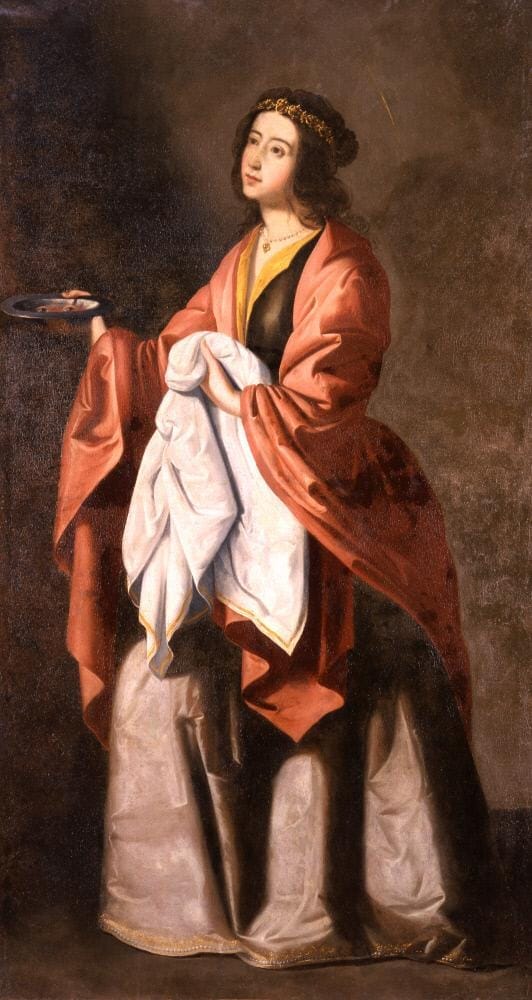
December 13: St. Lucy, Virgin and Martyr

There comes to us, to-day, the fourth of our wise virgins, the valiant martyr, Lucy. Her glorious name shines on the sacred diptych of the Canon of the Mass, together with those of Agatha, Agnes, and Cecily; and as often as we hear it pronounced during these days of Advent, it reminds us (for Lucy signifies light) that He who consoles the Church, by enlightening her children, is soon to be with us. Lucy is one of the three glories of the Church of Sicily; as Catania is immortalized by Agatha, and Palermo by Rosalie, so is Syracuse by Lucy. Therefore, let us devoutly keep her feast: she will aid us by her prayers during this holy season, and will repay our love by obtaining for us a warmer love of that Jesus, whose grace enabled her to conquer the world. Once more let us consider, why our Lord has not only given us apostles, martyrs, and bishops as guides to us on our road to Bethlehem, but has willed also that we should be accompanied thither by such virgins as Lucy. The children of the Church are forcibly reminded by this, that, in approaching the crib of their sovereign Lord and God, they must bring with them, besides their faith, that purity of mind and body without which no one can come near to God. Let us now read the glorious acts of the virgin Lucy.
Lucia, virgo Syracusana, genere et Christiana fide ab infantia nobilis, una cum matre Eutychia, quæ sanguinis fluxu laborabat, Catanam ad venerandum corpus beatæ Agathæ venit. Quæ ad ejus sepulchrum quum suppliciter orasset, Agathæ intercessione matris sanitatem impetravit. Statim vero matrem exoravit, ut quam dotem sibi datura esset, Christi pauperibus tribui pateretur. Ut igitur Syracusas rediit, omnem pecuniam, quam ex facultatibus venditis redegerat, pauperibus distribuit.
Quod ubi rescivisset is, cui eam parentes contra virginis voluntatem desponderant, apud Paschasium praefectum, Luciam, quod Christiana esset, accusavit. Quam ille cum nec precibus nec minis ad cultum idolorum posset perducere; immo tanto magis incensam videret ad celebrandas christianæ fidei laudes, quanto magis ipse eam a sententia avertere conabatur: Cessabunt, inquit, verba, quum ventum erit ad verbera. Cui virgo: Dei servis verba deesse non possunt, quibus a Christo Domino dictum est: Quum steteritis ante reges et præsides, nolite cogitare quomodo aut quid loquamini; dabitur enim vobis in illa hora quid loquamini; non enim vos estis qui loquimini, sed Spiritus sanctus qui loquitur in vobis.
Quam quum Paschasius interrogasset: Estne in te Spiritus sanctus? Respondit: Caste et pie viventes templum sunt Spiritus sancti. At ille: Jubebo te ad lupanar duci, ut te Spiritus sanctus deserat. Cui virgo: Si invitam jusseris violari, castitas mihi duplicabitur ad coronam. Quare Paschasius ira inflammatus Luciam eo trahi jussit, ubi ejus virginitas violaretur: sed divinitus factum est, ut firma virgo ita consisteret, ut nulla vi de loco dimoveri possit. Quamobrem præfectus circum ipsam pice, resina, ac ferventi oleo perfusam, ignem accendi imperavit; sed quum ne flamma quidem eam læderet, multis tormentis excruciatae guttur gladio transfigitur. Quo vulnere accepto, Lucia prædicens Ecclesiæ tranquillitatem, quæ futura erat Diocletiano et Maximiano mortuis, Idibus Decembris, spiritum Deo reddidit. Cujus corpus Syracusis sepultum, deinde Constantinopolim, postremo Venetias translatum est.
Lucy, a virgin of Syracuse, illustrious by birth and by the Christian faith, which she had professed from her infancy, went to Catania, with her mother Eutychia, who was suffering from a flux of blood, there to venerate the body of the blessed Agatha. Having prayed fervently at the tomb, she obtained her mother’s cure, by the intercession of St. Agatha. Lucy then asked her mother that she would permit her to bestow upon the poor of Christ the fortune which she intended to leave her. No sooner, therefore, had she returned to Syracuse, than she sold all that was given to her and distributed the money amongst the poor.
When he, to whom her parents had against her will promised her in marriage, came to know what Lucy had done, he went before the prefect Paschasius and accused her of being a Christian. Paschasius entreated and threatened, but could not induce her to worship the idols; nay, the more he strove to shake her faith, the more inflamed were the praises which she uttered in professing its excellence. He said, therefore, to her: We shall have no more of thy words, when thou feelest the blows of my executioners. To this the virgin replied: Words can never be wanting to God’s servants, for Christ our Lord has said to them: When you shall be brought before kings and governors, take no thought how or what to speak; for it shall be given to you in that hour what to speak; for it is not you that speak, but the holy Spirit that speaketh in you.
Paschasius then asked her: Is the holy Spirit in thee? She answered: They who live chastely and piously, are the temple of the holy Spirit. He said: I will order thee to be taken to a brothel, that this holy Spirit may leave thee. The virgin said to him: The violence wherewith thou threatenest me would obtain for me a double crown of chastity. Whereupon Paschasius being exceedingly angry, ordered Lucy to be dragged to a place where her treasure might be violated; but, by the power of God, so firmly was she fixed to the place where she stood, that it was impossible to move her. Wherefore the prefect ordered her to be covered over with pitch, resin, and boiling oil, and a fire to be kindled round her. But seeing that the flame was not permitted to hurt her, they tormented her in many cruel ways, and at length ran a sword through her neck. Thus wounded, Lucy foretold the peace of the Church, which would come after the death of Diocletian and Maximian, and then died. It was the Ides of December (Dec. 13). Her body was buried at Syracuse, but was translated thence first to Constantinople, and afterwards to Venice.

We here give some of the antiphons which occur in the Office of the saint: they form a lyric poem of great beauty.

Orante Sancta Lucia, apparuit ei beata Agatha, et consolabatur ancillam Christi.
Lucia virgo, quid a me petis, quod ipsa poteris præstare continuo matri tuæ?
Per te, Lucia virgo, civitas Syracusana decorabitur a Domino Jesu Christo.
Benedico te, Pater Domini mei Jesu Christi, quia per Filium tuum ignis extinctus est a latere meo.
In tua patientia possedisti animam tuam, Lucia, sponsa Christi: odisti quæ in mundo sunt, et coruscas cum angelis: sanguine proprio inimicum vicisti.
As Lucy was praying, there appeared unto her the blessed Agatha, and she comforted the handmaid of Christ.

O virgin Lucy! why askest thou of me, what thyself canst straightway grant unto thy mother?

Because of thee, O virgin Lucy! the city of Syracuse shall be honoured by the Lord Jesus Christ.

Words of Lucy: I bless thee, the Father of my Lord Jesus Christ, because by thy Son the fire around me was quenched.

In thy patience thou didst possess thy soul, O Lucy, bride of Christ! thou didst hate the things that are in the world, and thou shinest among the angels. Thou didst conquer the enemy by thine own blood.

We present ourselves before thee, O virgin martyr, beseeching thee to obtain for us that we may recognize in His lowliness that same Jesus whom thou now seest in His glory. Take us under thy powerful patronage. Thy name signifies light; guide us through the dark night of this life. O fair light of virginity! enlighten us; evil concupiscence has wounded our eyes: pray for us, O thou bright light of virginity! that our blindness be healed, and that rising above created things, we may be able to see that true light, which shineth in darkness, but which darkness cannot comprehend. Pray for us, that our eye may be purified, and may see, in the Child who is to be born at Bethlehem, the new Man, the second Adam, the model on which the life of our regeneration must be formed. Pray too, O holy virgin, for the Church of Rome and for all those which adopt her form of the holy Sacrifice; for they daily pronounce at the altar of God thy sweet name; and the Lamb, who is present, loves to hear it. Heap thy choicest blessings on the fair Isle, which was thy native land, and where grew the palm of thy martyrdom. May thy intercession secure to her inhabitants firmness of faith, purity of morals, and temporal prosperity, and deliver them from the disorders which threaten her with destruction.


December 13 (the Same Day): St. Odilia, Virgin and Abbess

On this same day, we have also the fifth of the wise virgins, whose bright lamps light us, during Advent, to the crib of Jesus their Spouse. Odilia did not shed her blood for Him, as did Bibiana, Barbara, Eulalia, and Lucy; her offering was her tears and her love. Her wreath of lilies blends sweetly with the roses, which form the crowns of her four companions. Her name is held in special veneration in the east of France, and beyond the Rhine. The holy hill whereon her tomb has rested now these thousand years, is still visited by numerous and devout pilgrims. Several kings of the Capetian race, and several emperors of the house of Hapsburg, were descendants of the father of our saint, Adalric or Atticus, Duke of Alsace.

Odilia was born blind. Her father insisted on her being removed from the house, for her presence would have been a continual humiliation to him. It seems as though this affliction was permitted by Providence, in order that the action and power of divine grace might be the more clearly manifested in her regard. The little exile was taken from her mother, and placed in a monastery. God, who designed to show the virtue of the holy Sacrament of regeneration, permitted that her Baptism should be deferred until she had reached her thirteenth year. The time at length came for Odilia to be made a child of God. No sooner was she taken from the baptismal font, than she received her eyesight, which was but a feeble figure of the light which faith had lit up in her soul. This prodigy restored Odilia to her father and to the world; and from that time forward, she had to defend, against unceasing attacks, the virginity which she had vowed to God. Her personal beauty, and her father’s wealth and power, attracted to her many rich suitors. She refused them all; and her father himself built a monastery on the rocks of Hohenburg, wherein she served her divine Lord, governed a large community, and gave relief to every sort of suffering.

After a long life spent in prayer, penance, and works of mercy, the day came which was to reward her for it all. It was this very day, the thirteenth of December, the feast of the holy virgin Lucy. The sisters of Hohenburg, desirous of treasuring up her last words, assembled round their saintly abbess. She was in an ecstasy, and already dead to the things of this life. Fearing lest she should die before she had received that holy Viaticum, which leads the soul to Him who is her last end, the sisters thought it their duty to rouse her from the mystic sleep, which, so it seemed to them, rendered her forgetful of the duties which she had to perform. Being thus brought to herself, she turned to the community, and said to them: ‘Dear sisters, why have you disturbed me? Why would you again oblige me to feel the weight of this corruptible body, when I had once left it? By the favour of His divine Majesty, I was in the company of the virgin Lucy, and the delights I was enjoying were so great that no tongue could tell them, nor ear hear them, nor human eye see them.’ No time was lost in giving her the Bread of life and the Chalice of salvation, which having received, she immediately rejoined her heavenly companion, and the thirteenth day of December thus united into one the feasts of the abbess of Hohenburg and of the martyr of Syracuse.

The Church of Strasburg, which honours Odilia as one of its greatest glories, has the following lessons for this feast. By giving them a place here, we do not adopt the statement they contain with regard to the rule which was followed in the monastery of Hohenburg. Mabillon, who proves that St. Odilia followed the rule of St. Benedict, shows that the Canonical Rule, as it was called, did not exist at that time.

Odilia, suæ decus et præsidium patriæ, Attici Alsatiæ ducis et Beresindæ primogenita soboles fuit; sed quod cæcis oculis nata esset, a patre repudiatam, mater humanior clam nutrici alendam tradidit. Post in Balmensi parthenio haud procul Vesontione educata, divinisque erudita litteris crevit aetate et sapientia. Jam adulta, dum a beato Erhardo præsule baptizatur, visum miraculo accepit. Interjectis aliquot annis, paternam in domum et gratiam reducitur. Ibi quidquid mundus amat despiciens, inter amplissimas opes paupertatis amorem, in medio aulae tumultu solitudinem anachoretarum retinebat; nuptiasque constanter aversata, post longum et acre certamen a patre obtinuit, ut sibi liceret cum aliis virginibus Deo se in perpetuum consecrare. Quare Atticus in vertice excelsi montis sacram sedem et monasterium ære suo excitavit, latos eidem fundos et prædia concessit, Odiliamque ei regendo præposuit.
Vixdum patuerat hoc sanctitatis asylum, quum ingens eo affluxit virginum multitudo; centum triginta fuisse traditum est. Hae primum nullis religiosae vitae legibus adscriptæ erant: Odiliam imitari pro legibus habebatur. Deliberantibus postmodo cuinam se regulæ addicerent, monasticae an canonicae; sapientissima praeses suadente loci natura, hanc alteri praetulit.
Cum vero esset in omnes lenis, se solam durius arctabat; pane hordeaceo et aqua, subinde modico legumine, tolerabat vitam. In rerum divinarum contemplatione defixa, vigilabat majorem noctis partem; quod supererat, quieti datum: pellis hirsuta pro lecto, saxum pro pulvinari erat.
Inter haec, materno erga pauperes et infirmos amore, aliud monasterium amplumque xenodochium in infimo clivo extraxit, quo facilius afflictae suae fortunae perfugium invenirent. Illic non solum sacras virgines collocavit, quae operam suam navarent miseris; sed etiam ipsa quotidie eos invisebat, cibis, solatiis refocillabat, neque pavebat leprosorum ulcera suis manibus fovere. Tandem meritis annisque gravis, quum se morti vicinam intelligeret, suas sodales in sacellum sancti Joannis Baptistae convocat: hortatur ut pii propositi tenaces arctiorem cœli viam nunquam deserant. Accepto deinde ibidem Corporis et Sanguinis Christi Viatico, vita cessit Idibus Decembris, anno, ut probabilius traditur, septingentesimo vigesimo. Corpus virginis in eodem sacello conditimi est, statimque sepulchrum ejus maxima veneratione coli ac miraculis clarere coepit.
Odilia, the glory and the protectress of her country, was the eldest child of Adalric, Duke of Alsace, and of Beresind his wife. Being born blind, she was repudiated by her father; but the mother, with more compassion, had her nursed privately. Later on she was sent to the monastery of Baume, not far from Besancon, where she was educated, and instructed in the holy Scriptures, and grew in age and wisdom. When an adult, she was baptized by the holy bishop Erhard, and was on that occasion miraculously cured of her blindness. After the lapse of some years, she was recalled to her father’s house, and became the object of his affection. During this time, she despised all that the world loves, preferring poverty to the greatest wealth, and leading a hermit’s life, amidst all the distractions of her father’s palace. She rejected, with great resolution, all the offers of marriage which were made to her, and, after a long and hard contest, obtained her father’s consent to devote herself for ever to God, with several other virgins. For this end, Adalric built, at his own cost, a church and monastery on the top of a high hill, and richly endowed it with land and possessions. It was at his request that Odilia was appointed to govern the monastery.
Scarce was this abode of sanctity established, when many sought for admission, and, as it is related, the community numbered no less than a hundred and thirty. At the commencement, no special rule was followed, the imitation of Odilia was their rale. When afterwards it was deliberated on which of the two rales should be adopted, the monastic or the canonical, this latter was preferred by the discreet Abbess, as being better adapted to the circumstances of the place.
To all around her she was indulgent; to herself alone she was severe. Her only food was barley-bread and water, to which she sometimes added a few herbs. Her contemplation of divine things was continual; she gave to it the greatest part of the night, and spent the rest in sleep. Her bed was a rough skin, and a stone her pillow.
To this she added a maternal solicitude for the poor and sick, for whom she built another monastery, and also a large hospital at the foot of the hill, that so they might have readier assistance in their various miseries. She not only placed there several of the nuns to take care of the poor inmates, but every day visited them herself, fed them and comforted them, and hesitated not to dress with her own hands the loathsome sores of lepers. At length, weighed down by age and merit, and knowing that her death was at hand, she assembles her sisters in the oratory of St. John the Baptist, and there exhorts them to continue firm to their holy engagements, and never to leave the narrow path which leads to heaven. Having received in the same place the Viaticum of the Body and Blood of Christ, she departed this life on the Ides of December (Dec. 13), and according to the more probable opinion, in the year seven hundred and twenty. The body of the holy virgin was buried in the same oratory, and her tomb became immediately an object of the greatest veneration to the faithful, and was celebrated for the miracles wrought there.

The ways of God in thy regard, O holy virgin, were admirable indeed, and He manifested in thee the riches and power of His grace. He deprived thee of sight, that so thy soul might the more eagerly cling to His own infinite beauty; and when afterwards He bestowed on thee thy bodily vision, thou hadst already made choice of the better part. The harshness of thy father deprived thee of the innocent pleasures of home; but it prepared thee to become the spiritual mother of so many noble virgins, who, following thy example, trampled on all the vanities of the world. Thou didst choose a life of humility, because thy heavenly Spouse Jesus had humbled Himself for our sake. Thou didst imitate Him also in His being our divine Deliverer, and taking upon Himself all our miseries, for thou hadst the tenderest compassion on the poor and the sick. Thou didst take on thyself the care of a poor leper, that had been abandoned by all else; with a mother’s courage thou didst feed him, and affectionately dress his loathsome sores. And is it not this that our Jesus is coming down from heaven to do for us; to heal our wounds by embracing our human nature, and to nourish us with that food, which He is preparing to give us at Bethlehem? Whilst the leper was receiving thy loving care, the frightful disease which excluded him from the society of his fellow-creatures suddenly disappeared; a delicious odour came from his whole person, whereas before, none but a saint like thyself could have borne to approach him. Is it not this which Jesus is coming down to do for us? The leprosy of sin was upon us; His grace heals us, and man regenerated sheds around him the good odour of Christ.1

In the midst of the joys which thou art now sharing with Lucy, remember us, O thou that wast ever so compassionate to the needy! We cannot forget the tears thou didst shed, and the prayers thou didst offer up for the soul of thy father after his death, whereby thou didst deliver him from purgatory, and open the gates of heaven to him that had banished thee from his house. Thou art no longer in the land of tears; thine eyes are opened to the light of heaven, and contemplate God in His glory: pray therefore for us, for thy prayers are now more powerful than heretofore. Think of us who are poor and infirm; obtain the cure of our maladies. The Emmanuel, who is coming to us, tells us that He is the Physician of our souls, for He has said: 'They that are in health need not the Physician, but they that are ill.’2 Ask Him to cure us of the leprosy of sin, and make us become even like unto Himself. Pray for France, thy country, and help her to maintain the purity of the Catholic faith. Watch over the ruins of the holy empire. Heresy has disunited the members of that great body; but it will once more flourish, if our Lord, propitiated by such prayers as thine, vouchsafe to bring Germany back again to the true faith and to submission to the Church. Yes, pray that these glorious things be brought about for the honour and glory of thy divine Spouse, and that nations, now weary of their errors and disunion, may unite together in propagating the kingdom of God upon earth.

Let us consider the ever blessed Mother of God leaving her humble dwelling at Nazareth, in order to visit her cousin, St. Elizabeth. The Church honours this mystery of the Visitation on the Friday in Ember Week of Advent, as we have mentioned above, in the Proper of the Time. We will let St. Bonaventure relate this sublime incident of Mary’s life, convinced that our readers will be pleased to hear the seraphic Doctor revealing to them, with his wonderful unction, these preludes to the birth of Jesus.

‘After, this, our Lady, pondering the words spoken unto her by the angel concerning her cousin Elizabeth, resolved to visit her, that she might congratulate with her and render her service. She, therefore, together with Joseph her spouse, set out from Nazareth for the house of Elizabeth, which might perhaps be fourteen or fifteen miles distant from Jerusalem. Neither the roughness nor the length of the journey discouraged her; but she walked with haste, forasmuch as she wished to be little seen in public. She was not like other mothers, burthened by her Child, nor was it to be thought that the Lord Jesus would be a burthen to His Mother. See, therefore, how the Queen of heaven and earth takes this journey alone, with none but her spouse Joseph; not riding, but walking; neither is she escorted by troops of soldiers and barons, nor attended by handmaids and fine ladies. Her train is poverty, humility, modesty, and the beauty of all virtues. The Lord Himself, too, is with her; and He verily hath a numerous and honourable suite, but it is not that of the world, vain and pompous.

‘Now, when she had entered the house of Elizabeth, she greeted her saying: “ Hail! my sister Elizabeth!” But she, exulting, and all full of joy, and inflamed by the holy Spirit, rises and most tenderly embraces Mary, exclaiming for joy: “Blessed art thou among women, and blessed is the fruit of thy womb! And whence is this to me, that there should come unto me the Mother of my Lord?” For as soon as the Virgin had greeted Elizabeth, John, in his mother’s womb, was filled with the Holy Ghost, as was likewise the mother. Nor was it that the mother was filled and then her child, but contrariwise the child was filled first, and he communicated the Spirit unto the mother. The babe effected nought in Elizabeth’s soul, but he merited that the Holy Ghost should do a work in her soul, because the grace of the divine Spirit had descended into him with greater abundance, and he was the first to receive the grace. And as Elizabeth had perceived the coming of Mary, so did John perceive the coming of Jesus. Therefore was it that he leaped for joy, and she prophesied. See the virtue of our Lady’s words, when by their utterance the Holy Ghost is conferred; for so replenished was Mary with Him, that, by her merits, He filled others also with Himself. Upon this, Mary made answer unto Elizabeth, saying: “My soul doth magnify the Lord, and my spirit hath rejoiced in God my Saviour.”

Sequence in Honor of the Mother of God
(Taken from the ancient Roman-French missals)

Hodiernæ lux diei
Celebris in Matris Dei
Agitur memoria.

Decantemus in hac die
Semper Virginis Mariæ
Landes et præconia.

Omnis homo, omni hora,
Ipsam ora et implora
Ejus patrocinia.

Psalle, psalle, nisu toto,
Cordis, oris, voce, voto:
Ave plena gratia!

Ave, Domina cœlorum,
Inexperta viri torum,
Parens paris nescia.

Fœcundata sine viro,
Genuisti more miro
Genitorem filia.

Florens hortus Austro flante,
Porta clausa post et ante,
Via viris invia.

Fusa cœli rore tellus,
Fusum Gedeonis vellus,
Deitatis pluvia.

Salve, splendor firmamenti:
Tu caliginosae menti
Desuper irradia.

Placa mare, maris stella,
Ne involvat nos procella
Et tempestas obvia.

Amen.
A happy day is this!
for on it we make commemoration of Mary,
the Mother of God.

Lot us sing to-day
the praises and the dignity of the ever blessed
Virgin Mary.

Whoe’er thou art,
and where’er thou art,
pray to her, beseech her to help thee.

Sing, sing, with all thy heart
and voice’s power;
Hail Mary! full of grace.

Hail, Queen of heaven,
purest of Virgins,
yet incomparable Mother!

Made fruitful by God,
thou, his creature, didst give birth,
O prodigy of prodigies! to thy Creator.

Here was the prophecy fulfilled;
that a garden should flower under the breath of the south wind;
that all its gates were closed, and no man could enter.

Mary is the earth spoken of as enriched with the dew of heaven;
she is as Gedeon’s fleece prefigured her,
filled with the dew of the Godhead.

Hail, Mary, thou brightness of heaven!
bring to our darkness
the light that is from above.

O star of the sea,
calm its storms,
and suffer not that they overwhelm us.

Amen.

Introit of Advent
(Ambrosian missal, sixth Sunday, Ingressa)

Videsne Elisabeth cum Dei Genitrice Maria disputantem: Quid ad me venisti, Mater Domini mei? Si enim scirem, in tuum venirem occursum. Tu enim Regnatorem portas, et ego prophetam: tu legem dantem, et ego legem accipientem: tu Verbum, et ego vocem proclamantis adventum Salvatoris.
Seest thou not Elizabeth thus speaking to Mary the Mother of God: How is it that thou, the Mother of my Lord, art come unto me? for if I had known of thy coming, I would have come to meet thee. For thou bearest the King, and I the prophet; thou him that giveth the law, and I him that receiveth the law; thou the Word, and I the Voice that proclaimeth the coming of the Redeemer.
  1. 2 Cor. ii. 14, 15. ↩︎
  2. St. Matt. ix. 12. ↩︎

Wednesday of the Second Week of Advent

Regem venturum Dominum, venite, adoremus.De Isaia Propheta.
Cap. xvi.
Emitte Agnum Domine, dominatorem terræ, de petra deserti ad montem filiæ Sion. Et erit: sicut avis fugiens, et pulli de nido avolantes, sic erunt filiae Moab in transcensu Arnon. Ini consilium, coge concilium, pone quasi noctem umbram tuam in meridie: absconde fugientes, et vagos ne prodas. Habitabunt apud te profugi mei: Moab, esto latibulum eorum a facie vastatoris. Finitus est enim pulvis, consummatus est miser, defecit qui conculcabat terram. Et praeparabitur in misericordia solium, et sedebit super illud in veritate, in tabernaculo David, judicans et quaerens judicium, et velociter reddens quod justum est.
Come, let us adore the King our Lord, who is to come.From the Prophet Isaias.
Ch. xvi.
Send forth, O Lord, the Lamb, the ruler of the earth, from Petra of the desert to the mount of the daughter of Sion. And it shall come to pass, that as a bird fleeing away, and as young ones flying out of the nest, so shall the daughters of Moab be in the passage of Arnon. Take counsel, gather a council, make thy shadow as the night in the midday: hide them that flee, and betray not them that wander about. My fugitives shall dwell with thee: O Moab, be thou a covert to them from the face of the destroyer. For the dust is at an end, the wretch is consumed, he hath failed that trod the earth under foot. And a throne shall be prepared in mercy, and one shall sit upon it in truth in the tabernacle of David, judging and seeking judgement, and quickly rendering that which is just.

Send forth to us, O Lord, the Lamb: 'It is the Lamb,’ says Peter of Celles,' it is the Lamb we need, and not the Lion; the Lamb that knows no anger, and whose meekness is never ruffled; the Lamb that will give us His snow-white wool to warm our coldness, and cover our nakedness; the Lamb that will give us His flesh to eat, lest we faint with hunger on the way. Send Him full of wisdom, for in His divine prudence He will vanquish the spirit of pride; send full of strength, for it is written that the Lord is strong and mighty in battle; send Him full of meekness, for He is to come down as dew that falls on the fleece; send Him as a victim, for He is to be sold and immolated for our ransom; send Him the pardoner of sinners, for He is to come to call them, and not the just; send Him to receive power and divinity, for He is worthy to loose the seven seals of the sealed book, the unspeakable mystery of the Incarnation.’* Thou art King, then, O divine Lamb! Thou art even now, in thy Mother’s womb, the sovereign Ruler. This virginal womb is a throne of mercy whereon Thou art seated in humility, ready to avenge our rights and confound our cruel enemy. O most dear King! our eyes cannot yet behold Thee, but our hearts tell us Thou art near us. We know that it is for our sake that Thou hast put on this strange royalty. Suffer us to approach Thee, and offer Thee our homage and loyalty, even now that a cloud hides Thee from our sight. . A few days more, and Thou wilt be seated on another throne, Thy Mother’s arms, and then all the earth will see the salvation that is sent unto it.

Hymn taken from the Anthology of the Greeks

(December 20)

Spelunca, parare; Agna enim venit fœtum gerens Christum: recipe, præsepium, illum qui nos terrigenas verbo solvit ineffabili modo: pastores de nocte vigilantes, prodigiosum confitemini miraculum; magique e Perside aurum, thus et myrrham Regi afferte: quia visus est e Virgine matre Dominus, quem et ipsa prona servili modo, mater adoravit et ei quem in brachiis suis tenebat dixit: Quomodo in me inseminatus es: vel quomodo in me ingeneratus es, Salvator meus et Deus?
Audi cœlum, et intellige terra; ecce enim Filius Verbumque Dei Patris progreditur ad nascendum ex Virgine, inexperta virum, sine dolore illum pariente et virtute Spiritus sancti. Bethlehem parare: aperi januam, Eden, nam qui Est fit qui non erat, et plasturgus omnis creaturæ plasmatur ipse, afferens mundo magnam misericordiam.
Natura immense, Christe Rex, quomodo parva te recipiet spelunca? Quomodo præsepe te poterit continere, Jesu, ex Matre nesciente virum, advena factus in propria, ut hospites ipse salves?
Novum facta cœlum, Domina, e vulva tua, sicut e nebula Christum solem gloriae oriri facere festines in spelunca carnaliter, omnes terrae fines suis splendoribus fulgentissime irradiaturum, per incommensurabilem misericordiam.
Noscis nostrum dolorem et miseriam, misericors Christe, et nos non despicis; sed exinanis temctipsum, non adhuc egressus ex tua genitrice; tabernaculumque figens in matrice nuptinescia, quæ sine dolore te pariet in spelunca caro factum.
Montes et colles, valles et campi, populi et tribus, gentes ac omnis spiritus, alalagmum agite; lætitiæ divinæ venit plenitudo, omnium advenit redemptio, Verbum Dei tempora nesciens per misericordiam factum sub tempore.
Vitis divina incorruptam maturitate nigrescere faciens uvam, appropinquat: paritura venit lætitiæ vinum scaturiens et nos bibere faciens ipsi canentes: Deus noster, benedictus es!
Myrotheca divina, intus myrum ferens graditur, ut in spelunca Bethlehem effundat illud a quo mystico replentur odore canentes: Deus patrum, benedictus es!
Forceps quam olim vidit Isaias propheta, divinum carbonem Christum in utero geris omnem materiam peccati comburentem, fideliumque animas illuminantem.
Finem habuerunt prophetarum præconia; quem enim praenuntiarunt in temporis plenitudine venturum, adest, apparet casta ex Virgine corporatus; illum puris mentibus excipiamus.
Cave of Bethlehem, be ready, for here comes the Mother bearing Christ, her Lamb, in her womb; and thou, O crib, receive him who delivers us mortals by his word ineffably; ye shepherds, keeping your nightwatch, tell the wondrous miracle; ye Magi, from Persia, bring to the King gold, incense, and myrrh; for the Lord hath appeared, born of a Virgin Mother; before him she herself falls down, and though his Mother, yet adores him as his lowly handmaid, and then taking him into her arms, she says unto him: O my Saviour, my God, how is it that thou camest unto me, and wast produced in me?
Hear, O ye heavens, and thou, O earth, attend: the Son and Word of God the Father is to be born of a Virgin that knows not man, and travails not when giving him birth, for all is by the power of the Holy Ghost. Bethlehem, be ready! Eden, open thy gates! for he that Is is made what he was not, and he that formed all creatures receives himself a created form, bringing to the world plentiful mercy.
O thou that art immense by Nature, O Christ our Ring, how shall a little cave receive thee? How shall a crib contain thee, O Jesus, Son of a spotless Virgin, making thyself a stranger in thine own house, that thou mayst give salvation to them that harbour thee?
Thou art a new heaven, O Lady! Hasten to make arise from thy womb, as from a cloud, Christ, the Sun of glory; may he appear in the flesh, in the cave, shedding thence to the ends of the world his dazzling splendour by his immense mercy.
Thou knowest, O merciful Jesus, our pains and misery, and thou despisest us not; but emptiest thyself even before leaving thy Mother’s virginal womb, where thou hast set thy tabernacle; this thy Mother will not travail in giving thee birth in the cave, thee who art made flesh.
Mountains and hills, valleys and plains, peoples and tribes, nations and every spirit, sing the song of victory! the fullness of a divine joy is coming, and all are to be redeemed, for the Word of God, who is beyond all time, is now made in time.
Now is coming towards us the heavenly vine, on which has ripened the immortal fruit; she comes to produco for us the wine of Joy, of which she will give us to drink: we will then sing to him, Blessed art thou our God!
There is advancing the vessel bearing the divine perfume, and she will place it in the cave of Bethlehem, and we, filled with the mystic fragrance, will sing, Blessed art thou, O God of our fathers!
Thou, O Mary, art like that instrument which Isaias saw of old, holding in thy womb the Christ, who, like a burning coal, will consume all the dross of sin, and will enlighten the minds of the faithful.
The songs of the prophets are hushed; for he, whom they announced as having to come in the fullness of time, is present and appears to us, having assumed a body from the chaste Virgin; let us receive him with pure hearts.

Prayer from the Mozarabic Missal
(Second Sunday of Advent)

Jucundatur, Domine, et tripudiat terra; quia Verbum caro factum habitat in sacrae Virginis membra. In cujus adventu omnis de captivitate redimitur terra; quae detinebatur per transgressionem Adæ in obscurata gehenna. Nunc moveatur mare, et omnia quae in eo sunt; montes exsultent et omnia ligna silvarum; quia Deus homo dignatur, per uterum beatae Virginis Mariae, de cœlo in mundum venire. Per ipsius igitur adventum te deprecamur, omnipotens Deus, ut nostræ camis fragilitatem a vinoulis peccatorum absolvas, et praesenti familiae tuæ misericordia plenus occurras.
The earth is glad, O Lord, and leaps with joy, for that the Word made flesh dwells in the womb of the holy Virgin. At his coming, the whole earth is ransomed from captivity, after having been kept, by Adam’s sin, in a dark prison. Now let the sea be moved, and all things that are therein; let the mountains leap with joy, and all the trees of the forests; because God, having become man, has deigned to come, through the womb of the blessed Virgin Mary, from heaven into this world. By this his coming, therefore, we beseech thee, O almighty God, that thou loose the weakness of our flesh from the bonds of sin, and come, in thy overflowing mercy, to the assistance of this thy family here present before thee.

* Third Sermon for Advent. ↩︎

Previous
Tuesday of the Second Week of Advent
Next
December 13 (the Same Day): St. Odilia, Virgin and Abbess