Daily reading
Advent
Double of the II Class · December 21 · Sanctoral
December 21, 2028
From Dom Guéranger’s The Liturgical Year.
A Double of the II Class leads the weekday.Rubric
December 21: Saint Thomas, Apostle
The Church announces to us, to-day, in her Office of Lauds, these solemn words:
This is the last feast the Church keeps before the great one of the Nativity of her Lord and Spouse. She interrupts the greater ferias in order to pay her tribute of honour to Thomas, the apostle of Christ, whose glorious martyrdom has consecrated this twenty-first day of December, and has procured for the Christian people a powerful patron, who will introduce them to the divine Babe of Bethlehem. To none of the apostles could this day have been so fittingly assigned as to St. Thomas. It was St. Thomas whom we needed; St. Thomas, whose festal patronage would aid us to believe and hope in that God whom we see not, and who comes to us in silence and humility in order to try our faith. St. Thomas was once guilty of doubting, when he ought to have believed, and learnt the necessity of faith only by the sad experience of incredulity: he comes then most appropriately to defend us, by the power of his example and prayers, against the temptations which proud human reason might excite within us. Let us pray to him with confidence. In that heaven of light and vision, where his repentance and love have placed him, he will intercede for us, and gain for us that docility of mind and heart, which will enable us to see and recognize Him, who is the Expected of nations, and who, though the King of the world, will give no other signs of His majesty, than the swaddling-clothes and tears of a Babe. But let us first read the acts of our holy apostle. The Church has deemed it prudent to give us them in an exceedingly abridged form, which contains only the most reliable facts, gathered from authentic sources; and thus she excludes all those details, which have no historic authority.
The Great Antiphon of St. Thomas
Prayer
The following prayer is from the Matins of the Gothic, or Mozarabic, breviary:
The Greek Church celebrates, with her usual solemnity, the feast of St. Thomas; but she keeps it on the sixth of October. We extract the following stanzas from her hymns.
Hymn of St. Thomas
(Taken from the Menæa of the Greeks)
O glorious apostle, Thomas! who didst lead to Christ so many unbelieving nations, hear now the prayers of the faithful, who beseech thee to lead them to that same Jesus, who, in five days, will have shown Himself to His Church. That we may merit to appear in His divine presence, we need, before all other graces, the light which leads to Him. That light is faith; then, pray that we may have faith. Heretofore, our Saviour had compassion on thy weakness, and deigned to remove from thee the doubt of Hishaving risen from the grave; pray to Him for us, that He will mercifully come to our assistance, and make Himself felt by our heart. We ask not, O holy apostle! to see Him with the eyes of our body, but with those of our faith; for He said to thee, when He showed Himself to thee: ‘Blessed are they who have not seen, and have believed!’ Of this happy number we desire to be. We beseech thee, therefore, pray that we may obtain the faith of the heart and will, that so, when we behold the divine Infant wrapped in swaddling-clothes and laid in a manger, we may cry out: ‘My Lord! and my God!’ Pray, O holy apostle, for the nations thou didst evangelize, but which have fallen back again into the shades of death. May the day soon come, when the Sun of justice will once more shine upon them. Bless the efforts of those apostolic men, who have devoted their labours and their very lives to the work of the missions; pray that the days of darkness may be shortened, and that the countries, which were watered by thy blood, may at length see that kingdom of God established amongst them, which thou didst preach to them, and for which we also are in waiting.
December 21 (the Same Day): Fifth Antiphon
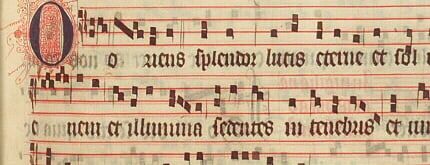
O Jesus, divine Sun! Thou art coming to snatch us from eternal night: blessed for ever be Thy infinite goodness! But Thou puttest our faith to the test, before showing Thyself in all Thy brightness. Thou hidest Thy rays, until the time decreed by Thy heavenly Father comes, in which all Thy beauty will break upon the world. Thou art traversing Judea; Thou art near Jerusalem; the journey of Mary and Joseph is nigh its term. Crowds of men pass or meet Thee on the road, each one hurrying to his native town, there to be enrolled, as the edict commands. Not one of all these suspects that Thou, O divine Orient! art so near him. They see Thy Mother Mary, and they see nothing in her above the rest of women; or if they are impressed by the majesty and incomparable modesty of this august Queen, it is but a vague feeling of surprise at there being such dignity in one so poor as she is; and they soon forget her again. If the Mother is thus an object of indifference to them, it is not to be expected that they will give even so much as a thought to her Child, that is net yet born. And yet this Child is Thyself, O Sun of justice! Oh! increase our faith, but increase, too, our love. If these men loved Thee, O Redeemer of mankind, Thou wouldst give them the grace to feel Thy presence. Their eyes, indeed, would not yet see Thee, but their hearts, at least, would burn within them, they would long for Thy coming, and would hasten it by their prayers and sighs. Dearest Jesus! who thus traversest the world Thou hast created, and who forcest not the homage of Thy creatures, we wish to keep near Thee during the rest of this Thy journey: we kiss the footsteps of her that carries Thee in her womb; we will not leave Thee, until we arrive together with Thee at Bethlehem, that house of bread, where, at last, our eyes will see Thee, O splendour of eternal light, our Lord and our God!
Prayer for the Time of Advent
(The Mozarabic breviary, Monday of the fifth week. Oratio)
Thursday of the Third Week of Advent
Cap. xxxiii.Domine, miserere nostri: te enim exspectavimus: esto brachium nostrum in mane, et salus nostra in tempore tribulationis. A voce angeli fugerunt populi, et ab exaltatione tua dispersæ sunt Gentes. Et congregabuntur spolia vestra sicut colligitur bruchus, velut cum fossæ plenæ fuerint de eo. Magnifìcatus est Dominus, quoniam habitavit in excelso: implevit Sion judicio et justitia. Et erit fides in temporibus tuis: divitiæ salutis sapientia et scientia: timor Domini ipse est thesaurus ejus. Conterriti sunt in Sion peccatores: possedit tremor hypocritas. Quis poterit habitare de vobis cum igne devorante? quis habitabit ex vobis cum ardoribus sempiternis? Qui ambulat in justitiis, et loquitur veritatem, qui projicit avaritiam ex calumnia, et excutit manus suas ab omni munere, qui obturat aures suas ne audiat sanguinem, et claudit oculos suos ne videat malum. Iste in excelsis habitabit, munimenta saxorum sublimitas ejus: panis ei datus est, aquæ ejus fideles sunt. Regem in decore suo videbunt oculi ejus: cernent terram de longe.
Ch. xxxiii.O Lord, have mercy on us: for we have waited for thee: be thou our arm in the morning, and our salvation in the time of trouble. At the voice of the angel the people fled, and at the lifting up thyself the nations are scattered. And your spoils shall be gathered together as the locusts are gathered, as when the ditches are full of them. The Lord is magnified, for he hath dwelt on high: he hath filled Sion with judgement and justice. And there shall be faith in thy times, riches of salvation, wisdom and knowledge: the fear of the Lord is his treasure. The sinners in Sion are afraid: trembling hath seized upon the hypocrites. Which of you can dwell with devouring fire? which of you shall dwell with everlasting burning? He that walketh in justices, and speaketh truth, that casteth away avarice by oppression, and shaketh his hands from all bribes, that stoppeth his ears lest he hear blood, and shutteth his eyes that he may see no evil. He shall dwell on high, the fortifications of rocks shall be his highness: bread is given him, his waters are sure. His eyes shall see the king in his beauty; they shall see the land far off.
Happy he whose eyes shall thus contemplate the new-born King in the sweet majesty of His love and His humility! He shall be so taken with this His beauty, that the earth, with all its magnificence, shall appear as nothing in his eyes. The only thing he will care to look upon, will be the Child laid in a manger, and wrapped in swaddling clothes. But, that we may have this happiness of closely contemplating the divine King who is coming to us, that we may merit to enter His court, we must do as the prophet bids us: we must walk in justice, and speak truth. Let us listen to the pious Rabanus Maurus, who expresses this, with much unction, in his first sermon on preparation for the feast of Christmas: ‘If at all times it behoves us to be adorned with the comeliness of good works, we should be so, with an especial care, on the day of our Saviour’s birth. Consider within yourselves, my brethren, what you would do, were a king, or prince, to invite you to come to celebrate his birthday. Your garments would be as new, as elegant, even as magnificent, as you could procure them, for you would think it an insult to him who invited you, were you to appear before him with anything upon you that was tom, or poor, or unclean. Show a like solicitude on the occasion of the coming feast: and let your souls, beautified with the several ornaments of virtue, go forth to their King. He loves the pearls of simplicity, and the flowers of chaste sobriety: wear them therefore. Let your consciences be composed in a holy calm, now that the solemn feast of Jesus’ Nativity is so close upon us. Assist at it lovely in your chastity, gorgeous in your charity, beauteous by your almsdeeds, brilliant with justice and humility, and, above all, radiant in the love of God. If the Lord Jesus shall see you thus when you keep His feast, believe me, He will do more than visit your souls; He will treat you with such familiarity, that He will choose them for His favourite abode, and there He will dwell for ever, as it is written: Behold! I will come, and I will dwell with them and they shall be my people, and I will be their God.’ Christians, you have no time to lose: quickly prepare yourselves for this great visit. Let sinners be converted and become just: let the just become more just; let the holy become more holy, for He that is coming is the Lord our God, and none else.
Prose for the Time of Advent
(Composed in the eleventh century, and taken from the ancient Roman-French missals)
Per quem condita sunt sæcula;
Cœlum quod plurima luce coruscat, et diversa sidera;
Sol mundi schema, noctium decus luna, cunctaque splendentia;
Mare, solum, alta, plana, et profunda flumina;
Aeris ampla spatia: quæ discurrunt aves, venti atque pluvia.
Haec simul cuncta tibi soli Deo Patri militant.
Nunc et in ævum, sine fine per sæcula:
Laus eorum tua gloria:
Qui pro salute nostra Prolem unicam,
Pati in terra misisti sine culpa, sed ob nostra delicta.
Te, sancta Trinitas, precamur, ut corpora nostra et corda regas et protegas, et dones peccatorum veniam. Amen.
By whom all ages were made;
The firmament, which shines with much light, and the countless stars;
The sun, the ornament of the world; the moon, which is the night’s beauty; and all shining things;
The sea, the land, the hills, the plains, and the deep rivers;
The wide space of the air, through which float birds, and winds, and rain;
All these obey thee alone, O God, as their Maker and King.
Now and evermore, for endless ages:
Their praise is thy glory;
Who for our salvation didst send thine only-begotten Son,
In whom could be no sin, to suffer on earth for our sins.
We beseech thee, O holy Trinity, to govern and protect our souls and bodies, and grant us forgiveness of cur sins. Amen.
Prayer from the Ambrosian Missal
(Second Sunday of Advent, Præfatio)
| Previous Wednesday in Ember Week of Advent | Next December 21 (the Same Day): Fifth Antiphon |