Daily reading
Lent
Double · February 23 · Sanctoral
February 23, 2029
From Dom Guéranger’s The Liturgical Year.
A Double leads the weekday.Rubric
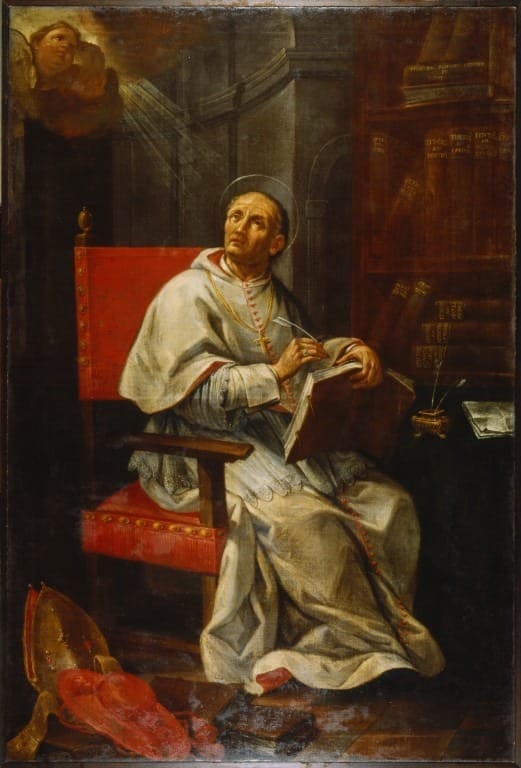 |
February 23: St. Peter Damian, Cardinal and Doctor of the Church
It is the feast of the austere reformer of the eleventh century, Peter Damian, the precursor of the holy pontiff Gregory VII., that we are called upon to celebrate to-day. To him is due in part that glorious regeneration, which was effected at that troubled period when judgment had to begin at the house of God.1 The life he had led under the monastic rule had fitted him for the great contest. So zealously did he withstand the disorders and abuses of his times, that we may attribute to him, at least in great measure, the ardent faith of the two centuries which followed the scandals of the tenth. The Church ranks him among her doctors, on account of his admirable writings: and his penitential life ought to excite us to be fervent in the work we have in hand, the work of our conversion.
The following lessons, read by the Church, on this feast, give us a sketch of our saint’s life:
Thy soul was inflamed by the zeal of God’s house, O Peter! God gave thee to His Church in those sad times when the wickedness of the world had robbed her of well-nigh all her beauty. Thou hadst the spirit of an Elias within thee, and it gave thee courage to waken the servants of the Lord: they had slept, and while they were asleep, the enemy came, and the field was oversown with tares.2 Then did better days dawn for the bride of Christ; the promises made by our Lord were fulfilled; but who was the friend of the bridegroom?3 Who was the chief instrument used by God to bring back to His house its ancient beauty? A saint who bore the glorious name of Peter Damian! In those days, the sanctuary was degraded by secular interference. The princes of the earth said: 'Let us possess the sanctuary of God for an inheritance.’4 The Church, which God intended to be free, was but a slave, in the power of the rulers of this world; and the vices, which are inherent to human weakness, defiled the temple. But God had pity on the bride of Christ, and for her deliverance He would use human agency: He chose thee, Peter, as His principal co-operator in restoring order. Thy example and thy labours prepared the way for Gregory, the faithful and dauntless Hildebrand, into whose hands the keys were no sooner placed, than the work of regeneration was completed. Thou hast fought the good fight; thou art now in thy rest; but thy love of the Church, and thy power to help, are greater than ever. Watch, then, over her interests. Obtain for her pastors that apostolic energy and courage, which alone can cope with enemies so determined as hers are. Obtain for her priests the holiness which God demands from them that are the salt of the earth.5 Obtain for the faithful the respect and obedience they owe to those who direct them in the path of salvation. Thou wast not only the apostle, thou wast moreover the model, of penance in the midst of a corrupt age; pray for us, that we may be eager to atone for our sins by works of mortification. Excite within our souls the remembrance of the sufferings of our Redeemer, that so His Passion may urge us to repentance and hope. Increase our confidence in Mary, the refuge of sinners, and make us, like thyself, full of filial affection towards her, and of zeal that she may be honoured and loved by those who are around us.
Friday in Ember Week of Lent
The Station is in the basilica of the twelve apostles; it is one of the grandest of the churches of Rome, and is enriched by the bodies of the two apostles, St. Philip and St. James the less.
Collect
Epistle
Cap. xviii.Hæc dicit Dominus Deus: Anima quæ peccaverit, ipsa morietur: filius non portabit iniquitatem patris, et pater non portabit iniquitatem filii: justitia justi super eum erit, et impietas impii erit super eum. Si autem impius egerit pœnitentiam ab omnibus peocatis suis, quæ operatus est, et custodierit omnia præcepta mea, et fecerifc judicium et justitiam: vita vivet, et non morietur. Omnium iniquitatum ejus, quas operatus est, non recordabor: in justitia sua, quam operatus est, vivet. Numquid voluntatis meæ est mors impii, dicit Dominus Deus, et non ut convertatur a viis suis, et vivat? Si autem averterit se justus a justitia sua, et fecerit iniquitatem secundum omnes abominationes quas operari solet impius, numquid vivet? Omnes justitiæ ejus, quas fecerat, non recordabuntur: in prævaricatione qua prævaricatus est, et in peccato suo quod peccavit, in ipsis morietur. Et dixistis: Non est æqua via Domini. Audite ergo, domus Israël: Numquid via mea non est æqua, et non magis vise vestræ pravse sunt? Cum enim averterit se justus a justitia sua, et fecerit iniquitatem, morietur in eis: in in justitia, quam operatus est, morietur. Et cum averterit se impius ab impietate sua, quam operatus est, et fecerit judicium et justitiam: ipse animam suam vivificabit. Considerans enim, et avertens se ab omnibus iniquitatibus suis, quas operatus est, vita vivet, et non morietur, ait Dominus omnipotens.
Ch. xviii.Thus saith the Lord God: The soul that sinneth, the same shall die: the son shall not bear the iniquity of the father, and the father shall not bear the iniquity of the son: the justice of the just shall be upon him, and the wickedness of the wicked shall be upon him. But if the wicked do penance for all his sins, which he hath committed, and keep all my commandments, and do judgment and justice; living he shall live, and shall not die. I will not remember all his iniquities that he hath done; in his justice, which he hath wrought, he shall live. Is it my will that a sinner should die, saith the Lord God, and not that he should be converted from his ways and live? But if the just man turn himself away from his justice, and do iniquity according to all the abominations which the wicked man useth to work, shall he live? All his justices which he hath done, shall not be remembered; in the prevarication, by which he hath prevaricated, and in his sin, which he hath committed, in them he shall die. And you have said: The way of the Lord is not right. Hear ye, therefore, O house of Israel: Is it my way that is not right, and are not rather your ways perverse? For when the just turneth himself away from his justice, and committeth iniquity, he shall die therein; in the injustice that he hath wrought, he shall die. And when the wicked turneth himself away from his wickedness, which he hath wrought, and doeth judgment and justice, he shall save his soul alive. Because he considereth and tumeth away himself from all his iniquities, which he hath wrought, he shall surely live, and not die, saith the Lord almighty.
Let us not forget the ancient discipline of the Church, during Lent. We should frequently be at a loss to understand her liturgy of this season, unless we picture her to ourselves as preparing the public penitents for a renewed participation in the mysteries. But first they must be reconciled with God, whom they have offended. Their soul is dead by sin; can it be restored to life? Yes; we have God’s word for it. The lesson from the prophet Ezechiel, which the Church began yesterday for the catechumens, is continued to-day for the benefit of the public penitents. If the wicked do penance for all his sins, which he hath committed, and keep all my commandments, and do judgment and justice; living he shall live, and shall not die. But his iniquities are upon him, and rise up against him, crying to heaven for eternal vengeance! And yet God, who knows all things, and forgets nothing, assures us that He will not remember iniquities which have been redeemed by penance. Such is the affection of His fatherly Heart, that He will forget the outrage offered Him by His son, if this son will but return to his duty. Thus, then, our penitents are to be reconciled; and on the feast of the Resurrection they will be associated with the just, because God will have forgotten their iniquities; they themselves will be just men. Thus it is that the liturgy, which never changes, brings frequently before us the ancient discipline of pubhc penance. Nowadays, sinners are not visibly separated from the faithful; the Church doors are not closed against them; they frequently stand near the holy altar, in the company of the just; and when God’s pardon descends upon them, the faithful are not made cognizant of the grace by any special and solemn rite. Let us here admire the wonderful mercy of our heavenly Father, and profit by the indulgent discipline of our holy mother the Church. The lost sheep may enter the fold at any hour and without any display; let him take advantage of the condescension thus shown him, and never more wander from the Shepherd, who thus mercifully receives him. Neither let the just man be puffed up with self-complacency, by preferring himself to the lost sheep; let him rather reflect on those words of to-day’s lesson: If the just man turn himself away from his justice, and do iniquity . . . the justices which he hath done shall not he remembered. Let us, therefore, tremble for ourselves, and have compassion on sinners. One of the great means on which the Church rests her hopes for the reconciliation of sinners is the fervent prayers offered up for them by the faithful during Lent.
Gospel
Cap. v.In illo tempore: Erat dies festus Judæorum, et aseen dit Jesus Jerosolymam. Est autem Jerosolymis Probatica piscina, quæ cognominatur hebraice Bethsaida, quinque porticus habens. In his jacebat multitudo magna languentium, cæcorum, claudorum, aridorum, exspectantium aquæ motum. Angelus autem Domini descendebat secundum tempus in piscinam: et movebatur aqua. Et qui prior descendisset in piscinam post motionem aquæ, sanus fiebat a quacumque detinebatur infirmitate. Erat autem quidam homo ibi, triginta et octo annos habens in infirmitate sua. Hunc cum vidisset Jesus jacentem, et cognovisset quia jam multum tempus haberet, dicit ei: Vis sanus fieri? Respondit ei languidus: Domine, hominem non habeo, ut cum turbata fuerit aqua, mittat me in piscinam: dum venio enim ego, alius ante me descendit. Dicit ei Jesus: Surge, tolle grabatum tuum, et ambula. Et statim sanus factus est homo ille: et sustulit grabatum suum, et ambulabat. Erat autem sabbatum in die illo. Dicebant ergo Judæi illi qui sanatus fuerat: Sabbatum est, non licet tibi tollere grabatum tuum. Respondit eis: Qui me sanum fecit, ille mihi dixit: Tolle grabatum tuum et ambula. Interrogaverunt ergo eum: Quis est ille homo qui dixit tibi: Tolle grabatum tuum, et ambula? Is autem qui sanus fuerat effectus, nesciebat quis esset. Jesus enim declinavit a turba constituta in loco. Postea invenit eum Jesus in templo, et dixit illi: Ecce sanus factus es: jam noli pec care, ne de terms tibi aliquid contingat. Abiit ille homo, et nuntiavit Judaeis quia Jesus esset, qui fecit eum sanum.
Ch. v.At that time: There was a festival day of the Jews, and Jesus went up to Jerusalem. Now there is at Jerusalem a pond, called Probatica, which in Hebrew is named Bethsaida, having five porches. In these lay a great multitude of sick, of blind, of lame, of withered, waiting for the moving of the water. And an angel of the Lord descended at certain times into the pond; and the water was moved. And he that went down first into the pond after the motion of the water, was made whole of whatsoever infirmity he lay under. And there was a certain man there, that had been eight-and-thirty years under his infirmity. Him, when Jesus had seen lying, and knew that he had been now a long time, he saith to him: Wilt thou be made whole? The infirm man answered him: Sir, I have no man, when the water is troubled, to put me into the pond; for whilst I am coming, another goeth down before me. Jesus saith to him: Arise, take up thy bed, and walk. And immediately the man was made whole; and he took up his bed and walked. And it was the Sabbath that day. The Jews therefore said to him that was healed: It is the Sabbath, it is not lawful for thee to take up thy bed. He answered them: He that made me whole, he said to me: Take up thy bed and walk. They asked him, therefore: Who is that man who said to thee: Take up thy bed, and walk? But he who was healed, knew not who it was: for Jesus went aside from the multitude standing in the place. Afterwards Jesus findeth him in the temple, and saith to him: Behold thou art made whole: sin no more, lest some worse thing happen to thee. The man went his way, and told the Jews that it was Jesus who had made him whole.
Let us return to our penitents of the ancient discipline of the Church; those of the present day, and we ourselves, can easily make a practical application of the reflections suggested by the Gospel. We have just been told by the prophet that God is ever ready to pardon a penitent sinner. But how is this pardon to be administered? Who is to pronounce the sentence of absolution? The answer is given in our Gospel. He that had been eight-and-thirty years under his infirmity, is a figure of the inveterate sinner: and yet he is made whole, and recovers the use of his limbs. How has the cure been wrought? First of all, the infirm man says to Jesus: I have no man, when the water is troubled, to put me into the pond. The water would have cured him; but observe, he has need of some man to lead him to the water. This Man is the Son of God, and He became Man in order to heal us. As Man, He has received power to forgive sins; and, before leaving this earth, He gives that same power to other men, and says to them: ‘Whose sins ye shall forgive, they are forgiven them.’* Our penitents, then, are to be reconciled with God by virtue of this supernatural power; and the infirm man, who takes up his bed and walks, is a figure of the sinner, whose sins have been forgiven him by the Church, by the divine power of the keys.
In the third century, a heretic, named Novatian, taught that the Church has not the power to forgive sins committed after Baptism. This doctrine was condemned by the Councils and the holy doctors of the Church; and in order to offer to the faithful some outward expression of the power given to the Son of Man of forgiving sins to such as repent, there was painted on the walls of the places where the Christians used to assemble, the infirm man of our Gospel, walking with his bed upon his shoulders. This consoling symbol is frequently met with in the frescoes which were painted, even in the age of the martyrs, in the Roman catacombs. They show us how the early Christians were taught to understand this passage of the Gospel, which the Church, so many centuries ago, assigned to this day.
The water of the Probatica was also a symbol; and here our Gospel conveyed a special instruction to the catechumens. By water they were to be made whole, and by water endowed with a supernatural virtue. The miraculous pond of Jerusalem could cure only the body, and that at rare intervals, and the favour could be conferred only upon a single individual; but now that the angel of the Great Counsel has come down from heaven, and sanctified the waters of the Jordan, the Probatica is everywhere; it is giving health to the souls of men, without any limitation either of time or of number. Man is the minister of this grace; but it is the Son of God, become the Son of Man, that works by the human minister.
Let us also consider the multitude of sick, who, as the Gospel tells us, were waiting for the moving of the water. They represent the various classes of sinners, who are seeking, during this holy time, to be converted to their God. There are the sick, or, as the Latin word has it, the languid; these are the tepid, who never thoroughly give up their evil habits; there are the blind; these are they whose spiritual eye is dead; there are the lame, who limp and falter in the path of salvation; and, lastly, there are the withered, who seem incapable of doing a single good action. All are waiting for the favourable moment. Jesus will soon be with them, and will say to each of them: Wilt thou be made whole? Let them answer this question with love and confidence, and they will be healed.
Let us address ourselves to the heavenly Physician of our souls, in these words of the Triodion of the Greek Church.
Hymn
(Feria VI. Hebdomadæ I. Jejuniorum.)
Puritatis fons, conserva nos, misericors, jejunii ope, respice ad nos ante te procidentes, attende elevationi manuum nostrarum, qui manus tuas in ligno pro mortalibus omnibus crucifixus expandisti, angelorum unus Dominus.
The snares of the enemy have involved me in darkness: enlighten me, O Christ, who, when hanging on the cross, didst obscure the sun, and bring to thy faithful the rays of pardon. May I walk in the light of thy commandments and, being purified, come to the brightness of thy saving Resurrection.
* St. John xx. 23. ↩︎
| Previous Thursday of the First Week of Lent | Next Friday in Ember Week of Lent |