Daily reading
Passiontide
Greater Double · March 21 · Sanctoral
March 21, 2029
From Dom Guéranger’s The Liturgical Year.
A Greater Double leads the weekday.Rubric

|
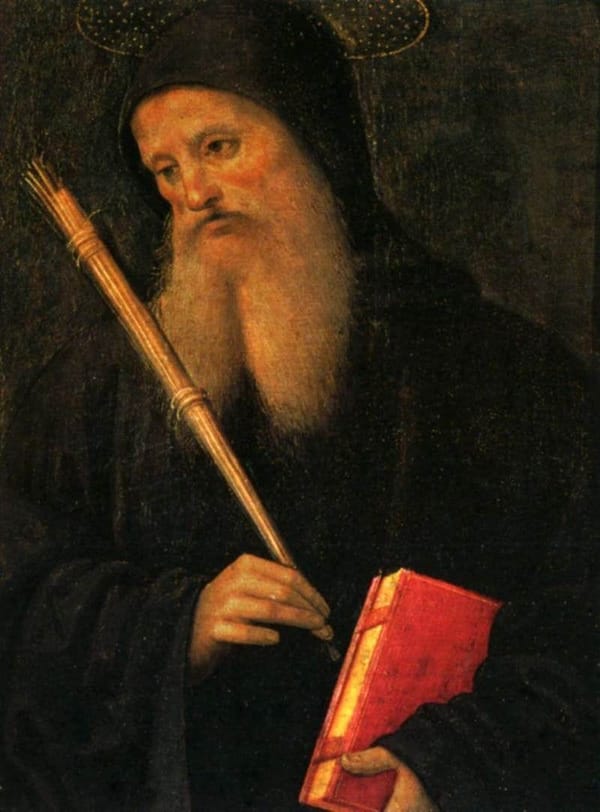
March 21: St. Benedict, Abbot
Forty days after the white dove of Cassino had mounted to heaven, Benedict, her glorious brother, ascended by a bright path to the blissful abode, where they were to be united for ever. Both of them reached the heavenly country during that portion of the year which corresponds with the holy season of Lent. It frequently happens, however, that St. Scholastica’s feast is kept before Lent has begun; whereas St. Benedict’s day, the twenty-first of March, always comes during the season of penance. God, who is the sovereign Master of time, willed that the faithful, whilst practising their exercises of penance, should always have before their eyes a saint whose example and intercession would inspire them with courage.
With what profound veneration ought we to celebrate the festival of this wonderful saint, who, as St. Gregory says, was filled with the spirit of all the just! If we consider his virtues, we find nothing superior in the annals of perfection presented to our admiration by the Church.
Love of God and man, humility, the gift of prayer, dominion over the passions—form him into a masterpiece of the grace of the Holy Ghost. Miracles seem to constitute his life: he cures the sick, commands the elements, casts out devils, and raises the dead to life. The spirit of prophecy unfolds futurity to him; and the most intimate thoughts of men are not too distant for the eye of his mind to scan. These superhuman qualifications are heightened by a sweet majesty, a serene gravity, and a tender charity, which shine in every page of his wonderful life; and it is one of his holiest children who wrote it, St. Gregory the Great. It is this holy Pope and Doctor, who had the honour of telling posterity all the wonders which God vouchsafed to work in His servant Benedict.
Posterity had a right to know the life and virtues of a man, whose salutary influence upon the Church and society has been so observable during the ages of the Christian era. To describe the influence exercised by the spirit of St. Benedict, we should have to transcribe the annals of all the nations of the western Church, from the seventh century down to our own times. Benedict is the father of Europe. By his Benedictines, numerous as the stars of heaven and as the sands of the sea-shore, he rescued the last remnants of Roman vigour from the total annihilation threatened by the invasion of barbarians; he presided over the establishment of the public and private laws of those nations, which grew out of the ruins of the Roman empire; he carried the Gospel and civilization into England, Germany, and the northern countries, including Slavonia; he taught agriculture; he put an end to slavery; and to conclude, he Baved the precious deposit of the arts and sciences from the tempest which would have swept them from the world, and would have left mankind a prey to a gloomy and fatal ignorance.
And Benedict did all this by that little book which we call his Rule. This admirable code of Christian perfection and prudence disciplined the countless legions of religious, by whom the holy patriarch achieved all these prodigies. During the ages which preceded the promulgation of this rule, so wonderful m its simple eloquence, the monastic life in the western Church had produced some few saintly men; but there was nothing to justify the hope that this kind of life would become, even more than it had been in the east, the principal means of the Christian regeneration and civilization of so many nations. Once this rule was written, all others gradually give place to it, as the stars are eclipsed when the sun has risen. The west was overspread with monasteries; and from these monasteries flowed upon Europe all those blessings, which have made it the privileged quarter of the globe.
An incredible number of saints, both men and women, who look up to Benedict as their father, purify and sanctify the world, which had not yet emerged from the state of semi-barbarism. A long series of Popes who had once been novices in the Benedictine cloister, preside over the destinies of this new world, and form for it a new legislation, which, being based exclusively on the moral law, is to avert the threatening prevalence of brutal despotism. Bishops innumerable, trained in the same school of Benedict, consolidate this moral legislation in the provinces and cities over which they are appointed. The apostles of twenty barbarous nations confront their fierce and savage tribes, and, with the Gospel in one hand and the rule of their holy father in the other, lead them into the fold of Christ. For many centuries, the learned men, the doctors of the Church, and the instructors of youth, belong, almost exclusively, to the Order of the great patriarch, who, by the labours of his children, pours forth on the people the purest beauty of light and truth. This choir of heroes in every virtue, of Popes, of bishops, of apostles, of holy doctors, proclaiming themselves as his disciples, and joining with the universal Church in glorifying that God, whose holiness and power shine forth so brightly in the life and actions of Benedict—what a corona, what an aureola of glory for one saint to have!
Let us now read the sketch of his life, as given us in the liturgy:
The Benedictine Order celebrates the praise of its illustrious patriarch in these three hymns:
Hymn I
Templa solemnes modulentur hymnos;
Hac die summi Benedicts arcem
Scandit Olympi.
Cum puer dulcis patriae penates
Liquit, et solus latuit silenti
Conditus antro.
Vicit altricem scelerum juventam:
lade conscripsit documenta vitæ
Pulchra beatæ.
Et nemus stravit Veneri dicatum,
Atque Baptistæ posuit sacrato
Monte sacellum.
Inter ardentes Seraphim catervas,
Spectat, et dulci reficit clientum
Corda liquore.
Et tibi compar utriusque semper
Spiritus alme, Deus unus, omni
Tempore sæcli.
let our temples echo with solemn hymns:
for on this day Benedict ascended
to the highest heavens.
he left his sweet home,
and hid himself from the sight of all
in a lonely cave.
by rolling amidst nettles and prickly thorns.
After this, he wrote a beautiful rule
of a holy life.
and a grove that was sacred to Venus:
and on the holy mount
he built an oratory in honour of the Baptist.
amidst the burning Seraphim:
he looks down on those that invoke him,
and refreshes their hearts with a nectar of sweetness.
To thee, also, O Spirit of love,
coequal with them, one God,
be glory for endless ages.
Hymn II
Quidquid æternæ monimenta legis,
Continet nobis celebranda summi
Vita monarchæ.
Inclytum proles Abraham decorat,
Isaac sponsae decus, et severi
Jussa parentis.
Celsior nostri patriarcha coetus
Isaac, Mosen, Abraham sub uno
Pectore clausit.
Hic pius flatu statuat secundo,
Pax ubi nullo, requiesque gliscit
Mista pavore.
Et tibi compar utriusque semper
Spiritus alme, Deus unus, omni
Tempore sæcli.
and all that the books of the divine Law tell us of holiness,
is contained in the life of the great patriarch
which we are now extolling.
Abraham for his being father of all believers;
Isaac for the beauty of his bride, and his obedience
to the trying commands of his father.
was richly laden with every virtue;
and in his single person represented
Isaac, Moses, and Abraham.
whom he has delivered from this stormy world,
and lead them with prosperous gales to the port
where there is no fear that can ruffle peace and repose.
To thee, also, O Spirit of love,
coequal with them, one God, be glory
for endless ages.
Hymn III
Quas sacro partas retinent agone,
Emicas celsis meritis coruscus,
O Benedicte.
Nil sibi de te rapuit voluptas,
Aruit mundi tibi flos ad alta
Mente levato.
Deseris, fervens nemorum colonus,
Edomas carnem, subigisque Christo
Tortor acerbus.
Signa te produnt operum pioruin,
Spargitur felix celeri per orbem
Fama volatu.
Et tibi, compar utriusque semper
Spiritus alme, Deus unus, omni.
Tempore sæcli.
with the crowns they have won in the holy contest,
thou, O Benedict, shinest resplendent
with thy sublime merits.
the pleasures of the world had no hold on thee,
and its flowers seemed but as withered weeds to a soul like thine,
that was fixed on heavenly things.
and becamest a fervent solitary.
Thou didst tame the rebellion of the flesh, and by sharp mortification
thou didst bring it into subjection to Christ.
thy holy miracles betrayed thee,
and the glorious fame of thy sanctity
swiftly spread through the world.
To thee, also, O Spirit of love,
coequal with them, one God,
be glory for endless ages.
The monastic missal contains the following sequence in honour of St. Benedict:
Sequence
Dona ferens novæ lucis,
Hodie recolitur.
Corde sonet in ardenti
Quidquid foris promitur.
Admiremur ascenderitis
Patriarchæ speciem.
Ilium fecit instar solis,
Abrahæ persimilem.
Hine Eliam latitantem
Specu nosce parvulo.
Cum securis revocatur
De torrentis alveo.
Illum Jacob futurorum
Mens effecit conscia.
Nos perducat in manentis
Semper Christi gaudia.
the happy death of our great leader,
which brings us the blessings of new light.
Oh! may the fervent heart re-echo
what the voice sings forth!
as he ascends to heaven
by the path of the east.
for he is the rich seed from which
a countless race hath sprung.
thou thinkest of Elias,
that hid himself in the little cave.
when he makes the head of the axe return
from the bed of the stream.
and like Jacob by the spirit
of prophecy.
and lead us safe to the joys of our Lord Jesus Christ,
who abideth for ever.
The Greek Church has not forgotten, in her liturgy, the praise of the great patriarch of the monks of the west. We take from the menæa some of the stanzas, in which she celebrates the name of Saint Benedict:
Hymn (Die XXI Martii)
O Benedict! thou vessel of election, thou palm of the wilderness, thou angel of earth, we offer thee the salutation of our love! What man was ever chosen to work on the earth more wonders than thou hast done? The Saviour has crowned thee as one of His principal co-operators in the work of the salvation and sanctification of men. Who could count the millions of souls who owe their eternal happiness to thee? Thy immortal rule has sanctified them in the cloister, and the zeal of thy Benedictines has been the means of their knowing and serving the great God who chose thee. Around thee, in the realms of glory, a countless number of the blessed acknowledge themselves indebted to thee, after God, for their eternal happiness; and upon the earth whole nations profess the true faith, because the Gospel was first preached to them by thy disciples.
O father of so many people! look down upon thine inheritance, and once more bless this ungrateful Europe, which owes everything to thee, yet has almost forgotten thy name! The light which thy children imparted to it has become dimmed, the warmth they imparted to the societies they founded and civilized by the cross has grown cold; thorns have covered a large portion of the land in which they sowed the seed of salvation. Come and protect thine own work; and, by thy prayers, keep it from perishing. Give firmness to what has been shaken. May a new Europe, a Catholic Europe, spring up in place of that which heresy and false doctrines have formed.
O patriarch of the servants of God! look down from heaven on the vineyard which thy hand hath planted, and see into what a state of desolation it has fallen. There was a time when thy name was honoured as that of a father in thirty thousand monasteries, from the shores of the Baltic to the borders of Syria, and from the green Erin to the steppes of Poland. Now, alas! few and feeble are the prayers that ascend to thee from the whole of that immense patrimony, which the faith and gratitude of the people had once consecrated to thee. The blight of heresy and the rapaciousness of avarice have robbed thee of these harvests of thy glory. The work of sacrilegious spoliation is now centuries old, and unceasingly has it been pursued; at one time having recourse to open violence, and at another pleading the urgency of political interests. Sainted father of our faith! thou hast been robbed of those thousands of sanctuaries, which, for long ages, were fountains of life and light to the people. The race of thy children has become almost extinct: watch over them that still remain, and are labouring to perpetuate thy rule. An ancient tradition tells us how our Lord revealed to thee that thy Order would last to the end of the world, and that thy children would console the Church of Rome and confirm the faith of many in the last great trials: deign to protect, by thy powerful intercession, the remnants of that family which still calls thee its father. Raise it up again; multiply it; sanctify it: let the spirit which thou hast deposited in thy holy rule flourish in its midst, and show, by thus blessing it, that thou art ever Benedict, the servant of God.
Support the holy Church, by thy powerful intercession, dear father! Assist the apostolic See, which has been so often occupied by disciples of thy school. Father of so many pastors of thy people! obtain for us bishops like those sainted ones whom thy rule has formed. Father of so many apostles! ask for the countries which have no faith preachers of the Gospel, who may convert the people by their blood and by their words, as did those who went out missioners from thy cloisters. Father of so many holy doctors! pray that the science of sacred literature may revive, to aid the Church and confound error. Father of so many sublime ascetics! rekindle the zeal of Christian perfection, which has grown so cold among the Christians of our days. Patriarch of the religious life in the western Church! bless all the religious Orders which the holy Spirit has given successively to the Church; they all look on thee with admiration, as their venerable predecessor: do thou pour out upon them the influence of thy fatherly love.
Lastly, O blessed favourite of God! pray for all the faithful of Christ during these days which are consecrated to thoughts and works of penance. It was in the midst of the holy austerities of Lent that thou didst mount to the abode of everlasting delight; ah! help us Christians, who are, at this very time, in the same campaign of penance. Rouse our courage by thy example and precepts. Teach us to keep down the flesh, and to subject it to the spirit, as thou didst. Obtain for us a little of thy blessed spirit, that, turning away from this vain world, we may think on the eternal years. Pray for us, that our hearts may never love, and our thoughts never dwell on, joys so fleeting as are those of time.
Catholic piety invokes thee as one of the patrons, as well as one of the models, of a dying Christian. It loves to tell men of the sublime spectacle thou didst present at thy death, when standing at the foot of the altar, leaning on the arms of thy disciples, and barely touching the earth with thy feet, thou didst give back, in submission and confidence, thy soul to its Creator. Obtain for us, dear saint! a death courageous and sweet as was thine. Drive from us, at our last hour, the cruel enemy who will seek to ensnare us. Visit us by thy presence, and leave us not till we have breathed forth our soul into the bosom of the God who has made thee so glorious a saint.
Wednesday in Passion Week
At Rome, the Station is in the church of Saint Marcellus, Pope and Martyr. This church was once the house of the holy lady Lucina, who gave it to the Pontiff, that he might consecrate it to God.
Collect
Epistle
Cap. xix.In diebus illis: Locutus eat Dominus ad Moysen, dicens: Loquere ad omnem cœtum filiorum Israel, et dices ad eos: Ego Dominus Deus vester. Non facietis furtum. Non mentiemini, nec decipiet unuequisque proximum suum. Non perjurabis in nomine meo, nec pollues nomen Dei tui. Ego Dominus. Non facies calumniam proximo tuo, nec vi opprimes eum. Non morabitur opus mercenarii tui apud to usque mane. Non maledices surdo, nec coram cæco pones offendiculum: sed timebis Dominum Deum tuum, quia ego sum Dominus. Non facies quod iniquum est, nec injuste judicabis. Non consideres personam pauperis, nec honores vultum potentis. Juste judica proximo tuo. Non eris criminator, nec susurro in populo. Non stabis contra sanguinem proximi tui. Ego Dominus. Non oderis fratrem tuum in corde tuo, sed publice argue eum, ne habeas super illo peccatum. Non quæras ultionem, nec memor eris injuriæ civium tuorum. Diliges amicum tuum sicut teipsum. Ego Dominas. Leges meas custodite. Ego enim sum Dominus Deus vester.
Ch. xix.In those days: the Lord spake to Moses, saying: Speak to all the assembly of the children of Israel, and thou shalt say to them: I am the Lord your God. You shall not steal. You shall not lie: neither shall any man deceive his neighbour. Thou shalt not swear falsely by my name, nor profane the name of thy God. I am the Lord. Thou shalt not calumniate thy neighbour, nor oppress him by violence. The wages of him that has been hired by thee, shall not abide with thee until the morning. Thou shalt not speak evil of the deaf, nor put a stumbling block before the blind: but thou shalt fear the Lord thy God, because I am the Lord. Thou shalt not do that which is unjust, nor judge unjustly. Respect not the person of the poor, nor honour the countenance of the mighty. Judge thy neighbour according to justice. Thou shalt not be a detractor nor a whisperer among the people. Thou shalt not stand against the blood of thy neighbour. I am the Lord. Thou shalt not hate thy brother in thy heart, but reprove him openly, lest thou incur sin through him. Seek not revenge, nor be mindful of the injury of thy citizens. Thou shalt love thy friend as thyself. I am the Lord. Keep ye my laws, for I am the Lord your God.
This passage from Leviticus, wherein our duties to our neighbour are so dearly and so fully defined, is read to us to-day, in order that we may see how we fulfil these important duties, and correct whatever short-comings we may discover in ourselves. It is God who here speaks; it is God who commands. Observe that phrase: I am the Lord: He repeats it several times, to show us that if we injure our neighbour, He, God Himself, will become the avenger. How strange must this doctrine have seemed to the catechumens, who had been brought up in the selfish and heartless principles of paganism! Here they are told that all men are brethren, and that God is the common Father of all, commanding all to love one another with sincere charity, and without distinction of nation or class. Let us Christians resolve to fulfil this precept to the letter: these are days for good resolutions. Let us remember that the commandments we have been reading were given to the Israelite people, many ages before the preaching of the law of love. If, then, God exacted from the Jew a cordial love of his fellow-men, when the divine law was written on mere tablets of stone; what will He not require from the Christian, who can now read that law in the Heart of the Man-God, who has come down from heaven and made Himself our Brother, in order that we might find it easier and sweeter to fulfil the precept of charity? Human nature united in His Person to the divine, is henceforth sacred; it has become an object of the heavenly Father’s love. It is out of fraternal love for this our nature that Jesus suffered death, teaching us, by His own example, to have such love for our brethren, that, if necessary, we ought to lay down our lives for them.* It is the beloved disciple that teaches us this, and he had it from his divine Master.
Gospel
Cap. x.In illo tempore: Facta sunt encœnia in Jerosolymis: et hiems erat. Et ambulabat Jesus in templo, in porticu Salomonis. Circumdederunt ergo eum Judæi, et dicebant ei: Quousque animam nostram tollis? Si tu es Christus, dic nobis palam. Respondit eis Jesus: Loquor vobis, et non creditis. Opera quæ ego facio in nomine Patris mei, hæc testimonium perhibent de me. Sed vos non creditis, quia non estis ex ovibus meis. Oves meæ vocem meam audiunt: et ego cognosco eas, et sequuntur me: et ego vitam æternam do eis: et non peribunt in æternam, et non rapiet eas quisquam de manu mea. Pater meus quod dedit mihi, majus omnibus est: et nemo potest rapere de manu Patris mei. Ego, et Pater unum sumus. Sustulerunt ergo lapides Judæi, ut lapidarent eum. Respondit eis Jesus: Multa bona opera ostendi vobis ex Patre meo; propter quod eorum opus me lapidatis? Responderunt ei Judæi: De bono opere non lapidamus te, sed de blasphemia, et quia tu homo cum sis, facis teipsum Deum. Respondit eis Jesus: Nonne scriptum est in lege vestra: Quia ego dixi, dii estis? Si illos dixit deos, ad quos sermo Dei factus est, et non potest solvi Scriptura: quem Pater sanctificavit, et misit in mundum, vos dicitis: Quia blasphemas; quia dixi, Filius Dei sum? Si non facio opera Patris mei, nolite credere mihi. Si autem facio, et si mihi non vultis credere, operibus credite, ut cognoscatis, et credatis, quia Pater in me est, et ego in Patre.
Ch. x.At that time: it was the feast of the Dedication at Jerusalem: and it was winter. And Jesus walked in the temple in Solomon’s porch. The Jews therefore came round about him, and said to him: How long dost thou hold our souls in suspense? If thou be the Christ, tell us plainly. Jesus answered them: I speak to you and you believe not. The works that I do in the name of my Father, they give testimony of me. But you do not believe because you are not of my sheep. My sheep hear my voice: and I know them, and they follow me: and I give them eternal life: and they shall not perish for ever, and no man shall pluck them out of my hand. That which my Father hath given me, is greater than all: and no man can snatch it out of the hand of my Father. I and the Father are one. The Jews then took up stones to stone him. Jesus answered them: Many good works I have showed you from my Father; for which of those works do you stone me? The Jews answered him: For a good work we stone thee not, but for blasphemy: and because that thou, being a man, makest thyself God. Jesus answered them: Is it not written in your law: I said you are gods? If he called them gods, to whom the word of God was spoken, and the Scripture cannot be broken; do you say of him whom the Father hath sanctified and sent into the world: Thou blasphemest: because I said I am the Son of God? If I do not the works of my Father, believe me not. But if I do, though you will not believe me believe the works, that you may know, and believe that the Father is in me, and I in the Father.
After the feast of tabernacles came that of the Dedication, and Jesus remained in Jerusalem. The hatred His enemies bore Him is greater than ever. They come round about Him, that they may make Him say He is the Christ, and then accuse Him of claiming a mission which does not belong to Him. Jesus deigns not to reply to their question, but tells them that they have seen His works, and that these give ample testimony of His being Christ, the Son of God. It is by faith, and by faith alone, that man can here know his God. God manifests Himself by His divine works: man sees them, and is bound to believe the truth to which they bear testimony. By thus believing, he has both the certitude of what he believes, and the merit of believing. The proud Jew rebels against this: he would fain dictate to God how He should act, and sees not that such a pretension is impious and absurd.
But, if Jesus openly declare the truth, He will scandalize these evil-minded men! Be it so; the truth must be preached. Our Lord has others to consult besides them; there are the well-intentioned, who will believe what He teaches. He, therefore, utters these sublime words, whereby He declares, not only that He is Christ, but that He is God: I and the Father are one. He knew that this would enrage His enemies; but He had to make Himself known to the world, and to arm the Church against the false doctrines of heretics, who would rise up in future ages. One of these is to be Arius, who will teach that Jesus is not God, but only the most perfect of creatures: the Church will answer, that Jesus is one with the Father, consubstantial with the Father: and then, after causing much trouble and sin, Arianism will die out and be forgotten. The Jews mentioned in to-day’s Gospel are the fore-runners of Arius; they understand what our Lord says: He says He is God, and they seek to stone Him. Jesus gives them a fresh grace; He shows them why they should receive what He here teaches; He reminds them, by the Scriptures they know off by heart, that the name god has sometimes been applied, in a limited sense, to men who had certain high offices put upon them by heaven; and then, He bids them think of all the miracles they have seen Him work, which so plainly testify to His being assisted by His Father, and once more declares Himself to be God, saying: The Father is in Me, and I in the Father. But men hardened in obstinacy, as these are, cannot be convinced: and the sin they have committed against the Holy Ghost is working its effects. How different is it with the sheep of this divine Shepherd! They hear His voice; they follow Him; He gives them eternal life; no man shall pluck them out of His hand. Happy sheep indeed! They believe, because they love; and as it is through the heart that truth gains ascendancy over them, so is it by pride of intellect that darkness gains admission into the soul of the unbeliever, and lasts as long as pride lasts. Alas! poor unbeliever! he loves his darkness; he calls it light; he blasphemes when he thinks he reasons, just as these Jews crucified the Son of God, that, as they said, they might give glory to God.
The Mozarabic breviary gives us the following beautiful prayer, which consists of exclamations to our suffering Jesus.
Prayer (Sabbato Dominicæ V. Quadragesimæ)
Let us now turn towards the holy cross. These words of the Greek Church, in her Triodion, will assist our devotion.
Hymn (Feriæ V. mediæ Septimanæ)
* 1 St. John iii. 16. ↩︎
| Previous Tuesday in Passion Week | Next Wednesday in Passion Week |