Daily reading
Paschal Time
Double of the I Class · Movable from Easter · Temporal
April 2, 2029
From Dom Guéranger’s The Liturgical Year.
A Double of the I Class leads; St. Francis of Paula and St. Mary of Egypt are commemorated.Rubrics

|
Easter Monday
Easter Monday
SO ample and so profound is the mystery of the glorious Pasch, that an entire week may well be spent in its meditation. Yesterday, we limited ourselves to our Redeemer’s rising from the tomb, and showing himself, in six different apparitions, to them that were dear to him. We will continue to give him the adoration, gratitude, and love, which are so justly due to him for the triumph, which is both his and ours; but it also behoves us respectfully to study the lessons conveyed by the Resurrection of our divine Master, that thus the light of the great mystery may the more plentifully shine upon us, and our joy be greater.
And first of all, what is the Pasch? The Scriptures tell us that it is the immolation of the lamb. To understand the Pasch, we must first understand the mystery of the lamb.
From the earliest ages of the Christian Church, we find the lamb represented, in the mosaics and frescoes of the basilicas, as the symbol of Christ’s sacrifice and triumph. Its attitude of sweet meekness expressed the love wherewith our Jesus shed his Blood for us; but it was put standing on a green hill, with the four rivers of Paradise flowing from beneath its feet, signifying the four Gospels which have made known the glory of his name throughout the earth. At a later period, the lamb was represented holding a cross, to which was attached a banner: and this is the form in which we now have the symbol of the Lamb of God.
Ever since sin entered the world, man has need of the lamb. Without the lamb he never could have inherited heaven, but would have been, for all eternity, an object of God’s just anger. In the very beginning of the world, the just Abel drew down upon himself the mercy of God, by offering on a sod-made altar the fairest lamb of his flock: he himself was sacrificed, as a lamb, by the murderous hand of his brother, and thus became a type of our divine Lamb. Jesus, who was slain by his own Israelite brethren. When Abraham ascended the mountain to make the sacrifice commanded him by God, he immolated, on the altar prepared for Isaac, the ram he found amidst the thorns. Later on, God spoke to Moses, and revealed to him the Pasch: it consisted of a lamb that was to be slain and eaten. A few days back, we had read to us the passage from the Book of Exodus where God gives this rite to his people. The Paschal Lamb was to be without blemish; its blood was to be sprinkled as a protection against the destroying angel, and its flesh was to be eaten. This was the first Pasch. It was most expressive as a figure, but void of reality. For fifteen hundred years was it celebrated by God’s people, and the spiritual-minded among the Jews knew it to be the type of a future Lamb.
In the age of the great prophets, Isaias prayed God to fulfil the promise he made at the beginning of the world. We united in this his sublime and inspired prayer, when, during Advent, the Church read to us his magnificent prophecies. How fervently did we repeat those words: ‘Send forth, O Lord, the Lamb, the ruler of the earth!’1 This Lamb was the long-expected Messias; and we said to ourselves: Oh what a Pasch will that be, wherein such a Lamb is to be victim! What a feast wherein he is to be the food of the feasters!
‘When the fulness of time came and God sent his Son’2 upon our earth, this Word made Flesh, after thirty years of hidden life, manifested himself to men. He came to the river Jordan, where John was baptizing. No sooner did the holy Baptist see him, than he said to his disciples: ‘Behold the Lamb of God! Behold him who taketh away the sin of the world!’3 By these words the saintly Precursor proclaimed the Pasch; for he was virtually telling men that the earth then possessed the true Lamb, the Lamb of God, of whom it had been in expectation four thousand years. Yes, the Lamb who was fairer than the one offered by Abel, richer in mystery than the one slain by Abraham on the mount, and more spotless than the one the Israelites were commanded to sacrifice in Egypt, had come. He was the Lamb so earnestly prayed for by Isaias; the Lamb sent by God himself; in a word, the Lamb of God. A few years would pass, and then the immolation. But three days ago we assisted at his sacrifice; we witnessed the meek patience wherewith he suffered his executioners to slay him; we have been laved with his precious Blood, and it has cleansed us from all our sins.
The shedding of this redeeming Blood was needed for our Pasch. Unless we had been marked with it, we could not have escaped the sword of the destroying angel. It has made us partake of the purity of the God who so generously shed it for us. Our neophytes have risen whiter than snow from the font, wherein that Blood was mingled. Poor sinners that had lost the innocence received in their Baptism have regained their treasure, because the divine energy of that Blood has been applied to their souls. The whole assembly of the faithful are clad in the nuptial garment, rich and fair beyond measure, for it has been ‘made white in the Blood of the Lamb.’4
But why this festive garment? It is because we are invited to a great banquet: and here, again, we find our Lamb. He himself is the food of the happy guests, and the banquet is the Pasch. The great Apostle St Andrew, when confessing the name of Christ before the pagan proconsul Ægeas, spoke these sublime words: ‘I daily offer upon the altar the spotless Lamb, of whose flesh the whole multitude of the faithful eat; the Lamb that is sacrificed remains whole and living.’ Yesterday this banquet was celebrated throughout the entire universe; it is kept up during all these days, and by it we contract a close union with the Lamb, who incorporates himself with us by the divine food he gives us.
Nor does the mystery of the Lamb end here. Isaias besought God to ‘send the Lamb ‘who was to be ‘the ruler of the earth.’ He comes, therefore, not only that he may be sacrificed, not only that he may feed us with his sacred Flesh, but likewise that he may command the earth and be King. Here, again, is our Pasch. The Pasch is the announcement of the reign of the Lamb. The citizens of heaven thus proclaim it: ‘Behold, the Lion of the tribe of Juda, the root of David hath conquered!’5 But, if he be the Lion, how is he the Lamb? Let us be attentive to the mystery. Out of love for man, who needed redemption, and a heavenly food that would invigorate, Jesus deigned to be as a lamb: but he had, moreover, to triumph over his own and our enemies; he had to reign, for ‘all power was given to him in heaven and in earth.’6 In this his triumph and power, he is a lion; nothing can resist him; his victory is celebrated this day throughout the whole world. Listen to the great deacon of Edessa, St Ephrem: ‘At the twelfth hour, he was taken down from the Cross as a lion that slept.’7 Yea, verily, our Lion slept; for his rest in the sepulchre ‘was more like sleep than death,’ as St Leo remarks.8 Was not this the fulfilment of Jacob’s dying prophecy? This patriarch, speaking of the Messias that was to be bom of his race, said: ‘Juda is a lion’s whelp. To the prey, my son, thou art gone up! Resting thou hast couched as a lion. Who shall rouse him?’9 He has roused himself by his own power. He has risen; a lamb for us, a lion for his enemies; thus uniting, in his Person, gentleness and power. This completes the mystery of our Pasch: a Lamb, triumphant, obeyed, adored. Let us pay him the homage so justly due. Until we be permitted to join, in heaven, with the millions of angels and the four-and-twenty elders, let us repeat, here on earth, the hymn they are for ever singing: ‘The Lamb that was slain is worthy to receive power, and divinity, and wisdom, and strength, and honour, and glory, and benediction!’10
Formerly, the whole of this week was kept as a feast, with the obligation of resting from servile work. The edict, published by Theodosius in 389, forbidding all law proceedings during the same period, was supplementary to this liturgical law, which we find mentioned in the Sermons of St Augustine,11 and in the Homilies of St John Chrysostom. The second of these two holy Fathers thus speaks to the newly baptized: ‘You are enjoying a daily instruction during these seven days. We put before you a spiritual banquet, that thus we may teach you how to arm yourselves and fight against the devil, who is now preparing to attack you more violently than ever; for the greater is the gift you have received, the greater will be the combat you must go through to preserve it . . . . During these following seven days, you have the word of God preached to you, that you may go forth well prepared to fight with your enemies. Moreover, you know it is usual to keep up a nuptial feast for seven days: you are now celebrating a spiritual marriage, and therefore we have established the custom of a seven days’ solemnity.’12
So fervently did the faithful of those times appreciate and love the Liturgy, so lively was the interest they took in the newly made children of holy mother Church, that they joyfully went through the whole of the services of this week. Their hearts were filled with the joy of the Resurrection, and they thought it but right to devote their whole time to its celebration. Councils laid down canons, changing the pious custom into a formal law. The Council of Mâcon, in 585, thus words its decree: ‘It behoves us all fervently to celebrate the feast of the Pasch, in which our great High Priest was slain for our sins, and to honour it by carefully observing all it pre-scribes. Let no one, therefore, do any servile work during these six days (which followed the Sunday), but let all come together to sing the Easter hymns, and assist at the daily Sacrifice, and praise our Creator and Redeemer in the evening, morning, and mid-day.’13 The Councils of Mayence (813) and Meaux (845) lay down similar rules. We find the same prescribed in Spain, in the seventh century, by the edicts of kings Receswind and Wamba. The Greek Church renewed them in her Council in Trullo; Charlemagne, Louis the Good, Charles the Bald, sanctioned them in their Capitularia; and the canonists of the eleventh and twelfth centuries, Burchard, St Ivo of Chartres, Gratian, tell us they were in force in their time. Finally, Pope Gregory IX inserted them in one of his decretals in the thirteenth century. But their observance had then fallen into desuetude, at least in many places. The Council held at Constance, in 1094, reduced the solemnity of Easter to the Monday and Tuesday. The two great liturgists, John Beleth in the twelfth, and Durandus in the thirteenth century, inform us that, in their times, this was the practice in France. It gradually became the discipline of the whole of the western Church, and continued to be so, until relaxation crept still further on, and a dispensation was obtained by some countries, first for the Tuesday, and finally for the Monday.
In order fully to understand the Liturgy of the whole Easter Octave (Low Sunday included), we must remember that the neophytes were formerly present, vested in their white garments, at the Mass and Divine Office of each day. Allusions to their Baptism are continually being made in the chants and Lessons of the entire week.
At Rome, the Station for to-day is at the basilica of St Peter. On Saturday, the catechumens received the Sacrament of regeneration in the Lateran basilica of our Saviour; yesterday, they celebrated the Resurrection in the magnificent church of St Mary; it is just that they should come, on this third day, to pay their grateful devotions to Peter, on whom Christ has built his whole Church. Jesus our Saviour, Mary Mother of God and of men, Peter the visible head of Christ’s mystical Body, these are the three divine manifestations whereby we first entered, and have maintained our place in, the Christian Church.
Mass
The Introit, which is taken from the Book of Exodus, is addressed to the Church’s new-born children. It reminds them of the milk and honey which were given to them on the night of Saturday last, after they had received Holy Communion. They are true Israelites, brought into the Promised Land. Let them, therefore, praise the Lord, who has chosen them from the pagan world, that he might make them his favoured people.
Introit
Ps. Confitemini Domino et invocate nomen ejus: annuntiate inter gentes opera ejus.℣. Gloria Patri. Introduxit.
Ps. Praise the Lord, and call upon his name: publish his works among the gentiles.℣. Glory, etc. The Lord, etc.
At the sight of Jesus, her Spouse, now freed from the bonds of death, holy Church prays God, that we, the members of this divine Head, may come to that perfect liberty of which the Resurrection is the type. Our long slavery to sin should have taught us the worth of that liberty of the children of God, which our Pasch has restored to us.
Collect
Epistle
Cap. X.In diebus illis: Stans Petrus in medio plebis, dixit: Viri fratres, vos scitis quod factum est verbum per universam Judæam: incipiens enim a Galilæa post baptismum quod praedicavit Joannes, Jesum a Nazareth: quomodo unxit eum Deus Spiritu Sancto et virtute, qui pertransiit benefaciendo, et sanando omnes oppressos a diabolo, quoniam Deus erat cum illo. Et nos testes sumus omnium, quæ fecit in regione Judæorum et Jerusalem, quem occiderunt suspendentes in ligno. Hunc Deus suscitavit tertia die, et dedit eum manifestum fieri, non omni populo, sed testibus præordinatis a Deo: nobis, qui manducavimus et bibimus cum illo, postquam resurrexit a mortuis. Et præcepit nobis prædicare populo, et testifican quia ipse est qui constitutus est a Deo judex vivorum et mortuorum. Huic omnes prophetæ testimonium perhibent, remissionem peccatorum accipere per nomen ejus omnes qui credunt in eum.
Ch. X.In those days: Peter standing up in the midst of the people, said: You know the word that hath been published through all Judea: for it began from Galilee, after the baptism which John preached, Jesus of Nazareth: how God anointed him with the Holy Ghost, and with power, who went about doing good, and healing all that were oppressed by the devil, for God was with him. And we are witnesses of all things that he did in the land of the Jews and in Jerusalem, whom they killed hanging him upon a tree. Him God raised up the third day, and gave him to be made manifest, not to all the people, but to witnesses preordained by God, even to us, who did eat and drink with him after he rose again from the dead. And he commanded us to preach to the people, and to testify that it is he who was appointed by God to be judge of the living and of the dead. To him all the prophets give testimony, that through his name all receive remission of sins who believe in him.
St Peter spoke these words to Cornelius, the centurion, and to the household and friends of this gentile, who had called them together to receive the Apostle whom God had sent to him. He had come to prepare them for Baptism, and thus make them the first-fruits of the gentile world, for up to this time the Gospel had been preached only to the Jews. Let us take notice how it is St Peter, and not any other of the Apostles, who throws open to us gentiles the door of the Church, which Christ has built upon him as upon the impregnable rock. This passage from the Acts of the Apostles is an appropriate Lesson for this day, whose Station is in the basilica of St Peter: it is read near the confession of the great Apostle, and in presence of the neophytes, who have been converted from the worship of false gods to the true faith. Let us observe, too, the method used by the Apostle in the conversion of Cornelius and the other gentiles. He begins by speaking to them concerning Jesus. He tells them of the miracles he wrought; then, having related how he died the ignominious death of the Cross, he insists on the fact of the Resurrection as the sure guarantee of his being truly God. He then instructs them on the mission of the Apostles, whose testimony must be received—a testimony which carries persuasion with it, seeing it was most disinterested, and availed them nothing save persecution. He, therefore, that believes in the Son of God made Flesh, who went about doing good, working all kinds of miracles; who died upon the Cross, rose again from the dead, and entrusted to certain men, chosen by himself, the mission of continuing on earth the ministry he had begun—he that confesses all this, is worthy to receive, by holy Baptism, the remission of his sins. Such is the happy lot of Cornelius and his companions; such has been that of our neophytes.
Then is sung the Gradual, which repeats the expression of Paschal joy. The verse, however, is different from yesterday’s, and will vary every day till Friday. The Alleluia verse describes the angel coming down from heaven, that he may open the empty sepulchre, and manifest the self-gained victory of the Redeemer.
Gradual
The Sequence, Victimœ Paschali, p. 145.
Gospel
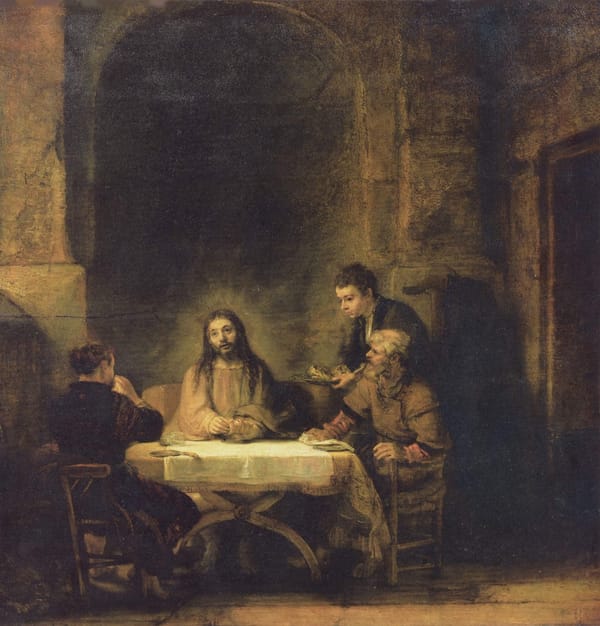
Cap. xxiv.In illo tempore: Duo ex discipulis Jesu ibant ipsa die in castellum, quod erat in spatio stadiorum sexaginta ab Jerusalem, nomine Emmaus. Et ipsi loquebantur ad invicem de his omnibus, quæ acciderant. Et factum est, dum fabularentur, et secum quærerent: et ipse Jesus appropinquans ibat cum illis: oculi autem illorum tenebantur ne eum agnoscerent. Et ait ad illos: Qui sunt hi sermones, quos confertis ad invicem ambulantes, et estis tristes? Et respondens unus, cui nomen Cleophas, dixit ei: Tu solus peregrinus es in Jerusalem, et non cognovisti quæ facta sunt in illa his diebus? Quibus ille dixit: Quæ? Et dixerunt: De Jesu Nazareno, qui fuit vir propheta, potens in opere et sermone, coram Deo et omni populo: et quomodo eum tradiderunt summi sacerdotes, et principes nostri in damnationem mortis, et crucifixerunt eum. Nos autem sperabamus quia ipse esset redempturus Israel: et nunc super hæc omnia, tertia dies est hodie quod hæc facta sunt. Sed et mulleres quædam ex nostris terruerunt nos, quæ ante lucem fuerunt ad monumentum, et non invento corpore ejus, venerunt, dicentes se etiam visionem angelorum vidisse, qui dicunt eum vivere. Et abierunt quidam ex nostris ad monumentum, et ita invenerunt, sicut mulieres dixerunt; ipsum vero non invenerunt. Et ipse dixit ad eos: O stulti, et tardi corde ad credendum in omnibus, quæ locuti sunt prophetæ! Nonne hæc oportuit pati Christum, et ita intrare in gloriam suam? Et incipiens a Moyse, et omnibus prophetis, interpretabatur illis in omnibus Scripturis, quæ de ipso erant. Et appropinquaverunt castello, quo ibant: et ipse se finxit longius ire. Et coegerunt illum, dicentes: Mane nobiscum, quoniam advesperascit, et inclinata est jam dies. Et intravit cum illis. Et factum est, dum recumberet eum eis, accepit panem, et benedixit, ac fregit, et porrigebat illis. Et aperti sunt oculi eorum, et cognoverunt eum: et ipse evanuit ex oculis eorum. Et dixerunt ad invicem: Nonne cor nostrum ardens erat in nobis, dum loqueretur in via et aperiret nobis Scripturas? Et surgentes eadem hora regressi sunt in Jerusalem: et invenerunt congregatos undecim, et eos, qui cum illis erant, dicentes: Quod surrexit Dominus vere, et apparuit Simoni. Et ipsi narrabant quæ gesta erant in via: et quomodo cognoverunt eum in fractione panis.
Ch. xxiv.At that time: Two of the disciples of Jesus went the same day to a town which was sixty furlongs from Jerusalem, named Emmaus. And they talked together of all these things which had happened. And it came to pass, that while they talked and reasoned with themselves, Jesus himself also drawing near, went with them. But their eyes were held that they should not know him. And he said to them: What are these discourses that you hold one with another as you walk, and are sad? And the one of them, whose name was Cleophas, answering said to him: Art thou only a stranger in Jerusalem, and hast not known the things that have been done there in these days? To whom he said: What things? And they said: Concerning Jesus of Nazareth, who was a prophet mighty in work and word before God and all the people. And how our chief priests and princes delivered him to be condemned to death, and crucified him. But we hoped that it was he that should have redeemed Israel: and now besides all this, to-day is the third day since these things were done. Yea, and certain women also of our company affrighted us, who before it was light were at the sepulchre. And not finding his body, came, saying that they had also seen a vision of angels, who say that he is alive. And some of our people went to the sepulchre: and found it so as the women had said, but him they found not. Then he said to them: O foolish, and slow of heart to believe in all things which the prophets have spoken. Ought not Christ to have suffered these things, and so to enter into his glory? And beginning at Moses and all the prophets, he expounded to them in all the Scriptures the things that were concerning him. And they drew nigh to the town whither they were going: and he made as though he would go farther. But they constrained him, saying: Stay with us, because it is towards evening, and the day is now far spent. And he went in with them. And it came to pass, whilst he was at table with them, he took bread, and blessed, and brake, and gave to them. And their eyes were opened, and they knew him: and he vanished out of their sight. And they said one to the other: Was not our heart burning within us, whilst he spoke in the way, and opened to us the Scriptures? And rising up the same hour they went back to Jerusalem: and they found the eleven gathered together, and those that were with them, saying, the Lord is risen indeed, and hath appeared to Simon. And they told what things were done in the way: and how they knew him in the breaking of bread.
Let us attentively consider these three travellers on the road to Emmaus, and go with them in spirit and affection. Two of them are frail men like ourselves, who are afraid of suffering; the Cross has disconcerted them; they cannot persevere in the faith, unless they find it brings them glory and success. 0 foolish and slow of heart I says the third: ought not Christ to have suffered, and so to enter into his glory? Hitherto, we ourselves have been like these two disciples. Our sentiments have been more those of the Jew than of the Christian. Hence our love of earthly things, which has made us heedless of such as are heavenly, and has thereby exposed us to sin. We cannot, for the time to come, be thus minded. The glorious Resurrection of our Jesus eloquently teaches us how to look upon the crosses sent us by God. However great may be our future trials, we are not likely to be nailed to a cross, between two thieves. It is what the Son of God had to undergo: but did the sufferings of the Friday mar the kingly splendour of the Sunday’s triumph? Nay, is not his present glory redoubled by his past humiliations?
Therefore let us not be cowards when our time for sacrifice comes; let us think of the eternal reward that is to follow. These two disciples did not know that it was Jesus who was speaking to them; and yet he no sooner explained to them the plan of God’s wisdom and goodness, than they understood the mystery of suffering. Their hearts burned within them at hearing him explain how the cross leads to the crown; and had he not held their eyes that they should not know him, they would have discovered from his words that their instructor was Jesus. So will it be with us, if we will allow him to speak to us. We shall understand how ‘the disciple is not above the Master.’14 Let us, this Easter, delight in gazing at the resplendent glory of our risen Lord, and we shall exclaim with the Apostle: No! ‘the sufferings of this time are not worthy to be compared with the glory to come, that shall be revealed in us.’15
Now that the efforts made by the Christian for his conversion are being recompensed with the honour of approaching the holy banquet clothed in the nuptial garment, there is another consideration that forces itself upon our attention from the reading of to-day’s Gospel. It was during the breaking of the bread that the eyes of the two disciples were opened to recognize their Master. The sacred Food which we receive, and whose whole virtue comes from the word of Christ, gives light to our souls, and enables them to see what before was hidden. Yes, this is the effect produced in us by the divine mystery of our Pasch, provided we be of the number of those who are thus described by the pious author of the Imitation of Christ: ‘They truly know their Lord in the breaking of bread, whose heart burneth so mightily within them from Jesus’ walking with them.’16 Let us, therefore, give ourselves unreservedly to our risen Jesus. We belong to him now more than ever, not only because of his having died, but also for his having risen for us. Let us imitate the disciples of Emmaus, and, like them, become faithful, joyful, and eager to show forth by our conduct that ‘newness of life ‘of which the Apostle speaks,17 and which alone befits us, seeing that Christ has so loved us as to wish his own Resurrection to be ours also.
The reason for the choice of this Gospel for to-day is that the Station is held in the basilica of St Peter. St Luke here tells us that the two disciples found the Apostles already made cognizant of the Resurrection of their Master: He hath, said they, appeared to Simon! We spoke yesterday of the favour thus shown to the prince of the Apostles, which the Roman Church so justly commemorates in to-day’s Office.
The Offertory consists of a text from the holy Gospel, referring to the circumstances of our Lord’s Resurrection.
Offertory
In the Secret, the Church prays that the Paschal Sacrament may be to her children a food nourishing them to immortality, and may unite them as members to their divine Head, not only for time, but even for eternity.
Secret
During the Communion, the Church reminds the faithful of the visit paid by the Saviour, after his Resurrection, to St Peter. The faith of the Resurrection is the faith of Peter, and the faith of Peter is the foundation of the Church, and the bond of Catholic unity.
Communion
In the Postcommunion, the Church again prays that her children, who have been fellow-guests at the feast of the Lamb, may have that spirit of concord which should reign among the members of one and the same family, whose union has been again cemented by this year’s Pasch.
Postcommunion
Vespers
The Vespers are the same as yesterday, with the exception of the Magnificat Antiphon and the Collect.
Antiphon of the Magnificat
Let us glorify the Son of God for having, on this the second day of the creation, made the firmament, and divided the waters that were under from those that were above it. The holy Fathers have, in commenting these mysterious words, preferred the spiritual to the material sense. Here we recognize the powerful hand of God, who strengthened his work, and established an equilibrium between those elements which lay confounded together in chaos. The Mozarabic Liturgy gives us the following beautiful prayer, wherewith to praise our Creator in this portion of his work:
Capitula
Let us close the day with two Prefaces on the mystery of the Resurrection. The first is the one used by the Ambrosian Liturgy on Easter Sunday.
Preface
The following Preface is the one used by the ancient Church of Gaul in celebrating the mystery of our Paschal Lamb:
Immolatio
And now let us warm our hearts to the Paschal mystery by this admirable sequence of Adam of Saint-Victor:
Sequence
Dies felix Christi victoria,
Dies digna jugi lætitia,
Dies prima!
In qua Christus infernum spoliat,
Mortem vincit et reconciliat
Summis ima.
Sub peccato conclusit omnia,
Ut infirmis superna gratia
Subveniret.
Temperavit iram dementia,
Cum jam mundus in praecipitia
Totus iret.
Vetus hostis, auctor malitiæ,
Quia nulla spes erat veniæ
De peccatis.
Dum tenerent cuncta silentium,
Deus Pater emisit Filium
Desperatis.
Carnem videns, nec cavens laqueum,
In latentem mens aculeum
Aduncatur.
Reformatur nobis in Filio,
Cujus nova nos resurrectio
Consolatur.
Restaurator humani generis,
Ovem suam reportans humeris
Ad superna.
Plenitudo succrescit ordinum:
Triumphantem laus decet Dominum,
Laus æterna.
Vox concordet matris Ecclesiæ;
Alleluia frequentet hodie
Plebs fidelis.
Triumphali fruamur gaudio:
In terra pax, et jubilatio
Sit in cœlis!
happy day of Jesus' victory!
day worthy of ceaseless joy!
O first of days!
that Christ robbed hell of its spoils,
conquered death, and made peace
between heaven and earth.
concluded all under sin,
that the weak might be made strong
by heavenly grace.
was going headlong to the abyss,
the power and wisdom of God softened his anger
by his mercy.
insulted us in our misery,
for that there was no hope left us
of the pardon of our sins.
when lo! whilst all things were in quiet silence,
God the Father sent his Son
to them that had no hope.
but not the snare:
he grasped at the hook,
and was caught.
to our former dignity by Jesus,
whose Resurrection now
gladdens us.
rose again free from the dead;
he carried his sheep, on his shoulders,
back to heaven.
the heavenly ranks are filled up:
praise, eternal praise is due
to our triumphant Lord.
blend in harmony with that of heaven;
let the faithful sing now, without ceasing,
their Alleluia.
let us rejoice in the triumph.
Peace on earth,
and jubilee in heaven!
- Isa, xvi 1. ↩︎
- Gal, iv. 4. ↩︎
- St John i 29. ↩︎
- Apoc. vii 14. ↩︎
- Apoc. v 5. ↩︎
- St Matt, xxviii 18. ↩︎
- In sanctam Parasceven, et in Crucem et Latronem. ↩︎
- First Sermon, On the Resurrection. ↩︎
- Gen. xlix 9. ↩︎
- Apoc. v 12. ↩︎
- On our Lord’s Sermon on the Mount. ↩︎
- Homil. v. de Resurrectione. ↩︎
- Canon II, Labbe, t. v. ↩︎
- St Matt. X 24. ↩︎
- Rom. viii 18. ↩︎
- Book iv, ch. xiv. ↩︎
- Rom. vi 4. ↩︎
April 2: St. Francis of Paula
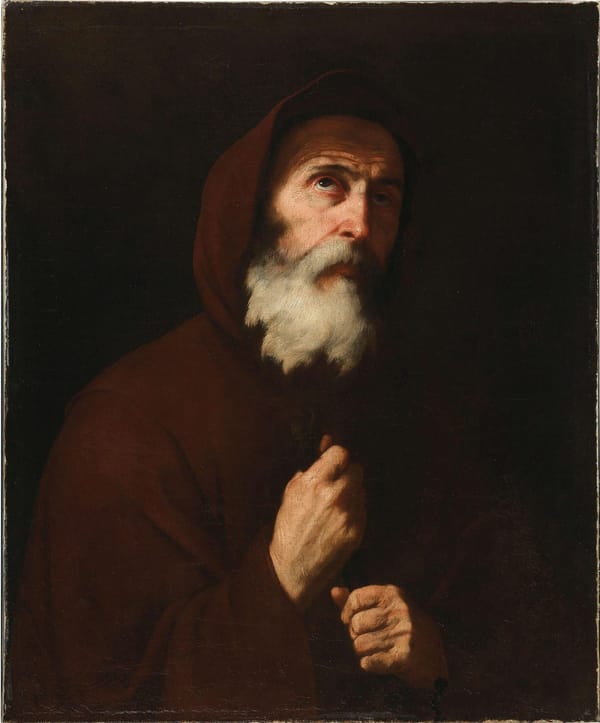 |
The founder of a religious Order, whose distinguishing characteristics were humility and penance, comes before us to-day; it is Francis of Paula. Let us study his virtues and beg his intercession. His whole life was one of great innocence; and yet we find him embracing, from his earliest youth, mortifications which, nowadays, would not be expected from the very worst sinners. How was it that he could do so much? and we, who have so often sinned, do so little? The claims of divine justice are as strong now as ever they were; for God never changes, nor can the offence we have committed against Him by our sins be pardoned, unless we make atonement. The saints punished themselves, with life-long and austere penances, for the slightest sins; and the Church can scarcely induce us to observe the law of Lent, though it is now reduced to the lowest degree of severity.
What is the cause of this want of the spirit of expiation and penance? It is that our faith is weak, and our love of God is cold, because our thoughts and affections are so set upon this present life, that we seldom if ever consider things in the light of eternity. How many of us are like the king of France, who having obtained permission from the Pope that St. Francis of Paula should come and live near him, threw himself at the saint's feet, and besought him to obtain of God, that he, the king, might have a long life! Louis XI. had led a most wicked life; but bis anxiety was, not to do penance for his sins, but to obtain, by the saint's prayers, a prolongation of a career which had been little better than a storing up of wrath for the day of wrath. We, too, love this present life; we love it to excess. The laws of fasting and abstinence are broken, not because the obeying them would endanger life, or even seriously injure health—for where either of these is to be feared, the Church does not enforce her lenten penances—but people dispense themselves from fasting and abstinence, because the spirit of immortification renders every privation intolerable, and every interruption of an easy comfortable life insupportable. They have strength enough for any fatigue that business or pleasure calls for; but the moment there is question of observing those laws which the Church has instituted for the interest of the body as well as of the soul, all seems impossible; the conscience gets accustomed to these annual transgressions, and ends by persuading the sinner that he may be saved without doing penance.
St. Francis of Paula was of a very different way of thinking and acting. The Church gives us the following abridged account of his life:
Apostle of penance: thy life was always that of a saint, and we are sinners: yet do we presume, during these days, to beg thy powerful intercession, in order to obtain of God that this holy season may not pass without having produced within us a true spirit of penance, which may give us a reasonable hope of receiving His pardon. We admire the wondrous works which filled thy life—a life that resembled, in duration, that of the patriarchs, and prolonged the privilege the world enjoyed of having such a saint to teach and edify it. Now that thou art enjoying in heaven the fruits of thy labours on earth, think upon us, and hearken to the prayers addressed to thee by the faithful. Gain for us the spirit of compunction, which will add earnestness to our works of penance. Bless and preserve the Order thou hast founded. Thy holy relics have been destroyed by the fury of heretics; avenge the injury thus offered to thy name, by praying for the conversion of heretics and sinners, and drawing down upon the world those heavenly graces, which will revive among us the fervour of the ages of faith.
April 2 (the Same Day, in Some Dioceses): St. Mary of Egypt, Penitent
One of the most striking examples of penance ever witnessed, is this day proposed for our consideration: Mary, the sinner and penitent of Egypt, comes to animate us to persevere in our lenten exercises. Like Magdalene and Margaret of Cortona, she had sinned grievously; like them she repented, atoned for her guilt, and is now the associate of angels. Let us adore the omnipotence of our God, who thus changed a vessel of dishonour into one of honour; let us lovingly contemplate the riches of His mercy, and hope for our own participation in them. At the same time, let us remember that pardon is not granted save where there is repentance; and that repentance is not genuine, unless it produce an abiding spirit and deeds of penance. Mary of Egypt had the misfortune to lead a life of sin for seventeen years; but her penance lasted forty: and what kind of penance must hers have been, living alone in a desert, under a scorching sun, without the slightest human consolation, and amidst every sort of privation! The pledge of pardon—the holy Communion —which we received so soon after our sins, was not granted to Mary, till she had done penance for nearly half a century. That pledge of Jesus' forgiveness, which He has given us in the Sacrament of His love, and which was communicated to us so promptly, was withheld from this admirable penitent, so that she received it for the second time only at the moment when death was on the point of separating her soul from her body which was worn out by austerities! Let us humble ourselves at such a comparison; let us think with fear on this great truth—that God’s justice will require an exact account of all the graces He has heaped upon us; and with this thought, let us rouse ourselves to a determination to merit, by the sincerity of our repentance, a place near the humble penitent of the desert.
We take the lessons of the Office of St. Mary of Egypt from the ancient Roman-French breviaries:
In praise of our incomparable penitent, we offer to the reader the following beautiful sequence, taken from the ancient missals of Germany:
Sequence
In amplexum Salomonis
Nostri transit filia;
Ex abjecta fit electa,
Ex rugosa fit formosa,
Ex lebete phiala.
Ad dilectum quam conduxit
Pacia nectens fædera;
Matre Dei mediante,
Peccatrici, Christo dante,
Sunt dimissa scelera.
Pervenit in Jerusalem,
Nuptura Pacifico;
Hinc excluso adultero
Maritatur Sponso vero
Ornata mirifico.
Dum laborat, mox redire
Necdum digna cogitur;
Ad cor suum revertitur,
Fletu culpa submergitur,
Fletu culpa teritur.
Leviathan conteritur,
Mundus, caro vincitur,
Domus patris postponitur,
Vultus mentis componitur,
Decor camis spernitur.
Tuia ornata tympanis,
Lauda quondam sterilis,
Gaude, plaude, casta, munda,
Virtutum prole fœcunda,
Vitis meri fertilis.
Umbilicus est præcisus
Tuus continentia;
Aquis lotam, pulchram totam
Te salivit, te condivit
Sponsi sapientia.
Intus tota delibuta
Oleo lætitiæ;
Croco rubene charitatis;
Bysso cincta castitatis,
Zona pudicitiæ.
Dum superna contemplaris,
Mutatis affectibus;
Vestiris discoloribus,
Cubile vernat floribus,
Fragat aromatibus.
Decoravit et amavit
Sic te Christi gratia,
Memor semper peccatorum,
Et cunctorum populorum,
Plaude nunc in gloria.
to the espousals with Jesus,
our true Solomon.
She that was abject, is made a chosen one;
she that was deformed, is made fair;
the vessel of dishonour is made one of honour.
and leading her to her beloved Son,
has knit the bond of peace.
The Mother of God interceded;
Christ forgave;
the sinner’s sins are pardoned.
came to Jerusalem,
to be espoused to the King of peace;
leaving her false lover,
she is united to the true Spouse,
honoured by the wonderful One.
but her unworthiness forbids it;
she is compelled to retire.
Then does she return to her own heart;
she weeps for her sins,
and her weeping blots them out.
tramples on Leviathan;
conquers the world and the flesh;
forgets her father’s house:
neglects the beauty of the body,
that her spirit may be made comely.
Thou, that once wast barren,
take up thy harp, and sing.
Exult and be joyful, for now thou art chaste and pure,
fruitful in virtue,
a vine that yields a precious fruit.
the shame of thy disorders
is effaced by the merit of thy purity.
The wisdom of thy heavenly Spouse has given thee,
cleansed and all fair,
the incorruption of his grace.
thou wast anointed with the oil of gladness.
The scarlet of charity,
the lily of chastity,
the girdle of modesty
—all were upon thee.
for thy affections were changed
from earthly to heavenly things.
Thy vesture was of every richest hue,
and thy couch was decked with flowers,
sweeter than those of spring.
in that Christ so loved thee,
and beautified thee with grace.
Be mindful of us sinners;
pray for all mankind;
feast now in thy eternal glory!
Thou wilt sing for all eternity, O Mary, the mercies of the Lord, who changed thee from a sinner into so glorious a saint; we join thee in thy praises, and we give Him thanks for having shown us so evidently, in thy person, that a true penitent, whatever and how great soever may have been his sins, may not only avoid eternal torments, but merit everlasting bliss. How light must now appear to thee, O Mary, that forty years’ penance, the very thought of which terrifies us! How short a time, when compared with eternity! How insignificant its austerity, if we think of hell! And how rich must its reward seem to thee, now that thou art face to face with infinite Beauty! We, too, are sinners; dare we say that we are penitents? Aid our weakness, O Mary! Thou wast made known to the world at the close of thy hidden life, in order that Christians might learn from thee the grievousness of sin, of which they make so little account; the justice of God, of which they are so apt to form so false an idea; ¿md the goodness of that Father, whom they cease not to offend. Pray for us, O Mary, that we may profit by the instructions given to us so profusely during this holy season. Pray that our conversion may be complete; that we may leave our pride and our cowardice; that we may appreciate the grace of reconciliation with our Maker; and, lastly, that we may ever approach to the holy Table with compunction and love such as thou hadst, when, in thy last happy Communion, Jesus gave Himself to thee in His Sacrament, and then took thee to Himself in the kingdom of everlasting rest and joy.
| Previous Easter Sunday | Next April 2: St. Francis of Paula |