Daily reading
After Pentecost
Semidouble · Movable from Easter · Temporal
June 10, 2029
From Dom Guéranger’s The Liturgical Year.

|
The Third Sunday after Pentecost
The faithful soul has now witnessed in the holy liturgy the close of the mysteries of our redemption. The Holy Ghost has come down to support her during this second portion of her career, by forming and developing within her the fullness of the Christian life as taught by her divine Saviour when on earth. He begins by teaching her how to pray. Prayer, said our Lord, must be continual: we ought always to pray, and not to faint.1 We know not what we should pray for as we ought; but the holy Spirit helpeth our infirmity, and Himself asketh for us with unspeakable groanings.2
In the Introit and the whole Mass for this Sunday, we are taught that prayer must have, amongst its other requisite qualities, that of humble repentance for our past sins, and of confidence in God’s infinite mercy.
This is the Third Sunday after Pentecost; it is the first that has no rubrical connexion with the great feasts we have been solemnizing; it is a Sunday with all the simplicity of the Office of the Time.
Introit
Ps. Ad te, Domine, levavi animam meam: Deus meus, in te confido, non erubescam.
Gloria Patri. Respice.
Ps. To thee, O Lord, have I lifted up my soul: in thee, O my God, I place my trust, let me not be ashamed.
Glory, etc. Look thou.
Collect
Second Collect
The third Collect is left to the priest’s own choice.
Epistle
I. Cap. v.Carissimi, humiliamini sub potenti manu Dei, ut vos exaltet in tempore visitationis: omnem sollicitudinem vestram projicientes in eum, quoniam ipsi cura est de vobis. Sobrii estote, et vigilate: quia adversarius vester diabolus tanquam leo rugiens circuit, quærens quem devoret: cui resistite fortes in fide; scientes eamdem passionem ei, quæ in mundo est, vestræ fraternitati fieri. Deus autem omnis gratiae, qui vocavit nos in aeternam suam gloriam in Christo Jesu, modicum passos ipse perficiet, confirmabit, solidabitque. Ipsi gloria, et imperium in saecula sæculorum. Amen.
I. Ch. v.Dearly beloved: be ye humbled under the mighty hand of God, that he may exalt you in the time of visitation. Casting all your care upon him, for he hath care of you. Be sober and watch: because your adversary the devil, as a roaring lion, goeth about, seeking whom he may devour: whom resist ye, strong in faith; knowing that the same affliction befalls your brethren who are in the world. But the God of all grace, who hath called us unto his eternal glory in Christ Jesus, after you have suffered a little, will himself perfect you, and confirm you, and establish you. To him be glory and empire for ever and ever. Amen.
The miseries of this present life are the test to which God puts His soldiers; He passes judgment upon them, and classifies them, according to the degree of courage they have shown. Therefore is it, that we all have our share of suffering. The combat has commenced. God is looking on, watching how each of us comports himself. The day is not far off, when the Judge will pass sentence on the merits of each combatant, and award to each one the recompense he has won. Combat now; peace and rest and a crown, then. Happy they who, during these days of probation, have recognized the mighty hand of God in all the trials they have had, and have humbled themselves under its pressure, lovingly and confidingly! Against such Christians, who have been strong in faith, the roaring lion has not been able to prevail. They were sober, they were watchful, during this their pilgrimage. They were fully convinced of this, that every one has to suffer in the present life; they therefore never sighed and moaned, as though they were the only sufferers; they did not assume the attitude of victims, and call it resignation; but they took each trial as it came, and, without talking to every one about it, they quietly and joyously united it with the sufferings of Christ. O true Christians! you will be joyous for all eternity, when there will be made the manifestation of that eternal glory in Christ Jesus, which He will pass on to you, that you may share it with Him for ever!
The Gradual keeps up the same strain: it encourages the faithful soul to confidence. Let her cast all her care upon her heavenly Father; has He not always graciously heard her in all her troubles and necessities? As to enemies, let her cast away the thought; God will think of that, and, if it so please Him, will avenge the soul they persecuted.
Gradual
Gospel
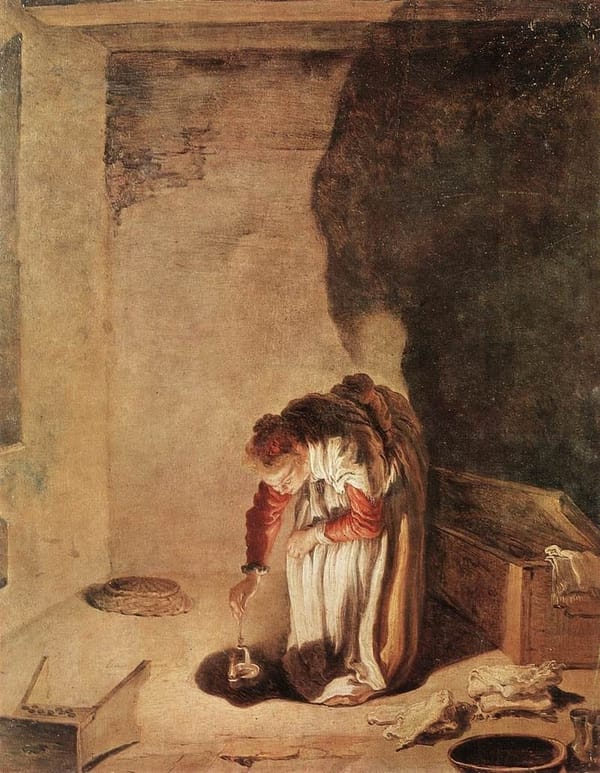
Cap. xv.In illo tempore, erant appropinquantes ad Jesum publicani et peccatores, ut audirent illum. Et murmurabant pharisæi, et scribae, dicentes: Quia hic peccatores recipit, et manducat cum illis. Et ait ad illos parabolam istam, dicens: Quis ex vobis homo, qui habet centum oves: et si perdiderit unum ex illis, nonne dimittit nonaginta novem in deserto, et vadit ad illam, quae perierat, donec inveniat eam? Et cum invenerit eam, imponit in humeros suos gaudens: et veniens domum, convocat amicos, et vicinos, dicens illis: Congratulamini mihi quia inveni ovem meam quae perierat! Dico vobis quod ita gaudium erit in coelo super uno peccatore poenitentiam agente, quam super nonaginta novem justis, qui non indigent poenitentia. Aut quae mulier habens drachmas decem, si perdiderit drachmam unam, nonne accendit lucernam, et everrit domum, et quaerit diligenter donec inveniat? Et cum invenerit, convocat amicas et vicinas, dicens: Congratulamini mihi quia inveni drachmam, quam perdideram? Ita dico vobis, gaudium erit coram angelis Dei super uno peccatore pœnitentiam agente.
Ch. xv.At that time: the publicans and sinners drew near unto him to hear him. And the pharisees and scribes murmured, saying: This man receiveth sinners and eateth with them. And he spoke to them this parable, saying: What man of you that hath a hundred sheep, and if he shall lose one of them, doth he not leave the ninety-nine in the desert, and go after that which was lost until he find it? And when he hath found it, lay it upon his shoulders rejoicing: and coming home call together his friends and neighbours, saying to them: Rejoice with me, because I have found my sheep that was lost? I say to you, that even so there shall be joy in heaven upon one sinner that doth penance, more than upon ninety-nine just who need not penance. Or what woman having ten groats: if she lose one groat, doth not light a candle, and sweep the house, and seek diligently until she find it? And when she hath found it, call together her friends and neighbours, saying: Rejoice with me, because I have found the groat which I had lost? So I say to you there shall be joy before the angels of God upon one sinner doing penance.
The parable of the sheep that is carried back to the fold on the shepherd’s shoulders was a favourite one with the early Christians; and they made representations of it at almost every turn. The same is put before us in to-day’s Gospel, that our confidence may be strengthened in God’s infinite mercy. It reminds us, in its own beautiful way, of our Lord Jesus; whom we contemplated, a few weeks back, ascending triumphantly into heaven, carrying thither, in His arms, the lost human family, which He had won back from satan and death and sin. For, as St. Ambrose says, ‘who is the Shepherd of our parable? It is Christ, who carries thee, poor man, in His own Body, and has taken all thy sins upon Himself. The sheep is one, not by number, but by its kind. Rich Shepherd this, of whose flock all we human beings form but the hundredth part! for He has the Angels, and Archangels, and Dominations, and Powers, and Thrones, and all the rest; all those other countless flocks, whom He has left yonder up the mountain, that He might run after the one sheep He had lost.’3
But it is from St. Gregory the Great that the Church, in her Matins of this Sunday, took the commentary on this Gospel. And in the sequel of his homily, the holy doctor gives us the explanation of the parable of the woman and the ten groats. ‘He,’ says St. Gregory, ‘that is signified by the shepherd is also meant by the woman. Jesus is God; He is the Wisdom of God. And because good coin must bear the image of the king upon it, therefore was it that the woman lost her groat, when man, who had been created after God’s image, strayed from that image by committing sin. But the woman lights a lamp; the Wisdom of God hath appeared in human flesh. A lamp is a light which burns in a vessel of clay; and Light in a vessel of clay, is the Divinity in our flesh. It is of the vessel of His Body, that this Wisdom says: My strength is dried up like a potsherd.4 For, just as day is made hard by the fire, so His strength was dried up like a potsherd, because it has strengthened unto the glory of His resurrection, in the crucible of sufferings, the Flesh which He (Wisdom) had assumed . . . . Having found the groat she had lost, the woman calleth together her friends and neighbours, saying: Rejoice until me! because I have found the groat which I had lost. Who are these friends and neighbours, if not the heavenly spirits, who are so near to divine Wisdom by the favours they enjoy of the ceaseless vision? But we must not, meanwhile, neglect to examine why this woman, who represents divine Wisdom, is described as having ten groats, one of which she loses, then looks for, and again finds. We must know, then, that God made both angels and men, that they might know Him; and that having made both immortal, He made both to the image of God. The woman, then, had ten groats, because there are nine orders of angels, and man, who is to fill up the number of the elect, is the tenth groat; he waslost by his sin, but was found again, because eternal Wisdom restored him, by lighting the lamp, that is, by assuming his flesh, and through that working wonderful works, which led to his recovery.’5
The Offertory is an outpouring of gratitude and love for the God who dwelleth in Sion; He does not abandon them that seek Him; He does not forget the poor man's prayer.
Offertory
Secret
Second Secret
The third Secret is left to the priest’s own choice.
The Preface is that appointed for all Sundays during the year, page 45; unless a feast is being kept which has a proper one assigned to it.
The Communion-anthem recalls to our minds, and with much appropriateness, the merciful teaching of to-day’s Gospel, now that eternal Wisdom has regained full possession of the lost groat, by means of the sacred Banquet, which He Himself had given to the repentant prodigal.
Communion
Postcommunion
Second Postcommunion
The third Postcommunion is left to the priest’s own choice.
Vespers
The psalms, capitulum, hymn, and vesicle, as above, pages 71-79.
Antiphon of the Magnificat
June 10: St. Margaret, Queen of Scotland
|
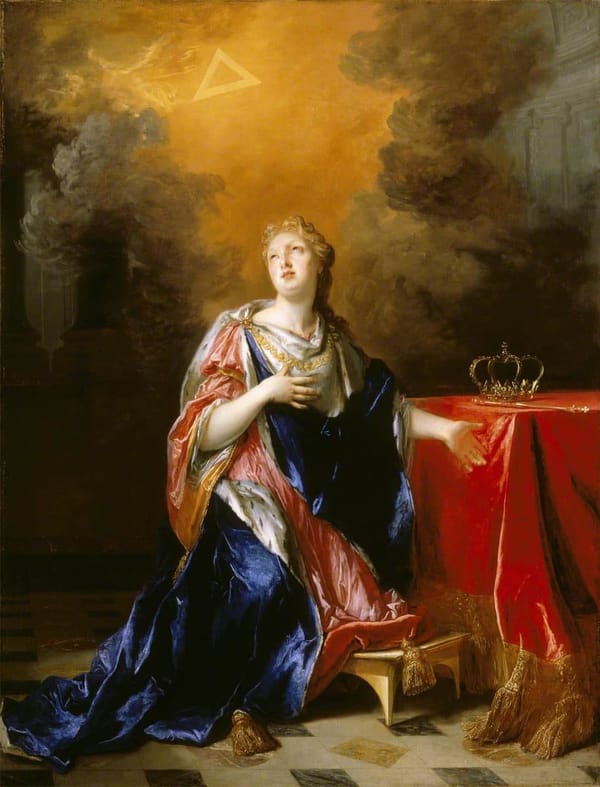
SCOTLAND had long been Christian when Margaret was given to her to establish, amidst a population so diversified, and so often at mutual enmity as was hers, that unity which makes a nation. Ancient Caledonia, defended by her lakes, mountains, and rivers, had, up to the fall of the Roman empire, kept her independence. But, whilst herself inaccessible to invading troops, she had become the refuge of the vanquished of every race and the proscribed of every epoch. Many an advancing wave, that had paused at the feet of her granite frontiers, had swept pitilessly over the southern provinces of the great British island. Britons, Saxons, and Danes in turn, dispossessed and driven from their homes, fleeing northwards, had successively crept in, and settling down as best they might, had maintained their own customs in juxtaposition with those of the first inhabitants, adding consequently their own mutual jealousies to the inveterate divisions of the Picts and Scots. But from the very evil itself the remedy was to come. God, in order to show that he is master of revolutions just as he is of the surging waves, was about to confide the execution of his merciful designs upon Scotland to such casual instruments as a storm or a political overthrow may sometimes prove to be.
At the opening of the eleventh century, Danish invasion had driven from the English shore the sons of the Saxon king, Edmund Ironside. The crowned apostle of Hungary, St Stephen I, generously received the fugitives at his court, welcoming in these helpless children the great-nephews of a saint, namely Edward the Martyr. To the eldest he gave his own daughter in marriage, and the second he affianced to the niece of St Henry, emperor of Germany. Of this last mentioned union were bom three children, Edgar, surnamed Atheling, Christina, afterwards a nun, and Margaret, whose feast the Church is keeping to-day. By the turning tide of fortune, the exiles once more returned to their country, and Edgar was brought to the very steps of the English throne. For in the meantime, the sceptre had passed from the Danish princes back again to the Saxon line, in the person of their uncle, St Edward the Confessor, and by very birthright seemed destined to pass ultimately to Edgar Atheling. But almost immediately after their return from exile, the death of St Edward and the Norman conquest again banished the royal Saxon family. The ship bearing these noble fugitives, bound for the continent, was driven in an opposite direction by a hurricane, and stranded on the Scottish shore. Edgar Atheling, in spite of the efforts of the Saxon party, was never to raise up the fallen throne of his sires; but his sister, the saint of this day, made conquest of the land whither the storm, God's instrument, had carried her.
Having become the wife of Malcolm III, her gentle influence softened the fierce instincts of the son of Duncan, and triumphed over the barbarism still so dominant in those parts of the country as to separate them utterly from the rest of the known world. The fierce highlander and haughty lowlander, reconciled at last, now followed their gentle queen along hitherto unknown paths, thrown open by her to the light of the Gospel. The strong now bent down to meet the weak or the poor; and all alike, casting aside the rigidity of their hardy race, let themselves be captured by the alluring charms of Christian charity. Holy penitence resumed its rights over the gross instincts of mere nature. The frequentation of the Sacraments, once more brought into esteem, produced seasonable fruits. Everywhere, whether in Church or in State, abuses vanished. The whole kingdom became one family, whereof Margaret was called the mother; for Scotland was bom by her to true civilization. David I (inscribed like his mother in the catalogue of the saints) completed the work begun by her; and another child of Margaret’s, alike worthy of her, Matilda of Scotland, surnamed ‘good Queen Maud,’ was married to Henry I of England; and thus an end was put on the English soil to the persistent rivalries of victors and vanquished, by this admixture of Saxon blood with the Norman race.
The following are the words given in the liturgy concerning St Margaret.
We hail thee, O Queen, truly worthy of the praises lavished upon thee by posterity, among the most illustrious of sovereigns! Power, in thy hands, became an instrument of rescue for an entire population. Thine earthly passage marks the meridian of true light for Scotland. Yesterday, holy Church commemorated in her martyrology him who was thy precursor in this far-off land, Columba, who, leaving Ireland in the sixth century, had borne the faith thither. But Christianity, crippled in its soarings by divers combined circumstances, could produce scarcely any of its civilizing effects on the inhabitants of the land at that period. Only a mother could perfect the supernatural education of the nation. The Holy Ghost, who had chosen thee, O Margaret, for the task, prepared thy maternity in the midst of tribulation and anxiety; thus had he acted in the case of Clotilde; thus does he ever act in the case of mothers. How mysterious and hidden did the ways of eternal Wisdom seem, as realized in thy person! Thy birth in exile, far from the land of thy sires; thy return home; then fresh misfortunes; then the tempest at sea; and at last thy being cast, despoiled of everything, upon the crags of an unknown coast: what a list of disasters! And who among the worldly-wise would ever have dreamed that herein was the direct course of a merciful Providence, to make the combined violence of men and the elements serve the sweet purposes of his designs in thy regard? Yet so it was; and this is the way thou wast moulded into the valiant woman,1 raised in all thy loftiness above the deceits of this present life, and wholly fixed on God, the one supreme Good, alone untouched by earth's revolutions.
Far from becoming either soured or dried up by suffering, thy heart, firmly anchored beyond the influence of this world's ebb and flow on unshaken and eternal love, was ever up to the mark in foresight and in devotedness, such as was needed to hold thee always at the height of the mission destined for thee. Wherefore thou wast indeed that treasure worthy of being sought from the uttermost coasts; that merchant-ship bringing bread from afar, and all good things to the favoured shore on which she is cast.2 Yea, fortunate indeed were thy land of adoption, had she never forgotten thy teaching and example! Happy thy descendants, had they ever remembered that the blood of saints flowed in their veins! Yet worthy of thee in death was at least the last queen of Scots, as she bowed beneath the headsman's axe a brow faithful to her Baptism up to her last breath. But alas! the unworthy son of Mary Stuart, by a policy as false as it was sacrilegious, abandoned at once both the Church and his own mother. Thenceforth heresy blighted the noble stem whence so many kings had sprung; and this at the very moment when England and Scotland were first united under one sceptre's sway! Nor may the treason of a James I be redeemed by the fidelity of a second James to the faith of his fathers! O Margaret, thy throne is firmly fixed for ever in the eternal kingdom; but abandon not thine own England, the land of thy sires, nor Scotland, still more thine own, of which holy Church has declared thee patroness. The apostle Andrew shares with thee the rights of patronage: in concert with him, preserve those who have been steadfast in fidelity, multiply converts to the ancient faith, and prepare the way for the speedy gathering of the whole flock into the fold of the one Shepherd.3
| Previous June 9: Sts. Primus and Felician, Martyrs | Next June 10: St. Margaret, Queen of Scotland |